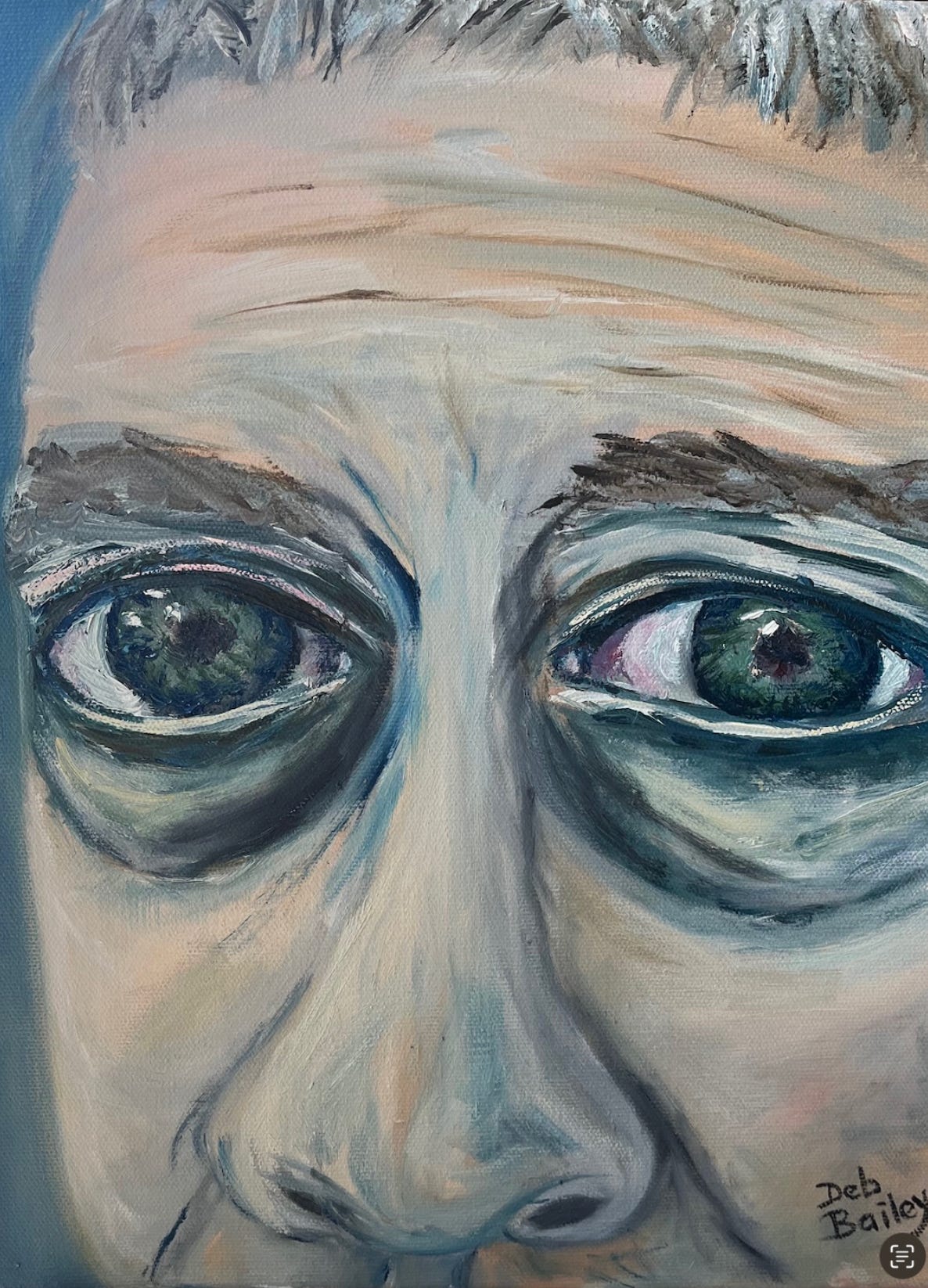
For most of my adult life, I was the warrior. Strong against him because I needed to be. I tried to get him to go for help. He wouldn’t. I was forced to draw a line in the sand to protect our kids.
But emotions are never so clear-cut, and life was always a pendulum between walking away and maintaining some kind of extended family relationship for our son’s sake, and… let’s be honest, mine, too. Because unless someone has no redeeming qualities — in which case it’s easy to walk away and never look back — if that person has also “done good things at times,” and used the powers of intermittent love and trauma bonding on you since infancy, it’s a lot more complicated.
I tried for “middle path” – allowing love, but standing guard. I was determined to be strong, and never again be that “trapped, weak, passive victim from the past,” nor let any one else be put in that same position. And yes, at that point I judged my younger self harshly and with no love.
But it all grew exhausting. As I got older and life had battered me over the decades, my husband noted that my self-portrait above bore a resemblance to a battle-weary soldier’s thousand-yard stare. I kept pushing me, but at the same time, a question I kept shoving to the back of my brain haunted me:”What happens when I am no longer strong?”
Strength was my biggest asset in life. I depended on it and it was my shield of safety. As long as I was strong, I could handle anything. My worth was in the “doing and achieving,” not in the “being.” I could stand guard against him, move boldly in my own life, never submit. And I would have been content to operate that way forever.
Deep down, I knew age was catching up with me, and I feared the inevitable “weakness” it would bring. All my life, once I was strong enough to get out of that house, I have wielded my strength as my sword. What happens though, when you reach for that dependable weapon and it is no longer there? And what is lurking there in the shadows, waiting for you, when that strength is gone? I can affirm that you can only outrun ghosts so long. They, however, can chase us forever.
I am dealing with that now, as I write this book. I still fear weakness. It puts me “back there,” emotionally — a victim, carrying a scar from the past. When I get sick, I am uptight and feel unsafe. Having to sit still, rest, do nothing of “value,” and unable to summon my “power,” I feel worthless, vulnerable, and scared. It it the work of my life now, to make my peace with this.
But as I watched my parents decline I had yet to even recognize this was needed. Instead, their weakness brought up many emotions. I had a front-row seat to the indignities life can inflict. And at times, it surprised me how I responded to their problems…how it “stretched” the boundaries of my heart. In fact, as their deaths approached, I had to answer two very hard questions:
– What choice do you make when the person who nearly destroyed you needs help now, because he is old, feeble, and dying?
– What choice do you make when the Mother who couldn’t or wouldn’t be there for you during childhood is dying and Hospice can’t come?
Complicated questions call for poets.
T.S. Eliot said:
…to make an end is to make a beginning.
The end is where we start from…
And poet Rainer Maria Rilke wrote of having to gradually live our way “into the answer.”
So, whether I knew it at the time or not, my journey to answers, about them, about me, would start at the end…
Tags: Rainer Maria Rilke, sexual abuse, stand guard, strength, T.S.Eliot, trauma bonding
 Soul Mosaic
Leave a comment