This blog shares excerpts of my draft memoir — working title: “I Thrive.” While not graphic, it will discuss aspects of the sexual, physical, and emotional abuse I endured and my journey back to healing…and thriving.
Photo by author, circa 1959-1960
To be the illustration
Memoir expert and author Marion Roach Smith described the genre of memoir this way:
“Memoir is not about you. It’s about something and you are its illustration.”
Another author, Trish Lockard, added that this genre is not just a recounting of things that happened to you because, after all — “Stuff happens to everybody.” Instead, memoir captures one’s reflections about an event when enough time has passed for a change, a transformation, to take place. Those insights gained over time through effort are the gift to the reader—the takeaway.
To only write a list of everything done to you in life without the reflections is like dumping a pile of ingredients on the counter and calling it a cake. It is only a cake when that pile of ingredients has gone through the crucible of a hot oven and been transformed into the real takeaway — dessert. Only then does it have “purpose and meaning.”
I loved how one author, whose name I cannot find, summed it up:
“Don’t just confess. Digest.”
Digestion is change and makes something useful…nutritious. It gives back. And digestion is the unfinished business of my life.
After seven decades of silence, it is time for me to look back, digest the raw material of my life, and obtain the nutrition— the insights that give it meaning. It is not: “Look at what was done to me” so much as the answers to the questions: “Because of what was done, what am I doing with it? What does it mean?” So, my life will be the illustration of that “something” that might have meaning and nutrition for all.
28 years of abuse…and building a “beautiful mosaic”
I’d sent my son downstairs to sit in the sunny atrium and call his friends. He needed a break. This was one time when I was glad for teenage friends on cell phones. A tiny touch of normalcy for him from the last couple of days.
All morning, we’d watched Ed’s oxygen numbers bounce up and down on the monitor. It was like watching a race where the lead was uncertain yet, but our “runner” might just bolt forward at any moment. Clearly, his levels were trending up. If they could just break through to normal….
I watched my husband sleeping in the bed. He was still on a lot of morphine to keep him quiet. However, given that his oxygen levels were inching toward normal, they started to bring the morphine dose down. As soon as his oxygen levels stabilized for sure, they wanted to get him off the respirator and bring him out of his coma.
The respirator had been a lifesaver for sure. But leaving him on it longer than needed risked infection. On the other hand, bringing someone out of their coma and removing the respirator is uncomfortable for the patient and excruciating to watch.
We wanted to be there to greet him on his “return from the coma”…and see, Was he still “Ed?” His brain swelling had not gotten any worse and was starting to improve. But the moment of truth would only come when he was awake. Then we would learn what all of this trauma had done to him.
They started the process. He groaned and became very restless. We couldn’t watch this part. It was too hard. Given that we had been on our vigil at the hospital for almost two days straight, we decided it would be okay to go home, shower, and change, and let this process unfold. The nurses agreed that we should do that and come back in a couple of hours.
That engineer brain
Ed is the sort of person who loves to figure out how everything works…and if it isn’t working optimally, to fix it. He was that way as a kid – collecting broken appliances and machines from the neighbors so he could take them apart and see what made them work. It was one of the many things I so loved about him. I longed to have that friend of mine back.
When I walked into his room on our return, he was asleep, resting quietly. He seemed much more peaceful than when we left, and it was a relief not to hear the rhythmic sounds of the respirator anymore.
Now he was being given oxygen through a mask, which happened to be lying on his face, crooked. As I reached over to straighten it, his eyes flickered, and mine bolted open wide. I just stood there, frozen, and held my breath.
Was my Ed, still Ed?
He hadn’t noticed me yet. Instead, his eyes were tilted down toward his nose, totally focused on the crooked mask. His brow was furrowed in seeming frustration and concentration.
I wanted to yell for joy! THAT was Ed. Without him even saying a word, I could see that his engineer brain was displeased by the “suboptimal” placement of his oxygen mask. He might have been groggy and still drugged, but HE WAS STILL ED, trying to figure out how to make some mechanical thing hew to his will!
Then he looked up, and for the first time since this began, I could see those beautiful, soft, blue pupils staring up at me. I couldn’t speak.
“Where am I?” His voice was gravely from the breathing tube, but he was clear and coherent. “What happened?” He had no memory of any of this since the ER.
Both my son and I were so ecstatic that we just cried. I gave Ed a short version of what had happened since the afternoon in the ER, and assured him he was doing great and would be just fine. Just seeing those beautiful, gentle eyes staring back at me and hearing his voice again were the best gifts in the world. I had started to despair of ever seeing and hearing him again.
“What happened in the ER?”
In that moment, I slammed the door shut on that conversation. I knew he was still weak and fragile.
“We aren’t talking about any of that right now. Not while you’re in the ICU. It doesn’t matter. All that matters is that you are alive! We’re just going to focus on getting you better now!”
He smiled, then drifted off to sleep. That was fine. I had seen what I needed to for the moment. Now, rest was what he needed.
Geometric figures
Once he was conscious, he started recovering quickly. It was like what the pulmonary doctor had said to us the first night: “Your husband is strong and healthy.”
In fact, strong and healthy was probably the reason that his sodium level had jumped up a bit too fast that first night. The doctor said that once the sodium had started to come back up, being healthy was a risk because the body would try to stabilize too quickly.
Given that, they still need to watch him for any signs of paralysis from that quick rise. And he still needed his vital signs followed to make sure his heart and lungs were okay. And continue to receive IV antibiotics for his pneumonia. They also wanted another MRI to see if the brain swelling had gone down and if there was any brain damage. So, we still had a ways to go. But things were looking up.
Later that day, they moved him into a “step-down” unit, where they could continue with close care, but more freedom than in the ICU.
I continued to stay with him, but sent our son home to spend time with friends and have some normal teenage life again. Ed was a little weird at this point because he was very weak. And he was mystified by the odd dreams he was having that were filled with geometric figures. We later learned this is common when you’ve had a lot of morphine.
Over the next day or two, we got him up and walking. Eating. And since he couldn’t get in the shower with all of his IVs, I sponge-bathed him. There are many ways to make love. As I washed his body and helped him feel like a human being again, it occurred to me that this, too, was another way. Each stroke of the washcloth was an unspoken expression of total love.
Thank you, Mariah Carey
His recovery sped up quickly. And at that point, I wanted him out of the hospital. He’d contracted a Staph infection, and I knew that the worst infections could be the ones you get in a hospital. So, once he was getting stronger, it was time to go home.
Of course, there was one last hitch. One of the lab tests was abnormal, so he had to have an ultrasound before they would discharge him. Fortunately, that turned out to be nothing.
Finally, words we never expected to hear – “We’re discharging you!”
It was cold out, and getting dark, as I drove slowly up the main street through town. I had the radio on, and that’s when that song came on….my absolute favorite song…the one I will ALWAYS associate with that moment in time, and with Ed: Mariah Carey belting out “All I Want For Christmas is You!” I’d always loved it. But NOW? THIS MOMENT? It said it all. Both Ed and I started to cry.
With Ed back in the house, life felt possible again. Our little family group was united again in our “nest.”
It didn’t matter if there was a tree, gifts, or anything. Nothing mattered beyond our joy to have Ed with us still. We’d wing the rest. In fact, when we got up the next morning, Christmas lights were strung up all over the inside of the house, like I usually did in the past. Our son had stayed up late to do that for us. It was Christmas in the very best of ways.
I never expected to see you up and walking again…
To express our overwhelming gratitude for all the nurses, doctors, lab and respiratory techs who saved Ed’s life, we went to a nearby gourmet grocery store and had them make up several gift baskets. And then we played Santa, going back to the ER, then the ICU to deliver the baskets of goodies and let Ed say thank you to them all, in person.
The young male nurse who had worked so hard on Ed that first night stared at Ed in shock…and then pleasure, as he shook Ed’s hand.
Quietly, the nurse said to me, “Frankly, if you had told me that night that he would recover and be able to walk in here on his own, I wouldn’t have believed it. I never expected it.”
I remember choking up as I told the nurse what I hadn’t said to anyone. “I feel like I failed him the night of his surgery….I listened to the doctor. I just felt like something was wrong, but I trusted the doctor. I should have brought Ed in here then.”
The nurse vehemently shook his head and stopped me right there. “Don’t even go there! You could have brought him in that night, and he might not have been bad, and we would have sent him home. And then you would have hesitated to come back when it really mattered. And he would have died. You did nothing wrong!”*
To this day, I still sometimes wonder. But it is what it is. I only know that on that afternoon, if I had picked up our son from school and gone home or even to the Urgent Care instead of right to the ER, Ed would have died. It was that close and that fast. The only reason he lived was because we were already in the ER when everything blew apart. And all of those wonderful people saved him.
So we went home. And celebrated our Christmas, and the best joy of our lives. We were all still together. We were determined to go on now, live our lives fully, and savor the gift of “us” still having a future together.
Photo by author
Four “certainties,” and a prayer
After all of the experiences through this time, there are a few things I was “certain” of, and one thing I prayed for.
The first thing I am absolutely certain of, is that on that afternoon, if I had picked up our son from school and gone home or even to the Urgent Care instead of right to the ER, Ed would have died. It was that close and that fast. The only reason he lived was because we were already in the ER when everything blew apart. And all of those wonderful people saved him.
The second thing I was certain of, I learned that afternoon in the ER. Life can go from normal to exploded in a matter of seconds. At that moment you are torn open to your core, and you realize that the only thing that matters is LOVE. Love. Love. Not the bills, not the irritations or the arguments. Not the plans, or the memories. Just…LOVE.
The next one is that our lives would never be the same. WE would never be the same. There was always going to be the “before times,” before this horrible event, and then, the “after times.” And who we would be, and how we would live, would be very different.
The prayer during all of this, was that when the time came, to please take Ed first, and not me. I don’t ever want him to know how those waiting room hours feel.
And the last certainty, was that I saw no need to ever tell anyone of the images I saw in the ER that day. Images that will be seared in my brain forever. In fact, I saw no reason to talk about that whole time. It was over and done with. Just move on and enjoy life.
Three certainties and the prayer were correct. That last certainty, though…not so much.
There is something about the ICU waiting room that I wish could be captured and spread throughout the world — unconditional love.
The ICU waiting room is a place out of time. While everyone hangs in limbo for an outcome, for a hoped-for word on a loved one, for relief from the intense pain of not knowing either way, life, as you know it, stops.
In that room, you enter the land of pain, fear, and sorrow – the great equalizers. No matter what walk of life you came from, rich, poor, or famous, no matter what color or race you are, when you enter the ICU waiting room, each one of you is the same — a hurting, terrified human being.
I sat there slowly becoming familiar with each person’s story. We became our own family, bonded in the understanding and compassion only pain can forge. Each of us waited for the 10 minutes every hour when we could either visit our loved one, or get a precious update on a test result that could mean life or death, and that seemed to take an eternity to come. Each of us celebrated any tidbit of good news for ANY one of us. It was like a victory for us all. Or, we consoled, knowing that at any moment, we might need to be consoled. If only regular life could operate that way – just full compassion and open hearts – what a changed world we could live in.
Our son spent hours there. When he couldn’t take another moment of watching his father’s “too-low” oxygen readings on the monitor, he would go into the waiting room to talk to the other “members of our cohort.” He knew their names, listened to them as they talked, and brought me updates on all of them. He has a sensitive heart and shared it generously all through those hours. And they loved us back…the way life SHOULD be.
The updates
After the pulmonary doctor left, we waited for word that Ed was settled in an ICU bay. Then I went right in to see him.
In the dark room, he lay motionless except for the rising and falling of his chest, which was orchestrated by an array of tubes and wires. Bags of IV solutions on poles with beeping controllers lined either side of his bed. Rows of numbers flashed and reloaded constantly on the screen above him, indicating any decrease in heart rhythms and his oxygen level. I stared so hard at those numbers, trying to use the force of my mental energy to make them rise.
The doctor, a nephrologist — kidney specialist — came over and started updating me. They were bringing up the sodium as slowly as they could. But now there was a new problem – his potassium level was plummeting. If it got below a certain point, his heart would just stop, and that would be it.
Yes, they were trying to bring up the potassium along with the sodium, BUT…the two were working AGAINST each other. Bring up one, and the other would drop. So it was a desperate seesawing battle to move first one up a little bit at a time, then the other one, all without dropping the potassium so low he died, or bringing up the sodium so fast he would be paralyzed.
The oxygen levels were abysmal. The fluids he had sucked into his lungs were blocking the air passages, preventing him from getting enough oxygen into his body despite the fact that they were giving him the maximum amount.
The bottom line? There was still no clear indication he would make it through the night. Ed’s life, our lives, were in the hands of this specialist.
A fluke
The doctor quizzed me: What was his medical history? What medications had he been on? And…by ANY chance, did I know what they gave him for anesthesia for the surgery??
Thank God I’d forced that damned anesthesiologist to tell me.
He pondered all my answers. Then asked, “Does he drink much?”
“Other than an occasional beer, no. He just drinks a lot of water every day…to be healthy.”
“How much?”
When I told the doctor that Ed usually took a gallon thermos of distilled water to work with him every day, the doctor winced.
“What caused this?!” I asked, still trying to wrap my head around all that had happened, as if knowing might help save him.
“Well, the anesthesia could have played a part. But then he was also on a month of high-dose steroids. That didn’t help. And his blood pressure medicine is notorious for dropping blood sodium levels. And, that’s a lot of water he drinks every day.”
He looked at me and said, “I don’t think this was any one thing. Any of those things by themselves wouldn’t do this. It looks like a perfect storm where several of these things just came together in a fluke event.”
A “fluke.” Yeah. Those things that “aren’t supposed to happen,” but just did. I had trusted the Universe, and that damned ENT, and trusted that all would go well. But…that didn’t happen.
The nephrologist told me he would be on all night and would be the one managing Ed’s sodium and potassium levels, which they were testing every half hour or so. And he promised to keep me updated.
I’d made it clear I was a lab tech, and I wanted to know EVERYTHING. And NO sugar-coating anything. Just straight facts.
Thanking him for all his care, I let him know we were not leaving. We were staying until…whenever. I was in lab-professional mode. This was not the time to fall apart. I could do that later. At that moment, I needed to be totally together so I could help in any way possible. I was “standing guard” over the love of my life…period.
Benign
As I turned to walk back to the waiting room, he said to me, “Oh, by the way. The biopsy on that unilateral mass…”
I held my breath.
“It was nothing. Just a benign cyst.”
I rolled my eyes at the irony of it all. “Great,” I said to the doctor. “If he lives, we’ll celebrate.” That damned mass that started it all was a non-issue. I was happy for that. But would Ed live to hear the news?
And, as an aside, to this day, he still has problems with that sinus….
The long night of life in the balance
Despite people telling us to go home, neither my son nor I was leaving. We were going to stay until we knew what would happen. We COULDN’T go home.
A neighbor left us with a sheet, blankets, and a pillow. We were the only ones left in the waiting room, so we spread out the sheet, turned off the light, and stretched out.
My son was restless. I put my hand on his leg to comfort him. He slowly relaxed and dropped off to sleep. I tried to lie down, but my heart was pounding so hard, and I was shaking. I had to sit up. So I closed my eyes and breathed deeply, trying to calm down.
As I sat there in the dark, I pleaded with God. “Please save him. But If he can’t come back and live a good life…..then take him. He would hate living unable to do anything or unaware…but if he can live a good life, please, save him. I don’t even care if he is crippled or has some permanent damage. As long as he can live a good life.”
And I also asked for help for me. I was afraid. Afraid I wasn’t sure I was strong enough to handle things if he were to be comatose or crippled. Afraid…just…afraid.
The blessed ICU nurse. He was wonderful. He came out to check on us now and then. And to update me.
He mentioned that the head nurse wasn’t happy we were there sleeping on the floor. But he told her, “Leave them alone. Look, if we lose him, we’re gonna lose all three of them. Let them be.”
I thanked him deeply. He was such a tremendous help that night, bringing me the steady stream of potassium and sodium numbers. Letting me know the nephrologist seemed to be making progress. Ed might actually be turning a corner.
Then, a couple hours later he came in.
“Your husband’s temperature is 104.”
I knew what that meant – the aspiration in his lungs was now a pneumonia. “What do you want to do?”
“He’s already on antibiotics, but…”
I waited while he looked me in the eye.
“If we could get his temp down, it would help. In the old days, we’d pack the patient in ice to bring the temp down.” He looked at me, one medical professional to another.
Without a trace of hesitation, I said, “Do it.”
“He won’t be comfortable.”
“Do it!” I knew the nurse was right. And this was no time for half-measures.
He nodded. Seemingly relieved that I understood and agreed with what he felt was the best chance to help Ed.
The night wore on. More labs. More temps. More O2 levels.
I never slept.
But his temperature came down.
The next day
Friends returned and sat with us. More updates on sodium and potassium. Those had finally stabilized.
The doctor mentioned that at one point during the night, the sodium level jumped a bit too fast. He was worried about the paralysis. “We won’t know for a couple of days yet.”
And his brain was still swollen. They would be doing another MRI to see if it was being pushed against his skull.
Still trying to verify just what happened to cause all of this, the doctor asked if maybe Ed’s sodium was already low before the surgery.
My “lab-tech” brain fired. I snapped alert, realizing this was something I COULD help with. “They did a potassium pre-op. I know the machine that does those tests. When it does a potassium, it also spits out a sodium result.”
He and the head nurse, who understood I was in the medical field, offered me a chair at the nurse’s station and a phone. “Call the Day-Surgery center and see if you can get a sodium level.”
They had him in the records. Yet strangely, nobody could answer about a sodium level. I told them I knew labs held blood samples for a day or so. Could they please re-run the sample and see if it was low?
I also knew that if that sodium was low, that meant the lab tech who ran that potassium test before Ed’s surgery should have picked up on that and told the anesthesiologist. It would be no excuse to say the doctor hadn’t ordered a sodium. If you run a test and see an abnormal result, you still tell the doctor.
Again, strangely, they never could find the sample. “It must have been discarded already….” Yes.
As a last resort, I called Ed’s doctor and asked for any previous sodium levels that he had on hand to see if there had been any trend down recently. But beyond that, there was nothing more I could do.
So I offered to help the nurse bathe and change Ed, so he could be comfortable. I stayed calm through all this because I knew the nurse didn’t need an emotional wife. If I could stay in control and help with his care, they would be willing to keep me well informed of any and every change.
For the rest of the day, we were either in Ed’s room watching monitors, keeping vigil in the waiting room with other families, or sitting with my friends and one of my siblings who came to visit. A gift of love despite our differences.
At one point, they sent us home to try to sleep. My son and I did go home, but it was painful to stay there. Neither of us could sleep. Everywhere we looked in the house, we saw Ed. The touches of him all around us just drove us out of the house and back to the hospital.
At least when we got there, he seemed to be stabilizing.
“Your husband’s blood oxygen has dropped. It’s hovering around 47% right now. Below 50% we usually see brain damage.”
The words hit me like a rock against my skull. All of us went so silent that the quiet crushed against my eardrums.
“Is my husband going to live?”
Those were words I never expected to hear coming out of my mouth at this point in life. Especially given Ed was only 47.
The doctor hesitated.
But I was blunt, direct, to-the-point, with words that meant I wanted no fluff answers. I had been in the medical field too long. I knew how doctors and nurses sometimes sugar-coated things or used evasive words so as not “freak the family out.” I didn’t want coddling or patronizing. I couldn’t bear “uncertainty.” Tell me now – Is he dying or is he going to make it?”
Even though Ed had just been admitted to the ICU from the ER, I thought we had a chance. They had finally diagnosed him in the ER as having severe hyponatremia — blood sodium so low it almost killed him. But they said they could treat him. So what had changed?
The doctor took a breath. My mind rapidly assessed his face, calculated in his delay in answering, and knew before he spoke his most carefully chosen words, that we were dealing with yet another descent toward Ed’s death.
“Your husband is young and strong…” was all he said.
That trip
I always struggled anytime Ed traveled on business. Struggled was an understatement. Phobic that something would happen to him is more accurate. I knew from the time my aunt was killed in a car accident when I was 9, that phone calls can come and inform you that the “thing that usually doesn’t happen,” just did. I never forgot my mom’s intense wail when she heard her sister was dead.
So, I held that same fear again in early 2005, when he had to travel with a few guys from his office to a meeting in New York City. And it was with that same huge sigh of relief I always felt on his return that I picked him up from the airport. It always felt like we’d been given yet another “reprieve,” until the next time.
And even though he looked exhausted and had caught some bug, at least he was back. The rest we could deal with.
For the rest of the year, though, and all through 2006, he had a constant sinus infection. All the usual things – nasal saline, nasal steroid sprays, antibiotics – wouldn’t touch it.
Finally, out of desperation, we went to an ENT. He, too, prescribed another round of nasal steroid spray. Then, when that didn’t work, he gave Ed a round of oral prednisone. Which should have worked…but it didn’t.
So the doctor moved up to his big guns: a very-high-dose, month-long round of steroids. Failure again.
At that point, the doctor ordered CT scans of the skull. To this day, I absolutely HATE those large sheets with cross-section images of Ed’s skull. Because there in THAT image was something we couldn’t ignore – the “unilateral mass.”
That basically meant that there was “something there,” only on one side. Who knew what that something was? It could have been the cause of his problems or not. And it could have been anything from nothing at all to cancer. So, we couldn’t ignore it.
Photo by author – sinus xray of the “mass”
If there is anything I am even more phobic about, even worse than business trips, it’s me or anyone I love having to undergo any kind of surgical procedure. You would think I would be fine with that after 30 years in the medical field. But I’d seen too many things over those years. I didn’t want to be anywhere near a hospital, and I didn’t want anyone I loved near a hospital.
So every time I held that X-ray film up to the window and studied that image, I felt a hatred for that mass, and a sense of foreboding.
But knowing that my phobias, though understandable, could not run my life, I sucked it up and put on a brave face. When we got to the day-surgery center, I reminded myself that thousands of people have procedures every day and “things usually don’t happen.”
Yes, I grilled the condescending anesthesiologist about exactly what chemical they were giving him for anesthesia. Yes. I asked about his lab results that they did. Yes, I was terrified when they wheeled him away. But as I sipped tea in the waiting room, I convinced myself that my fears were overblown. Everyone else sitting there was reading a magazine, chatting on the phone, or looking generally bored. So, I told myself to just trust that all would be well.
And when they called me into the recovery room, he sat there, smiling, sipping soda, and chatting away. He seemed to have shrugged off the anesthesia well. And even though the surgeon had to operate in an area just a couple of millimeters under his brain…under his pituitary gland to be specific, all had apparently gone off without a hitch.
They told me what pain meds to give and when, how to take care of the wound dressing, and change it. We settled in at home for a quiet evening that should have seen Ed sleep off the rest of the anesthesia and pain meds, and wake up refreshed and alert in the morning.
Should have.
Just let him sleep it off!
The afternoon went sort of okay. He slept. But he kept wanting more water to drink. Seemed to be very thirsty. And he was acting off, not really with it. While I couldn’t put my finger on it, things just felt “wrong.” He’d had previous pain meds after dental procedures and had not reacted like this.
Trusting my gut, I called the surgeon and told him what I saw. The surgeon snapped at me. “He’s just out of it from the pain meds! Let him sleep it off!”
I was in a quandary. I knew Ed. Things seemed off. But I also knew I was nervous, so…I believed the doctor.
Just have them catheterize him!
The next day, I sent our son off to school. Ed got up, but was distant. Strange. Quiet. He seemed detached from things around him. But he answered me. Sort of.
But he couldn’t zip his pants. His abdomen seemed swollen. His feet, too, wouldn’t fit in his loafers. I called the doctor’s office. The equally abrupt nurse blew me off.
“He’s retaining fluid! Something is wrong.”
“Just take him to the ER then and have them catheterize him!” I don’t think she was listening to me.
“I didn’t say he couldn’t go to the bathroom! I said he is RETAINING FLUID! He is SWELLING all over his body!”
“Then take him to the ER.” She clearly just wanted me off the phone.
It was time to get our son from school.
“You’re coming with me,” I said to Ed. I had decided that we might need to get him checked by somebody.
“Do you want to go and get checked at the Urgent Care?”
He mumbled something unintelligible. I didn’t wait for his answer.
The moment our son got in the car, I said to Ed again, “We can go to the Urgent Care or the ER.”
He just stared at me and couldn’t answer. I went right to the ER.
What is this?
It was blessedly quiet there, a rare occurrence. They took him right back, and the nurse started to ask him some of the usual intake questions. He couldn’t answer. Then she did something that flooded me with terror.
“What is this?” she asked Ed. She was pointing at his watch.
Ed sat there, and I could see him concentrating mightily. Then he looked up at her helplessly, tried to say something, but couldn’t make sense
I thought, My God, he’s having a stroke.
She obviously thought so too, because she immediately admitted him into the ER, did all the vitals, and then sent him for a CT scan of his brain. I waited.
They wheeled him back a short time later. He was no longer conscious.
I sat quietly near him. Waiting for the results. That’s when all hell broke loose.
The bag of sneakers
In a matter of seconds, his eyes flipped wide open, and he looked at me like he was angry. His arm shot out hard in my direction like he was throwing a punch. His surgical site in the nose tore open, and blood was everywhere…including down into his lungs.
I thought, *He just aspirated blood into his lungs! He’s a dead man!* I knew from years in the bacteriology lab that when something like that happened, it meant you were at risk of a serious infection as well as damage from fluids going into the lungs that weren’t supposed to be there.
I yelled for the doctors, and though they told me to calm down, they were clearly in emergency mode.
First, they intubated him to get air in his lungs. They started administering meds and performing assessments to figure out what had happened.
I was off to the side. My entire body was shaking. My teeth gritted.
The doctor started firing questions at me: “What meds was he on? What had he been doing today? What was his surgery for? What’s his medical history? Diet?”
As fast as he asked, I answered. Despite the fact that my heart was pounding and I was barely staving off total panic, I knew in that moment that the only way I could help save my husband was to get a grip, think clearly, and answer every question. And…I did.
In between questions, I was saying as many Hail Mary prayers as I could as fast as I could, as well as flat-out pleading with God, and doing deep breathing to stay in control.
I watched as if things were in slow motion. The doctor pricked Ed’s bare foot. Ed didn’t react. I froze and knew what that meant.
The doctor turned to me and voiced the words I was thinking: “I think he’s had a major stroke.”
The room went quiet as they kept working on him. I never left the room. I was frantic, terrified, but in control. I wasn’t leaving him. That’s when the nurse walked in with lab results.
The doctor almost smiled with joy. “He didn’t have a stroke! He’s got severe hyponatremia!” He explained that they actually had something they could work with. They could turn this around, and he would probably be okay. But they had to give the sodium IV VERY slowly. If they gave it too fast and his sodium rose too fast, he could end up paralyzed.
My heart pounded, partly with relief, partly with terror over the risks. But at least we had a chance.
Things calmed for the moment. They brought me papers to sign. My hand shook so hard I could barely hold the pen, much less sign my name.
I heard later that the surgeon came by and they told him what was going on. He never came by to see me. I never spoke to him again. I should have sued him. But at that moment, and for the next many years, I would be too busy to deal with a lawsuit I couldn’t afford anyway. I just cursed the fact that I had EVER listened to him and didn’t bring Ed to the ER that night. I felt responsible for this.
I spoke to my teenage son and told him what was going on. Then I instructed him on how we were going to manage this. I said that “even unconscious people may hear you. I understand that you’ll need to cry. But you do that outside his room. When you go in to see him, you speak strongly, positively, and tell him you are there and love him. Do not cry when you are with him.”
I was shaking all over. Operating on years of hospital training and adrenaline. And the knowledge that we needed to keep under control to be there for Ed. And I needed to be there for my son. So, be strong.
Yet, in that moment, that lifetime of “STRONG” was starting to break apart. All my life, I just bulled through. I had gotten to the point where I didn’t need anybody. Didn’t want to be let down by someone again. So I just took care of things myself. But in these few minutes, everything had changed. I suddenly realized – What do I do if he dies? And I am alone? Who would actually be there for me? Maybe I can’t do it all?
My son and I decided to make a few calls. To a couple of old friends…even though we were no longer that close, I knew they would come. And to one of my siblings, even though she and I hadn’t been on good terms. To neighbors, who could look after our house. To friends of my son. And to my parents, who said they would pray.
At that moment, the doctor came and said Ed needed an MRI to see how his brain was doing. But they were going to have to fight to get him in the machine and would need several techs to help. Because he was on a ventilator, they would have to manually pump oxygen into his lungs when doing the MRI. So it would take a few minutes.
While they arranged everything, I sat there in the now darkened room. Ed was motionless, now changed into hospital garb, and hooked up to all kinds of monitors. His chest rose and fell with the ventilator. The room was silent except for heartbeats, the ventilator, and the beeps of oxygen level numbers up on the screen.
The nurse tapped my shoulder, then gently handed me a plastic bag, and then walked to the desk. I looked down. His sneakers and clothes.
I clutched the bag in shaky hands and thought to myself, Is this how it ends…a bag of sneakers?
To the ICU
People did come. A friend brought us sandwiches. Another friend sat with my son. A neighbor brought blankets and a pillow.
And the many techs were beyond angels. They heard what was happening. Several stayed late and volunteered to work together as a team. Rallied and got him into the MRI machine and kept his oxygen going, tag-teaming with each other to keep pumping the oxygen bag. God bless each one of them.
I watched it all through a small square window in the door to that room. I wouldn’t leave. I couldn’t eat. I needed to know he would survive the MRI.
Finally, they finished. He had cerebral edema – his brain was swelling with fluid against the skull. They would have to monitor him to make sure he didn’t incur any brain damage. It would be a long night. But if they could get his sodium slowly back up, he should make it.
So it was with that hope that I went up to the ICU waiting room with my son and our group of friends to wait while they moved Ed up there. They said they would let me see him when he was all settled.
And that’s when the pulmonary doctor stepped in to tell us about the low blood oxygen level, and hesitated when I asked, “Will my husband live?”
It was one of those warm, fall afternoons, not sunny, but still, the array of colors splattered on the trees across the pond dazzled.
On the TV, my son was watching the old movie, “The Trouble With Angels.” It was a 1966 comedy with Rosalind Russell and Haley Mills about life in a Catholic girls’ boarding school, where Mills is the determined troublemaker, and Russell is the equally formidable Mother Superior. It is a funny movie, especially if you had the nuns for teachers as I did, and one that we played now and again for comic relief.
I was sitting at my painting easel in the corner of the living room, near the window that looked out on the pond. By all accounts, it should have been a serene afternoon. At any time in the past, with a similar setup, it was. And today started that way. But then, it suddenly changed.
The longer the movie played, the more afraid I became. Dread, foreboding, and this overwhelming sense of …guilt…being in trouble…bad things about to happen, flooded through me.
I tried to shake it off. This is stupid, I remember thinking. I mean, what the hell was wrong? Yet the longer I sat there trying to paint, the more afraid I got.
Worse. I had never experienced anything like this before. I mean, sure, when I was a kid at home, and my father was raging. But I was a 51-year-old adult woman having a peaceful afternoon with my son in my own home. So what was I suddenly so afraid of?
I tried to summon all that rigid strength I’d always had at my fingertips, to quell the fear. I could always depend on being strong. But that day, for the first time in my life, that strength failed me. Shocked, I realized I had no control over the intensifying terror racing through my body.
All I could think was, What is happening to me?!
I didn’t say a word to anyone. Just gritted my teeth, kept painting, and hoped it would pass. Eventually it did ease. But, I felt “different,” afterwards. Like something had changed permanently within me, though I couldn’t explain what, and life was never going to be the same.
The experience left me shaken, because I couldn’t attribute it to any specific cause. If I didn’t know why something happened, how could I know it wouldn’t happen again? It challenged my sense of always being in control of myself and my choices. And I was always, “in control.”
I’d always been able to bull through anything, no matter what. Even if I was exhausted, scared, or whatever, I did it. To me, life challenges were simply mind over matter. My mind drove the bus, the body delivered. No questions asked, no excuses allowed.
But this time, I hadn’t been able to. Why? I was as surprised and upset by my failure to stop those fears as if I’d tried to move my leg and it wouldn’t respond.
I sat there, racking my brain, trying to figure out what had just happened. Life had been pretty calm and stable these last few years. I hadn’t even needed to see a therapist for quite a while.
Yes, I had started menopause, but so far the symptoms hadn’t been too bad or unusual. Some night sweats. More fatigue than I’d expected. Otherwise, just business as usual.
Even as I couldn’t explain it, I remember hoping it was a fluke that would never happen again. But, it was just the beginning of something that would never be the same again.
Midlife status
It was the fall of 2005. Our son was entering his senior year of high school, and I will admit I was feeling this sense of grief. It was the realization that life was about to undergo a major change. He would go off to college, and the years of intense busyness that had filled my life with tutors, transporting him places, school activities, helping with homework, everything that had been the norm for the last 18 years, were almost over. On the one hand, it would be a chance for me to explore new directions. On the other…after a bumpy start during his infancy, I had really loved being “Mom,” and I was going to miss it all.
Other things had recently changed, too. We lost our beloved dog, a small rescue poodle named Gracie. And that was heartbreaking.
Work was also in flux. After ten years of protecting thousands of people participating in hundreds of research studies, I decided I needed a break. So that summer, I stepped down from my work on the ethics board. That left me adrift. But I was burned out. I just couldn’t read another research study on yet another medical disease. I would just need to figure out something else. Maybe now I would have the chance to do some writing?
And friendships with women…they were as problematic as ever. I just couldn’t seem to make things work. While I’d gained an understanding of the issues at play in that earlier friendship that I’d ended, I was still not meshing well with my friends.
The tangled knot of friendship failures
I’d had a couple of close friends from an earlier job. But when I left that job, even though I tried to stay in touch, things changed over time. Also, and I can say this looking back, I was needy. Clingy. Afraid of being “abandoned.” Abandonment and trust were huge, unrecognized issues from my childhood. No one had ever been there to protect me, and love was a very conditional thing to be earned. So I was always seeking a friend who I could trust would never abandon me. A tall order, and usually, I was seeking it from a friend who was emotionally unavailable.
I had other friends who were good to me. But I didn’t seem to acknowledge them as much. I was like I needed to prove to myself that I could get love from someone who wasn’t interested in giving it.
Again, looking back, I realize it wasn’t just my problems that caused those failures. I sensed that the individuals had issues of their own at the time that had nothing to do with me. I was determined to “be there for them” and thought if I did that, they would love me. It was a pattern familiar to me from the past.
These days, I think that was a “Mom” thing. My whole childhood, I’d gone without Mom’s attention or support. Her love was unattainable. And I wanted it, but it was always withheld. She was emotionally unavailable.
So I think I found friends who were the same way. And like with Mom, I kept trying to “earn their love,” a futile and unhealthy endeavor. I was just oblivious to that truth yet.
The other thing operating in me was that I was convinced that I was the broken one. That others had it together, and had all the answers — to life in general, and for me in particular. I had no answers for me that I trusted. Deep down, I always believed the real truths were outside of me.
My father had always dictated what I was supposed to think and believe. Since I’d never been allowed to have my own opinions growing up, or encouraged to trust my own instincts, why would I trust my own thoughts now? So now, I was looking outside of me, to the people around me, for answers, acceptance, validation.
I was starting to recognize that I was too clingy and needy. But beyond that, I still didn’t understand what was driving it all. And if you don’t even recognize there’s a problem, you can’t begin to understand what’s causing it, much less figure out how to fix it.
So over the last few years, I’d lost one close friend, and seemed to be losing a current one. It seemed no matter what I tried, or did, or said, I just pushed them away. All I knew was that it hurt, I was confused, and I was pretty much fed up with even trying.
Marriage
The one area that seemed to be going well was my relationship with Ed. We’d managed to move beyond the issues from early in our marriage, and the tools we’d learned in the marriage classes were serving us well.
Also, we’d had time for some fun things in life. With his parents gone, and with no recent battles with mine, we could focus on enjoying our own lives. There were trips to places like Gettysburg, where we even rode the battlefield on horseback one time, bringing the history of that battlefield alive.
Other trips brought us back to the rocky New England coast, Colonial Williamsburg in Virginia, and even some family get-togethers again that went uneventfully.
On a smaller scale, we loved to explore or discover odd things. On time it was exploring some backwoods areas near the Williamsburg airport to discover the overgrown 1950s Nike missile base command center, something only two history geeks could love. Or another time, it was searching online for what had happened to Toto, the dog in the 1930s movie, The Wizard of Oz. If you would like to know, check out my WordPress blog posts on the topic.
In any event, those years were a pure joy. Overall, our life together had settled into a more easy pace.
If there was one area where I still struggled with fears, it was when Ed had to travel for work. It was that fear of abandonment that drove that, and most especially, the fear that something would happen to him. I was terrified of losing him. He was my soul mate, best friend, and protector. I’d struggled with that phobia right from the beginning, and each trip, I just had to tough it out.
Where did I go?
After that episode while oil painting that day, those moments of intense fear started to rise now and then. I hated them. I couldn’t control them. I feared them.
I even remember having a full panic episode start up while at the movies with Ed one time. To this day I hate the movie, “The Curious Case of Benjamin Button.” The whole premise of the movie — a baby being born old, and out of sync with other children, then growing younger as he aged — felt out of control and freaked me out.
Aside from the anxiety attacks, I was also becoming aware of a tremendous level of fatigue, probably due to menopause. All my life, I’d depended on being strong…took it for granted. Now, unable to muster energy for anything, I kept remembering that question from earlier in my life: “What happens when I’m not strong anymore?” And it terrified me. That was my defense shield against anything that might threaten me.
All I knew was that the “me” of all my life, seemed to have disappeared. I remember telling a friend of mine that I suddenly felt like a stranger to myself and kept wondering: “Where did I go?”
She just laughed, chalked it up to midlife, and assured me that it would go away. I wondered.
Changed forever
However, very shortly, something else would temporarily derail that question. In December, I was going to face the biggest crisis of my life, which was about to change forever.
Before I get into today’s segment, just a moment of gratitude and celebration. It is my husband’s and my 38th anniversary. It is always a day of joy for us. But I will simply add that through the months of writing this book draft, and seeing all the struggle and pain, I find it an especially wonderful thing that we are together and thriving. So, to my husband, my partner through it ALL, my soulmate, thank you, and I love you.
Tara’s permission
After the large break in the family, the next few years had their ups and downs. For a couple of years, I stayed away. That was hard, especially when my uncle, my mother’s last sibling and a favorite uncle, died from cancer. I just chose not to attend the funeral, which, in my family, was no small absence. But it was also a time when Ed’s parents were sick, and his mother was dying, so my excuse was that we were taking care of their needs.
In fact, her death came the very next year, and his father’s death 3 years after that. The awareness of life’s mortality for our parents slowly brought me back into contact with my extended family over the next couple of years. As it had helped me to stop hating God, Buddhism, as well as my work on a medical ethics board, provided me a path toward a reconciliation of sorts with the family.
The ethics board’s work constantly forced us to consider how best to protect subjects in research studies, without taking away their power to make their own choices about participating. That work was about constant wrestling – with the study guidelines and with everyone else on the panel – to reach the best solution. Often I would go to the meeting with one decision, but after much discussion I’d sometimes change my mind. Our discussions and consensus-building taught me that the best answers were not achieved quickly, but with much thought and struggle.
Buddhism, too, was about taking each situation, individually, looking for the most ethical solution, and avoiding extremes if at all possible. It was about remaining flexible and caring, even when you had to be firm. And it was about holding two truths at the same time. You could love someone, even as you had to be a force against them. That was reinforced by my understanding of that Goddess, Tara, and seeing her as a force for love, but also for protecting when necessary.
Finally, my parents and I agreed to meet at a hotel in Virginia and have a conversation about the past couple of years. This time at least, I felt somewhat empowered to do this.
The meeting
Painting by author
We sat across the table from each other in the hotel lobby, Dad and I. Mom sat off to the side, silent as usual. This was the first time we’d seen each other in a few years, since I’d written the article about not trusting him. And it was difficult, especially sitting right across the table from him. But it had to be done.
I am by nature a person who doesn’t like to cause hurt feelings, even if it’s justified. I just want to get along. It’s my nature to want to spare another discomfort. I know pain. Why would I want to inflict it on someone else?
Also, for me, it takes so much energy to have to stand my ground against another, even if the situation requires it. After a lifetime of Dad always denigrating my opinions or even my right to have them, I had to fight decades of old programming and fear to sit across from him and tell him how it’s going to be. In person.
Normally, I prefer situations where things can be worked out collaboratively. Put things on the table, and find a solution. I just want to get along, not fight. Since there are very few things in life I am black-and-white about, I can be flexible about answers. It’s always amazed me when someone else is so rigid and intractable that there can be no way to resolve the problem. On the one hand, I wish I could be that way – it would be easier. Yet it’s not me, and at times I’ve even felt like a failure because of it.
But there are times where there IS only one, non-negotiable answer. Like in this meeting. And even though it was hard for me to be strong enough to insist on that outcome, I also wasn’t going to run from my responsibility. Especially when it was critical — like the kids in the family.
So, it was that “compassion goddess” who sat across from him at the table
“Our kids were at stake.” However nervous I was, I was not budging on this.
My father looked at me, his face an emotionless mask.
“You raised me to always take care of my siblings. You said it was my responsibility.” My voice stayed firm even as my gut was twisting.
“Well. If I had to protect my siblings, I will absolutely protect our kids. I love you…I want you to know that. I always have. You are my father….but the kids come first.”
I knew that was one thing my father would “get.” That was the family ethic going back generations. His father gave him hell one time for not looking after his brothers when they got into a fist fight with others. And he gave me hell if I didn’t look after my siblings. So I played his card — take care of the younger kids. And I wanted it clear that this was not negotiable. For the kids, I would fight him, always, even if I hadn’t fought for myself.
My mother said absolutely nothing. Registered nothing. But my father heard me. I had no idea if it would alter his future behavior. Or if he believed me when I said I loved him. But I sensed he grasped that I would never stop watching him where the kids were concerned.
He was also a master of assessing “relative power in situations” and of trying to manipulate someone to his side if he saw an opening. So in that moment, I made sure no chink in my armor showed, even as a part of me…that young child inside, still wanted his love and approval.
As an aside, that part never goes away. It is the ache, the hunger of all those years of not being loved for yourself. Of desperately reaching for any crumbs of his attention, something he would always leverage to his advantage. But still, you hunger for it.
Daria Burke, in her memoir, Of My Own Making, summed up kids looking for love when it isn’t possible in an abusive situation: “…we are hardwired to seek out and trust the familiar, even when the familiar isn’t safe or good for us…We are hardwired for hope.”
On some level, I kept hoping that he might yet change or be changed. Or just stop being interested in any kind of abuse opportunity. It takes a lot of years of therapy to come to grips with understanding the emotional hold an abuser, especially a parent, has on you.
But at least we managed a sort of “detente” after that.
The calm years
The next few years were actually calm by comparison to the past. The kids in the family were all getting older now, which meant they were probably safer than in the past. Also, my parents moved to Pennsylvania to a retirement community, which put more distance between him and the kids. So I was relieved.
For a couple of years, our own family things were going pretty well. We had opportunities for vacations, both with extended family members and on our own. Our son was working hard in school, and while he had some areas of struggle, he also had other places where he just thrived.
There was a period during this time, though, that he became deeply quiet and sad. Almost despondent. And while a small part had to do with school, the bigger part was about a secret he’d kept to himself. Afraid to tell us. In fact, later he would share that he almost thought about suicide. Those middle school years are the hardest.
Finally, in his second year of high school, he opened up and shared that he was gay. I was actually relieved just to know what had been causing him such emotional agony. I will admit it gave me pause, not because he was gay, but because I feared what the world might do to him. There is so much hate out there. I was only sad that this would make his life harder.
But the wonderful thing was that once he opened up to us and saw our love had not changed, he just blossomed. Years of hiding his truth had taken its toll. So, finally able to be himself and be loved for who he was, he began to approach life with an enthusiasm and joy that had been missing for several years.
Also, through these years, I had not needed to work with a therapist. It was a wonderful stretch of feeling “settled” and calm. I actually found myself thinking: Maybe I am finally cured? Maybe this is all over?
All through my adulthood, through all the years of therapy and marriage classes, I had this idea that it was just a matter of toughness and determination. That if I worked hard enough, fast enough, and often enough, I could “beat this emotional burden.” Then, I would be all better, and this nightmare would finally be “over and done with.” After all, I truly hadn’t felt the need to see a therapist. So I started to consider life on the other side of needing therapy.
Until one weekday afternoon, when a wave of intense anxiety and panic showed up…
We stood quietly in the Temple, waiting in line as the Buddhist monk approached each of us in turn. We each had a “kata” – a traditional scarf meant as an offering to the monk – draped over our folded hands.
He stopped in front of each person, looked into their eyes, then wordlessly selected a small piece of paper with a Tibetan name on it and gave it to them. Whatever the monk saw in each person’s eyes determined the name he gave to them.
Finally, it was my turn. He moved slowly, with much peace. I was always amazed at how deliberately he executed even the simplest movement, as if he had all the time in the world. He looked at me, REALLY looked. His focus was like a laser boring through my eyes and into my soul. His expression was soft, and his own eyes were like clear, still pools of water. I felt serenity emanating from him.
His scan of me lasted only a moment. But he showed no hesitation as he sought out one particular decorative slip of paper and handed it to me. Whatever he saw in my eyes, apparently, he was very decisive in what name I should have. Handing him my kata, I bowed in gratitude.
It was only after he moved on to the next person that I looked to see what name he had chosen for me. Neatly printed on the paper were the words, “Tashi Dolma.”
The woman next to me saw my paper and said, with some level of irritation, “*I wanted that one!”*
Caught off guard by her comment, I just stared at her. The intensity of her reaction surprised me. It seemed out-of-place for a Buddhist Temple supposedly bathed in peace, non-attachment, and acceptance.
“Don’t you know what it means?!” She seemed even more irritated by my ignorance.
I shook my head.
“Tashi Dolma! Auspicious Tara!! You know, the Goddess of Compassion!”
At that moment, I considered that she was not exactly exuding compassion herself. I just thanked her for telling me, then turned away, actually taken aback at the monk’s choice for me.
I remember being in shock for a moment. This Buddhist monk, who did not even know me beyond what he saw in my eyes, had given me a name that was as esteemed as if he’d named me the Blessed Virgin Mary. In fact, Tara, the Buddhist goddess of compassion, is that equivalent.
Mary. He named me the equivalent of that spiritual mother I had turned to so many times in life.
I reflected on how many times I had looked to her for maternal care. Those years in childhood when I would go to Saturday Confession, then just sit by her statue for a while because I loved the caring in her eyes. The years of struggle and pain in our early marriage, where I cried for her to help me, because I’d had no other mother figure I could turn to. And even now, saying the rosary sometimes daily, on my neighborhood walks. For some reason, despite the fact that I was no longer a practicing Catholic, I still said the rosary as my way to just feel her help in my life. I didn’t feel so alone.
I smoothed my fingers along the paper and over his carefully scribed Tibetan letters and just felt awe. And responsibility.
This was no small thing. If he saw that in my eyes and my heart, if he felt I deserved that name, then that was not a coincidence. It meant I had a purpose I was supposed to fulfill. It meant I had a lot to live up to.
I still feel that way…even though I converted to Judaism, my final spiritual home. I will write about that soon.
But still, even today, I keep in my heart the awe and the responsibility that I felt from that day. Because he named me Tara, Mary, the Compassion Goddess. I can’t waste his faith in me.
Photo by author
She who saves…
Out of curiosity, I just looked up “Tashi Dolma” in Google AI. The words fill me with awe still, as I soak up each one:
“Tashi Dolma (or Trashi Drolma) is a common Tibetan name meaning “Auspicious Tara” or “Good Fortune Goddess.” It combines Tashi (”auspicious,” “good fortune,” or “luck”) with Dolma*(the Tibetan name for Tara, a revered female Buddha of compassion and liberation). It signifies a blessing for a fortunate life, often representing the protective energy of the Green Tara.*
Tashi (བཀྲ་ཤིས་): Refers to good fortune, luck, or auspiciousness. It is often used in the greeting “Tashi Delek”.
Dolma (སྒྲོལ་མ): Means “she who saves” or “she who liberates,” referring to the female Bodhisattva/Buddha Tara.
Cultural Significance: This name is popular in Tibet, Bhutan, and Himalayan regions, representing a compassionate and protective force.”
I stopped at: “She who saves…or liberates…a compassionate, and protective force.”
If ever there was the purpose of my life, all those years, and now again as I write this story, that line is it. I tried to protect my family, save it. I was determined to give my son a better life. And for anyone I came across who was hurting, I always felt their pain and tried to soothe it.
My journey to find a spiritual path
By the mid-1990s, I had tried one last time to stay with Catholicism. Having a young son, I debated what to do for a spiritual connection with him. So I tried going back to Mass. Despite my anger and despair with God. Despite the priests who had told me as a child in the confessional that my father’s abuse of me was my fault. Despite those things, there was still Mary. So I tried.
But the last straw was the priest in that sermon on Sunday, scolding the women for not dressing up as well as the Baptist women at the church down the street. And then lecturing about the young mother with the baby who walked out of church right after Communion instead of waiting for the Mass to end. I almost got up and started yelling right then, “Have YOU ever tried to sit with an infant in church for a whole hour?! You’re lucky she MADE it to Communion!”
When I got home that day, my husband saw my mood and asked how Mass was.
I just snapped an answer: “No one should come out of church angrier than they went in!”
I felt like that lyric in Sting’s song, “All This Time,” where he asks where Jesus is if He is supposed to be here in the world. While I might have been angry at God, I couldn’t blame God or Jesus for the failings of that religion. And don’t even get me started on pedophile priests…..
So, with that, I was finished with the Catholic Church.*
Well, I put an asterisk there. I was finished with regular church and Sunday Masses with clueless priests. I did continue to search on my own for wisdom that went beyond them. I knew there had been mystics and saints who actually did have a clue about true spirituality.
So, I continued to say a rosary. Looked into the Spiritual Exercises of St. Ignatius. Read about St. John of the Cross and his Dark Night of the Soul, as well as the writings of his friend, the nun, Teresa of Avila.
I loved her comment, “May God protect me from gloomy saints!” Her thoughts that spiritual life should be joy, love, and hope, not rigid piety, convinced me that she was a person I’d have tea with now if she were still alive.
Continuing my search for answers, I read the poetic writings of the mystics – The Desert Fathers, the Dead Sea Scroll writings, and the Gospels of the Gnostics – Mary, Thomas, James, and others whose writings never made it into the standard Catholic Canon. Their thoughts went against the political hierarchy of the early Church, so their voices were muffled.
I flat-out decided that St. Paul needed psychological help. He had such hateful views about sex – essentially, get married if you can’t control yourself, but otherwise stay away from it. Nowhere did he offer wisdom on how to properly celebrate an aspect of life that God created.
Re-enchantment and celebration
However, thank God, I did come across the writings of a former Catholic monk, and now psychologist, Thomas Moore. His books, Care of the Soul, and Reenchantment of Everyday Life, were such a breath of fresh air, and a much healthier view of the role of sensuality in the world in everyday life:
“There is no reason why a workplace should not be a place of beauty, intimacy, pleasure, and desire — sexual values…The pleasure question is an important one and could be the most direct route to enchantment, because the line between sex and enchantment is a thin one. If we don’t live in a sexual world, then we place all our sexual expectations on a personal lover, and sexual love simply can’t thrive in such a loaded and desexualized context…in therapy, I listen to people trying to sort out their feelings of desire and sensuality in terms of their spouse or lover. They rarely consider the sexual nature of their work, their homes, or their experience in nature…involving aromas, memories, and sensations…When it is carried out without…power struggles and obsessions, sex can be an exploration of the soul.”
My God, here was a former monk who nailed the innate beauty and sensuality in all its forms and didn’t mention the word sin even once. These things he described, those had been my “Moments of Respite” — those moments where I found something around me beautiful and just reveled in it. Those Moments were the things I’d used all through my life to sustain me in that house I grew up in…through years of sexual assaults by my father, and now, through years of battling him.
My hat is off to Thomas Moore. He helped me put the world and sex in their proper perspective and learn to celebrate even the simplest things in life and nature.
Other dilemmas
As far as our son and church were concerned, we decided to do our own “church” at the table after Sunday dinner. For a little while each week, we’d read something and talk about it. Sometimes it was the book of all the religions of the world. Other times, it was arguing over a passage from the Tao Te Ching. And sometimes we’d watch those Great Courses classes on The Old Testament. Dr. Amy Jill Levine, who did that one, is funny, brilliant, and insightful. We loved her classes.
I continued to search for answers – to God, to my family battles, to the question, “Do I still maintain a relationship with them despite all the hurt of his abuse?” I read through the Course in Miracles book and Marianne Williamson’s book, A Return to Love.
Someone had to have an answer to the dilemma: “How do you maintain boundaries and healthy relationships when your family doesn’t have them? And can you still love them even if you hold them accountable?”
Life is Suffering
At that moment, I discovered two books, A Path With Heart by Jack Kornfield, a former Buddhist monk, and one by Lama Surya Das, Awakening the Buddha Within. They changed my life.
In fact, the first truth of Buddhism that they revealed to me also changed it: Life is Suffering. It was actually a relief, not a depressing thing for someone to just say it like it was. Life is Suffering.
Buddhism summed things up in “Four Noble Truths”:
Life is Suffering
Suffering Has Causes
These Causes can be healed
The way to healing is to follow the 8-Fold Path
Jack Kornfield’s book was about training your mind and heart to bring compassion to yourself and others. He showed how to make it through your own “Dark Nights of the Soul.” Kornfield’s approach is down to earth, as shown by the title of one of his later books, After the Ecstasy, the Laundry. To him, a spiritual path wasn’t just for monks, but most especially for those of us dealing with life’s myriad problems.
Covering topics in everyday life, from relationships and sex to psychological and emotional healing, it was like a manual to effective living skills. And he taught how to meditate, and answer the question: “Did I love well?”
Lama Surya Das’s book was a practical guide to living these ideas in the real world. There were great things like, “*As we think, so shall we become*.” And concepts on how to have good intentions and see the world more clearly, instructions on ethics, how to live well and peacefully, and how to meditate. His book opened my way to see the world with NUANCE. Life isn’t black or white, but a thousand shades of gray. It’s not just right or wrong, but what is something’s ethics in a given situation.
This training was what I needed to continue to both love and hold my father accountable.
I spent the next ten years studying Buddhism. Working with different variations of Buddhism over the years, and different meditation groups and temples, I found my way to some peace.
Reading books by Jack Kornfield and Sharon Salzberg, I learned about Vipassana or Insight Meditation methods. Shunryu Suzuki taught me that you keep a “Beginner’s Mind,” — that is, a true master approaches life always as a beginner because there is always something new to learn, even in the familiar. As long as you are open to new ideas, you can learn. Instead, if you think you know everything, you are like a cup filled to the brim with water. Nothing more can be added or learned. It just spills out, wasted. You leave room for the new ideas.
Pema Chodron, an American Buddhist nun, wrote many books in very frank and funny stories. But all of her writing conveyed the importance of “not running away from your truth.” She taught about how to handle “when things fall apart,” and also how to use a “tonglen meditation practice” to send out compassion into a hurting world.
And books by the Vietnamese Buddhist monk, Thich Nhat Hanh, were especially helpful. He taught how to accept ALL your emotions, how to hold your anger and calm it like a mother calming a crying baby. Most especially, here was a man who had every reason to hate Americans for what they did during the Vietnam War. Yet, he spent decades working with Vietnam veterans to help them heal their pain from their war experiences. Just an amazing example of compassion.
The lessons learned
What you think, Is what you feel, Is what you do…
(From my journal)
Through all of this work, I learned about unconditional love. About how to hold both pain and love in your heart. About what true “unconditional” love is. And how to walk a “Middle path” in life – neither a doormat, nor a rigid judge. And I learned I could take the pain, but not let it destroy me. The one area I will write about later, though, is the question of forgiveness. That question has a LOT of nuances, so I will write about that topic separately.
As to my family, because I speak my own truths, I suspect I am an anathema to them, and that can hurt. The rules are to follow the family system’s dictates, or you are not acceptable. All those years, his rules meant I could not be myself and be accepted. But through Buddhism I learned that I can, and MUST think my own way to truth.
Through all of this, I came to feel that God didn’t fail me, but that God has been with me through everything. My strength, my ability to still love my family, my willingness to fight for our kids, and even every one of those song lyrics or books that helped me and fed me when I needed support – to me, all of it came from God.
As to the evil done to me, well, my own feeling is that a God who gives us free will in life can’t interfere even if something horrible is happening. The best that I think God can offer is those subtle messages in the moment from “somewhere” that inspire each of us to give the world the best we can, even in the worst moments.
And About God?
Thus, coming back to the question – What sustained me? A world full of sages who wrote books about their own struggles in life and how they transformed hate and anger into love or healing. Many meditation masters. Stray song lyrics. Book quotes. Buddhist Compassion Goddess names….God.
And God would be the next step on my journey to my ultimate spiritual home – Judaism. I would eventually move on from Buddhism alone, because….I missed God.
About that family system
And coming back to my family? No, it has never been easy. And it was not going to be easy going forward, even as the coming next few years would be calmer.
For sure, I would still get comments like, “When are you going to get over this?” Or they wouldn’t really talk to me that much. Or my family would try to pull in my son by making a “joke” like, “Come with us. We know how your mother is.”
And I had failures and reacted badly at times. Or didn’t handle my communications with them as well as I could. But I tried.
The more I studied Buddhism and later, Judaism, the more tools I had to “see,” understand what was operating, and respond in a way that matched my soul. And even now, I remember that monk’s expectations of me as “Auspicious Tara.”
So, why did I stay or return and keep trying to find a way to have a relationship?
It was my nature.
It was my early training as the oldest.
It was fed by stories from Catholicism, like: Greater love hath no man than that he lay down his life for a friend.
It was reinforced with Buddhism, and its lessons in compassion, stretching the heart, healing the world, and facing truths
It was cemented by the examples of those like Thich Nhat Hanh and Pema Chodron
It was my belief that everyone has some shred of good in them
It was the examination of why my father caused harm, even as I don’t excuse his choice not to try to fix his abusive ways or even admit them
It was the help of therapists
It was the LARGE doses of unconditional love, cooperation, and support from my husband
TRIGGER WARNING – DESCRIPTIONS OF FEAR AND VIOLENCE IN NIGHTMARE DESCRIPTIONS
Unaware
I didn’t know it at the time, but bubbling deep beneath my surface was a huge, roiling well of trauma. And it would be another 10 years, with events in 2006-2009, before it would surface and blow me apart. Until then, I would live “unaware.”
I was unaware that my intense fear reaction to my father’s “look” in the hotel that day was an emotional flashback. I didn’t know there was even such a thing.
I was unaware that the intense anxiety I always felt on Saturdays and Sundays were “body memories.”
I was unaware that the rage that would flare up in me instantaneously if someone held me back even gently, or if my shirt got caught on a doorknob, was a reaction to past abuse.
I was unaware that my intense fear of darkness, of driving on dark, rainy nights, of inexplicable body pain or tension, or a deep sense of foreboding in unexpected moments, were trauma reactions to “things only my body remembered and knew why.”
And I was unaware that there was even a thing called “trauma,” much less something called PTSD.
I will write more about these in the next book section about what I’ve learned over the years, and what it all meant.
But at that time, I was unaware because I was too busy taking care of life. And because medical science itself was only starting to understand all of this.
If there was any hint or premonition of the trauma reaction to come, it was in my nightmares. They really ramped up in this period, with many recurring scenes and themes. While nightmares continue to this day, which I will write about later, there is one difference now — the nature of them. Now, they have evolved to give me more power and let me fight back. The ones in the 1990s until very recently, though, were all about being the victim.
Painting by author
Sleep was no respite
My journal notes from December of 1995 relate dreams of darkness, dismembered bodies, and scenes of my past sexual abuse, laden with shame, guilt, need, and no escape. Snakes started to appear, harbingers of danger. Along with knives and axes.
There were dreams of dark rooms filled with a sense of foreboding and an evil presence. And everywhere, shadowy figures.
And there were many dreams of being unclothed, looking for bathrooms, and only finding ones that were broken, closed, or out in the open.
Also, I had many, and still do, of trying to call someone on the phone, but being unable to dial it right, find the number, or get the call to connect.
The other characteristics of my nightmares were that they were in locations that felt “familiar,” and they frequently started out with a full-angle view of things. But in the most critical moment, the scene would suddenly zoom in on some specific detail that filled my whole view.
The overpowered victim
Many of the nightmares of this time period were about being attacked, unable to get help, or in a place where I was about to be overwhelmed.
On that last one, which I still have to this day, I am driving on roads near or almost in the ocean waves. Walls of water are racing up, swirling all around me, and I am about to be swept away.
As to the former themes:
For years, I had a recurring dream of being alone on a rainy, dark street in the middle of the night, being chased by a lone, shadowy man with a knife.
Another recurring dream had several variations, all set in a house that was supposed to be “home.”
They almost always involved an “upstairs” where I could literally feel an intense evil presence, and I had deep fear to go up there. There was a sense that something terrible happened up there, or was about to.
One time, my father was behind the door with an ax. Another time, I watched as the “unseen” evil presence went from room to room, axing people. I could see what was happening and felt what the victim felt, but I wasn’t the perpetrator or the victim. I was the “camera.” And in one of those, I actually met the killer face-to-face. I knew because I saw it in his eyes.
The most intense version of this “house” dream was set in the actual apartment where I grew up. In the dream, my husband and I were sleeping in the spot my parents would have been, and our son was in my old bedroom. Ed woke up and saw a man heading for our son’s room, so we raced to stop him. But I got separated from Ed. Alone, I headed for my old bedroom. Suddenly, out of nowhere, a dark figure raced full speed at me, rapidly swelling in size until it loomed over and overwhelmed me. All around me was a sense of pure evil.
No one cares
A version of those same “house” dreams ended with the sense that no one cared, and I was on my own.
In that nightmare, I went up into the darkness, again feeling total terror and the presence of evil. Suddenly, I felt someone behind me, very close, breathing. I couldn’t move at first, but finally was able to turn and attack it. I stabbed at it with a sharp, ornately decorated letter opener. I killed the evil person, but the next day, when being questioned by the police, I was aware that the rest of the family in that house was indifferent to my situation. They were glad I took care of it, but then went on as if nothing happened and with no concern for what would happen to me.
One nightmare with a more realistic setting was my trying to get my family to accompany me to a therapy appointment. They kept stalling until we were late. At the same time, I had to push a heavy file cabinet to the appointment and up a set of stairs. No one would help, and no matter how much I yelled for them to hurry up, we never made it to the appointment until the time was over.
Feeling I harmed what I loved
This dream came shortly after the intense last confrontation with my family, when I wrote the article about my father abusing me. I had tried to help the family, but all it did was blow up.
In the dream, for some reason, the situation required that I kill our pet hamster, whom I loved. I don’t know why, but it had to be done. I didn’t want to, and I knew he trusted me. So I tried to make it fast and painless, but failed. Instead, he died slowly in agony and pain, looking at me as if to say, “These hands that used to stroke and snuggle me and that I trusted…look what you did to me!” Even as I wrote this in my journal, I felt like throwing up.
Was this a very early real memory?
The most realistic dream…if it was a dream — I cannot say if it was a dream, or a mix of dreams and early memory — but it showed up in my journal entries from 1995-1997 more than once. In it, the victim switches between my son and me in that role. At times, I am that observing “camera” again.
3/30/95
I am in our old house, in a sibling’s bedroom. I have the sense that something has been done to me/my son. The doctor is there to examine one of us, and I have this feeling that finally, there will be proof of what Dad has been doing.
Mom is there, not believing. I am watching as the doctor does the examination….I (or my son) am about 4-5 years old. The view suddenly zooms in on a vagina….the doctor says that it has been opened up. My mother doesn’t think this is possible as the vagina is too small and says it can’t be done, but the Dr says it is so. I have the sense my mother can’t/won’t understand that this is possible. Dr asks …what my dad does with his penis, and now it is my son answering. He says my father puts it in a little bit and pushes back and forth – so the doctor knows this had to have happened because either one of us, as the victim, is too young to know about this unless it happened.
My mother is still puzzled, and I remember explaining to her (I am the adult observer at this point), with frustration at her ignorance, that of course he could. She was angry because he felt it necessary to get off like that…like it was some sort of shortcoming in him, and she almost seemed familiar with the act, like it wasn’t the first time he did this. But there was no anger that her child had been violated.
Later in the dream, we are in the doctor’s office, and he is telling my mother that I have been abused – there is skin trauma there. My mother is horrified and can’t imagine who would do that
What sustained me?
In the next section of the book, which will be coming soon, and where I make sense of my questions and share the things I have since learned, I will write more about nightmares, trauma processing, and my healing. The dreams are much different these days, but they took years to evolve into my taking charge and claiming my power.
For now, I will focus on completing this section of the book — “The Old Country” — which is my life story. And for now, I will simply say that I feel these dreams were my subconscious trying to hold and process so much trauma that was there beneath the surface. I think the nightmares were the only tool my subconscious had then to try to manage it all.
Looking back at everything I’ve shared in this “Warrior” section — all the things Ed and I were dealing with in those years ourselves, then the family confrontations, and finally all the trauma I was carrying even as I was unaware of it, I found myself wondering: HOW did I sustain?
Because by this point, I was approaching middle-age and growing weary. I no longer felt like the fierce, strong warrior. More like one who’d been through one too many battles. And I was at a loss for what to do anymore with my father and his “system.”
In 1993, Tears for Fears did a song called “Break It Down Again.” It was about recognizing that things are not what you thought, but are instead a time bomb building. And your only choice is to face it, and yet again, tear it down and start over….
The same was true for the cycles of Dad’s “promises.” Another family gathering. Another round of “seeming too familiar,” and too “in control of the situation.” Things that just seemed wrong.
On this trip, we were gathering to celebrate an uncle’s anniversary. Everyone was arriving and checking into their hotel rooms.
Stepping out of my room, I encountered him in the hallway. He was smiling, happy, and in a hurry. Commenting that he was going to arrange for a cot so that one of the kids could sleep in his room, he turned to rush down the hall.
“What?!” Fire flared through me. I had to have misunderstood him.
“What do you mean sleeping in YOUR room?!”
I hoped I was wrong. I WANTED to be wrong. I didn’t want to have to fight him yet again…but I couldn’t let this go unchecked.
He stopped in his tracks. Smile gone, he turned and stared at me for a moment. Then he just turned away and walked down the hall without saying a word.
I was reeling. Did I hear him right? I started questioning my reality. Was he just baiting me to see if I would rise to the challenge?
To say I was triggered was an understatement. But I was totally knocked off balance.
Shaking, I retreated to my room to try to pull myself together. I was just frozen, emotionally. I don’t recall if I even said anything to my husband. I just remember that at that moment, I couldn’t think straight. And the rest of that day was a blur.
As an aside, I will note that for whatever reason, none of the kids ended up sleeping in my parents’ room. Whether that had never been the intention, or he changed his plans, I have no idea. All I know is that he refused to even answer me. If you really cared about your family and wanted to show good faith, you wouldn’t walk away without answering a question like that. All of it smacked of mental mind games.
The next morning at breakfast, he glared at me from across the room. Terror shot through me. It was that LOOK. The one he used to terrorize me all those years. It was pure hate.
I froze, and my stomach twisted. It didn’t matter that I was an adult. The emotional flashback he set off in me was so powerful that it was as if he’d hit me. I was staggering, struggling to regain a shred of emotional footing or control. And losing. If this were a boxing match, I was the boxer going down from a head punch.
That weekend would continue to haunt me over the next few weeks. What was he doing?
Fall, 1995 – The agony…and the choice
For the remainder of that summer and early fall, I was in agony. I wrestled with what to do or believe. In talking with Ed, we slowly began to conclude that Dad had not changed. His actions seemed more like someone “testing the boundaries,” manipulating and maneuvering, or toying with me.
I couldn’t shake the conclusion that “the good dad” display had been an act. A facade. The real dad, whoever he was, seemed like a wisp of smoke that floated through your fingers when you tried to grasp his essence. He was a chameleon — something different to each person or in every situation. It was like that advice he gave me years ago in high school: “Find out what people want and need, give it to them, and they will like you.” He operated from the place of “be what you need to be for each person.”
Even as my certainty grew, so did my fear of confronting him. Was it me? Was I imagining it all? Maybe he WASN’T doing anything wrong this particular time…
But then, he never kept his word on doing therapy. He had admitted abusing me. And I remembered the therapist’s description of him as having no remorse and little ability to maintain love.
Also, I had read the research and knew the recidivism rates were high, especially for sexual crimes. With no therapy, why would he change? Why give up the power and the pleasure? What was in it for him?
In one book I read, Father-Daughter Incest by Judith Lewis Herman, I felt I had an answer:
“The offender should never be considered entirely ‘cured.’ Just as the alcoholic never loses his susceptibility to addiction, even after years of sobriety, the incestuous father can never be expected to lose sexual interest in his daughter entirely. Even after he has acknowledged full responsibility for his crime and recognized the harm he has done to his daughter, he will still crave the incestuous relationship and may attempt to revive it in subtle ways. A man who has had many years of practice in concealing, excusing, and indulging an antisocial compulsion cannot develop secure inner controls in a few months of even the most intensive treatment…some therapists have argued that it is naive to imagine that fathers can ever be safely reunited with their families. Even if the overt sexual behavior is brought under control, according to this line of reasoning, the father will never abandon his effort to dominate his family and to control his daughter’s life.”
The book noted that apparent transformations could be based on “…the father’s ability to assess their relative power in any situation and to vary their behavior accordingly.” In an example shared, it was noted that the father “changed only as much as he had to.”
While he was no longer after me, with no treatment, there had to be little to no chance he would stop trying to find someone for his compulsion.
I was at a loss for what to do anymore. I had tried directly confronting him in 1984 and 1988. I tried writing and threatening jail in 1993. And now, again, I had directly confronted him. Instead, he was acting as if he were back in power.
Could I count on others in the family to fight him? I only knew that no one was comfortable when I threatened him with jail 2 years earlier.
Why was it so hard for any of us, myself included, to see who and what he was, and to effectively stand up to him?
Another book, Alice Miller’s Breaking Down the Wall of Silence, offered an answer:
“Without a helping witness, a mistreated child does not regard the damage done…as psychic mutilation…A mistreated child must repress all doubt to survive. If it were to doubt the benevolent purpose of what it suffered, it would place itself in mortal danger….That is the logic of repression: ‘I refuse to know what my parents did to me and to others. I want to forgive them and not to condemn them…They are my parents…’”
She indicated that even as adults, “many choose not to confront the painful facts…People whose only experience has been the wall of silence cling to the wall, seeing in it the solution to all of their fears…”
So that explained why anyone who’d been a victim of such abuse, directly or indirectly, would struggle to fight him. Yet, I did keep trying in spite of my fear. Why?
There too, Miller’s book had an answer: “…if they (the victims) have once glimpsed an opening in it (the wall of silence), they will not endure its illusory protection…Now they wish to save others from the same fate…”
Whatever my fears, I wanted to protect everyone from him. While I still so wanted a healed and unified family connection, I couldn’t pretend he had changed. The more I read, and the more I spoke with our therapist, the more I realized…he was the same. All my previous efforts to get him to seek help had failed. And I had to do something.
The decision
In all of this, I also wondered if I had a responsibility to contact authorities to say I felt he was a child molester. But in discussing it with Ed and the therapist, we realized a few things. It was too late to charge him for the things he had done to me – statute of limitations. Second, he’d never been arrested or caught in anything. Third, I had no proof he had actually crossed a line with any kids, ours or others. And fourth, regarding anyone outside the family, the therapist mentioned that there are abusers who only go after close family members whom they can manipulate and control, but never go after outsiders. So, to call Social Services was not an option. And again, this was a time of little awareness or conversation about child abuse prevention. I was looking for solutions that didn’t yet exist.
After wrestling with this whole thing for over a month, I did the only thing I felt I had left. Write. This time, I was going to write an article for publication. Maybe by telling my story publicly, it could bring pressure on him to finally get help. And, if anyone else out there was struggling with the same problems, maybe it could help them feel they weren’t alone or crazy.
It took me over a month to research the topic. I found expert quotes, wrote very clear descriptions of the ways he abused me, used a pen name, and called the article: “Should We Trust Him?” And my conclusions were a strong, “No.”
I proceeded to send it out to various magazines in the hopes of getting it published. And then, I pulled together my remaining courage and mailed it to my family. I told them why I was doing this and that I was using a pen name. Lastly, I reminded everyone again that he could not, and should not ever be trusted around our kids.
And then, I waited….
The immediate answers I got back were rejections from the magazines. While they thought it was a good piece that needed to be out there, it “wouldn’t work for their particular publication.” I think it just wasn’t the time in the world yet for putting those kinds of words in print. Except maybe in obscure academic circles.
The family responses came a few agonizing weeks later.
It can be dangerous to be a truth-teller
My intentions with the article were honorable. And I had done my best. But my execution had some mistakes, the biggest one being that I shared details others had told me in confidence. Even with a pen name, that was a flash point.
There is also the fact that even just sharing my own details was a flash point. I was speaking openly about our family, even if I used a pen name.
First, one family member responded with yelling, rage, curses, and accusations. My husband said later that even though he was across the room and I had the phone up to my ear, he could hear the yelling clearly.
And about a month later, another followed – less rage but more accusations.
From my journal notes after those calls, the feelings were clear:
“What the hell is wrong with you?!”
“Who the fuck do you think you are?!”
“Why are you doing this?”
“You’re stuck in the past!”
“At some point, you just have to get on with your life!”
“Why don’t you work in a shelter?!”
“You can’t work in a shelter until you fix yourself!”
“But maybe working in a shelter will fix you!”
“Writing doesn’t help anything!”
“When are you going to stop this?”
“You have no right to write this!”
“You didn’t get the story right. Why didn’t you ask?”
“You just want everyone to feel sorry for you.”
“You’re just trying to make money and end up on talk shows!”
“Stop telling me what to do!”
“You’re dragging us into something that is between you and him!”
“He’s changed.”
“He’s never going to change. Just accept it.”
“Maybe if you had more kids, you wouldn’t have time for this.”
“Yes, there were bad things, but there were good things!”
“You’re just trying to destroy him out of hate!”
“They’re just two lonely old people.”
“There are people in hospitals who have it worse!”
The one thing lacking in all responses was any acknowledgement of the research I quoted, or of the horrors in the scenes I wrote showing his abuse of me….
Oh, and my father’s response? Silence.
But there is also the bigger picture
Before I go on, I need a moment to explain things that have taken me years to understand about that whole incident.
The way this played out is all about those family systems. They seek balance. If the abuser throws it out of balance, the rest of the system compensates. And conversely, if someone upsets the balance of silence by speaking, the rest of the system compensates…sometimes with attacks.
On that last point, there is one aspect, though, to keep in mind. In family or community systems, there are many victims. My father had abused me directly. But the damage he did went beyond me.
In any family or community system where there is abuse, anyone nearby is also hurt. Maybe it is because they are silent witnesses to it all, or because they hurt from the ugly energy in the household. Or maybe the abuser’s focus on one target means everyone else is given less attention and love. They may not understand why, but they feel it.
Certainly, my mother reacted with rage when she saw me having to pay more attention to Dad when I was a child. She didn’t get that if I didn’t show him that attention, he would make me pay for it later. She just saw something out of balance, and that the attention he paid to me, she didn’t get.
That said, she was another adult and should have called him on it. But she was an abused spouse, so beaten down and financially powerless. So all she could do was ignore it and glare at me. As to others in the family, they were even more powerless.
The bottom line is that everyone in an abusive household is an equal victim trying to deal with the situation the best way they can. Each person holds trauma and struggles to survive it in their own way. Just because I felt the best thing to do was openly confront and publish, doesn’t mean that was right for another.
For me, it was an impossible situation because there were kids involved. My own actions were going to always land on the side of never trusting him, and always sounding the alarm. Even if everyone else was being careful, I was still going to sound that alarm again and again.
The aftermath
In this case, by the time the dust settled, I was so terrified and visibly shaking so badly, I didn’t feel safe anywhere. After one of the phone calls, I went outside and just sat in the very darkest spot in the yard. Yet no place felt dark enough, isolated enough, or safe enough. I felt like the reach of that system would always get me, no matter where I was, and it would destroy me.
After this particular round, I struggled with thoughts of suicide. And I was thrown back into that place of feeling I had been totally wrong. I’d broken trust, rules, and hurt people. I was wrong. I was bad. I was crazy.
No matter how brave you are, or if your intentions were well meant, an enraged system takes its toll.
My husband changed our phone number so it was unlisted because he saw how afraid I was whenever the phone rang…my dread in answering.
And I feared that my father, feeling he had regained power, could somehow harm us – sue us. Come “get me”? Certainly, that was the terrified child convinced that his power was invincible. But I did change our house locks as my mother had a key. And it was clear Mom was never a protection against him.
In my mind, no matter where I went or hid, I would not be safe.
Painting by author
My journal entries from the time noted my struggle:
“I feel like the child who did something wrong and is frightened…So I’m careful and apologetic…I have to stop coming across as a needy child, but rather as a strong, aware, confident person…I forget that I sent that article out because it is my truth and opinion…my ‘Declaration of Independence’ from that system.”
I also wrote that I was concerned about whether I had caused harm. I even wondered if my father would crumble in this and blow his brains out. But that wasn’t him. He would always try to come out on top.
The bottom line was that yes, I had stirred up a hornet’s nest. I’d spoken out loud. Was I right or wrong? Yes. I may have assessed him correctly. I may have handled it all wrong. Or maybe it was right. Frankly, in these situations, there is no perfect way for any of us in that household.
For example, in looking back, I also realize no one asked: What about him? What about his being unwilling to change? To get help? If he loved his family so much, weren’t we worth that effort? Even some alcoholics decide to change because they love their family. And what about the horrific details I’d shared of what he did to me?
For myself, I only know that my desire to “fix the situation” was rooted in love. I really tried to get him to get help. I didn’t pursue legal action against him. I hadn’t sued him either. And I gave him repeated chances. I did all I could. I did the best I was capable of at the time.
But, those repeating cycles…they just kept going round and round and round…
“She would of been a good woman,” The Misfit said, “if it had been somebody there to shoot her every minute of her life.”
Flannery O’Connor, story, “A Good Man is Hard to Find”
He woulda been a good man if…
It was that same book I was given by one of my elementary school nuns from her college English course. The one that opened my mind to the wide new world of literature. The one I drank up like it was water, and I was dying of thirst.
There was that one story in the book, though, by Flannery O’Connor, called “A Good Man is Hard to Find.” I was both repelled by it because of its violence and unwillingly, but powerfully drawn to it. I could never let it go. All my life, it gnawed at me, but I never knew why.
It was about a family that took a wrong turn on a vacation trip, all because the manipulative grandmother badgered them to go find some old house she wanted to visit. So, to placate her, they made a detour, turned down a rutted dirt road, and ended up in an accident. At the same time, they crossed paths with a killer named The Misfit, who was on the run. Because the grandmother recognized him and announced it, the entire family would end up dead, shot, one by one. The grandmother would be the last one to be killed.
But the crux of O’Connor’s story was about that last moment right before The Misfit shot her. It was in that last second before the bullet tore into her that she finally had a spiritual awakening.
After he killed her, the Misfit observed that “She would have been a good woman, if it had been somebody there to shoot her every minute of her life.” The comment resonated with me for years, even as I didn’t know why.
But I finally understand. She was Dad. He was manipulative, self-absorbed, and thought he was better than everyone else. Smarter. More clever. Just like the grandmother in the story. And the only time he would act differently was if he felt the power balance had shifted against him in an encounter. Then, instead of bullying and being abusive, he would be kind, magnanimous, charming, even. He would behave.
While I don’t think he ever had a change of heart or spiritual awakening, I realized that he “could a been a good man if it had been somebody there to threaten him with jail every minute of his life.”
A purpose, re-examined
Photo by author
On my forearm, I have a tattoo that clearly states my purpose in life — Tikkun olam — the Jewish directive to “Heal the world.” When I taught science at the museum, my purpose was less about teaching science and more about reaching kids who might be hurting. I did all I could to reach them, inspire them, and heal them.
I am writing this book, these entries, for the same reason. I start by healing myself and making myself whole again, but I also share the story to help anyone else heal.
The struggle here is to tell the story, with deep emotional truth, while protecting the privacy of others. At the same time, I have to tell the story as it happened, and as fairly as I can. This is not about making me the hero.
Cycles of “If only”…
Dad’s behaviors, when I look back, show up as an unchanging pattern of cycles. For example, whenever we went on vacation, the first day was wonderful. He was happy, relaxed, and we were excited. But within the next 24-48 hours, that mood would slip, his irritability would rise, we would walk on eggshells more and more, until the inevitable explosion would take place. Then he would be contrite, calm, and happy, and the rest of the cycle would start again.
Diagram by author
In the same way as vacations, there was another cycle operating, though I didn’t realize it then. And it was going to play out again and again in a series of confrontations over the next several years.
My goal in confronting him was not to destroy our family, but to save it. I loved my family. Despite all the harm he had done to me, he had also done good things, and I still loved him. By challenging him and trying to open up the silences, I hoped to protect and preserve our family.
Silence had been one of his powerful tools. The rule of the family. In our house, our family system, it was made very clear from a young age that life was meant to be hidden. Secret. Back then, I didn’t realize what was operating or how much harm that silence enabled and protected. But once I got out of the house and began to understand what he was and the harmful things he did, I could no longer remain silent.
“When something exists in a family that is not discussed, it goes into what Carl Jung termed ‘the shadow,’ the unacknowledged aspects of the self…the shadow is called the ‘elephant in the living room.’ Everyone knows that something is wrong, but no one speaks it. Everyone accommodates the presence of what is unspoken and verbally talks around that territory, avoiding it as though there really is an elephant in the living room. Everyone knows better than to cut directly from point A to B because he or she would bump into a huge obstacle. That obstacle is silence; that obstacle is fear; that obstacle is facing the unknown.”
Christina Baldwin, Storycatcher: Making Sense of Our Lives through the Power and Practice of Story, pg 148
My thinking at that time was that if only I could figure out the right things to say or do, I might make him understand. If only he would get help, he could realize how much better our family could be. If only he could see the harm his actions caused and how they needed to change, there was hope for a better life. If only our family bonds, the things that were good, could be preserved. If only. If only. If only.
I didn’t understand then, you cannot make someone change when they don’t want to. There were no “right things to say or do” on my part. And it didn’t matter how many “good things” he did, that didn’t change what he was or what he might be capable of in the future.
So, like vacations, so began a cycle of confrontations over the next several years.
1984 + 1988 – The preceding confrontations
I’ve already written about two times that I challenged him to get help. The first one was in 1984, shortly after I began therapy. The second time was in 1988 when I was pregnant.
The 1984 effort was a failure as he either outright refused or paid it lip service by visiting a counselor once. Then he moved to Texas and refused any help from my therapist to find a new provider for him in Texas.
In 1988, when I confronted him during my pregnancy, he said he would get help. In looking back, I realize he never did apologize. But my therapist gave him phone numbers for other psychologists he could contact, which my father accepted.
At that point, I severed contact with him because I was too busy with my infant son. Whether he used those contacts, I don’t know. I doubt it. In those years, he wasn’t required to prove anything to any authority.
I saw my mother after our son was born, but I did not see my father again until early 1990. By then, our son was over a year old. It was a tentative visit, mostly to see my mother. But also, I truly hoped that maybe there would be a change…a chance for rebuilding our relationship.
It was difficult to know what to do with him, or what to think. He had seemed sorry. Contrite. Kinder. Changed. He didn’t offer any further information, and again, I was so busy with our son, I did not pursue it.
I will note that it is very hard when you have been both abused by someone, and also given the only real “love” and attention in your childhood, by that same person. Yes, he did bad things, but he also did good things. He is your father, and there is still love. And that family loyalty that was drilled in for my entire early life.
In looking back, I can only say it was so confusing. There was no clear guidance on what to make of him. I really wanted things to just “get better” and heal. I’d second-guess myself all the time. Was he a bad person, or just so misguided he thought what he’d done to me was actually some kind of love? Yet, I remembered that Nova Scotia trip years ago, when he admitted he knew he’d abused me.
But lately, he seemed to have changed. I wrestled with doubts. Was it possible he was sorry? COULD he change? Would it be okay because he was older now?
Yes, there was that cluelessness about sexuality in older people. At the time, I thought, well, he’s in his early sixties. Of COURSE he’s no longer interested in sex…right? He was too old. Yes. Clueless.
So it was just such a confusing mess. And again, there was so little known or talked about back then about sexual abuse. I just took it one day at a time.
1993 – The third one
Somewhere in that same period, we moved to North Carolina and were very busy with all the issues and responsibilities I’ve already talked about. Meanwhile, Dad had retired, and so my parents would periodically visit different family members, and there also would be family get-togethers.
Whenever they came down our way, they seemed to be on their best behavior. No angry “second-day-of-vacation” Dad, or any whiff of inappropriate behaviors.
It is that most difficult quandary that the therapist would explain to me, that when an abuser shows both love and abuse, it is the hardest kind of situation to navigate. He said it would be easy if Dad had been all bad, because then you could just walk away with no issue. But when there is goodness and love, mixed in with the abuse, it is the hardest situation. If you fight them, you look unreasonable when they are kind. And you can never be sure which person is showing up or how to react.
I was trying to maintain a connection with my family. For a few years after I first got out of that house, I had shut everyone out completely. But as time went on, I realized that wasn’t the answer. Total avoidance, as if they were all dead, didn’t work. I loved them. While I had no desire to be reeled back into enmeshment, I was trying to find some kind of “middle ground relationship” rules.
We were also trying to give our son some semblance of extended family experiences. There was no chance of that on my husband’s side. He had no siblings or extended family. His parents were older and sickly. If there were to be any extended family connections, it would be with my family.
It was hard, for sure. Our son really liked those visits and loved seeing everyone in the family. And he thought my father, especially, was a lot of fun. I had to balance being constantly on guard with letting him enjoy his grandparents.
The visits were mostly family group get-togethers, and we always stayed at a hotel. It was the best we could do to achieve some kind of “normal,” while protecting. But it drained me. A neighbor of mine at that time observed, after we returned from one of our family gatherings, that I always came home from those trips absolutely exhausted.
As our son started to get older, I would give small amounts of information, a bit at a time, as age-appropriate. Instructions on how his body was his own and what others weren’t allowed to do to him. I’d also explain that Grandpa could be nice, but he had also been abusive and hit us when we were kids. And, of course, we never sent our son for any stay-over visits with his grandparents.
But it was hard. Especially the time our son pointed out to me that he understood that I had one set of feelings about my father, but that he had his own relationship with him, and our son wanted that relationship. On the one hand, it meant Ed and I were succeeding in giving our son that extended family experience he craved. But it made it that much harder to make sure no lines were crossed.
For a few years, things seemed okay. The dad of the past seemed to be absent. He was calmer. Gentler. I wondered if maybe retirement removed some life stressors that had driven his abusive behaviors? Had he gained some wisdom as he got older? I hoped so.
Then a communication with a sibling trashed that assumption. While he was on his best behavior around me, he might not have been so with the others in the family. He was apparently trying to spend time alone with one or another of the kids. Offering to do clothes changes. Offering things that on the surface might be innocent enough, unless you consider that he was a lifelong child abuser. And some of the kids in the family, my son included, were now around the same age that I was when Dad molested me in the car as a toddler. No small trigger point for me.
Also, about that same time, I learned that he had not been to a counselor like he said he would. He brushed it off by saying that he and my mother had gone to see a priest. Who knows if that was even true? And even if they did, to my mind, that was a useless substitute for treatment by a mental health professional for deeply ingrained abusive behavior.
It hit me full force that here was the man who sexually abused me for decades and who had not done any therapy. Given no help, why would he be any different now? He still had to be a risk.
I reacted very strongly. Afraid that I might be overlooking a real problem, I consulted our therapist. His description of my father was chilling:
“…personality disorder…antisocial behavior. Conscience and empathy were absent, or present only in small and inconsistent amounts. Even though he could be kind and caring at times, he had no ability to sustain those emotions.”
That terrified me…and it also made sense. It was why he could start out on our vacations all happy and nice, but by the second or third day, he was back to “miserable Dad,” and there would be fights. He could never sustain good behavior. And in like manner, he never got help for his abusive behaviors. So while he had been acting as the “good, changed” Dad, was it even true? Could he sustain healthy behaviors?
My siblings and I all agreed this needed to be dealt with. So I confronted him, yet again, this time in a letter. I told him clearly that he had failed to honor his word to get help. That meant he was a risk to any kids in the family. Given his failure, I told him that if he touched any of the kids in the family, I would make sure he was prosecuted and sent to jail.
Frankly, I was shaking as I did that. I didn’t even know if I had the strength to go through with that threat. I was still a work in progress myself and fragile. It hadn’t been THAT long since I got out of the system.
My own emotional power was shaky, and my self-esteem was low. Every confrontation with him, with his family system of rules, terrified me and triggered fear, anxiety attacks, and nightmares. He still could make me question my very reality. I’d second-guess my perceptions and feel guilty that I was reading things wrong and creating unnecessary discord in the family.
Also, while we all agreed he needed to be “controlled,” that unity was shaky at best. I’d get comments such as, “You need to get over this,” or “Stop living in the past.”
I’d sit there, totally confused. Was I reading this all wrong? If everyone else felt it wasn’t a problem, and that “those problems” were all in the past, were they right that I was just hanging onto my own issues from the past? Or was everyone just ignoring the elephant in the room, hoping that if nobody talked about it, it would just go away?
I so wanted to let things go. I just wanted peace in the family. But I kept coming back to two things: I knew what he was. I had experienced, firsthand, just how manipulative he could be and how much damage he did. And…there were young kids now. Even if I was overreacting, I’d rather that than risk trusting him.
Sometimes, you walk the path you feel is right, even if you walk it alone. It was just that if you add in all of those issues on top of our marital therapy, jobs, Ed’s parents’ illnesses, and our son’s needs, it was such an overwhelming time.
Painting by author
The family system reactions
In all fairness to everyone involved, each was doing the best they could.
Jen Cross, in her book Writing Ourselves Whole, noted that “…sexual abuse doesn’t just happen to individuals…but to families and communities.”
While I’d been my father’s “sexual target” all those years, the energy in the household touched everyone. Each was a victim in different ways. And each had to deal with that trauma and damage in their own way. The reactions to one person speaking up, or another remaining calm, silent, or enraged, can vary widely. So there are no villains here, except my father.
1993 – There will be no more silence on this
Meanwhile, Dad was apparently scared enough by my letter that he made a trip down to North Carolina to discuss my “concerns.” I requested he stay at a hotel. My mother was put out about that because they were retired and had to watch their money. This, despite the fact that they had just bought an RV and were traveling around the country, including to Alaska. But whatever.
I confronted him about the fact that he was trying to get close to kids and be alone with them, things he, as a sexual abuser, had no business doing. I blasted him for not keeping his word about getting help. And I made it clear that a priest didn’t count. As far as I was concerned, he lied. He betrayed. And as usual, there was just silence and secrets.
He apologized for the silence on the subject and said that he was now working with a woman therapist. She had given him a book to read. He promised to speak openly about this to all of us in the family and said he would keep me updated on progress. Before he left, he promised, “There will be no more silence on this.”
And that was the last he ever said about it.
Reflecting on things more recently, I’ve wondered: Had he even gone to a therapist? Or if he did, had he been honest with her? What was this book she gave to him, and did she think a book was enough to unravel the deep-seated problems of a 60+-year-old man who was a lifelong wife abuser and child molester?
But at the time, I took him at his word…even more guarded, but still hoping…
Words from the Universe
Even as I struggled to stand up to him, there seemed to be help “from beyond.” I can look back and feel there were times the Universe sent messages not to give up. I’d come across some powerful quote, a line from a book or movie, or a song lyric, that seemed to be talking directly to me.
One time, it was Madonna’s song, “Live to Tell.” To this day, that song just strikes a raw nerve in me. Its haunting lyrics just screamed out about men’s lies, secrets, and who would tell the truth.
There was even Dad’s programming in me, speaking from my childhood. He drilled in things like: “You’re the oldest. You know better. You’re responsible for them.”
So, I “stood guard,” always watching and listening for any of those “familiar signals” that might indicate kids were at risk. And no matter how afraid I was of him or of a confrontation with him, if I saw something “odd,” I was going to challenge him. If his “feelings got hurt,” well, he lost the right to be given the “benefit of the doubt” a long time ago.
At that point in my life, even if I was struggling to build emotional strength, I was physically strong. I was in my prime, and that was the one quality I could always count on. If I needed to confront him, I’d harness that part of me that was the fierce, male energy. Then, afterward, I would collapse and have to rebuild myself again. But at least I could always draw on that physical power. It was my battle armor, just like Maureen Murdock wrote about in her book, *The Heroine’s Journey*:
“Our heroine puts on her armor, picks up her sword, chooses her swiftest steed, and goes into battle.”
Murdock, pg 6-7,
Painting by author
It’s just that underneath that armor, I was still quaking jelly inside. And my biggest fear was, “What happens if I am no longer strong?” What if my fears got the better of me? But so far, I’d been able to keep fighting him. I stayed focused on the kids, “put on my armor,” and pushed my fears to the background at the moment of battle.
My hope was to convince him that he was no longer the only power base in the family. There was a lyric in the song by the Police, “Wrapped Around Your Finger,” that I strived for — that moment when the manipulator turns white because he realizes the tables are turned, and he’s no longer in control.
So every time one of these stray messages floated into my consciousness, I absorbed them like food into a starving person. They were my gifts from God.
All through the 1990s until the early 2000s, I would remain “on guard.” Only then, with kids growing older, and Dad’s health and cognition starting to fail, did I dare start to stand down.
But before that time would come, there would be one more confrontation, the largest of all, in 1995.
Before I go on with my story, I need to clarify something.
As I write, I usually speak of my “family,” either in terms of my husband, son, and myself, or my family of origin – my household growing up. And I try to be mindful to be clear who I mean in each specific instance.
But I will also sometimes mention the “family system,” and it occurs to me I never explained what I mean by that. So, before I continue the story, a clarification is in order.
My own impressions
First, I am not a psychologist or mental health professional, so I can only speak from things I have learned in therapy, read in the research, and then applied to my own situation.
For example, as part of the PAIRS therapy classes that Ed and I took to save our marriage, we had to create family charts that went back 2-3 generations and that identified successes, addictions, abusers, marital difficulties, and such. It was an exercise to see, at a glance, the patterns and behaviors that seemed to operate, both in an immediate nuclear family and across generations. By observing such patterns, it helped us understand issues that came from both of our family histories that were possibly affecting our marriage.
For our work in this, the “family system” included the following:
Not just the father, mother, or specific child, but all in a household, and sometimes extended family members
The rules, behaviors, and culture of the whole family, again, not just the immediate family, but also intergenerationally
Does the system allow each member to become their own person, or are the members forced to serve the needs of others, enmeshed in others, and unable to make a healthy separation?
The rules, behaviors, and culture of the “surrounding ethnic, religious, civic, and cultural” communities that the family lived in and was affected by
It is a living “emotional” system, like a biological system, that requires “homeostasis” – that is, everything has to balance out. If one part of a system is extremely out-of-balance, the rest of the system has to compensate or over-extend in order to keep the whole in balance. In the case of abusive households, abusive persons create a large imbalance that favors themselves. This means that the rest of the family members in that system have to work overtime or be pulled way out of balance in order to compensate for the abuser. All of that adversely affects the health of the other members in the abuser’s family.
Diagram by author
So the things I have defined are my own interpretation, for my own use, and might differ from the formal academic and psychological theories, which I give a bit of info on next.
Google AI’s thoughts
If of interest, I did a search on this topic, and got this information from the Google AI:
“A family system is a therapeutic and sociological framework viewing a family as an interconnected, interdependent emotional unit, rather than just a group of individuals. Behavior, actions, and emotions of one member affect the entire group. Key concepts include, but are not limited to, boundaries, roles, and maintaining homeostasis (equilibrium) within the family.
Key aspects of the family system include:
Interconnectedness: Family members are deeply connected, with one member’s actions triggering responses from others.
Emotional Unit: Families often operate under the same “emotional skin,” where stress in one person affects the whole unit.*
Patterns & Roles:
Behaviors are often repeated through generations (generational patterns) or assigned (e.g., caretaker, troublemaker).
Structure: This includes nuclear, extended, or blended families living together or operating as a unit.”
Formal Family Systems Theory research information
Lastly, for anyone wanting to dig deeper into the theory of family systems, I would suggest seeking out a psychology professional. Also, here are some links for background information. Family systems theory was developed by Dr. Murray Bowen, and it focuses on the way relationships affect the well-being and mental health of the individuals in the system.
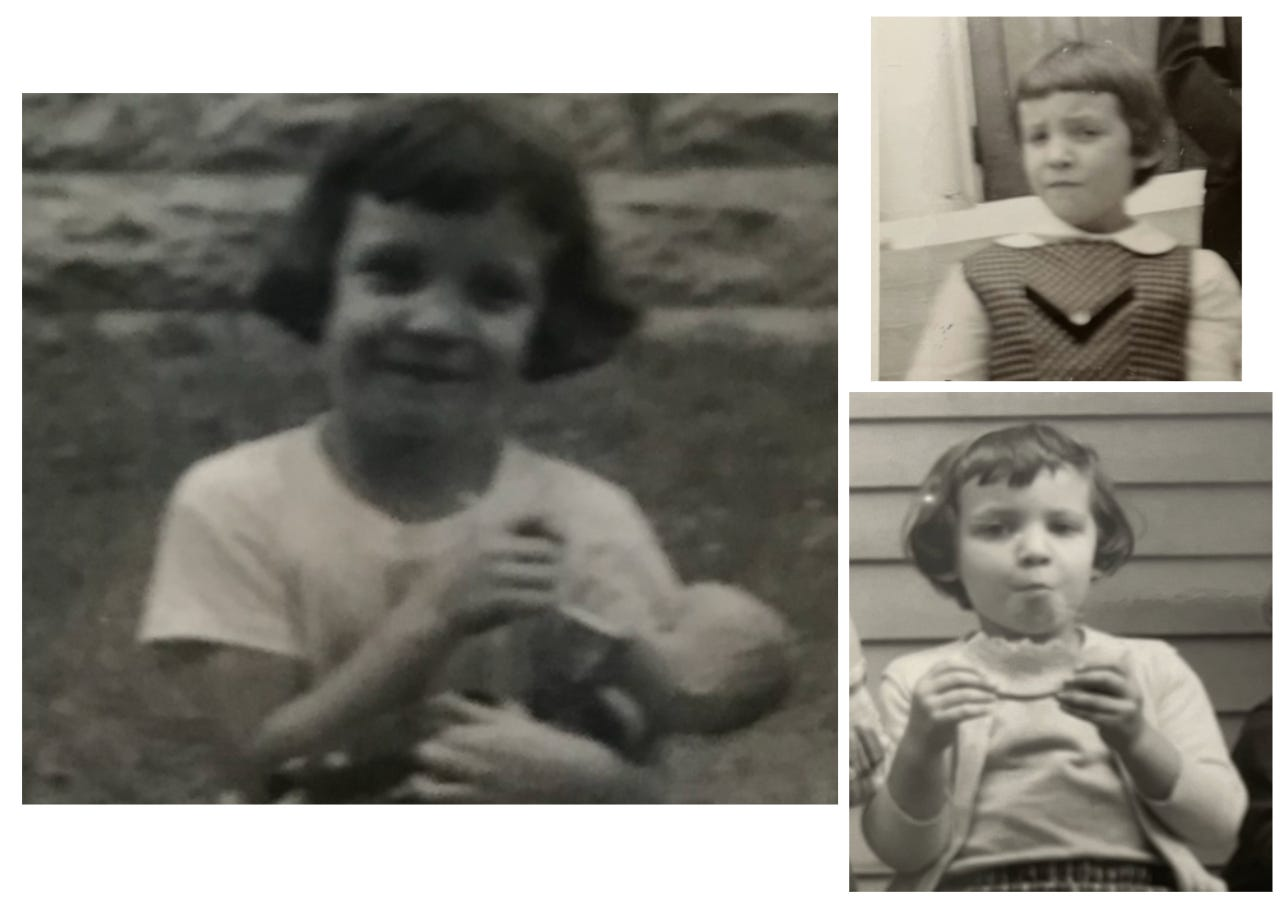
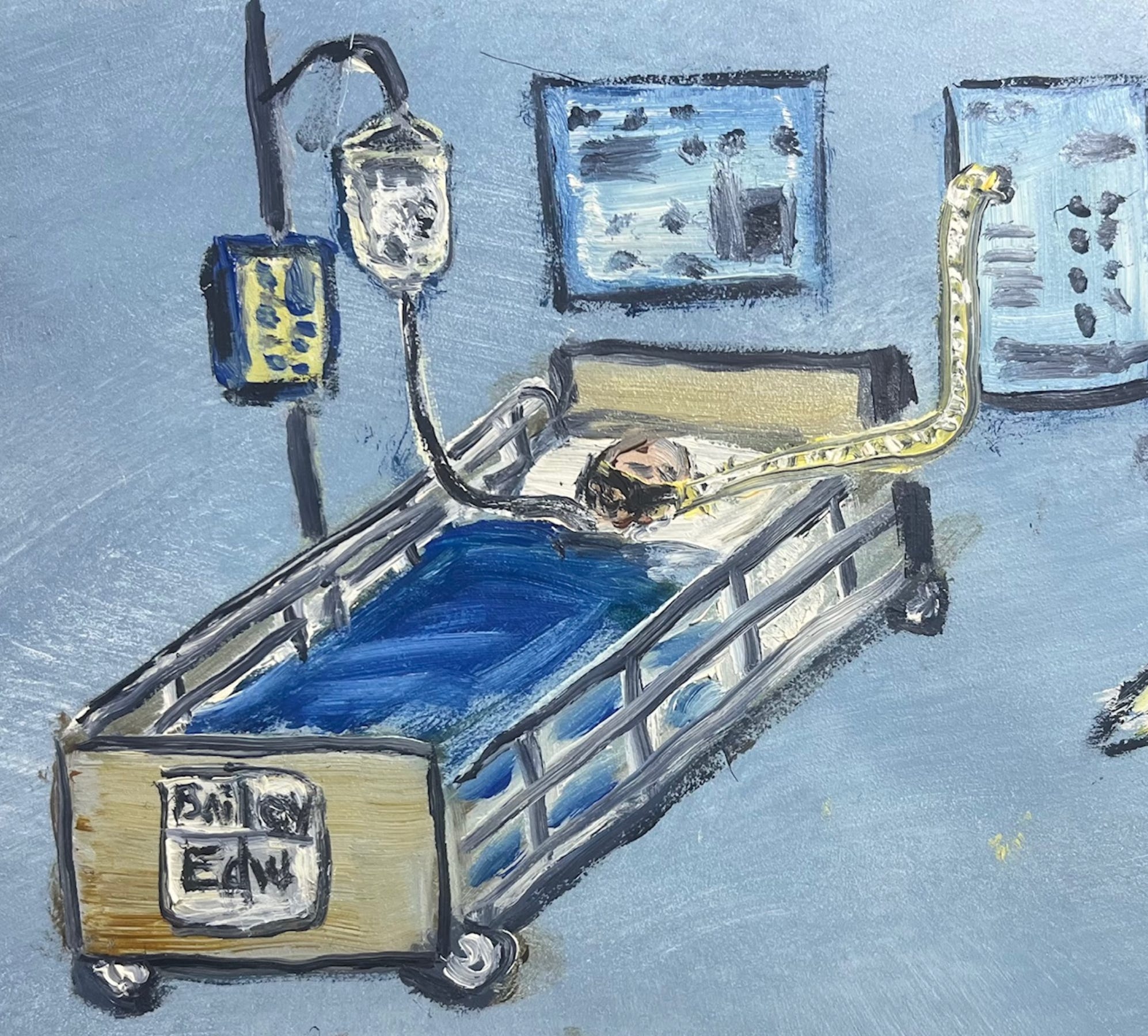
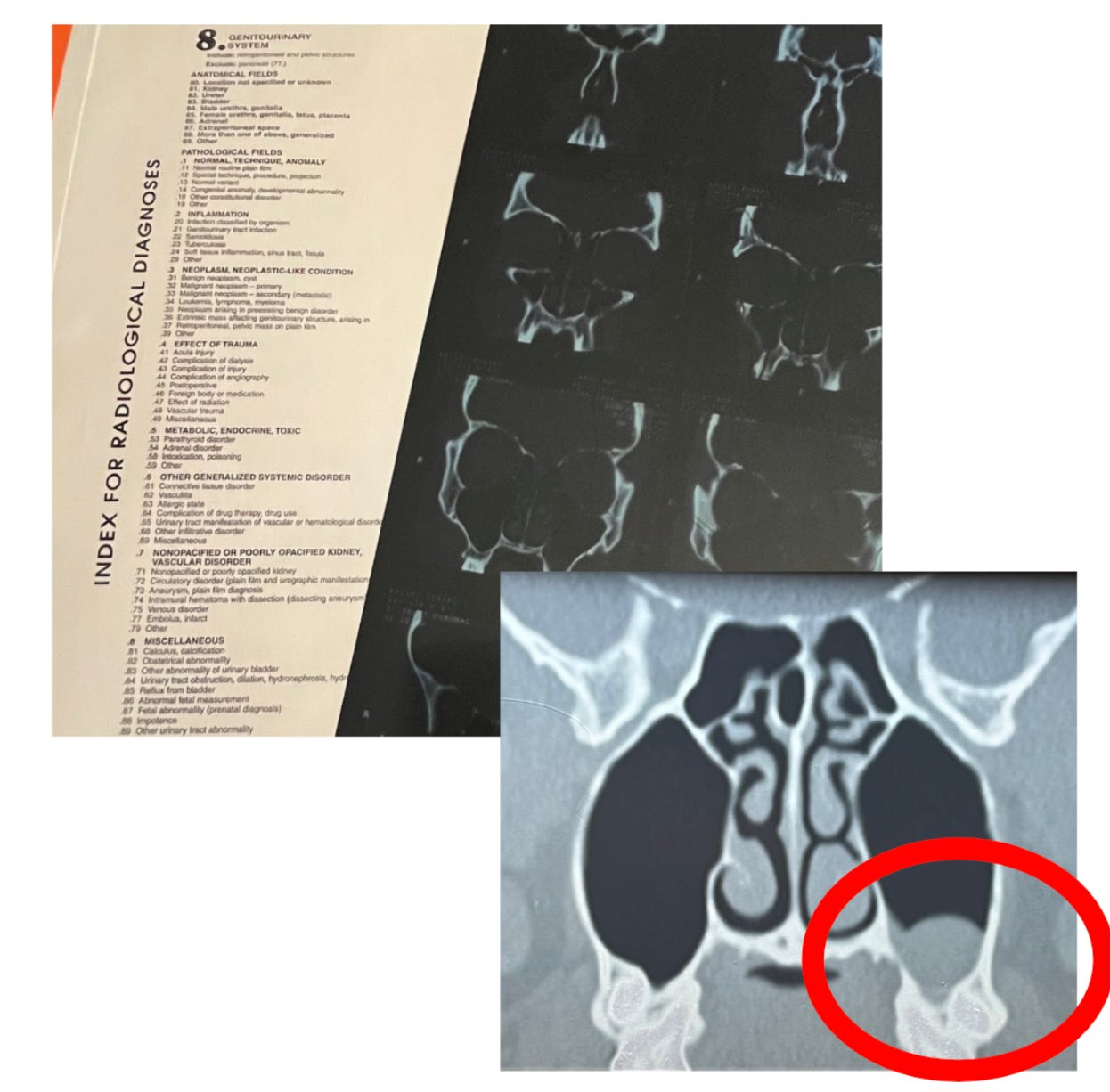
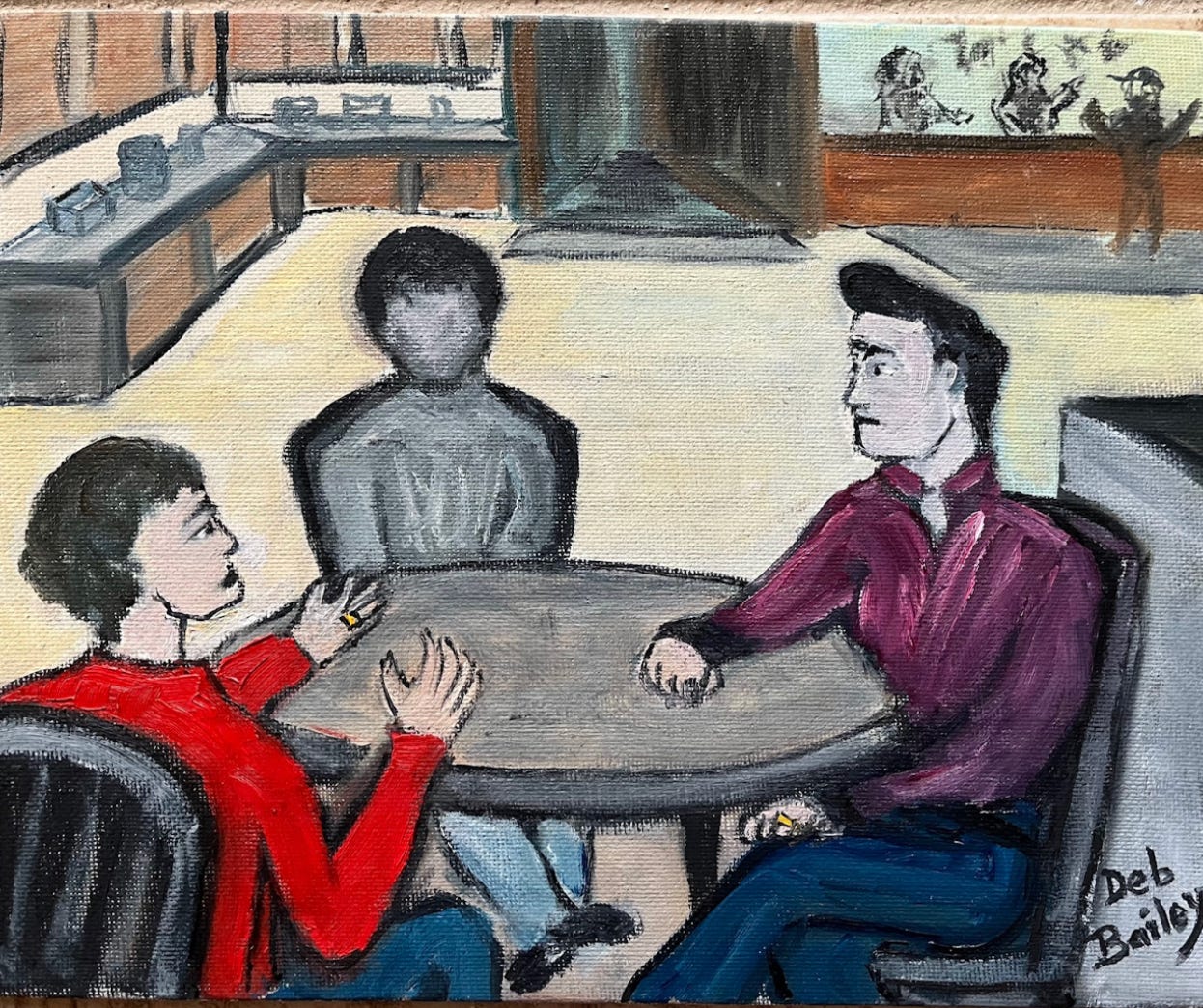
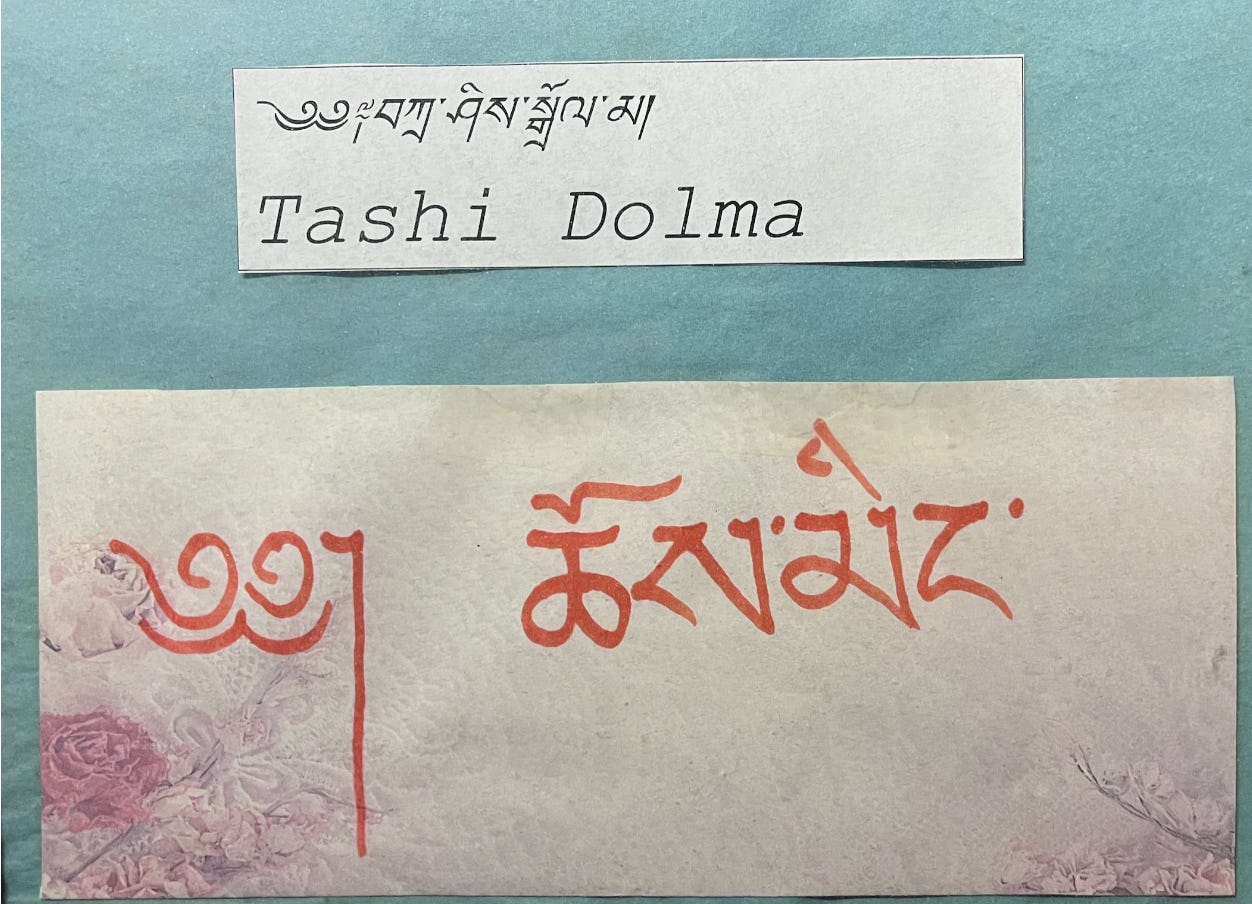
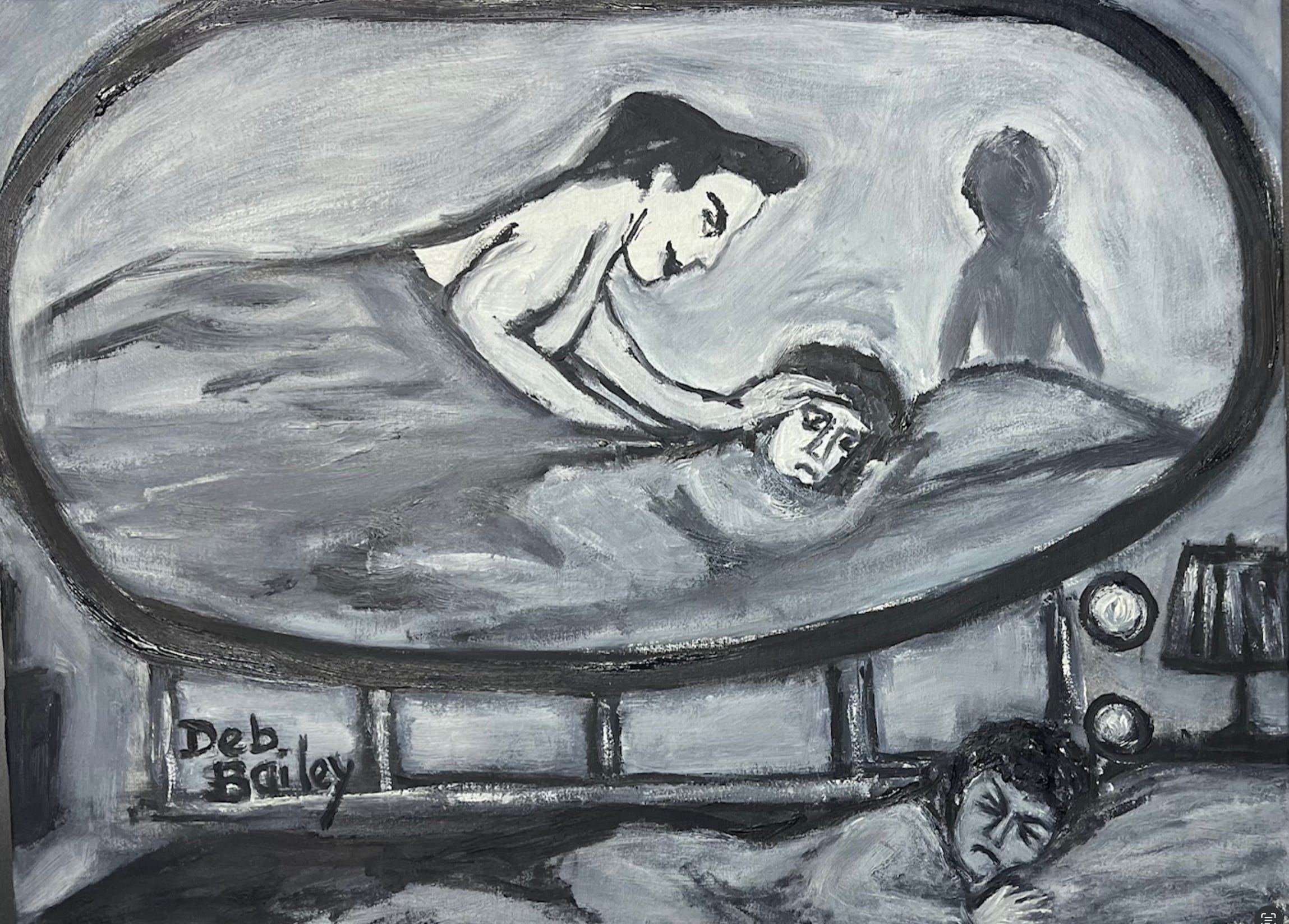
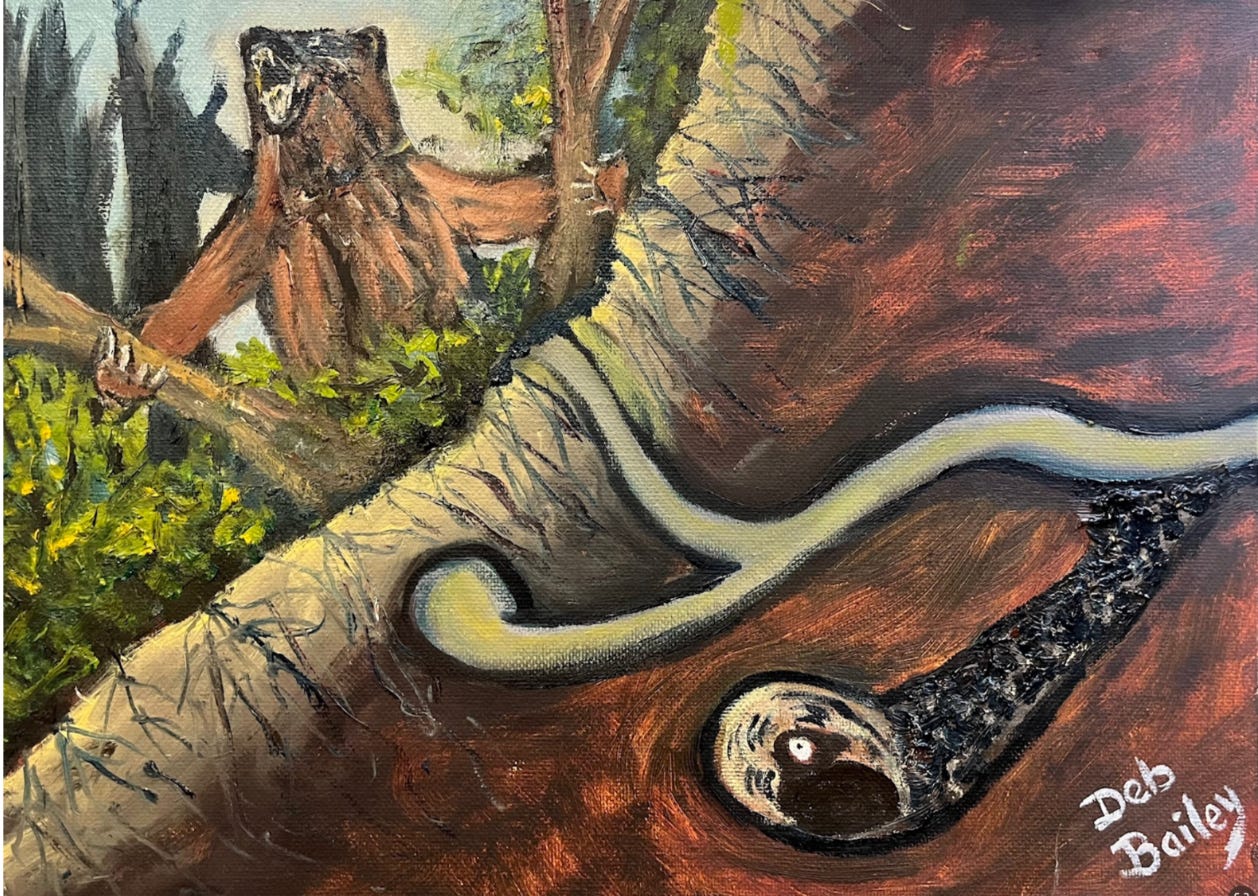
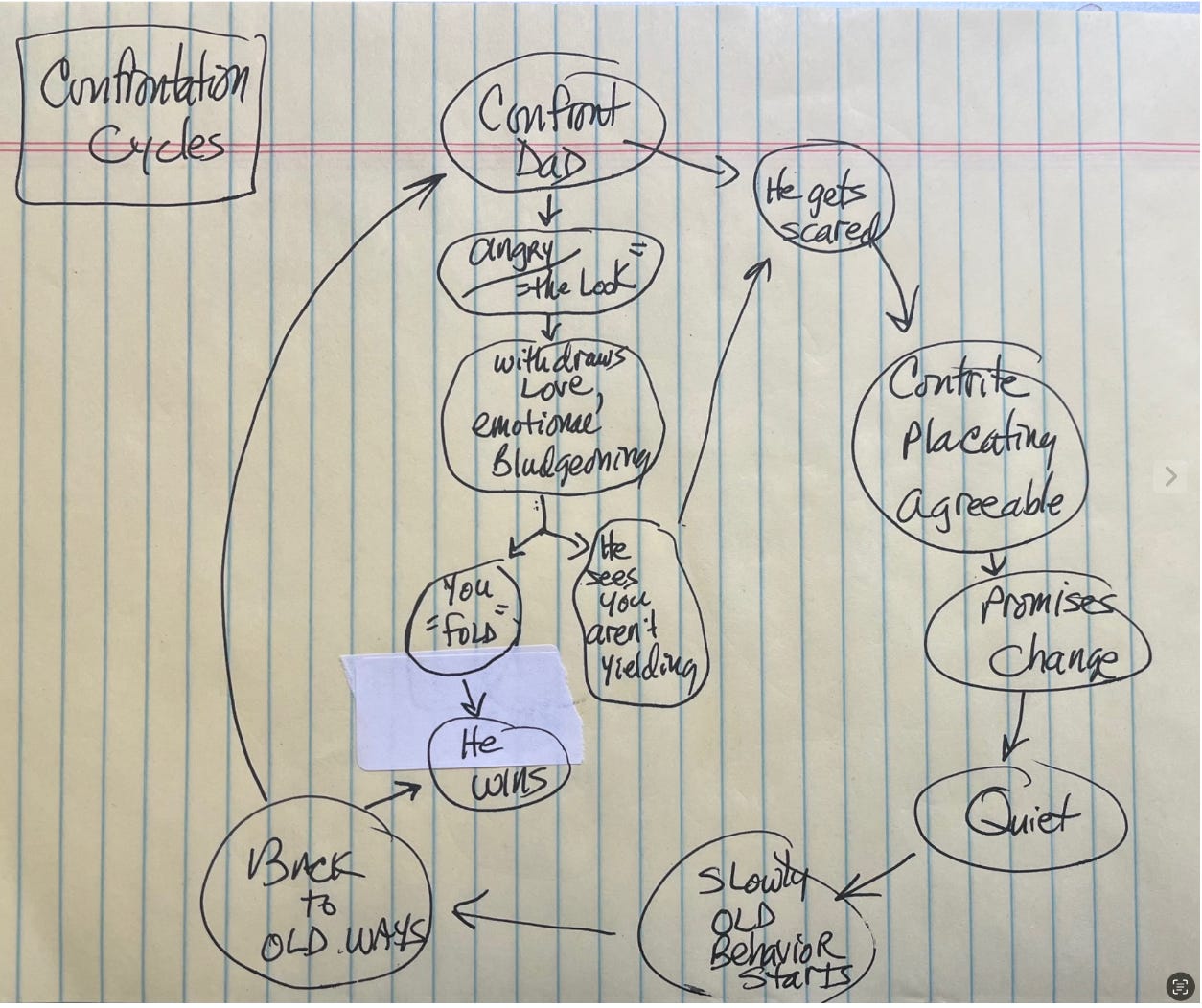
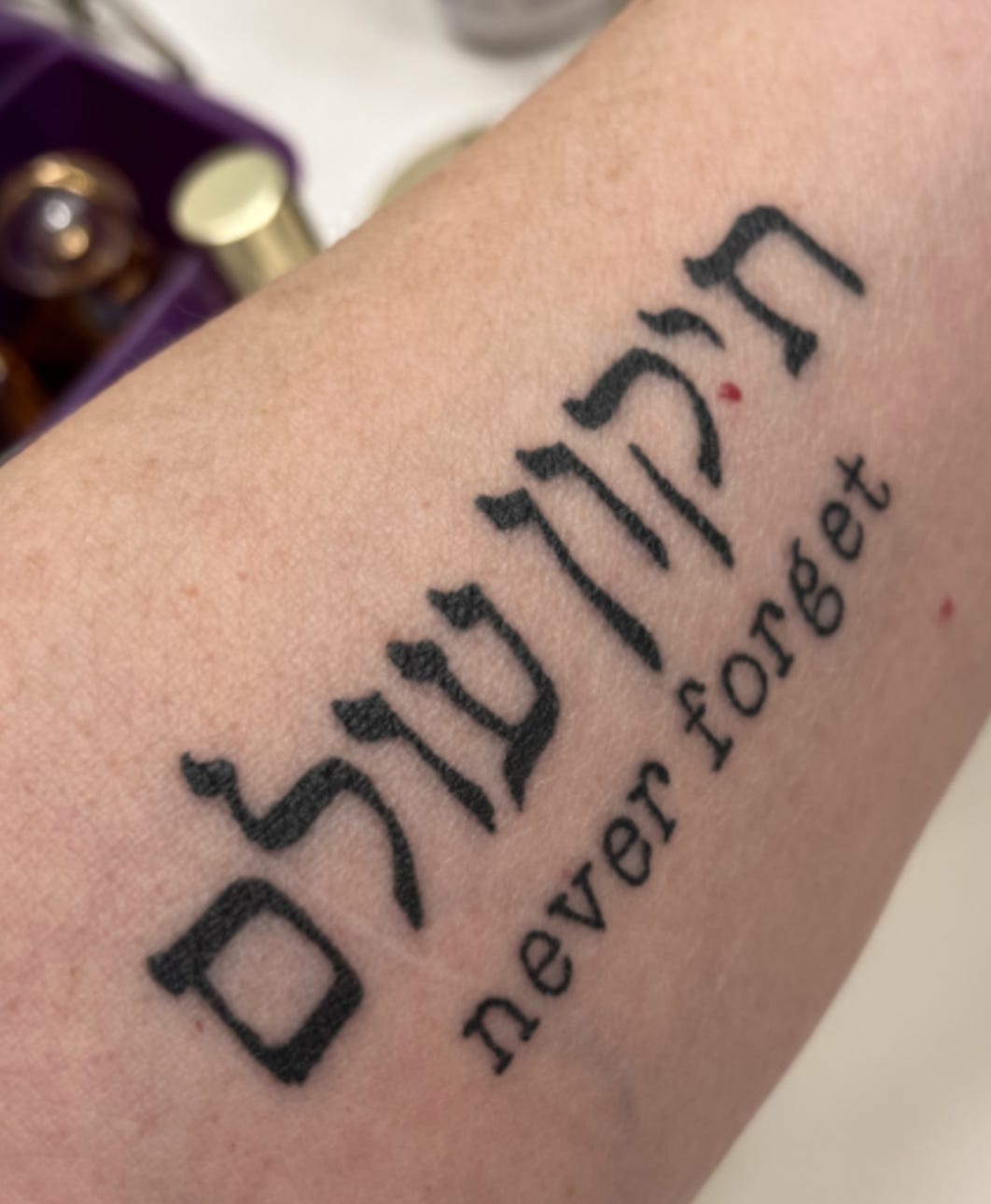
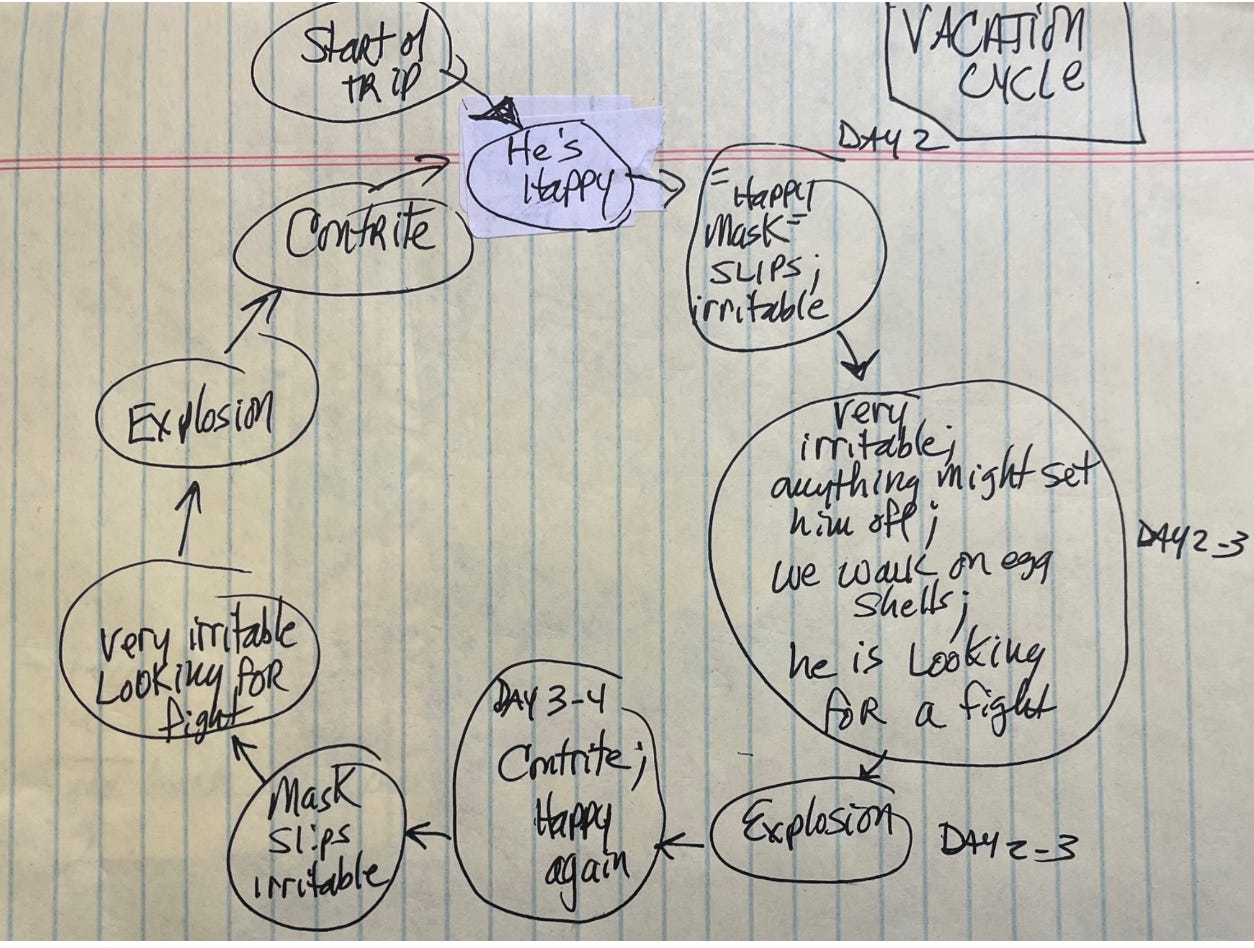
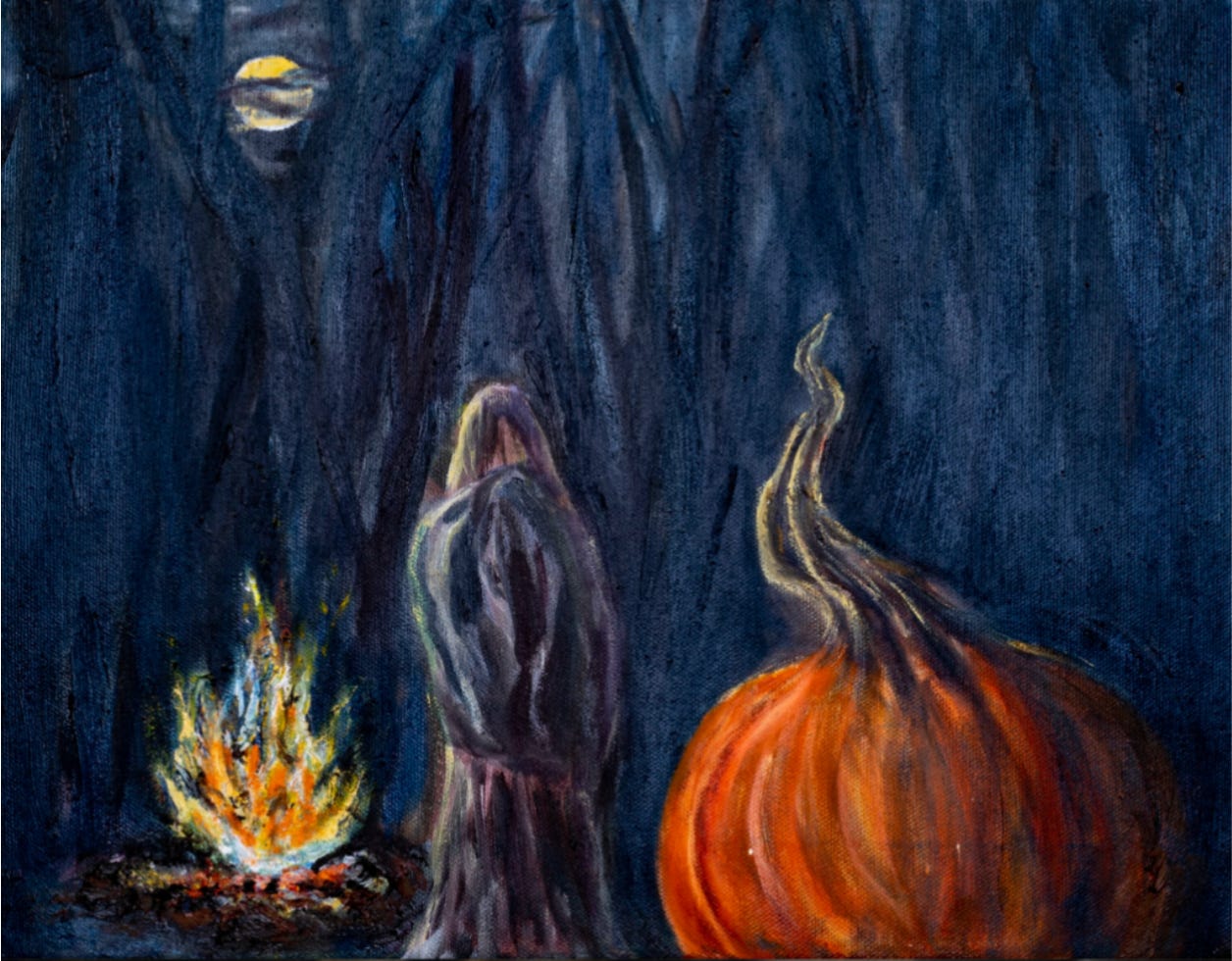
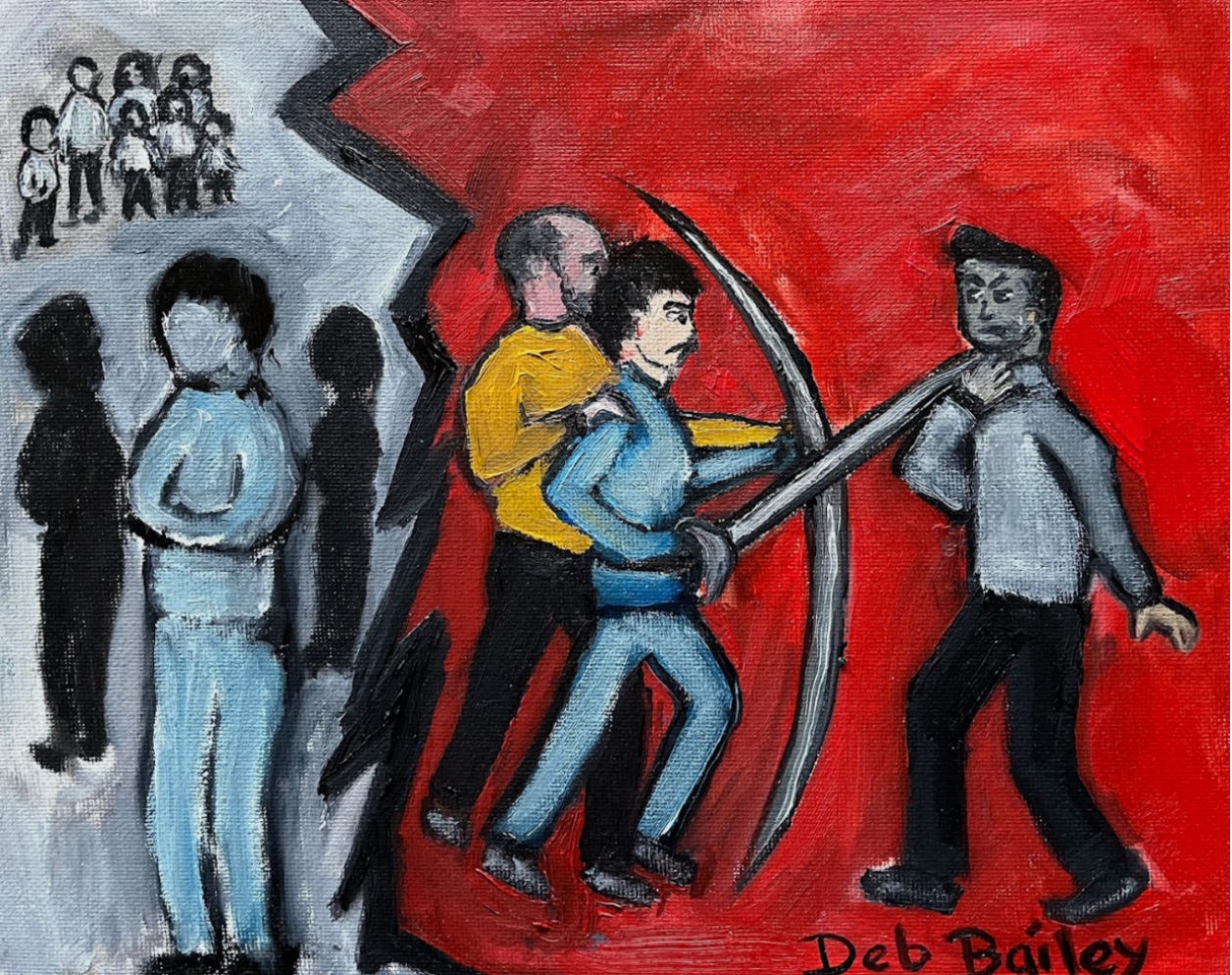
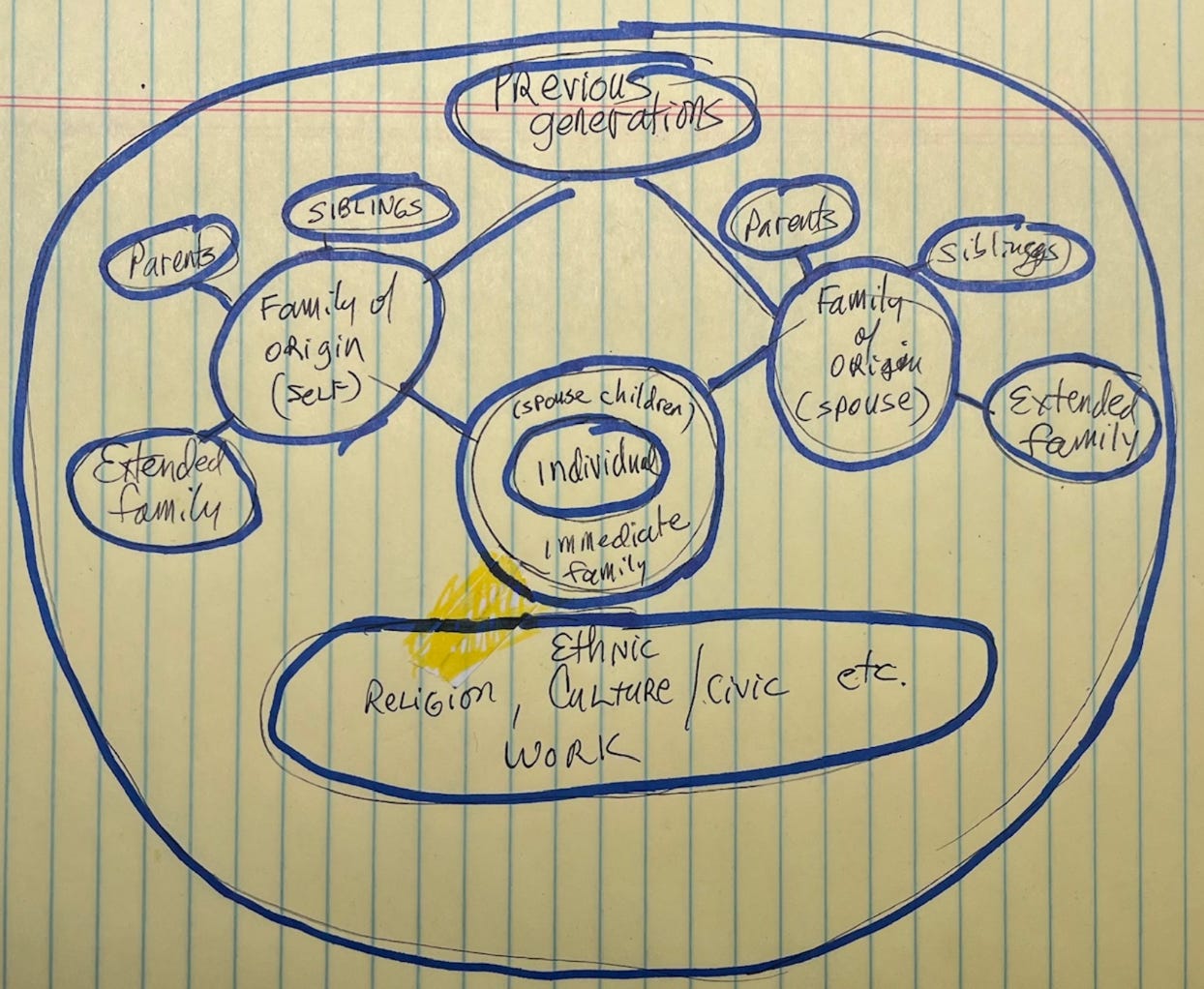
 Soul Mosaic