One of the things about writing deep and heavy things is that while I don’t shy from them, I do take time to savor the gift of the present moment. So today’s entry is a “Respite from that writing,” and a gift to my readers…
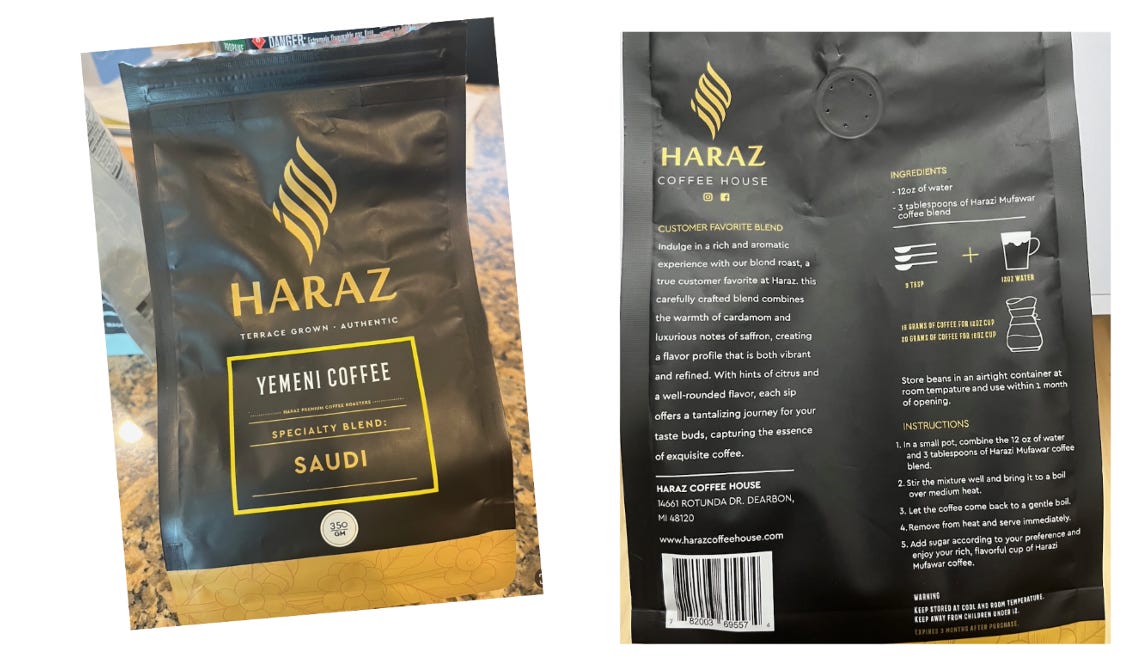
My neighbor stood at my front door, hands outstretched, holding a bag of treasure! Well, treasure to me, given my love of all things coffee. There is so much that excites me about it that goes beyond just getting a hit of caffeine.
First, it was just the joy of seeing my neighbor standing there. Second, it was the pleasant surprise of that bag of coffee she was gifting me. And third, it was her lovely comment that she wanted to give it “just to celebrate ‘me’.” How can you not love a gift like that?
She and I spend a lot of time exploring various coffee shops in the area, comparing, testing, savoring, and…sometimes settling for “meh.” But always it is the joy of the hunt, discovery, the flavors, and most of all, time shared with a wonderful friend. So, her impromptu gift just warmed my heart on so many levels.
Then, there is the fact that for me, I LOVE not only trying out different foods and things, but the entire experience around it. For me, no matter what it is — dinners, alcohols, teas, coffees, home-made ICE CREAMS!…it’s all about the “experience, ritual, and discovery.” For me, simple eating and drinking can be elevated to the level of the divine with a proper approach — sensory awareness with intellectual curiosity. I’m not a snob, and it’s not that I don’t equally enjoy hot dogs, a pizza, or a simple cup of tea. And I will say that even on those, I am acutely aware of sensations too. But I also yearn for the exotic experiences that allow me to travel the world without even leaving my kitchen.
For example, while I don’t drink much alcohol, when I do, I like to savor the experience. It’s about the processes used and the flavor profiles different processes create. Having a glass of wine is fine, but I also want to taste the differences between different wineries’ takes on, say, a Merlot or a Pinot Noir. I want to learn about the grapes, the soil chemistry, and what happens behind the scenes, not just in the winery, but in the bottle itself.
If it’s going to be scotch, whiskey, bourbon or beer, I don’t waste the experience on simple. Scotch blends are fine, but I love comparing those 14- and 18-year-old single malts from Speyside, including ones aged in bourbon then rum casks. I love digging to find out what their malting process was, or how the various Scotches compare to Irish or Tennessee Whiskeys. And why does a distillery use more rye than wheat in a particular bourbon? As far as beers, no IPAs, thank you, just stouts, especially Guinness or Young’s Double Chocolate Stout. And when I used to drink tea, it usually wasn’t bagged but loose leaf, black, and in particular, Darjeeling. And I won’t even get started on all the fun possibilities for exploring food types, cuisines, and preparation styles.
In case it’s not obvious by now, I don’t just eat or drink things, I immerse myself in sensory “extravaganzas.” So, of course, when I decided to switch to coffee, there were soooo many things I realized played into the experience.
There are answers to the simple questions
- What kind of experience do you want? Just “give me any coffee” or something more exotic?
- What kind of coffee roast level do you like? Light? Medium? Dark?
- Do you prefer already ground beans, or to grind your own, and if so – coarse? fine? in-between?
- What kind of coffee creation do you want? Regular brew? Latte? Mocha? Flavored? Espresso?
Then to complicate things — what KIND of coffee beans?
- Regular coffee brands or specialty beans that are either single-region or blends?
- Arabica or Robusta, or a blend?
- Colombian? Kenyan? Ethiopian? (my favorite)
Of course, no matter what bean you choose, how will you brew it? Are you into quick techniques or long, involved “rituals?”
- Coffee maker or instant pods?
- Old-style percolator
- French Press
- Pour over
And to all of these questions, there can be the “philosophical” question – WHY do you prefer one over the other? The questions for the experience can be endless!
For this piece, I will put aside most of these things as explorations for another day (along with wines and scotches). And in another piece, I will explore the different coffee beans in more detail.
Today I will focus on just one thing — WHY is eating or drinking ANYTHING so full of delightful sensory experiences? And I’ll use the coffee in the “treasure bag” my neighbor brought me, as an example.
It was a bag of Yemeni coffee, prepared in a “Saudi or Arabic” style. I’ll spend more time on the details of Yemeni coffee in another piece. But the reason for this particular gift was that we had discovered a Yemeni coffee shop a couple of weeks ago and visited it early one morning.
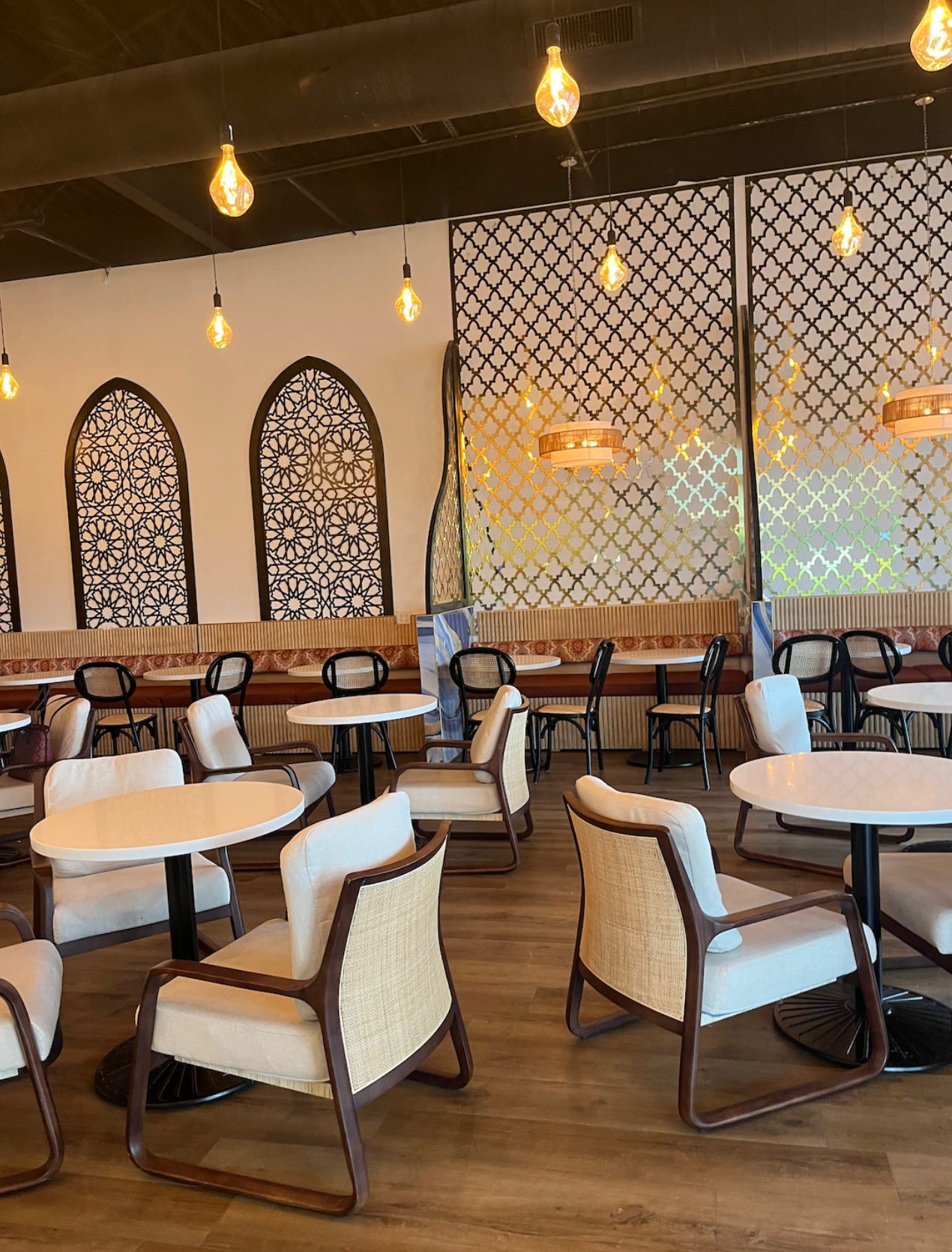
Talk about savoring a sensory experience. The little shop itself was beautiful, and even though it was quiet as it was early, the serenity of the place for me also came from the decor. The acoustics were great, so it wasn’t loud even with a few other people talking nearby. And between the beautiful wood all around and the soft and decadent chairs, the environment felt rich and peaceful..
There was a cabinet of MANY freshly made pastries, including these amazing milk cakes – moist, and available with different flavored toppings that were not overly sweet. The coffee options were wide-ranging. You could have regular coffee brews and the usual assortment of lattes, mochas, espressos, and other drinks.
But you could also get a traditional Yemeni and Turkish brews. I chose the traditional coffee selection called Harazi Mufawar, which used Yemeni coffee beans, cardamom spice, cream, and sweetener if you wanted, though since they used condensed milk, it was fine without it. It took a few minutes to prepare, but it was worth the wait.
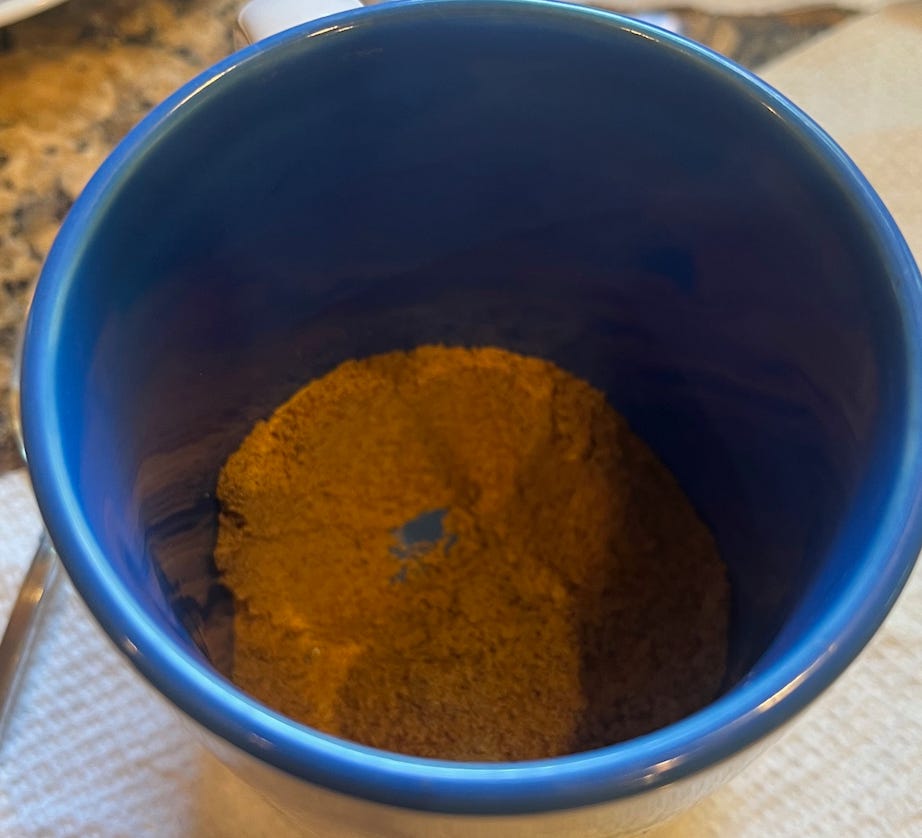
When our cups arrived, they were steaming hot, so we let it cool a bit. That also gave time for the very fine coffee grounds mixed in the cream to sink to the bottom. The coffee is made by grinding the beans into a very fine powder. This is then mixed in water and boiled, cooled for a moment, then boiled again more than once. Each successive boil allows for more of the coffee bean and cardamom flavors to deepen and intensify.
When I finally brought the cup to my lips and sipped, I could feel my brain circuits flooding with sensory reactions. First, there was the spicy aroma. Anyone who knows about the science of scent knows that it is the most powerful of sensory experiences. The olfactory receptors in your nose have over 1000 different types of receptor genes, allowing us to differentiate approximately 1 trillion different molecules. With the sensitivity of those receptors, a huge amount of chemical information is collected and then channeled into the olfactory bulb. This structure is right below the brain and plugs directly into the emotion center of the brain — the amygdala — as well as into centers for smell identification, memory and learning, and physiology — the olfactory/piriform cortex, the hippocampus, and the hypothalamus
https://magazine.hms.harvard.edu/articles/connections-between-smell-memory-and-health
I sat there for a few moments just taking in the scent, and noting my body’s emotional and physiological reactions — joy, and a rapidly spreading sense of calm.
Next I sipped. I could simply say that the experience was perfect, but I’ll elaborate. First, the tactile sensations were rich and creamy, coating the palate in a slippery, thickened, warm liquid. Next, the taste buds kicked in, each type, as they awakened to the liquid flowing over them. It was a perfectly balanced mixture of sweet and spicy, coupled with the soothing sensation of warm comfort.
I can stop here, but for anyone who is geeky and wants to know more of what happens behind the scenes. I’ll go on.
The short version is that a rapid set of brain chemical and electrical reactions, nerve connections and transmissions, hormonal inputs, and analytical processing takes place, combining taste data with scent data to yield the “experience.” The experience is a mixture of chemical identifications in the food or drink; memory searches for previous experiences or memory filing of new ones; emotional reactions, such as joy or disappointment; and physiological reactions in your body, such as calm, comfort, stress, or tension, which I think is the basis for our understanding of something like “comfort food,” for example.
- Sweet: which are detected by receptors, including GPCRs that bind to sugars.
- Salty: Here, ion channels allow sodium ions to enter the cell, and hence detect salt.
- Sour: acids cause this, and there are specific ion channels sensitive to acids, most likely, the hydrogen ions they give off.
- Bitter: This is also detected by GPCRs that respond to various bitter compounds, probably a protective mechanism against toxins.
- Umami: This is a savory taste detected by GPCRs that are activated by amino acids, such as glutamate.
But wait, if you care, there’s more! Taste buds have approximately 50 different kinds of taste receptors. As the food is chewed and various chemicals are released, the taste buds bind to the different chemicals, and different receptors respond.
There are five basic taste sensations:
(Note: GPCR: For sweet, bitter, and umami tastes, the receptors are G protein-coupled receptors (GPCRs), while ion channels directly detect salty and sour tastes; GCPRs are protein molecules that when bound to various chemicals will change shape and cause a cellular reaction that sends messages to the brain)
Once the food molecules have hit those taste cell receptors, an electrical change takes place in the cell that then triggers chemicals — neurotransmitters to send signals to the brain. There, the brain takes that data and combines it with the information from scent, and sends all of it to the brainstem and cerebral cortex to interpret. So when savoring anything, from the simple hot dog to the oldest scotch, there is a LOT happening in the brain and body, VERY fast.
In the case of my coffee, my brain was flooding with reactions from all my senses – tactile, aromatic, and taste, not to mention my emotions — joy and contentment — and also my body’s physiological response – calmness. It took a moment for me to absorb, identify, and relate to each one individually, and not just be overwhelmed and say, “It’s good!”
But, before I finish, one last question: Which taste sensation receptor listed above detects spice?
After all, this coffee had an abundance of delightful cardamom and ginger, and some blends also include saffron, nutmeg, or cloves. For sure, there was a strong but perfect level of complex spice flavors, OVER AND ABOVE, the variety of flavors from the coffee itself (which I’ll write about another time).
The answer? None of them. Huh? So HOW do we detect SPICY flavors????
Spiciness is detected by a different system than that for taste – it is detected by the trigeminal nerve in the face. This nerve senses touch, temperature, and pain (which is why we perceive it as heat). In other words, spiciness is actually considered a form of pain, and there are people who may have nerve pain triggered if their foods are too spicy.
As an aside, the nerves used by the taste buds above to send the 5 different flavor signals to the brain are the facial nerve, the glossopharyngeal nerve, and the vagus nerve. FWIW.
But there is a bit more to identifying any particular spice than just the trigeminal nerve’s messages. For example, in the case of the spice, cardamom, its complex flavor is picked up through a combination of taste receptors, olfactory receptors, and those thermosensory ion channels — that trigeminal nerve detection of temperature and pain. Because cardamom is not a single ingredient but a mixture of MANY chemical compounds, there is no one “cardamom receptor.” It’s that variety of receptors that each detect different compounds in the spice, and that the brain then puts together to identify that particular spice.
So that’s the answer to the trick “flavor” of spicy.
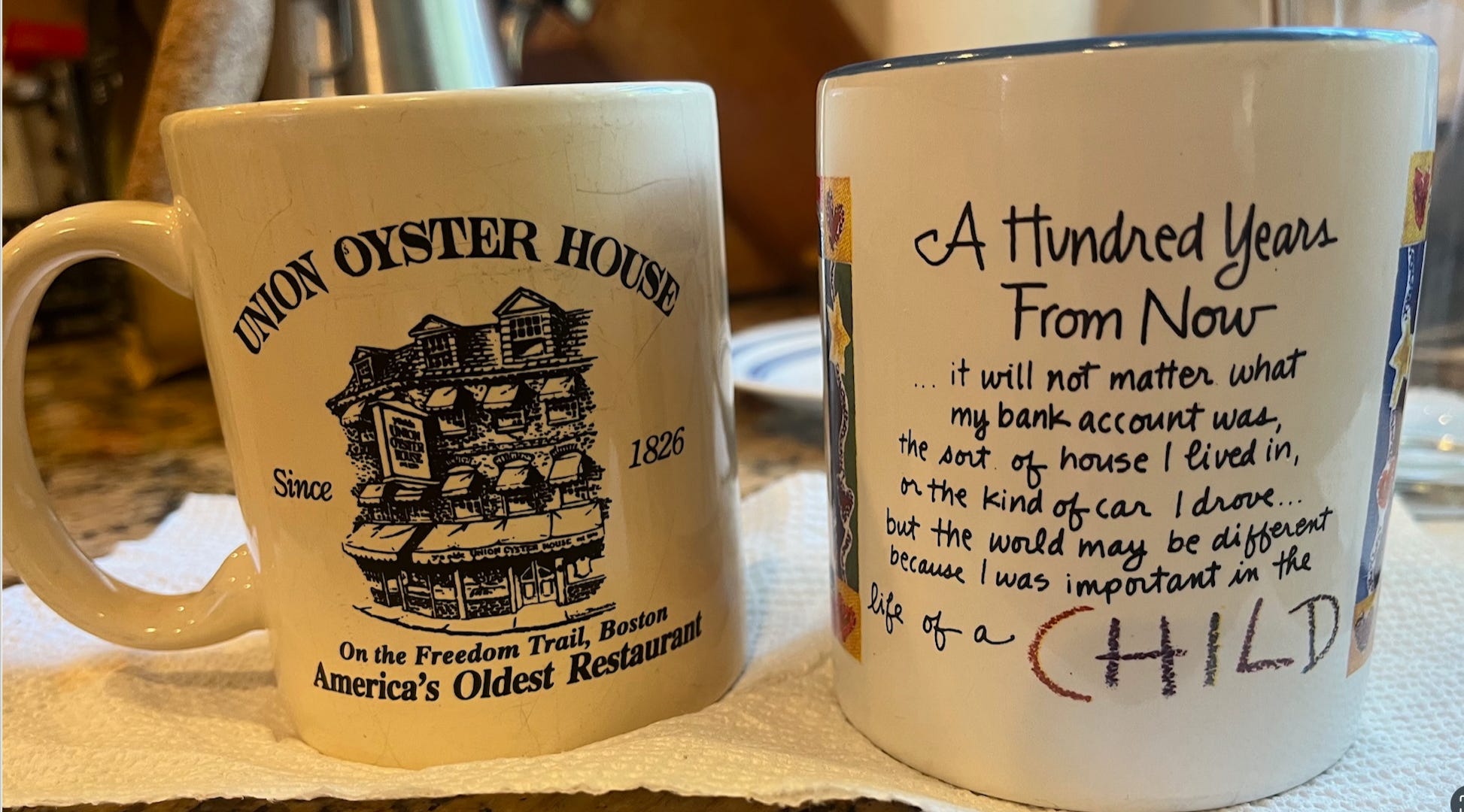
Now, before I bow out, my cup of Yemeni/Saudi coffee. As part of the experience, I am also particular about my coffee mugs. While my regular morning coffees go into a Hydroflask so I can sip them all morning and not have them get cold, for this coffee, I use a mug. And I have just mugs that have meaning — from special places, or gifts from friends. Today’s choice came down to these two — a mug from the Union Oyster House in Boston, a special place for my husband and I, and a mug given as a gift by a good friend who was honoring my passion for teaching kids at the museum I worked in. Since I just used the Union Oyster House one yesterday, I will choose the one about children and think of her.
Here is how powdery the coffee is ground. It almost looks like cocoa powder.
And then, after 3 rounds of boiling and cooling, then cream:
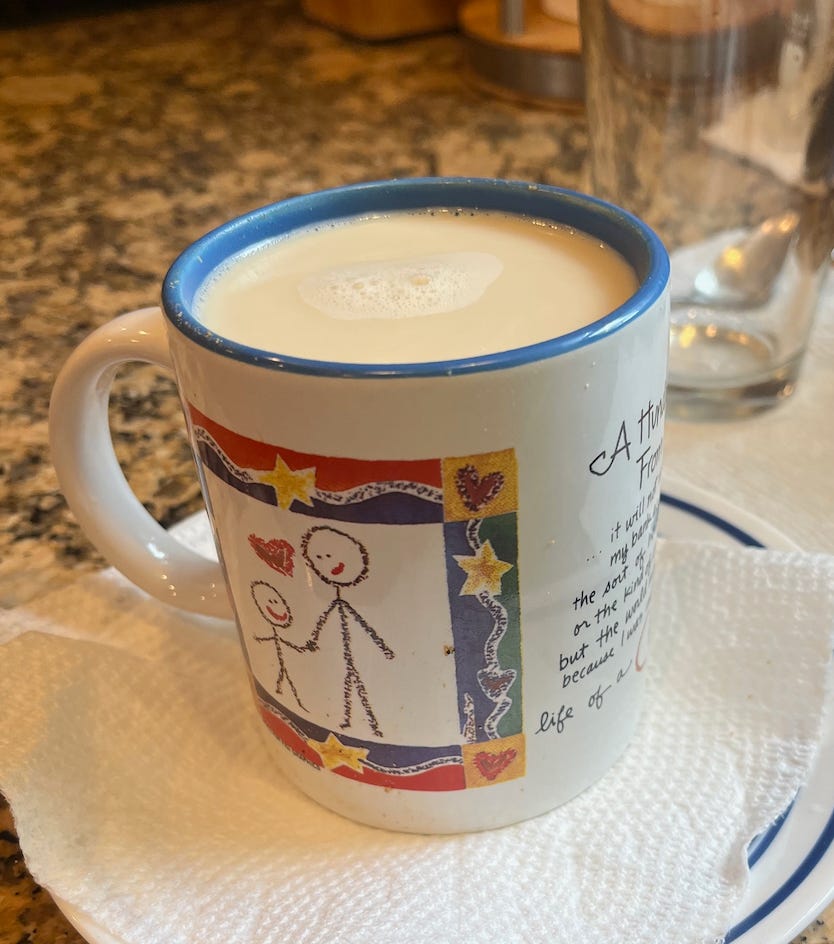
The flavor? Pad Thai peanut sauce! That’s my immediate and first sensation. Quickly followed by chocolate and a touch of pepper! Its taste profile is just slightly different from the coffee shop version, not in a bad way, but because this has the additional flavors of saffron, and I believe cloves. Also, I used heavy whipping cream versus condensed milk, which, again, is just fine, just a little thinner consistency.
So, now, I sit here sipping this gift. As I sort out all the threads of flavors and feelings, I also feel gratitude for the many special people in my life, including those who gifted me the coffee and the mug. I am totally happy in my life.
I’d call that sensory perfection for a Sunday afternoon!
 Soul Mosaic
Leave a comment