Since my bedroom was right off the kitchen, I got to listen to the recitation of the daily “morning litanies” between my parents.
“Do you have your badge?”
“Yes.”
“Do you have your keys?”
“Yes.”
“Wallet?”
“Yes.”
“Handkerchief?”
“Yes.”
All that was missing from their conversation to make it like the church litanies were a few Amens or Ora pro nobises.
It was the same mind-numbing set of questions every morning, done just before he walked out the door. And woe to her if he got to work and was missing one of these things because she didn’t ask.
On more than one occasion, apparently, he had forgotten his badge. This meant that he had to stand at the guard gate at Pratt & Whitney’s entrance until someone, most likely his hard-assed boss, came and verified he belonged there. Since they did government and military research at the plant in those days, security was not taken lightly. I expect he probably got chewed out, or at least mocked, for forgetting his badge. And since I think it happened a few times, it was probably becoming an actual problem, not just an embarrassment. So somehow, it became my mother’s job every single morning to run down the list before he left the house.
But even before this “festive routine” took place, there was the “battle of the breakfast” litany.
“What would you like for breakfast?”
“I don’t know!”
“Would you like eggs?”
“NO! Yes!”
“How do you want them?”
“I don’t know!”
“I can scramble them. Would you like that?”
“I don’t know! NO!”
“Over easy?” Boiled?”
“Just scramble them!”
“Do you want toast?”
“NO, I don’t want any toast.”
Each of his answers was delivered with an increasing level of anger and meanness. You’d think she was asking if he wanted a pile of dung on his plate.
Why she got up to make him breakfast is beyond me. Years later, I told him one day that I never would have bothered because, based on how he treated her, he didn’t deserve it. But I could say that years later because I was in my 20s, and it was one of those rare days he was in a good mood, pretending to be easy-going.
So he would laugh and agree and shake his head at the idea he could have been so miserable. And he knew he’d been miserable, because one morning he finally just told her not to get up to make him breakfast anymore, because it was better not to be around him in the morning. So even he knew he was out of line.
However, there was one that morning where the “leaving for work litany” actually ended on a protective note, and THAT caught my attention. Especially the reason, which scared me to death.
She apparently had been talking with him about her fears when going out of our apartment and down to the cellar. Since our food freezer and potato bin were down there, it was very common for her or one of us to go down to get things for dinner. And as I mentioned, all of us, right down to the dog we would eventually get, hated the cellar.
But on this particular morning, we didn’t have the dog yet. And while I didn’t hear her whole question, I heard every word of his answer. It rings in my ears to this day:
“If you hear a noise down in the basement, then don’t go down there! You might not come back up!”
As I said, this was “mean-morning-Dad” time, yet here he was showing concern and protectiveness for her. That whole very different interaction woke me right up. The implication of the words, “You might not come back up,” terrified me that something in that cellar could kill my mother.
Even though I was only 6 or 7 at the time, I understood the significance of what was going on: 1) there was a big danger out there to “Mommy,” 2) she could die, and 3) Daddy cared because he stopped being mean and was protecting her.
I also understood “threat from strangers.” Given that I walked alone to school every morning, and later would shepherd my younger siblings and school friends, I’d already been heavily instructed to avoid “strangers trying to give candy or offer car rides.”
So, I was well aware that there were bad people “out there.” And I even knew that lately there had been someone called “the Green Man,” attacking women. The world could be interesting, but I understood, even then, it also held threats. And Dad was our protector. Whatever he was like to us at home, he must have loved us because he was always making sure we were safe from things “out there.”
Years later, I looked up the Green Man and yes, he had a name — Albert DeSalvo — also known as the Measuring Man, and the Boston Strangler. As the Measuring Man, he posed as an agent looking for models and gained entrance into homes before assaulting the women. After a prison stint for that, he then continued assaulting women, over 300 of them between Connecticut, Massachusetts, and other New England states, as a service man who wore green work pants, the reason for the name, the Green Man. Regarding his being the Boston Strangler, while there is controversy over whether he raped and killed all 13 of the Strangler’s victims, he was proven guilty in one of the murders.
So throughout my childhood, I began to pay close attention to other murders, gathering an intense awareness of just how scary “out there” could be. There was Kitty Genovese in 1964, attacked and murdered in New York City one night on her way home from work. While she screamed for help, bystanders did nothing, and by the time someone called for help, she was dead. So right off the bat, I learned that no one “out there” would help you.
The next year, I read about the 1965 murders of two children in Queens, NY, that have never been solved. Five-year-old Edmund and his sister, four-year-old Alice, were asleep in their beds. The next morning, they were gone, and eventually Edmund’s body was found along the Van Wyck Expressway. I followed the newspaper articles, intensely scouring them for details of those killings. Here were two children younger than me, in their own beds, and they still ended up dead.
For whatever reason, nobody noticed I read the newspapers regularly after that. Maybe they thought it was great that I was reading the news at 9 or 10. But I was focused on specific types of news – murders of women and children. I needed to know what happened, why, and how to take care of myself.
The summer and fall of 1966 had several national murders in the papers. Richard Speck murdered 8 student nurses in their Chicago dorm. Charles Whitman, a former Marine, killed his mother and wife, then shot 46 people with a high-powered rifle from the University of Texas bell tower. And then there was Valerie Percy, daughter of US Senator Charles Percy, in Chicago, who was murdered in her bed at home by an intruder. So I learned that big cities were dangerous, horrible murders were a regular occurrence, you could die just walking down the street, and that being older, rich, or powerful offered no protection.
Then it moved close to home. A couple of summers later, several girls scattered around the state, who were about my age, were abducted and bludgeoned to death. A serial killer was suspected but never apprehended. A girl my age was abducted from the pizza place up the street from where I lived, and later found stabbed to death. And a few years later, the body of a local woman who had been sexually assaulted and killed was found on the grounds of the local University of Connecticut campus, not far from where I parked my car every day.
So even at a young age, I understood that life “out there” offered no guarantees of a better life. It was obvious that young women, whether living at home or out on their own, who were just trying to create a life for themselves, courted danger at every step. Even just watching the fights in the house across the street from us reminded me of this.
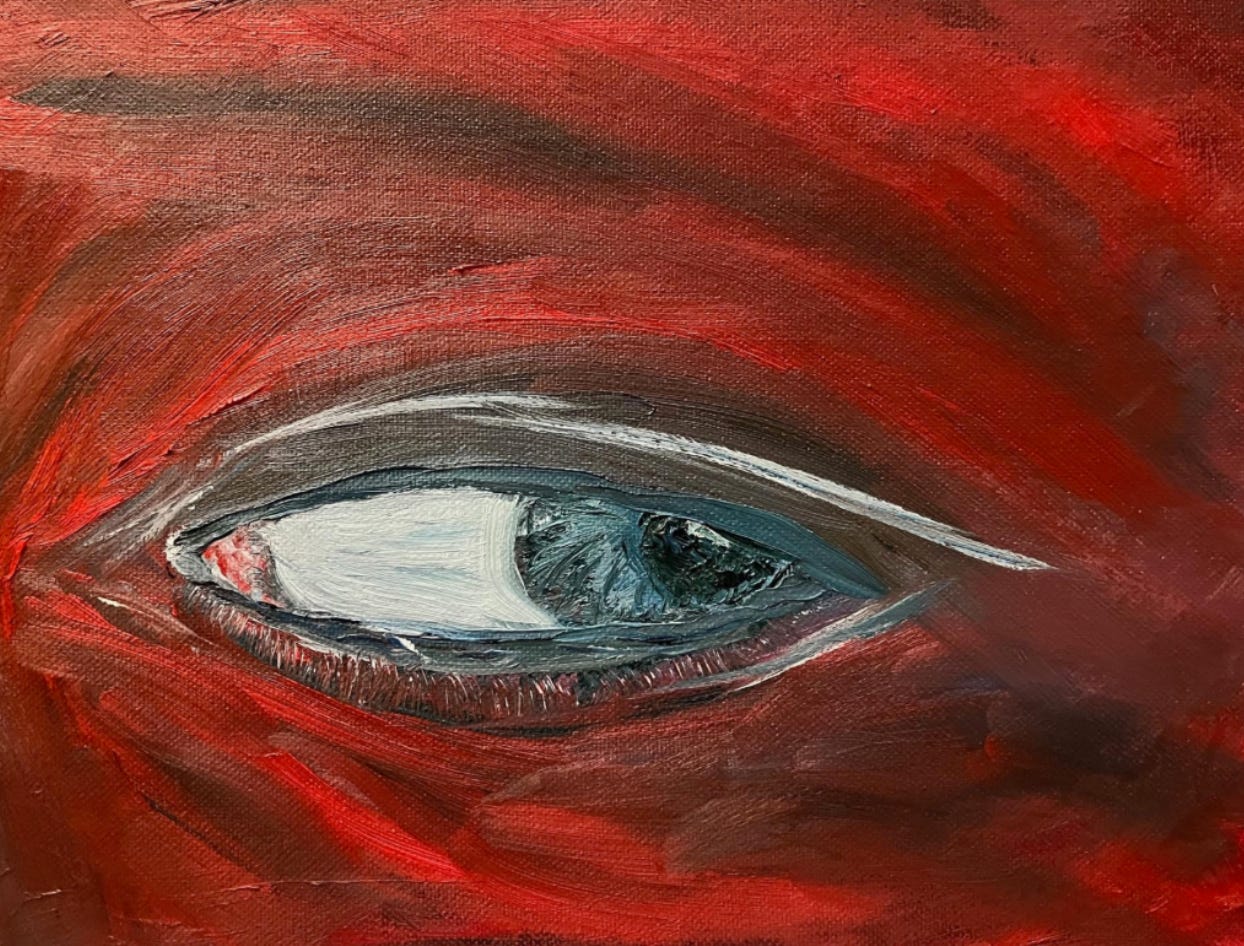
What I learned early was that you always had to be watching…danger could come from anywhere. And you couldn’t trust anyone “out there” to help you. Even though home had its “unsafe” times, and I was always being “watched” by him for his opportunities, to my young mind, home was still safer than out there because Dad would protect us from it.
One time during college, when driving back to school, I got stuck in a town an hour away from my home. I was at risk. My father drove halfway across the state from his job to come get me. And he was always teaching us how to be “aware” and safe in the world. So why would I question the house rules that said, “We were lucky we had Richie?”
The fact was, life out there seemed to keep reinforcing that in your own home, you get some bad, but if you also get some good, then what are you complaining about? Just be grateful for the good and go with that. As to the bad, tough it out, keep moving, and follow the house rules.
So, about those house rules….
 Soul Mosaic
Leave a comment