In spite of the very insular and controlled nature of our home, there was a wider circle of people in my life that offered some level of, if not support, at least distraction and moments of respite.
For one, there was our extended family in the form of grandparents and cousins, as well as school, church, and some family friends. I’ll speak about school, church, and friends in a bit.
In terms of family, I mentioned having grandparents who lived in Bridgeport and later in Stratford. Those were my father’s parents, and that whole family is a good example of the effects of intergenerational trauma. In a sentence, so much pain and dysfunction.
In fact, being there actually made our house seem normal by comparison. Years later, when I was in my last year of college, I lived with those grandparents for 12 months. I was doing my hospital internship for my medical laboratory degree, and the only way I could afford to do that so I could finish college was to live with them. I was there Sunday nights through Fridays for most of that time. You would think it would be a welcome break to be away from Dad this way. And in terms of being able to avoid him, it was. But these were the people who created my father, and frankly, by the end of the week, I was actually ready to go home. One time, I even drove home in a snowstorm just to get out of there.
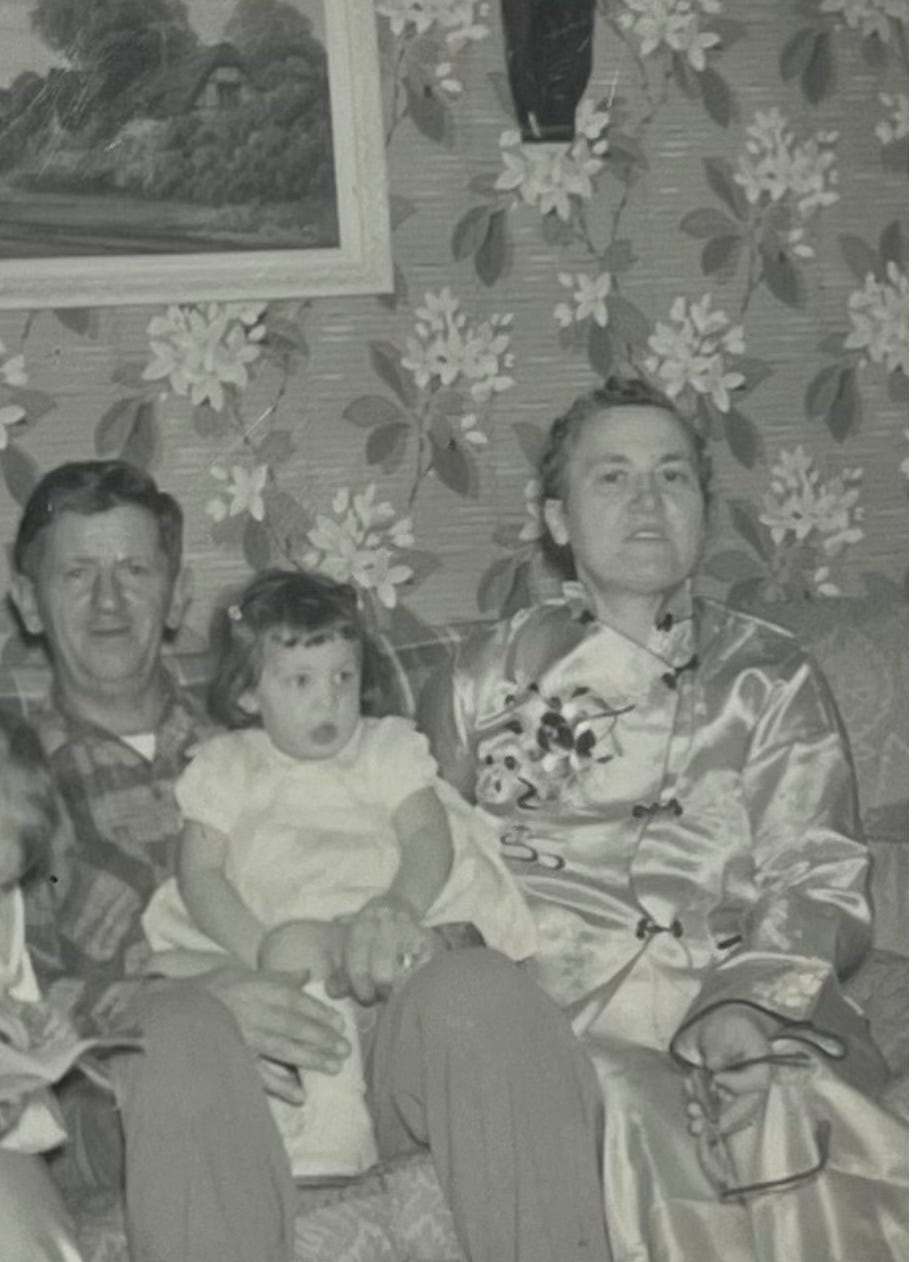
Dad’s father was an alcoholic for a good part of his adult life. As a kid, my father had to drag him out of drunken fights at the local Sokol’s club. And even when we were kids, my grandfather was still drinking. He was usually drunk on all holidays by lunchtime. Only years later did he stop cold turkey and instead focus on cleaning the house. My grandmother said she threw crumbs on the floor to keep him busy. But his health was damaged from years of alcohol abuse, and he would eventually die of those effects.
Dad’s mother was the source of his abuse. She inflicted much pain on him, and I sense sexual boundaries were crossed in some fashion. She herself had a whole history – an absent mother who was apparently ill and in some facility, and an alcoholic father. She was shuffled amongst relatives at times, and I think she was sexually abused by her oldest brother and maybe her dad. She adored her other brother, but he was killed in World War II, something that broke her heart. When I lived with her, I would sometimes see her just sitting in the spare bedroom, going through boxes of things he had sent her. Just…remembering him, and speaking wistfully about him. She also had a younger sister who had deep emotional problems, such that she made my grandmother seem normal.
But my grandmother hated her oldest brother. And even though the family would all get together at Grandma’s house for Christmas, I could see there was little love lost there. He was creepy — always trying to entice us with necklaces and little pieces of jewelry. He was a retired postman, and I always wondered why he kept a pocket full of necklaces with him. I steered clear of him. There was also some mention by my grandmother years later of his daughter having to live with my grandmother for a while, and I have to wonder if he wasn’t the reason.
Christmas gatherings at her home were a parade of dysfunctional relatives streaming through. The best place to be was down in the basement, watching the poker games. When my grandfather wasn’t drunk, he would play and explain how all of them cheated, and he could tell you — accurately — who held what cards and who was cheating the most.
Grandpa’s family had its own dysfunction that involved his mother dying young, and his father then marrying a woman my grandfather hated. He always referred to her as “the old lady.” I remember little of her except for being dragged to her bedside when I was very young, to say good-bye when she was dying. I wasn’t sure why. I found that whole episode strange – pretending to be sad about some old woman I didn’t really know, who was dying. My grandfather also had a whole gaggle of step-siblings that he always referred to as “The Other Side.”
After the Navy, Dad married and moved away to Torrington. He so often avoided talking to his mother that even my mother would have to nag him to call her now and then.
For the most part, given that we lived an hour away, we went to Bridgeport for occasional Sunday visits, and on Easter and Christmas. So it was my mom’s parents who lived upstairs from us that we spent the most time with. Unlike Dad’s parents, who had a lot of the Slovak traditions but were more modern, Mom’s parents were very much “the old country” in how they lived. But I loved it. As they were the adults we had the most connection to besides my parents, I will speak of them separately, in the next essays.
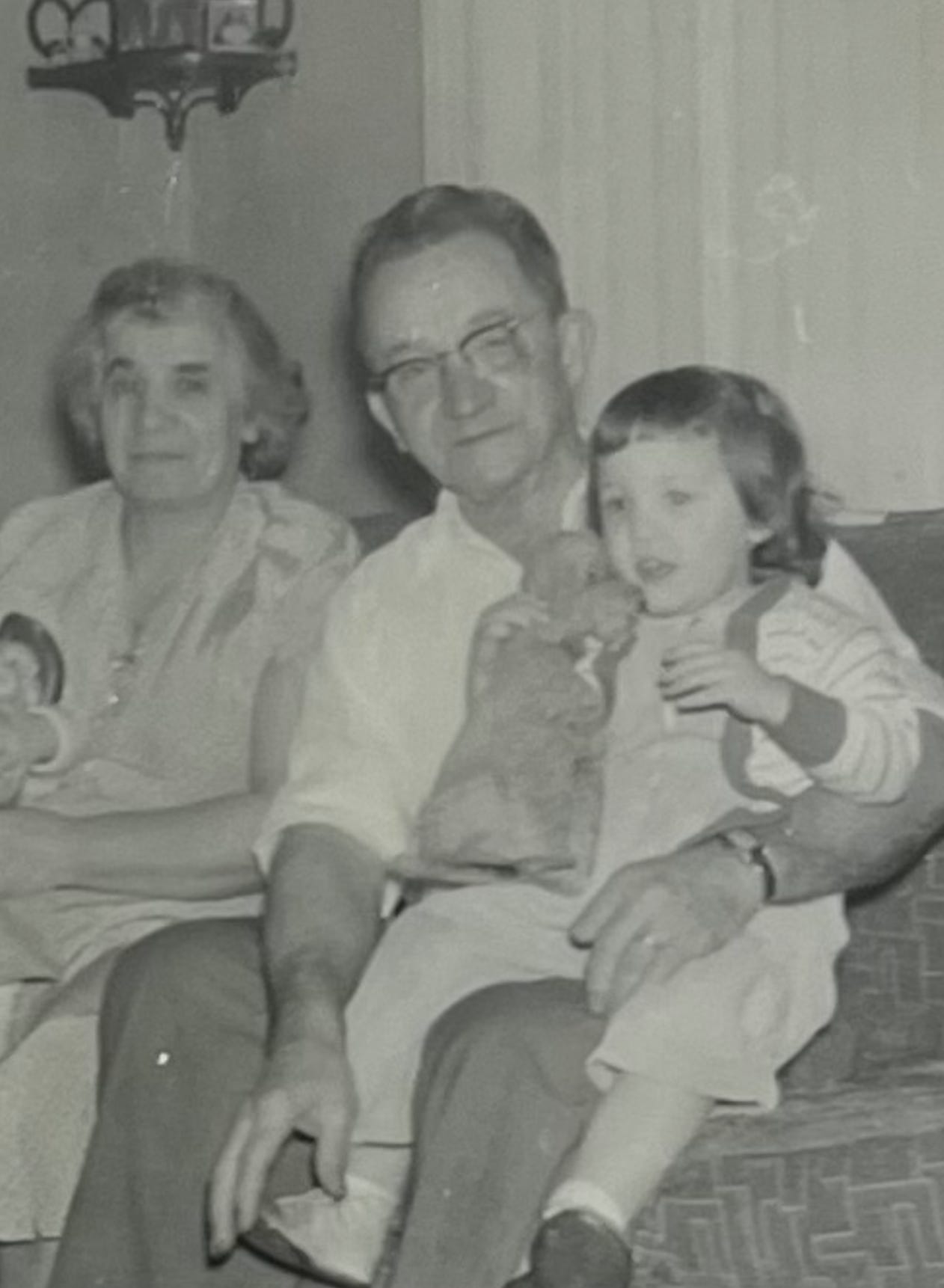
The other extended “family member” was the Slovak culture itself — my school, church, and especially all the older Slovaks that lived near us. I read an article recently about the traits found in modern Eastern European cultures, and while there seems to be more equality between the genders now versus back then, there are still a lot of traditional qualities.
Those qualities were even stronger when I was growing up. My maternal grandparents didn’t smile much in any photos. They would laugh when amongst us, but not with outsiders. There was a lot of privacy — a person’s home was literally their private castle. You didn’t interfere in a marriage, even if you thought something was wrong. And the man ruled the house and made the decisions.
Outsiders were viewed with suspicion until they proved themselves. Even when they talked about people of other nationalities in town, such as the Italians, the Polish, or the Irish because our town was truly a melting pot of immigrants, for that older generation it was all about their own culture first. And it was a stretch for one of their kids to marry outside of their nationality. Better to find a good Slovak boy or girl.
Food was important. They had all been through hard times. Times where they didn’t have enough to eat. My mother hated soup because that’s all they ate every day in her house. I loved my grandmother’s soups, especially Krupi, but then I didn’t grow up eating it every day. It was basically beef barley soup, but since my grandparents and parents called it Krupi, I thought it was something exotic. I looked up the Slovak word and found it stood for “grain soup.”
Now there were exotic old country specialities like pickled pigs’ feet, though I wouldn’t touch that. I remember my grandfather had a ceramic crock in the hallway one time with pigs’ feet in salt, covered in a thick layer of gelatin. And I wasn’t crazy about kielbasa either, unless it was roasted on the grill because when it was boiled, it had too many little hard bits of fat and gristle in it. I would douse it in ketchup and choke it down when we had it for supper.
But still, there were holiday celebratory foods like kolach – a sweet nut roll that I have kept the family recipe for, and added my own touches to over the years. And balls of sweet raised-dough coated in honey and poppy seeds that they called “babalki.”
They also knew how to make simple foods delicious, things such as Halupki, which was essentially cabbage stuffed with beef and rice and cooked in a tomato sauce; or Kapusta – a sauerkraut sweetened with bacon grease. And trust me, it was sweet, thick, and amazing on hot dogs.
The rule of food was that no matter how much or little you had, you brought people to your table and shared it. It was more than sustenance. It was community. Connection. Primal.
As to other rules of the culture, they were simple and strict. Respect for your elders was instilled early and was absolute. Also, without question, was loyalty to your culture, family, country. They were a no-bullshit people who had little use for small talk and said exactly what they thought. They valued stability, respect for order, and status quo. And…strength. ALWAYS strength.
My grandfather’s sister lived on the third floor of our house. She had married a bit later in life and had two daughters. She was widowed after only a few years and worked the rest of her life at the local factory in the “needle shop.” She had a lot of women friends who came to visit, and we knew them all. One lady I especially loved would always proclaim how she was “Str-r-r-o-n-g like bull,” in her Slovak accent.
“Str-r-r-o-n-g like bull,” was a standard comment made often by those old Slovak women. My great-aunt’s friend said this regularly, and I think it was how she shrugged off all the various challenges in her life. Those old people, especially the women, accepted that, of course, life was hard and you just bulled through it.
They’d lived through hard childhoods, hunger, leaving family behind when they immigrated here, wars, the Depression, and family losses. They’d worked in factories and jobs of manual labor, and had little money.
And yes, the men were hard-working, but there were always the weekends spent drinking at the club with their friends. Men drank. It was the women who had to deal with the rest. They never got a break. Aside from drunk husbands, there was sometimes abuse, the constant challenge of where the next meal was coming from, not to mention giving birth to and raising many children, usually with little help or money. Some of those old women quietly sought help from each other. Others carried on alone.
So they HAD to be strong. And they took pride in that. They proclaimed it with that saying and owned their strength. At least they could own strength in those ways, because for the rest of the things in their lives, they were powerless.
When it came to money issues, credit, decision-making…in so many households in that culture, the man ran the house. It was understood, both in their Slovak culture and their Catholic church, that the wife answered to the husband, and his word was law.
I thought a lot about their lives. How did they put up with all that they lived through, all while being seen as second-class by both society and religion?
Their ethos was a rugged acceptance. It was that you worked hard. You took care of your family. You just put up with the troubles life brought you by being “str-r-r-o-n-g like bull.” Society may have viewed them as second-class. But they knew they were just as strong as the bull in their house. And I would argue, stronger.
Yet, they also knew where life limited them. So, especially the old women would instill in us kids to go to school, get good grades, and get an education. “Go to college” was their mantra. And “Go for the money,” was their advice. Because for them, education brought the good job, which brought the money, stability, and freedom that they never had, and could never hope for. And if you didn’t go to college, then you got a trade, worked in the factory, whatever. You hustled. But you didn’t sit around doing nothing.
I know I internalized that quality of being strong, not just from my own house, but from all those older Slovak women. And my husband teases me to this day that I am his “Eastern European, peasant, tractor woman.” He commented one time, noting my bull-headedness about something, that if I am confronted with a brick wall, I will pound my head against it to go straight through it until my head is a bloody pulp, and then maybe finally take the easier way and walk around it. I am learning. But early training dies hard.
It was funny. Years after I moved away and was living in another state, I hired a older Czech woman one time to clean my house. I had a lot going on and needed the assistance. But I also felt embarrassed and like a failure that I needed to have her come in. I mean, based on my training, here was a woman older than me, cleaning the house that I was supposed to be able to keep up with myself. Feeling guilty, I kept trying to help her.
Finally, she got angry and said to me, “You go do your work! I do this! I str-r-r-o-n-g like bull!”
I almost fell over. I hadn’t heard that saying in decades, and here I was in another state, years later, hearing it again. But yes, that Slavic mentality. Be strong. Work hard. You don’t question things, you just bull through it because that is what life is like.
Before I move to the next phase of life, I’ll speak of my grandparents, my Slovak Catholic elementary school with the nuns and the church, and a few family friends, because all of those were also very strong influences on who I was and who I became.
Then, that next phase. Because this one was quickly drawing to a close. Its days were numbered, along with the system I depended on for emotional support.
 Soul Mosaic
Leave a comment