Making the sausage
There’s an old saying about not watching the sausage being made because it is such a messy process. Best to just enjoy the result.
We had a similar rule in our house for when our young son washed the kitchen floor. He absolutely loved to do it. He’d play his music, sing, dance, and splash water everywhere. Yet at the end, it would all come out beautifully.
The trick was not to watch it happen. Just set him up with the mop and water, arrange all so no harm could come to him, and then go upstairs until he was done. At that point, we could both be happy and celebrate, because I’d have a clean floor, and he would feel great about his success. We both understood that there was a “messy middle part” that was best not to watch.
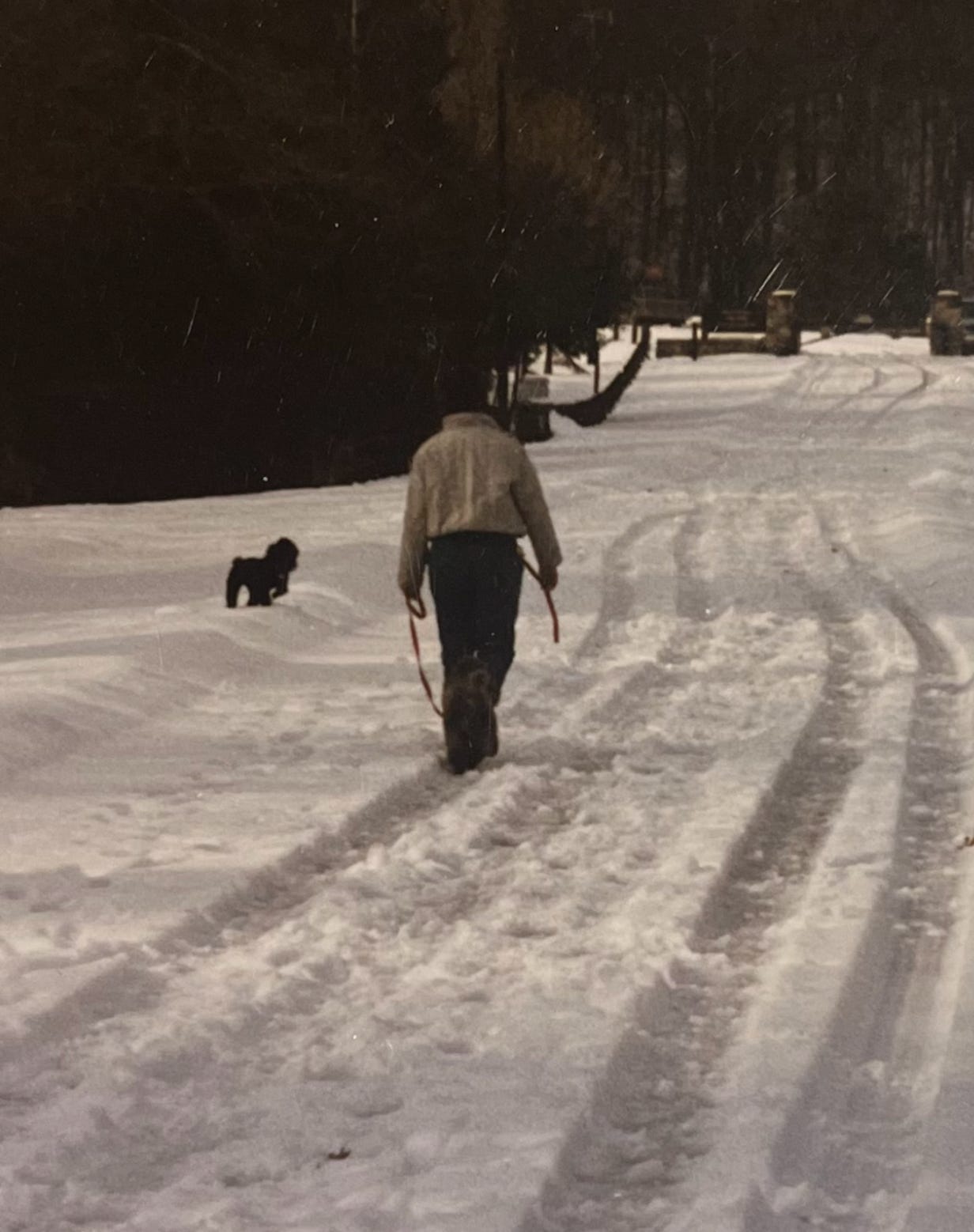
I feel the same about the journey of coming back from that despair and rebuilding my life. It was a long, weary, one-foot-in-front-of-the-other, trudging time. And it would get messy, something I would feel ashamed of for a long time. Something I would judge me harshly for, and refuse to look back at for decades.
Only now have I dared to stop running, turn around, and see that earlier “me” with more compassionate eyes. Only now can I pull out that mess, put all the pieces together into a whole picture, and understand why it happened that way so that I could welcome my younger adult part back with love. But that would take years.
Not wanting to miss out on anything
During those darkest days, I continued to keep walking, each day giving myself permission to always wait until tomorrow before deciding whether to kill myself. Fortunately, I started pushing out the “deadline.”
Over time, it eased more, and I could make it two days, then a week, then a “You can always come back to it in the future.” I knew I was turning a corner when that process began to be more trouble than it was worth, and I could feel shades of that feisty young kid from my childhood starting to push back at it all.
Eventually, my stubborn side did win out. I wasn’t exactly sure what I WOULD do with me, or what kind of future I might have. But, still, just like those nights driving by the Naugatuck River, I didn’t want to give up and risk missing something in life.
“Chewing on things”
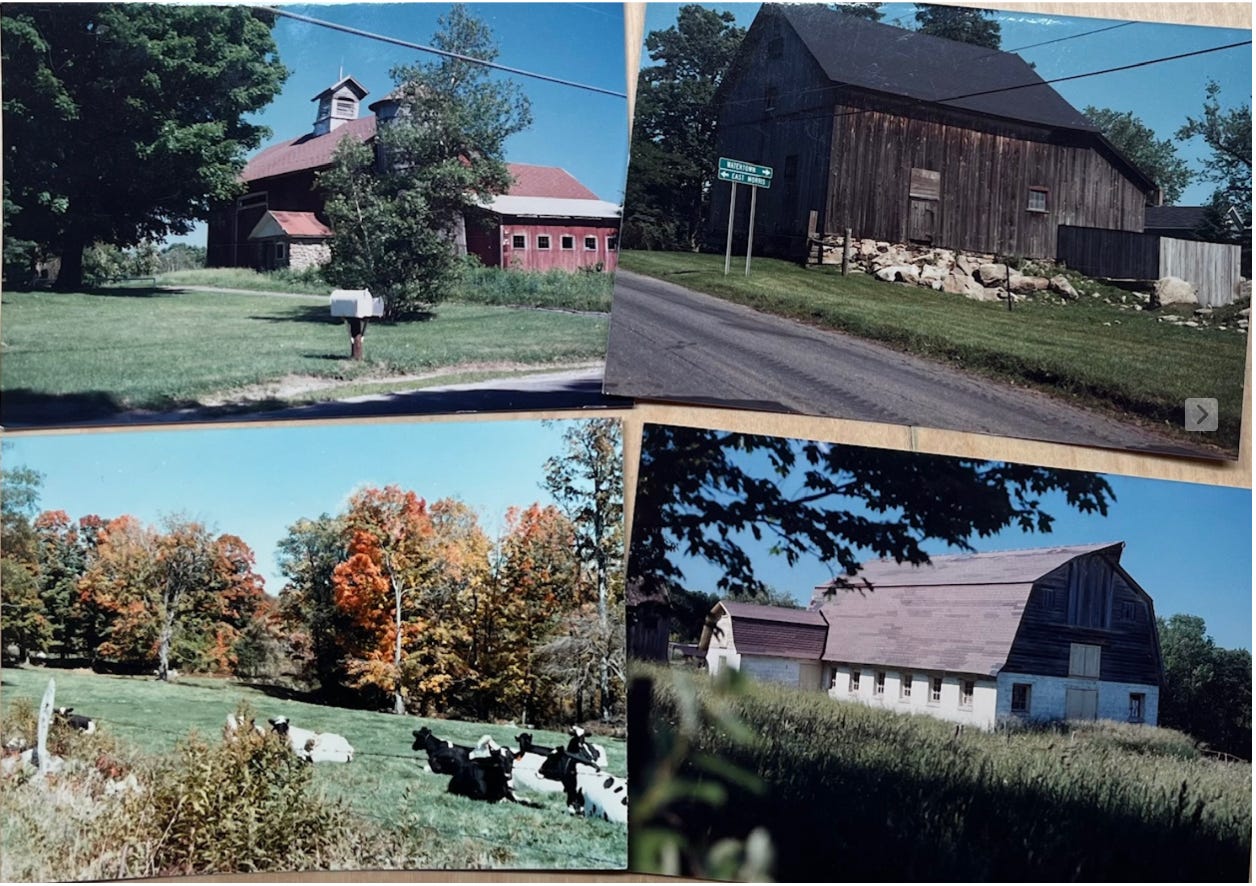
Aside from more months of long walks, I started to take drives around the farm roads nearby. As I drove through the countryside, I let my brain chew on what kind of future I could create. At that moment, it was a blank slate. I’d dumped out all the pieces of my life on a table and was now picking through them to see which ones to keep and which ones to throw away for good. So, while it was still unsettling, at least it wasn’t bleak anymore.
Moments of Respite
I also went back to giving me those MOMENTS OF RESPITE. This was that same process I’d used all those years to get through the difficult days when life felt like a hand pinning me to the ground. At those times, when my mind would ask: “Why bother? Why try?” I would seek out a momentary escape.
Moments of Respite were my way to find beauty and refuge, even while surrounded by trauma. It wasn’t a “dissociation” thing, but maybe more like a ‘’hyper-focus,” or a meditation. I wouldn’t have known to call it that back then. I just did it, intuitively I guess, as a way to survive.
In the solitary moments when I could retreat from Dad and shut out the abuse, I would find some small detail in my environment to appreciate, a sensory experience to savor, or one of my interests to lose myself in, even for a little while. I could eke out sustenance where none seemed possible. And that would keep me going.
One of the things I did during this particular time was to go back to what I did best – learn and explore. So, I indulged my art side with classes at a local art shop, as well as at the local community college. That latter one even offered the opportunity at the end of the semester to take a bus trip to the Museum of Fine Arts in Boston. And I pushed myself another time, to go to Boston for a weekend bacteriology seminar through my job. All of these were hard in a way – it was a real effort to get back out there in the world more. But still, it was progress.
On other days, the moments of respite were more spur-of-the-moment outings. One Saturday, it was a visit to a local airfield to take a ride in a glider, and I even got to fly it for a bit. The beauty of the forested hilltops below me, wisps of clouds streaking by, the silence except for the sound of wind slipping over and under the glider wings, it was a moment removed from the heaviness of gravity, both physically and spiritually.
Another day, it was an adventurous ride in a biplane with a local pilot. That was sensory overload in terms of the noise of the engine, the rush of wind right into my face, and the pressure pounding my sinuses went he put the plane into a nosedive. One time was enough for that. But for sure, it was a respite. And even though I did all these things alone and I felt the loneliness, still, I was at least getting out there.
Most of the time, though, they were exercises in focusing on sensations in the moment, no matter where I was. And while the back of my brain continued to “percolate” on the question of what my future might be, those experiences would be feeding my soul. Whether it was picking out the strains of individual instruments in a piece of chamber music or the unified prayerful voices of the Abbey nuns singing Gregorian Chants, those moments gave me peace and a chance to “inhale” life.
That fall, there was one particular experience I carry with me to this day that just abounded with the bounty of sensory delights. I can still feel the crisp air in my nostrils as I walked under steely gray skies surrounded by bare trees…
The orchard barn:
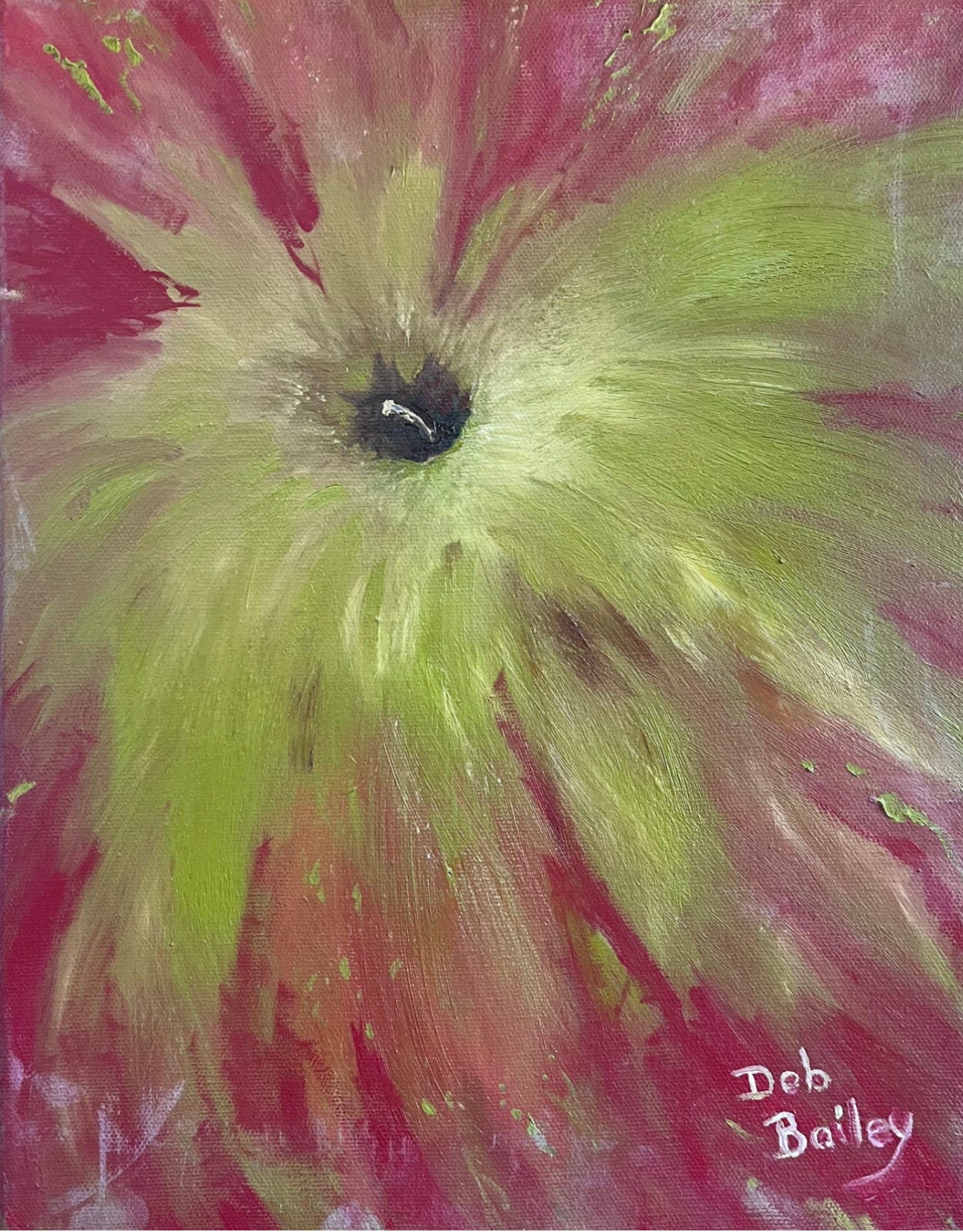
Pulling into the dirt driveway of the farm, I parked near the barn, the only car in the lot. It was a small farmer’s barn not far from where I lived, and where he sold the many varieties of apples that he raised.
Dried leaves crunched underfoot as I approached the building, and the air was heavy with that sweet smell of damp earth and composting plants. The sun hung low in the sky as the late afternoons were already taking on the appearance of night sooner than I wanted.
Inside the dimly lit barn, with my breath visible in front of my face, bushel baskets of nature’s bounty were arrayed in rows before me. Grease pencil writing on cardboard signs listed the varieties there: Early McIntosh. Golden Delicious. Baldwins and Cortlands. Empires and Granny Smiths. So many to choose from, thanks to nature’s gift of abundance, whether of flavors and textures, colors, or sensations.
That gift, though, presented the dilemma — which one or ones to choose? Even the questions came in abundance: Sweet apples or tart? Crunchy or soft? All? How much money was in my wallet? (Farmers then didn’t take credit cards, and there was no Venmo or Squarespace.)
More questions followed. Would it be pies for the freezer? Or applesauce? Caramel or candy apples, or baked ones? The type of apples makes a difference, of course, depending on how you are going to use them. And then there was just that simplest of delights, eat them cold and crisp right after being picked.
I walked the rows of baskets, the gravel of the barn floor grinding against my boot soles. Back and forth, assessing the red ones, the green-red stippled. The sizes. The shapes. I sought out the best ones with the fewest bruises. It was good that I was doing this during prime harvest time, before the apples were all picked over. But even then, bruised apples made great applesauce.
Finally, I chose a large basket of McIntosh and another of Cortlands. Unable to wait any longer to sample one, I grabbed a large Mac, rubbed it against my jacket, and tore into it.
When you eat apples that are fresh off the tree, the sensations come all at once: the aroma of sweet and spice mixed together; the snap of crisp skin giving way under your teeth; a flash of tanginess as the soft flesh hits your tongue, and the syrupy juice that sprays out and runs down your chin. It is an overload of delight.
In that “Moment of Respite,” the despair of that day temporarily evaporated. In the raw air of a fall evening, drowned in the sensations of a fresh apple, I felt the totality of an autumn miracle right in the palm of my hand. And refreshed, I could go on.
Details, the “marrow of life”
So many times over the years, those Moments of Respite saved me, fed me, gave me the energy to try again. For all the times when my world was torn apart, life was sustained by the abundance of small details.
It is those precious details that preserve the lifeblood of our souls. To me, details are life itself. Personal friends. They make all the difference in the experience.
You can draw a circle on a paper and color it in with a red crayon and call it an apple. Or you can dive deep into the details and savor a miracle. Instead of the circle-and-red-crayon approach to life, you can paint on a blank canvas panel, slowly spreading burnt umber for shadows, then layer in increasingly bright pigments of cadmium red, cinnabar green, lemon yellow, and titanium white. You can vary the intensity of the colors and the depth of the layers. Whatever you choose, the details make it all the richer for the moment. And it is in seeing the details that we are reminded there is more to life than just the pain we are struggling with at the moment.
Moments of Respite would be my reminders that in the midst of chaos, life still offered worlds of richness and sensory escapes where my overwrought nervous system could retreat to find calm…where I could bind my wounds, restore my mind, and return, ready for another round of the battle.
I no longer live in New England, but the minute the leaves hint at shades of alizarin crimson and burnt sienna, the evenings get a chill, and the light departs sooner than I like, I remember that barn during fall harvest time. Even more so, whenever I hold a crisp, fresh apple, no matter the time of year, that moment comes flooding back — fall is right there with me. And, even if just for a few seconds, the world seems a little less daunting, and I am reminded that details are always my friends, and the very marrow of life.
 Soul Mosaic
Leave a comment