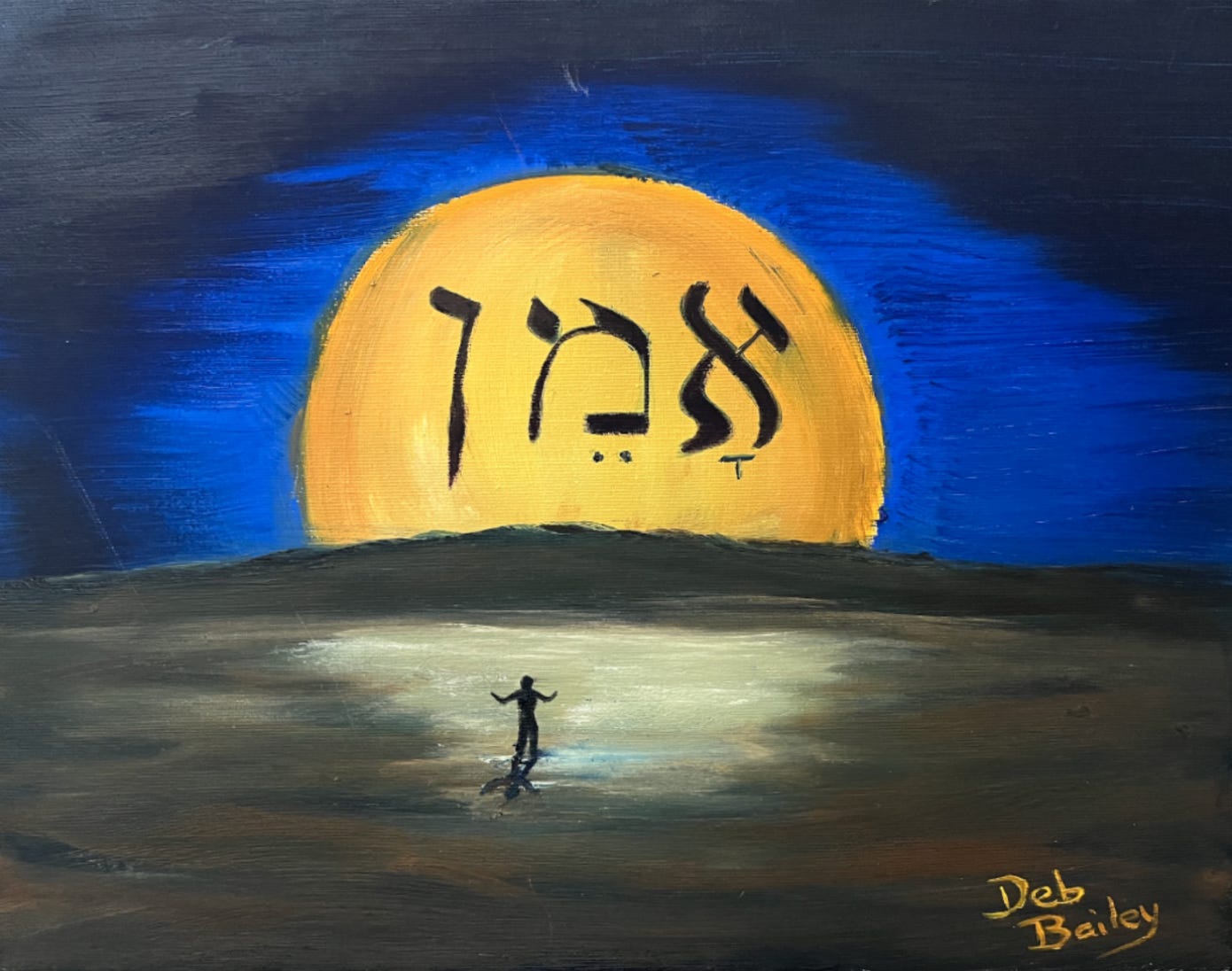
Prayer from the Reform Siddur (prayer book) – Mishkan T’Filah
This is an hour of change.
Within it we stand uncertain on the border of light.
Shall we draw back or cross over?
Where shall our hearts turn?
Shall we draw back, my brother, my sister,
or cross over?
This is the hour of change, and within it,
we stand quietly
on the border of light.
What lies before us?
Shall we draw back, my brother, my sister,
or cross over?
Why Judaism?
So why did a born-and-raised, formerly devoted Catholic, with an aunt who was a nun and two uncles who were priests, go to a rabbi and ask to join “The Tribe?”
Maybe that journey was like the name of my blogs: Soul Mosaic. Not any one thing, but a creation made of so many small and diverse pieces accumulated along the way? An image formed slowly that became impossible to ignore?
The mosaic pieces were scattered all through my life:
- The childhood visit to a synagogue
- Watching the rabbi at the meat-packing store perform his Kosher rituals over a newly butchered steer.
- The grounded, soulful bearing of my Jewish friends and therapists, which to me, set them apart from others
- The precious words by Viktor Frankl, written after his experiences in a concentration camp, which kept a teenage-me going.
- The book, The Chosen, which tells the story of two young Jewish teens and the struggle for one to learn humility and wisdom.
For sure, it was all of those together and a thousand more things from my own soul that formed the foundation of an open, receptive heart.
But it was Abraham Heschel and Barbra Streisand, whose words and voice flamed the spark of my curiosity into a full-blown inferno.
Heschel wrote the words that spoke a truth to me about my abuse and how to weave it into my life. For what I lived through, there is no “getting over it, or forgetting it.” It reminds me all the time through anxiety, panic attacks, body memories, and nightmares. The mistake I made most of my life was in thinking I could shut it out or leave it all behind. Heschel taught me another way:
“We are a people in whom the past endures, in whom the present is inconceivable without moments gone by. The Exodus lasted a moment, a moment enduring forever. What happened once upon a time happens all the time.”
I realized as I read those words that there was no more running from my past. Instead, I needed to accept it would always be with me. And that my present would be “inconceivable” without moments gone by. That means I needed to learn to walk WITH those moments, because those moments are precisely what made me who I am in the present. If I could accept them, if I could hold them in love, as the Buddhist monk Thich Nhat Hanh taught about all of our inner pain, then I could carry them with me and use them for good in my life.
Then there was Barbra Streisand. What a powerful, wonderful woman. She created her movie “Yentl,” about a woman who was soul-driven to be a rabbi in a man’s world. And in that movie, there was a particular song – “Where Is It Written?” that was so powerful it ripped open my soul. The raw yearning in her rendition of that song captured the struggles in my own heart — longing, seeking, questioning, hoping…the search for…God.
I had finally come back to wanting God because of Buddhism, a strange thing when you consider that Buddhism doesn’t discuss or have a God. But that was the clarifying moment. I needed and wanted that connection again, and I knew I wouldn’t find it in Buddhism. However, the one thing it did for me was help me to stop hating God.
Where had God been?
All through my childhood, during all the abuse, I believed God could save me from Dad. If only I prayed and believed long enough, hard enough. If I could just find the right way to ask, then, like the Church said, “I would receive God’s help.” But no matter how I asked, that help never seemed to come. Eventually, I gave up on God. In fact, I hated God.
Years later, I heard the first rule of Buddhism: Life is Suffering. And I actually felt relief. The bottom line is that life just is. It’s nothing chosen by us or for us. Whether it is suffering, joyful moments, abuse, or love, it comes on its own terms. To me, that meant there was no great master plan controlled by a heavenly being.
The bottom line was that God didn’t cause that abuse…or stop it. All those people who say it’s God’s will, or God doesn’t give you more than you can handle — that made no sense to me. Why would God want me abused? And God didn’t give me abuse as some “training ground” for being some especially holy being. And I also remembered something else.
All through school, the nuns taught that God gave us free will to choose goodness or evil, love or hate. If that was the case, that meant that the things that happened in life, good or bad, came from the decisions PEOPLE made. Not God. And further, that God could not interfere or it would be taking back that gift of free will.
All of this meant – God didn’t cause the abuse. Didn’t want the abuse. And…was powerless to stop the abuse. If a God gave men free will, He couldn’t later take it back because He didn’t like what men were doing with it.
To me, that meant that God was left to watch in horror at what one of his creations was doing to another. And try to whisper into that person’s heart to stop the harm. But each person could choose to ignore those callings.
Given that, again, to my mind, there were only two things God could do — walk with the person suffering, while whispering strength into their soul, or call for another to help. God can only act through people. He can call to the heart of another with those quiet soul whispers, and hope they will hear and act. But if they don’t, that help doesn’t happen. So to me, God isn’t the problem. Beyond us hearing His call, God’s hands are tied.
In that moment, I remembered so many times when I wanted to give up, and some voice inside me would tell me to hang on. To keep going. Or there would be a line from a book or movie, or a particularly relevant song lyric, a “something” that just seemed to jump out at me at just the right time.
And at other times, I would encounter a “helper” I hadn’t expected. Someone who came along just at the right moment, to give me a break, comfort, or a role model. I consider it no coincidence that people like my high school teacher, certain friends, or helpers came along just when they did. I hadn’t planned on them or sought them out. Maybe…God had been there with me all along, trying desperately to help ease the path?
The whispered call…
Now, all of this is my conjecture, and certainly another person might see this all very differently and totally disagree with me. Absolutely justified. Each person must wrestle with their anger, doubts, and pain to come to their own understanding. So these thoughts are solely my interpretations.
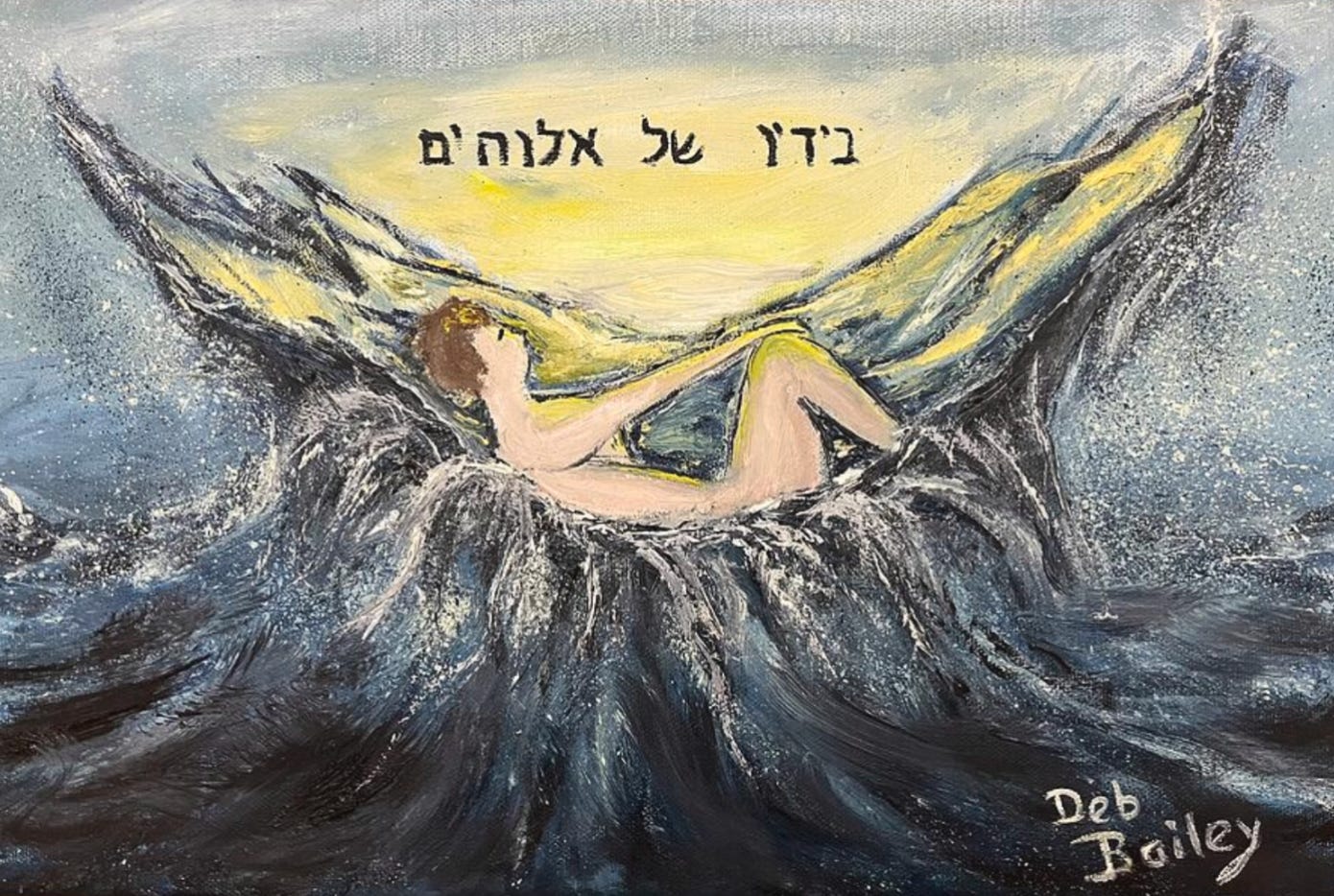
All I know is that for me, I found my way back to God through Buddhism. And then I found my way to a spiritual home, in Judaism. When I visited the local Reform Temple for the first time, listened, and read the prayer above about the Hour of Change, I knew on a gut level that my own 40-year-desert-wandering was finally over. God had whispered an invitation, and my gut embraced the call.
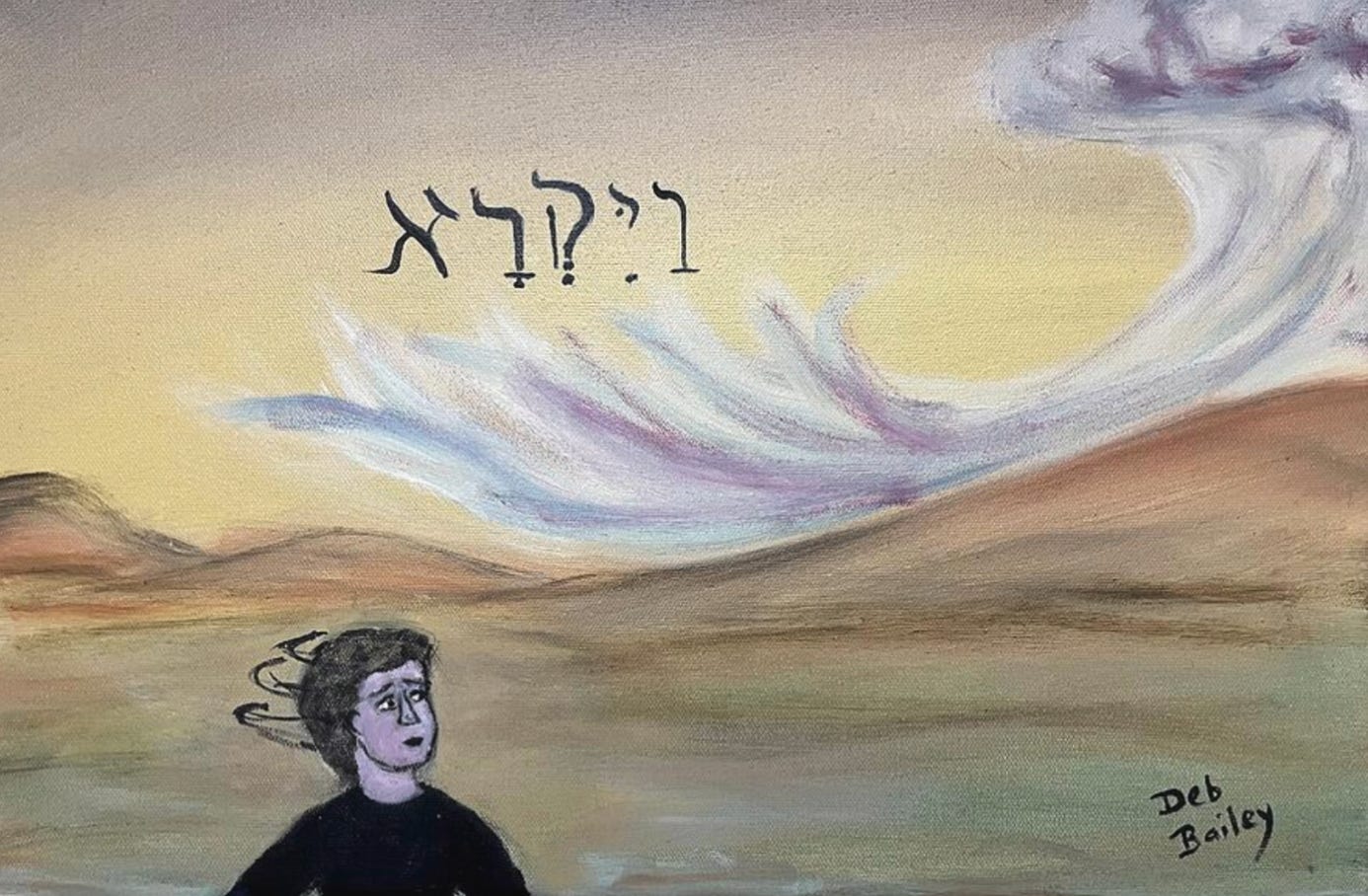
Home at last
The other thing about that Reform Temple was that it was liberal and active in issues of social justice. Further, nobody just “swallowed” statements preceded by “Thou Shalt or Thou Shalt Not,” without some questioning and soul-searching. People thought deeply, struggled with each other and with themselves, and worked to find the best actions and answers.
Also, there was that solidarity of the women. The Temple was led by an amazing woman rabbi. And the women there were active, strong, and committed in a “Sisterhood.” Something I longed for my whole life.
At a visceral level, without a question in my mind, I felt I’d finally arrived “home.” I signed up for the classes.
About the sense of “Sisterhood”
Before all of this, in addition to the Buddhist meditation classes, I had also been attending weekly sessions of a women’s spiritual group run by a Catholic nun. Any woman of any faith could attend, and the place had a warmth and community to it that fed my Mother-hunger. That had been my reason for always praying to the Blessed Virgin Mary through my life — the one Mother figure I could count on.
That group not only reinforced the importance of a “Divine Mother,” but it was also the beginning of my realizing that women, gathered together in spirit, can be a powerful force for healing, support, and acceptance.
Even the day of my conversion, as I was driving for my “Mikveh immersion,” the ritual bath that is part of the conversion process, I sensed that both the Mary of my Catholic childhood, who was herself a Jewish woman, and Sister Luke, my aunt who was a Catholic nun before she died, were both with me in spirit. And that they understood my choice.
On that conversion day, I came home, finally, to my own Sinai and Promised Land. I had journeyed from Catholicism, to hating God, to Buddhism, to finally, peace and connection as “Ruth.”
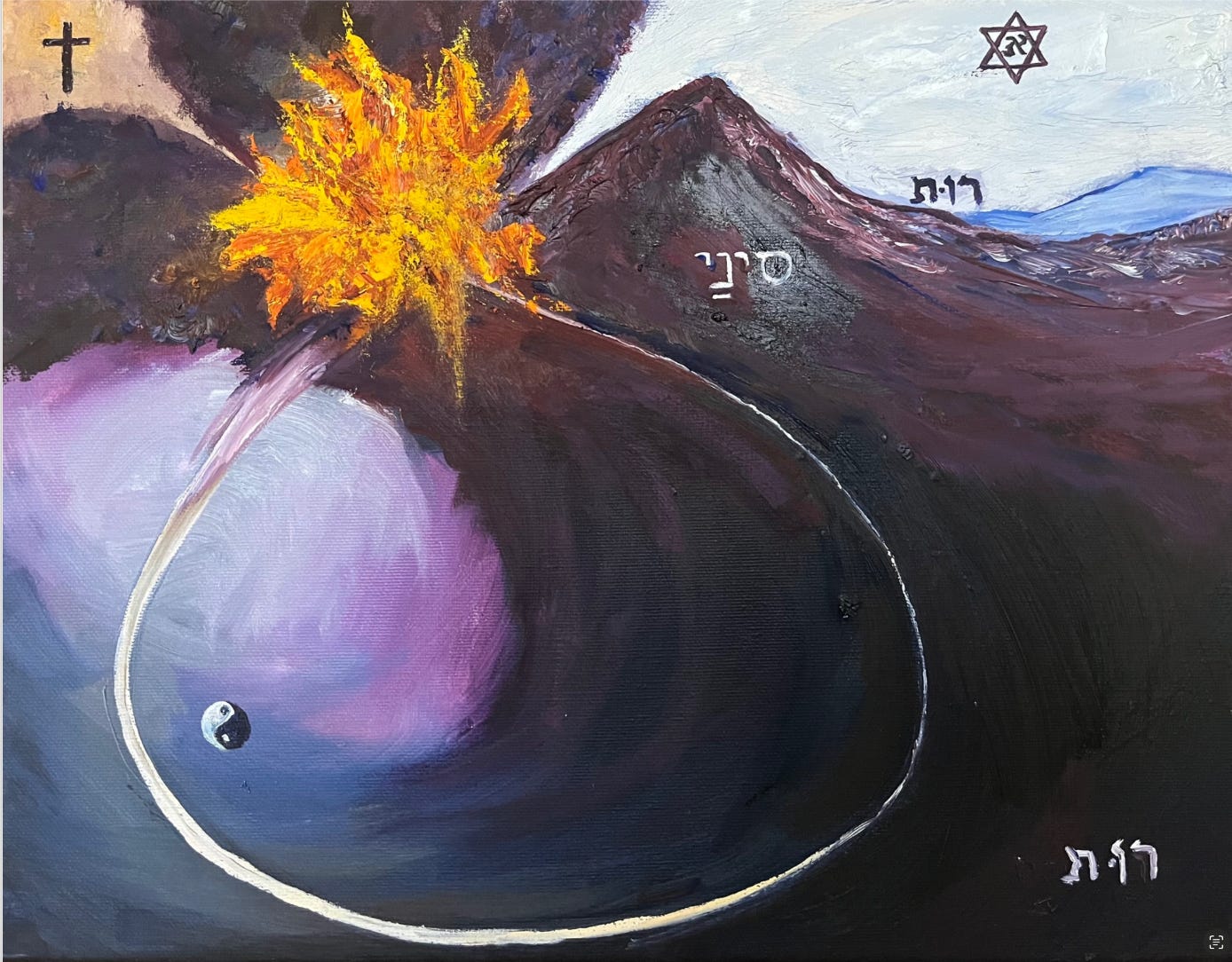
This was my Exodus from all the loss and confusion and darkness, to what was truly right in my heart. And while my own very Catholic mother was not pleased at my conversion, she did say she still loved me and that “…if you were going to convert to something, that would be the religion I would want.”
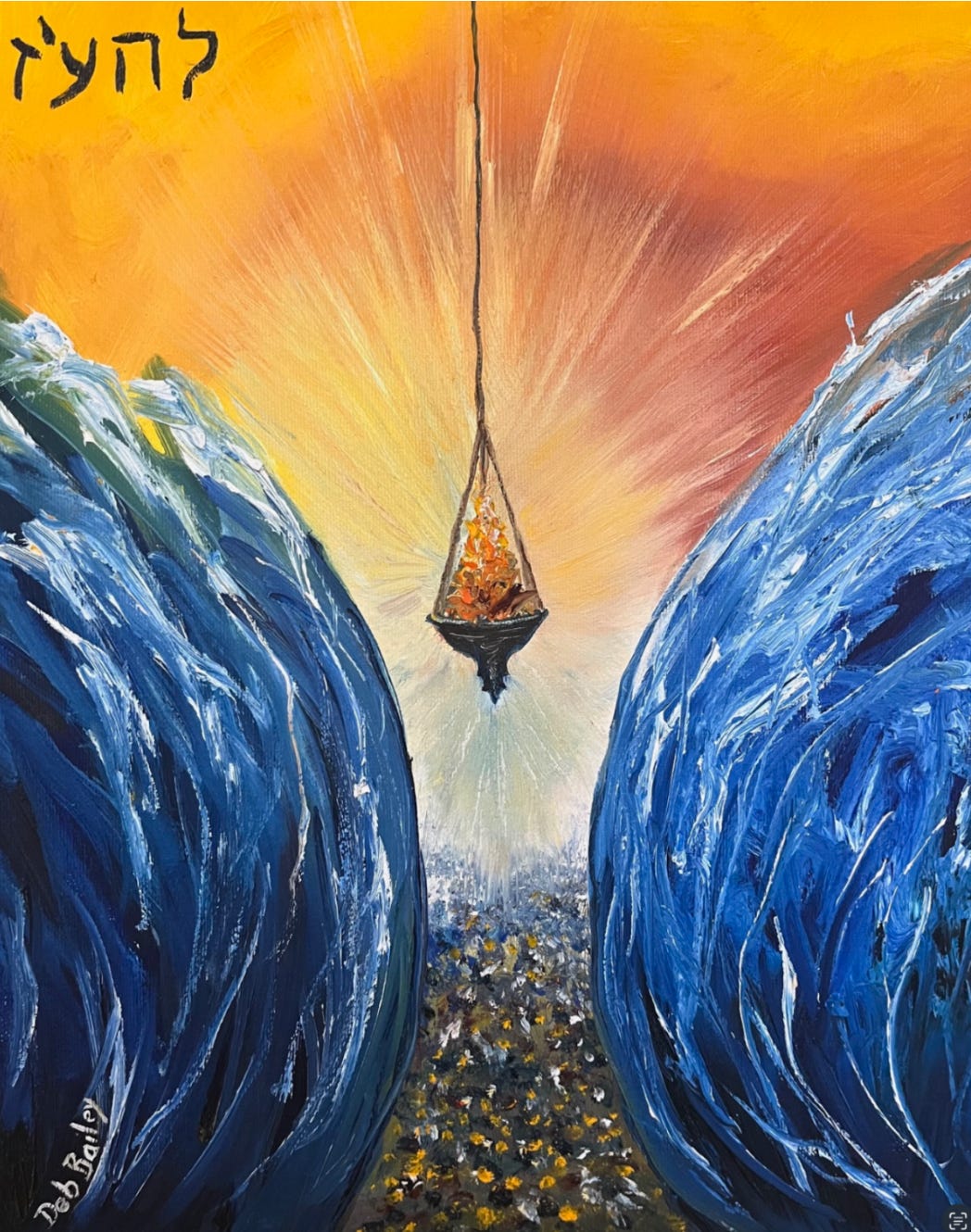
Why Ruth? And how do I relate to “rules?”
When I converted, I chose Ruth to be my Hebrew name. Again, it came back to sisterhood, mother issues, and loyalty. Ruth was the daughter-in-law of the Jewish woman Naomi, and was not of the Hebrew tribe. In time, Naomi’s husband died, as well as Ruth’s husband and Naomi’s other son. It was at that point that Naomi decided to return home to her people. She released her two daughters-in-law to return to their own families, but Ruth refused to leave. She basically told Naomi, “Where you go, I go. Your land will be my land. Your people will be my people.”
Ruth loved Naomi and stayed by her side as a “daughter.” It was a bond I respected and had wanted. I couldn’t stay with my mother in that house. I had to leave her…in a sense, abandon her to save myself. It was the right decision. But it was a decision I wished I didn’t have to make. I loved that Ruth could remain with Naomi.
As to the last question, after years of such strict Catholicism, and even one of the Buddhist groups I participated with, I am “Dogma-averse.”
I am done with scripts, dictates, decision trees for salvation or enlightenment, and no spoon-fed answers. What I seek is a fair chance to question, wrestle with doubt, and earn my answers. The Temple classes I took were a joy. They took nothing at face value. But then, here was a people who went through a Holocaust and had to each answer for themselves: Where was God in the Concentration Camp?
HERE was a God, and a belief system that I could relate to, feel at home in. NOW I was home. And God …was here with me. We would wrestle with life’s issues, side-by-side…together.
And no, I did not give up bacon, or lobster, or cheese with my meat. I ditched dogma for soul. I am not driven just by the letter of the law – Halakha. I can’t. Not after decades of destructive dogmatic Catholicism, which is in its own throes of moral degradation with pedophiles, and is a rich church in a world of poverty. I follow those “whispers” of my heart. They may be informed by law. But the ultimate choice has to be mine…and I don’t consider what I eat to be the measure of my connection to God. I will also be very clear here about one other thing. For me, when I speak of Judaism, it is in a soul way. I will not get into my thoughts about Middle-East political issues.
What I give is my devotion to fighting with life and wrestling with conscience and …Kavanah – the spirit of the law. And I think God will understand that. I place myself in His or Her hands.
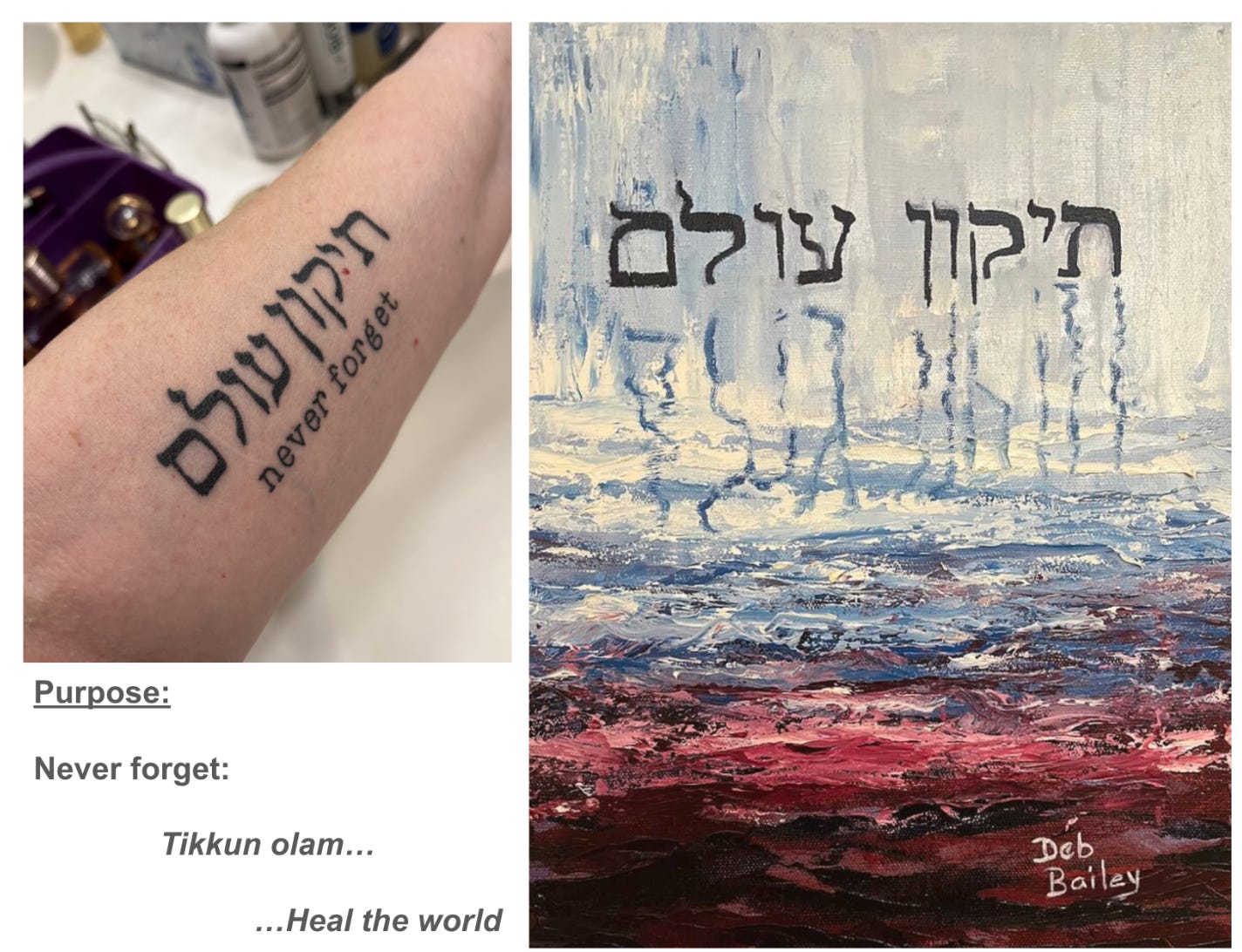
The last reason I am there is what has become the foundation for my purpose in life…for the REST of my life. And the one so important to me, it is tattooed on my arm. In Hebrew: Tikkun Olam, never forget.
It is my dictate to myself, my purpose in anything I do, for the rest of my life:
Never forget to help heal the world. And it is that very command for Tikkun olam that became my next job….
Note:
I am seeking financial support to complete my memoir, work with an editor, and return home for fact-checking. Your help would mean the world to me as I take this step toward healing and giving voice to my journey.
Please like, comment, and share this post to help spread the word. The link for my fundraiser is on GoFundMe. Thank you for your support.
 Soul Mosaic
Leave a comment