Archive for the ‘Broken Bits’ Category

The Gift

March 14, 2008

For those who love anything to do with the movie and book I mentioned in my anniversary post, 84 Charing Cross Road, here is a website that started in 2003 to: “…put together a brief history of one of London’s, if not the world’s, most famous bookshops, Marks & Co, 84 Charing Cross Road, London WC2.”

There is everything from a history of the store, pictures, info on the actual people that worked there, including Frank Doel, FPD, and pictures of them. The website owner has had help from some of the employees’ daughters and the site continues to seek out any information on the store, the people, and the antiquarian book trade, to update the site.

One of the links is to a site on Helene Hanff. It’s run by a woman from England whose dream was to go to New York and visit Helene, which she was able to do before Helene died in 1997. The site has books, interviews, audio clips, etc.

Both are great sites and if you love the movie, the books, the bookstore, or the author, I recommend them.

The Post: Under the Pier – Animal R&D cont.

March 13, 2008

Even though I’d identified my first two main characters, I didn’t know much about them. On top of that, I still needed a third main animal character, and that didn’t even touch the question of who else inhabited this world I was trying to show.

I started doing simple web searches on hermit crab, symbionts, snail fur hydroid, Narragansett Bay flora and fauna, New England ocean divisions. As Robert Frost always said, way leads on to way, so web site leads to web site. In short order I was finding more info than I knew what to do with. I had to organize it, figure out just what was relevant, and in some cases, figure out whether the info I was finding was even correct. Just because it’s on a website…or even in a book, doesn’t make it gospel. My rule of thumb was to try and find that same information in at least 2 or 3 other places, including books if possible, before accepting it.

I found that animal names were a large problem. Names could drive you out of your mind. A sheepshead fish (Archosargus probatocephalus) and a sheepshead minnow (Cyprinodon variegatus variegatus) are two very different fish even though they are both often just called “sheepshead”. A mud dog whelk is also called an eastern mudsnail, so when I saw the name “New England dog whelk” I figured they were the same. Apparently, though, they aren’t. The mud dog whelk/eastern mudsnail is Nassarius obsoletus, and the New England dog whelk (among other names) is Nassarius trivittatus. So using Latin names to verify who was who, really became a necessity. However, taxonomists can play a bit of havoc with Latin names, too. These 2 guys have a different genus names in different sources. In some articles the genus name was Nassarius and in others it was Ilyanassa. Needless to say, a real pain.

Another problem was “location.” I began collecting information on all the plants and animals so I could “populate” my fictitious Narragansett Bay story location. Narragansett Bay may be in Rhode Island which is New England, but “New England” isn’t always just New England. There’s the Gulf of Maine, Buzzards Bay, Massachusetts Bay, Georges Bank, Cape Cod Bay, Stellwagon Bank, Long Island Sound, Narragansett Bay…..all of which may vary in what animals and plants live there. Nothing is EVER simple.

In reality, New England actually has different zones of animals often separated right about the level of Cape Cod. There are a couple of large currents operating off the Eastern US coast. Most people are familiar with the Gulf Stream – warm water that flows westward from Africa as the North Equatorial Current, circulates through the Caribbean and Gulf of Mexico, then heads north until about the level of Cape Cod. At that point the warmer waters turn eastward as the North Atlantic Drift and head toward the British Isles.

Coming down from the north is a cold current moving counterclockwise past Greenland, then south along the US coast and is known as the Labrador current. A branch of that known as the Maine current brings cold water down along Maine, New Hampshire and into Massachusetts Bay north of Cape Cod.

So it appears Cape Cod is the meeting spot for the cold northern currents and the warmer southern Gulf Current. From the National Audubon Society’s Field Guide to North American Sea Creatures:

“This makes Cape Cod a so-called zoogeographic barrier, a region of great interest and diverse fauna, whose water temperatures differ by as much as 10 degrees F between it’s north and south shores. Many northern cold water species range only as far south as Cape Cod, and many southern species range only as far north as its southern shore.”

So even though the Atlantic Wolffish is found in the Gulf of Maine and Maine and Rhode Island are both in New England, odds are the wolfish is an unlikely inhabitant of Narragansett Bay. In fact some of the fish in Narragansett Bay probably have more in common with ones off Cape Hatteras than Cape Cod. Another example of this – sea cucumbers. The National Audubon Guide said the orange-footed sea cucumber is the largest and most conspicuous sea cucumber in New England, BUT more than one source said it’s from the Arctic to Cape Cod. From Cape Cod south, it’s the Hairy Sea Cucumber.

Even locally within a particular area, there are differences. Just because some fish or creature lives in Narragansett Bay doesn’t mean you’ll find it right by the story’s pier. Some are strictly offshore water creatures. You can’t put them in shallow coastal zones. Some prefer sandy bottoms vs. gravel or mud. Some are bottom dwellers, or live attached to pilings or rocks and are not found floating in the sunny surface water. And of course, season: some are only present in December, but not June. I really wanted to include the Harbor Seals in my story, but they are only there in the cold months. So, scratch Harbor Seals

From all of this, I drew up a long list of fish, algae, plants, birds, and invertebrates that fit ONLY in Narragansett Bay, in the right location, in the right season. There were a few exceptions to the rules – the occasional bird who “never is here in June, only December, but occasionally, it’s there in June anyway.” I included those only if I had a research paper, article, or interview with some researcher that documented that nature doesn’t always follow the rules.

Armed with this list, I began writing up animal character biographies. They still included “flaws, strengths, driving needs, hopes,” but also included topics like:

-What problems do they have in finding food and living space?
-Who do they eat or who eats them?
-Do they have parasites, symbionts, or freeloaders who don’t harm or help them?
-Where are they most likely to be found?
-Do they have any odd quirks, interesting behaviors, unusual qualities?
-How likely are they to interact positively or negatively with my hermit crab protagonist or be present in his world?

I started with books, mostly nature guides like the National Audubon Guides to Invertebrates, Birds, Fishes, Mammals, and New England, that had detailed descriptions, photos, and answers to some of these questions. Another great book was by Save the Bay, The Uncommon Guide to Common Life in Narragansett Bay. Also I found some websites helpful. One in particular was the Narragansett Bay Biota Gallery that covered all categories of life above and below the bay’s waters, and included pictures.

I made an index card for each animal, plant, algae, bird, fish, whoever, that conceivably could end up in the pages of my book. On the front of the card I wrote their common name or names and the Latin scientific name. On the reverse, I logged some key facts, and what books and page numbers in those books had additional info. The index cards were color-coded based on whether they were invertebrates, fish, algae, plants, mammals.

Once I’d collected all of this information, I could then spot the holes – the unanswered questions. That’s where Google searches helped. Also, emailing places like the University of Rhode Island’s Graduate School of Oceanography, Woods Hole Oceanographic Institute, NOAA’s Ocean and Coastal Resource Management, and the University of Maine’s Darling Marine Center provided actual researcher names and contact information so I could talk to real human beings to get the straight information I was missing.

There are many researchers I will need to thank in a later post, but one in particular provided me with such a treasure trove of information on hermit crabs, I have to thank him here as well. Dr. Jason D. Williams of Hofstra University, provided me with a number of research papers on hermit crabs, including information on their behavior, shell interests, locations, etc. One paper in particular was invaluable: “Symbionts of the hermit crab Pagurus longicarpus Say, 1817: New observations from New Jersey waters and a review of all known relationships.” [Proceedings of the Biological Society of Washington, 114(3):624-639, 9 October 2001] THIS is the paper that told me all I wanted to know about who Carpus would have on his shell, in his shell, crawling on his gills, and even inside his body. From this paper, I got…Crepid.

Crepid is short for Crepidula cf. plana, a slippersnail. He sits right inside the opening to Carpus’s shell. As such, he too is rather immobile, like Hydrac. He does not have stinging tentacles, teeth, or claws. And, he takes up space, giving Carpus less room to move around in his own shell. At first glance, Crepid the slippersnail seems totally useless, dead weight. But again, remember: conflict potential. How does Carpus feel about hauling around yet another useless animal on his shell? A little tension there? And what about the defensive and inferior-feeling Hydrac? There’s a good chance he would be just thrilled to constantly put down this “slug.” That means Hydrac and Crepid, in addition to being extra weight and not very useful, are now bickering all the time. It’s enough to drive a hermit crab out of his tiny little mind.

Oh, and for those sticklers for detail out there who say that this species of slippersnail doesn’t fit inside the opening of a periwinkle shell…yes, I have more than one source that documents that it does TOO fit. So there!

The last item about the animal world was “rules of the world.” As I mentioned earlier – nobody is running around in clothes and shoes, nobody flies any planes or pilots submarines, and nobody is called “Suzy Squid” or “Peter Periwinkle.” As much as possible, I wanted the creatures to look and be where they would be underwater. I wanted them to eat rotting scallops or live seaweed, not hamburgers, and I wanted their adventures and actions to be what they would experience in the ocean. In fact, the traumas and problems the main characters encounter include not only predators, but pollution, fishing trawlers, over-fishing, aquaculture, and environmental restoration.

I tried not to have many of them talk as talking animals can be a problem if not done well. However, I did take liberties with the three main characters, Carpus, Hydrac, and Crepid. To have an adventure, they had to talk and think, act, interact, argue, freak out, etc. I am still evaluating how satisfied I am with that effect, but there is precedence for it in books like Charlotte’s Web, and more recent ones like Kate DiCamillo’s The Tale of Despereaux, and Erin Hunter’s series on battling cat clans, Warriors.

I gave the three main characters, or at least the protagonist, Carpus, some knowledge of humans. They recognize things like ships, human refuse on the sea bottom, anchors, boards, and humans – male, female, boy, girl. He can recognize a few of their “sounds” – some simple words like ship, boat, etc., and he finds humans unpredictable, ghastly, annoying, and best avoided. I tried to give these skills a logical explanation. In the course of his normal life, Carpus has spent a lot of time along docks and piers, around coastal towns, and hence humans. All three characters, being the recipient of our pollution, are aware of “foreign objects…human objects” in their world.

Readers might be willing to accept these rules – the willing suspension of disbelief – if you can make a logical case for them and you are consistent with following them. If you have no plausible explanation or you keep deviating from your world’s rules, your reader is going to get fed up and put the book down. Every time you break your own story rule, it pulls the reader out of the story experience and makes the reader doubt that you can actually tell a good story.

I expect by now you are convinced I have no life. Maybe that’s true. After all, why go to all this trouble to do this much research AND document Latin names? Because descriptions, or locations, or actions, who eats what or what eats them, where they live, eat, mate, sleep are details that give your characters the authority of their truth. Get their details right and your characters ring true. Furthermore, you get the trust and gratitude of your reader.

Does it matter to have the trust of your reader? Yes. Especially if your reader happens to just LOVE sea creatures or is a science nut and actually knows these details. The minute they find something incorrect, they are now upset with the author. In fact, they have now lost faith in the author to get ANY details correct. Those readers look at it as “if they got this wrong, what else is messed up?” Their pleasure in your book is now gone, they’ve been pulled out of the emotions of being in your story world and now their whole reading experience might become a proofreading quest to find all your other errors and tell everyone else what a piece of garbage your book is. In short, you’ve lost that reader and possibly many others.

The alternative is not to use details, but then you end up with something like, “the crab wandered past a snail who was being stalked by a big fish who got eaten by some kind of bird…in the ocean.”

The bottom line is that some stories have a lot of technical detail and some don’t. If you’re going to have technical details in the story, then resign yourself to a lot of research and do your best to get details right. You may not be perfect, but you want to be close because the flip side of all this is, satisfy a reader with accurate details and they believe in your world. And you. You’ll have that reader for life. They will love you, venerate you, swear by you, possibly even quote you when they’re old enough to write research papers. Think I’m joking?

That same Dr. Williams from Hofstra who is an expert on hermit crabs and gave me all kinds of research papers, also suggested I find an old children’s picture book from 1957 called, Pagoo, by Holling Clancy Holling. It was out of print at one point (though I found an old copy), but this marine biology researcher still suggested it because of the accuracy of its details. I also noticed it was re-issued in 1990 and is still available on Amazon.

So, if you’re going to write a story with lots of creatures and such, get your facts straight or write a different story.

In that vein, as a review for myself as I prepare to do revision number three and put in all those telling sensory details, I will be starting a new post category on my blog: Creature Features. Each post will profile one of the creatures or algae from my story and include links to pictures and accurate details. Stay tuned for that.

The next post in the Under the Pier series will be: Research Part IV – Setting as Character
The Post – Admiral Byrd is Peeking & New Aquarium Products

March 12, 2008

Some Fiddler Updates – New Product Technical Details and Romance

1) Preparations, Take 2, for the Fiddler Crab Nursery Tank:

I came home from PetsMart yesterday armed with calcium sand to replace the gravel in the nursery aquarium. That project will commence later today. The sand is actually something called Seachem Meridian Tidal Marine Substrate. It’s basically calcium carbonate precipitated from ocean waters by coral. It will stabilize the calcium and alkalinity levels in the water, and keep the pH from getting too low. Its porous structure and size supposedly are good for the growth of denitrifying bacteria. We shall see.

At the very least, it’s a dual purpose as I can also use this sand for the bottom of the land hermit crab cage I just bought. The land hermit crab project will be ramping up soon.

I also picked up some liquid food that should work fine for the larvae. I’d mentioned a product called JBL Nobilfluid that a gentleman from Finland used to raise his crab larvae. However the Nobilfluid is made in Germany and appears to be available in Finland, Germany, England, Italy and the UK, but I couldn’t tell if it was available here in the US. I could get it from a UK website but between the exchange rate and the shipping, I expect the cost is prohibitive. A JBL representative answered my email yesterday and said their product is not available in the US yet.

I found this new product at PetsMart called Kent Marine ZooPlex. The problem I had with the fiddler babies was trying to find liquid plankton to feed them. My mistake was getting live liquid phytoplankton, which made the tank toxic and killed them. I realized larval crabs need zooplankton, which is animal plankton = roughly translated: MEAT. Phytoplankton, being plant based, is the wrong plankton. Larval crabs are carnivores, not vegetarians. Anyway, Kent Marine ZooPlex is “concentrated aquacultured Marine Zooplankton” and is geared toward invertebrates including larvae. The bottle notes it can be used as a brine shrimp replacement. So this sounds like it might be just the thing for liquid feeding of newborn larval crabs who are too small to chase live brine shrimp around.

I will still need to get the dried brine shrimp eggs to hatch when I know I have a pregnant female ready to shed her eggs. The brine shrimp hatchery project will come a bit later.

2) How to raise the alkalinity of the water for the brackish tank without raising the pH?

The dilemma I have when using Instant Ocean to make up the brackish tank water for the adult crabs, is that I have to use it at about half strength. That way I get a salinity of about 1.010 instead of 1.020-1.024. The trouble is, that makes the alkalinity way too low meaning there’s not enough calcium in the water for the crabs when they molt.

I’ve tried adding Seachem’s Marine Buffer, to raise the alkalinity and it’s very successful, but it also raises the pH way up to 8.3. That’s fine for a marine tank, but for the brackish tank, the fiddler crabs seem to like the pH closer to 7.8-8.0 I have a constant battle trying to get the salinity low enough, the alkalinity high enough and the pH “just right” somewhere between a freshwater tank and a marine tank. When I use the Marine Buffer I have to then add something to lower to pH.

I was hoping to find something that would raise the alkalinity, but not the pH when I use Instant Ocean to make up the brackish water. Yesterday I came across Seachem’s Reef Calcium. The website description reads:

Reef Calcium™ is a concentrated (50,000 mg/L) bioavailable polygluconate complexed calcium intended to maintain calcium in the reef aquarium without altering pH.”

I am going to try the Reef Calcium product and see if that solves the problem. I will let you know.

3) Romance: a humorous update for a Wednesday:

Ever since his success with Scarlett O’Hara, Admiral Byrd has been out there claw-waving up a storm. Melanie Hamilton spends just about all her time inside the live rock. Yesterday afternoon is the first time I’ve seen her out of it in weeks. I think she took to hiding out in the rock when Scarlett O’Hara was living in the nursery tank. With Scarlett temporarily gone, Melanie was the total focus for Admiral Byrd. I don’t think she liked that.

Anyway, after giving birth, Scarlett O’Hara has been eating almost non-stop. I think she finally slowed up a bit yesterday, but she’s still pretty ravenous. In fact yesterday, I dropped a shrimp pellet in the tank and Scarlett scrambled up and caught the thing in mid-drop. It never even touched down on the gravel. And she’s pretty good. No fumbling and bobbling the shrimp pellet. She spotted it, she jumped, clutched it to her chest and landed on her feet, eating the pellet before she landed. She could probably earn a spot as an outfielder for the Red Sox.

Unlike Melanie Hamilton, Scarlett hasn’t been too concerned one way or another with Admiral Byrd’s where-abouts. She doesn’t run from him, or toward him. She just eats. Still, I don’t think she’s averse to his presence as she’s spent a fair bit of time in his lair, the fake rock cave, while he walks around waving his claw. I have to wonder if he realizes she’s sitting in his house?

Last night I turned off the tank lights, shut off all the house lights and went upstairs to bed. A little later I had to come downstairs for something and walked by the tank. Even in the dark, I could see Admiral Byrd standing there on his gravel hill, waving his claw. Total darkness, but the crab is still out there trying to get the attention of the ladies of the tank. What dedication.

He is also very funny in his pursuit of Scarlett O’Hara. He climbs to the top of the live rock, to wave his claw of course. Yesterday while claw-waving, he caught sight of Scarlett down on the gravel next to the live rock. He stopped waving, tip-toed to the edge of the rock, peeked over the edge at her to see which way she was going, then, like a teenage boy in love, scrambled down the rock and followed her around all the while waving his claw.

So watch out Scarlett, Admiral Byrd is peeking.

The Post – Under the Pier – Research Part III: Animal R&D

March 11, 2008

For the animal side of the story, a lot of what I said about the human characters applies here. You have to decide on a protagonist, then add in one or two sidekicks and some secondary and background characters. They need personalities, backstory, lives, struggles, flaws and strengths – essentially character bios. Before I could start that process though, I had to figure out who were my main characters.

Unless your human world has people flying on magic carpets or walking on water, the rules of your characters’ behavior are pretty much established by real life. With animals, it needs to be more defined. I wanted to stay as close to reality as possible, though I was going to have the characters talk and think. Exactly what the boundaries would be for their behavior would be defined as I got more into the story.

When I initially started mapping out the story several years ago, I wanted a hermit crab with an anemone on his shell. In fact, I believe the early iterations of this book had that. I’d read that anemones and hermit crabs have a symbiotic relationship. The hermit crab carries the anemone around, thus assuring the anemone mobility and a steady food supply. The colorful, highly visible anemone offers the hermit crab some protection from predators that prefer to avoid the anemone’s stinging tentacles.

At first glance, it seemed like the perfect partnership, an underwater Batman and Robin, and I figured I was well on my way to having two of my three main animal characters. I’d even found out which anemone prefers to live on hermit crab shells: the Tricolor Anemone, alias Calliactis tricolor. (In the next post – Animal R&D cont. – I’ll share why I bother with the Latin names). In any event, I thought I was all set. Then, reality, or rather, geography, crashed in.

My story is set in New England, specifically, in the waters of Narragansett Bay. Hermit crabs with the Tricolor anemones on their shells live in the waters from North Carolina to Mexico…warmer waters.

No problem. I figured I just needed to look at the hermit crabs in New England and find out which ones had anemones on their shells, and which anemone it was. The answer to both: none. Hermit crabs in New England do not carry any anemones around on their shells. In fact, in the cold New England waters, there aren’t as many anemones even on the sea floor.

Well that shot a hole in my approach to animal character connections. My best idea for a duo against the threats of the deep and they didn’t live in New England. The closest I could come to an anemone riding a hermit crab shell in New England was something called a “snail fur hydroid.” It lacks the flash and intimidation factor of the Tricolor anemone. It’s more like this tiny lackluster matt of tentacles and polyps. In terms of effect, it’s kind of like having an earthworm when you hoped for a rattlesnake.

I was upset at first but then realized my good fortune. How much drama do you have between two characters who work well together, probably get along, and contribute pretty equally to their mutual success? Now consider being a hermit crab hauling around a thin fuzzy matt of tiny polyps – no bright colors, no flashy poisonous tentacles. Yeah, it’s got some small stinging polyps – like having a pellet gun instead of a shotgun. Are you going to feel like the hydroid is an equal partner in this situation? Maybe a little resentment there? And is the hydroid going to be very personable? Deep down it knows it’s an undersized second-rate threat, a poor substitute for an intimidating anemone. Maybe it’s going to have just a bit of an inferiority complex which means it’s going to be a royal pain to deal with? It’s going to overcompensate by being sarcastic, argumentative, insulting…and those are its good points. I suddenly realized the snail fur hydroid offered a much greater potential for conflict than an anemone.

Okay, no anemone. Just the hydroids. I thought I could at least have a large tough hermit crab. Well, forget that too. The hydroids were most likely to be on the shells of the smaller hermit crab – the long-clawed hermit crab.

So, my anemone has been shrunk to a matt of “snail fur hydroids” and my large tough hermit crab ended up as one of the smallest ones in the coastal New England waters. Yes, it’s one of the most common ones, but hardly the most dramatic, at least at first glance.

However, again, I considered conflict potential. A smaller hermit crab would have to fight harder for any shells or food or location resources. So, I went with the smaller hermit crabs.

I hoped to at least salvage the large flashy Moon Snail shell for my hermit crab, but the long-clawed hermit crab is too small to haul one of those around. Instead, I had to be satisfied with an underrate snail fur, on the outside of a tiny periwinkle or mud dog whelk shell dragged by a small hermit crab.

Do you see where this is going?

You can start out with a vision but often your vision won’t work in reality. You can give up, flip off reality, or reframe it by looking for the conflict potentials in what reality presents. I chose the last. This meant being a stickler for detail even as I might push the limits of reality on a few things. There are readers who will excuse a talking animal, but they’d never forgive a North Carolina anemone riding on a New England hermit crab.

So, at the end of all of this, I had my protagonist: the long-clawed hermit crab, Pagurus longicarpus, known in the story as “Carpus,” and the first sidekick: a snail fur hydroid. The snail fur hydroid belongs to the genus Hydractinia, so his name in the story became “Hydrac.”

I now had two characters who instead of being best friends probably had an antagonistic relationship. Since the animal side was going to mirror the same struggle as the human side: do I connect to others or run away? this seemed to match up better for the overall story structure. So I can thank the limits of geography and nature for ending up with two characters who fit the story problem better. At this point, it was time to flesh these two out with some research, add a third main character, and start adding in some other animals.

Coming up Next: Animal R&D – Picking the third main character, painting in the details and adding in the background.

The Gift

March 11, 2008

I heard this song on the radio yesterday…hadn’t heard it in a long time. When I did, I remembered how its lyrics always soothed a bad day, how they always lifted my spirits and gave me another boost to start again. I love the sense of feeling small before the ocean, and being reminded not to sell out, lose my sense of wonder, settle for the path of least resistance, give up on love, or sit it out when you can still look life in the eye, and dance.

They don’t play the song on the radio much anymore, but I wish they did. At the very least, I share the lyrics with you. Lee Ann Womack’s – “I Hope You Dance.” May her lyrics give a boost to your day. I may have to go get the CD. Her “delivery” is the other part of this that so restores my soul.

Lee Ann Womack – I Hope You Dance Lyrics

I hope you never lose your sense of wonder,
You get your fill to eat but always keep that hunger,
May you never take one single breath for granted,
GOD forbid love ever leave you empty handed,
I hope you still feel small when you stand beside the ocean,
Whenever one door closes I hope one more opens,
Promise me that you’ll give faith a fighting chance,
And when you get the choice to sit it out or dance.

I hope you dance….I hope you dance.

I hope you never fear those mountains in the distance,
Never settle for the path of least resistance
Livin’ might mean takin’ chances but they’re worth takin’,
Lovin’ might be a mistake but it’s worth makin’,
Don’t let some hell bent heart leave you bitter,
When you come close to sellin’ out reconsider,
Give the heavens above more than just a passing glance,
And when you get the choice to sit it out or dance.

I hope you dance….I hope you dance.
(Time is a wheel in constant motion always rolling us along,
Tell me who wants to look back on their years and wonder where those years have gone.)

I hope you still feel small when you stand beside the ocean,
Whenever one door closes I hope one more opens,
Promise me that you’ll give faith a fighting chance,
And when you get the choice to sit it out or dance.

Dance….I hope you dance.
I hope you dance….I hope you dance.
I hope you dance….I hope you dance..
(Time is a wheel in constant motion always rolling us along
Tell me who wants to look back on their years and wonder where those years have gone)

The Post – The Fiddler Babies are Dead, But We’ll Start Over And Prove Horseyhannah Wrong!!

March 10, 2008

The fiddler babies are dead.

I am sad, because I really did like the fiddler babies. I looked around on the web last night for clues to their demise and that’s when I got ticked.

The Discovery Channel’s Animal Planet Online Forum had a discussion of how to raise fiddler crab larvae. “Horseyhannah,” a senior member on the forum basically told a member who asked how to raise fiddler larvae that it’s so hard and requires hundreds of thousands of dollars of equipment to simulate ocean environments, waves, tides, etc. so it’s really not possible. Horseyhannah told the person to just enjoy the adult fiddler crabs and don’t bother to raise the babies. Needless to say, the person asking the question was polite, said thank you, agreed it will probably be hard, but would still like to know horseyhannah’s info source…just in case she decided to raise them anyway. My answer to that person is: GO FOR IT!!!! PROVE HORSEYHANNAH WRONG!!!!!

In fact, I am determined to do just that. In my book, Horseyhannah has thrown down the gauntlet and I am determined to prove her wrong.

I will concede failure on this first attempt. I am sad as I was so looking forward to having some fiddler grandchildren survive. I was frustrated and disappointed because contrary to the advice above, I think it was not only possible, but it was happening. Because I lost them so quickly, that tells me something overwhelming happened in the tank to kill them all off at once.

To review, by Friday afternoon, there were no babies moving around. It was a rapid decline, and up until that point, we still had quite a large number alive. I have to conclude it was a water quality issue and I think the biggest culprit was the live phytoplankton. But to go through this methodically, let me look at several things. If it were salinity, ie they didn’t like the marine environment I don’t think they would have lived that long in it to start with. I suspect the following things were problems:

1) I used gravel and we did lose MANY babies because they burrowed into the gravel crevices and died there.

2) The nitrite levels in the water spiked suddenly and got very toxic. Thoughts on this point:

a) I didn’t get the tank set up early enough to have a mature and well-functioning nitrogen cycle.

b) I either fed them the wrong food, or too much, or both. The wrong food or too much food meant it didn’t get eaten, sat in the tank and rotted. OR it created a huge algae bloom that raised nitrite levels beyond a tolerable level.

c) I didn’t change the water fast enough once I realized the nitrites were a problem, though given the phytoplankton issue, I was probablly fighting a losing battle from the beginning.

d) I no doubt lost babies doing the water changes because my only option was to bail water out of the tank and pour it down the drain

So boys and girls, what have I learned from this first attempt that can be done better next time?

1) I will use calcium sand not gravel. Aside from the fact that the babies won’t get trapped in the substrate material, the calcium sand will provide enough calcium for the babies to stay healthy during many molts.

2) Figure out the right food and amount. The gentleman from Finland whose article I quoted a few days back (he raised the Red Clayed Mangrove crabs) fed his larval crab Artemia…brine shrimp. He had a hatchery right in the tank to have a fresh supply. He also used something called JBL Nobilfluid for when the larvae were too small for the brine shrimp. This product is probably similar to the Small Fry liquid food I was using. It it made by a company in Germany and I’m trying to find out if it is marketed here. It has 50 different vitamins and minerals as well as brine shrimp and is geared for newly hatched aquatic animals too small to tackle live brine shrimp yet.

3) DON’T USE LIVE PHYTOPLANKTON this time. In spite of an almost 50% water change, I could not get the nitrite levels down. In fact, they kept rising. Now I am finding information that phytoplankton excrete nitrites. The better the phytoplankton did, the higher the nitrites. And with each feeding I basically inoculated the tank with more. I created my very own algae bloom which released such high nitrite levels, the babies were doomed.

Frankly, the tank seemed to be doing okay until I started using the phytoplankton. I would feed the liquid Small Fry food and while the tank would be cloudy initially, it cleared quickly, telling me the babies ate the food. At that point, in spite of it being a new tank with an unestablished nitrogen cycle, the nitrite levels stayed pretty low. However, once I started using the phytoplankton, the tank got cloudy quickly, the nitrite levels spiked, the water had a greenish tint, and the larval crabs numbers dropped dramatically. So, NO phytoplankton.

4) For water changes, instead of bailing water out, I will use the water bubbler as my “filter” to keep the babies in the tank, and let gravity siphon water out of the tube. I have the bubbler’s pump set up beneath the tank and have a regulator valve in the line to keep water from back-flowing from the air bubbler, into the pump. If I remove the valve and let the tube sit in a bucket, it will slowly siphon off water through the bubbler. This should let me slowly get water out for changes, without bailing larval crabs out of the tank and sending them down my kitchen drain.

So. I will start over. Admiral Byrd is doing his part, trying to get Scarlett O’Hara to notice him. Scarlett O’Hara has been eating and hanging around Admiral Byrd’s cave den. I figure it’s only a matter of time before Scarlett has eggs again. Therefore, tomorrow, I will take down the nursery tank, clean it out, get some calcium sand, and get that tank up and running again with the live rock in it, and get that nitrogen cycle stable.

We are going to try this again! My husband and I would love some fiddler grandchildren, 🙂 and even he said that we must prove Horseyhannah wrong!!! Stay tuned.

The Post – A Followup to Lee Woodruff and Caring for Our Injured Soldiers

March 9, 2008

A REVISION NOTE: THE URL FOR THE WASHINGTON POST ARTICLE BELOW IN INCORRECT. CLICK HERE FOR THE CORRECT LINK FOUND IN MY MARCH 25 08 POST.

I received a comment on March 7th’s post about Lee Woodruff and her Book, In An Instant. Usually I respond directly on the comment for that post, but decided to respond with a post of it’s own. I do not have personal experience with this group and cannot vouch for them. If of interest, here is the information. There is a Washington Post article that is included in the comment that may be of interest.

First, the comment:

Richard Anderson | richard@wellspouse.org | wellspouse.org |

I have read Lee and Bob Woodruff’s book, In an Instant, and it rings true. The Woodruffs were actually very lucky, thanks to top-quality medical care, and possibly divine intervention as well! It is very much to their credit that they have now started their Family Fund for Iraq war veterans and others with TBI.

As President of the Well Spouse Association (http://wellspouse.org, 1-800-838-0879), a non-profit, 501(c)(3) grassroots organization offering peer support to husbands, wives or partners of people with chronic illness and/or disability, I should know.

About 10% of our members are caregivers to spouses or partners with TBI. In this and other chronic illness situations, it can be a life sentence. They need support to help them feel they are not alone in their caregiver journey. Lee Woodruff made that clear in her book in speaking out about her own experience.

Thank you for a perceptive post. For another perceptive look at the life of a spousal caregiver, read the Washington Post Magazine story, The Vow, p. W10, March 9, 2008, about a WSA member whose wife has Huntington’s Disease, here:

http://www.washingtonpost.com/wp-dyn/content/article/2008/03/04/AR2008030402498.

Lee Woodruff noted that there are many small groups and large national groups, including some within the military, working to help the families of traumatic brain injury patients. I imagine there are resources out there for other illnesses as well, offering support to family members. To find a support group, or verify that a group is legitimate, asked your physician, VA, hospital social worker, ask at your military base, or veteran’s groups. Usually these places will have further information on a support group or a place you can contact to locate support.

The Gift

March 7, 2008

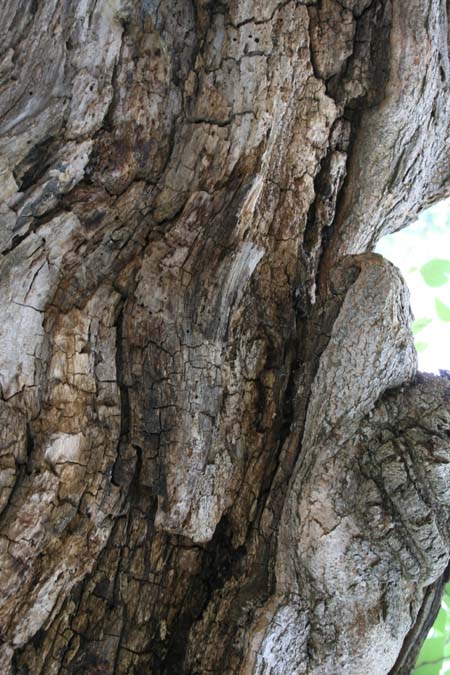
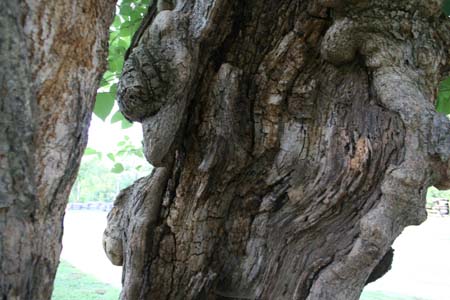
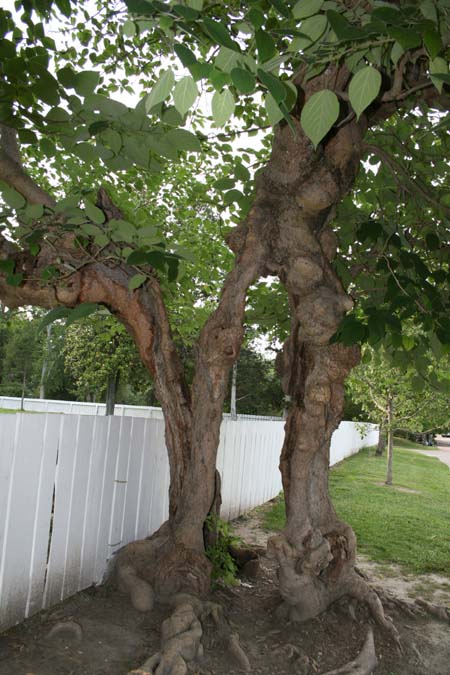
Sometimes when you are feeling very “full of your own power and worth” it helps to be reminded to be humble. If you think you’ve seen it all and know it all, consider the tree below. It might look like the shattered remnants of a tree, not very useful and certainly not pretty for landscaping. But remember that in life, all is not what it seems. Sometimes the most important things come in humble trappings.

The tree below is from Colonial Williamsburg. It is well over 250 years old. It witnessed the beginning of our country’s struggle to be free and shaded British and Colonial soldiers alike. It’s leaves blossomed over hostile residents of Williamsburg on their way to besiege the Governor’s Palace when his soldiers stole their gunpowder from the magazine. In fact, it witnessed the dark figures of those same soldiers stealing that powder in the early morning darkness, just hours earlier. This tree watched George Washington, Thomas Jefferson, Peyton Randolph, and Patrick Henry walk by. Actually, “saw them” in the flesh.

So this strange-looking tree – missing most of its insides – is still here with us, nursed along by the Colonial Williamsburg staff. Strange-looking maybe, but it’s life history gives one pause. It has witnessed so much. A reminder that sometimes the overlooked broken silent things in the background just might have amazing stories if only they could talk, and carry a value beyond money.

img_0496resized.jpg

img_0509resized.jpg

img_0505resized.jpg

The Post – Lee Woodruff – In An Instant and Helping Our Injured Soldiers

March 7, 2008

Taking a rest tomorrow, so posting Saturday’s Gift and Post tonight.

Tonight I had the honor of hearing Lee Woodruff speak at Quail Ridge Books in Raleigh, about her book In An Instant. It’s co-written by Lee and her husband Bob Woodruff, the ABC News anchor who sustained a traumatic brain injury from an IED while on assignment in Iraq . It’s the story of their family’s journey through pain to healing and then recovery.

I could say many things about her – she’s a great speaker, frank, honest, down-to-earth, warm. Passionate comes to mind – she speaks so passionately about our servicemen, what they go through and the struggles they have after sustaining such injuries. She very frankly noted that her family was lucky as they had the care of ABC, Disney, and many family and friends to sustain them. Our servicemen do not. She also frankly noted that it is the willingness of those young men and women to step up to the plate and volunteer that makes it possible for the rest of us, her 16-year-old son included, to have a choice as to what we will do with our lives.

She noted that their family has worked to turn the experience into good, lemons into lemonade, including setting up a charitable fund for servicemen with traumatic brain injuries, which I’ll explain in a moment. They have grown as a family. They have tried to help others. When asked though, given all the good that’s come out of what happened to her husband, and all the good things they’ve done and people they’ve helped, did she view what happened to him as a good thing? Her immediate answer was an unequivocal “NO.” She said if she could rewind the clock, she’d wish this never happened. However, it did. She has come to understand that life is suffering and you simply choose whether it can ennoble you or make you bitter. She noted very simply that she did not want to become a bitter old woman.

She has tremendous compassion for others and said she imagined everyone sitting there has experienced some kind of life-altering event. She feels for all. Often times people come up to her and say “this happened to me, but it wasn’t anything like what you went through.” She immediately put a halt to that thought. Her feeling is that life hands everyone suffering and pain is pain.

She spoke strongly about the struggles of our servicemen and their families when there is a traumatic brain injury. Too often these families are struggling and forgotten. She and Bob make it a point to visit VA hospitals when they travel. It is obvious this is a driving passion for both of them. She feels they were given a chance to have good care so now it’s their turn to bring attention to the servicemen. She shared a quote:

“The willingness with which our young people are likely to serve in any war, no matter how justified, shall be directly proportional as to how they perceive the Veterans of earlier wars were treated and appreciated by their country.”

That came from George Washington. She felt we are not doing enough for our injured veterans now.

In gratitude for their good fortunes they’ve started the Bob Woodruff Family Fund to assist service members injured while serving in the United States Armed Forces. Special emphasis is for traumatic brain injury victims. They work to raise public awareness of the problem, excellence in research, prevention, diagnosis, treatment. support and resources for the injured as they try to reintegrate to daily life. They work with individuals and small organizations to do everything from provide money for cab fares to wives of injured servicemen going to and from hospitals, to funds for bills, treament and rehabilitation for a blinded veteran who lost his pension and whose wife had to quit work to nurse him back to health. The stories were too numerous.

Her deep commitment to these men and women showed in her words, her face, her eyes. It is said eyes are the windows to the soul. That is the truth. Her eyes showed her soul. It is a soul of love.

If anyone wants more information on how to donate to the fund and help our servicemen who have given so much, the website is:

www.BobWoodruffFamilyFund.org

And she noted they have only one paid employee – the wife of a Marine who is on his 3rd tour of duty in Iraq, and she works out of her bedroom so they don’t have to use any money to pay for an office.

The Post – A Fiddler Update – Water Issues and Decreased Numbers

March 7, 2008

I am not sure that things in the nursery tank are going well. A sudden reversal in fortunes over the last day or so. Very decreased numbers of babies. In fact, this morning, it’s hard to tell if there are any left. The water got cloudy, like an algae bloom, and the nitrites spiked high and even a touch of chlorine showed on the dipstick, odd since I use distilled water. So the chlorine is coming from tank conditions, not the water I used. Some thoughts:

I am not sure if the decrease in numbers is:

1) Normal? They cannibalize each other.
2) High nitrites?
3) Touch of chlorine?
4) Wrong food?
5) Too much or not enough food?
6) Salinity? Are the science articles wrong and should I have left it brackish?

Water quality:

It started out that the water would get cloudy for a little while after I put food in the tank. Then it would return to being clear. Now, however, it’s cloudy all the time. I replaced 1 gallon of water last night (still “marine” at 1.019), and I added buffer to raise alkalinity for them to have enough calcium to molt. I also added Prime to get rid of chlorine and decrease nitrites. I succeeded with raising the alkalinity, and eliminating the chlorine. Nitrates are still in the “okay” zone, but nitrites didn’t drop.

This morning the tank is still cloudy. I will recheck parameters in a little while, and probably replace another gallon of water. I hate to do that because if there are babies left, I am most likely pouring some of them down the drain with water I tank from the tank. I do pull the water from the side of the tank where the babies did not hang out much, but still. Nothing to be done there though. a.m.

It occurred to me this morning that maybe the phytoplankton was either a bad idea or I just gave too much. The phytoplankton is alive. I noticed the water I drew off last night had a greenish tint. That means the phytoplankton, which is PLANT plankton, and alive, may be blossoming, in fact, maybe it’s a phytoplankton bloom in the tank. Given it’s not the open ocean, but a closed environment, the bloom, while successful in generating more food for the babies, maybe too much of a good thing in an aquarium. If too much growth, is it raising the nitrites and killing off the babies? I am wondering if I should have left the food at “Small Fry” and maybe the ground up krill and not added the phytoplankton.

I will also put a sample of the water under my “precision” microscope later to see if in fact the water is jammed with plant cells.

I will update on the results of water change, microscope viewing, and repeated parameters later, as well as whether it looks like there’s any babies left.

Live and learn. As my husband says, “Next time”….I think there’s always things we can do better. AND, once this experiment is over, we’re going to leave that spare tank up and running empty so it can settle out with a matured nitrogen cycle. Stay tuned for updates.