Trigger alert – The descriptions here may upset some readers. Please proceed gently.
Who WAS Dick Phillip?
When Robert Louis Stevenson wrote his novella, *The Strange Case of Dr Jekyll and Mr Hyde*, he had no idea that 45 years later, his character would enter reality as my father.
Dick Phillip. Richard Phillip. Richard M. Phillip, Richard Marshall Phillip…Richie.
Who WAS Dick Phillip…and as an aside, as a kid…and an adult, I always wondered why he preferred “Dick” for a nickname. Except that in his case, it seemed to fit in more ways than one.
To me, who he was varied with his mood and his needs. Sometimes he was so warm and fun, and other times it was like I didn’t exist, or worse. Intermittent reinforcement. Alternate love with rage, with love, with cold isolation, and back to love again. Mix it up until I was so confused and convinced that somehow it was my fault, and if only I could figure out the right things to do, then it would be okay.
As for how he treated others, it just depended on what you were to him, where you stood in relation to what he wanted and needed, and who had the upper hand in the power dynamic between you.
When I started high school and was worried about succeeding in a public school after years with the nuns, his advice was:
“If you want people to like you, find out what they need or want, and give it to them. Then they’ll like you and you’ll look good.”
Even then, I thought that seemed like a cold way to treat people, and being a young teen, I ignored him. But it was his modus operandi in life because he wasn’t looking for friends. He was always about getting something out of an interaction.
If you were outside of the family and had nothing he needed, you were off his radar…except to make sure you weren’t a threat. If you were a family member, at the very least, he would put on enough charm to keep the peace and preserve any future usefulness you might have to him. If you had something he wanted or you could advance his goals, now you had his attention.
There would be the charm offensive. And helpfulness. He would assess what the power dynamic was — were you a weak or strong person? Did he need to approach you gently with deference, or could he just play you and take advantage of you with no second thought? To him, it was about whether you were a sap or a player and what rules applied. He thought he was so much smarter than everyone else, and relationships to him were transactional.
For example, later in life, he and my mother spent several years traveling in an RV. When they finally chose a retirement community to settle in, it was one that was just being built. The nuns needed people willing to take the risk and be an early customer. And, as with all new endeavors, they appreciated the help of someone willing to give guidance on questions that came up as they proceeded.
He was more than happy to step up and help them out. And in the process, he also managed to get special arrangements for their home, and even got to hook up his RV to their electrical supply while the house was being finalized. He never did anything without having his reasons, motives, or goals.
Dr Jekyll
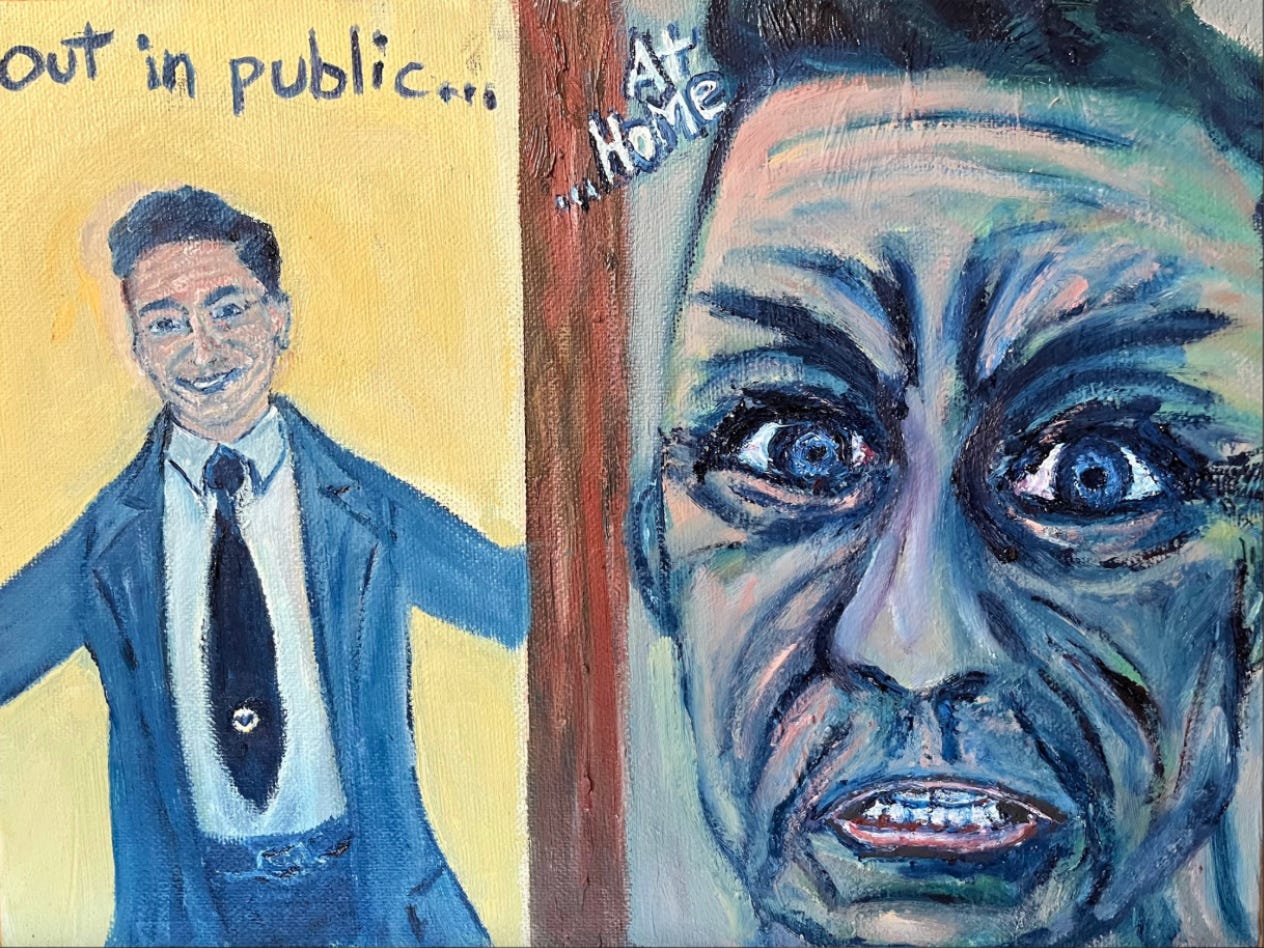
When we were out in public, it was amazing to see just how fast he could turn on the charm and switch to his “fun and easy-going face.” We could have just left the house after he raged at us for something, yet the minute others were around, he was that happy-go-lucky family man, easy to please, and ready to help. It was all about cultivating the image of that kind, strong, upstanding family man. Always dressed in a suit, his company tie-pin in place. Good provider. No one would have believed us if we tried to tell them otherwise.
There is an old English Idiom that captures it perfectly: “Hail fellow, well met.” Even though it’s originally from the 1600s and became more famous in the 1800s with writers like W. Somerset Maugham and James Joyce, the phrase persists today, along with a modern meaning.
A number of dictionaries describe it as being a person whose behavior is hearty, friendly, congenial, sociable, and gregarious, but often done in a way to gain favor or create an impression. The efforts are insincere, overly superficial, and done to ingratiate a person with another. A glad-hander.
On Sunday mornings at Mass, Dad regularly served as an usher. His usual team-mate for this was an older gent – tough, old, Slovak man, who called Dad his buddy and always patted him on the back for being such an upstanding, Catholic, family man. And to the men of the Holy Name Society – a Catholic men’s club at our church – Dad was a good member and a friendly guy who got the job done. Especially the year Dad managed to secure Johnny Egan, a former Detroit Pistons player, to speak at their annual banquet. It was all about creating that aura and illusion of the good, holy, happy man — the image of the man who had it all under control, and would do anything for a friend.
So that “Hail-fellow, well-met” persona was his outside face. But behind those eyes was that calculating, manipulative brain, scanning, assessing, and selecting. If he befriended you, it’s because he’d already targeted you and would cash in at some point. You just didn’t know it yet.
Mr Hyde
This was the face that was only seen “behind closed doors.” This was the Dick Phillip we often lived with.
When we’d be out with others and things were fun, light, filled with laughs, Dad would come across as the most relaxed person. He had them all convinced. But even in those moments, it was dicey for me.
Particularly as I started to get older, he was always looking for me to pay attention to him and not spend too much time with others. If I seemed to be enjoying others’ company too much, he would shoot me the “hurt look.” Or there were the times I’d say or do the wrong thing, or share something from home that I thought was innocuous. Everyone might laugh, including him.
But either way, I’d transgressed, and he would let me know it. When no one was looking, he’d flash me “that look,” that momentary glimpse of his inner rage. It would freeze me to the core and turn my insides to mush. In that second, I knew that when we got home, I was in for it.
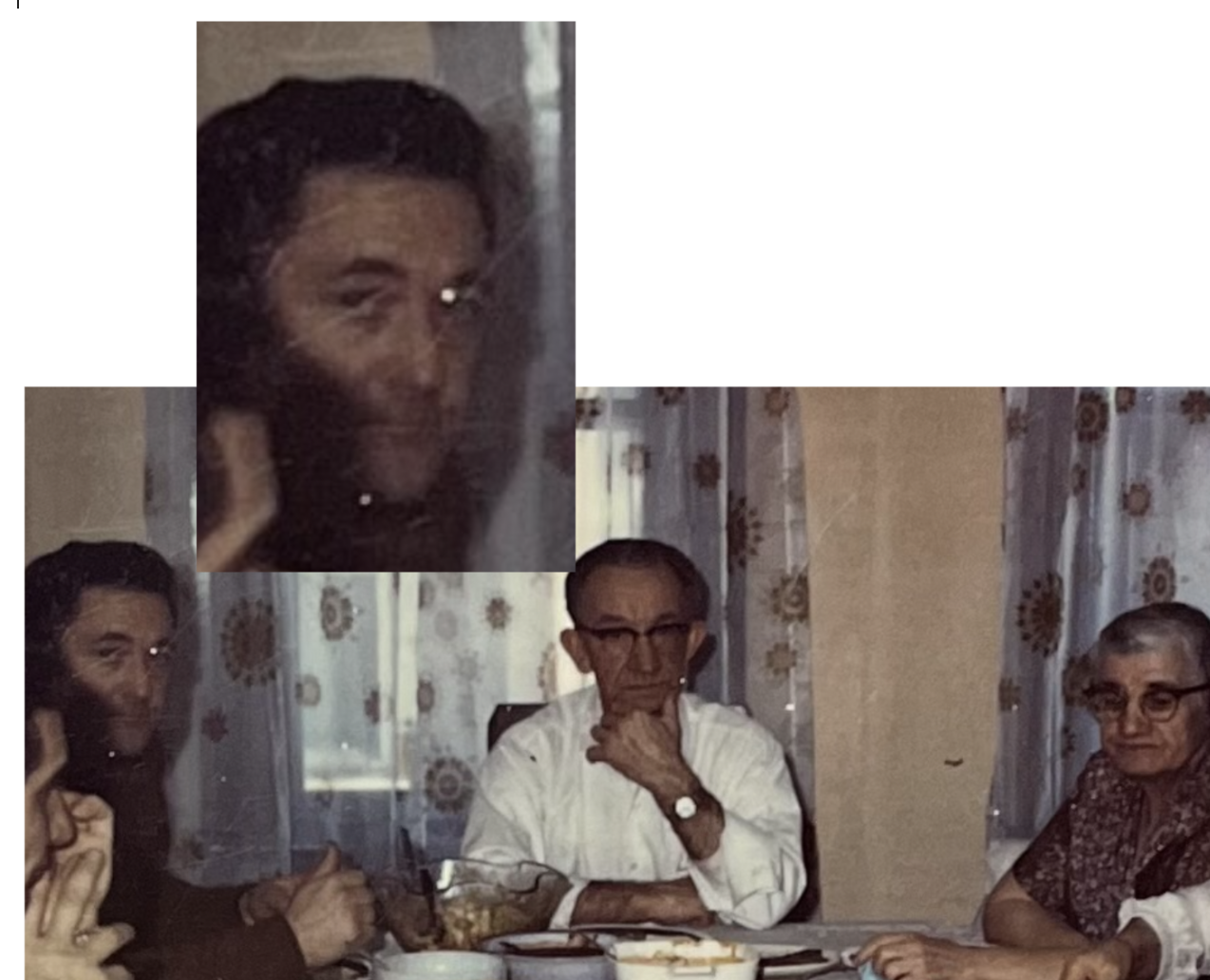
Photo by author
That look. His eyes were the eyes of the men in the FBI posters at the Post Office that I stared at when we walked downtown with Mom. Eyes can be a chilling glimpse into someone’s soul if it’s filled with inner pain. And for the men in the FBI posters, it was understandable that they were that. They were wanted men. But this was supposed to be “Dad,” not some criminal on a wanted poster. Yet in those moments, his eyes were flat and cold, predatory and reptilian, filled with rage, and totally absent of mercy.
So getting hit with that look when we were out with others was a special form of torture. It was psychic aggression, delivered in advance, that worked me over long before we got home. Long before that house door closed and his fist lifted, I was already living that reality, surrounded by happy people while I would be scared, nauseous, and alone.
He would be smiling at everyone else but would ignore me. I’d try to catch his eye to make a wordless plea for forgiveness or at least mercy. Or I’d try to speak to him privately to correct my “mistake” and avoid “later.” As he continued to shower others with his fun-loving attitude, I kept hoping he’d send some to me, but it was all to no avail. Like flipping a switch, he’d find a solitary moment to flash that angry face and remind me I was in trouble. I’d be dying inside. I’ve never felt so lonely, isolated, powerless, and afraid as in those moments. It was surreal and crazy-making because they were all still laughing along with “happy Dad” and had no clue of how alone I was or how terrified.
I so wanted to be able to reach out and tell someone. But first, if I did, that would have been horrible for me when he got me alone. And besides, given his two faces, even if I tried, they would’ve never believed me. Never having seen that face of his behind closed doors, they could never envision he was capable of it…at least not most. On one occasion, he did let his mask slip, and I will share that later.
While I didn’t understand any of this then — I was convinced I was wrong and was just trying to appeal to that warm Dad who supposedly loved me — I understand now that his process was designed to tear me apart emotionally. It was his way to let me know just how truly alone I was. And just how powerful he was because he had them all fooled. They had no idea what was about to happen to me, and I could not tell them. And he KNEW it. He had me at his mercy.
Later, whenever the family outing was over, that ride home would be silent anticipation of what was coming. My only question was how bad would it be this time? My nerves would tighten and tighten and tighten the closer we got to our house. I remember thinking to myself one time, My nerves can’t shake any more than they already are. But then they did.
When we’d get home, the minutes walking to the house seemed like hours. My desperate glance toward him, my last silent plea for mercy, was worthless. He wouldn’t make eye contact. He just walked arrow-straight ahead, steely-eyed, blank expression, but jaw set rock-hard.
I’d barely breathe as I heard the click of the door being unlocked. Each of us filed in, and then there’d be the sound of the door snapping shut. I knew one of two reactions was coming — either violence or total silence, and I feared both.
If he was angry because I’d “ignored him” too much when we were out, then it was the “silent treatment” because he couldn’t very well blow up at me. Mom might notice. He’d wait until he could pick a fight over something that to him seemed logical in front of my mother. But until then, he would act fine to everyone else except me. I was a non-person, isolated and alone. No one else knew what was happening, and I didn’t dare tell Mom or it would be even worse for me.
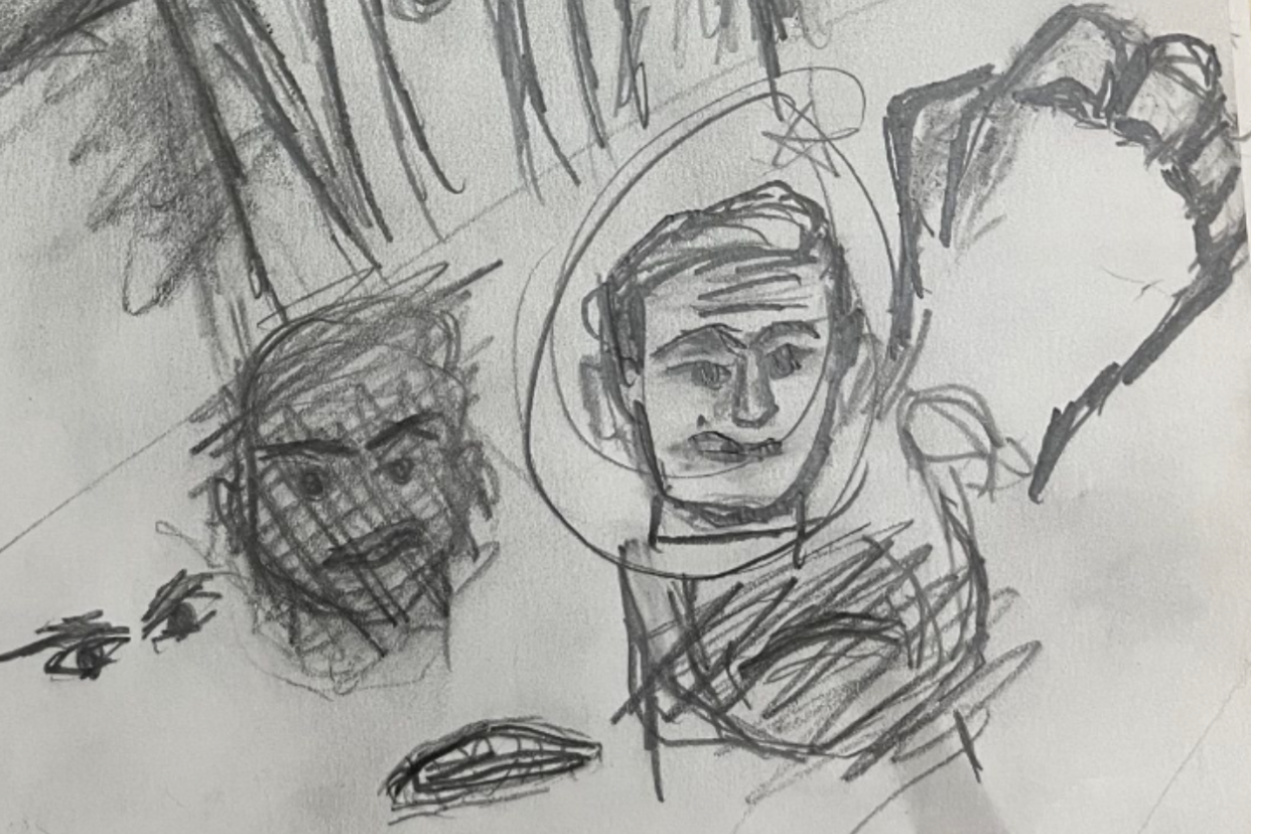
But if it was something wrong that I said when we were out, then it would be the rage reaction. Before the door was even closed, and he finished turning around, he was already transforming. His regular-Dad face slid off like a mask falling to the floor, replaced by “angry Dad.”
Drawings by author
I remember his eyes. They would lock onto me with such hate. He’d tilt his head, and his mouth would shift to one side like he was biting his lip. With gritted teeth and his face a grimace of determination, he’d come at me with balled fists.
In those moments, I was shaking and ice-cold. As I prepared for the hit, I’d back away, hoping to escape to my room before he could catch me. If I could do that, it would give my mother time to step between us and block his path while she uttered her usual, “Hon, stop!”
The Hungry Ghost
So who was the real Dick Phillip? Was he ever real to anyone? I don’t think he was ever real, even to himself. He was whatever or whoever he needed to be in the moment. If anything was real, it was the eyes of his rage when he came at me. That was his “self-reveal,” the empty, hurt man who needed to dominate me. He may have been an abused boy, and that lonely, wounded 18 or 19-year-old in that Navy picture, but by his 30s, he was a hardened predator, reptilian and cold. He’d developed his power process, with methods refined to deliver an effect, then extract a response. He used it masterfully, always. It was insidious.
The Buddhists describe a being they call a hungry ghost. It’s someone so empty inside and needy that they greedily suck up whatever they can from another to fill the emptiness inside them. I think that term applied to him.
 Soul Mosaic
Leave a comment