Teshuvah – the turning and “re-turning” – Part I
Part I -my 2017 journaling:
It is almost Yom Kippur…Day of Atonement,
the end of the Days of Awe,
which are often summed up in the word, “Teshuvah.”
It’s a good word, combining the triad: “turning, returning, repentance,”
a “coming home” of sorts.
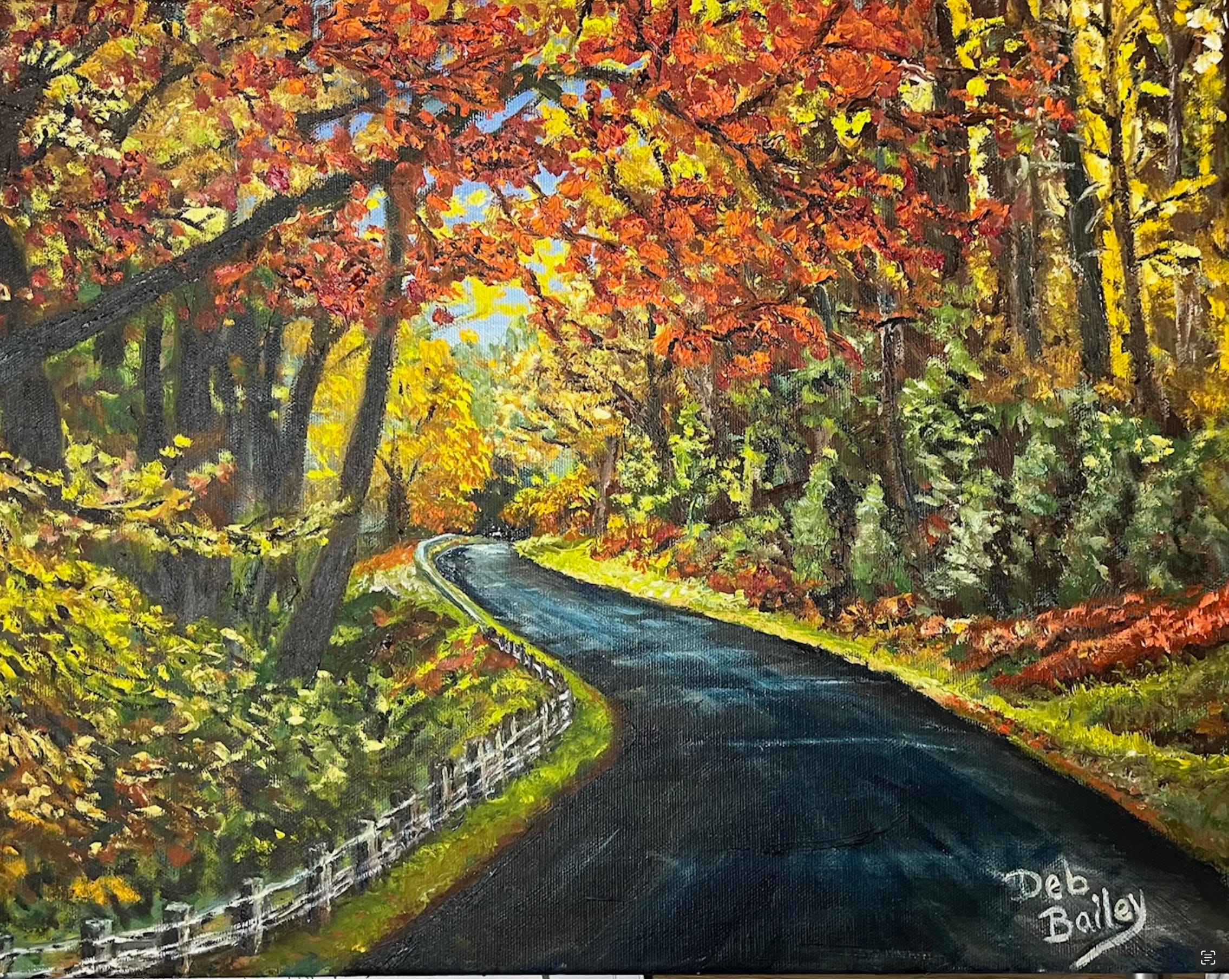
It comes in the reflective and fading days of the year – Fall –
and is a time that calls us to turn from ordinary busy lives,
return to ourselves to reflect,
and repent.
Then, with the end of those days,
we resume the cycle of life and the new year, all over again.
Always, the circle.
The Underworld – Things to remember….
“God is in the darkness.”
Dom Bede Griffiths (Midwinter God ix)
If I had to choose one song to be the theme song for this stage of the work, It would have to be “Break it Down Again, by Tears for Fears. The lyrics and even the pulse of the music capture the emotional turmoil of that nigredo, underworld place, the place where we rip it all open, take it all apart, then wait to hear what it will teach us.
For this post, I will not just share my own thoughts but invite the voices of many others who have made this journey, studied or guided it, and who have a wisdom far beyond me.
What is the Underworld Nigredo Journey?
I call it “Boot camp for the soul,” because it sure feels like that to me. I was challenging myself beyond anything I had done up to this point, and I decided that once I opened that door and released the “ghosts,” I wasn’t turning back. I couldn’t. It hurt too much to stay put anymore, even as it hurt to go forward.
“And the day came when the risk to remain tight in a bud was more painful than the risk it took to blossom.”
Anais Nin
There was only one way past the pain — through. And my only other choice was how fast or slowly that wound would let me move through it.
Of course, I always wanted it done faster. But this work is just like an open abscess that is recovering from an infection — it needs to go slowly and heal from the inside out to be sure all the pus and bacteria are gone. Likewise, the healing of the “soul abscess” also proceeds at its own pace. You can’t yell at it to “Hurry up, already!” Well, you can…but it won’t help.
“The descent cannot be hurried because it is a sacred journey, one not only of reclaiming the lost parts of oneself, but also of rediscovering the lost soul of the culture…It’s not the conquest of the other; it’s coming face to face with myself…Looking to reclaim the parts of myself that have not seen the light of day.”
Maureen Murdock – The Heroine’s Journey (8-9)
So when I get too impatient, I try to remember a line from Howard Thurman’s Meditations of the Heart – “Teach me the patience of unanswered prayer.”
Much has been written about this time of taking oneself apart and staying with what comes up. Philosophers, memoir writers, psychologists, and mystics have all described the process, and their writings describe a very similar experience.
“…the great mystic St. John of the Cross… describes the dark night as a long period of unknowing, loss and despair that must be traversed…” (A Path With Heart, Jack Kornfield)
Christine Valters Painter, in her book Midwinter God: Encountering the Divine in Seasons of Darkness, is eloquent and direct in her thoughts:
“There is an alternate way of being to the culture of ‘cheer up and get on with it’…sometimes we need to be uncomfortable….By staying present to the discomfort of life, we grow in our resilience and our ability to recover from the deep wounds.”
She refers to that work as a “mystical, holy darkness“ that is about “stripping away all of our false idols and securities” to reach a “more profound realization of the love that already dwells within us.”
All of that sounds very lofty and beyond reach. Given that I was filled with self-loathing, especially for my younger self, I felt unworthy. But, if I was going to take it all apart, I figured it was worth a chance. Maybe someday I would like myself better?
What does it feel like?
The author and therapist, Thomas Moore, wrote that the dark night forces us to think deeply.
I would add that it can be a disorienting fog bank that you can’t see through. You FEEL things even as you can’t yet see answers or direction.
Several writers speak of the willingness and the need to sit with the pain and not run away or push those feelings aside because it is precisely in those sorrows and hard emotions that our wisdom resides.
Thomas Moore sums it up this way:
“You don’t know what’s going on. Nobody around you knows what is happening to you. But something is taking place, some deep process dissolving you and remaking you into something new.” (47 Dark Night of the Soul)
Murdock, in Heroine’s Journey, adds:
“This journey…is filled with confusion and grief, alienation and disillusion, rage and despair…there is no sense of time…you cannot rush your stay…there is no quick way out… a period of darkness and silence and of learning the art of deeply listening once again to self: of BEING instead of doing.” (8-9, 92-93)
She ends by noting that to find the way back to oneself, you have to move “…down into the depths of the ground of…being.”
Why do this?
I wanted to be free of the ache inside, and to finally listen to the unanswered parts of me I’d abandoned long ago. It was bad enough that my mother abandoned me to Dad. But then I doubled the abuse when I abandoned myself. Running from me left behind something that stayed alive and bleeding.
“Feelings that are not acknowledged do not go away; they go underground and bind us to the past….In the darkness we are reborn.”
Maureen Murdock, The Heroine’s Journey: Woman’s Quest for Wholeness (126;100)
Even the various religious traditions encourage us to go within and stay with ourselves to find the treasure hidden there. The Bible, in Genesis, tells us to “Go to yourself” (Gen 12:1-17:27). The Israeli philosopher, Martin Buber, wrote that, “All journeys have secret destinations of which the traveler is unaware.” The American Buddhist nun, Pema Chodron, said that “Real safety is your willingness to not run away from yourself,” and Rumi taught that “As you start to walk out on the way, the way appears.”
What might be found on that way, at that secret destination?
“The despair and the beauty dwell together in the same space, not competing, but offering to us the full experience of soulfulness.” It is a place where we can “…rediscover our own power and wholeness in the face of disorientation and disintegration…..we pray for the strength to endure our own underworld journeys and not avoid them. Endurance means we are developing the capacity to make something substantial.” (Midwinter 66, 103)
Risks
You might get stuck in the past and not return to the present. St John of the Cross said there were two kinds of darkness: “tinieblas” and “oscura.” Oscura, I will describe, in the benefits section, next.
Tinieblas is a depression that can “dismantle people without putting them back together again.” (Midwinter God 87). It is the place to be aware of and avoided.
The journey is not about staying in the dark but going there to learn and transform. Yet it is a serious place, and the pain can overwhelm. It can be easy to look back and not be able to move forward.
But we don’t have to get stuck. A skilled therapist or counselor can help us care for ourselves and guide us to reframe what happened, process it, and complete it, and then take new knowledge and healing forward.
A number of memoir writers have expressed differing opinions about whether they would ever write their story again. More than a few said that they would not. Others said that they would, but would know it would be a very difficult journey and not expect it to be full of joy. And yet others said they absolutely would do it again because they felt their growth was worth it.
The bottom line is that it is a journey not to be taken lightly or alone. Whether to even do so, or when, is a very individual choice. It should be a collaborative decision between a person and their advisor. Work with someone. Be gentle. Give yourself a lot of self-care, do not rush the journey, or feel that you even must take it. Each person has to do what is right for them.
Benefits
While Oscura describes a journey that is obscured and shrouded in fog, it can help us grow. It challenges us to look deeply, patiently, and to sometimes wait, with no clear idea of when or if the answers we seek will come. Or if the answers will be what we expected.
But it is the healing darkness that, through our work, can bring wholeness and a return that is a new way of being. It allows us to see all the losses, mistakes, or regrets, process them, and move forward with compassion for ourselves.
“In your black moods and dark fears you find an essential part of yourself…The whole point of the dark night of the soul is the promise of new life….letting the future rise organically from a deeply felt and acknowledged past.” (Thomas Moore, Dark Night of the Soul, 64, 71)
Maybe the ultimate gift can be what psychiatrist Judith Herman said about reclaiming one’s history. It can be followed by “renewed hope and energy for engagement with life.”
Entering My Nigredo time
So, aware of the upheavals in my soul — the emotional pain I was in and the ugliness of my nightmares — I realized that, at least for me, diving deep was my only choice. And that healing work could not just be an “intellectual” endeavor. I was going to have to “get my hands dirty.” To use a metaphor I’ve mentioned before: Stop resisting the stomach bug, and just throw up already.
A college friend of mine once told me that I liked life to be nice, neat, and orderly, but that sometimes life just gets messy. She was right on both counts.
I wasn’t getting any younger. If I wanted a change in my life, it was time to do that scariest thing of all — surrender to the emotions. For a control freak like me, that is the ultimate terror…but the only way.
“The Descent (to the Underworld) always destroys old and outdated ways of being and prepares the ground for the wisdom we need to give birth to our most authentic self. It requires us to make a sacrifice before we continue on our path: the sacrifice of our old upper-world self. It’s a hard process, but in that place of destruction, gestation, and rebirth, we begin to explore the biggest question of all: If we have to let go of everything that once we imagined defined us and mattered to us, what then might we become?“
(Sharon Blackie and Angharad Wynne in Wise Women: Myths and Stories for Midlife and Beyond – 23)
Blackie added that “The trick to navigating the Descent is not to despair, and not to push too hard — but to let the new story emerge in its own time.”
Now again, all of this theoretical verbiage sounds so delightful and easy. Yet, frankly, real life isn’t a fairy tale. But still, so often at a key moment, I’d read a line from a story that delivered exactly the wisdom I needed. I loved Blackie’s line, “…in all the best fairy tales, where there’s life, there is hope.”
I spent months being suicidal when I first got out of my parents’ house. I got through it by telling myself each day to wait to kill myself. That I might miss something. So just hang on one more day and then, if I’d had enough, I could always kill myself then. Maybe if I’d seen Blackie’s book of tales then, it might have made things easier. But the fact remained, I’d lived through that time, and I sure as hell wasn’t going to give up now.
Instead, I would let it all come. It might knock me down. But I was determined to keep going. I’d rest, then get up and push just a little further before I fell again. And then do it again, and again. One of the tales in Blackie’s book said it all:
“Through all the long years, this princess refuses to give up. She endures the stasis and apprentices herself to the hard lessons of the Underworld, playing the long game — until one day…she is ready to act…seizes her opportunity to escape…One of the finest things about this story is that no one rescues this princess. After she’s suffered her time in the Underworld and grown old enough and wise, she discovers that now, she has the resources, finally, to rescue herself.” Blackie (23-24)
One other thing I learned was that “old enough and wise” is a state of mind. It can be a 70-year-old, but it can also be a 17-year-old.
Rupi Kaur was 17 years old in 2009, when she performed her first poem onstage after escaping an abusive 3-year relationship. Though she was terrified, she let the words come through her. And the audience response was strong. So strong, in fact, that she continued to perform and speak as often as she could.
At 21, while still a university student, she self-published her book of poems about her abuse and her life: milk and honey. She was told no one would publish the book, so she did it herself.
There was such a response to her words that Andrews McMeel Publishing offered to be her publisher. Her book has long since hit the New York Times bestseller list, been translated into over forty languages, and sold over six million copies. At her young age, she went through her own Underworld, found her “age and wisdom,” and no doubt has helped the millions of readers who purchased her book. It was recently re-released in a 10th Anniversary edition. And it is still powerful:
my heart woke me crying last night
how can i help i begged
my heart said
write the book
It took me a lifetime to reach the place of seeking wisdom that Rupi Kaur found at 17, but it doesn’t matter. If and when the time is right, the Underworld calls to each of us. And what we do with it is our own choice. Not everyone needs to perform or write. They need to follow their own inner voice as to what is right for them.
When I found her book, it spoke to me, just like the stories of so many other women that I read. The fact that there are so many stories like this out there, and that there are so many readers hungry for those stories, is an indication of just how rampant sexual abuse and assaults are. And just how many need to hear the healing voices of others.
So, about Teshuvah — what does it mean to me?
I love words….I find such power and wisdom in them. Even one single world can hold the insights of an eternity. I will write about some of the words I used in this process in an upcoming post.
But for here, I want to share a word from Hebrew that has true heft: Teshuvah. In its religious descriptions, it is usually spoken of in reference to Yom Kippur, the Day of Atonement, when we reflect on our actions and make amends for things we could have done better.
For me, it has a broader meaning: You go back to go forward. The root of the word includes images of turning around, re-turning, or going back to something. For me, going back lets me see something again, look deeper, see what I missed. And then, when I’ve learned what it has to teach me, I can go forward, changed.
Rabbi Jan R. Uhrbach wrote that it is “not a simple return. Teshuvah is a return forward …to a new creation…We return to who we have always been, and are meant to be, but have not yet become.”
If….
I was driving to work early one Saturday morning. A peaceful moment. Not much traffic. Not a cloud in the sky. Gentle temps. The radio was playing in the background, and all felt right with the world.
And then, the song “If” by the 1970s group, Bread, came on the radio. David Gates sang the words in his soft, soft tone, lulling me into more peace. Until that word, If, said ever so gently, blew my heart wide open.
IF. If only. If only my life had been different. If only my Dad had been a REAL father, a loving one with boundaries. If only he’d never abused me. What could my life have been?
A wave of pain and sorrow, loss, despair, and rage flooded out. I started to cry as I drove, and it took all my self-control to pull myself together enough to finish my commute and get through my day.
IF. One word. Two letters. Yet it represented an entire lifetime of things taken from me, and a lifetime of backed-up, walled-off, soul-destroying emotions I’d never allowed myself to even be aware of, much less feel.
IF. It was my Teshuvah moment. I couldn’t run anymore. I knew in that moment that I needed to go home. Back to Connecticut. Back to the place of my childhood. I needed to physically put my feet on that ground and my eyes on those places, and…listen.
IF I went home, what would I feel…and learn? I had no idea. It would be that journey’s secret destination that I was unaware of, that Martin Buber talked about.
It was overwhelming to consider. And yet, already decided in that moment. I had no choice. My soul was screaming, “TESHUVAH! Go home!”
And, I did….
Teshuvah – the turning and “re-turning” – Part II
Continued from my 2017 journal writings above: Teshuvah, Part II
It is fall again, the end of another full circle.
The sensory delights still remain,
and I smile at the daydreams and adventures of my past.
There is something still magical to me about fall,
even if life sometimes seems less so.
And God…well, God is no longer able to do everything.
But maybe that is better.
It gives us room to breathe, wrestle, and discover.
For years, I hated Him….Her…whomever.
I finally figured out, though, that God is really in a bad way,
because the maker of all, is at our mercy.
Longing to love and heal us, God instead must wait…
for our answers.
Answers have been the problem of my life.
Finally, I have accepted that we are the only ones who can provide them.
They are there, waiting to be extracted from the stories of our lives.
For my whole life, I swore there was no point to telling that story.
But now I have learned it is the only point.
Brought to the light of day, fully felt,
that story may allow me to untangle the knots of that house
and finally discover the answers I’ve needed.
Who do I write this story for?
Certainly, for myself.
But also, maybe for God?
Just as I refused to write for me,
for years I also swore I’d write it for no one else.
What would be the reason?
If I had no answers for myself,
why would I have any for another?
But in the end, the story is the answer to all.
For my answers.
For God, who has been waiting a lifetime to hear my answer
to His request for help with “tikkun olam” – healing the world.
And maybe even for others.
My answers are not theirs.
They have to excavate their own from the story of their lives.
But my journey may encourage another to undertake their own…
and in the process, find their way back to life.
It is Fall, yet again,
a returning,
And finally, God, yes,
you have my answer…
I will help with Tikkun Olam.
Next – The Teshuvah trip to Connecticut
Note:
I am seeking financial support to complete my memoir, work with an editor, and return home for fact-checking. Your help would mean the world to me as I take this step toward healing and giving voice to my journey.
Please like, comment, and share this post to help spread the word. The link for my fundraiser is on GoFundMe. Thank you for your support.



Leave a Reply