sometimes
they ask me to remember
but they want me to remember
their memories
and i keep on remembering
mine
Lucille Clifton, from her book, The Collected Poems of Lucille Clifton 1965-2010, 1987, pg 262
So what DO we put in a memoir?
It takes a lot more thought than just penning a bunch of trauma memories.
Of course, I use my memories, the ones that I have. But do I remember everything correctly? Completely? There have been moments when I think my memory is great. Then I find a journal entry that had even more details than I remembered, and it makes me question how good my memory actually is, even as I’ve carried that image my whole life.
Then, there is truth. We tell something, and we are sure we are accurate. Our intention is honorable, Yet, how often have we heard, “That’s not the way I remember it!” In that moment, anyone listening is wondering, Who is telling the truth? How can they know for sure? For that matter, are we really clear on our intentions?
And then, there is “humanity” in writing. Do we answer the siren call of being true to the art even if it means causing harm to another? Or betrays someone’s privacy?
When I don’t know what to do, I do what I do best – research the hell out of it. I look around for the widest range of answers from experts before I decide what my own path will be.
So I spent the better part of a year reading over twenty books on how to write a memoir, seeking the “Holy Grail” of answers to these questions.
In this post, I’ll share several things I discovered from the many thoughts and opinions I found, things I then had to “chew on” to decide if the advice rang true for me. In an upcoming post, I will share “My Conclusions” for my own approach to what and how to write a memoir.
The nature of memory
“Rubens discovered a peculiar thing: Memory does not make films, it makes photographs.”
Milan Kundera, Immortality
One thing I learned about memory is that it is often pretty good around the moments of intense trauma. I REMEMBER being held against a wall by my throat. I REMEMBER how taut my nerves were when he would come at me verbally and physically. But could I tell you what happened immediately before the incident? Or right after? Or later that afternoon? No. But that moment? Absolutely. So, memory is often snapshots of a spot in time.
And what about those moments when our memory differs from that of another about a shared incident? What do you do? Whose memory do you trust?
“More often than not, we each have wildly different versions of our shared past…’When it comes to writing from your angle of vision, trust your own lens of memory the most… it’s your story, your personal truth.’”
Brenda Peterson & Sarah Jane Freyman, Your Life is a Book: How to Craft & Publish Your Memoir
So it appears that memory, while it can be “mostly” trustworthy, is definitely not that running movie with no gaps. Stick to your lens of what you remember.
The question of truth
Truth. That’s been a big one for me. The immensity of the responsibility to do it right, be true to me, yet represent others correctly AND preserve their privacy, made me willing to stay silent…which inflicted pain on me.
For my life, I had remained mostly silent about the abuse. I confronted my father and informed some family members. But it has only been in the last few years that I started to tell others – people I grew up with who had no idea; co-workers; new friends. It is only recently that I tell it with less and less shame, and more self-acceptance and love.
So, speaking out has taken a lifetime. And I’ll write more about that in another post about “Courage.”
But before I could even get into the questions of “whether to write? Should I use a pen name? Or what are the risks of speaking openly?” I had to figure out what was the truth of the story. And the truth of my life.
For that matter, what is the nature of truth in general? And by extension, is that the same truth in a memoir?
I knew that completely objective truth in life is impossible. None of us is that objective even when we try to be. Whatever I experienced in life was felt in my body and seen through my eyes. I couldn’t see it through another’s eyes and know what they saw or felt.
Three people witness an accident. Ask them what happened and you’ll likely get three different accounts. Assuming no one has a reason to lie, each is no doubt telling what they saw as honestly as possible. But each one may notice different details based on what catches their eye, where they were standing, and how they reacted to it. And each one may have different abilities TO remember. So while none of them is lying, none of them has the whole story either.
Is the truth a combination of the three? Is one more accurate than the other?
Whose truth do you use?
Andre Dubus III, in an interview with Melanie Brooks for her book Writing Hard Stories: Celebrated Memoirists Who Shaped Art From Trauma, spoke of what he did when writing about his family:
“You don’t have to tell the family story. You have to tell your story of being in that family.”
So that told me that truth can be affected by your own feelings, experiences, and perspectives. You have to tell what YOU experienced. You cannot speak of what another felt. You don’t know their side of it.
Does that mean you can tell a story if you remember AND relate every detail?
Can you still tell it if you don’t recall every detail?
Can you “combine details” or change them for the sake of telling a better story?
So many conflicting thoughts on “what is truth?”
Maureen Murdock, in her book Unreliable Truth: On Memoir and Memory, gave her approach:
“Andy Rooney is right: memoir is not history. It’s an attempt by the author to narrate her memories with the greatest emotional truth she can muster. That probably means that not every fact is completely accurate…..As a memoirist, it is your job to relate your memory as sincerely as possible and to assure the reader that you have done a sufficient amount of reflection so that what you write is your best understanding of what originally happened. The reader cannot expect you, as writer, to remember every single detail or conversation accurately. But the reader has the right to expect that what you claim to be true will be accurate to the best of your recollection.”
That seemed good to me… a good, honest, making your best effort.
Then, I read Vivian Gornick’s book, The Situation and the Story: The Art of Personal Narrative, and I was totally thrown.
Gornick’s opinions have sparked controversy because of her feeling that it is the emotional truth that matters most, and hence she is more fluid with the details.
“A memoir is a work of sustained narrative prose controlled by an idea of the self under obligation to lift from the raw material of life a tale that will shape experience, transform event, deliver wisdom. Truth in a memoir is achieved not through a recital of actual events; it is achieved when the reader comes to believe that the writer is working hard to engage with the experience at hand. What happened to the writer is not what matters; what matters is the large sense that the writer is able to make of what happened. For that the power of a writing imagination is required.”
Vivian Gornick, The Situation and the Story: The Art of Personal Narrative
This stopped me cold. So I kept researching her and what other writers thought of this approach.
Victoria Best wrote about that controversy in her blog, Tales from the Reading Room, in an August 18, 2008 a post, “The Memoir vs. Truth,”:
“Addressing a group of students on a non-fiction MA programme, Gornick admitted quite casually (and it seems that her ignorance of fault or lack of shame contributed to the horror the audience felt) that some of the scenes were ‘composed’, and that some of her characters were ‘composites’. This brought forth a strong reaction from the students and a series of critical responses in America’s literary media….”
Best went on to add:
“Gornick’s argument is that memoir and autobiography are closer to literature than to journalism, and that the value of a piece of personal narrative lies in what the author makes of the event, rather than its raw material reality.”
However, Best also notes that any memoir writer has a difficult job. “This pact between the memoirist and the reader, one in which the reader asks for both art and truth, is a tricky one to fulfill.”
So the writer’s dilemma is that a reader wants the story to be true, but also wants it told like a story, in an engaging literary AND emotional way. It is a tall order.
Truly conflicted, I kept searching.
Jill Bialoski, in a Writer’s Digest article, “The Messy House of Memoir,” mentioned similar sentiments about Gornick’s approach to truth in memoir:
“Gornick says: ‘Memoirs belong to the category of literature, not of journalism. It is a misunderstanding to read a memoir as though the writer owes the reader the same record of literal accuracy that is owed in newspaper reporting or in literary journalism.’”
I was feeling really uncomfortable about this approach. Maybe it’s just me, my science background, or my personal wishes for what I read from an author. But I prefer to read something that is true, not made up. I’ll sacrifice art for truth.
Another author, Andrew Hudgins, shared his mixed feelings on this whole topic with Jennifer Leigh Selig in her book, Deep Memoir:
“Hudgins is ultimately uneasy with the ‘illogical, unethical, and immoral position’ that writing about our past leads us to, if we want to create art out of experience…Autobiographical writing ‘dances on the shifting middle ground between fact and fiction, reportage and imagination, actuality and art; different writers will draw their lines on that ground in different places.’”
So there seemed to be three possible paths:
- Strive for all the truth you can give
- Details don’t matter as much as an emotionally true piece of literature
- Yes, all of this exists; it’s damned uncomfortable, and each writer has to figure out what they feel is right.”
The first and the third called out to me.
Humanity in truth – Is it Art ABOVE relationships at all costs?
If the questions of memory and truth are difficult, what about an author so committed to absolute truth for artistic perfection above all that they risk harming another?
This was getting more insane by the moment. And scary. I was already struggling for the courage to write. What do I do with the questions of memory, truth, and now, humanity?
And none of this even gets into the questions about “legality.” Plainly – what if, no matter what I choose, I get sued for what I wrote?
On that last question, I am not going to address it in this post. Later. There is already too much going on here.
For right now, my question was: Are there writers who put the absolute letter of their writing truths above any concerns for the impact their writing might have on another?
In his book, The Courage to Write, Ralph Keyes quoted writer Willa Cather:
“My art is more important than my friend.”
And he also related Joan Didion’s comment on this:
Writers are always selling somebody out.
Even NPR books shared this description of Joan Didion:
“While Didion loved what she called the rituals of marriage, motherhood, and domestic life, she was always a writer first and foremost. Writing was how she processed everything.”
NPR Books
So it seems that these writers, totally committed to full truth, operated from an approach where you have to check your heart at the door. ART comes first, and you must honor art above your relationships. Otherwise, what’s the point?
As much as I struggled with Gornick’s approach to writing, I totally recoiled at these two writers’ views. Where was caring about the people in your life? Did striving for honesty mean destroying others regardless of the costs? Wasn’t there any room for compassionate nuance?
My experience in life has always been to avoid extremes. Any dogmatic “Thou Shalts” immediately puts me off and reeks of simplicity and ego.
I spent ten years working on an ethics board. So often, the best answer was not in authoritative dictates but in a very gray middle after much back and forth. And even if it ended up being an authoritative dictate, it required a LOT of serious consideration before just declaring an unbending truth. And in the ethics board work, that kind of unyielding rule generally only applied to life-or-death matters of safety. Everything else was in those shades of gray.
So this approach left me very conflicted. Frankly, my gut sense was that if being a “true artist” meant callously disregarding relationships, I wanted no part of it. Which again brought me back to that dilemma I face above in “truth” – do I just NOT write? If I don’t, maybe no one else is harmed? Unless someone needs the story? And for sure, I am harmed.
Can a writer be honest, create a good story, and still be humane?
Well, Andre Dubus again, in his interview with Melanie Brooks, seemed to hint at the possibility:
“If this were me, I would ask myself: Am I trying to hurt anyone with this book? If the answer is yes, then I wouldn’t write it, or I would write it, but I wouldn’t publish it. If the answer is no, then I would go ahead and write it.”
Writing Hard Stories: Celebrated Memoirists Who Shaped Art From Trauma – Melanie Brooks
Interview with Andre Dubus III
But that still didn’t answer how humane he would be in handling the truth versus another person’s feelings.
Two other authors, though, really clinched an answer for me. You have to love Stephen King. In twelve words, from his book On Writing: A Memoir of the Craft, he spoke volumes of wisdom:
“Life isn’t a support system for art. It’s the other way around.”
To him, you support life. You don’t sacrifice everything of value in life to create good art. I liked that.
Finally, poet and memoirist Maggie Smith “crossed the finish line with the baton held high in victory.” In her Daily Stoic YouTube interview CREATIVE DISCIPLINE: “Good Bones” Maggie Smith & Ryan Holiday, she nailed it:
“…even in this genre, restraint is important because your words have impact…I think that sometimes people think that courage for the artist is just saying whatever you think. And there is something maybe dashing and bold… about that, but there’s also something maybe cruel about it too. …You don’t want to be someone who’s pulling your punches, but at the same time, do you think about how your work lands for and on other people? …That’s just responsibility. It’s just being a good person. …I’m not a writer first and then a human. And so the human being in me has to be part of the editorial process.”
Then she took the topic even further in her book, Dear Writer: Pep Talks & Practical Advice for the Creative Life:
“One thing people frequently ask me is, ‘How do I write the difficult material?’ The questions that live inside this one, I think, are: ‘How do I write the thing I can’t bear to write? And how do I protect myself — and my relationships — in the process?’”
Her answer to these questions:
“I set boundaries in the book…My mantra…was ‘When in doubt take it out…I believe our allegiance in a piece of writing is to ourselves as human beings, to the people we love, and to the piece of writing itself. And I believe we can use craft choices to protect ourselves and the people we love without diminishing the power of what we’re creating.”
The right to tell your own story?
So with all of these many voices in my head, I came back to my first question:
DO I GIVE UP ON WRITING MY STORY?
And I came back to a word that summed up my original place of decision-making – Levav.
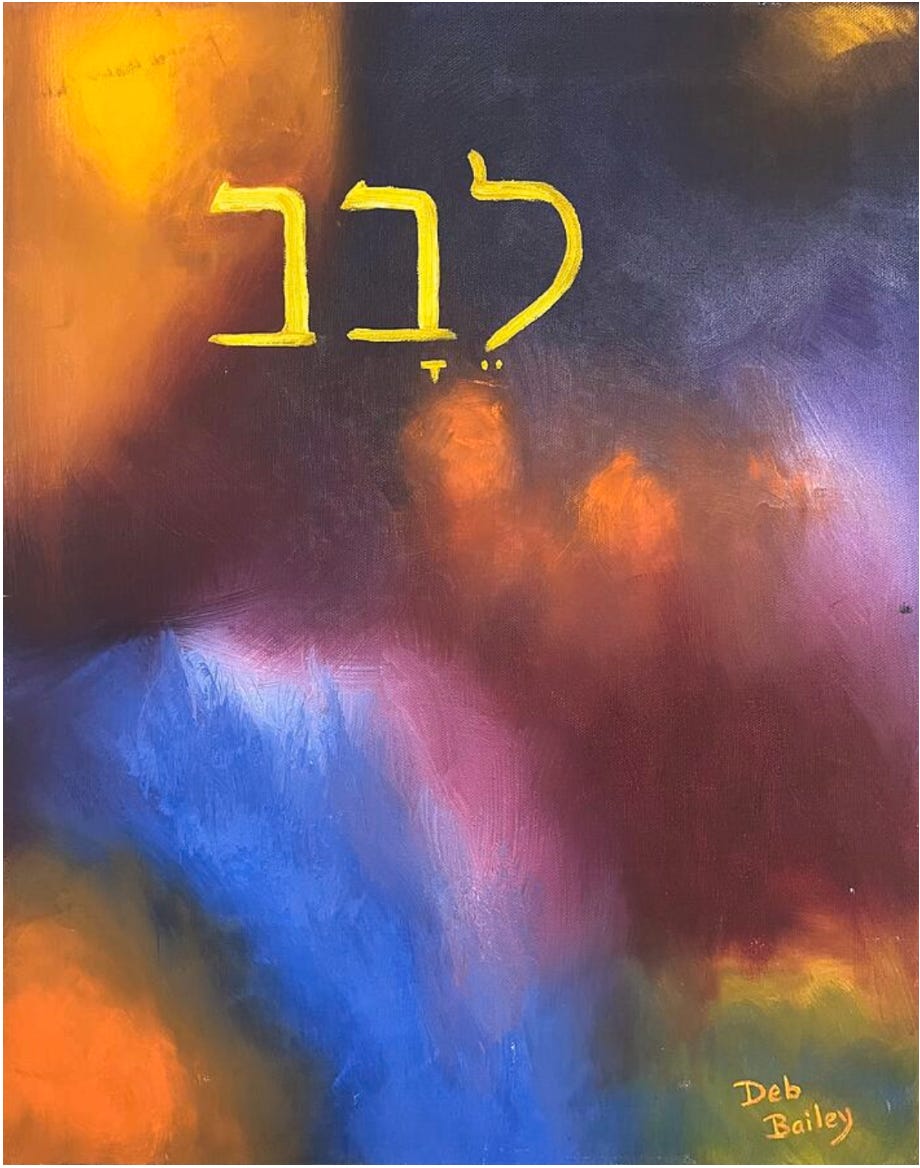
In ancient Hebrew, the word means “heart” but not like the modern definition. It means the place at the core of your entire being – the place that holds your deepest mission in life, your moral intentions, and the trajectory of your life.
That place spoke up clearly and loudly with a resounding, “NO!”
So that was a done deal – I AM writing. And I had company in this approach. Certainly from my husband, son, friends, and therapist. But even other writers had similar opinions:
Writer Jerry Stahl, in his book, Permanent Midnight, said this:
“This is what I think: If you had the nerve to live what you lived, you should have the nerve to write it.”
Daily Stoic podcaster Ryan Holiday, in his book Courage is Calling, quoted Rabbi Hillel’s question:
“If not me, then who? If not now, then when?”
Then he added:
“We each receive our call. If we don’t answer it, then we deprive the world of something. Our failure of courage ripples out beyond us, into the lives of other people.”
And if I had ANY doubt about writing and using my own name versus a pen name, Holiday added:
“If you’re going to speak out: Sign your name.”
My decisions?
Before I share the “rules and boundaries” I drew up for writing this book, I will discuss three more areas that factor into these choices:
Why Write? What Secrets and Silence Do to You
Why Write? The Rest of the Story
The Courage to Write
Note:
I am seeking financial support to complete my memoir, work with an editor, and make a visit to my home state for fact-checking. Your help would mean the world to me as I take this step toward healing and giving voice to my journey.
Please like, comment, and share this post to help spread the word. The link for my fundraiser is on GoFundMe. Thank you for your support.


Leave a comment