“Tibetan Buddhists believe that eloquence is the telling of a truth in such a way that it eases suffering.”
Melanie Brooks Interview with Kate Bornstein in Writing Hard Stories
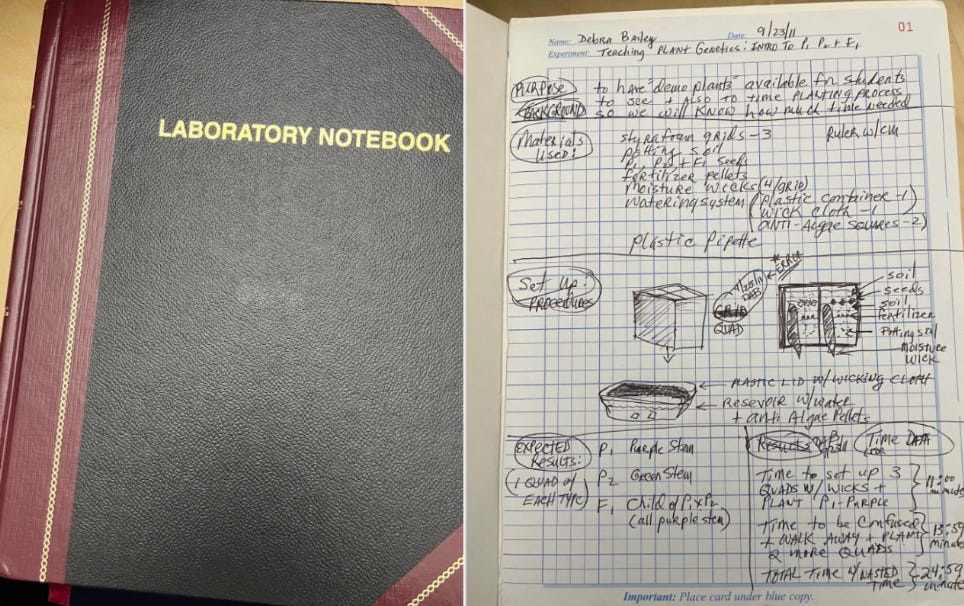
Given my background as a laboratory technologist, science researcher, and then science teacher, I know you can’t do an experiment well without a plan.
So, like that good science-tech-turned-writer, I have researched my ideas, made my lists of risks and benefits for writing, and explored the natures of truth, memory, and courage.
And, like for any good experiment, I have written up “the protocol” — the list of rules for how this particular “experiment” will be done.
Or plain and simple, these are my “line-in-the-sand” rules for what I will and won’t do in this book.
The “Lab Protocol” – My Contract With the Reader
Non-negotiable – Humanity
First, this book is not about revenge and definitely not about inflicting harm. In a previous post, I shared Stephen King’s pithy advice to focus on art supporting life and not the other way around. And author Maggie Smith’s shared that same ethic and said she didn’t want to lose her humanity for her art.
They both drew a very clear ethical line in the sand. And it mirrors my own. So, to the very best of my ability, even uncomfortable truths about myself or others, will not be used as weapons.
Maggie Smith’s maxim of “when in doubt take it out,” is decent advice. And frankly, if there is something I need to convey, I should be a good enough writer to craft a way to express the issue without harming another. It just takes a little bit more work.
Non-negotiable – Truth
While I will respect author Vivian Gornick’s approach to focus on the emotional truth but be more fluid with actual facts and details, I cannot follow that. I will not use composite characters or fictional scenes to show an emotional truth.
Instead, I will follow author Andrew Hudgins’ conclusion that each writer has to decide their own line in the sand. And as to that, I will follow essayist Leo Gutkind’s instruction to use the “tools of the fiction writer while maintaining allegiance to the facts.” He called it: “a sensible kind of honesty.”
Non-negotiable – Fairness – Self-interrogation and reflection
Mary Karr, in her book, The Art of Memoir, had some very good advice about being even-handed in our assessments and judgments of others as we write:
“Try to consider the whole time you’re working how your views — especially the harsh ones — may be wrong. Correct as needed.”
As all the writing textbooks, even for fiction, note: Even villains have good qualities and no hero is perfect.
So it is important to scrutinize not just others, but myself. There is no wisdom to be found in softening the truth and no growth in false self-praise.
Non-negotiable – Objectivity – Stay out of another person’s head
While none of us can ever be totally objective, we can be clear about using only “our eyes” to describe a situation. I can “surmise” what drives another, or give examples of what I saw or experienced from them, but I can never know for sure what they are really thinking unless they say it. I can speak to how another’s words or actions affected me. But I can’t speak for them. So the same is true for this book – I write MY story, not the story of anyone else.
Non-negotiable – Be true to me
“One of the steps to writing a successful memoir is to mine the emotional truth of a situation….”
Maureen Murdock, *Unreliable Truth: On Memoir and Memory
Truth is what is in my heart, what comes through me, what I felt and endured. I will speak my truth as I understand it, and not sugar-coat it. One of my biggest worries all my life was what another would think of me if they knew the whole truth. Well… now is my chance to find out. Holding back now would serve no one, and for me, I just consider “softening things to make me look good, ridiculous.”
Also, no one else gets to tell my story or tell me not to write it. If they don’t agree with me, they can write their own book.
Non-negotiable – Keep the ego out of it
This follows on to the previous one. Speak from humility. Speak from love and openness. And speak only for myself. While things I write about might work for another, they might not. And someone else might do it much better or find a better path. I offer what I learned at face value. Not “expertise.” I am here to walk “with,” not above.
The other part to this is to never worry about another’s comments about me, good or bad, and don’t be seduced by praise. If I feel I am supposed to write this book, and I feel that is coming from a power beyond me, it’s best that I just get out of the way.
Non-negotiable – No judgments or “commandments”
Banned from this book are the following items, sentences, or questions:
- If you only…
- You just have to…
- You should …
- It wasn’t that bad…
- Just don’t think about it…
- Why didn’t you?
- What were you thinking?
- When will you get over it?
- Or any other variation of the above or the usual comments society has all too often thrown at abuse survivors.
Also, while I talk about my own need for God, and my own religious quest in life, those are strictly what I needed to do for me.
Each person must find their own path to peace in life, with or without religion. I make no directives about “Well, just let God” or “You should follow this or that or any religion.”
Non-negotiable – Memory
As I mentioned in an earlier post – no matter how we try to be accurate, or how well we remember something, our memories are not perfect. And what we remember from an event will always differ from another’s recollection simply because each of us experienced and noticed different things. So to handle memory glitches:
- Use all available materials – journals, letters, etc. to state what happened
- Start with the clear statement that I am writing truthfully to the best of my ability and memory, which may not be perfect
- When relating memories, qualify which ones I am absolutely clear about and which ones I am unsure of. Don’t claim I remember everything perfectly
- Research as much as I can because that information can help prompt my memories as well as validate them
Non-negotiable – Gratitude
Gratitude – to God, my husband and son, friends, high school teacher, therapists, supporters, and to so, so, so many people, including those who may not even be aware of it – my deepest gratitude. Each one saved me just by being them. Whether large or small, their presence in my life just when I needed it was a gift I will never forget.
Some simple ground rules on style or writing conventions:
- Names – I don’t name anyone in this book unless they have expressly said they are fine with it.
- Privacy – There are people in my life I choose not to speak of. I am writing my story, and as such, they have not agreed to have their lives be made public. That is their right, and I respect it.
- Not porn – I write to give a clear depiction of the horror and pain of abuse, not to be gratuitously explicit.
- Structure – I will give this its own post next.
The last rule… A “reminder” for myself
I came across this line from a Harley Davidson advertising campaign. And while I am not a motorcycle rider, I have to thank whoever came up with the line. I love it and use it as my reminder every day of my writing:
“When writing the story of your life, don’t let anyone else hold the pen.”
Now, on to the thoughts and questions I have been chewing on about how this book…or maybe? books…should be structured in the future….
Note:
I am seeking financial support to complete my memoir, work with an editor, and make a visit to my home state for fact-checking. Your help would mean the world to me as I take this step toward healing and giving voice to my journey.
Please like, comment, and share this post to help spread the word. The link for my fundraiser is on GoFundMe. Thank you for your support.


Leave a Reply