My definition of trauma
If I had to describe trauma, I’d liken it to a “horcrux” from the Harry Potter books: a piece of another, something alive, inserted into you by that other. It’s their pain, their wound, their “intrusion” placed inside of you and stored there, even as you have no idea what’s happening to you, or why.
But given my science background, I don’t stop with just my opinion. I like to survey a wide range of sources to see if there is a general consensus on the facts.
Another viewpoint
Author Pat Schneider, in her Forward to the book, Writing Ourselves Whole, by Jen Cross, describes it this way:
“Trauma…is a rupture, a bifurcation, a disassembly. Trauma marks the moment when what was ended, and something new emerged.”
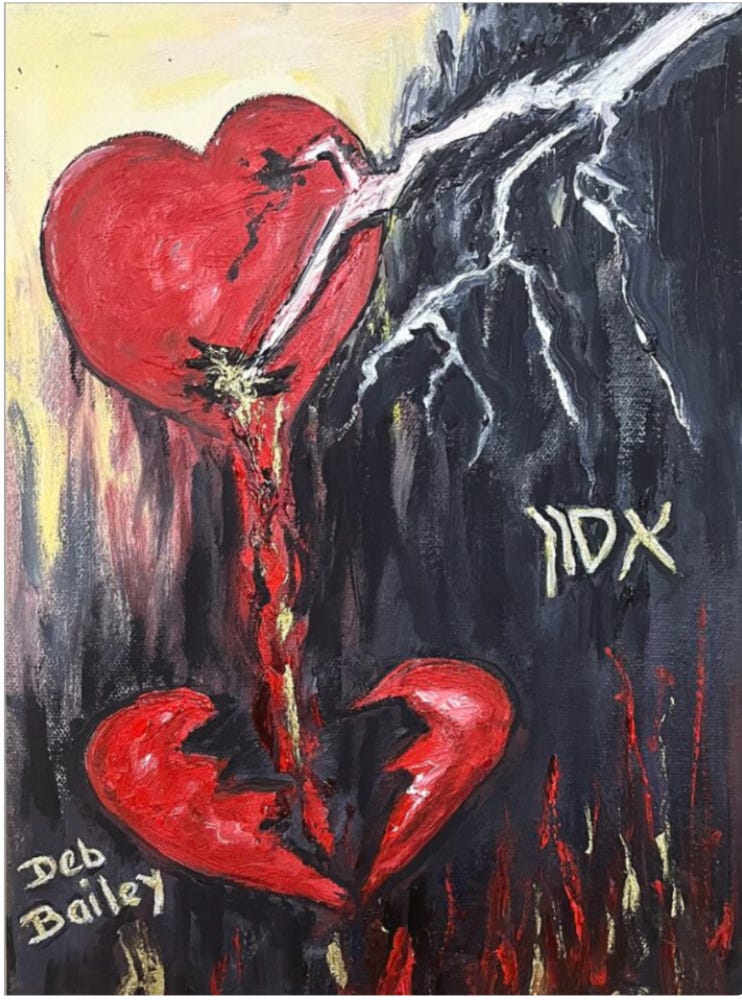
Reading the above, I always ask, “What happens when what “was” was snuffed out right at the start…and you don’t even get to see what was before it was taken?”
Maybe author Jen Cross, in her book Writing Ourselves Whole, hinted at the answer:
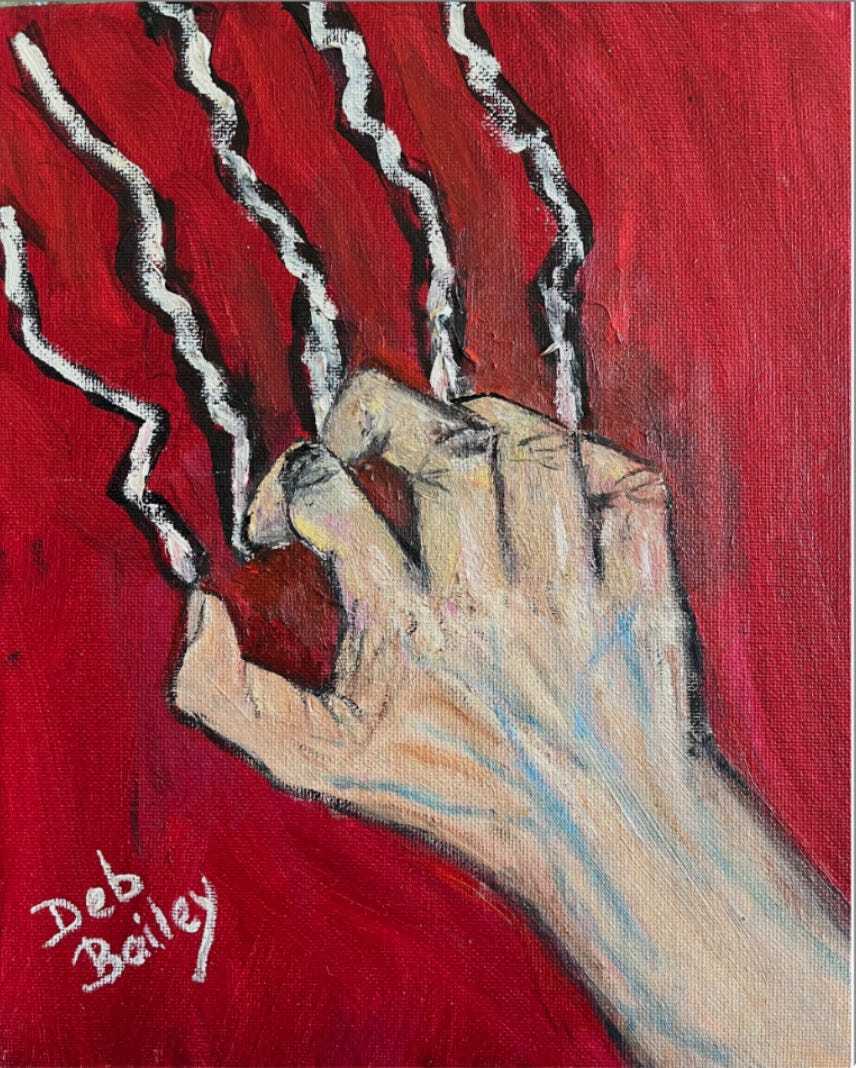
“We who are survivors of horror — of sexual violation, of physical abuse, of mental torture, of emotional manipulation or disregard, of captivity…We’re not the first generation of survivors, we’re not the first generation whose parents…thought we were worthy of abuse: part of our lineage is that truth, borne forward in the mouths of the ones who came before us, in the whispers and models of resilience…No one told us outright how to survive: that knowing is bone-deep ancestral memory, something in these cells that knows about staying alive when everything else says die.”
She goes on to share her thoughts about what trauma is:
“…the unlanguageable: the unspeakable, the unspoken, and the unheard.”
In her writing workshops on sexuality and sexual trauma, she defines trauma as: “any experience which confounds understanding, and which leaves a person feeling silenced: either without access to language to describe it, and/or unwitnessed/unheard/shut down when they attempted to speak about the experience.”
She considers a traumatic experience as “something out of the normal, except of course, for those living with incest or domestic violence, living in war zones, or experiencing political persecution or race-hatred: this IS our normal.”
What about the mental health experts?
So there is much discussion that circles the word “trauma.” How exactly do the mental health experts define it:
In the Diagnostic and Statistical Manual of Mental Disorders (DSM), trauma is defined as “exposure to actual or threatened death, serious injury or sexual violence.”
Jen Cross, Writing Ourselves Whole
“…trauma is really a wound that happens to your psyche, to your mind, to your brain…it is a reaction that you have (to) something horrible that’s going on.”
Bessel van der Kolk, in an interview on The Ezra Klein Show, New York Times, August 24, 2021
“…trauma is a speechless terror…trauma is not a memory but a reliving…”
Bessel van der Kolk, “Trauma is Not a Memory: Insights from Dr. Bessel van der Kolk,” Ronald De Caluwe, March 29, 2026
“Trauma comes back as a reaction, not a memory.”
Bessel van der Kolk
“Trauma is not what happens to you but what happens inside you.”
Gabor Mate, The Myth of Normal: Trauma, Illness and Healing in a Toxic Culture
“Trauma is not what happened; it’s how our bodies responded to an overflow of stress and emotional isolation.”
Janis Isaman
Well, if I was looking for “consensus” on a trauma definition, I sure found it in these. To a person, they all speak to the reaction inside. Not the event itself. It is an inside wound.
What it is NOT
Just as important, though, were the comments I found on what felt trauma is NOT:
“Trauma did NOT make you stronger.
It traumatized you, broke your heart, dysregulated your nervous system, gave you PTSD, sleepless nights, trust issues, connection difficulty, almost killed you, and stole your will to live.
YOU made + make yourself stronger…by showing up for yourself after all you’ve been through.”
Dr. Jen Wolkin, Neuropsychologist and author
Or one I particularly agree with, especially the last line:
“Trauma doesn’t make people stronger. It damages their nervous system. It hijacks their digestive tract. It keeps the person in a constant loop of hypervigilance. To tell someone they are stronger because of trauma is to deny what it has cost them to survive.”
Lessons Taught By LIFE
I so appreciated these. Because IT COST ME A LOT to survive. And every time someone says, “Well at least it made you strong,” or “God doesn’t give you anything you can’t handle,” I want to scream.
What is the difference between trauma and PTSD?
Here again, I defer to the experts for a clear explanation of this:
From a Google search on the two terms:
”Post-Traumatic Stress Disorder (PTSD) is a specific, chronic mental health diagnosis. While trauma is an experience and a natural initial reaction, PTSD occurs when those stress reactions do not fade, lasting over a month and disrupting daily life.”
From the Newport Academy website:
“When trauma goes unprocessed or untreated, it can become embedded in the nervous system and progress into Post-Traumatic Stress Disorder (PTSD)….
The main difference between trauma and PTSD is length of time. Trauma refers to an individual’s experience during and immediately after a life-threatening or highly distressing event. There is a specific set of symptoms associated with this trauma response…
Trauma that is not processed in the mind and body can progress into PTSD, which is a specific mental health diagnosis. PTSD criteria includes symptoms lasting longer than a month that are severe enough to interfere with daily functioning. The event and the memories and fears associated with it are replayed over and over in a…nervous system, like a broken record player.”
Is there more than one type of trauma?
“There are various types of trauma that, if left untreated, can lead to PTSD and/or other mental health conditions.
- Acute trauma is typically a single traumatic event, such as a natural disaster, a car accident, or an assault.
- Chronic trauma refers to ongoing and repeated traumatic experiences, such as child abuse or neglect, domestic abuse, or bullying.
- Complex trauma is a combination of both acute and chronic trauma.”
Newport Academy website
Causes
As mentioned above, there are many causes. The list below is not exhaustive but gives enough examples to make the types of causes clear:
- War
- Rape, Sexual Abuse, Incest
- Physical or Emotional Assaults
- Traumatic events like accidents, medical emergencies, etc.
- Racism or other harmful forms of bias
- Witnessing another being harmed
- Inherited via genetics
Who will suffer from it?
Why some get it, and others don’t, is VERY individual and the subject of much research. Is it biological, something developed even in utero? Could it be some emotional or environmental influence, a lack of supportive help, or a genetic factor handed down? Or other factors we do not yet know?
For example, some combat veterans are deeply affected by what they lived through in battle, yet others might return okay despite horrific experiences. Was it the type of experience? The number of them? Was it the veteran’s age? Biology? Did one have more support?
In my case, I was severely traumatized by sexual, physical, emotional, and mental abuse. I have complex PTSD. My therapist did note that type of PTSD can be affected by the frequency of the abuse, its severity each time, and the overall duration of the abuse…how long it lasted before it ended for good or the victim finally escaped it.
For me, all three of those items were off the charts:
- The intensity of the sexual trauma was horrific. My young mind had to deal with a powerful, intense, adult sexual energy I didn’t even understand. From pre-verbal times in infancy to adulthood. So my young circuits were overwhelmed.
- Add to the sexual assaults, the intensity of my fear when I was pinned to a wall by my throat and feared he would kill me. I had no means of defense, and feared for my life thousands of times at the hand of a much more powerful adversary.
- There was the intensity of how often he drilled in the programming: This is love. Don’t tell. They wouldn’t understand. This helps the family. You’ll destroy the family if you talk. This helps me with your mother. Don’t tell. Don’t tell. Don’t tell…..
- The duration of ALL of those things was twenty-eight years…with another twenty years after that of fighting my father or having to deal with him in some fashion as I tried to recover. It was essentially lifelong.
- And through all those years of abuse, I was alone in my traumas. I had no support, no protection, no “comrades in arms” who had my back or shared the experience.
Yet, I lived. Another person could have one experience and never recover, or even end their life. It does not make them weaker. Abuse is NOT a competition. It is totally individual. Why I lived and another might not could have many reasons beyond our understanding.
It’s not a contest
So who will get it or why? I don’t know. I only know it is not a contest for who had it the worst. There is no defining “worst” in purely objective terms using a calibrated analytical scale. Worst for each person is within them.
Up next
In the next post, I’ll get into the nature of trauma — its science and its biological, chemical, and psychological effects on a person.
Note:
I am seeking financial support to complete my memoir, work with an editor, and make a visit to my home state for fact-checking. Your help would mean the world to me as I take this step toward healing and giving voice to my journey.
Please like, comment, and share this post to help spread the word. The link for my fundraiser is on GoFundMe. Thank you for your support.


Leave a Reply