Mother hunger and my house
“For girls without mothers or maternal figures suffer an injury that author and licensed professional counselor Kelly McDaniels calls mother hunger, the feeling of terminal brokenness, of primal fear of abandonment, or disordered boundaries, a wound that resides deep within the right brain as a result of not receiving adequate nurturance, protection, and guidance in the early years of maternal attachment.”
Daria Burke, Of My Own Making
Author Daria Burke followed her above quote with an assessment of her own pain:
“In my case, my self-image had been all but shattered…The emotional neglect I suffered left me feeling insecure, unworthy, and with a persistent sense of needing validation of my place in the world. Please, perfecting, and performing at the highest levels became cornerstones of my identity…survival tools…
There’s a huge abyss of pain within me that’s been there my whole life and is centered around my mother. Yes, she was always there…physically. We had clothes, food, and supervision. But… there was emotional abandonment, disinterest, lack of protection from Dad, and the feeling I was sacrificed for family security.
There were things I think she knew. But she didn’t fight him. And so often she didn’t look at me. When he was at me emotionally all weekend for “payback” because I’d avoided his ‘advances,’ I didn’t have her protection or care either. So many times, it was a “turned back.”
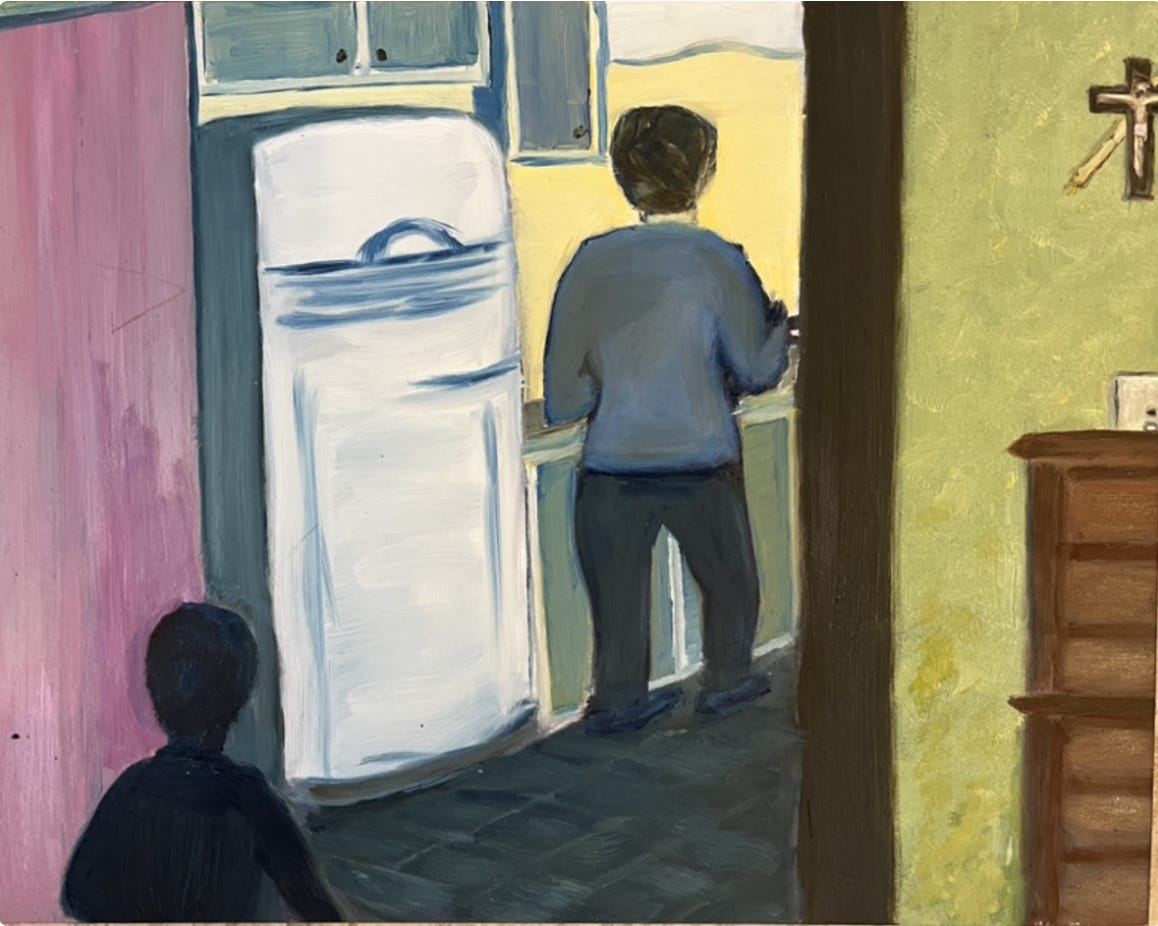
Whether that was her payback to me because she sensed his over-interest in me, or her way to survive an impossible situation for both of us, I don’t know. One therapist suggested “pathological denial.” If you don’t turn around, you don’t see, and if you don’t see, it doesn’t exist. She might not be able to deny his violent temper and abuse, but other things I think she tried to rationalize. Yet, still, she KNEW something was off.
Even she couldn’t deny the “weirdness” of the time Dad insisted we all shower together. There were times she expressed discomfort with how he kissed me. There was the door on my bedroom and no one else’s. And the fact that, as a young girl, I went to Confession every Saturday afternoon that I could. What was the source of such intense guilt in an 8- or 9-year-old girl? She never asked.
There was the time when Dad demanded I go with him on a Saturday afternoon after she told me she wanted me to stay home and help her. Trapped between the two of them, I knew I had no real choice. If I didn’t go with him, I would pay dearly.
When I told her, she cornered me in my bedroom, got in my face, and, fiercely but ever so quietly so he wouldn’t hear, demanded to know why I didn’t love HER. She confronted ME, not him. And even as I desperately wanted to tell her why I had to go with him, I knew it was useless. She wouldn’t or couldn’t help me.
The fact that I was so certain meant that, even at that age, I already clearly understood that “maternal love” had definite limits. I heard that “I didn’t matter”…which, to my child mind, meant I was unlovable. And my conclusion was, “My mother doesn’t love me…and if my own mother doesn’t… who would?!”
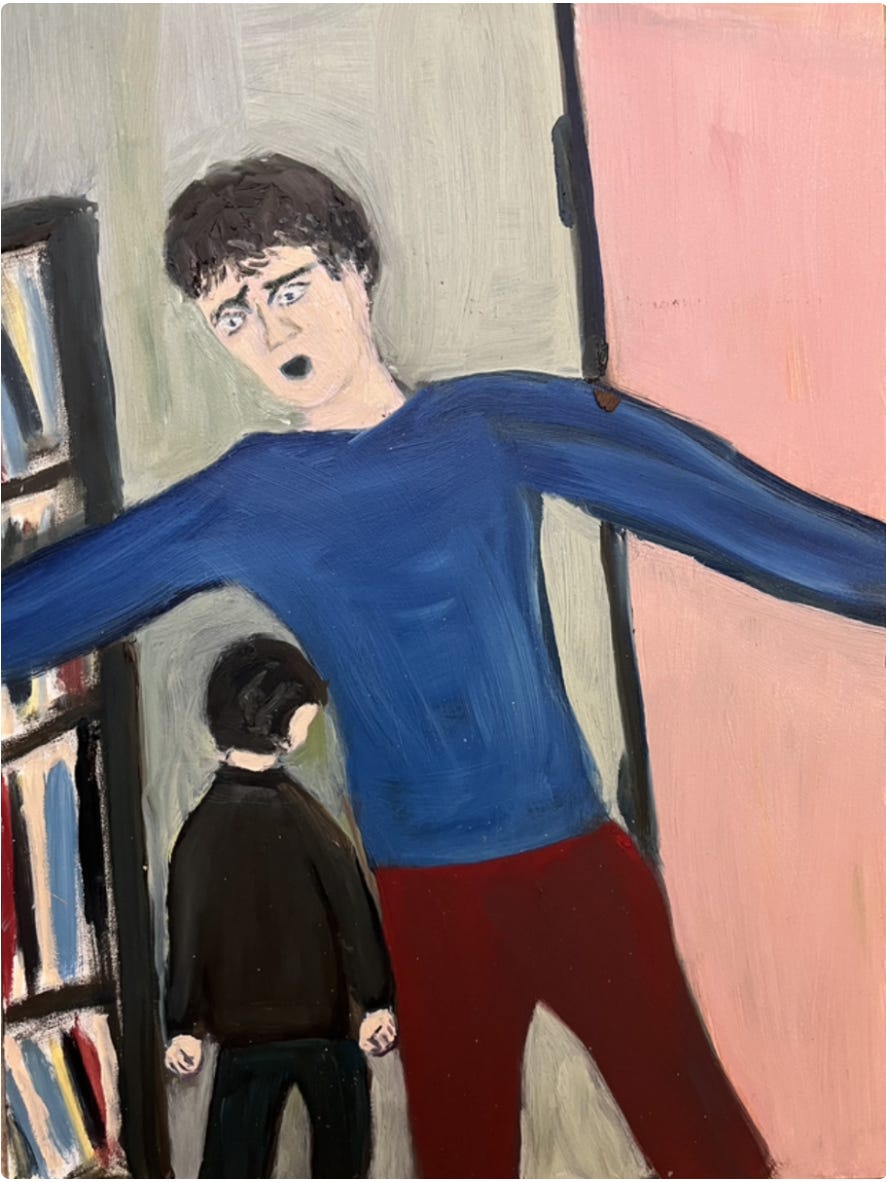
The truth is, there was a wall between us our whole lives. And that hurt. But just how far back did that breach between us extend? When did it happen? And could I ever find a way to heal it?
The EMDR session on Mom
I had spent a lifetime recovering from all the abuse. A lifetime learning skills, rebuilding me into a whole person. Moving forward on so many things. But the most treatment-resistant issue of them all was at my very core. And it was only now, late in life, that we had finally realized what was going on. So, it was back to EMDR. And while it was one of the most intense ones ever, it finally broke it all open:
Journal notes: “Post-EMDR 7/22/2024”
Today’s EMDR was a very different process and didn’t finish on the usual note… it took almost two solid hours of work to realize:
This is VERY complicated with MANY triggers and parts to it, but all of which boil down to:
- I don’t matter, I am unlovable, and unloved; therefore I must fight to claim the love I deserve.
- Today’s effort was like dissecting an owl pellet – pulling apart many threads and strands to discern all the discrete elements of what is operating here.
- It started VERY tangled, and we untangled “some of it”…and we now know what work needs to happen now.
- The pain revealed, the tears, the wound uncovered, ALL HAVE TO DO WITH NO CONSISTENT LOVE IN INFANCY
The wound is:
- VERY YOUNG – ROOTED IN INFANCY AND LACK OF LOVE – “OBJECT CONSTANCY”
- AS WITH AN INFANT AND MOM PLAYING PEEKABOO, AND IF MOM DISAPPEARS SHE IS “GONE,” AND THE INFANT IS ALONE, I FEEL SOMEONE’S LOVE, AND THEN IF THEY ARE GONE, SO IS THE LOVE
- HARDEST TO TREAT
- NEEDS “SOMATIC” HEALING
- IT EXPLAINS THE POWER OF MY TRIGGERS AND REACTIONS
- EXPECT REVERBERATIONS
The experiences I’ve been having with all the triggering reactions have been disorienting, powerful, and really upsetting – like EMOTIONAL VERTIGO. All the messages, triggers, things that came up, trust issues- they all boil down to the message:
I don’t matter, and I am unlovable. My mother didn’t love me; therefore no one can/will.
That is not a message I thought up – it is one burned into my soma, my nervous system, by what was done to me in my life – VERY early. Pre-verbal, pre-toddler. Abandonment. By both parents.
My therapist noted that there are two parts operating in me:
- ADULT
- I am very competent, resilient, strong; I’ve done a great job learning, recovering, putting me back together
- I am NOT a “crazy woman” as I’ve questioned, but am very healthy
- Given 2 full decades of multiple abuses (sexual, verbal, mental, emotional, physical) and witnessing violence, living in chaos, and no consistency of love or protection – I’ve still emerged intact, no addictions – I am OK
- I have very intact boundaries
- VERY YOUNG part which holds that very BIG PRIMAL WOUND
- Any logical messages do NOT help or get through
- It’s like that baby stage where there is no “object constancy”
- Baby sees Mommy hide behind hand, and she is “gone”
- In my infancy – there was no security or consistent love
- This insecurity was instilled VERY early on
- This wound is SEVERE, PRIMAL, HARD TO COME BACK FROM and the HARDEST TO TREAT
- It is all about “will it (love/friendship/mothering/whatever) still be there
- About terror of being alone, abandoned
- About needing mothering
- This is literally stored in my “soma” – body tissues and nervous system
- Add to it the two decades of additional powerful abuse memories to reinforce these early experiences
Because of this wound, in my friendships I have the filter of:
- I am afraid of you even as I want so much to have a lifelong connection with you
- You can hurt me
- The people I most FEAR are the ones closest to me; THEY can hurt me; casual acquaintances are no problem
- So with people close to me, I look for that evidence that they will leave or hurt me
- Then I go into an abuse cycle which is: “Just get it over with and hurt me”
This situation is hard to live with because:
- Healing it requires a way to process a deep pain that’s without words and does not respond to logic
- It is hard to communicate to someone who has never experienced it – hard for them to understand, and so I come across as childish or confusing
- I need to, and am working to use my strong adult skills to build and keep building relationships
This situation is very complicated to heal and needs other approaches
- This needs “somatic” work – literally ways to hold me
- A way to help me/befriend me, that early person
- The somatic work is touch- and other-based, NOT word-based. Not “logic-based”
A moment for explanations
What did my therapist mean when she spoke of “object constancy” versus abandonment? My mother and father were “there” when I was an infant. It wasn’t like they left me alone in the house. But maybe “attachment” goes much deeper than that?
Bessel van der Kolk, MD, explained that “psychological well-being does not begin with reason or behavior, but with relationship — from the very first moments of life… that secure attachment to a caring parent or caregiver literally forms the blueprint for how a child experiences itself, others, and the world. ‘You become how people see you’…When a child…encounters unpredictability, emotional distance, or rejection, that experience becomes a fundamental part of the personality. ‘If no one truly sees you, you essentially do not exist’…children do not consciously ask themselves whether they are safe — they become safety, or they become fear.”
Bessel van der Kolk, MD, in an interview with Ronald De Caluwe, “Trauma is Not a Memory: Insights from Dr. Bessel van der Kolk”
Research shows that from birth, the infant is seeking connection to a secure caregiver who will comfort their crying and keep danger at bay. If the baby senses that crying brings on danger or neglect, the attachment to the caregiver is derailed.
Dr Robert C. Scaer noted that “A healthy reciprocal maternal interaction provides stability to the arousal system of the infant brain, and inhibits them from excessive over- or under-responsiveness to threat.”
My therapist used a term “object constancy.” When I looked it up, I came across related terms, such as attachment theory, object permanence, and emotional permanence.
First, the attachment bond is the deep and growing relationship between an infant and the caregiver. It is driven by the infant’s need for comfort, security, and physical closeness to a primary caregiver. The infant is seeking a secure and stable base for its existence. The healthy development of this attachment bond leads to object constancy, object permanence, and emotional permanence
Object permanence: This is the cognitive understanding that a person or object exists even if they are out of sight. An example is the game “peek-a-boo.” Early in infancy, if the mother hides an object, or she hides from that baby, the object or “Mom” no longer exists. But as the cognitive skill develops, the infant comes to know that just because an object or Mom is hidden, they both still exist.
Object constancy: This is the development of the infant’s emotional view of the caregiver. Here the infant learns to construct a “representation” of their caregiver, such that they realize Mom is the same person whether she is feeding them, changing them, holding them, or walks out of the room and then back in again.
Very closely related to that is “Emotional permanence.” This is a form of object constancy, but it is an emotional feeling. Here the infant learns that the caregiver continues to love and care for them even if the infant is feeling different emotions towards them, such as anger, frustration, upset, or happiness. They also learn to trust that they continue to be loved even when the caregiver is not present.
If the attachment bonds in infancy fail to develop or develop in a faulty way, the infant, and later, the adult, have a chronic fear of abandonment, need constant reassurance and validation of their worth, and may even experience mood swings from very happy to very sad, or feeling bad about themselves.
So what about an attachment bond in my infancy?
As I noted earlier in a post about the effects of trauma, those emotions can be picked up by the infant in utero. Emotions in the mother, the environment, sensory details. And this would be the case once the newborn infant was brought home.
My mother had lost a baby a few months before I was conceived. Right after me, she became pregnant again. So, within her first three years of marriage, she had three children. She had no extra help from her mother. And my mother was nervous during my infancy, and not the most self-secure person overall. So there were a lot of anxiety issues operating in the house.
HER mother was not there for her emotionally during her childhood. And in fact, my grandmother had been abandoned by HER mother in her childhood. Then my grandmother, as a young woman, had four children, endured her husband’s alcoholism, and carried so much stress with the survival and money fears during the Depression that she had a nervous breakdown. Another relative had to help my grandfather with the kids during that time. Consequently, my mother, who was the youngest, received very little mothering herself. She, in turn, struggled through childhood with self-esteem and security issues. So suffice it to say that there were already some major intergenerational mothering issues taking place in her family.
My mother was home alone with me, something most women of that time did. She also had no close friends, no help at home, so little emotional support, and no time for herself.
So she was having babies, caring for babies, pregnant with babies, or all three at once, on her own. And that time period also espoused the child-rearing philosophy of “let the baby cry” and get them on a set schedule.
As to that time period, she was expected to be the perfect wife. Have and take care of babies. Do the housework. Put dinner on the table, and have no means of support financially except my father. It was the 1950s, so women didn’t have a lot of economic rights. Add in that we lived in a male-dominated, Catholic, ethnic, patriarchal culture. The rule was you stayed in the marriage. Suffered quietly and prayed. And everyone else stayed out of your business. The man of the house ruled.
As to the “man of the house,” my father was working full-time and going to school full-time. So at the very least, he was absent a lot and tired. And I suspect he did not feel like he was the center of my mother’s attention during those years. Also, I can’t speak to whether his physical violence toward my mother had started yet…or was worsening. For sure it would worsen in the next couple of years, and I remember Dad’s violence with her and me from an early age. But whatever it would soon be, I expect that during my infancy, the presence of all of that tension was already operating.
And then, the obvious wound was added on – his sexual assaults on me….
So, given all of this….I cannot imagine that my infancy was a time for much secure attachment to either of my parents.
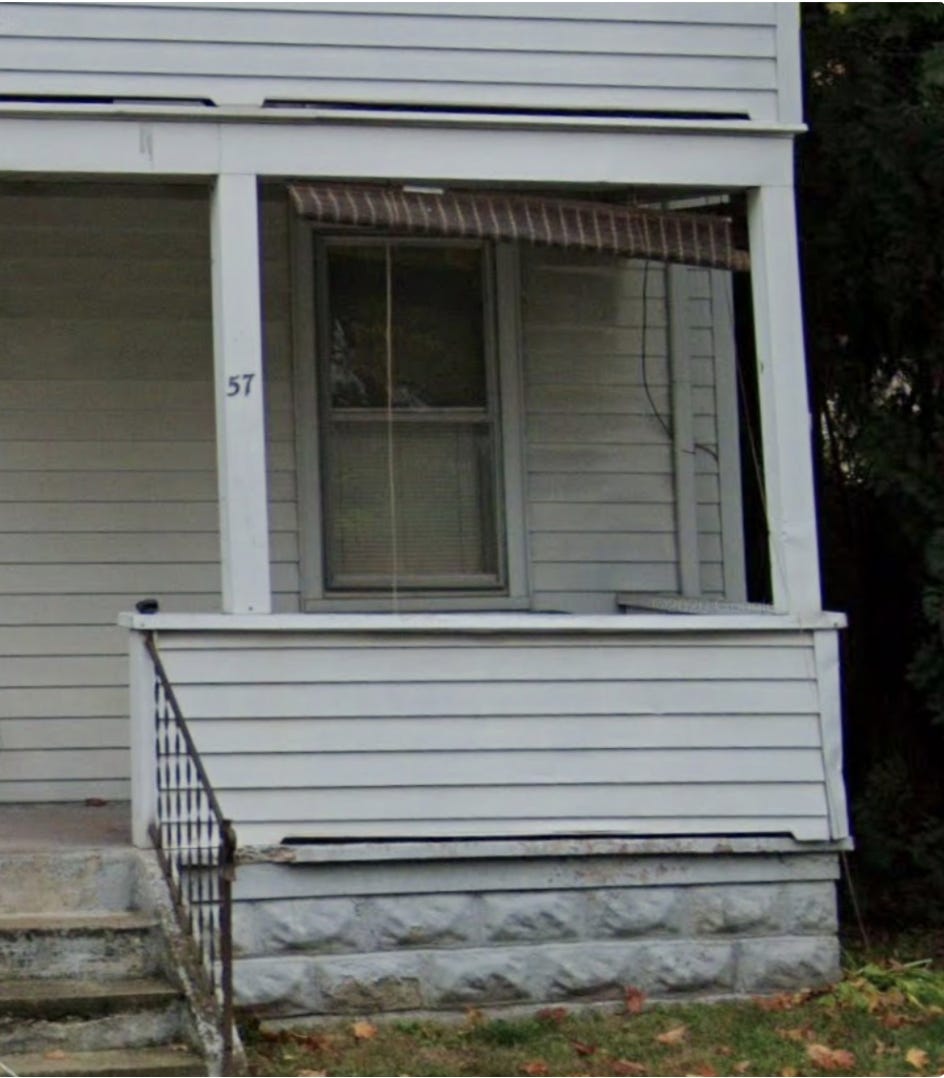
If I had any doubt, all I needed to do was come back to that question of “What do you fear?” as the way to know what happened in my infancy. I can still recall my reaction when, a few years ago, I paid a visit to the house where my parents had their first apartment. It was the place that they lived for the first two years of my life.
The moment I pulled up outside, I was flooded with intense dread and fear. In fact, I could barely stand to remain there. It was all I could do to just scan the exterior before I had to put the car back in gear and get out of there. I couldn’t stand it another second.
Up Next
With all of the various trauma issues, effects and damage operating, I can now understand why it took me so long to be able to leave that house. Up next – “Why I Couldn’t Leave”
Note:
I am seeking financial support to complete my memoir, work with an editor, and make a visit to my home state for fact-checking. Your help would mean the world to me as I take this step toward healing and giving voice to my journey.
Please like, comment, and share this post to help spread the word. The link for my fundraiser is on GoFundMe. Thank you for your support.


Leave a Reply