If there’s one movie character that I immediately associate with my father, it’s Robert DeNiro’s hitman character in the movie The Irishman. The facial expressions, the coldness, the matter-of-fact attitude when hitting someone. In both attitude and mannerisms, my father and that character could be twins.
Even at the end of the movie, they were alike. DeNiro’s hitman was nearing death, but was without remorse or apology for his life; he showed no introspection about his life’s choices. My father was the same. Flat emotions. No apology. Just cold to the end. I sure didn’t see any concern about “meeting his maker.”
The origins of his “malware”
“Although the majority of victims do not become perpetrators, clearly there is a minority who do. Trauma appears to amplify the common gender stereotypes: men with histories of childhood abuse are more likely to take out their aggressions on others, while women are more likely to be victimized by others or to injure themselves.”
Judith Herman, MD, Trauma and Recovery
My father shared stories that pointed to the fact that he was abused as a child. His mother could be violent with him. At least until he got to his teens. He said that the last time she hit him, he just stood there and stared her in the eye. He noted she looked afraid and never did that again.
She gave him unnecessary enemas that no doubt crossed boundaries with sexual implications. I remember him telling me how he would get turned on to see her walking around in her bra when she was nursing his baby sister. He also happened to mention that, as a middle-school-aged boy, he often had to change his baby sister’s diaper. Given his later admission to getting turned on when giving me a bath as an infant, I have to wonder how safe she was with him and if his sexually abusive tendencies were already at work then.
His father was a weekend alcoholic who also worked a lot of hours at the munitions factory during the war. So he was either absent, drunk, or getting beaten by his wife, who yelled about feeling abandoned and having to do everything.
So I have no doubt that my father came out of that home with some serious pathologies relating to sex and gender roles, and fears about the relative power…or powerlessness of men versus women.
My feeling is that fear of women’s power drove him relentlessly to an extreme need to dominate and control my mother. His was a total embrace of “patriarchal power” in our house. And I think that stayed with him right to the end.
What is “patriarchy”?
In her book See What You Made Me Do: Power, Control and Domestic Abuse, author Jess Hill explained patriarchy as a “dual system of power: men’s power over women, and some men’s power over other men.”
I get the first half of that sentence. It was that second half of the sentence I needed to unpack and will get to in a moment.
As to men’s power over women in general, Hill noted that “patriarchy entrenches male dominance,” and she used sociologist Allan Johnson’s research to define patriarchy’s four elements:
- Society is “male-dominated”: positions of power are held predominantly by men
- Society is “male-identified”: patriarchy sets masculinity as the benchmark for what is good, desirable, or normal
- Society is “male-centered”: we focus primarily on the exploits of men and boys
- Patriarchy is organized around an obsession with control
Hill notes that it is especially that last one that matters in domestic abuse: “The capacity to show power and control is the standard by which men are measured…How and what they control doesn’t matter, so long as they create the impression of being in control.”
This sets up a dynamic where men are expected to live up to patriarchy’s rules, which are “regulated – through fear, control, and violence – by other men.” Hill explains that while men are generally seen as more powerful than women as an overall group, individual men do not always feel that way. In fact, some feel powerless. However, the one thing they DO feel is ENTITLED to power. And this sets up the dynamic for abusiveness:
“When men feel powerless and ashamed, it’s their entitlement to power that fuels their humiliated fury, and drives them to commit twisted, violent acts. That entitlement to power is the key to understanding why men and women generally respond so differently to shame and humiliation.”
So you have my father at the mercy of an abusive mother who is triggering desires in him at the same time. And he is left undefended by a weak father figure. To him, his father may have stood for very little, especially when he was beaten by his wife. If his father was powerless against his mother, that may have intensified what my father felt as a boy dealing with her outbursts. I know he carried a rage against her most of his life. He would not call her very often unless my mother nagged him to. And when she was dying, he said he had a long conversation with her in Slovak, so no one else could understand, and let her know all the things he was angry about.
Throughout his life, he operated as a tough guy. Even when he was old and dying of cancer, he had to be macho. One particularly frigid northern winter night at home, he complained of being cold. My mother suggested he wear a robe, to which he snapped, “Men don’t wear bathrobes.”
When I was there one week to help my mother care for him, he refused to use his walker, thus risking a fall and more problems for my mother. I told him he needed to use the walker, and he immediately shot me that same rage-filled look he used when I was a kid, balled his fist as if he were going to hit me, then finally just walked away. In fact, two nights before he died, my husband and I had to go to the hospice facility and talk to him because he was being abusive to the young nurse who was trying to care for him.
So that Robert DeNiro, tough-guy hitman character devoid of empathy to the end? That was my father.
His goal, whether he knew it or not
Plain and simple? It was about him filling his needs. Sexual gratification. Emotional support to assuage his core insecurities. It came down to him sucking the life out of us to supply what he craved and couldn’t give to himself.
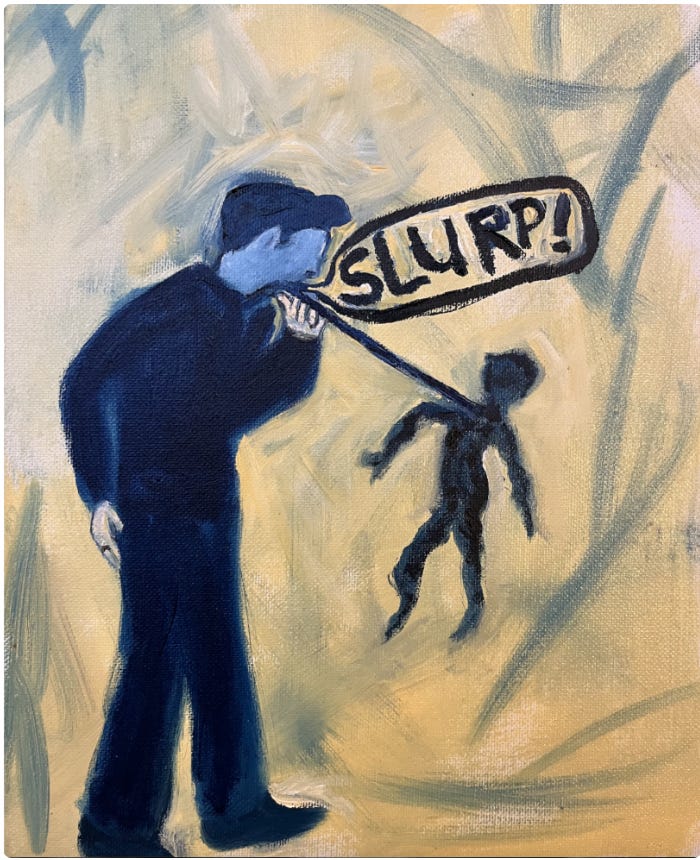
We were his “captive audience,” the targets of his demands…and retribution if…no, WHEN, we failed to meet his needs. Because the truth was – no one could have filled those needs. That gaping wound inside of him was cavernous.
“Selections” and the Charm Offensive
I don’t know that he KNEW any of this. Did he consciously set out to be a certain way? I feel he set out to get exactly what he wanted and needed, but whether he was actually aware of what drove him, who knows. He probably wasn’t. He just acted from having a need and seeking to fill it.
He courted my mother all during his stint in the Navy. He would get leave, get to his home in Bridgeport, then take the car and drive to Torrington to visit my mother. They spoke of him spending his time there; he slept with her dad and she with her mother, to keep all proper.
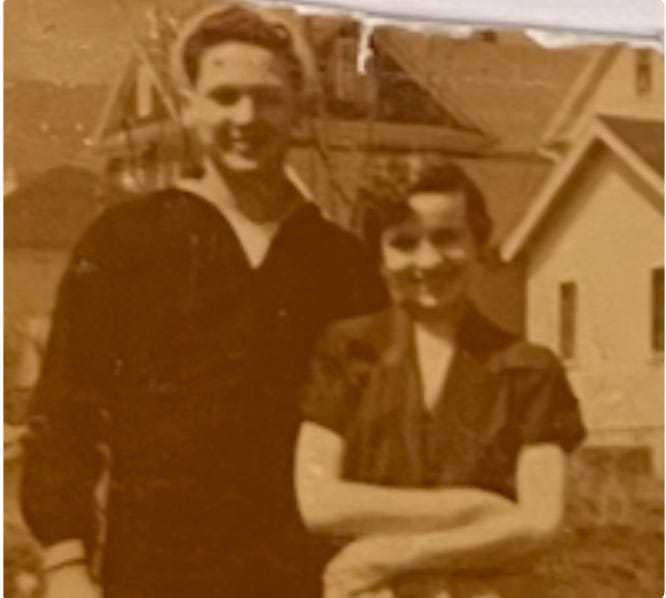
I think he selected her based on his needs. He needed a certain type of woman, and I think she fit that picture:
- Deferential: She was someone who looked up to him as a well-traveled, exciting man of the world.
- Similar economic class and values: Both had alcoholic fathers, turbulent childhoods, and not much money. He had ambitions and goals in life, and she probably sensed he would work hard, be a good provider, and NOT drink.
- Emotionally needy: Both grew up with little love or attention. They needed each other.
- Slovak culture: They were both from the same culture. They knew each other through a Slovak-based gymnastics club as kids
- Religion – She was a devout Catholic. He was Catholic, and wanted that religious woman to be the mother of his children, and to keep him in line. After all, as he told me more than once, it was the woman who had to be strong because men couldn’t control themselves
- Virgin – A big deal then, to marry the “pure” woman. This also meant she probably wouldn’t cheat
And, while no one ever said this, I think he felt her insecurity and lack of self-esteem. Here was a woman who would look up to him and let him “rule.”
So he married exactly what he wanted. And that lasted for a while. It’s just that later, I don’t think he wanted what he married anymore. He started to want more and more in life. Where early on, he demanded she be home with the kids; later he switched and wanted her to go out, go to school, get a career, and make money so they could have more. Yet all the while, of course, she would still be under his thumb. He kept changing the benchmark as he needed more in life. Mom was the same as she always was, content with being a mom and with having “enough.”
Add to it that lurking patriarchal issue that intensified as they both got older. A mythology book I read summed it up when talking about women as the “goddess figure” in life:
“Patriarchy, and the sons and daughters of patriarchy, do know the Goddess. Locked in fear of her judgments, they see her as a negative mother who could destroy them; therefore, they want either to dominate her or please her….For most people, it takes a lifetime for the psyche to find its relationship to the Goddess. She appears in the psyche in her three-fold nature, sometimes Virgin, sometimes Mother, sometimes Crone. However, it is the Crone that our culture has so brutally repressed. The wise woman, the healer, the transformer has been one of the greatest threats to the patriarchal world.”
Marion Woodman, Elinor Dickson, Dancing in the Flames: The Dark Goddess in the Transformation of Consciousness
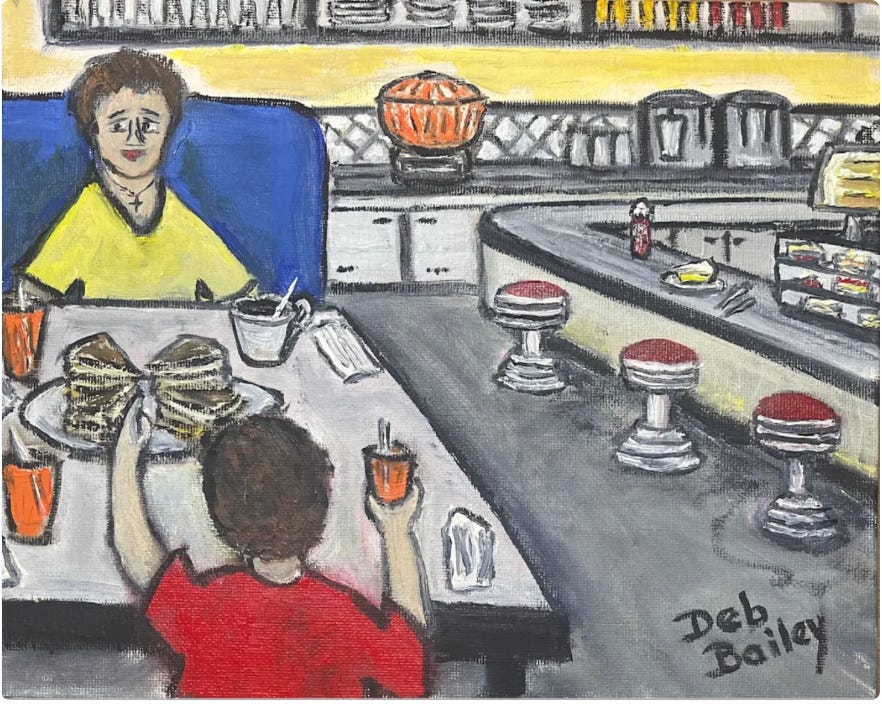
For them, as he said one time, the early part of marriage was fun. She was devoted to him. He got all his needs met. But then she moved on from the Virgin to the Mother. Four pregnancies in five years, loss of the first child. Money needs. Burdens of parenthood and life, his job and schooling. Soon life wasn’t the fun times anymore.
I remember one fight of theirs where he blamed her for not being desirable. And he told me that the “things he did with me helped him with my mother and helped keep the family together.”
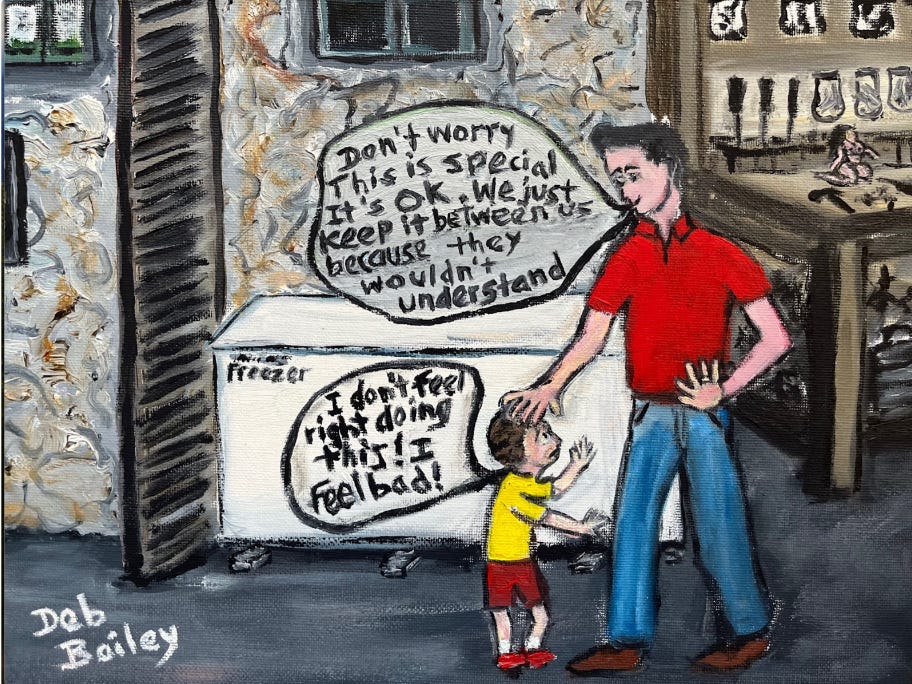
If ever there was a twisted dynamic at work in him, that nailed it. Somewhere in there she morphed from Virgin to be targeted, lured, and conquered, to the Mother figure – an archetype strewn with the wreckage of his relationship with his own mother. And then finally, to the Crone.
Whereas at the beginning, she was the answer to his needs, he later saw her as the threat that would prevent him from getting them met. And he grew to despise her.
Hence his demeaning comments about her in front of me, and his constantly telling me not to grow up to be a “stupid woman,” said in front of her. He was telling me don’t grow up to be my mother.
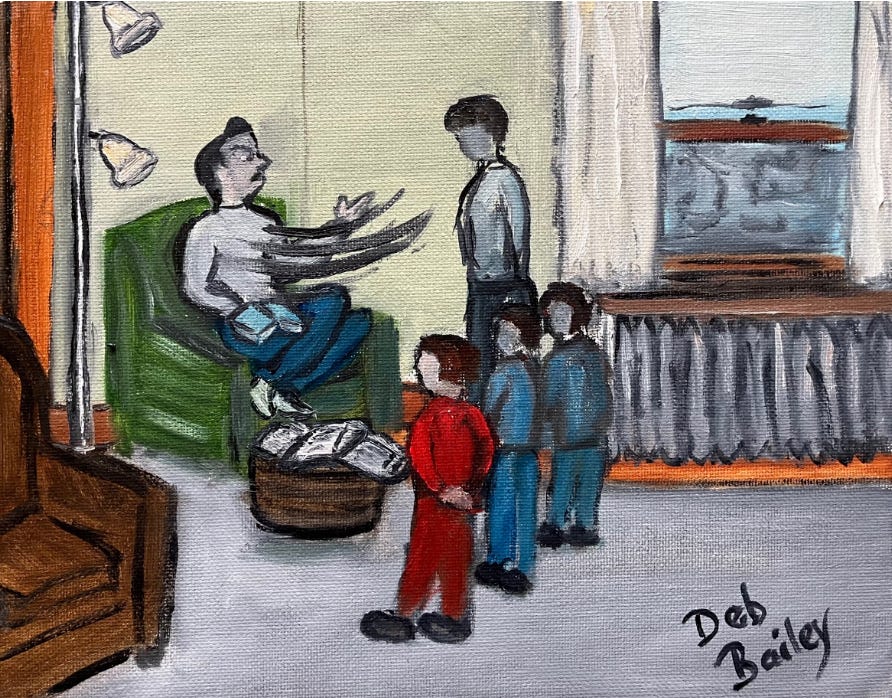
The slow destruction of the spirit
And what did I see of my mother during these years? I will write about her soon. Right now I will simply say that I watched a beautiful, vibrant, happy woman, who reveled in being a mother to us, slowly become smaller and more bitter.
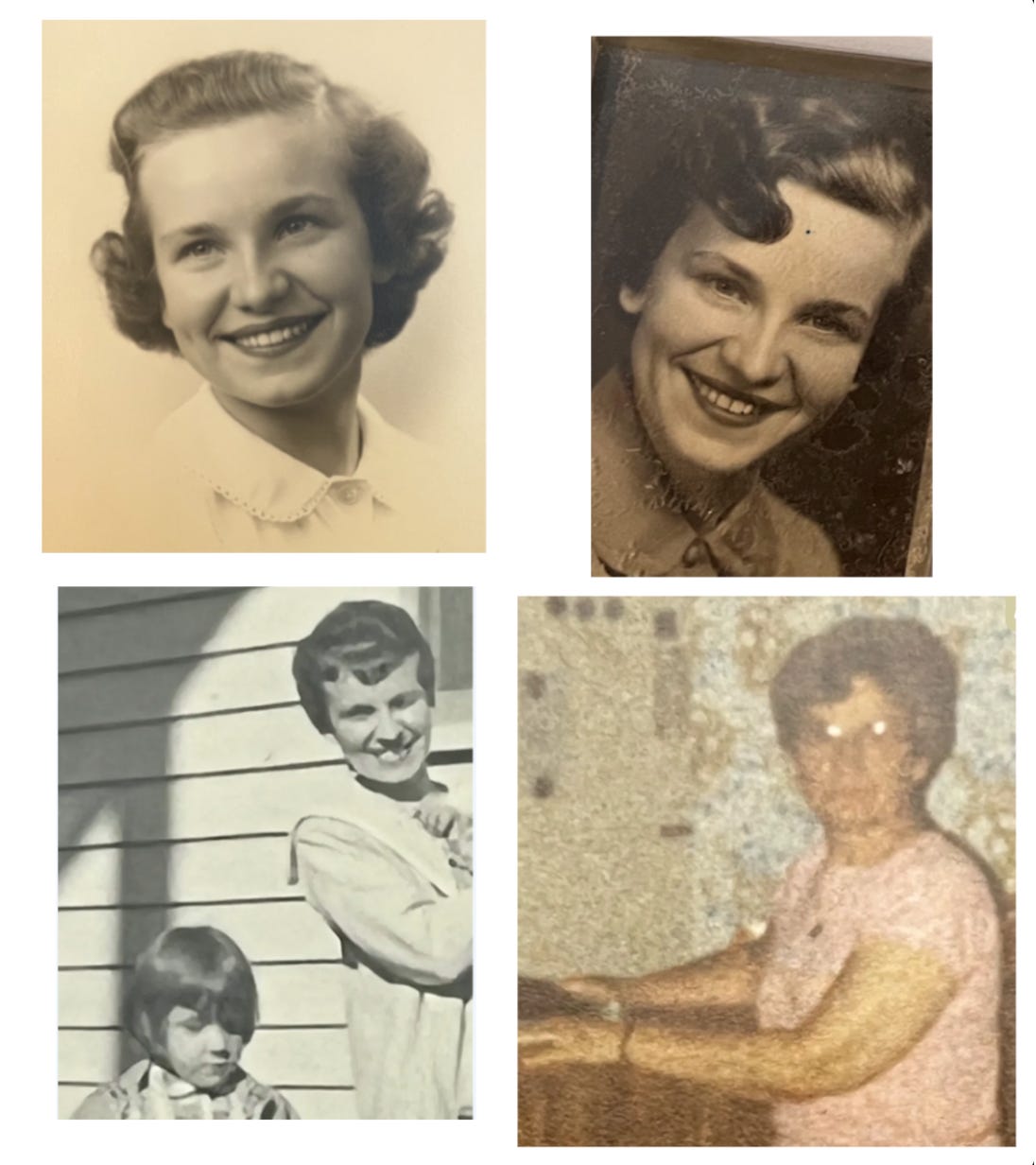
These quotes from research on domestic abuse point to what might have been taking place inside of her. From where I watched, she was his target, with no one to defend her:
“A psychological abuser will find a survivor’s emotional soft spots and exploit them for control and entertainment…It is a source of power and entertainment for a toxic person to destroy an originally healthy and happy person. This point is often missed by survivors because in the middle of the abuse, they see themselves as broken. Since the abuser says such hateful things, the survivor assumes they were targeted because they were ‘weak.’ That is the exact opposite of the truth.”
Shannon Thomas, Healing From Hidden Abuse
“In domestic battery, the violation of principles often involves sexual humiliation. Many battered women described being coerced into sexual practices that they find immoral or disgusting”
Judith Herman, Trauma and Recovery
On the last quote about sexual humiliation, I can’t speak for my mother or what my father demanded of her. I’ve just wondered sometimes if this was partly the reason their bed was out in the open in the middle of the house – a way to keep him at bay because it limited his opportunities to get at her? A way to prevent any more pregnancies? Given their Catholic beliefs, birth control, other than avoidance, was out of the question.
All I know is that as I grew more aware of things, and listened at the bathroom wall as he beat her, I heard her pleas of terror and saw her being demeaned, dominated, and crushed.
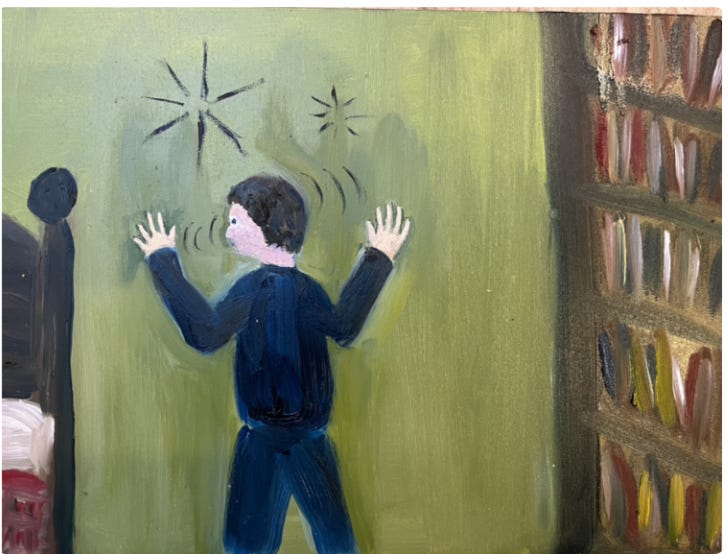
Herman goes on to note:
“The violation of relationship often involves the sacrifice of the children. Men who batter their wives are also likely to abuse their children…Although many women… will defend their children…this pattern of betrayal may begin with apparently small concessions but eventually progress to the point where even the most outrageous physical or sexual abuse of the children is borne in silence. At this point, the demoralization of the battered woman is complete.” (83)
So many times I prayed for my mother to just TURN AROUND when he was groping me in the same room while her back was turned. Did she really not know? Or did she not turn so she wouldn’t have to deal with what was right there? I know she protected us when he came at us physically, but did she give up when it came to stopping the sexual abuse?
EVERYBODY can be “made”
One time, on one of the many Saturday afternoon car rides I had to endure with Dad, he shared yet another one of his deranged philosophies about life. I was about eleven or so, and he was speaking about getting women “to give in to men.”
In my young, innocent brain, I recoiled from this, and I told him I wouldn’t let anyone “get me.” Ironic, given the situation and what he’d been doing to me all my life.
But he just said: “Don’t think you wouldn’t do it.”
Then he smiled knowingly and assured me in a confident tone that implied personal experience: “EVERYBODY can be ‘made.’ It’s just a matter of how to get them to do it, and how long it takes to get there.”
He laughed, and I couldn’t help feeling like he actually reveled in the challenge and was sure he would ultimately win. He also noted that: “Men can’t control themselves. Women have to be the strong ones.”
So women were supposed to be the strong ones and control men. But “everybody can be made.” This was all just a game to him.
Now, on so many levels, this conversation was wrong, especially with one’s eleven-year-old daughter. But then that never stopped him before when telling me gems of wisdom like how men who cheat on their wives eventually don’t feel guilty, or that he was doing these sexual things for me to prepare me for my husband.
But the other thing about this conversation was that it revealed his attitude that one way or another, no matter how long it might take, he would get what he wanted. He would just figure out the right approach. Keep at it and wear the person down, until ultimately, they would be “made.” I had to wonder if that was his approach with my mother.
Sliding down the slippery slope one incident at a time
There was the time when I was very young and Dad insisted that we all take a family shower together as a way to teach about “the differences” between men and women. I didn’t like it. I could tell my mother didn’t like this and was uncomfortable. Yet she yielded.
It was like he was testing her boundaries, pushing at her, until she complied. Wear her down. He could make things sound logical and twist it all around so you doubted yourself. I think her gut reaction was that this was wrong, but between his ability to twist things, and the uneven power between them, she was led bit by bit, down a slope she wouldn’t normally have chosen.
Colleen Hoover, in her novel, It Ends With Us, revealed this very effectively in these excerpts from her main character reflecting on her relationship:
“We all have a limit. What we’re willing to put up with before we break. When I married your father, I knew exactly what my limit was. But slowly…with every incident…my limit was pushed a little more. And a little more. The first time your father hit me, he was immediately sorry. He swore it would never happen again. The second time he hit me, he was even more sorry. The third time it happened, it was more than a hit. It was a beating. And every single time, I took him back. But the fourth time, it was only a slap. And when that happened, I felt relieved. I remember thinking, ‘At least he didn’t beat me this time. This wasn’t so bad.’”
A later quote also spoke to that “I’ve-stuck-it-out-this-long-I-can’t-leave-now” effect the abuse has on the victim:
“Every incident chips away at your limit. Every time you choose to stay, it makes the next time that much harder to leave. Eventually, you lose sight of your limit altogether, because you start to think, ‘I’ve lasted five years now. What’s five more?’”
So here was a man relentless and inexhaustible in his pursuit of his pleasures. And she was the exhausted target. To him, it was all a game of strategic manipulation…chess moves to gain leverage until his opponent was cornered or exhausted and capitulated. It was about psychological domination to keep control of the situation and the targeted victims.
Assess relative power and alter strategies accordingly
When I was eight months pregnant with my son, that is when I finally knew I had to open the secret of his abuse of me all those years and tell the rest of my family. I asked my whole immediate family to come to the therapist’s office for that meeting. Surprisingly, my father came. He even brought his Bible, which he held carefully placed on his lap over his groin.
For decades, I wondered why he was willing to show up. In looking back at all of this, though, I get it. He was all about scanning the horizon for evidence of who held the power and the upper hand. At that moment, he was about to lose his leverage. The best chess move for him was to show up. He would be able to monitor exactly what was going on. He could do damage control, demonstrate remorse, appear contrite, say whatever he had to, to manage the situation. Even if it meant pretending to agree to get help, whatever he had to do, his best course of action was to, of course, show up. Strategic manipulation of the people and the moment.
So for my mother, he would keep at her until he eroded her identity, her limits, her very being, and then got what he wanted. Everybody can be made. It’s just a matter of how, and how long.
And after you are “made,” what is left to the person?
Up next –
THE Family System, and his TOOL kit.
Note:
I am seeking financial support to complete my memoir, work with an editor, and make a visit to my home state for fact-checking. Your help would mean the world to me as I take this step toward healing and giving voice to my journey.
Please like, comment, and share this post to help spread the word. The link for my fundraiser is on GoFundMe. Thank you for your support.
 Soul Mosaic
Leave a comment