I’ve spoken in my posts over the last year about my struggles to survive, escape, and rebuild myself and my life. And I’ve quoted many sources on the effects not only of the incest itself, but of the sense of abandonment by my mother. And there is one particularly poignant moment of my life that illustrates that pain well.
The wedding dress
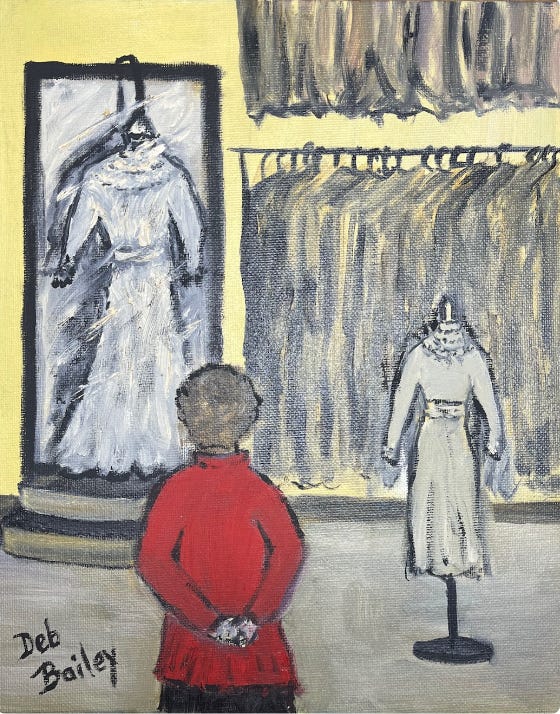
I knew for my wedding I wanted to keep things simple, small, and low expense. We had a set budget and just a small number of guests, which suited both my husband and me.
Also, I wasn’t interested in a traditional bridal gown. Instead, I had always been fascinated by the wedding photo of Mom’s parents. Their attire was lovely but simple. My grandfather had a nice suit, a starched collar, and a bow tie. Grandma had a tea-length dress and a veil. They had little money, so “fancy” was out.
I liked that approach. Marriages that lasted didn’t need expensive parties. It was the soul you brought to it. I wanted intimate and simple, just like my grandparents. I even told my bridal attendants that they could wear one of their own nice dresses instead of spending money on a never-to-be-worn-again bridesmaid gown.
Now, the only dilemma I faced was…what dress to get for myself? I am NOT a paragon of fashion and never was. I live in jeans and T-shirts in the summer, flannel shirts in the winter. If there was anything I felt ill-equipped to do, it was pick out a dress. I envisioned classic simplicity. But HOW do you find that amongst racks and racks of frilly dresses? And what store would have things like that? These days I know what store I would go to because I can walk in there and tell them what kind of event I need an outfit for, and ask them to “dress me.” And they do. But back then, there was nothing like that in my town.
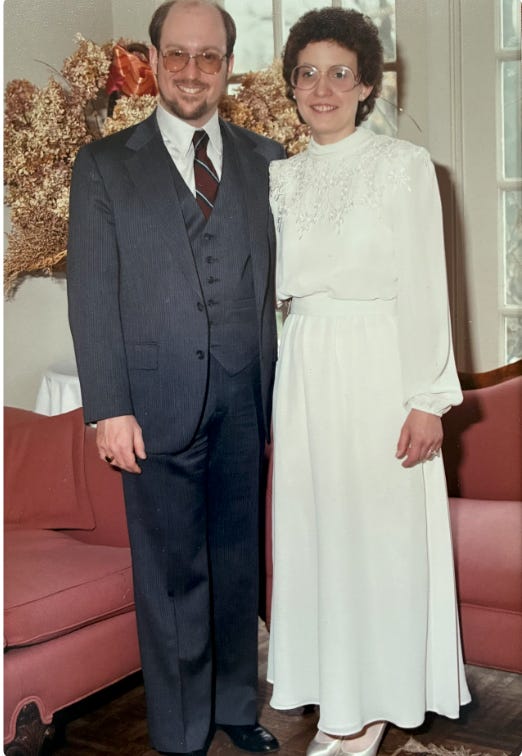
Also, it would have been nice to have someone with me to give me feedback. And given I was shopping for a wedding dress, it would have been nice to share that moment with my mother. But I was alone. My mother and I were somewhat estranged at that point, and anyone else who could have come was busy. So, I went alone.
Most of the time I wouldn’t have cared. I was independent and strong, and if I wanted to do something, I would just do it. But buying a dress for the most critical event of my life? A mother’s companionship at that moment would have been nice. So that hurt.
The “gods” must have been with me because somehow, I found a dress shop in town, one I’d never shopped in before. And after being initially overwhelmed by racks of things I didn’t want, I found what I was looking for on a corner display upstairs. And I think I did well, even down to the dress heels, my fashion “ineptness” notwithstanding….
Abandoned
The book, The Heroine’s Journey by Maureen Murdock, has been incredibly helpful as I learned about the powerful pain that comes from the “Mother Wound.” But even more, the book helped me understand what a true feminine journey through life at the soul level looks like.
The female mythology of life is not the usual “hero journey” of battling dragons, vanquishing enemies, and reaching for the heights of power. It is instead a circle. If anything, it is a journey of deep interior growth as the woman moves from maiden to wife, midlife to sage. At that critical midlife time, it involves a solitary descent into the darkness of the “Underworld,” a total deconstruction of the self, and finally, a return, bearing both wisdom and the power of matriarchal outrage to dispense justice.
Did I know any of this most of my life? Nope. For most of my life, until these last few years, when I finally made that dark journey to face the deepest aches, I only knew I felt insecure, confused, and unaware of my own goodness and power.
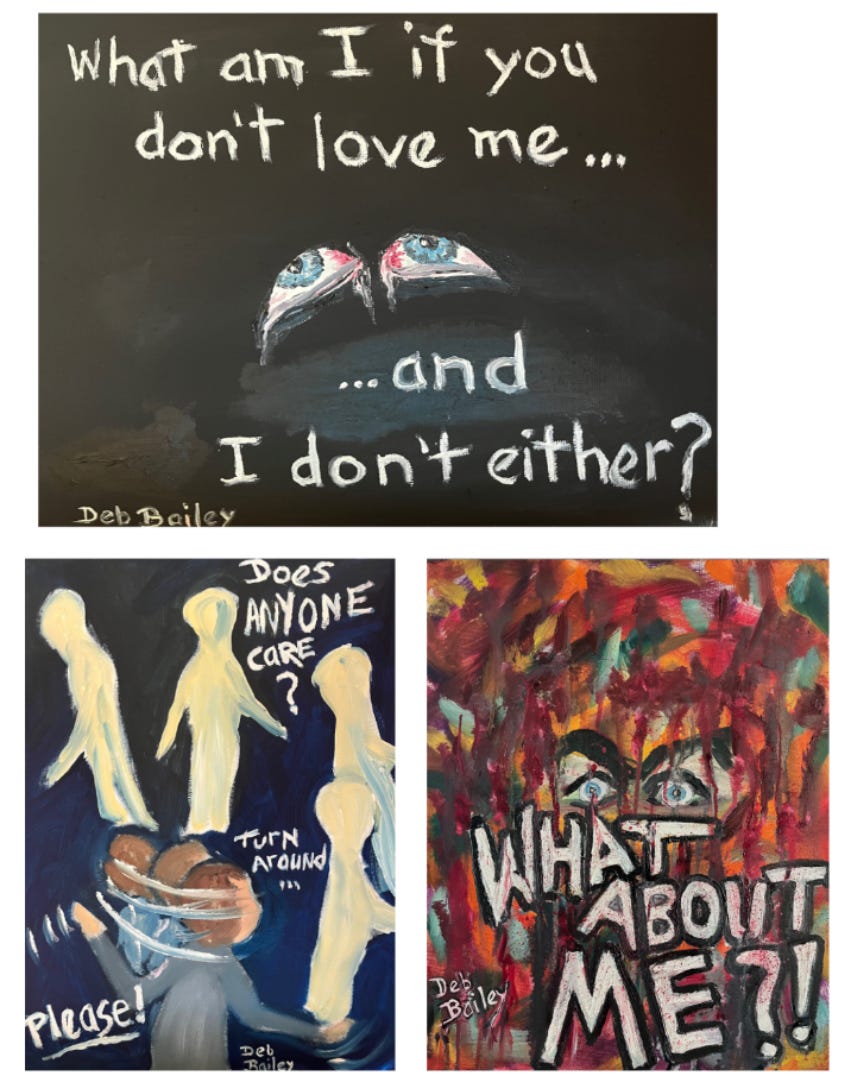
It has only been recently, through reading that book, that I came to understand why so many of my female friendships were unsatisfying, or downright hurtful. I was still seeking my mother in all of them, and choosing friends from a place of neediness, not self-care.
“Feeling abandoned by the mother is an issue for unorphaned women as well. Whether the mother was physically present or not, the lack of her emotional and spiritual presence is felt as abandonment by the child. Incest survivors who were molested by male relatives and adult children of alcoholics relate the excruciating pain of being abandoned by mothers too overwhelmed or self-involved to be protective of and present for their children. Throughout their lives, these children continue to ask others for attention, approval, and definition of self in their urgent need to be mothered.”
(Murdock, The Heroine’s Journey, 143)
Murdock went on to describe a woman who had lost her mother and was then separated from her grandmother. The woman approached all the relationships in her life from that Mother Wound:
“She sought her mother in her relationship with her husband, daughter, friends and associates…”
(144)
This was a simple but powerful revelation to me, and it explained why I was always so needy in my friendships, and then they didn’t work. I was not looking for healthy adult friendships, but still seeking a mother to care for and protect me. I carried a wound that said I was not enough and had no power.
It was an intergenerational wound that I inherited from my mother and grandmother:
- Mom abandoned me to Dad’s molestation
- Mom abandoned herself to Dad’s abuse
- Mom had felt abandoned by her mother during her mother’s nervous breakdown
- Mom felt abandoned by an alcoholic father
- My grandmother was abandoned in childhood by her mother who ran off with another man
- Who knows what my great-grandmother’s problem was
I’m only certain that each of us had a huge well of emptiness at our cores and no idea how to heal it.
Identifying with dad
Murdock went on to explain another key element in my life, my identification with the power of my father instead of the feminine:
“If a woman’s psyche “has taken up” her mother in a negative or destructive way, she splits from her positive feminine nature and has much work to do to reclaim it. If her mother’s attitudes threaten her very survival as a woman, she may identify closely with the masculine, seeking salvation in it.”
(141)
The power in our house was with Dad. He was the source of any attention and love, and his praise meant everything. He said not to grow up to be a stupid…powerless…woman. And I told myself not to grow up to be my mother.
That precious, powerful, and much-needed mother-daughter bond was decapitated.
The “wedge”
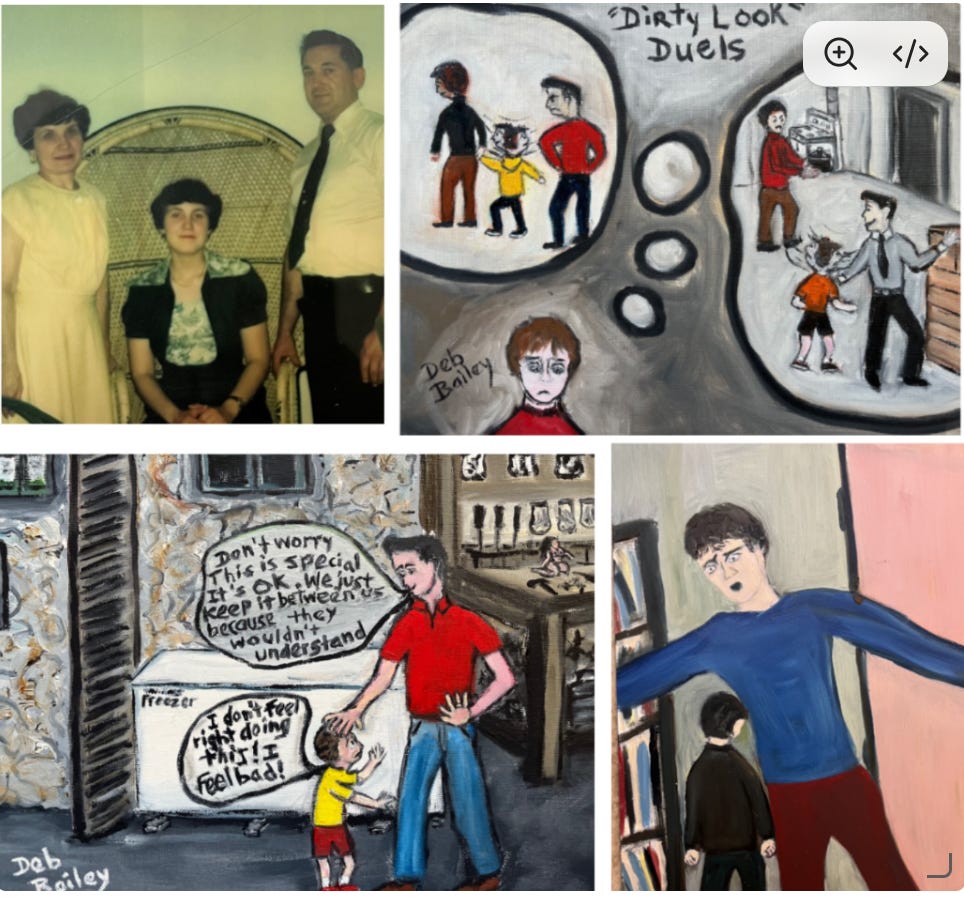
The other overwhelming emotion I carried ALWAYS was guilt. I hated the abuse. And not only was I being harmed, but I was so afraid of how hurt my mother would be if she found out.
He kept saying it was all fine, but I wondered, because in her moments alone with me, Mom made her pain clear…but only to me. I think she viewed me as competition. Or at least, an unloving daughter.
I felt terrible, like I was a wedge between them. What I didn’t realize was that he was the wedge. His actions severed any bonds between her and me and between everyone else in the house. By keeping us at odds with each other, he maintained control. And we were unable to see this or unite against him.
Instead, all the relationships were at more of an impasse. We may have loved each other, but forced apart by him, we each just went our own way, unable to bridge the gap.
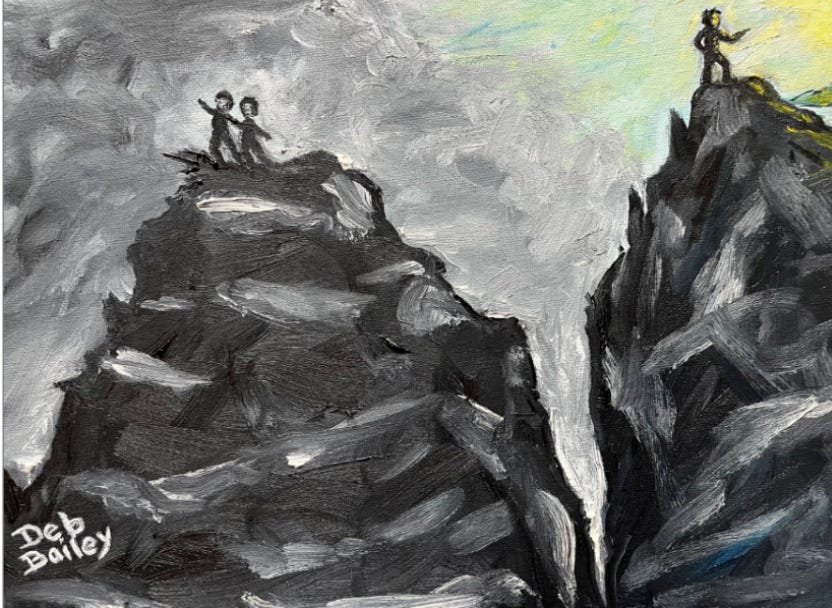
I blamed myself. So I spent my life drowning in guilt, self-blame, and self-loathing.
Coming home to myself
At some point, we all have to come home to the “mother in ourselves.” We come into the world alone. We will leave alone. And while we are here, we might be lucky to forge bonds of sisterhood with others. But first, we have to find our own internal mother power and nurture ourselves. We can learn from others, but the heroine’s journey is to descend into the darkness, remake ourselves, and return, stronger and standing on our own two feet. It’s not that we don’t reach out in sisterhood, but we have to have our own grounding as well.
Murdock described it as a mythology type:
“Woman is nurtured and healed by grounding herself in the ordinary. Very often during this period of reclaiming the inner feminine, she identified with Hestia and finds the Wise Woman Within.”
(146)
I love mythology and knew that Hestia was considered the center of the home. As the virginal goddess of the hearth, that central fire of the home, she provided shelter from the elements. She served as the uniting core for family and friends with her powers of warmth, security, and human relationship. And as a woman ages, she becomes the sage, the grandmother figure who carries the feminine insight, wisdom, and strength within her to share with others.
That explains why I feel such a strong pull to read mythology, though not the usual stories. Instead, I prefer reading Greek myths written BY women, focusing on the FEMALE characters. I love stories of women who have spiritual, psychic, and emotional powers, are aware of their power, and know how to wield it with strength and care.
In Greek mythology, I have always loved to read about the witch, Circe, and the Oracle at Delphi. Then there are the ancient mythological goddesses, Cailleach in the Celtic legends of the north, and Baba Yaga in the Slavic lands. They are often depicted as old hags, but they are women not to be trifled with, and as easily comfortable with destruction as creation.
I also love the story from the Hebrew Bible of Ruth and Naomi. Ruth was the widowed daughter-in-law of Naomi. When the elder woman decided to return to her people and ancestral home, Ruth refused to leave her side. The two women bonded and looked out for, and after, each other.
Most especially, the spiritual “mother goddesses” of religion have resonated with me. I took comfort when the Buddhist monk gave me the name of Auspicious Tara, after the Tibetan mother goddess of compassion. I had always been drawn to the Catholic Mary and the tales of the Black Madonna. And in Judaism, there is that Hebrew feminine version of God: Shekhinah.
All of them parallel the qualities of Hestia – mother-protector and binding force in life. The one who provides nurturing through the groundedness of the hands-on rituals of life and home.
Whether I knew it or not, even as a child, I was tapping into this through my use of those “Moments of Respite” that I turned to when Dad’s abuse became too overwhelming. Moments of Respite were my ordinary, earth-grounded moments of nurturing and self-care…it was MY divinity through the daily moments on earth.
Learning these things was tremendously comforting to me, and they were the major turning point for me. By understanding just what my huge inner well of emptiness was all about, I could then move forward to heal it.
Now, finally, I am becoming that elder Wise Woman.
Up Next
Impacts beyond me – The toxic relationships of a broken family system.
Note:
I am seeking financial support to complete my memoir, work with an editor, and make a visit to my home state for fact-checking. Your help would mean the world to me as I take this step toward healing and giving voice to my journey.
Please like, comment, and share this post to help spread the word. The link for my fundraiser is on GoFundMe. Thank you for your support.


Leave a Reply