Real safety is your willingness to not run away from yourself — Pema Chodron
The audience
A friend of mine asked who I was writing the book for. Almost without hesitation, I said– myself. Now in case that sounds selfish, it really isn’t. There is that old saying that before you can help another, you have to take care of yourself.
In the past, I would have answered that question differently. So many times over the years I tried to write my story in one form or another, but always, I thought I was writing it for others. After all, shouldn’t we want to help another if we can, to escape the pain we were in? A noble thought but it’s not that simple.
Each person must untie their own Gordian Knot
It’s also been said that the more you learn, the more you realize you don’t know. Hence the idea of writing a book to save another seemed arrogant, presumptuous, and flat-out wrong. I’ve spent a lifetime searching for my own answers, so how could I think I had answers for anyone else?
That might have been a bit of the pendulum swinging a little too far in the other direction, though. About the point I had decided never to write, a few key mentors in my life took issue with that. One of them–my high school English teacher who was pivotal in saving me back then, said to me: “You don’t give people answers. You tell your story. From your story, they find their own answers and untie their own Gordian knot.”
In that second, I was convinced. Her comment cemented my decision–this was a reason I could accept and write for.
Are there many good reasons to write a memoir?
Now I recently listed the number of risks in writing this kind of story, which made me wonder what, if anything, might be a good reason for doing my memoir. Maybe a few more than just “I knew my mentors were right.”
The list, summarized in two words:
To be blunt, my simplest answer to “Why write a memoir?” is this:
“To heal.”
The “recipe” and the disclaimer
But there are many more subtleties and nuances to the healing–specifics for HOW to heal. It’s like the difference between saying “make a dessert” and giving someone a recipe for chocolate cake. You have a better chance of success with the latter.
In delving into several memoir-writing and mythology books, I was shocked at just how many “pros” I came up with. Quite the recipe! And at least for me, every one of them was valuable, nuanced, and strong.
One disclaimer though–my list of reasons to write my memoir does NOT include the four that most people might assume are the biggest ones: money, fame, revenge, or credentials as an expert. None of those apply.
The amazingly LONG list of reasons why you SHOULD write a memoir:
So without further delay, here is my list of the REAL reasons to write a memoir, as well as a comment or two on them. In future posts, I may reorganize, reword, or combine some of them, and I will for sure have more to say on some of them. But for now, my list:
To create–art &/or writing releases and transforms emotions and memories
To experience art and writing — invites different ways of thinking and feeling about life experiences
Use story — it is the medium that helps us make sense of experiences – our “Human Instruction Manual” as Jennifer Leigh Selig, PhD calls it in her book Deep Memoir. (more on the use of story in another post)
Answers — to all the unanswered, or previously unexplored questions that have haunted me through life…even if the answer is that there will be no final answers
Discover and release harmful beliefs – such as I must stay silent in order to be accepted and viewed as okay
Correct the errors and unhealthy patterns – fix all the wrong conclusions and beliefs I have held and replace them with healthy ones
Redemption – not from sin, not by God, but give this to me after years of punishing me
Transformation – a “spiritual alchemy” that converts pain into wisdom
Transcend what came before – surprise myself with how far I can surpass previous limits
Reclaim and reconnect – gather back together all the parts of myself and my emotions that I abandoned or walled off
Reclaim my INNOCENCE – I am still that innocent even as I felt robbed of innocence so much of my life
Reclaim my power and rights – to think, to have my own opinions, to not need another’s approval
Release pain and despair and anxiety – and treat them as “friends” because they will be there through life
Learn to love myself and embrace that I am enough, and good enough
Shed – shame, self-judgment, self-hate, the need for the approval of others
See my story in a new way, through adult eyes not that of the wounded child
Understanding – to understand myself, my past, how it happened, and to maybe help others to understand me
To Define who I really am now – to do this I need to know the whole story of my past vs only seeing fragments
Learn – how to live life fully, ways to heal
Question – no longer accept or normalize abuse but question what doesn’t seem right
Become whole – Rebuild, or put the fragments back together like a mosaic to see the whole picture
Telling the truth eloquently to ease suffering [of others] (Tibetan Buddhist definition)
Decide my meaning – because of what happened, what will I do with it
Acceptance – stop beating myself up for mistakes; accept my humanity, imperfection
Forgiveness – of myself or others – or …NOT, as I see fit
Compassion/empathy – for yourself and others vs being tough and hard
Giving Voice/banish silence – find the words I never had before because all I had were sensations and body memories
Stop a cycle of trauma – by changing me, I change my relationships and the world around me
Stop running and confront – face realities, questions I may have avoided, and emotions such as fear, confusion, guilt, shame, rage
Mourn – grieve the loss of my innocence, all the years and experiences I was denied, the “person” I could have been without the abuse
Explore the choices made by others – remember adults made the choices in this; I was not to blame
Survivor’s Obligation – I have survived and thrived; others did not so give witness and make their lives count for something too
Reframe the story – by looking at that past in a new context, I can give new meaning to those events and when I do I change the past, which changes my present and future
Give recognition – to who I was, my courage, what I endured and how I overcame
Healing – bring this to myself and others
Become free – allow myself to be free to be, maybe for the first time in life; and maybe help set others free
Thrive – in spite of what was done, how I may still struggle at times, I am here…I thrive
Set down the load, pain, image, story – I am allowed to rest, recover, rebuild, care for me
Purge – storylines, beliefs, and especially secrets held that increase physical and emotional pain and keep me trapped
Become – I may have been hijacked from who I could have been, but I can still go forward, a new version…a hybrid of all I’ve been through
Connection with others – not be “alone” but create a community with others through shared universal emotions
Remap my brain/nervous system – I change in the moment as I write and thus change my future.
Feel my courage – I have the chance to realize my own abilities/know my power and capacity to face any challenges and stand tall
Intention – This is not for revenge but to do an honorable and healing thing
Doing the right thing – that IS the reward
Choosing – by writing I demonstrate my decision to keep going forward and growing
Embrace who I am – I can COME OUT OF THE CLOSET after 7 decades; stop hiding my past, stop living a facade that said my past was normal, stop being invisible
Set my own boundaries now – which means I get to determine what they are and enforce them
To finally know – I was not stupid; I was not an aberration of nature
To realize – I can stand on my own and will not fall apart
Trust – learn to trust those who deserve my trust…and most especially trust me and my perceptions after years of being discounted and gaslit
Tell my own story – do this myself, vs letting another tell it instead
Preserve and memorialize my past – by making it concrete and external in written form I don’t lose my story, and I don’t have to keep reprocessing to remember the lessons and insights
To “do deeds, not run from them” – in a Baba Yaga mythology story, she asks this question to those seeking her help:
“Have you come to do deeds, or to run from them?” — Becoming Baba Yaga by Kris Spisak
Your Gordian Knot
I will no doubt condense this list when I write about it in the book, but this list amazed me. And I wanted to share it with any out there considering whether to write about their life. Only you can answer that. Only you can untie your own “Gordian Knot.” But if you are so inclined, I share the list in the hopes you can find enough reasons to convince yourself it can be a worthy endeavor.
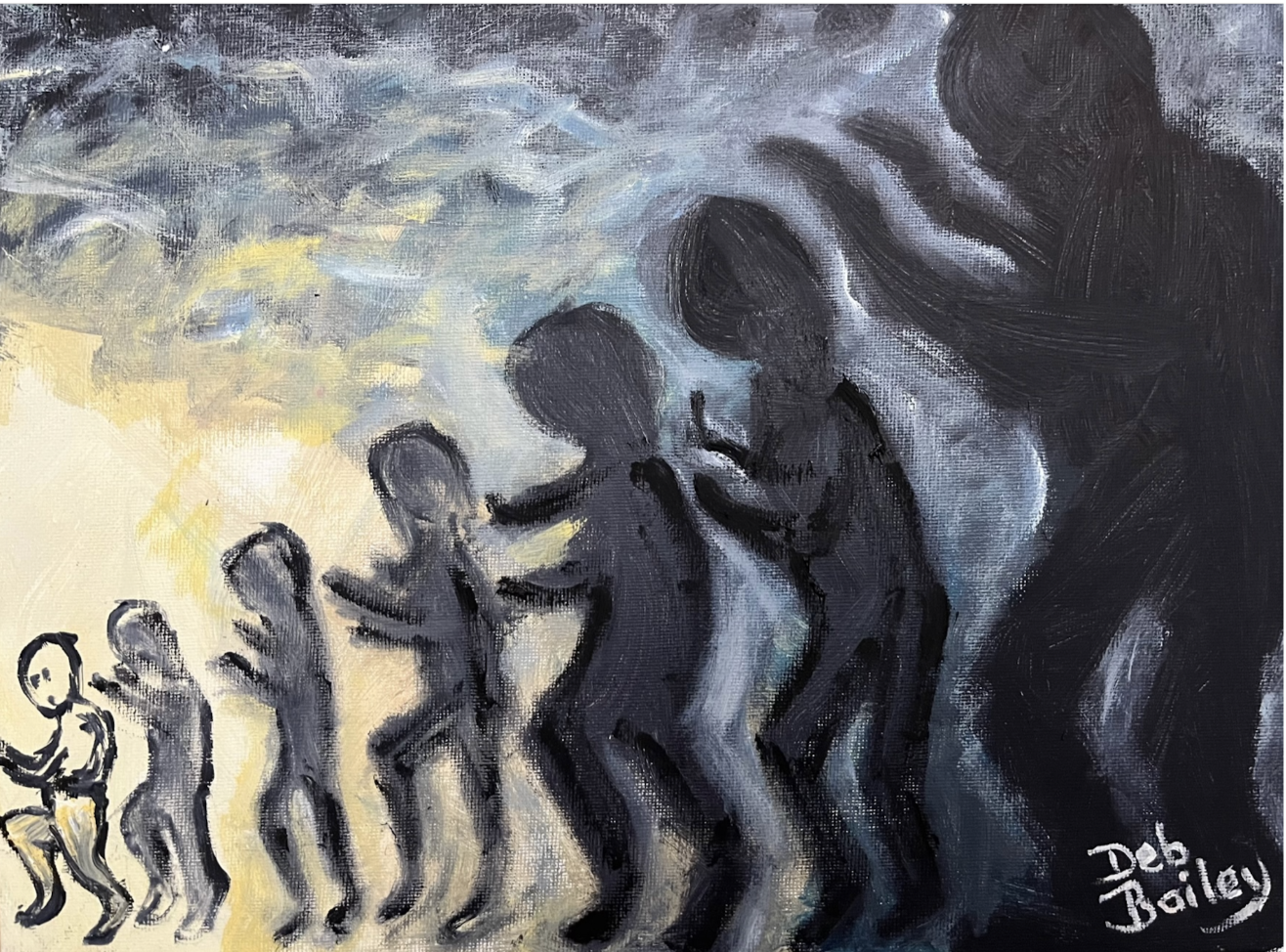
 Soul Mosaic
Leave a comment