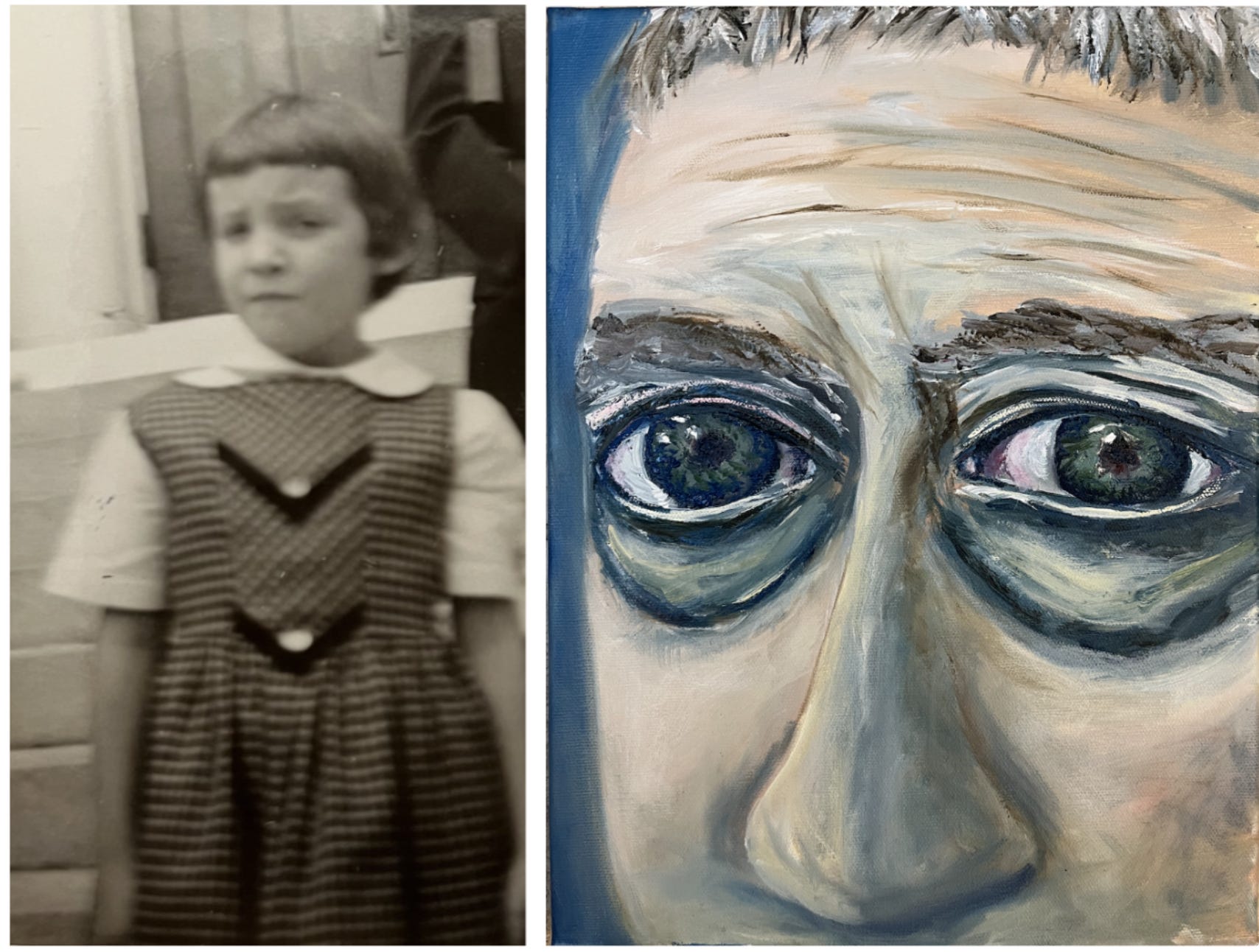
What you think is what you feel is what you do.
I wrote this motto for myself a long time ago after a session with one of my therapists. It is one thing I use to calm me and remind me to take a moment to “pause” before acting. But it’s also been my way to understand my many behaviors and reactions in life.
Trauma altered my sense of safety, body integrity, physiology, and the way I think and feel. And it follows that all of that then generates what I do…or want to do. They are the root cause of the many different reactions that take place before I even have time to think…unless, like now, I teach myself to pause for a moment, breathe, and remember that these things are not my true self, but trauma reactions:
From my journal: “EMDR triggers for Monday’s work – 7/22/2024”
Beliefs
- I don’t trust me or my decisions
- I am not worthy/worth anything
- I am “not allowed” needs
- I don’t deserve
- I am not good enough …I am “less than” everyone else
- I will be replaced, hurt, abandoned
- I need outside validation that I am okay/acceptable/right
Behaviors
- I want what I want, now, and if I don’t get it I get anxious, desperate, impatient, and angry
- I want to fight anybody or everybody who gets in my way or treats me poorly
- I see the world through the lens of my pain and overreact with rage now, which makes me behave like HIM, and I hate that
- I HATE him for demeaning Mom all those years in front of us, and I will NEVER forgive him
- He can rot in hell before I will pray for him
- I worry that if I don’t forgive him, HE will be the one who greets me when I die and will haunt me for eternity
- If he shows up, I would want to punch him out
What frustrates me is that after all these years since those traumas, after all the work I have done and all the progress I’ve made, certain reactions still flare up unexpectedly in me. Why?
Living wounds and triggers.
Even as the past is long over, unless I’ve had a chance to go back and process a particular memory or wound, it remains deep within, buried alive. And triggers are the “jab in that open wound” that prompts those reactions.
Triggers
There is no predicting or preparing for being triggered. They happen because you unexpectedly encounter a person, situation, tone of voice, smell, sound… something that immediately takes you “back there” to the moment you were traumatized. And in that moment, even as you know you are in the present, your emotional brain prepares for the onslaught from the past.
One of those triggers sets off a series of alarms throughout your body, and your physiology returns to that moment of trauma, terror, and pain. Those alarms mobilize the body to take the hit, batten down the hatches, or engage in battle.
Floods of cortisol, adrenaline, and other stress chemicals shoot through the blood vessels, setting the brain on fire and triggering a conflagration that then feeds on itself and becomes hard to halt.
Reactions run the gamut. The face grows taut and pales. Emotions range from flat to overwrought. Body functions change — urinary urgency, anxiety, diarrhea, pounding heart, tensed muscles, and the one I catch myself in all the time – clenched jaws. My dentist has more than once expressed amazement at how strong my jaw muscles are and how dense the bone is there. Yes, clenched jaws.
Some of my triggers, and the immediate reactions that come up:
- Secrets – I HATE secrets of any kind; I feel an intense loathing, fear, and hatred of them and won’t be part of them
- Older white men who act domineering, dismissive, threatening, or disrespectful – Rage
- Certain times of the day, week, month, year; especially late weekday afternoons and Sat/Sun afternoons – Fear/anxiety/dread
- Locations – My hometown. Being in a high school in the afternoon. Walking into the airport in Connecticut. All take me right back in time to when I was being abused – Intense fear, heaviness, and dread
- Sensory – smells, sounds, music, tone of voice all take me right back to either a good or bad memory – Either contentment or intense fear and dread
- Sensory – sound: Any sudden loud noises, voices, or sneezes – Startle response and strong fear
- Sensory – touch: My shirt getting caught on a drawer knob and yanking me back, or someone grabbing at me – Rage
- Sensory – a change in facial expressions or a certain angry facial expression, especially from my husband or close friend – Immediate intense fear
- Being stuck behind a slow driver or person in the grocery store – Impatience and rage
- Someone wasting my time – Impatience and rage
- People not keeping their word – Anger, abandonment, disappointment, feeling disrespected – Rage, as I view myself as a fool for trusting someone
- The silent treatment from others – Fear, abandonment, anger
- People disrespecting me or treating me like a fool – Rage, shame, the feeling that I don’t matter/I’m not important
- Close friendships are places of joy but also anxiety due to issues of trust, abandonment, low self-worth – A perceived slight can trigger intense anxiety, abandonment fears, or rage
Trauma reactions & behaviors – The four (or six) ”Fs”
Probably the most commonly known “reactions and behaviors” spoken about in relation to trauma are the four “Fs” — Fight, Flight, Freeze, and Fawn.
I am not going to spend a lot of time on this one. Books have been written on this topic. There are so many sources available to explain them all. For here, I will simply make the following observations from my life:
Fight – This was mostly impossible for me for so long. First, it was dangerous to fight back. I was at physical risk. And from infancy on, I’d been bludgeoned and manipulated into submission. Or at least mostly so. I say “mostly” because I did try many times over many years to convince him this was wrong. I did avoid him until I couldn’t stand his physical and mental abuse. I fought back the only ways I could, until I could finally get strong enough to leave.
Flight – This was impossible, except to run from him and hope my mother would stop him. But given that I was abused from infancy on, and was a child, I had no means to leave and escape it. And even when I reached an age and situation where I “could” leave… for a long time I couldn’t. I’ll write about this in an upcoming post.
Freeze – Dissociation. Freeze up. Hold the trauma inside and dare not show it. Be helpless and passive. I think I did this during the moments of abuse. I would dissociate. I would try to think about other things. I daydreamed constantly, even in school, which got me in trouble. And when he would attack me, batter me with yelling and verbal abuse, I just froze. I couldn’t answer. My insides and nervous system were so overwhelmed I couldn’t do anything.
Fawn – This was my most common refuge. I wasn’t a whole person. I doubted myself. So I tried to just survive it all as best I could. Try to assuage. Placate. Find a way to try to convince him it was wrong. Endure things when I had no choice. Wait things out until they got better and his mood changed. And this followed me into adulthood. I always needed outside reinforcement that what I thought or felt was correct. Allowed. Accepted. It took decades to realize this, much less start to change it. And this one caused the most shame. Because again, it left me feeling like I was complicit, involved, partly to blame.
There are sometimes two others listed in some sources: “Fine“ and “Faint.“ The latter is clear – confronted with something overwhelming, the person faints. I don’t think I experienced this. And “fine” is to deny or downplay the impact of the traumatic event. On this last one, I was certainly oblivious for a long time about what happened, even as I knew things weren’t right. And yes, for a long time I think I downplayed the immensity of the harm done. But once I started in therapy, I never denied it.
Some familiar culprits
Dissociation
Robert C. Scaer, MD, describes dissociation as a “sense of unreality….a ‘fog’ that exists between them (people suffering from it) and their sense of awareness and the rest of the world.” Scaer explained that it served as a psychological escape from fear.
Another source agreed with his statement, noting that “dissociation is the child’s brain keeping them safe by momentarily removing them from perceived threat in their day-to-day life.” Dissociation is a way to escape into one’s mind when you can’t fight back or physically run away. The more frightening the event, the more likely dissociation occurs. And later, dissociation continues even when the danger is gone because the body can’t turn off the reaction.
Beacon House, “Developmental Trauma Close Up”
Pete Walker, in his book Complex PTSD: From Surviving to Thriving, mentions two different types of dissociation – Left-Brain Dissociation and Right-Brain Dissociation. I am not sure if others use this as well, but his descriptions are as follows:
- Left-brain Dissociation: He describes this as more of an obsessive/compulsive flight type, “using constant thinking to distract yourself from underlying abandonment pain.” He calls it more of a “Human Doing” state versus human “Being.”
- Right-brain Dissociation: This is common in the “freeze” reaction and allows the person to “disconnect from experiencing his abandonment pain, and protects him from risky social interactions…” It could take the form of “prolonged bouts of sleep, daydreaming,…TV, online browsing and video games.”
Numb and anxious at the same time
This is a case of a mixed reaction that I felt for many years. It is a reaction where I felt little fear or joy, but more just a blankness or flat reaction to things. Yet at the same time, there was an overall sense of being uptight and unable to relax. Some of the sources call this a “functional freeze.”
Inability to cry unless extremely triggered/ready to break down
I’ve experienced this reaction for most of my life until multiple EMDR sessions helped to release the emotions trapped inside. Then I was able to access normal sadness and tears.
Shame (toxic guilt) versus Healthy guilt
Shame and guilt were such a massive part of my makeup. Between what was being done to me; that I felt horrible about it; guilty because I felt I was betraying my mother; guilty of a huge sin against God and the Catholic Church….SO much guilt and shame. It was crushing, and I HATED me. But what ARE guilt and shame? Are they the same?
Guilt is about making a mistake, shame is about being the mistake.
Guilt: I did something that I wish I hadn’t done and need to make an apology…There’s a way back.
Toxic shame: there’s a flawed defective core in my identity (there’s something wrong with me)
Jeff English on Peter Attia podcast transcript (March 10, 2025): “Unpacking trauma: How early wounds shape behavior and the path to healing”
So while there can be healthy guilt – you regret something, admit a mistake, make amends, and go on in a well-adjusted manner — toxic shame leaves you with no way back. It made ME the problem.
“…when you’re subjected to that kind of abuse as a child, you almost always begin to feel that it’s justified, that there really is something wrong with you, that you’re this terrible person that this is happening to.”
Dorothy Allison, Fresh Air Podcast, 1992 with Sam Briger
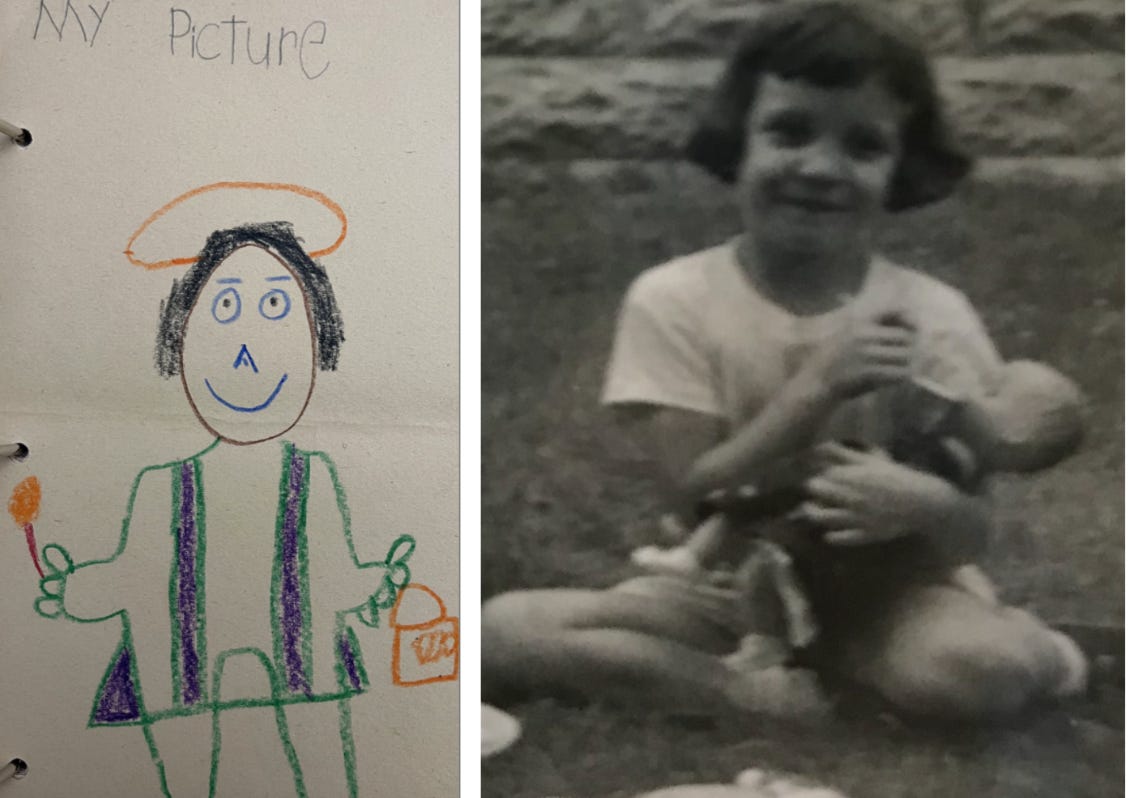
And that self-blame didn’t stop in childhood. Without correcting that belief that I was to blame for what happened, that sense of “flawed, wrong, wicked” stayed alive inside for decades. I spent so much of my life trying to find out how I could have gone so terribly wrong, even though I was never to blame. But I needed to know: HOW DID THIS HAPPEN?!
That part is a normal human reaction. When something bad happens, no matter what it is or what age we are, we are desperate to make sense of it, find a cause or explanation. Because without that, we live in terror that it might happen again. Whenever there are tragedies or illnesses that happen to someone, often people around them try to find a cause, a blame, or an explanation. Because if there is none, well, that terrible thing might happen again to anyone. That “whatever” becomes the danger we all fear.
Then, in my case, add to that fear the shame because the bad thing was something I blamed myself for, and well, that was even worse. When we blame ourselves, we BECOME that danger. WE are the unpredictable monster that might make us do something just as bad or worse in the future.
And then, the worst part of all of this is…what if your body actually enjoyed what was being done to it….even though you didn’t want it to?
“Self-blame is congruent with the normal forms of thought of early childhood…It is congruent with the thought processes of traumatized people of all ages, who search for faults in their own behavior in an effort to make sense out of what has happened to them….Participation in forbidden sexual activity also confirms the abused child’s sense of badness. Any gratification…becomes proof in her mind that she instigated and bears full responsibility for the abuse. If she ever experienced sexual pleasure…these sins are…evidence of her innate wickedness.”
Judith Herman, in her book Trauma and Recovery,
So there is shame for being part of something “bad,” shame that your body betrayed you and enjoyed it, and then shame and horror that maybe YOU caused it. AND that you are also giving the abuser permission to keep doing it. For me, in my child’s mind, the self-loathing was especially intense because once my body responded, I felt like I was giving him permission to do it again. I felt COMPLICIT and at fault.
As Dorothy Allison describes it, “if a child begins to feel erotic excitement while being manipulated by an adult, does that give the adult permission to do it?…part of the reason to keep it a secret…is that you might give someone any small measure of encouragement to feel they have a right to do this.”
Isolation/lonely in a crowd
Having been through all the isolation from the abuser’s control, and then having to experience so much humiliation from the abuse, it can feel almost impossible to relate to others. How could I expect them to hear what I lived through and understand, much less not judge, or love me?
“This is what isolation does: it leaves us with no place to turn. We might eventually have friends…with whom we want to be close — and still there’s a distance between ourselves and those important people…Intimacy has been a place of danger and shame…of violation…we are…profoundly terrified of being exposed in another’s eyes…What will happen when they learn what awful things we’ve done…We believe no one will love us if they know who we really are, what we carry, what we’ve done, what’s been done to us…” Jen Cross, Writing Ourselves Whole 110
Even worse, Cross describes the other dilemma and why we isolate. What if others might want to love us, but we are “too much” for them? We want to tell them our truth so we can finally put down our loneliness. But what if they can’t hear it?
“We are afraid that our stories, that we ourselves are ‘too much’ – and that our story has probably frightened them…I ask a great deal of the people in my life who ask to hear this story. I want them empathetic but not flooded…My trauma story is long and I tell it matter-of-factly…I ask my listener to hold a lot…to hear these horrors I rattle off like the casual description of a school day — because for me they were. I ask my listener to come into my world to meet me where I live, which is the place where sexual violence is routine…If that’s not where my listener usually lives, it’s a hard door to walk through…What I want is to tell the truth…so that you can see the land I live in and what I look like inside, so that I don’t have to be alone there anymore.”
Jen Cross. Writing Ourselves Whole 110, 112
Emotional flashbacks
- Any number of strong emotions that have no obvious trigger but that I cannot shake. These include fear, rage, anxiety, depression, etc. I now understand these are body reactions to a trauma that happened before I could remember it and for which I have no language to express it. Or from when I may have dissociated in that moment so I couldn’t remember an overwhelming event, but my body remembers it. So it comes out as an emotional flashback.
- These reactions are often triggered by the time of day/week/month/year, and for me. For example, they show up as despair, depression, and dread, especially first thing in the morning. They also manifest as feeling afraid or like a “bad person,” especially on weekday or Sunday afternoons.
- Intense self-loathing – this is not as strong anymore because I have started to treat it with self-love and compassion. I now understand it is an old emotion, not anything based in current reality.
Body memories/physical symptoms
- Stomach upset/GI – Irritable Bowel Syndrome
- Joint pain and arthritis
- Pelvic area pain
- Recovery from illnesses takes a long time – immune system is not robust
- If I get over-tired, I get sick – immune system is not robust
- Breathing difficulties
Breathing difficulties
I am often aware of a difficulty in catching my breath, especially if I also note feeling anxious at the same time. It happens even when I am at rest. I’ve had my lung function tested, and it is fine. It was explained that it could be a body memory from a traumatic fear reaction. In those moments, the breathing becomes quicker and shallower as opposed to the slower, relaxed, deep breaths in normal circumstances.
Nightmares
I’ve written a lot about this one already. So I will simply add that I think nightmares for me are my brain’s way of releasing trauma a bit at a time, and trying to process it and make sense of it.
Other common ones
Simply noted, these are very common ones, and I have experienced or continue to experience many. A lot of years of trauma…a lot of behaviors that needed to be recognized, then worked on:
- Hyperarousal – overly strong fear response/catastrophizing because the body is stuck in fight-or-flight mode
- Hypervigilance – always on guard and scanning for threats
- Fitful sleep
- Startle response
- Feel that I am bad, wrong, or in trouble
- Feel I am inferior or “not real.” A lack of a sense of self
- Hate asking for help or needing others
- Hyperindependence: Never letting others be there for you; always doing your own self-protection
- Lack of trust
- Insecurity/abandonment (Will write more in the next post about this one)
- Exhaustion for no reason
- Always need a reality check from someone else that I am okay – outside validation
- Compulsive need to achieve; perfectionist
- Apologize a lot even when not at fault
- Boundary issues
- Overanalyze everything
- Always “doing” – not “being”
- Minimize my pain and harm
- Authority and control issues
- Shapeshifting one’s emotions to match those of others
- Caretaking/over-responsible for others
- Overprotective of others
- Hesitate to share feelings with anyone
- Self-loathing, self-sabotage
Some that need special attention
The behaviors I’ve written about above are ones I have experienced, or continue to. There are a few other less common ones that I cannot speak to personally, but can also be reactions to trauma. I mention them here for the sake of completeness and because they can have serious impacts on life and health. And I would also add the encouragement for anyone experiencing them to seek help for them from therapists and support groups:
- Risky sex
- Getting involved in or staying in abusive relationships
- Being abusive to another
- Addictions – drugs, alcohol, sex, etc.
- Cutting/self-harm
- Suicidal ideation
How to help them
The presence of any or all of these “silent alarms” is not a personal failure. I now accept that I am not failing or overreacting because I have them. As I read somewhere, those alarms came from harm, not weakness. And I’ve been overcompensating my whole life, trying to offset them or stuff them down so they don’t show and I can look “in control and normal” on the surface.
But that doesn’t serve me. These reactions were there because I was living for decades in “survival mode.” And while those are fine in an emergency, they were never meant to be a way of life.
What to do with them?
First – as I have been slowly learning – accept them. Listen to them. Embrace them and get to know them. Don’t push them away. They are symptoms, NOT the problem. They are the key to healing. It is not my fault or my failure that I have them. They were inflicted on me. I deserved…and deserve… love, caring, healing, and acceptance…all of me, even my wounds.
Second, get help. In addition to standard therapy, there are a number of “somatic techniques” – ones that address the trapped and unprocessed emotions stuck in body tissues and the nervous system. EMDR, neurofeedback, yoga, and other physical “movement” practices are some of the options. As my therapist has told me, “motion is lotion.” Every movement is another bit of trapped stress released.
I will also write soon about ways to heal trauma.
Up next
One set of behaviors I have struggled with requires its own post – insecurity and abandonment, especially when based in the “Mother Wound” and/or “pre-verbal-aged” trauma.
Note:
I am seeking financial support to complete my memoir, work with an editor, and make a visit to my home state for fact-checking. Your help would mean the world to me as I take this step toward healing and giving voice to my journey.
Please like, comment, and share this post to help spread the word. The link for my fundraiser is on GoFundMe. Thank you for your support.


Leave a Reply