The question
Sometimes, when I can’t quite figure something out and can’t even form the question, I paint. The movement of my hands across the canvas, while smelling the paint and seeing the image, seems to forge a connection to my logic-based brain. Then, finally, the chaos clears, and the words spill out.
A while back, I did a triptych set of paintings that captured my feelings about going from catastrophe or trauma, through disoriented darkness, to a gradual scarring over, restoring, and healing. And while that wounded heart is never the same as before the trauma, still, it mends, and I go on.

Looking at those heart images, which were a metaphor for me and the brokenness I felt, this question finally became clear in my mind:
If this is trapped in my body….
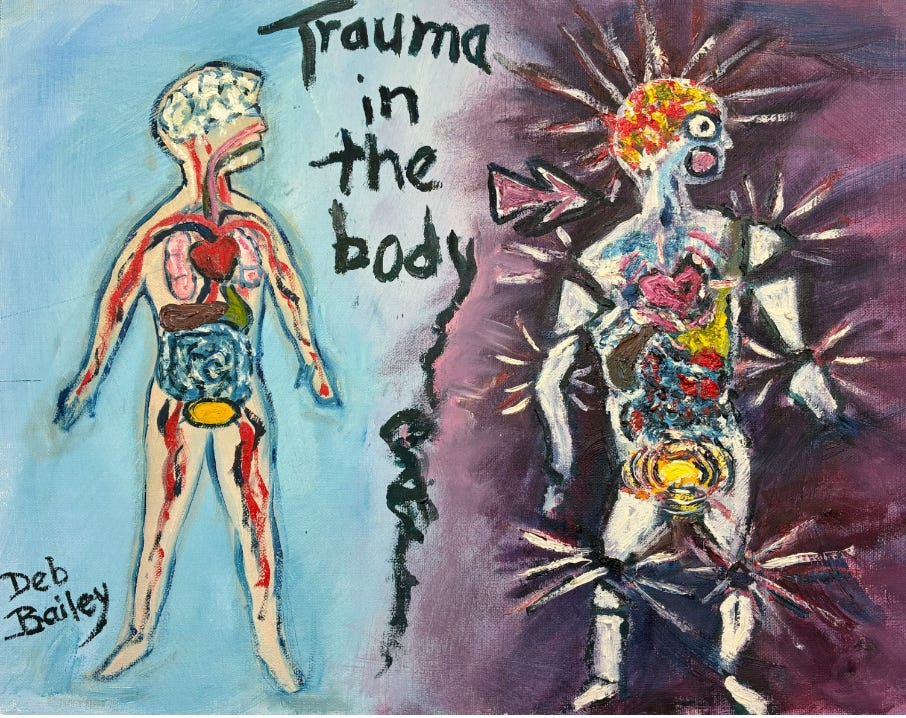
…and this is trapped in my mind…
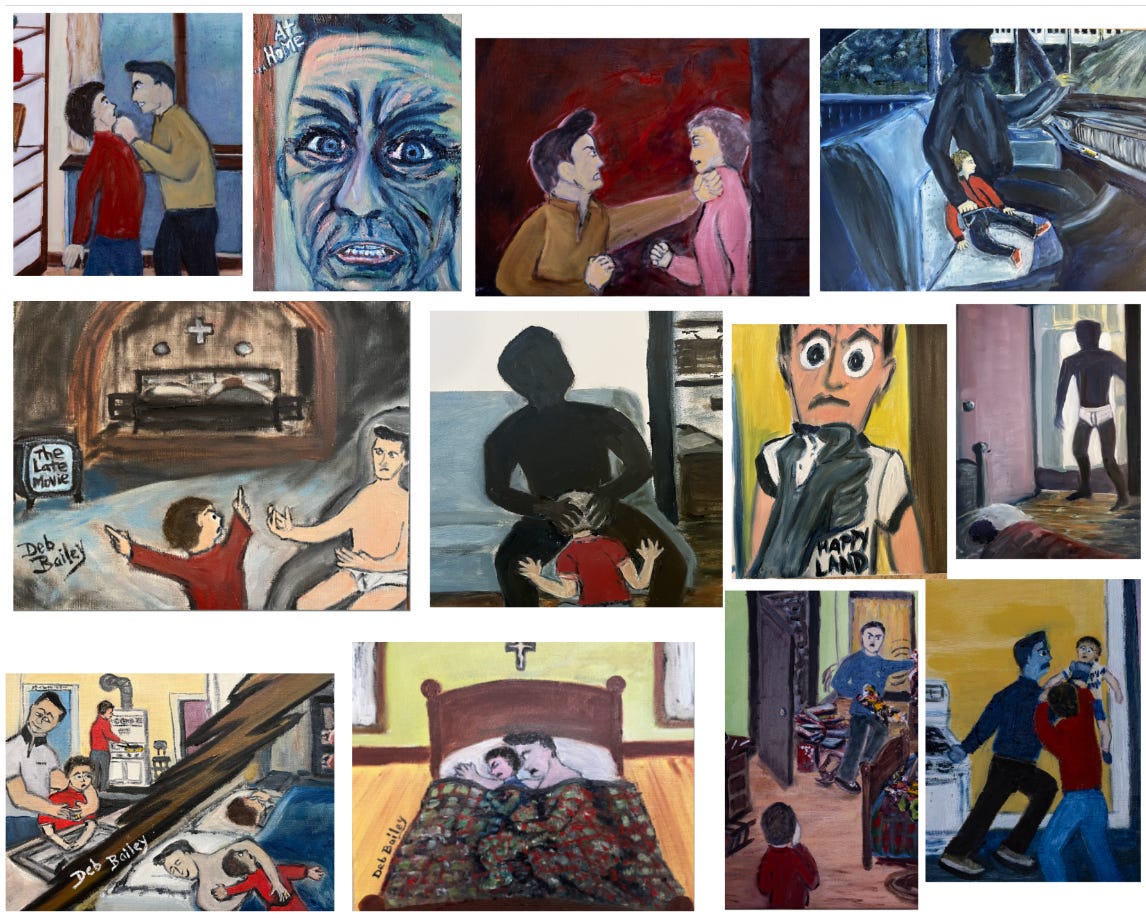
…what kind of therapy shifts my trauma reactions from this…
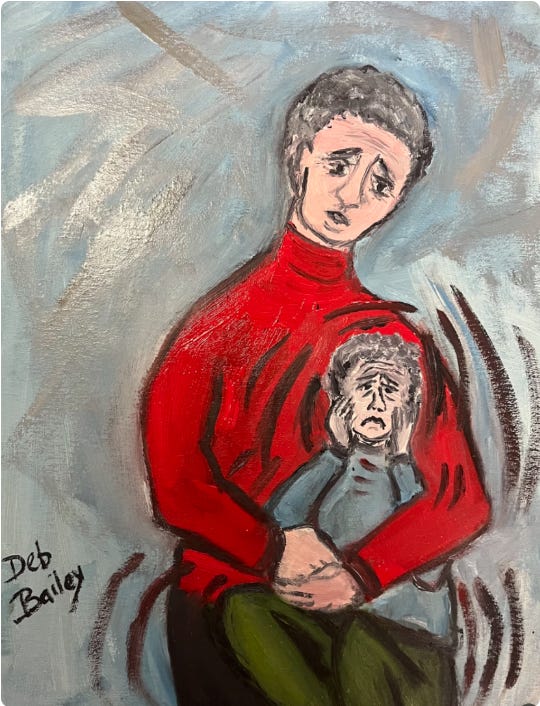
…to this?
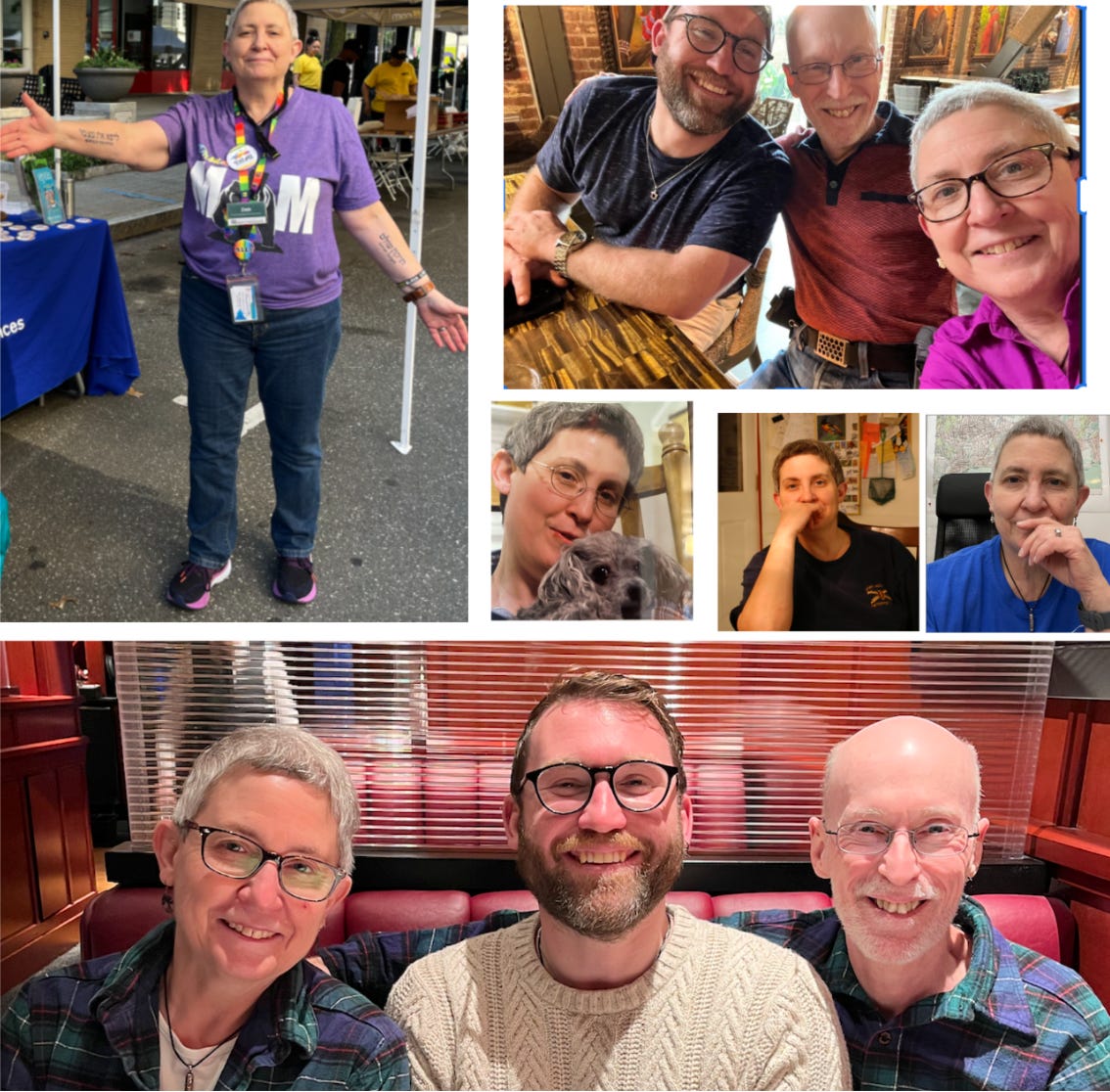
Integration
“… these responses…protective adaptations that have become costly. The work then is not to erase them, but to help them update…some forms of innocence do not return. That is a loss…What is possible instead is integration….Integration is not a euphemism for moving on. It is a more exact description of what healing often looks like when the goal is not restoration of the past but the construction of a livable present.”
Nicole Ohebshalom, PhD, LPCC, RN, PMH-C, “PTSD and the Loss of Self: Finding a Way Forward After Trauma.”
Constructing a livable present. Is that possible? I can only say it is happening for me even as it’s taken a lifetime.
Bessel van der Kolk, MD, noted that in trauma, our brains “adapted to unsafety. And that also points the direction for recovery: if the brain has adapted, it can also learn to attune itself again — provided you find the right entry points and involve the body.”
Ronald de Caluwe, “Trauma is Not a Memory: Insights from Dr. Bessel van der Kolk,” March 29, 2026
So how does a person help their brain to “re-adapt….to attune to itself again?” As this topic has become more openly discussed in the world, more and more research studies are being done, and more tools are being developed. Each person must find their own path.
For me, in addition to my painting and writing, it’s been a four-pronged process:
- Therapy – for me, Cognitive Behavioral Therapy to unearth, learn, and understand.
- Movement/somatic therapy, to free trapped stress stored in body tissues.
- Bilateral eye movement or EMDR.
- And medicine – in the form of antidepressant and anti-anxiety meds.
CBT – Cognitive Behavioral Therapy
This is one of the various therapies often referred to as “talk therapy.” It is not the only one, and I am not well-versed in the many other methods that fall into this category. I will simply note that CBT is what I have used extensively with my therapist and which has served me well. But just be aware, there are different techniques, and again, it’s an individual process decided between the person and their therapist.
By first talking things through with my therapist, I’ve been able to become aware of thoughts and behaviors that are taking place, especially ones that no longer serve me well. I can identify and clarify what the issues are, what memories might be most useful to work on, and when to apply things like Yoga or EMDR (see below). Using CBT to prepare for some of the somatic and EMDR work below allows me to heal more effectively when using those techniques. And then repeating the CBT after using those other techniques helps me make sense of it all. I can then understand what was happening and formulate ways to manage symptoms and make my life better.
Movement/Somatic Therapy
Movement assists especially in treating the “somatic wounds” – the trauma buried in the nervous system, connective tissues, and body organs. Its target is the physical feelings that are frozen in the body at the time of the traumatic event, as opposed to thoughts. Dr. Bessel van der Kolk once noted that “if the memory of trauma is encoded in our senses, in muscle, tension, and in anxiety, then the body must also be involved in the healing process.”
Saniya Ahmed Khan, Yourstory.com, “The Body Keeps the Score: 10 Key Quotes from the Book“
The trauma stored, especially in infancy and the toddler years, was extensively in the form of body sensations and emotions, non-verbal forms of memory. So now, every movement I make helps to release a bit of those stored sensations. And the more released, the calmer things become. For example, slow, deep breathing can be very effective because it sends signals of safety to the brain. Safety equals calm.
I’ve used a few different kinds of movement:
- Tapping
- Yoga
- Tai Chi
- Walking
- Painting
- Breathing/Meditation/Prayer
Most are self-explanatory. Just to give some extra information on “Tapping,” it is also known as EFT, or Emotional Freedom Technique.
From a Google search:
“Tapping therapy, or Emotional Freedom Techniques (EFT), is a somatic practice that combines traditional Chinese acupressure with modern psychology. It involves using your fingertips to tap on specific meridian points on the face and upper body while focusing on a traumatic memory or stressful emotion to help calm the brain’s stress center.”
My therapist recommended a very simple and helpful video to get me started. The instructor is Cheri Clampett, C-IAYT, and the video title is “Emotional Freedom Technique: Tapping” from the Ridley-Tree Cancer Center. I found that even just listening to her voice in the video calmed me.
Another site, The Tapping Solution, also offers videos and additional information on what body points to use, as well as the history and science of the technique.
There are other forms of somatic therapies as well, including drumming and other physical exercises. And sometimes therapists also use neurofeedback – computer programs that help calm the electrical circuits in the brain.
Eye Movement
A special form of movement that I also have used extensively is EMDR – Eye Movement Desensitization and Reprocessing. While this is not considered somatic therapy, bilateral eye movements – moving the eyes back and forth while following a light beam and focusing on a traumatic memory – have been very helpful for me. The process helps to complete an “unfinished memory” – something traumatic that was stored without the chance to cognitively process what was happening. Because that memory was unfinished, it was stored “alive” as if it is still going on. By using this method, I have been able to transform and reduce high-intensity traumatic emotions to a much calmer state and replace fear messages with new beliefs and behaviors.
Meds, now, and those on the horizon
As I have noted before, I am not a psychiatrist or doctor. So I will speak briefly on this topic and recommend that any questions be directed to the right professionals.
I have used a 2-med combination for several years that functions to heal the depression and manage the anxiety. There are many medications available, many more than when I began this work.
Also on the horizon are new treatments that utilize various psychedelic drugs, as well as MDMA, a pharmaceutical-grade form of Ecstasy. These chemicals are being studied in research trials with licensed professionals to explore their use as aids during therapy sessions. They are being explored for their ability to alter traumatized brain circuits and possibly allow for better openness and progress during therapy sessions.
I cannot and will not offer any recommendations here. I am simply noting that there are new drugs being studied that may be valuable in the future. Again, any questions, discuss them with your doctor.
PTG – Post-Traumatic Growth
So is there a “transformation” for survivors in the wake of all the trauma and costs?
I think there can be. In fact, researchers have a name for it: Post-Traumatic Growth (PTG). It doesn’t mean PTSD is gone; in fact, the two can co-exist. It just means there can be some profound personal shifts.
I did a Google search on the term Post-Traumatic Growth, just to get a broad understanding of how the psychology professionals describe it:
From Google:
PTG does not mean the trauma was good or deny deep emotional distress. Instead, it reflects how the intense struggle to make sense of a shattered worldview can lead to profound personal shifts. Researchers Richard Tedeschi and Lawrence Calhoun identified five primary domains where growth appears: [1, 2, 3, 4]
- *Appreciation for life: Developing a changed, more grateful perspective on everyday moments and priorities.*
- *Relating to others: Forming deeper empathy, compassion, and more meaningful connections with loved ones.*
- *Personal strength: Recognizing an inner resilience and confidence (”I survived this, so I can handle difficult things”).*
- *New possibilities: Discovering new interests, paths, or life goals previously unconsidered.*
- *Spiritual or existential change: Deepening a philosophical, existential, or religious understanding of life. [1, 2]*
PTG versus Resilience:
- *Resilience is the ability to withstand a challenge and bounce back to your previous baseline of functioning.*
- *Post-traumatic growth goes beyond bouncing back; it means moving forward to a higher level of psychological development or a fundamentally changed perspective. [1, 2, 3]*
It is also important to note that PTG can co-exist right alongside post-traumatic stress disorder (PTSD); a person can feel deeply distressed and anxious while simultaneously experiencing transformative internal growth. Not everyone experiences PTG, and feeling unable to “grow” from hardship is a completely normal human response. [1, 2]
Another website noted that there were “ten qualities” people demonstrate as part of PTG, and these come up as they move through five stages of change:
Ten qualities:
- Start to notice an inner strength
- Crave deeper, more authentic connections
- Cherish the small moments as more precious now
- Be open to new possibilities
- Reflect on what your values are and what matters most
- Give yourself more self-compassion
- Advocate for your needs and set boundaries
- Let go of what no longer serves you
- Learn to navigate uncertainty
- Find purpose in your existence
Five stages of PTG:
- Struggle – Experience the pain and disorientation of your trauma
- Survival – Day by day, establish stability and coping methods
- Reflection – Start to make meaning of what happened to you and its impact on you
- Rebuilding – With small steps, align your life with your values and needs
- Transformation – Start to see new perspectives, strengths, and possibilities from your experiences
*From: Sarah Herstich, The Complex Trauma Podcast, “10 Signs You’re Experiencing Post Traumatic Growth”
While each source I found gave slightly different variations of these stages and qualities, all of them base their descriptions on the original research done by Richard Tedeschi, PhD, and Lawrence Calhoun, PhD, who identified this area.
I first learned of this term when reading Daria Burke’s memoir about her own healing path: Of My Own Making. She describes this phenomenon as: “a continual becoming, a relentless evolution…the awakening of spirit that defies the paradigm of perpetual suffering that in psychology has come to be known as post-traumatic growth (PTG). A theory as profound as it is perplexing, suggesting that out of the darkest moments of our lives, we can emerge not just intact, but stronger and more resilient than before.”
She described the results of the researchers’ work in this way:
“They observed individuals who, despite enduring unspeakable tragedy…arose with a newfound sense of strength and purpose…people diagnosed with PTSD could also be positively transformed by trauma, manifesting in five distinct phases: greater personal strength, awareness of new possibilities, strengthened relationships, an enhanced appreciation for life, and spiritual growth.”
One caveat the researchers noted as a critical element for success in this kind of growth is the need for SOCIAL SUPPORT…from family, friends, COMMUNITY. It was that same message I wrote of earlier – we need community…community needs us…and that is where the strongest healing comes.
My PTG
In looking at the huge number of blog posts I’ve written over the last year and a half, I see that first half of this book – The Old Country section – was an “integration.” It was a reclaiming of all my broken parts as well as a piecing them together so that, for the first time in my life, I could see the WHOLE picture.
But to leave it simply as “this is what happened,” would not only be unfinished, but would also leave out the most important part:
What does it all MEAN?
Hence, I have needed this whole second section of my book – The Undiscovered Country – because it’s my PTG. It’s where I “went to school” and studied that life story, asked questions, and learned things. That was the only way I could make sense of it all and start to “transform” myself, my beliefs, and my life.
That is why I have used these “psychological alchemy” stages that Carl Jung described. They capture perfectly, for me, that the path to understanding is an evolution.
Starting with the dark chaos of the Nigredo posts, followed by the brightening energy in the Albedo section as insights slowly emerged, it was the path I found most helpful.
Next, it will go on to the stages of:
Citrinitas – the yellow phase of deeper realizations, which I will describe below
Rubedo – the red stage of reclaiming my present-day power and identity
Epilogue – the exploration of “What do I want next in life?”
Because for me, there is ALWAYS another “next” until I can’t do it anymore. So, that is where this part of the book will travel next.
Very Individual…and TIRING!
I will note just a couple of last things. Any methods, progress, outcomes… they are ALL INDIVIDUAL. No one’s needs, depth of trauma, or path to healing can be compared to another’s. Nor should they be.
Also, despite my feistiness in being determined to reclaim as much of my life and health as possible, there is one other thing I have experienced through all of my work — and that is tremendous FATIGUE. My therapist reminds me this is normal because all the reprocessing and confronting and releasing of emotions is WORK. Recently I also came across this simple reminder that I put up in my writing area:
“As you begin healing from past trauma and your body moves out of fight-or-flight mode you will need a lot of rest. You’re not lazy; your body is finally catching up on the calm it’s been missing for years. Let it.”
Nadia Addesi
She speaks the truth. So I am embracing fatigue as part of my path to wholeness.
Up Next
As part of my alchemy process to healing, I wrestle with the many unanswered questions in my life.
In the next section of the book – the Citrinitas, or “yellow” phase, which is the place for those deeper insights and answers that have been waiting a lifetime – I will tackle one of the biggest questions that has haunted me all my life:
“What the HELL happened in that house that it could go SO wrong?! HOW did he wield such power?”
So now, on to Citrinitas and his “toolbag for abuse.”
Note:
I am seeking financial support to complete my memoir, work with an editor, and make a visit to my home state for fact-checking. Your help would mean the world to me as I take this step toward healing and giving voice to my journey.
Please like, comment, and share this post to help spread the word. The link for my fundraiser is on GoFundMe. Thank you for your support.


Leave a Reply