The book
It Can Happen to Anyone: Why Battered Women Stay, 3rd Ed.
My eyes locked onto that title like laser beams. Could this book represent answers to questions I held for a lifetime? And blame?
It wasn’t lost on me that it was written not by men, but by two extremely accomplished female researchers:
Alice D. LaViolette, MS, MFT
Ola W. Barnett, PhD.
The first was a long-term advocate, expert court witness, and consultant in domestic violence issues. The second was a distinguished professor of psychology at UCLA, with research including the topics of batterers, battered women, and dating violence.
It was the first half of that title that REALLY drew me, because it was the first time anyone suggested that my mother wasn’t weak, at fault, or “different.” That maybe she just fell into a trap she couldn’t climb out of.
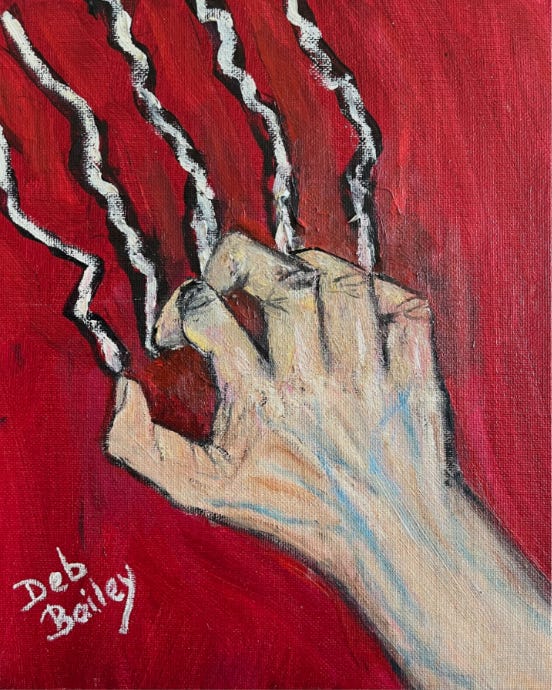
The second half of that title clinched my decision to buy the book because it implied that there were logical answers for why my mother stayed with my father.
I was already on the trail of explanations given my research into Dad’s abuse tools and especially understanding about intermittent reinforcement, trauma bonding, and the brain chemistry changes that drove those things. But this was the missing link — the research that showed that a person who fell victim to trauma bonding WASN’T ANY DIFFERENT THAN ANYONE ELSE!”
THIS was a book I had to read.
The “Good ol’ days of my mother’s world
The other day, on a break from my reading and research, I put a question to the Google search engine:
“Was there any support for wives of sexual abusers in the 1960s?”
I was pretty sure I already knew the answer. I had lived then. But I was just curious what a Google search might turn up.
While there were no surprises, I have to say, it totally nailed the world of 1960:
“Official or institutional support for wives of sexual and domestic abusers was VIRTUALLY NONEXISTENT in the 1960s.”
It lumped the search information into two big categories:
- Cultural and Social Issues
- Legal and Institutional Realities
In the first, it noted that abuse inside a marriage was viewed as a private, “family matter,” not a crime or social problem. What went on in the home stayed in the home. You didn’t interfere in a marriage.
“Her” problem
There was tremendous shame and stigma attached to admitting your spouse abused you. Everyone would look the other way, imply that maybe you brought it on yourself, and usually friends would distance themselves, leaving you alone with “your problem.”
In fact, society wanted it to be your problem. Early on, writers often failed to put the blame on the perpetrators, where it belonged, and instead said or implied that it was the fault of the battered spouse. Researchers attempted to show in their studies the “presumed deviance” of victims, looking for characteristics that set them apart from others:
“Finding something wrong with battered women makes it possible for the rest of us to distance ourselves from them: ‘If I am different from battered women, I will not be battered.’ ‘If she is different from other women, I do not have to help her.’”
From the book, It Could Happen To Anyone: Why Battered Women Stay (LaViolette and Barnett – 85-87)
Ironically, the book noted that study after study instead demonstrated: “Women entering relationships that eventually become abusive do not appear to differ from their nonbattered counterparts…becoming trapped in a battering relationship could happen to anyone.” (114)
Those words sank into my brain and nervous system, and I became aware of intense calm spreading through me. And relief. All those years I’d blamed myself for taking too long to stand up for myself, and all those years I’d judged my mother as a failure changed in an instant. Layers of heavy, black anger and disgust dissipated like fog on a sunny morning. The idea that actual scientists affirmed WE WEREN’T WEAK FREAKS felt SO good.
Maybe we had been trapped and harmed. But we weren’t some aberrant, deformed, substandard bit of humanity that society made us out to be, and that we accepted. No, we’d just had no help. So I kept reading.
Religion & Society
As for help, another area that failed us: religion. The guidance there for women was to be obedient, pray for the husbands, endure for the sake of the family, hope that in time it would change, and work to be better wives. The words “ ’til death do us part” were iron chains, not some nice slogan.
Mathilda Gage, a late 1800s suffragist, aptly noted that, “The church, which should have been the great conservator of morals, dragged women to the lowest depths.… the most grievous wound ever inflicted upon women has been in the teaching that she was not created equal with man…”
(58)
I can state from my own experience in the Catholic Church all those years, as well as stories from friends, that marriage was “for better or worse,” forever, and stacked against the woman. And here, society, culture, and religion joined forces in dictating what a “good woman” should be.
Women were socialized to endure, be strong, and show commitment, as well as to keep hope, and be a nurturing and supportive force in the home despite getting none of their own needs met. Male dominance and aggression were viewed positively. These values were reinforced by the strong male-dominated ethnic culture we lived in.
And if you didn’t accept those requirements, the priest would bring in the big guns of sin, Divine decrees, and God’s punishment in the fires of hell.
Religion, then, was patriarchy at its strongest. A male God. Male church fathers. And even during the sex abuse scandals to come years later, it was male clergy abusing, male clergy investigating other men, and male clergy covering it up.
As Mary Daly, a 20th-century feminist philosopher and theologian, put it: “As long as God is male, then the male is God.”
Add to all of this that my mother was very religious and accepted those rules. So, no. Religion was no hope.
The police and courts? Even they would often refuse to get involved. And legally, divorce was expensive and difficult. Often the abused wife had to prove severe and extenuating circumstances to even be allowed to sue for divorce. If she even had the money to hire a lawyer.
In addition, spouses were at risk if they remained in the home with the abuser, and there were no shelters, crisis hotlines, or advocacy groups. These did not exist until feminist activities started in the 1970s. And even if you could get to court, it was often handled in a civil court versus a criminal court. Civil courts were focused on mediation and reconciliation efforts rather than criminal prosecution for violence. The implication again was that this was not a crime.
As far as establishing financial independence, many women had few options for income or job training. And even if they did have jobs, banks would often deny them a credit card in their own names or refuse to give them loans or mortgages without a man to co-sign.
Then, there was us. Even if my mother could have gotten a job, who would have looked after us? There were no childcare situations other than a friend or family member. Her parents weren’t going to support her in getting a divorce. And she was isolated from friends, so that wasn’t an option.
That “trash compactor”
So as far as I’m concerned, my mother was trying to play by the rules of those “good ol’ days.”
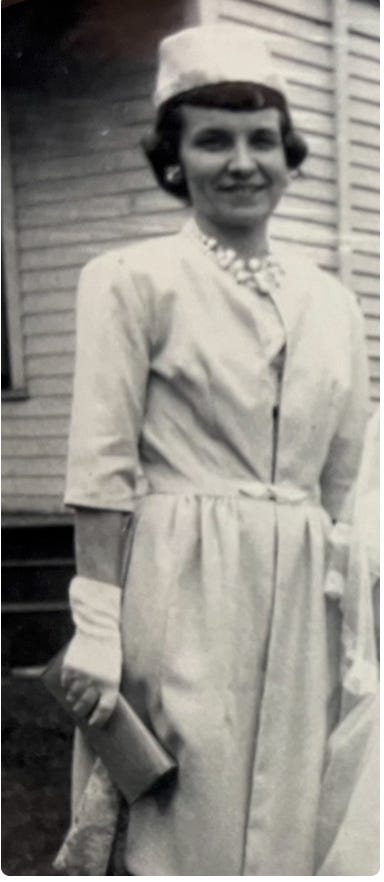
But those rules were only fine if you were a white male. Jennifer Leigh Selig, PhD, in her book Deep Memoir, shared a really perfect quote from Elizabeth Gilbert’s memoir, Eat, Pray, Love:
“…society’s message to women has always been…Embrace the trash compactor that is your life. Bow down beneath your burdens and shut your mouth about it….Surrender more. Endure more. Sacrifice more. Become a good martyr.”
That memoir was published in 2007. If women were still feeling that pressure then…and still now, despite the feminist progress made, I can’t begin to imagine the pressure on my mother to take on all the shame, stigma, and responsibility of HIS abuse…alone…and to blame herself.
At the same time, her own particulars
While she wasn’t “an aberration of nature” and the cause of the abuse, there were risk factors that made my mother a candidate for an abusive relationship.
I’ve previously talked about the confusing and addictive powers of tools like intermittent reinforcement, gaslighting, threats, cognitive dissonance, and others, to keep a spouse controlled by the abuser. And I’ve also described how those tools of coercive control trigger actual chemical and biological changes that reinforce the trauma bond.
The addition of strong religious convictions, ethnic culture, financial need, and the structures of society then, to disempower women, no doubt all helped convince my mother that she was better off to stay.
And then, there is the power of an abused spouse’s own views and assessments. The book, It Could Happen to Anyone, noted that:
“Surprisingly, research has not uniformly shown that all couples involved in maritally violent relationships inevitably report marital dissatisfaction…The importance of marital satisfaction separate from or in spite of intimate partner violence has emerged …as a variable in leave/stay decisions.”
The research noted several things involved in that choice:
- perceived benefits versus costs
- the quality of one’s alternatives (a different partner, job, education, shelter)
- the size of the investment in the relationship, especially in terms of time, children, finances, effort
I would add that the marriage offered my mother an alternative to living with an alcoholic father and financial insecurity, both of which were present in her family of origin. I don’t know if my grandfather ever physically or sexually abused Mom because of his drinking, but no doubt she found the times when he was drunk to be very frightening.
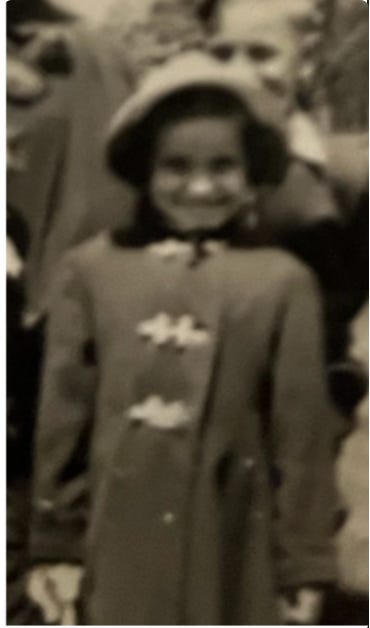
I will also note that my mother never liked having to deal with bills and finances. What I saw was a person who wanted to be protected and taken care of. I think that was her scar from her past, and even the book notes that childhood trauma can certainly predispose someone to getting into or staying in abusive relationships.
It’s certainly possible, especially given the mores of the time to view “abuse” as a family matter, not a crime, that she may have still decided staying in the marriage was better than leaving. Her hanging on for the times Dad showed her care and attention might have been worth it. Aside from the many other factors at play, I suspect it also fed that low self-esteem part of her that felt “hopeless” without him.
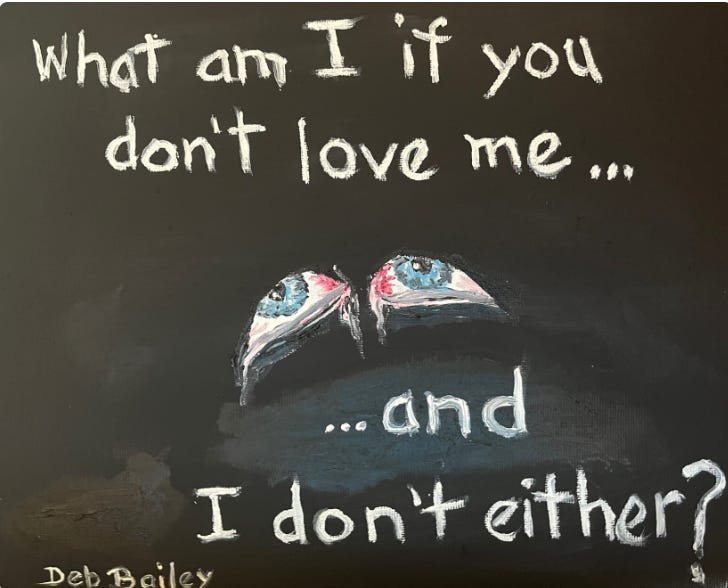
Her sister had entered the convent in high school. She was very bright, and no doubt saw what her mother went through in marriage and child-bearing. At that time, her own options were limited. She could remain single, but there was no money for an education or few opportunities for a decent job. That meant she most likely would have had to live at home, or marry and have the same life her mother did. Becoming a nun offered her freedom, education, and a satisfying career.
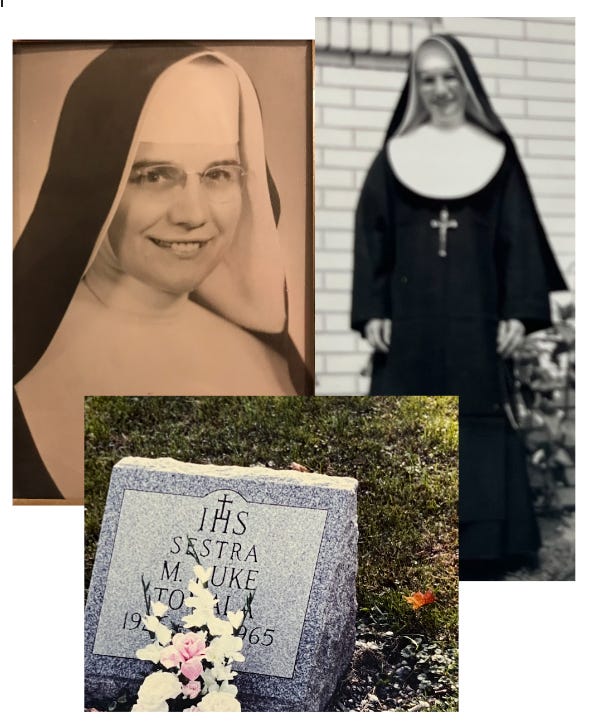
I know she loved being a nun, and I do think she was satisfied and truly felt a calling. But I also have wondered that if she’d had other options besides marriage, would this still have been her path? I recently read an account of a former nun, who said she entered for the wrong reasons. When she decided to leave the order, it was because there were now many other options for women. I can’t know my aunt’s motives. But for many reasons, I can understand her choice.
So given that the times of my mother’s youth in the early and mid-20th century offered very limited possibilities for women, I imagine marriage to my father seemed pretty good to her. Growing up through the Depression and in a difficult household would have impressed on her the need for security above all, and to hang in there when things were not good. All of that cemented her belief systems and ethics about commitment, marriage as forever, God, loving her partner even through bad times, and making sure she and her children were provided for.
Annie Tanasugarn, PhD, in her 2023 Psychology Today article, “Are You Experiencing a Trauma Bond?” described the childhood stress factors at play:
“Traumatic bonds are introduced in childhood where traumatic experiences increase the risk of a child developing an insecure attachment style…A history of unmet basic needs in childhood predisposes a person to further traumatic bonding in their adult lives where their needs for safety, consistency, predictability, and belonging continue going unmet…a person with a history of depression or low self-esteem from childhood trauma is at an increased risk of falling victim to a narcissistic partner where the person comes in as a “hero…”
The hero would have been my father, promising a better life with security and no alcohol…something they both wanted. He would have been her provider and protector; her bastion against the unpredictability of her home life. And he, in turn, having grown up in violent chaos, would gain control and get all his unmet needs filled by someone who would not leave him.
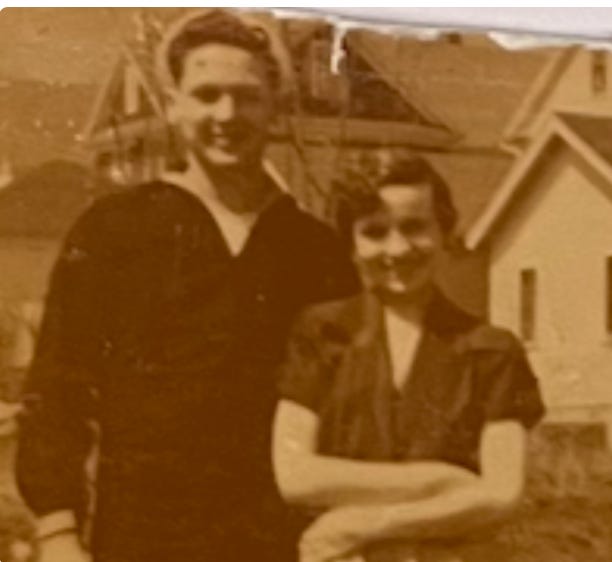
Thus, even when he would get abusive, the apologies and better times he offered would offset the downside for her. They were each other’s anchors, bonded against the threats of the outside world. And when you sit across from someone every day at the table, you see their humanity and shrug off the rest.
As a child, I once overheard a conversation my mother was having with a friend over coffee. They were discussing the loss of a child by a mutual friend. My mother’s response was that while losing the child was terrible, it wouldn’t be as bad as losing your husband. As she put it, “You can always have another child…but you can’t replace your husband.”
Combine all these many ingredients, and it was a recipe that delivered a Faustian Bargain to my mother – for the sake of security and anything that was good, sell out the rest. It was a normal reaction to a life of many abnormal situations.
Up Next
So what did that create in our house? The “mind map” makes it clear…
Note:
I am seeking financial support to complete my memoir, work with an editor, and make a visit to my home state for fact-checking. Your help would mean the world to me as I take this step toward healing and giving voice to my journey.
Please like, comment, and share this post to help spread the word. The link for my fundraiser is on GoFundMe. Thank you for your support.


Leave a Reply