The old wise woman
So I have come to the point in this story – and in my life – where I get to fully claim the identity I want. Who am I now, as an older woman in life? And what do I stand for and want?
I’ve always only had pieces of my identity, never the whole. And it was always so dependent on outside support and affirmation. It’s been a long path to this moment, and to even understanding just how crucial it is to my life from this point forward.
Through this writing, I’ve found many answers even as I also found more questions. But the biggest thing I have received is that gift to “know better.” When I was a girl, my father always yelled at me and said, “You’re the oldest! You should know better.” Back then, I always wondered, “What is it I am supposed to know?” But now, through this book, I have gotten to really know me. Instead of fumbling in confusion through broken pieces and disjointed memories of my life, I have assembled the full picture and given it clarity. That has brought a sense of wholeness inside I’ve never had before.
Does that mean I still don’t long for a mentor with all the answers? Some mystical old wise woman I can visit with at a full moon and ask for her knowledge?
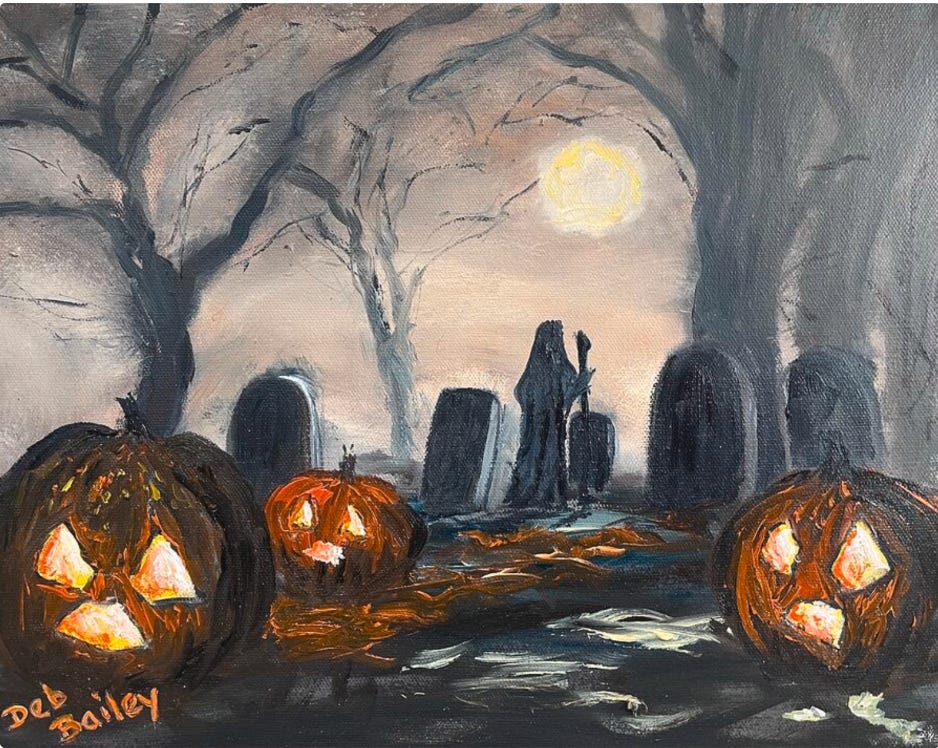
Sure… even as I know there is no such person and that no one else has my answers. And sure, even as I know we each have to confront what is inside us, wrestle with it, then birth our own wisdom. And I think I am not alone in this longing.
Early societies had been matriarchal, bearing the wisdom of creation and connection. But somewhere along the way that disappeared.
In her book The Receiving: Reclaiming Jewish Women’s Wisdom, by Rabbi Tirzah Firestone, she notes how for thousands of years, the wisdom of life seemed to be held strictly by the men. Only the patriarchy was allowed access to the written knowledge of their society and allowed to make the rules for all. Rabbi Firestone seems to almost cry out in agony from the book’s page when she laments:
“Where in the world had all the women gone? Where were the wise women and community leaders, the seers and the sages? …I found that, sorrowfully, Judaism was entering the twenty-first century with no named women mystics or spiritual guides.”
When I read those words, I recognized that they were the crux of my own longing and agony. In fact, I suspect the longing and agony of all the women in our current culture ask: Where are the women? Where are the feminine mystics and spiritual guides for today’s world???
At this point in my life, THOSE are the types of mentors I seek. If I’m to integrate my past and negotiate with my present to decide my future, I want that kind of feminine wisdom that equally matches the guides the men have had.
And then I paid closer attention to the books I have been reading lately…viscerally drawn to, in fact. They were books all about feminine divinity and mythological characters. Without realizing it, my own soul was telling me where to find it.
The truth is that the Universe did not leave us without feminine knowledge. It’s within us. It’s just been silenced and ignored for thousands of years, along with the instructions for how to access it.
But once you discover this, there is no locking up those voices anymore. The key is story.
O Bard, sing me the song of the women…
In my freshman year of high school, I fell in love with The Odyssey. Not only would I consume the reading assignments as soon as I got home from school, but I would even read ahead of what was required.
I loved the strangeness of the story. The sense of adventure. The determination of the hero to prevail against all odds and Gods. And of course, heroes were men.
Despite his abuse of us, I deeply respected my father’s determination to make his mark in the world and hated my mother’s passivity and perceived weakness. Back then, I loved hearing about the places he visited when he was in the Navy. I was impressed with his efforts to get ahead by working full time while going to school full time. And I observed and learned from his example to never let anything stop you from achieving what you want. I identified with and embraced totally that “male” path of adventure and achievement, and wanted that for my life.
As far as I was concerned then, I was never going to marry or be a mother. I would chart my own course, whether a marine biologist always out at sea, going in the military, becoming a writer, or saving kids as a teacher. Always my mantra was, “Don’t grow up to be my mother.” To be her was to be trapped, conquered, and denigrated. And that was NEVER going to be my future.
So, yes, I consumed stories like The Odyssey, Robin Hood, or Jules Verne’s books — ones always with powerful male adventurers. The only female exception was the Nancy Drew mystery stories I had, because she was the brave female sleuth who treasured solving mysteries over anything else.
But these days there is a shift. First, I now consider Odysseus a jerk, not a hero. He wanted to get home to his wife and young son so badly that he stayed years with the witch Calypso? The man who thought up the Trojan Horse couldn’t figure out a way to leave her island? And maybe he wouldn’t have incurred the wrath of the god Poseidon if he hadn’t blinded Poseidon’s son, the one-eyed Cyclops Polyphemus, then proudly take credit for it by shouting his name to the giant.
His cleverness was heartless. He cared nothing for others, but was simply a man all about himself, his conquests, and his ego. His calamities on his ten-year journey home were the result of his poor choices and flaws, and I have no sympathy for him.
But the women in that story? There was his long-suffering wife, loyal for twenty years, and struggling to fend off a houseful of freeloaders who wanted to marry her. What was life like for her all that time while Odysseus cavorted with various women on his long way home?
And what was the real story of the witch Circe? Or of the slave women in Odysseus’ house, forced to do the bidding of those freeloaders, then killed by Odysseus when he returned because they were disloyal, and brought shame on his house. But they were slaves. Did they have a choice in what any man did to them?
So now, if I were to sit at the table of some ancient Greek household, I don’t want the visiting bard to tell me the story of a man who can’t find his way home. I want to know about the women in that world. Tell me of their pain. Regale me with accounts of their courage, and the cleverness they showed in finding a way to wield some power in a society that gave them none. THOSE are the songs, O Bard, that I want to hear now.
Why? The intensity of what I feel now in despising Odysseus is not lost on me. He is my father. And he silenced, tricked, and denigrated my mother and me. And I am furious. Now I hunger for the stories of similarly denigrated women who still found a way to fight back, because those stories can awaken my own inner feminine warrior for this stage of life.
I don’t want a “Hero’s Journey” story anymore. No more tales of great travels and exploits, battles, and conquering victories. Give me the tales of the women left behind who had to deal with all the shit and still somehow kept their home fires burning.
And what are these tales? They are found in the mythological stories that teach us the power of those feminine archetypes we all, in our current day, long for. They are found in the HEROINE’S Journey…and THAT is a whole different type of journey.
What is the Heroine Journey and why is it different from the Hero’s Journey?
For years now, the hero’s journey has been a popular theme in modern culture, defined especially in the works of mythologist Joseph Campbell. The approach has been used both as a roadmap in life for achieving goals, as well as by writers and filmmakers to craft exciting and epic stories of adventure. And for the latter, its steps have been described in a variety of books on writing, including Christopher Vogler’s book, The Writer’s Journey: Mythic Structure for Writers.
The path is an outward-focused quest for any number of things, ranging from individual achievement, personal glory, or a victory of some kind, to winning the woman or saving the world. The structure has been depicted as a linear ascent or a round trip circle of departure and return. But the story progression is basically linear – starting with discontent, an unfulfilled dream, or a crisis that drives the hero to undertake the journey as a response to an inciting incident. He then struggles on, often alone, to face increasing challenges until the moment-of-truth battle where he achieves the “boon” – whatever the goal was. And often the hero of the story is left in a place that leaves him isolated from or somehow different than his community.
The heroine’s journey, on the other hand, was not well known until recently. In fact, Joseph Campbell felt women didn’t even have a quest. He saw them as the goal.
That comment right there, even though referring to a mythological element, nails the problem we see in our current culture: Women are not valued for who they are. Their perspectives are ignored, and the only qualities valued by a patriarchal society are power, conquest, domination, and achievement.
More recently, a growing number of books have been written about the feminine path. One, The Heroine’s Journey by author Gail Carriger, mirrors Christopher Vogler’s approach of using the mythological framework to craft good stories.
For me, though, I most relate to the book of the same name, by mythologist and Jungian psychologist Maureen Murdock, because it focuses on the spiritual and psychological perspective. Her approach is to describe the heroine’s journey in terms of healing, personal and psychological integration, and wholeness of spirit.
In contrast to the hero’s journey, the heroine’s path focuses inward for psychological and spiritual transformation. It has been described as a circle, or a spiral that often loops back on itself, because the journey of self-discovery, healing, and reuniting the split masculine and feminine parts of the self is a repeating process. It is not a one-and-done conquest. And to achieve that unifying integration of the self, this path requires a descent into the darkness of one’s shadows and fears, as opposed to some outward journey.
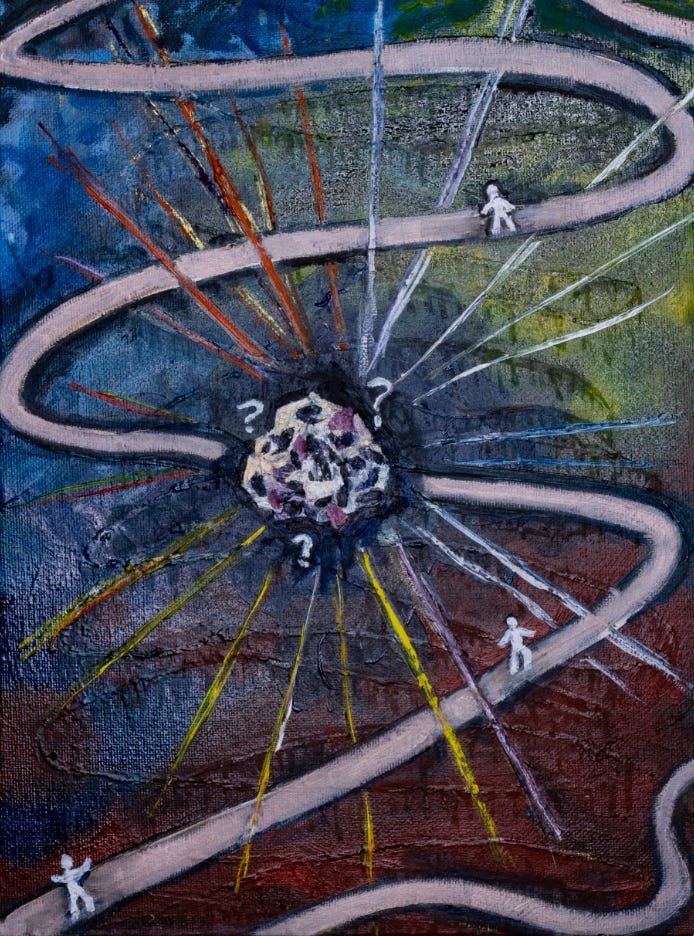
Another difference is that unlike the solitary nature of the hero’s journey and its aftermath, the heroine version relies on community and teamwork, the building of family-type bonds, and a return to unity and connection. Qualities such as vulnerability, intuition, and inner strength are emphasized.
One note to clarify something before I continue. Both of these journeys — the Hero’s and Heroine’s — can be, and often are, undertaken by both genders because each of us has a masculine and feminine side. So the hero’s masculine journey can be about that side of anyone’s nature. It is not restricted to someone of the male gender. So, the type of journey is more about the nature of the problem to be resolved, not necessarily the gender of the person.
For myself
So why do I talk about all of these seemingly abstract concepts that might fit better in a literature class?
Because for me, this was how I finally found my way to tap my own inner knowledge and find my identity. I have always loved stories and especially mythology. So those are the tools my inner mystic uses to reach me and help me make sense of myself. Another person’s inner feminine might use a totally different process. Each of us has to listen and know what works best for us.
But using the metaphors of mythological journeys, I could explain my life.
For example, for so many years I had to remain in the domain of that masculine energy. I drew on it to stand guard and fight outward battles many times against my father. That was the “Hero’s Journey” part of my life. Outward-facing. No time for introspection.
Now, though, he is gone, and that path is done. But I’m not, because there’s been another, different journey, waiting for me all my life. And now it is time. This is the quest to define who I am as an older woman in this world – the older woman who has finally come back to reclaim that whole feminine side of me that I shunned all my life. There, in that side that I abandoned in my youth, is the rest of my identity.
Up next
Let me introduce you to my feminine mystical friends.
Note:
I am seeking financial support to complete my memoir, work with an editor, and make a visit to my home state for fact-checking. Your help would mean the world to me as I take this step toward healing and giving voice to my journey.
Please like, comment, and share this post to help spread the word. The link for my fundraiser is on GoFundMe. Thank you for your support.


Leave a Reply