Archive for the ‘Broken Bits’ Category

The Gift

March 7, 2008

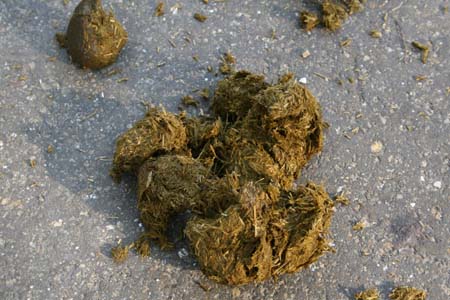
Okay, the gifts have been deep and meaningful all week. Humor is good meditation too. Here is an “excuse” shot – one of those you take just as an excuse to try out your new “macro” camera lens. I am sure everyone is familiar with “road apples.”

They are appropriate I think for a Friday, the end of the work week. For one, people often take off to visit places on the weekend and in that regard, these are special road apples. They come from one of our trips to Colonial Williamsburg in Virginia, left behind by the specially trained horses pulling the handcrafted colonial carriages. So, this should feed that “weekend wish to get away from it all.”

More to the point for a Friday, whether you were an 18th century farmer, or you work in a 21st century office, by the end of the work week, everyone has probably gotten their fair share of this stuff…. 🙂 Happy Friday.

img_0524resized.jpg

The Post – Preview of Coming Attractions

March 6, 2008

Companies have “Product Pipelines.” Teachers have “Lesson plans.” Movies have “Coming Attractions.”

Given that, I thought it was important to take a moment today to let everybody know “what’s coming” in the next few months on Soul Mosaic. The list below is not complete by any means, just some of the highlights farthest along in the planning stages:

Fiddler Crabs:

It remains to be seen whether the babies will make it or not, but I will continue to keep you posted. I see from the blog numbers this is a subject of high interest, so I will keep the updates coming.

As of today, the numbers of babies in the nursery tank has dropped dramatically. I am both sad and relieved. If thousands survived, they might have taken over my entire downstairs. However, I hope some make it. The parameters in the tank are good except for nitrites…the bane of all new tank setups. I am on my way right now to do a water change and see if that helps.

Hermit Crabs:

The next addition to the household in the near future will be 2-3 hermit crabs. I will be chronicling that from the very beginning, including what gear I buy and why, what happens when I “bring the babies home,” and how “life with hermit crabs” goes. Stay tuned for updates on when that will be happening.

Writing Posts:

There will be more posts to come on both My Author Journey, and the journey of Under the Pier as it moves through its process. I am pleased to report I am almost done with the second draft and will be starting both the third draft soon as well as putting together a submission proposal for a couple of editors. I will be sure to document the journey as it progresses. Topics still to come over the next several weeks and months in both of these areas:

1) Essays

From animals to God, geeks to kids, essays are how I speak. So more to come in this department

2) General Writing Journey

– The Writer’s House – That Swarming Bacteria, Proteus mirabilis

– Broken Bits – Encouragement for the Writer’s Soul From Beyond the Grave: A Nobel Laureate “Speaks”

– Writing Sanity: Do Something For Someone
3) More Topics for Under the Pier – Journey of a Novel

– Research Part III: Animal Character R&D

– Research Part IV: Setting as Character

– Three: The Mystical Number for Character Dynamics

– Test, Review, Retest, Analyze, Conclude

– Research Biblio- Diner Books

– Research Biblio – Nature Guides

– Writing the First Draft: If I Find One More Envelope Shred With a Story Note on It I’m Going to Scream!

– The First Draft is Done; What Now?

– So What’s Scribbled On All Those Revision Board Lists?

– What Writings Books Did I Use and Which Ones Did I Find Helpful?

– What Was Writing the Second Draft Like?

– What’s Coming Up for the Third Draft?

COMING SOON!!! A New Blog Category: Creature Features

As part of my preparation for Draft 3 of Under the Pier, I need to refresh my memory on all the critter descriptions. To really have those fish, birds, snails, and crustaceans breathing on the page requires vibrant details. So since I have to do a biology review of sorts, I thought I’d turn it into a creature of the day review for all of us. So – “Creature Features” coming VERY soon. (Appetizer: Did you know that an oyster toadfish can sound like an underwater foghorn?)

Photos and Art:

– New Macro photos coming soon. Since it’s Spring that means I can go back outside and crawl around the pond. Who knows what I’ll catch with my macro lens.

– “Photographic Journey of a Painting” – I will follow the journey of one of my oil paintings from rough sketches to explore composition arrangements, initial layers of paints, through finished product.

– Possibly Pastel: Given that I will be taking a 2 day seminar on Pastels in April, I may start exploring pastel art works and sharing those as well.

The Confusion:

What to do with the years and years worth of animal articles I have collected? – I have a box of news articles from the web collected over MANY years. It’s one of my quirks. I see an article about an animal, a cat who flew cross-country trapped in a plane’s insulation, a zoo animal playing with fabric softener dryer sheets, a 6-legged octopus, and I HAVE to print it out and keep it. My husband finds them for me now and sends them to me. Just like my feeling compelled to keep writing down the words “Mosaic” and “Broken Bits” over and over for the last few years until finally I realized it was my blog’s title and theme, I feel compelled to collect these articles.

The confusion in my mind is: WHAT SHALL I DO WITH THEM? I know I am supposed to do something with them… I FEEL it. But …what?

(Anybody have any flashes of insight????)
…And Last But Not Least: And Then There’s Bear

So, lots to come in the next few months, so stay tuned.

The Post: Under the Pier – Research Part II: Human Character R&D

March 5, 2008

If you’re writing about Abraham Lincoln, conducting research is pretty straight-forward. If you have a real person, you can find books, movies, articles, people who knew them or experts to interview.

How do you research someone who doesn’t exist? With fiction characters, a lot of times you first decide what your story is about and who needs to be in it, then you start hunting. A lot of the work is really character “construction.” You have to build the characters and give them a life to know what facts you need. Some research might go on as you craft the character, but for me a lot of it came after I had some idea who the people were.

For starters, I had to decide just what kind of characters this story needed – superficial or deep. If this was a plot-driven adventure story, the main change and action would take place outside of the characters. That means the characters, even the main ones, remain the same from beginning to end. So they just need their framework – looks, personality, talents, some backstory. It’s the adventure, the plot action, that changes.

Under the Pier is a character-driven novel. The real energy, drive and purpose of the story take place inside the characters. They will grow or regress, change for the better or worse, due to their personality and circumstances. It’s not about the story actions or problems, but how they REACT to those story problems. So this meant my characters had to have depth, history, psychology, family, emotional wounds, unanswered questions.

Before I could research anything, I had to pin down some concrete things about each character. As much as I hated to have to start picking traits and family backgrounds because to choose things is to exclude others, it’s the only way to have a true-to-life character. Nobody in life can have blonde, red and brown hair (unless they dye it that way), three different colored eyes, be both young and old, and do EVERYTHING you ever dreamed of doing. Neither can your characters. So for both sides of the story, animal and human, I had to create a character, build their life, and then relate their life to others in the story. Robert Frost said “way leads on to way.” In writing, character leads on to character.

For the human side I wanted more than just birth date, physical description, or the meaning of their names – yes, I selected names that matched some aspect of their personality, but I also wanted sections for things like: strengths, weaknesses, goals, fears, driving needs. I took a lot of the information from my extensive journaling and wrote up personality profiles that gave each person a life story – traumas and triumphs, parentage or lack thereof, marital status, family dynamics, issues, problems, glaring flaws.

And by the way, for well-rounded, true-to-life characters, it’s important that the heroes be jerks about some things, and the villains be saints about others. NOBODY in real life is all good or bad. If you do that with your characters what you end up with is a stereotype or a caricature. At the very least, what you end up with is dull and boring. I read somewhere that when police interrogate suspects and witnesses, they expect some discrepancies between the various versions. That’s normal human nature. Everybody sees different things. When the stories match up too perfectly, the officers suspect the story being told isn’t real. The same is true with characterization. For example, General George S. Patton, Jr.’s grandson shared this observation about the man:

“My grandfather once commented that in his view a gentlemen should be able to curse for three minutes, non-stop, without repeating himself.”

At first glance one would never figure a gentleman would use such language, but flesh and blood human beings are full of inconsistencies. So create a character that “overall” is true to his nature, but do sprinkle in some unexpected traits. It makes for more real, interesting characters, and adds to the story action possibilities.

In any event, when writing my characters’ biographies, I started with the simple date of birth and description, then went on from there. For Rosa, the old woman who runs the diner in the human side of the story, the physical description went something like this:

She is relatively thin and wiry, but solid-boned, strong from years of physical work, with short whitish hair that used to be black. She’s about 105 pounds, in good condition overall from walking up and down stairs to her apartment behind the diner. Some arthritis and she is slowing down, but still is healthy and strong enough for being almost 80. She does have high blood pressure and sometimes forgets her meds.

That gave me enough of a picture in my mind – one of those strong old women who worked hard all their life, like many old women I grew up around in my very ethnic hometown. The thing about pinning down part of a person, though, is that it provides the bridge to the next piece of their puzzle. For example, just talking about her life of hard work suggests a need to explore areas like her background, level in society, personality, and attitudes toward life.

The beginnings of personality start to show in the additional information I put down:

She was born on October 29, 1929. If you know any history – this was Black Tuesday – the crash of the stock market and the beginning of The Great Depression. Unless she was born rich and lucky, which she wasn’t, this tells you how her life was going to go. To continue with my description, I decided her parents were immigrants from Italy, arriving just a year before her birth. Her mom died giving birth to her, something not uncommon for the time. Her father wasn’t around much, either looking for work, drunk or simply gone for long periods. She was shifted from family member to family member, often not a happy situation. She had to work from a young age and got out of her aunt’s house as soon as she could. She started working in a place called the Midway Diner, run by this handsome young guy named Frank Santelli, his grandmother, and his maternal uncle, Angelo Campelli. Uncle Angelo started the diner in the late 1890s with a horse-drawn cart and built it up from there. She fell in love with the diner and Frank, almost immediately. She married Frank by 18, revered Frank’s grandmother who took Rosa under her wing, and spent the rest of her life preserving the legacy of that diner, even after Frank’s death. She had 4 children – a daughter who died as an infant, and 3 sons, all still alive.

Okay. Right in this section, by picking the particulars of Rosa’s background, I’ve set up not only the rest of her life, but set up the bridges to the stories of her husband, his grandmother, his uncle, the diner’s history, her children, and raised questions like, why did she revere Frank’s grandmother, where was Frank’s mother and father, and what happened to Rosa’s infant daughter? Just by picking certain details, you create the thread to more questions, more characters, more life situations, conflicts, and relationships. You create….a real person with a real life. MOST importantly I’ve set up the question in the reader’s mind.. Why is all of this important with regards to Rosa’s relationship with Max, the story’s 12-year-old female protagonist? That’s the ultimate thing to remember. Not everything the biography will be part of the story, but if you make it part of the story, it better have a real good reason for being there, ie, how does it relate to the protagonist and the story’s main question?

Now. Research on Rosa. Well for one thing, I looked for anything I could find to “validate” her personality traits so a reader wouldn’t think I was overdoing things. I spotted an article in a Rhode Island newspaper about a woman in her 80s who would go out after snowstorms and not only shovel her driveway and sidewalk but those of her neighbors as well. She shrugged off the effort as “exercise” and viewed it matter-of-factly. She was home, her neighbors had to go to work, so she just took her time and shoveled everybody’s sidewalks. So, Rosa rings true to life. (If you want more of a feel for her, click here for the January 24th, 2008 post where I included a bit from the book describing Rosa)

Other people in the story. I know a bit about diners growing up in New England, and what the people were like who worked in them and ran them. I grew up in an ethnic town full of those early 1900s immigrants from Poland, Italy, Slovakia, Ireland etc. and knew the rules of the culture: hard work, no wimping out, not very much money, family and church were everything. Those people survived the Depression and World War II by helping each other even as they fought with each other and drove each other crazy. They didn’t mince words, but put it right on the table, usually in colorful language. For holes in my knowledge base, I researched books on diners, history, New England, did Google searches, and talked to people.

For example, Rosa’s son Vince, her eldest son, a war hero from Vietnam who is kind of a mystery character with a shrouded past, finally returns home after many years away. He works nights at the diner making doughnuts. I interviewed a number of people who worked in bakeries at night making doughnuts, so I’d get my details right.

For other characters in the book, I did the same thing – wrote the physical characteristics, figured out ages, started linking them to other characters in the book, and creating a “web” of relationships and lives. The more you added to the people and the web, the more possibilities for story action and conflict.

For example, the human protagonist, Max, lives with her grandmother, who also works at the diner. Max’s grandmother is dating Vince. For a number of reasons this both disgusts and scares Max. And Max views Vince’s shrouded past with tremendous fear and suspicion.

Just setting up that scenario, suggests questions like: “Why is Max living with her grandmother? How long has this gone on? What happened to her parents? What IS the deal with Vince’s shrouded past? Why does Max fear him and fear his dating her grandmother?

Then throw in a quirk. Here is Vince, a mysterious character Max fears, and a still strong and burly man. I gave him a small poodle as a pet. Not exactly what you would expect is it? And then there’s that pendant he has around his neck that he never takes off. Just what happened all those years he was away?

If I ran into problems or a block, I “talked to the characters.” You interview them, start a conversation, ask them a question about school, politics, the person they hate the most and why, anything. But having a conversation with a character is like talking to someone at work. The more they talk, the more you learn who they are. Most writing blocks come from either not knowing who your characters are and hence how they would react, or not knowing where the story is going. So…interview and journal, then go back to writing the biography.

The minute you put down one trait on a character then add a second, you set up a chain reaction that leads to more questions, decisions, more characters, more background, more dark secrets in closets, whatever. By the time I was through, I had two binders of character biographies. Some of the characters are background ones. For example, Rosa runs a ladies’ poker game in the corner booth of her diner – her booth – every Friday night. ALL the area ladies who run businesses along Main Street play, and even Sister Rita Luke from Our Lady of the Seas up the street shows up to win money for her outreach programs. Father Steve is the “chaplain” As one of the old ladies in the group puts it: “First we pray, then we play.” So I needed some cursory description of who the ladies were and what stores they ran.

Once you’ve got the real people, the research part is easy. For medical problems I did Google searches, hunted through medical textbooks, talked to an ER physician, and even pulled details from the book, The Perfect Storm. For a legal issue involving Max, I talked to a lawyer. For emotional problems, again, there was Google, psychology books, and a psychologist. I researched Catholic history, and ethnic superstitions, both very big themes in that culture. I researched the fishing industry and what kinds of research post-doctoral students were doing in Rhode Island for either universities, the military or the environment. And yes, I got books on the meanings of names, so I could accurately name my characters, not just pick something out of a hat. In the course of the research, I looked for interesting tidbits or colorful facts that I could incorporate to give my characters the “authority” of that life.

Finally, I looked for things to use as character tags. Character tags allow us to quickly identify the character, tell us something about their deeper personality, and raise more questions for the reader to answer. Vince walks a poodle and wears a mysterious pendant. Rosa has her certain superstitions, Max walks around in the middle of the summer wearing a paint-stained oversized flannel shirt. Almost immediately, we associate certain things with certain people, then begin our quest to find out “why?”

Up Next: Under the Pier: Research – Animal Character R&D
The Post: Fiddler Update – From Periods to Commas

March 4, 2008

Just a brief note today – buried in writing work, bills, and car stuff….reality creeps in. 🙂

The fiddler babies continue to thrive. I notice the numbers are down in the tank, and we also noticed they seem to congregate on the right side of the tank, near to the live rock. They swim in and out of the live rock crevices, and some do wander to the other side of the tank to investigate the water filter which is not running at the moment. They probably figure it’s another cave because any babies over there tend to hover under or behind the non-running water filter. But even as tiny guys, they know to keep to shelter.

My husband diligently checks on them with the flashlight and noted that they are bigger…he commented that since birth they have grown from “periods” to “commas.” It will be interesting to see how many survive. The tank is “ocean” level salinity now at around 1.020. I’ll keep it there until the 17th, which will be two weeks “in the ocean” for the guys. About that point I will start doing water changes and bring the salinity slowly back down to the brackish level I keep the adult tank at: 1.010-1.012.

I am keeping an eye on the nitrite levels in the babies’ tank since it’s up quite a bit. I added Amquel to lower the nitrites but I never really see that happen with that or Prime. I sometimes wonder if the solutions to bring the nitrites down are really “placebos” for the owners of the tanks? In any event, monitoring water quality, especially since I’m putting liquid food into the babies’ tank 3 times a day.

The adult tank has been “business as usual” – Melanie Hamilton spends most of her life hiding inside the live rock, Admiral Byrd is ALWAYS waving his claw these days, and about the only difference is Scarlett O’Hara. She must be recovering from “pregnancy and childbirth” because she has NOT stopped eating. She is shoveling in shrimp pellets and picking algae off everything, with both claws at once. She gives “two-fisted eating” a whole new meaning. It is non-stop, almost “frantic” in its intensity. I guess she is making up for lost time and nutrients. Otherwise, she seems fine.

That’s the goings-on today. Working on the next Under the Pier installment, hopefully to be done for tomorrow. Need to finish some chapter revisions first. Stay tuned.

The Gift

March 4, 2008

I received a nice note about my blog a couple weeks ago from a man who does career counseling. I visited his site and noticed the many comments from people who were guided and helped by his thoughts. While I am not in any of the fields he deals with for careers (though I used to be in pharmaceuticals) and can’t speak to whether anyone else will like it or find it helpful, I offer his site for others to check out.

I did like his Feb 26 2008 post about dealing with your kids career choices. An excerpt:

“As Parents, most of us do, want the best for our children. However, one of the worst things we can do is make fun of the decisions our kids make or put them down rather than building their self-esteem. Dream for your children but be happy with the choices they make in their career path. We have to accept them for who they are, whatever ability God gives them as their gift to society.

All I ever wanted for our children is for them to be their very best. It has not been my goal to direct any of them into the same mold or career path as we’ve enjoyed. Life is about living with integrity and good character regardless of where we are.

Success is not about making money or being rich. Yes, it’s nice to have the means to provide well for your family, but in society today it’s possible in most occupations for us to be successful and responsible.”

Having a son in college, I can relate truly and I loved Randy’s observation that every generation thinks the next one is on its way to failure. 🙂 His comments about what success really is about, resonated with the feelings in my heart. So if you like this, maybe visit the site and read the whole article.

The site is: Career Advice by Randy. The author is a man name Randy Nichols.

The Post – Under the Pier: Research Part I – Turning the Dream Into Flesh and Blood

March 3, 2008

According to the Gospel of John, “In the beginning was the Word…and the Word was made flesh.” (John 1:1,14) Something similar happens when performing a science experiment or writing a novel. First there is the idea. But before the idea becomes a scientific paper or a book in the hands of a reader, a few things have to happen. Again, given my science background, I’ll define the process in terms of the scientific approach.

The scientific approach involves a series of steps:

1) Define your hypothesis – the question you are trying to answer or the idea you think you want to prove and a rough idea of how you will do this

2) Outline the procedures and supplies to be used

3) Research your idea to see if it has merit, if there are any invalid assumptions, or new information out there

4) Run your tests and record the results

5) Do a preliminary analysis of your results

6) Re-test anything soft or questionable and make any changes or additions to the experiment

7) Analyze the data and draw conclusions

8) Write the report

Now the same steps adapted for writing a novel:

1) Define your premise – the deeper story question you want to answer – and create a rough outline of the story plan you will use to do this

2) Create your research plan and to-do list: what areas will the research cover, who can you talk to, what information should you collect, where can you find it, what places might be good to visit

3) Do any interviews, phone calls, site visits, library visits, obtain books, pictures, maps, DVDs, music, anything to “put the reader” in the story. Look for any new or unusual information that could add a twist to the story

4) Refine the story framework, such as plot action points or chapter structure then write some sample scenes, character descriptions, dialogue, and chapters

5) Review what you’ve written to see if the characters, emotions, and setting ring true, if the rules of your story world hold up, if the path you’ve taken will in fact answer your story question, and if the pacing is correct. Read any scenes, dialogue, or chapters out loud to see if the voice sounds real or fake. Decide if the point of view is correct

6) Make changes to the story framework such as adding, deleting or rearranging chapters; If needed, add, delete, or change characters, scenes, dialogue, setting, voice, themes, story action, point of view, or pace.

7) Review your plan and tweak where needed

8) Write the first draft

Before I go on, I’m going to put one disclaimer in here. My computer shows #8 on both of these lists with a smiley face. No matter what I do, I can’t get rid of it. I didn’t put it there and it annoys me, but I’m not wasting any more time on trying to get rid of them. If your computer doesn’t show the smiley faces, that makes me happy.

I’ve already covered item one. I know that my story question involves the theme of connection: Do you run from yourself and others or risk connection? The setting includes the worlds above and below the pier in a fictitious New England port town, and there are dual protagonists – a 12-year-old girl and a hermit crab – each with a predicament that forces them to answer this question. I’ve already roughed out a chapter structure and a story line with plot action points, crisis, climax, and hopefully, the correct resolution. This post introduces the next step: Your research plan and to-do list

Research is a kick. In fact some authors will tell you they love it so much they can get lost in it. They have to literally pull themselves out of it and force themselves to start writing. Research unearths specifics, those delicious details that bring the story world alive. They besiege the readers’ nose with pungent smells, their skin with sticky salt water mist, their hair with humidity-generated curls, and their ears with the dull moan of foghorns. They answer questions like: How DOES a fishing trawler catch fish and why does it use cookies and rockhoppers? Can a child operate an ROV? WHICH seagulls are in Narragansett Bay and where?

Specific details make the difference between a man “on a beach looking at the ocean,” and a man “staring longingly out over the east passage of Narragansett Bay, while slipping on black-algae coated shale next to a tide pool containing blue mussels, orange-striped anemones, Northern rock barnacles and red-gilled nudibranches, at Brenton Point State Park, in Newport, Rhode Island, on a steamy August afternoon, just before the black cumulus clouds erupt into a violent thunderstorm.”

Research helps answer “why.” Why is the character looking out over Narragansett Bay instead of Long Island Sound, the Gulf of Maine, Buzzards Bay or the Outer Banks? It explains why the story action is set in January and June instead of July, and why the fish you wanted in your story can’t be used because it’s not in Narragansett Bay near the shore in June.

This story required LOTS of research, and I had a ball with it. All the research really fell under two categories: Characters and Setting, though in some respects, setting can be a character too, but for simplicity, I’ll keep them separate. I will deal with each of the two categories below more extensively in separate posts, but for now a general summary of the approach for researching characters and setting issues. Like the journaling phase, you start with questions:

1) Characters/Creatures/Place as character

First you need to know who you have. In this story, for both people and animals, there are primary, secondary, and background characters. Real people and animals have lives. Good characters – human or animal – have back-story. What’s the story behind each primary and secondary character?

Since there are animals, there need to be rules of the story world. No Suzy Squirrels, no ducks in clothes, no seagulls driving cars. There are long-clawed hermit crabs, hydroids, slipper snails. common periwinkles, Atlantic oyster drills, dogfish sharks, winter flounder and Northern lobsters – in short, real animals, specific to the location. But do they talk? To each other? To only certain animals? To certain humans? No humans? No one? Do they understand “human talk”? Do they know what boats, piers, fishing nets, and otter boards are? Is the human world totally foreign? Do they think?

Regarding place as character – are there particular places in the story that are characters in their own right? Why? What do they feel like? What is THEIR backstory?

2) Setting – This story has a dual setting – under the pier and above the pier. The setting issues include the “broad picture” – what is the surrounding area like, and the “narrow picture” – what is the protagonist’s home turf like? For example, what is her house like, or what is the hermit crab’s tide pool like? What kinds of neighbors do they have? What places do they like? Avoid? Why?

Topics to investigate include things like: topography, geography, geology, climate, the natural flora and fauna above and below the pier, environmental issues, financial and sociological concerns, local economy, business and industry, higher education and research universities, military installations, availability of technology, an educated populace, the effects of prevailing attitudes, ethnicity, and superstitions on the types of jobs, housing, architecture, food, dining, shopping, churches and civic institutions there, the effect of the area’s history on its attitudes, the incorporation of historical buildings or artifacts, legends and myths as part of every day life, and whether historical values influence current day life at all.

Once you’ve brainstormed about all the possible areas to look into, what questions to ask, what references to get, who to talk to, and where to go, the next step is start digging. In the next three posts I’ll show how steps 2 and 3 were applied for my character and setting research.

Coming up Next: Under the Pier – Research Part II: Human Character R&D

Soon to come:

Under the Pier – Research Part III: Animal Character R&D

Under the Pier – Research Part IV: Setting as Character

Under the Pier – Test, Review, Retest, Analyze, Conclude

Under the Pier – Write Your first Draft

General Writing Journey Topics – Broken Bits, Writer Sanity, The Writer’s House – That Swarming Bacteria Proteus mirabilis

The Gift

March 3, 2008

“Age is not important unless you’re a cheese.”

Helen Hayes

From Wikipedia: Helen Hayes (October 10, 1900 – March 17, 1993) was a two-time Academy Award-winning American actress whose successful and award-winning career spanned almost 70 years. She eventually garnered the nickname “First Lady of the American Theater”, and was one of the nine people who have won an Emmy, a Grammy, an Oscar and a Tony Award. (For the total entry, click on her name above)

The Gift – A Fiddler Crab Extra!! Meet the Babies!

March 2, 2008

fiddler-crab-under-100x-magnification.jpg

Okay. You’re wondering what in God’s name this thing is. Well, it’s one of the crab babies, at least my rough sketch rendition of one. (If  you want to see real photos of the zoeae and later larval stages of fiddler crabs, click here ).

It’s the best I can do. I’m spoiled because I am used to working in labs with good equipment.

In the lab I would have put an aliquot of liquid from the aquarium in a test tube, spun it down in the centrifuge, poured off the supernatant, and made a slide out of the sediment, which would be concentrated crab larvae, instead of chasing one unlucky soul all around the microscope slide trying to catch him long enough to see him.

I would have had nice stains to chose from to make the larvae show up better. Today I had McCormick’s yellow food coloring from Harris Teeter.

I would have had a nice Zeiss microscope with oil immersion lenses and fine optics. Instead, I have a Milben kids’ microscope, circa 1965, in a wooden case, with an EverReady 5 volt flashlight shining in the mirror to light the stage. (And if you want a kick, click here to see a similar setup to my microscope and wooden case. It even has the dissecting kit tool indentations in the styrafoam. I had those dissecting tools a long time ago. It says something when you search Google for Milben microscope and it’s listed under “antique sites.”)

I would have had a nice Zeiss microscope with a camera attached to photograph what I saw. Instead, I had to sketch it. I don’t have one of those neat electronic tablets to draw with. All I had is the “pencil” tool on my son’s Photoshop program that I barely know how to use.

So, I know, stop whining. I’m not in the lab anymore. Given all this, I still managed to catch one crab baby, watch him through my very “SUB-OPTIMAL” microscope, in food coloring stain, and draw you a WAY suboptimal sketch.

But still, what the sketch shows is the head part on the right, with two little “?claws” moving back and forth rapidly. It stretches out with the tail on the left. We could even see “material” moving through the crab from the head, out the tail. Yes, out the tail. My husband caught that one. So I guess we can assume the crab baby has been eating the food I served. 🙂

In any event, minus all the fancy equipment, it’s the best I can give you, but still it’s something. I should note that this was a 100x magnification.

We have noted that Days 1 and 2 there was a fair reduction in numbers of larvae and my husband noted the blackened area that looked like a mass murder in one corner of the tank deep down in the gravel where many babies perished. Still, there are LOTS of babies swimming in the tank AND they are bigger than yesterday. If you hold a magnifying glass up to the tank, you can see tiny tails. So some are thriving after all.

If many many thrive, at least the guys at Fish Pros said they’d be happy to buy some from me for cash or store credit. That would be great. I’m always in need of new supplies. 🙂

Salinity is almost “ocean” at 1.017. Should reach 1.020 later today.

Anyway, now you’ve “sort of” met the babies.

….about that centrifuge – it occurred to me I could take a small, capped plastic tube and tie a rope around it and spin it around my head. Then I thought, maybe even better – tape the tube to the inside of my washing machine and run it on the spin cycle. But leave it to my engineer husband: find a way to attached two capped tubes on a rod opposite each other, connect them to a power drill, and turn the drill on….THAT’S the best RPMs for the money. 🙂

The Post – Baby Food Specifics, and Those Salinity Research Papers

March 2, 2008

First, I knew that Fish Pros in Raleigh NC would come through for me. I really wanted some kind of live plankton food for the babies as that’s what they would get in the ocean. I figured ground up TetraMin Tropical Flakes and ground up Tetra MiniKrill (freeze dried plankton) mixed with some Wardley’s Small Fry Liquid Food and distilled water would be as good as it gets, and I think it’s a pretty good mix. But I wasn’t sure I could grind the foods small enough for the pinpoint babies. Yesterday I took a ride to Fish Pros and lo, they had a bottle of DT’s Live Marine Phytoplankton – Premium Reef Blend. So this morning I mixed ground mini-krill in a 1/2 tsp of the phytoplankton and added a few drops of Small Fry in a little distilled water and put it in the tank. For other feedings, I’ll use ground up Tropical Flakes in the phytoplankton and Small Fry liquids. That should give enough of a mix of animal and plant material in their feed. The pet food link below for the Wardley’s Small Fry says that “live food” is best but for quick backup and unexpected births, the Wardley’s Small Fry is a good substitute. The DT’s phytoplankton is live.

For those truly geeky enough to want to know a bit about what’s in these foods:

DT’s Live Marine Phytoplankton: contains live Nannochloropsis oculata (yellow-green algae), Phaeodactylum tricornutum (diatoms or algae), Chlorella (green algae)

Wardley’s Small Fry: water, egg product, yeast extract, freeze-dried Calanoid Copepods (planktonic crustaceans that make up the biggest protein source in the ocean), and some vitamins and preservatives

TetraMin Tropical Flakes: fish meal, brown rice, shrimp meal, dried yeast, wheat, oat meal, fish oil, and a variety of vitamins and minerals.

Tetra MiniKrill – Freeze-dried Plankton: freeze-dried krill – Euphausia pacifica (shrimp-like invertebrates that are part of the zooplankton)

The Tropical Flakes can stay out at room temperature. Supposedly so can the Small Fry, though once I opened it, I am refrigerating it. The minikrill are in the freezer (yes, next to the loaves of bread but I don’t think I’ll mix them up), and the DT’s phytoplankton must be refrigerated. But again, I don’t think I’ll grab the phytoplankton when reaching for my husband’s bottle of blueberry juice. 🙂 So, that’s food.

The two articles for salinity in larval crabs:

Salinity Preferences in the Stage I Zoeae of Three Temperate Zone Fiddler Crabs, Genus Uca, Paul S. Capaldo, Department of Natural Sciences, Roger Williams College, Old Ferry Lane, Bristol, RI 02809; Estuaries Vol 16, No. 4, p. 784-788 December 1993

Dispersal and Recruitment of Fiddler Crab Larvae in the Delaware River Estuary, C.E. Epifanio, K.T. Little, P.M. Rowe, College of Marine Studies, University of Delaware, Lewes, Delaware 19958, Marine Ecology – Progress Series Vol. 43: 181-188, March 24, 1988

The first article mentions the three species of fiddler crabs in the study: Uca minax (red-jointed fiddler crabs, which is what I have), Uca pugnax and Uca pugilator, the latter two preferring high salinity areas. Uca minax prefers low salinity found higher up in estuaries, nearer to fresh water sources. The latter two are located in areas closer to the ocean, pugnax in salt marshes and tidal creek banks, and pugilator in the silt and silt-clay areas. The article notes that even though all three may inhibat the same salt marsh, because of their preferences for different salinities and locations, the competition for space and food between the three groups is greatly reduced.

So, today’s entry for all those who wanted geeky specifics on food and salinities. Enjoy!

The Post – What to Feed the Babies and How Salty Should the Water Be?

March 1, 2008

Just a reminder that coming up over the next week, the next few installments on the journey of my Under the Pier novel. I had to take a break from those for taxes, actually finishing some more chapter revisions, and of course, taking care of the “grandchildren.” But stay tuned. More to come on Under the Pier.

Re the grandchildren:

What wonderful goings on! Soooo many little black dots in the nursery and they are definitely swimming around. Many are hiding out in the shadows of the live rock caves. So tiny and already they know to hide and avoid “predators.”

I am feeding them three times a day with a mixture of ground up mini-freeze dried krill, some ground up flake food, a few drops of the liquid Small Fry baby fish food, and a little distilled water mixed in. We shall see how it goes. And no, I am not grinding the mini-krill with my husband’s lovely stone mortar and pestle that he uses for grinding up herbs and spices in the kitchen!!

Regarding salinity – it’s a tricky call. While Uca minax, which are the type of fiddler crabs I have, are seen furthest up the estuary in areas of lowest salinity, there seems to be evidence that for at least the first two weeks of their larval development (zoeae) , they actually survive and do better at a higher salinity. However there is also evidence that for the next (megalopae) stage to metamorphose into crab Stage 1, this species does best with the lower salinity seen in the upper estuary environment that the adults live in. I will post more information tomorrow including the links to the two papers I found today on this subject. Long story short today though, is that zoeae of all the species of fiddler crabs, seem to need a couple weeks of “being at sea,” hence higher salinity.

I’ll also explain about the three species used in one of the studies and how their selectivity for salinity levels puts them in different spots in the estuaries and thus probably keeps them from competing with each other for resources and food.

Also to come – I dug out the small microscope I had as a kid and will pick up some microscope slides. So to follow, descriptions of babies, under the glass.

A couple of other notes – courtesy again of my engineer husband. He noted a bunch of white things all over the gravel and wondered if the babies had already molted. Maybe they have but these white dots were too big and irregular in size for baby shells. I believe it’s salt crystals that didn’t dissolve in the water before I added it. I added more water to bring the salinity up closer to a marine environment. I started at 1.010 (brackish) when they were born and over the course of yesterday raised the salinity first to 1.012, then by last night 1.015. Today I’ll finish raising it to 1.020. Then in two weeks I’ll bring it back down to 1.010-1.012, the optimal range for Uca minax adults.

Sand. Again, my husband was watching the babies swim – it is amazing to see these tiny things whiz around the tank – but he shined a light to see if they would follow the beam. The article I posted in yesterday’s gift mentioned that the babies will go to the light. My husband didn’t see evidence of that, but what he noted was that many little babies had worked their way down between the gravel bits, all the way down to the bottom of the tank. Unless they figure out how to get back up to the water, they’ve had it. Now let’s face it. Their parents had a brain the size of a pinpoint. How large a brain do you thing babies the size of a pinpoint have? So the odds of them getting back to the surface are not good. I said “evolution at work. Anybody who tunnels down in the gravel probably won’t live to reproduce. ” My husband noted that gravel is less than optimal for this (engineers talk like this by the way, things are optimal, less than optimal, sub-optimal 🙂 ).

The real important point though was his next comment: “The NEXT time we do this, we should use sand.” There you have it folks. My husband has fallen in love with the fiddler crabs. In all truth, he has. He watches them, thinks about how to make their lives better, anticipates the babies getting ground up in the water filter…..those babies are lucky to have him!!!

Anyway, stay tuned for the links on those two articles about optimal (yes, OPTIMAL) salinity levels for fiddler crab larvae.