“Real safety is your willingness to not run away from yourself.”
Pema Chodron
“Real safety is your willingness to not run away from yourself.”
Pema Chodron
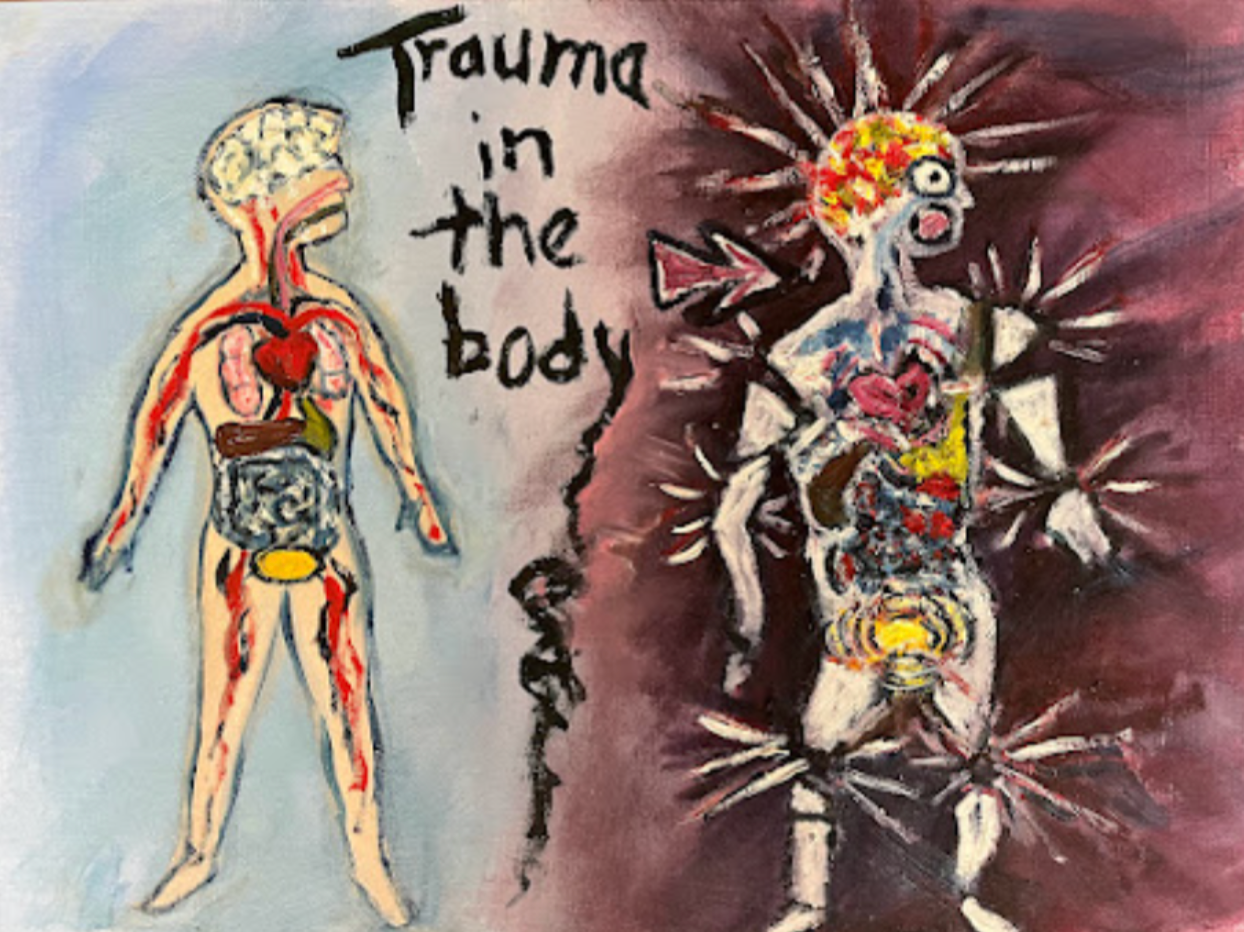
I live with PTSD and anxiety. I have my whole life, even for those decades when I didn’t know it, or denied it. I just shrugged it off as irritable bowel, being “high-strong,” or having a small bladder. Other than that I was fine, no different than anyone else, right? Because if you ignore what you feel, mobilize some anger at your “weakness” and push harder, of course you will get over it, right?
There are so many things wrong with that paragraph I won’t even waste time to list them.
Now, I am not a psychologist so I am not going to give anyone advice. I will just relate my own experience. As to the above, that is how I lived my life for years, and I will simply say that unless you are looking to cause yourself more harm, I wouldn’t recommend it.
I now work with a wonderful trauma specialist. And anytime I said anything like the above to her, if I didn’t get an eye roll, I would see her take a deep breath, smile with compassion, maybe say something like “Yes, well…” and then proceed to help me understand why treating myself that way was me abusing myself the way I’d been abused for years.
For starters, she said: “ You come by your anxiety honestly,” by which she meant it would have been abnormal not to have PTSD and anxiety after what I lived through. That was a major revelation to me. I actually had to take a bit of time to wrap my head around the fact I wasn’t being weak. And imagine that, there was actually a valid reason for what I was experiencing.
Second, when we first started working together I was shocked to see the amount of compassion she showed me. That was certainly nothing I’d experienced much of in my earlier years, never mind allowed for myself. So Clue #2 — perhaps I was not approaching this whole “healing thing” correctly?
Regarding “weak,” I should note that I grew up in a situation where weakness was reviled and it was all about being tough. And I had to be anyway because it was survival. The mantra I learned was “hurry up and get over it.”
I remember having a stomach flu one time and right after being ill my father insisted I needed to eat because I needed to get over this fast. So I came by “tough” honestly, too.
My therapist gradually helped me understand there was nothing wrong with being kind to myself, and that believe it or not, healing is a life-long endeavor. I learned that PTSD and the various things that came along for the ride in me — depression, anxiety, and anger — made total sense given the stress-hormone-fueled cocktail that flooded my system for decades. I joked with a friend, that I had no idea what “calm” felt like, except for maybe the time I was coming out of anesthesia after a colonoscopy. It finally started sinking in that I had a fair bit of “relearning” to do.
Given I spent my adult life in medical research, I did what I did best — hunted for information that would teach me what I’d not learned my whole life. I consumed research journals and Psychology Today articles on anxiety, stress, and PTSD. I read books, such as one my therapist recommended: Bessel van der Kolk’s The Body Keeps the Score: Brain, Mind, and Body in the Healing of Trauma. I read anything and everything to help me understand why my body felt like the painting above. Once I realized how totally unaware I’d been of how poorly I was treating myself, I was hungry for all the knowledge I could get. After all, I might be decades late, but I can be taught.
So then, of course, I did the opposite. I figured that if I read everything I could find, worked as hard as possible with my therapist as fast as possible, and pushed myself to relax and meditate and… Yeah. It might not have been the stomach virus anymore, but it was still that “hurry up and get well” mentality. So much for self-compassion and letting healing become a way of life.
I will say with total gratitude, that my therapist is a blessing and the most patient, compassionate person I have ever dealt with besides my husband and a few good friends. Like coming back to the breath when you get distracted in meditation, she kindly brings me back, again and again, to self-compassion…and at least the “suggestion” of patience with myself.
Her knowledge of Yoga and meditative techniques also rekindled the practices I had first started learning in the 1990s when I came across a wonderful book by the former Buddhist monk Jack Kornfield, A Path With Heart. It was all about the reminder that life is filled with suffering, but that we can still show ourselves and others compassion. It was such a help, as were books by Pema Chodron and other meditation practitioners.
This is not to say that this fixed my PTSD. No, nor the anxiety. In spite of all my work in life, that “word salad” still walks with me. Yet, progress does come and I recently had another “aha” moment.
I was sitting on the couch, aware of those pesky tendrils of anxiety starting to spread through my body, as they often do, uninvited. My initial thought was one of “God, when will this ever go away?” and an answer immediately flashed across my brain: “Never.” But instead of being upset, I actually felt a calmness at that. A sense finally, of acceptance and the awareness I wouldn’t be failing if I just stopped fighting it.
In that moment, I was aware of a level of compassion coming in along with the anxiety. It occurred to me that the frantic, anxious part of me…WAS me. A piece of me. She was my lifelong companion, maybe even a friend of sorts — she sure could be as we’d traversed enough of my life together.
Finally, the awareness dawned on me that I could either spend the rest of my life hating her or…I could simply accept her…welcome her in. I could offer that part of me love and acceptance, and invite her to just “come on over, and sit with me and we will weather the storm together until it eases.”
This is not to downplay the discomfort or the need for my anxiety meds or continued therapy. But something shifted in that moment just a bit…something softened. To just stop the battle against myself was actually a relief.
After all, if I had a friend who was struggling and upset, what would I do with them? I knew without question — I’d hug them. I’d walk beside them and tell them I love them no matter what. It wouldn’t cure their anxiety, but it would give them relief to know they were loved, accepted, and not alone. So why wasn’t I doing this for myself?
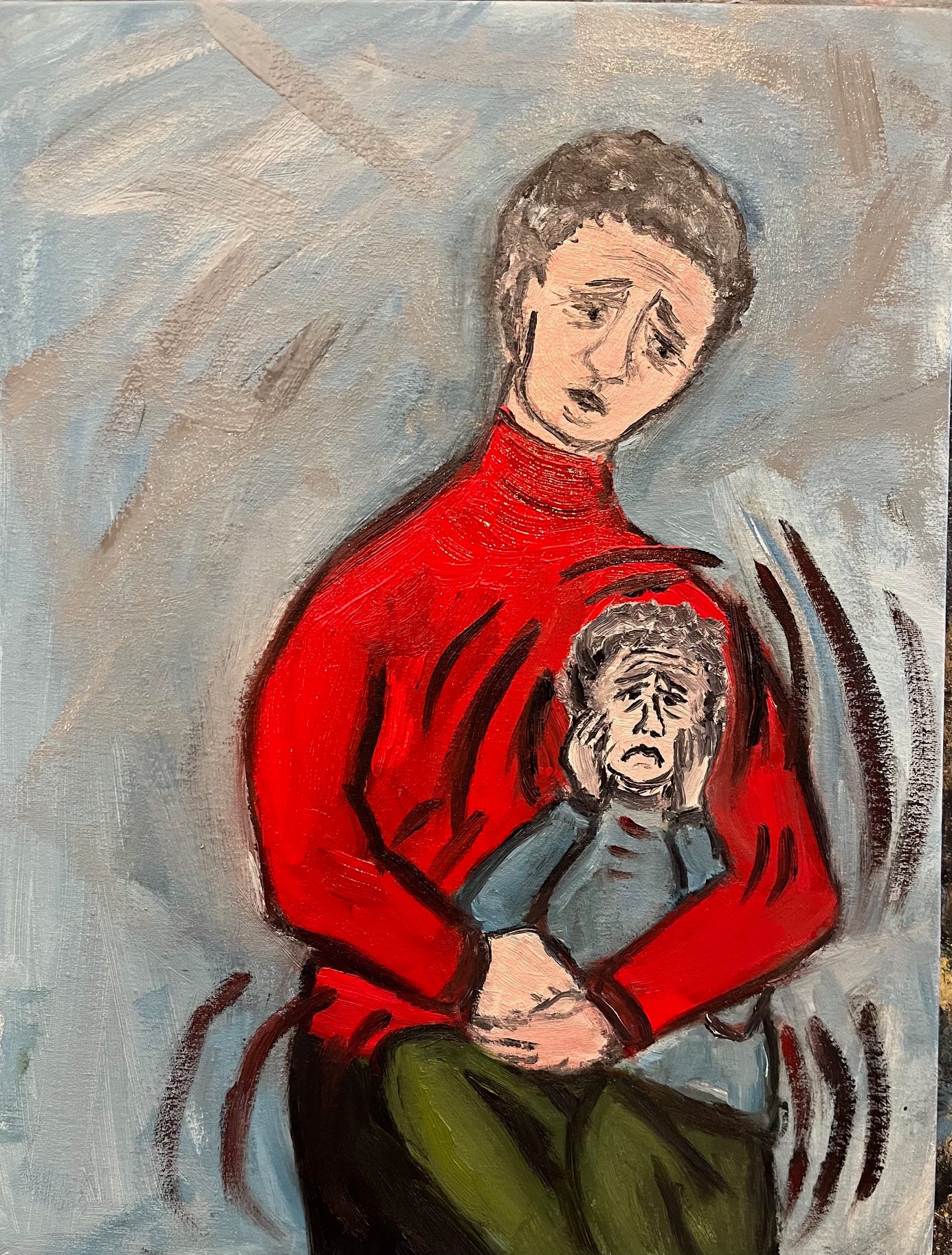
I flashed on this image of “calm me” just holding that quivering stressed-out me and saying gentle words of love. And I remembered a quote I’d read years ago by the Buddhist monk, Thich Nhat Hanh, about holding ourselves like a mother holding and calming an upset infant. Sure, he was talking about managing anger but the same thing applies to anxiety:
Anger is like a howling baby, suffering and crying.
Your anger is your baby. The baby needs his mother
to embrace him. You are the mother.
Embrace your baby.
I figured, if it works for anger, then it might work for anxiety. And God knows, I struggle with anger and impatience too, so what could I lose to try?
And then, the other day I found the Psychology Today article by Leon F Selzer, PhD: “Why Anger is Nothing More Than Repressed Anxiety,” and if that didn’t set off waves of self-recognition, nothing would.
Dr. Selzer explaied how “anxiety and anger are two sides of the same emotional coin, kindred states of ‘agitated unease.’” That hit me. He went on to explain that “most people would prefer to ‘mutate’ their anxiety into anger…” He noted that anger gives a person the “illusion” of regaining control and it was a “pseudo-solution” to the self-shaming that went along with having anxiety.
Well, hello again. In one short article, he connected the dots between my anxiety, the shame I always felt at “failing to get rid of it,” and my anger and impatience. I resorted to that last one because at least getting angry and taking some action seemed better than being “weak, anxious and stuck.”
I suddently understood what Thich Nhat Hanh was getting at, and why his antidote to anger had deep relevance as an antidote to anxiety. Imagine that — self-compassion as a better way of life than kicking yourself? Who would have thought.
Now no, it doesn’t mean I will not feel that familiar creeping sensation of anxiety at unexpected moments, or that I can stop working with a therapist, or doing all the self-caring things she recommends. I just finally understood for the first time in almost 7 decades, how nice it is to be nice to me. So, now, when things get upsetting, I can hold my own “baby” with care, and at least I don’t have to add “self-hate” to the word salad of things I live with.
If anyone else has felt that familiar sinking sensation of fear spreading through your nervous system, I would of course encourage them to seek their own therapist, mentor, or spiritual guide to help them explore and navigate ways to healing. But I can also add that for anyone, giving oneself a few moments of quiet attention, love, and “holding your own baby” is always a soothing and loving experience. May you all find a way to “comfort that inner being.”
“Gloriousness and wretchedness need each other. One inspires us, the other softens us.”
“Do I prefer to grow up and relate to life directly, or do I choose to live and die in fear?”
Pema Chodron, from her book, The Places That Scare You: A Guide to Fearlessness in Difficult Times
I did not ignore my posting today, just got caught up in revising two chapters of my novel, Under the Pier. I am one chapter’s revision away from being finished with the second draft. At least this time, it looks like a real book, instead of a pile of pages with 10000 “fix-it” cards flapping off the pages like lettuce. (Draft 1).
Given it’s late and I”m tired, and given that yesterday’s post was very serious with deep advice, I decided that the perfect balance to that is to seek “Life Advice on the Other End of the Spectrum,” ie “the ridiculous.” For that, one must seek out ….Nancy Drew.
I have this book, Clues for Real Life: The Classic Wit & Wisdom of Nancy Drew.” It’s compiled by Jennifer Fisher for Meredith Books. It’s a collection of humorous advice based on Nancy’s adventures in the original 56 yellow-spined books….the ones I grew up with…the only “true” Nancy Drew stories…though we won’t get into those 1930s original versions that are so politically incorrect it’s not only embarrassing but painful. I tend toward the 1950s/1960s versions of the stories. Most of the really offensive stuff was edited out.
Anyway, when you’ve really been pushed to your limits, I say, chuck the serious advice and go for the silly. I think even Eleanor Roosevelt and Pema Chodron might agree with me. So I leave you with a few bits of life wisdom, compliments of Nancy’s adventures and the anonymous author of this book.
“If someone’s trying to buy a house and it suddenly becomes haunted, it’s probably not a coincidence.” (The Hidden Staircase)
“A fashion-conscious sleuth always puts on her robe and slippers before she investigates things in the middle of the night.” (The Secret of the Golden Pavilion)
“When your special friend is coming over, you might get your housekeeper to serve cake and ice cream while wearing a pretty apron and cap.” (The Clue in the Diary)
“While waiting out an overheating car in the desert, it’s always refreshing to touch up your lipstick before your rescuers arrive.” (The Secret of Shadow Ranch)
and last but not least, advice on love:
“When your boyfriend is chloroformed and tied to a tree and he’s just disgusted with himself at being caught instead of you for getting him into this predicament, you know he likes you.” (The Ghost of Blackwood Hall)
Some other time I will have to give the tallies for how many times in these books, Nancy has been knocked unconscious, her car totaled, her house robbed, her father, housekeeper, best friends, boyfriend and her dog knocked unconscious. I figure by the time she is 40, the brain damage from getting hit over the head or chloroformed, will have set in and she probably can’t afford car insurance because of all the times she was run off the road by the villains.
Until then….
“If your view is basic badness, you see it wherever you go. If your view is basic goodness, you see it wherever you go.”
Pema Chodron from her interview with Bill Moyers on the PBS special: Faith and Reason
“Our personal attempts to live humanely in this world are never wasted.”
Pema Chodron, from her book, The Places That Scare You: A Guide to Fearlessness in Difficult Times.
“The intention to open the heart and mind is what’s essential. If we do good deeds with an attitude of superiority or outrage, we simply add more aggression to the planet. …When we practice generosity we become intimate with our grasping. When we practice the discipline of not causing harm we see our rigidity and self-righteousness. Our practice is to work with guidelines of compassionate conduct with the flexible mind…seeing things without “shoulds” or “should nots.” We aren’t drawing upon a code of conduct and condemning everyone who doesn’t comply. If we draw a line down the center of a room and tell those in it to put themselves in the category of “virtuous” or “nonvirtuous,” are we truly more liberated because we choose “virtuous”? More likely we’re just more arrogant and proud. Bodhisattvas are to be found among thieves and prostitutes and murderers.”
Pema Chodron, from her book: The Places That Scare You: A Guide to Fearlessness in Difficult Times
“We always have a choice, Pema Chödrön teaches: We can let the circumstances of our lives harden us and make us increasingly resentful and afraid, or we can let them soften us and make us kinder.”
From the Shambala Publications website description of her book: The Places That Scare You-A Guide to Fearlessness in Difficult Times
 Soul Mosaic