Archive for June, 2026

Tools – Writing – Why “Story” and About Structure

June 30, 2026

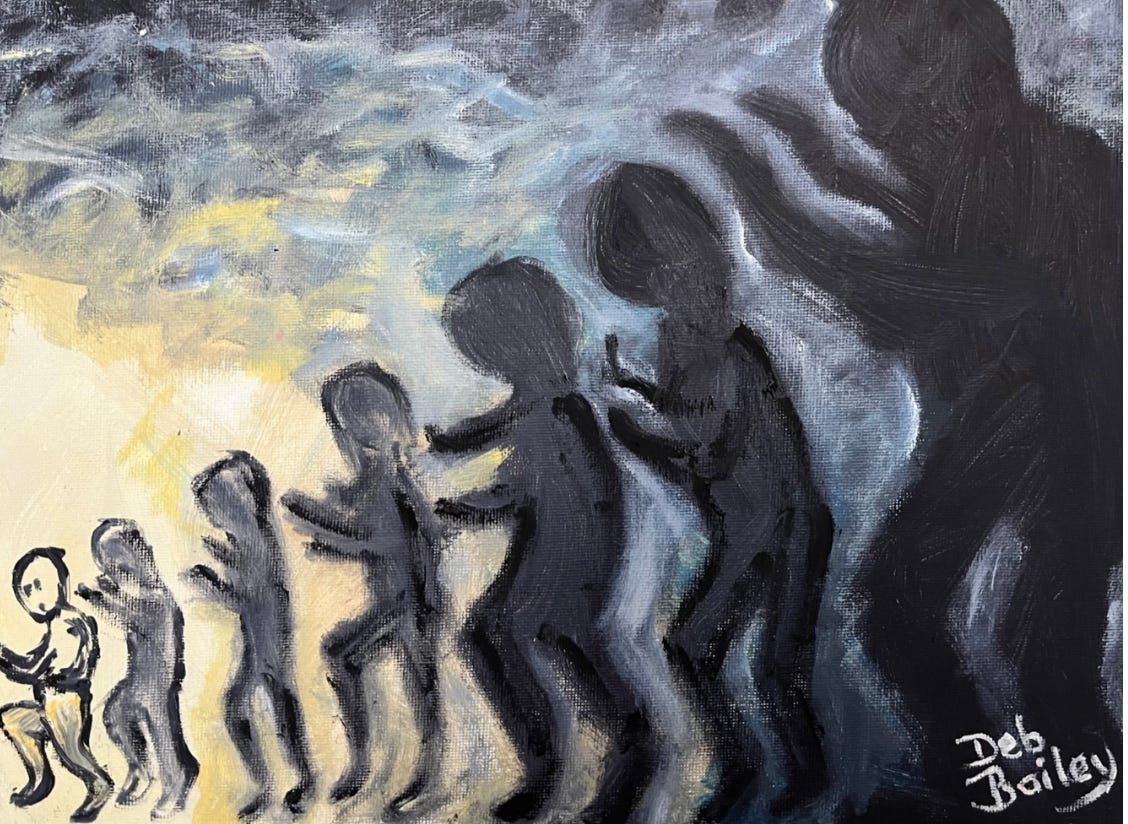
From the caves of the ancients, to now

So, after all these posts on the “Tools” I use to heal, tools which drove my decision to write, the final question to answer was: “What “form” of writing to use?

For me, it was a simple choice – STORY.

It is a method as old as humans themselves,
the method used around the campfires of ancient hunters and warriors,
the tool heard from caves, to feudal halls, to family hearths.
Story.

Story, in all its ugliness, joy, failure, and success.
Story, not as “happily ever after,”
Story, not as journalistic objective news reporting
because that is never possible.
Story, not as seen by others,
but Story, as what happened to me.

And when you write your own story
you need to put it ALL out there on the table,
see all the bits and scraps, pain and mess,
mistakes and breakthroughs,
spread out before you.
Only then can you start the long hard work
of examining each piece,
and then putting the pieces all back together.
Only then can you see the whole picture,
and what it can teach you.

What is “story?”

Because my academic background is science, not literature, I went looking to people steeped in both writing and psychology for the answer to this question. These were my favorite and most helpful answers:

(more…)

Tools – Writing – My “Reader Contract” Rules

June 29, 2026

“Tibetan Buddhists believe that eloquence is the telling of a truth in such a way that it eases suffering.”
Melanie Brooks Interview with Kate Bornstein in Writing Hard Stories

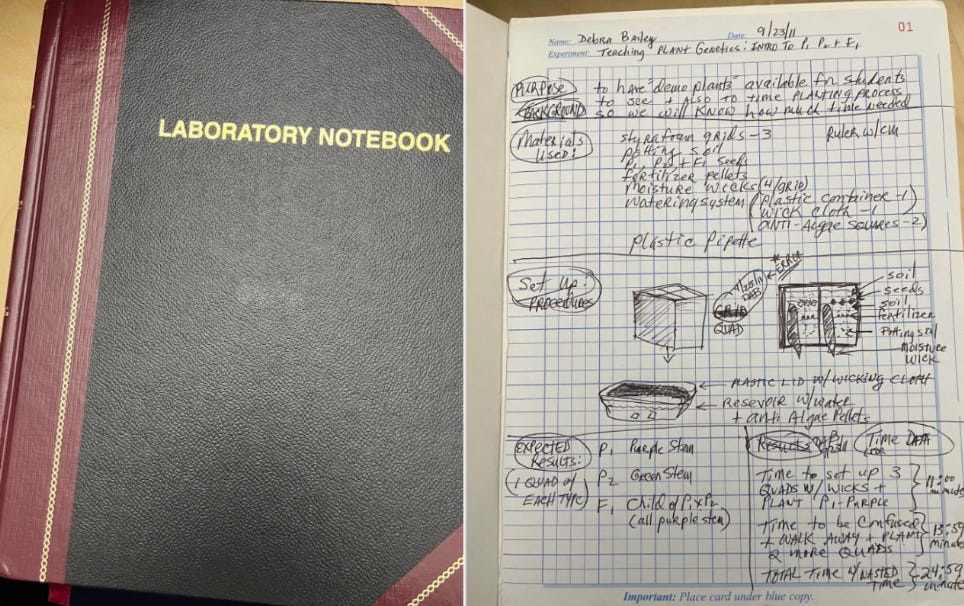
Photos by author

Given my background as a laboratory technologist, science researcher, and then science teacher, I know you can’t do an experiment well without a plan.

So, like that good science-tech-turned-writer, I have researched my ideas, made my lists of risks and benefits for writing, and explored the natures of truth, memory, and courage.

And, like for any good experiment, I have written up “the protocol” — the list of rules for how this particular “experiment” will be done.

Or plain and simple, these are my “line-in-the-sand” rules for what I will and won’t do in this book.

The “Lab Protocol” – My Contract With the Reader

(more…)

Tools – Writing – The Courage to Write

June 28, 2026

the light that came to lucille clifton

came in a shift of knowing
when even her fondest sureties
faded away. it was the summer
she understood that she had not understood
and was not mistress even
of her own off eye, then
the man escaped throwing away his tie and
the children grew legs and started walking and
she could see the peril of an
unexamined life.
she closed her eyes, afraid to look for her
authenticity
but the light insists on itself in the world;
a voice from the nondead past started talking,
she closed her ears and it spelled out in her hand
“you might as well answer the door, my child,
the truth is furiously knocking.”
Lucille Clifton

About the nature of fear

Painting by author

Carl Jung said that “…what you resist not only persists, but will grow in size.” I would add a P.S. to that…truth will hunt you down until there is no escape.

And even if you try, it will never really let you go. It will just come out in other forms. Like the truth in Lucille Clifton’s poem that is “furiously knocking,” mine, too, is relentless and so I “might as well answer the door.”

What is courage?

There are all different circumstances we can encounter that require…or at least invite us to show courage. But what exactly is it?

(more…)

Tools – Why Write? The Answer’s in the Words…

June 27, 2026

“You too are driven by the desire to understand, know…beneath your desire for knowledge writhes the hunger to understand and love yourself.”
Gloria E. Anzaldúa’s essay: “now let us shift…the path of conocimiento…inner work, public acts,” in This Bridge We Call Home

Time Passages…

It all started with Al Stewart’s song, “Time Passages,” on the radio. It’s a mellow song that I have heard thousands of times and always enjoy.

On this particular day, the melody and lyrics drifted through the background of my consciousness as I drove along. As usual, I hummed along with some of the familiar words about memories and escapes into the past. But this time, one particular line smacked me with a recognition I’d never had before – the line about things left behind.

Like a lone dancer on a dark stage suddenly framed in a brilliant white-hot spotlight, those words flashed in my brain. Things left behind. THAT’S what this has been about.

(more…)

Tools – Why Write? Maybe Ask – Why Secrets and Silence?

June 26, 2026

“Becoming the author of your story is about claiming the power to define what something means and to take charge of the ways your life events impact you and influence how you move forward…the power is in you to shape how you will live…The power is in the stories you tell to encourage you to take the next risk, to make the next move, to keep saying yes to life.”
Sandra Marinella, MA, MEd, The Story You Need To Tell: Writing to Heal From Trauma, Illness, or Loss

Why write?

The world asks, “Why write?”

And the writers answer:

“Avoiding a secret subject can be its own kind of bondage.”
Melissa Febos, in Body Work: The Radical Power of Personal Narrative

There is no greater agony than bearing an untold story inside you.”
Maya Angelou, I Know Why the Caged Bird Sings

“A story untold could be the one that kills you.”
Pat Conroy

But then the world asks, again, “Why write?” as if you never answered.

Which makes me ask, “Didn’t you hear the writers’ answers?”

However, after seeing this go on for years, my mind finally understands: They did. They just didn’t like the answer. So they keep asking. And, besides, “Why write?” was not really a question anyway.

Why write?

(more…)

Tools – Writing – On Memory, Truth, and Humanity in Memoir

June 23, 2026

sometimes
they ask me to remember
but they want me to remember
their memories
and i keep on remembering
mine

Lucille Clifton, from her book, The Collected Poems of Lucille Clifton 1965-2010, 1987, pg 262

So what DO we put in a memoir?

It takes a lot more thought than just penning a bunch of trauma memories.

Of course, I use my memories, the ones that I have. But do I remember everything correctly? Completely? There have been moments when I think my memory is great. Then I find a journal entry that had even more details than I remembered, and it makes me question how good my memory actually is, even as I’ve carried that image my whole life.

Then, there is truth. We tell something, and we are sure we are accurate. Our intention is honorable, Yet, how often have we heard, “That’s not the way I remember it!” In that moment, anyone listening is wondering, Who is telling the truth? How can they know for sure? For that matter, are we really clear on our intentions?

And then, there is “humanity” in writing. Do we answer the siren call of being true to the art even if it means causing harm to another? Or betrays someone’s privacy?

When I don’t know what to do, I do what I do best – research the hell out of it. I look around for the widest range of answers from experts before I decide what my own path will be.

So I spent the better part of a year reading over twenty books on how to write a memoir, seeking the “Holy Grail” of answers to these questions.

In this post, I’ll share several things I discovered from the many thoughts and opinions I found, things I then had to “chew on” to decide if the advice rang true for me. In an upcoming post, I will share “My Conclusions” for my own approach to what and how to write a memoir.

The nature of memory

“Rubens discovered a peculiar thing: Memory does not make films, it makes photographs.”
Milan Kundera, Immortality

One thing I learned about memory is that it is often pretty good around the moments of intense trauma. I REMEMBER being held against a wall by my throat. I REMEMBER how taut my nerves were when he would come at me verbally and physically. But could I tell you what happened immediately before the incident? Or right after? Or later that afternoon? No. But that moment? Absolutely. So, memory is often snapshots of a spot in time.

And what about those moments when our memory differs from that of another about a shared incident? What do you do? Whose memory do you trust?

(more…)

Tools – Writing – The Power of a Single Word

June 20, 2026

The unexpected twist of fate

I love words. Discovering new ones. Sounding them out. Finding out where they originally came from. How their meaning evolved over time.

As a kid, I used to spend summer afternoons reading both the dictionary and Roget’s Thesaurus. Yes, truly. I read them…of my own choice. Another one of my Moments of Respite.

It was just fascinating to find so many meanings for one word, and so many words for one meaning. Then there were all the different ways you could alter words — nouns, adjectives, verbs. And best of all, deciphering the code of odd characters for accents, hyphenations, and pronunciations.

As an unexpected twist of fate, that activity served me well later on, as, at one point in my writing career, I was a freelance lexicographer: I helped write and edit a dictionary and a thesaurus. I made sure every possible nuance of meaning, cultural reference, and usage was there for each word, and that every detail of origin and pronunciation was correct. I couldn’t believe I was being paid to “meet words and learn their life stories!”

So it is no surprise that for this memoir, I have a list of “power words.” They are words that prompt deep reflection on my life, Words that evoke strong emotions. Words that best describe the images in my head, and the depths of my spirituality. And they provide abundant “prompts” for my journaling and this book.

And that is just in English.

Behold!

I also have books now on Hebrew words. Their pronunciations and how to write them in both Hebrew and English fonts. Their root origins, the multiple ways they can be interpreted, and… most importantly… how they connect with my soul’s power in using them. When I write them and form the curves and lines with the pen, I FEEL their power. Especially this one:

(more…)

Tools – Writing, Finally… From the “Outside, In”

June 19, 2026

Finally, it is time to get to the point: Writing and the why, how, what, truth, and courage choices of it all.

I’ll start from the “outer edges” of the subject and move to the “heart of the matter.”

The necessary evil that can be a superpower

In my next post, I am going to talk about the ultimate power in writing – that choice of a single, lonely word a writer makes in a given moment to carry the weight of a life.

The choice of a word can mean the difference between sending a flaming spear of meaning directly into your reader’s heart or missing by a mile and watching the spear land in a puddle and dissolve into soggy smoke.

But before I get down to that core decision, I am going to talk about one “auxiliary” power to keep in mind after you choose your words. Grammar.

Please don’t roll your eyes. And before I get started, I am not a grammar expert. Nor do I want to be. For sure, I am not trying to sound literary or impressive. In fact, call this post my “Grammatical disclaimer.”

(more…)

Tools – Stories – Abused or Abuser – The Examples of Others

June 18, 2026

You may encounter many defeats, but you must not be defeated.
Maya Angelou

How much longer???

First, I saw the photo… then her face. No, actually, it was her eyes peering out of that face that I noticed first of all. They had a haunted quality.

They were gentle. Soft. Wounded. There was a sadness to her face I immediately recognized and ached for. Then I saw the headline and felt not only the ache but also the outrage on her behalf.

It was a BBC article from 27 March 2024: “Long wait for therapy after step-grandfather’s abuse.”

Starting at age five, her step-grandfather sexually, emotionally, and physically abused her. As she got older, it really ramped up, and she noted that along with the constant sexual abuse, there was a lot of physical abuse.

I immediately identified with those elements of her story, even as some aspects of our paths differed. Where I didn’t get out of my house until 28, she left home at 16. However, that didn’t make it better. Just different.

On the plus side, she was able to start telling others what happened and even reported her abuser to the police in 2016. The following year, he was sentenced to 25 years in prison.

However, her own recovery was hampered by the very limited availability of therapy services. As she noted in the article, help availability depended on where you lived. And even when she could get any kind of help, it was short-lived and inadequate.

In that regard, my experience was different. Even though I started late on my journey to healing, I had been able to find and access therapists as I needed and wanted.

To bring awareness to the lack of needed therapy resources in her area in the UK, that girl, Charlotte Robinson, 26 at the time of that article, waived her right to anonymity. She told the world about her struggles with nightmares, flushing, and constant flashbacks, and the need for medication to sleep.

She shared that in seeking help, she’d been on waiting lists for 18-months in the past, and at the time of the article, she had been waiting 3 years for the specialized trauma therapy she needs.

It is stories like hers that infuriate me and bring out the warrior in me. I’ve always been the sort of person who, even when I wouldn’t fight for myself, was ready to fight for or defend another.

These days, though, I no longer have the kind of energy to wage big battles. But given her story, and no doubt ones very, very similar, THAT is a driving force for my writing.

If I can get a strong enough message out there through my story, maybe it can help anyone who is still waiting?

I keep Charlotte Robinson’s picture above my work area, so I don’t forget her eyes. I only hope she is no longer on a waiting list…

The “people”

I cringe a bit using the word “Tools” when speaking of the lives of others. I don’t mean people as “objects.” It is the power of their stories, I guess, the wisdom I get from them…because those stories motivate and teach me.

When I am weary of writing my story, I read about others who have been abused or treated badly in life, and then I go on. I see so many people who’ve overcome such odds or waged such battles to try that I can’t help but be inspired. So, I guess it is the “stories” that are the tools.

(more…)
Tools – Healing for the Body…If My Soul Will Stop Resisting It

June 16, 2026

“Your body is the place where heaven and earth meet.”
God in Your Body: Kabbalah, Mindfulness and Embodied Spiritual Practice, Jay Michaelson

For most of my life, my body was not a meeting place with the Universe but a despised battleground. I hated it. It had betrayed me by yielding to pleasure when he abused me. Failed me by fearing him and freezing up.

It had been his tool for his own gratification, so I loathed what he craved. And he had drilled into us that taking time for self-care was a waste of time. Whenever I got sick, right after I threw up, he would tell me to eat so I could hurry up and get better. Bottom line – the body was something to suck dry and make demands on, not take care of.

So for years I just worked it to death, gave it no quarter, and took from it. It didn’t deserve any better in my estimation. I refused to exercise or give it proper ease and care. I demanded that it deliver, be strong, and be there whenever I placed a demand on it. And I showed it no compassion or gentleness.

News flash: In case it isn’t obvious, that attitude has not served me well. I don’t recommend it.

Second news flash: True healing is not just emotional work. It’s body healing, too.

Because so much of the trauma is stored in the body tissues and nervous system, somatic, or body healing, is essential. Psychiatrist Dr. Bessel van der Kolk, who wrote the book The Body Keeps the Score, describes trauma and its connection to our bodies:

(more…)