All my life, I was strong. I had to be. And aside from Ed, I walked that road alone. I was like all those old Slovak women: “Str-r-r-o-n-g like bull!” I would do what I had to. Depend on no one. Keep going.
Until life finally broke me. Hard. And then it became – What now? IS there a “now” anymore?
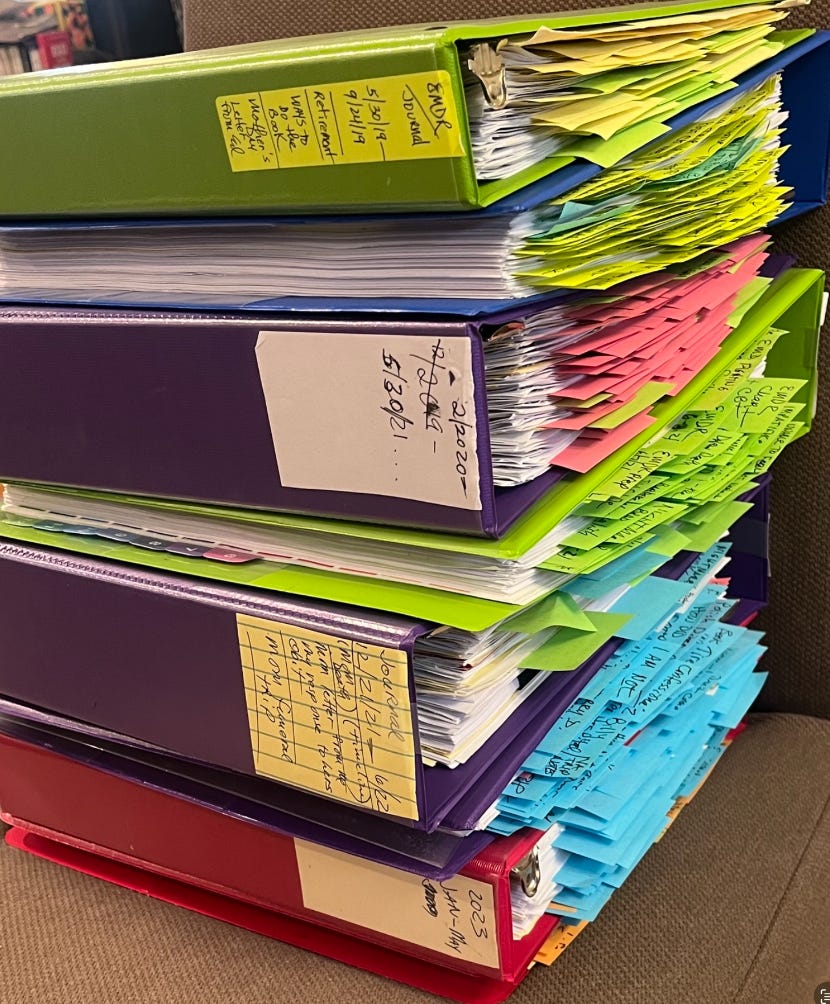
I started the entries for this memoir’s first draft on June 3, 2025.
Since then, I have been writing almost every day. I will soon finish this longest part, “The Old Country,” which has been the story of my life, from the beginning, with all the abuse, then the escape, the recovery, the battles, the good things, the crises, and the aging. All of those pieces contributed to my life and who I am.
It is a relief. For the first time in my life, instead of shattered, stuffed-down shards of a life, I will have a “whole” – an entire picture put back together, for the very first time. The “mosaic of my broken soul.”
Even now, as I labor through it, clarity about many things is emerging. FINALLY, I have the whole wide-angle view of all that happened. Like standing on a hilltop, taking in the vista of the landscape before you.
That “wholeness” is what will make the final part of the book possible – the…insights, the “digested” understanding, the ability to let go of things that have haunted and shamed me for a lifetime.
The first half of 2007 was an absolute joy. While Ed was still somewhat weak, he was making good progress. He was even able to join my son and me on a trip to tour a Virginia university that our son was considering for that fall.
And June was the celebration of so many years of hard work by our son. We reveled in…and cried at…his high school graduation.
Ed and I also decided on a rare “indulgence” for ourselves, by joining a brand new gym that spring. Aside from an amazing variety of weights and machines, they also offered swimming, racquetball courts, a wide range of classes, nutritionists, trainers, and facilities that were almost decadent. After all we had been through, tiled showers, a sauna, hot tubs, and a cafe with health food and smoothies seemed like something to help us celebrate.
It also let us renew our connection as a couple with regular date nights at the gym. Not to mention that it was a healthy way to help us transition to being “empty-nest” parents, especially since our son would be out of state. We had been focused on parenthood since I got pregnant 3 months into our marriage. So this was our celebration of a new phase of life, and of us.
We spent a lot of time on the weight machines – a way to trim the bodies, and regain muscle strength. Given that Ed’s hospitalization had weakened him, the machines were a great help with recovery.
Life was going perfectly. It was like the first day of our honeymoon years ago, when we sat in the sun sipping Pina Coladas, reveling in that peace and wondering how long it would last.
I’d sent my son downstairs to sit in the sunny atrium and call his friends. He needed a break. This was one time when I was glad for teenage friends on cell phones. A tiny touch of normalcy for him from the last couple of days.
All morning, we’d watched Ed’s oxygen numbers bounce up and down on the monitor. It was like watching a race where the lead was uncertain yet, but our “runner” might just bolt forward at any moment. Clearly, his levels were trending up. If they could just break through to normal….
I watched my husband sleeping in the bed. He was still on a lot of morphine to keep him quiet. However, given that his oxygen levels were inching toward normal, they started to bring the morphine dose down. As soon as his oxygen levels stabilized for sure, they wanted to get him off the respirator and bring him out of his coma.
The respirator had been a lifesaver for sure. But leaving him on it longer than needed risked infection. On the other hand, bringing someone out of their coma and removing the respirator is uncomfortable for the patient and excruciating to watch.
We wanted to be there to greet him on his “return from the coma”…and see, Was he still “Ed?” His brain swelling had not gotten any worse and was starting to improve. But the moment of truth would only come when he was awake. Then we would learn what all of this trauma had done to him.
There is something about the ICU waiting room that I wish could be captured and spread throughout the world — unconditional love.
The ICU waiting room is a place out of time. While everyone hangs in limbo for an outcome, for a hoped-for word on a loved one, for relief from the intense pain of not knowing either way, life, as you know it, stops.
In that room, you enter the land of pain, fear, and sorrow – the great equalizers. No matter what walk of life you came from, rich, poor, or famous, no matter what color or race you are, when you enter the ICU waiting room, each one of you is the same — a hurting, terrified human being.
“Your husband’s blood oxygen has dropped. It’s hovering around 47% right now. Below 50% we usually see brain damage.”
The words hit me like a rock against my skull. All of us went so silent that the quiet crushed against my eardrums.
“Is my husband going to live?”
Those were words I never expected to hear coming out of my mouth at this point in life. Especially given Ed was only 47.
The doctor hesitated.
But I was blunt, direct, to-the-point, with words that meant I wanted no fluff answers. I had been in the medical field too long. I knew how doctors and nurses sometimes sugar-coated things or used evasive words so as not “freak the family out.” I didn’t want coddling or patronizing. I couldn’t bear “uncertainty.” Tell me now – Is he dying or is he going to make it?”
It was one of those warm, fall afternoons, not sunny, but still, the array of colors splattered on the trees across the pond dazzled.
On the TV, my son was watching the old movie, “The Trouble With Angels.” It was a 1966 comedy with Rosalind Russell and Haley Mills about life in a Catholic girls’ boarding school, where Mills is the determined troublemaker, and Russell is the equally formidable Mother Superior. It is a funny movie, especially if you had the nuns for teachers as I did, and one that we played now and again for comic relief.
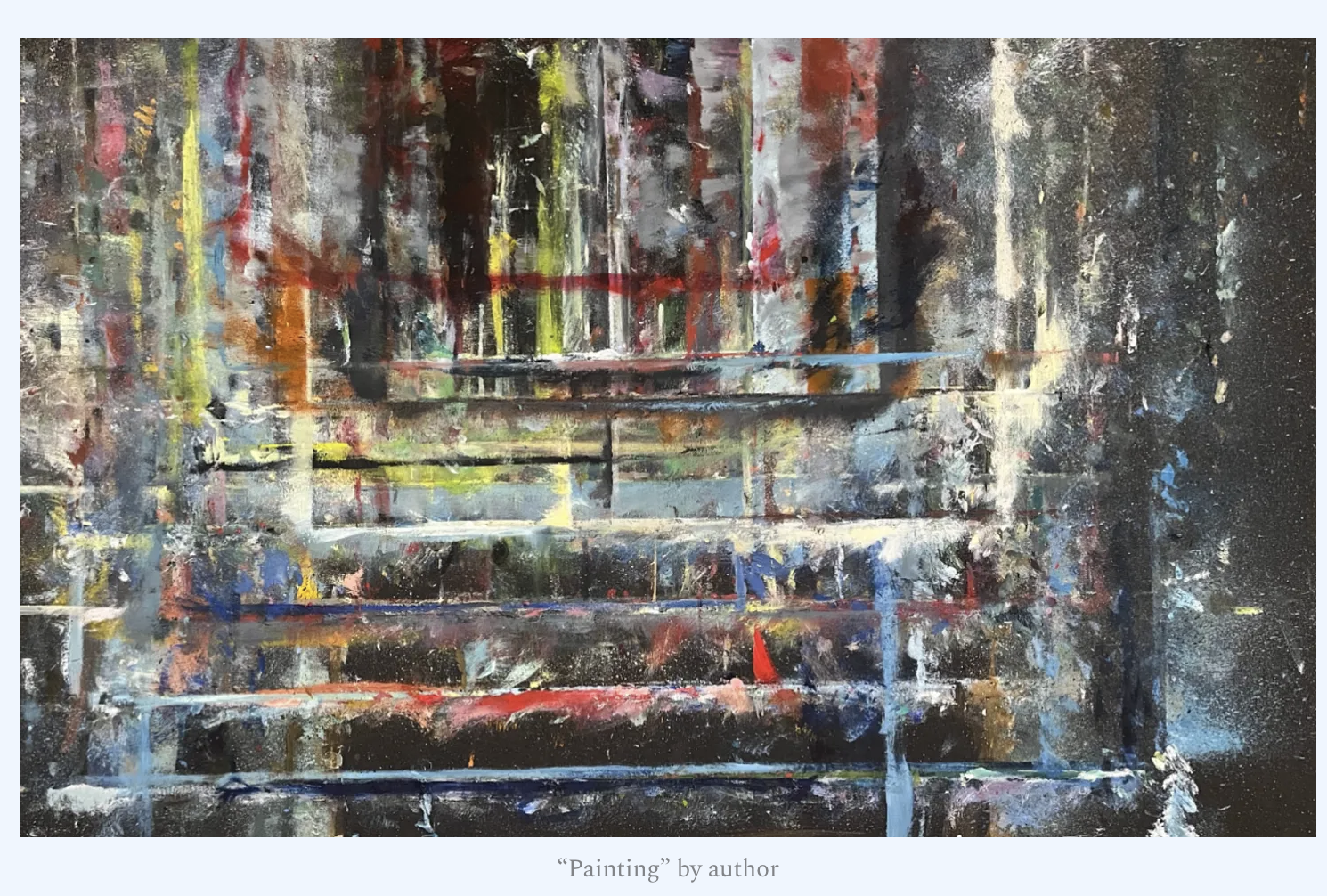
I was sitting at my painting easel in the corner of the living room, near the window that looked out on the pond. By all accounts, it should have been a serene afternoon. At any time in the past, with a similar setup, it was. And today started that way. But then, it suddenly changed.
The longer the movie played, the more afraid I became. Dread, foreboding, and this overwhelming sense of …guilt…being in trouble…bad things about to happen, flooded through me.
I tried to shake it off. This is stupid, I remember thinking. I mean, what the hell was wrong? Yet the longer I sat there trying to paint, the more afraid I got.
Worse. I had never experienced anything like this before. I mean, sure, when I was a kid at home, and my father was raging. But I was a 51-year-old adult woman having a peaceful afternoon with my son in my own home. So what was I suddenly so afraid of?
I tried to summon all that rigid strength I’d always had at my fingertips, to quell the fear. I could always depend on being strong. But that day, for the first time in my life, that strength failed me. Shocked, I realized I had no control over the intensifying terror racing through my body.
Before I get into today’s segment, just a moment of gratitude and celebration. It is my husband’s and my 38th anniversary. It is always a day of joy for us. But I will simply add that through the months of writing this book draft, and seeing all the struggle and pain, I find it an especially wonderful thing that we are together and thriving. So, to my husband, my partner through it ALL, my soulmate, thank you, and I love you.
Tara’s permission
After the large break in the family, the next few years had their ups and downs. For a couple of years, I stayed away. That was hard, especially when my uncle, my mother’s last sibling and a favorite uncle, died from cancer. I just chose not to attend the funeral, which, in my family, was no small absence. But it was also a time when Ed’s parents were sick, and his mother was dying, so my excuse was that we were taking care of their needs.
In fact, her death came the very next year, and his father’s death 3 years after that. The awareness of life’s mortality for our parents slowly brought me back into contact with my extended family over the next couple of years. As it had helped me to stop hating God, Buddhism, as well as my work on a medical ethics board, provided me a path toward a reconciliation of sorts with the family.
We stood quietly in the Temple, waiting in line as the Buddhist monk approached each of us in turn. We each had a “kata” – a traditional scarf meant as an offering to the monk – draped over our folded hands.
He stopped in front of each person, looked into their eyes, then wordlessly selected a small piece of paper with a Tibetan name on it and gave it to them. Whatever the monk saw in each person’s eyes determined the name he gave to them.
Finally, it was my turn. He moved slowly, with much peace. I was always amazed at how deliberately he executed even the simplest movement, as if he had all the time in the world. He looked at me, REALLY looked. His focus was like a laser boring through my eyes and into my soul. His expression was soft, and his own eyes were like clear, still pools of water. I felt serenity emanating from him.
His scan of me lasted only a moment. But he showed no hesitation as he sought out one particular decorative slip of paper and handed it to me. Whatever he saw in my eyes, apparently, he was very decisive in what name I should have. Handing him my kata, I bowed in gratitude.
It was only after he moved on to the next person that I looked to see what name he had chosen for me. Neatly printed on the paper were the words, “Tashi Dolma.”
The woman next to me saw my paper and said, with some level of irritation, “*I wanted that one!”*
TRIGGER WARNING – DESCRIPTIONS OF FEAR AND VIOLENCE IN NIGHTMARE DESCRIPTIONS
Unaware
I didn’t know it at the time, but bubbling deep beneath my surface was a huge, roiling well of trauma. And it would be another 10 years, with events in 2006-2009, before it would surface and blow me apart. Until then, I would live “unaware.”
I was unaware that my intense fear reaction to my father’s “look” in the hotel that day was an emotional flashback. I didn’t know there was even such a thing.
I was unaware that the intense anxiety I always felt on Saturdays and Sundays were “body memories.”
I was unaware that the rage that would flare up in me instantaneously if someone held me back even gently, or if my shirt got caught on a doorknob, was a reaction to past abuse.
I was unaware that my intense fear of darkness, of driving on dark, rainy nights, of inexplicable body pain or tension, or a deep sense of foreboding in unexpected moments, were trauma reactions to “things only my body remembered and knew why.”
And I was unaware that there was even a thing called “trauma,” much less something called PTSD.
I will write more about these in the next book section about what I’ve learned over the years, and what it all meant.
But at that time, I was unaware because I was too busy taking care of life. And because medical science itself was only starting to understand all of this.
If there was any hint or premonition of the trauma reaction to come, it was in my nightmares. They really ramped up in this period, with many recurring scenes and themes. While nightmares continue to this day, which I will write about later, there is one difference now — the nature of them. Now, they have evolved to give me more power and let me fight back. The ones in the 1990s until very recently, though, were all about being the victim.