Real safety is your willingness to not run away from yourself — Pema Chodron
The audience
A friend of mine asked who I was writing the book for. Almost without hesitation, I said– myself. Now in case that sounds selfish, it really isn’t. There is that old saying that before you can help another, you have to take care of yourself.
In the past, I would have answered that question differently. So many times over the years I tried to write my story in one form or another, but always, I thought I was writing it for others. After all, shouldn’t we want to help another if we can, to escape the pain we were in? A noble thought but it’s not that simple.
Each person must untie their own Gordian Knot
It’s also been said that the more you learn, the more you realize you don’t know. Hence the idea of writing a book to save another seemed arrogant, presumptuous, and flat-out wrong. I’ve spent a lifetime searching for my own answers, so how could I think I had answers for anyone else?
That might have been a bit of the pendulum swinging a little too far in the other direction, though. About the point I had decided never to write, a few key mentors in my life took issue with that. One of them–my high school English teacher who was pivotal in saving me back then, said to me: “You don’t give people answers. You tell your story. From your story, they find their own answers and untie their own Gordian knot.”
In that second, I was convinced. Her comment cemented my decision–this was a reason I could accept and write for.
Are there many good reasons to write a memoir?
Now I recently listed the number of risks in writing this kind of story, which made me wonder what, if anything, might be a good reason for doing my memoir. Maybe a few more than just “I knew my mentors were right.”
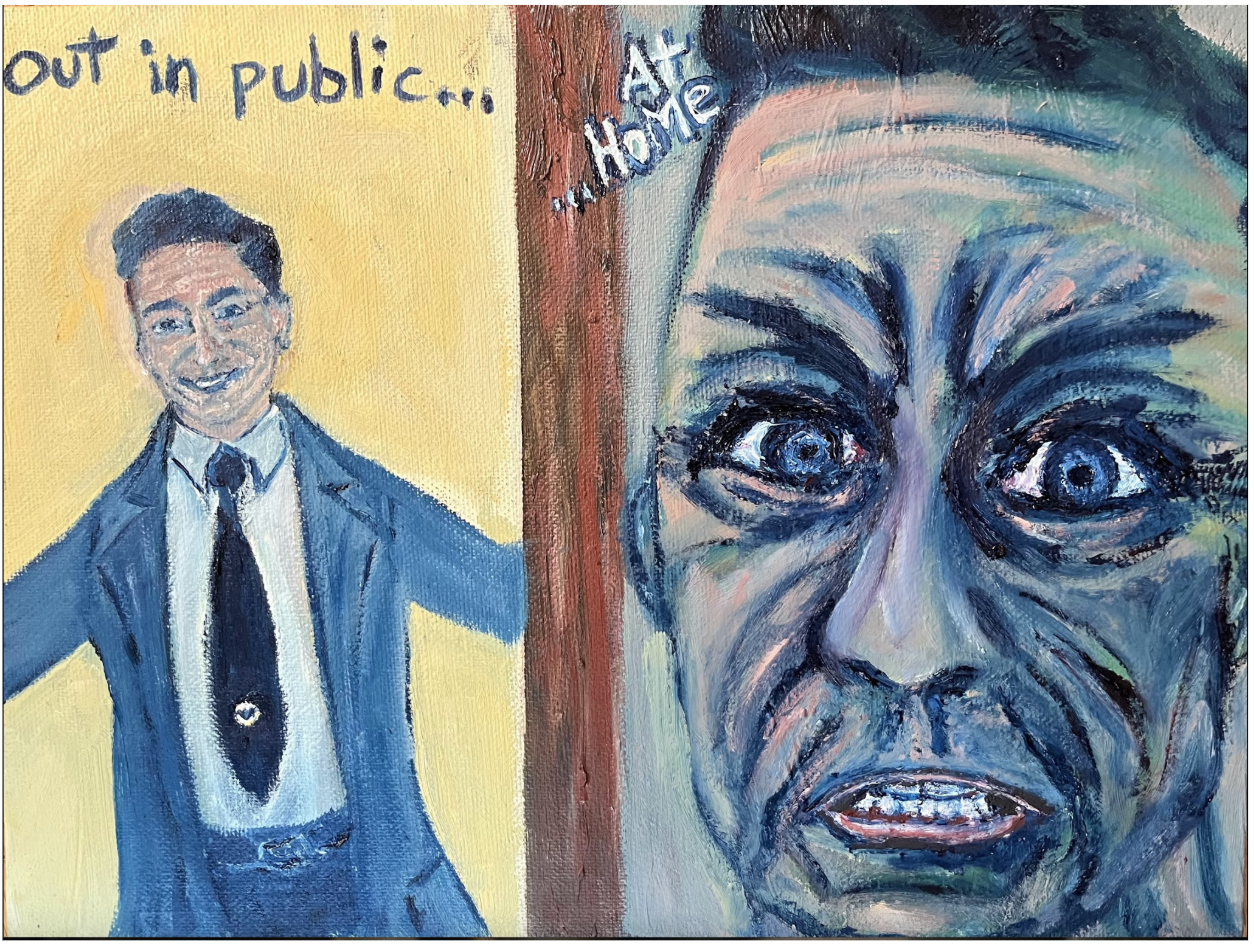
What lives in the heart of another, what REALLY goes on behind closed doors, and who do you believe?
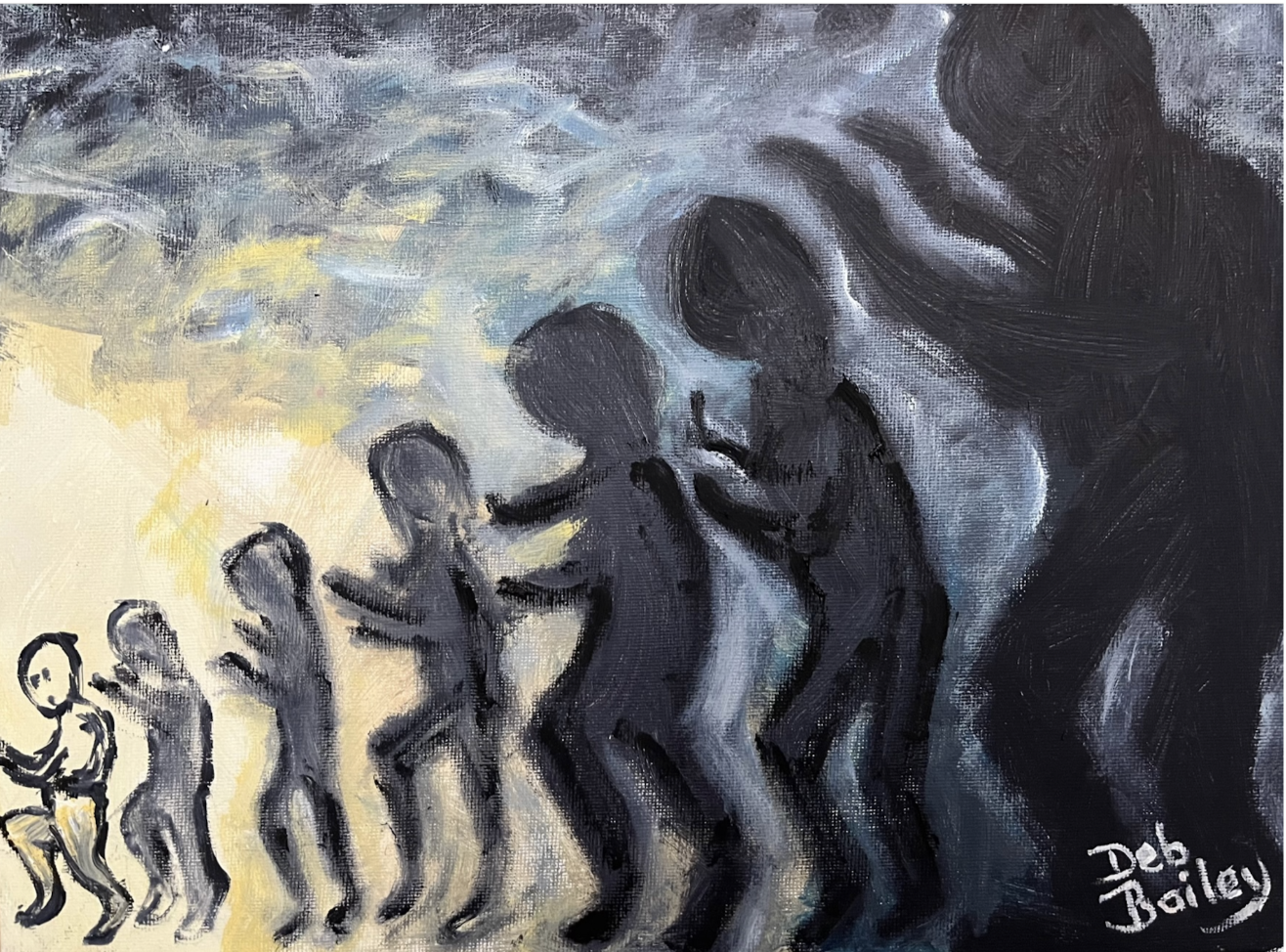
Painting done by author
Before I get started, let me first say this piece is not about the average failings we all have where we wish we had done better. We all have dark places in our hearts that we try to overcome with our better sides. And most of the time we actually do. There is not a one of us out there that is perfect. But there are those who carry much darker sides, inflicting harm on others without caring and often taking pride in their ability to fool others.
Why can’t people just leave it alone?
Domestic abuse, child abuse, incest….these are messy topics, uncomfortable topics, topics many would rather avoid than deal with. For many people it comes down to, “he said, she said,” and how do you prove it? And if you know the person accused personally or through their fame, who do you believe? Do you even want to believe it might be true? Why can’t it just be simple and why do people have to bring this stuff up?
“The intention to open the heart and mind is what’s essential. If we do good deeds with an attitude of superiority or outrage, we simply add more aggression to the planet. …When we practice generosity we become intimate with our grasping. When we practice the discipline of not causing harm we see our rigidity and self-righteousness. Our practice is to work with guidelines of compassionate conduct with the flexible mind…seeing things without “shoulds” or “should nots.” We aren’t drawing upon a code of conduct and condemning everyone who doesn’t comply. If we draw a line down the center of a room and tell those in it to put themselves in the category of “virtuous” or “nonvirtuous,” are we truly more liberated because we choose “virtuous”? More likely we’re just more arrogant and proud. Bodhisattvas are to be found among thieves and prostitutes and murderers.”
 Soul Mosaic