Posts Tagged ‘writing’

Structuring My Memoir…Start With the Visuals

January 4, 2025

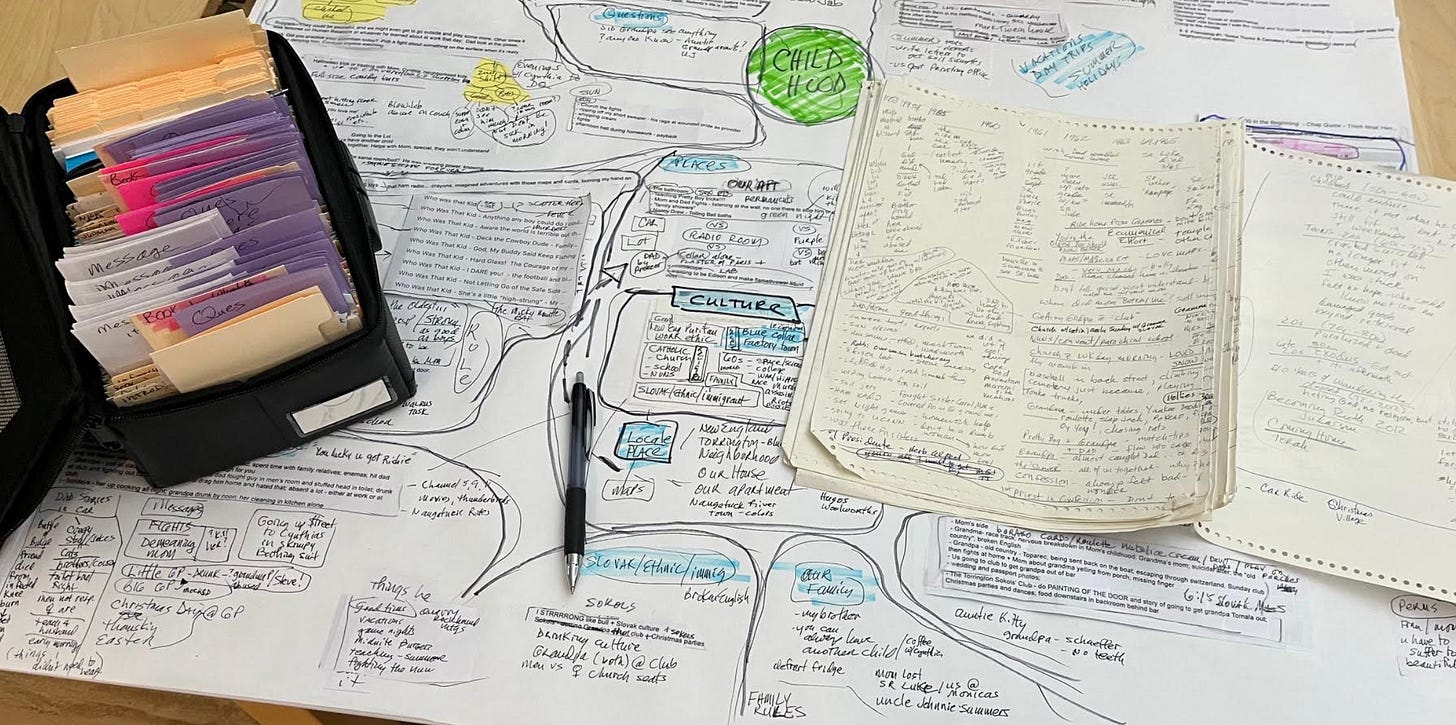
Picture of a huge sheet of paper with story details mapped on it; also a pen, and a box of index cards of notes, and another folded sheet of paper with life timeline on it
Photo by author

How to tell the story

Aside from making order out of chaos by deciding which of life’s millions of details to include or leave out, there is the issue of how to order the book and tell the story. I am still working on that. But at least for the first draft stage, I have a rough outline to follow as I write.

Introduction & “in media res”

(more…)

She Had No Idea What She Was In For…

December 9, 2024

And she deserves to finally be seen and heard

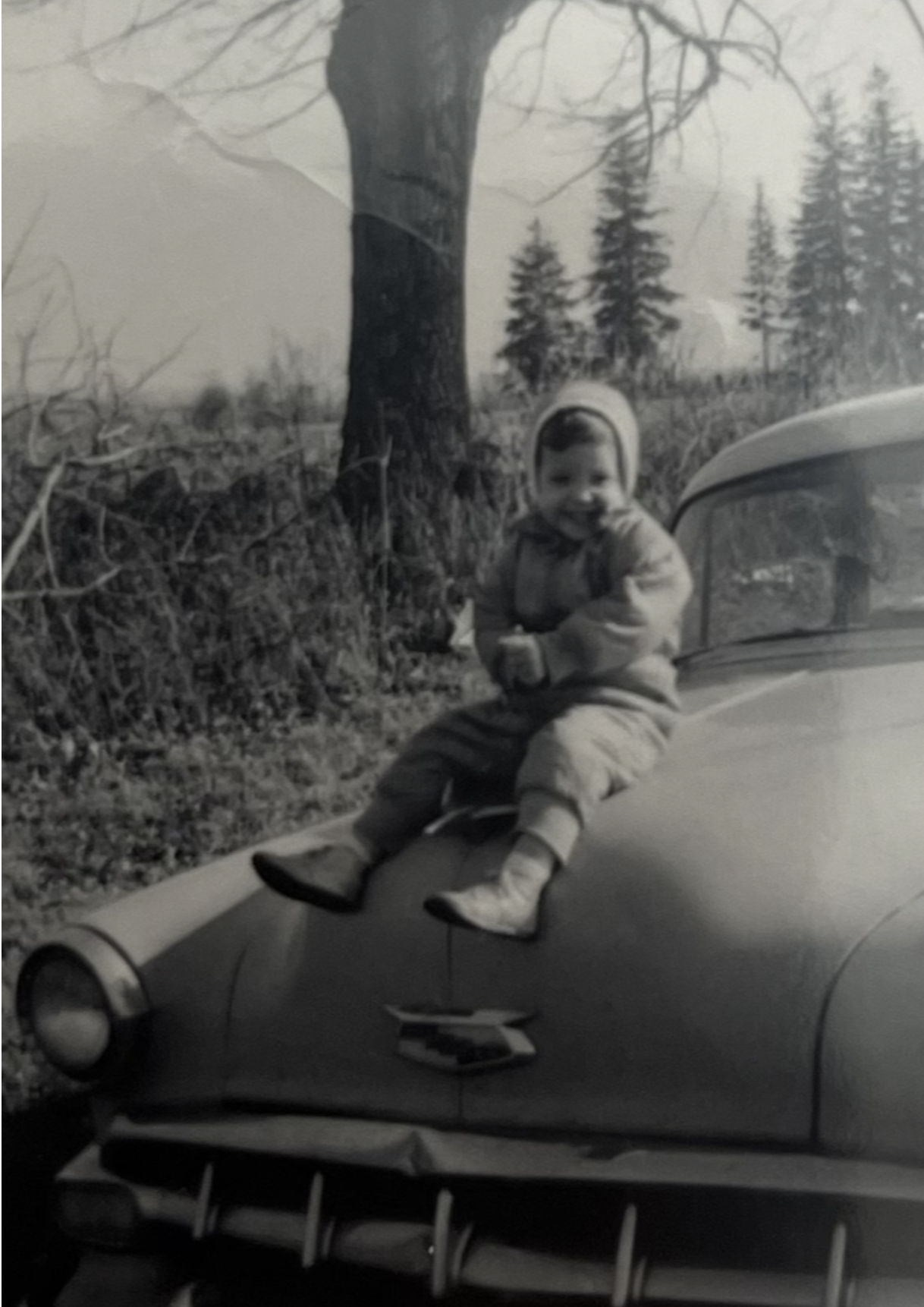
Black-and-white 1957 photo of the author as a 2-year-old toddler in a snowsuit, sitting on the hood of a 1954 Chevy Belair sedan on a sunny late afternoon winter day. Countryside of Torrington CT around Klug Hill Rd.
Photo by author

The “ancient history look” of 1950s black-and-white photos

It’s one of those typical 1950s black-and-white photos found in family albums — those of the era of the late Baby Boomers but before the 1960s when you could more easily obtain color film. It has that dated look and these days, it could simply be viewed as “back then, ancient history.” Only the car gives a clue as to the time period. The bottom line is that this picture comes across more as something found in a history book than a real moment out of a real life. So, while I’ll use some photos in this book, for a large part I am going to use paintings.

The details of a photo…

Why? First, check out the difference when viewing that same moment in full color:

(more…)

Is Writing a Memoir Worth it? 3/3 WHAT IF YOU DON’T WRITE?

December 2, 2024

Is Writing a Memoir Worth it? 

The answer may be “no”…and it wouldn’t be wrong.

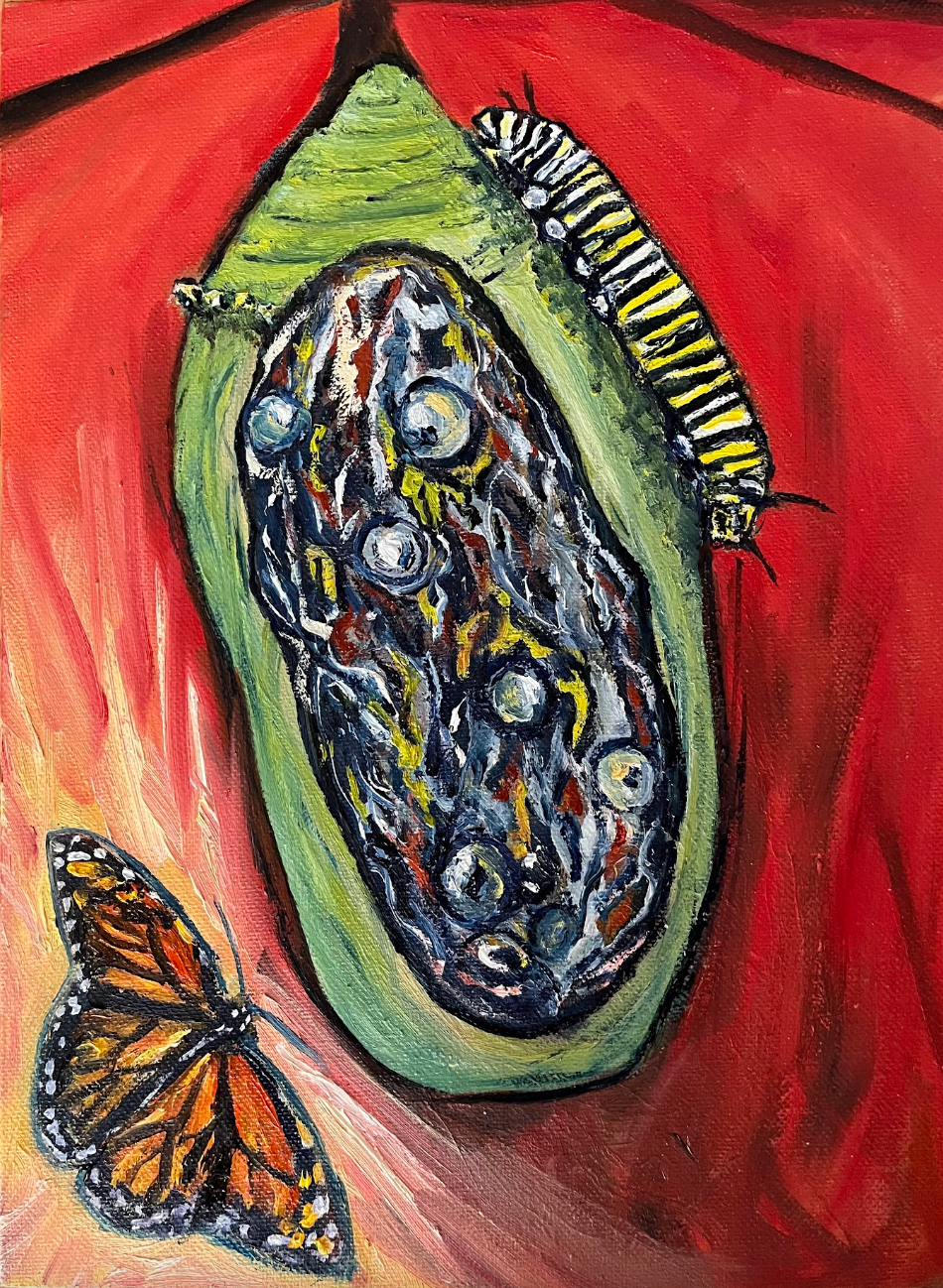
Painting of a caterpillar perched on a cocoon with a butterfly on the bottom of the painting, against an orange background. Inside the cocoon we can see the dissolved mush of the previous caterpillar as it transforms to a butterfly eventually
Painting by the author

Did you know THIS happens in a cocoon?

I recently wondered how a caterpillar — this slug-like crawling thing, emerges from a cocoon as a multi-colored, fragile-winged, flying beauty.

Being a retired science geek I of course hunted the answer down. While I sensed it was a sort of “magical” process, the specific details surprised me. Attached is a Scientific American article for those of you who would like to know the nitty-gritty process. 

https://www.scientificamerican.com/article/caterpillar-butterfly-metamorphosis-explainer/

The short version is that all of the tissues of that caterpillar are literally digested and become mush! All its various structures are gone…with one exception: Imaginal discs. 

Imaginal disc magic

When caterpillars are forming in their original eggs, they contain not only the structures needed to be a caterpillar but also an imaginal disc — an organized group of very specific cells — for each of the adult body parts they will have. 

Once in the cocoon with the caterpillar reduced to mush, the imaginal discs take over and start reconstructing that soup into the adult butterfly. When the transformation is complete, the butterfly will emerge, mate, lay new eggs that will form new caterpillars carrying imaginal cells, and so on.

So…what do imaginal discs have to do with choosing not to write a memoir?

The very personal cocoon of transformation

Writing a memoir is a very personal decision and requires a careful assessment of risks to you and benefits to you. It is also a matter of personal timing in life as well as so many other factors. There is no right or wrong decision. It’s taken me seven decades to get to this point, even as I tried several times at different ages. It’s just that I was still mush in a cocoon and wasn’t ready.

Now, I choose to write. But after a lifetime of healing and transformation, I could have chosen the opposite instead. And I wouldn’t have been wrong. It’s not about the decision to write a memoir or not. It’s about growing, healing, and finding peace.

The Middle Path

The Buddhists say there is a Middle Path — not one or the other, but some road in between that fits you and lets you do what YOU need to do to heal. It doesn’t only have to be “write a memoir” or “don’t write.” Another way to heal could be to work with a therapist, paint, write only for yourself, or pursue some spiritual exercises that give you peace. The real point is to grow, heal, transform, and find peace. 

“Spiritual” imaginal discs

To that end, I guess I relate to the caterpillar and butterfly story because I think we all have our own special “spiritual imaginal discs” — an inner part of us that came with us at birth and which holds the seeds of who we are meant to be in life. At the end of the day, it isn’t about a particular path to realizing our potential and our life mission. It is about finding out the mission itself. So find your own imaginal discs within you and follow your best path.

Take the time to consider things

Now, if you feel drawn to writing but aren’t sure , check out my previous two posts on “Is Writing a Memoir Worth it?” — the first on Risks of writing,

and the second about 54 reasons to write 

These two provide a number of points to consider before you decide. Maybe consider the lists, honestly answer the questions, and make your own decision. No one should ever tell you what to do, or that you are wrong.

My best to you.

Is Writing a Memoir Worth It? 2/3 – YES

December 1, 2024

54 Reasons Why Writing a Memoir MATTERS

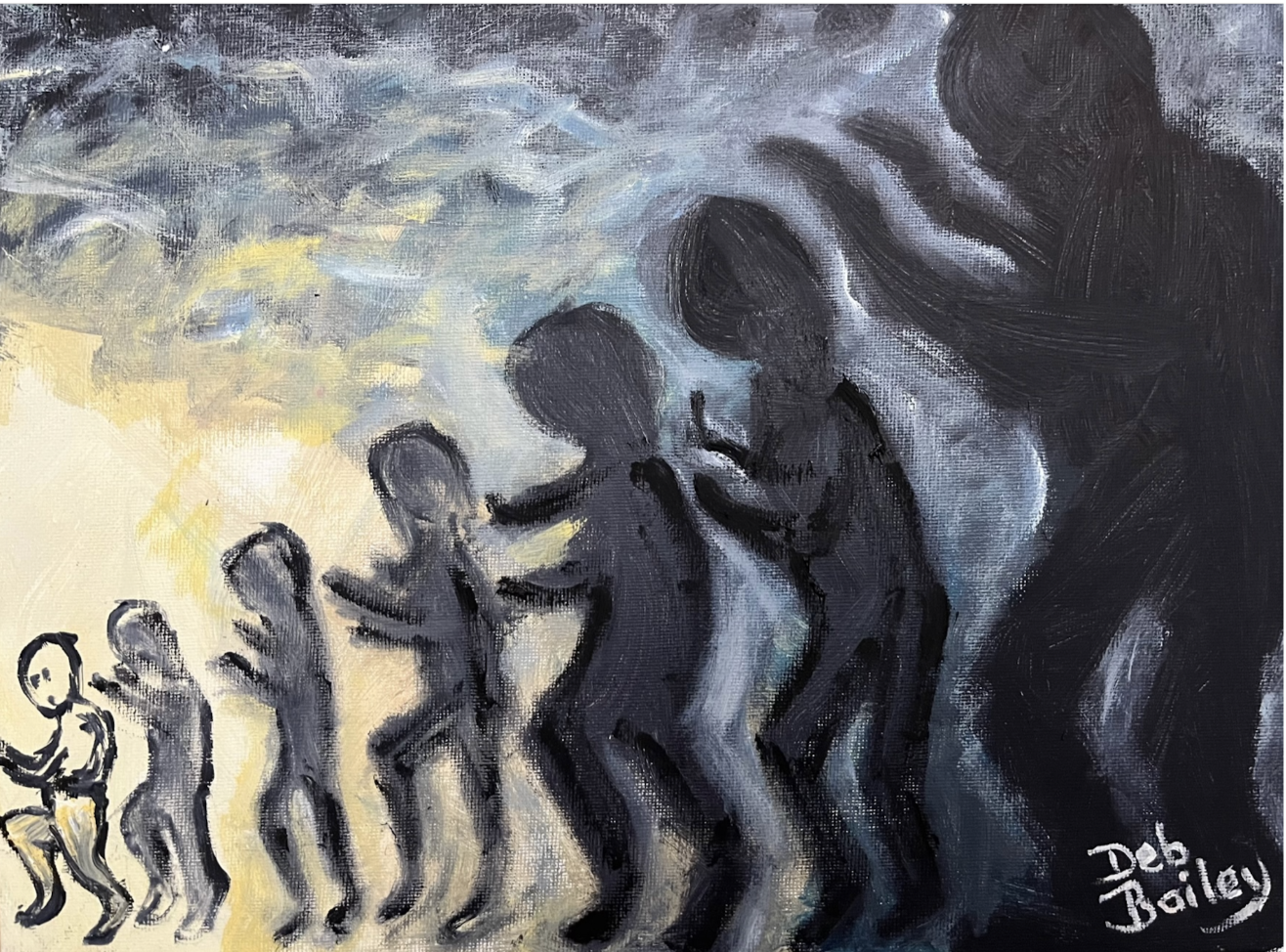
Abstract painting with a person trying to tiptoe away from their shadow selves who carry that person's secrets and past. The person is trying to avoid facing their past but the shadow versions just get bigger, darker, more ominous
Painting by author

Real safety is your willingness to not run away from yourself — Pema Chodron

The audience

A friend of mine asked who I was writing the book for. Almost without hesitation, I said– myself. Now in case that sounds selfish, it really isn’t. There is that old saying that before you can help another, you have to take care of yourself.

In the past, I would have answered that question differently. So many times over the years I tried to write my story in one form or another, but always, I thought I was writing it for others. After all, shouldn’t we want to help another if we can, to escape the pain we were in? A noble thought but it’s not that simple.

Each person must untie their own Gordian Knot

It’s also been said that the more you learn, the more you realize you don’t know. Hence the idea of writing a book to save another seemed arrogant, presumptuous, and flat-out wrong. I’ve spent a lifetime searching for my own answers, so how could I think I had answers for anyone else?

That might have been a bit of the pendulum swinging a little too far in the other direction, though. About the point I had decided never to write, a few key mentors in my life took issue with that. One of them–my high school English teacher who was pivotal in saving me back then, said to me: “You don’t give people answers. You tell your story. From your story, they find their own answers and untie their own Gordian knot.”

In that second, I was convinced. Her comment cemented my decision–this was a reason I could accept and write for.

Are there many good reasons to write a memoir?

Now I recently listed the number of risks in writing this kind of story, which made me wonder what, if anything, might be a good reason for doing my memoir. Maybe a few more than just “I knew my mentors were right.”

(more…)

Is Writing a Memoir Worth it? 1/3 – RISKS

November 26, 2024
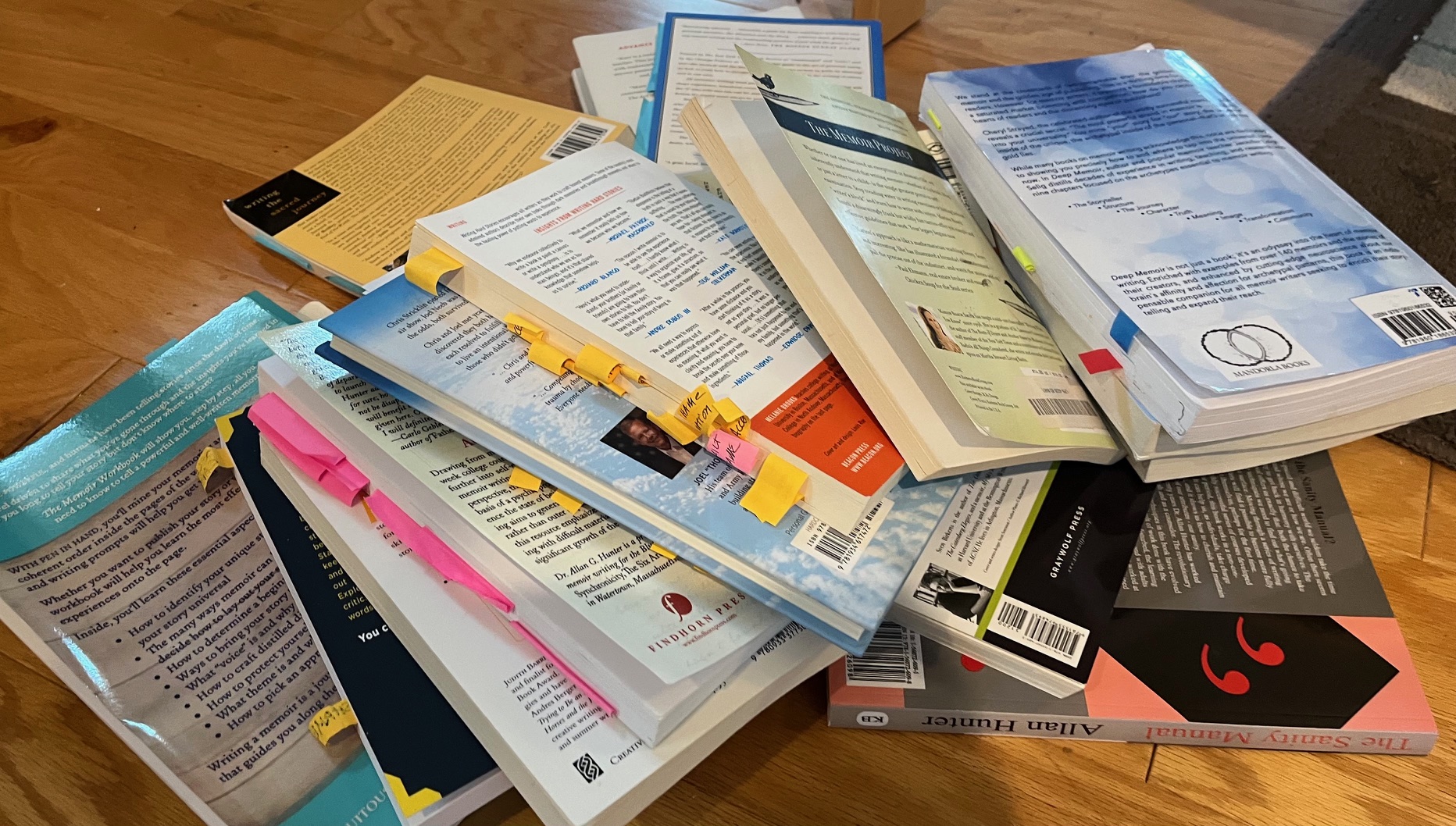
Pile of over 20 books on memoir writing the author has read to learn how to do this. They have many stick tags and notes sticking out of them.
Photo by the author of just “some” of the many memoir-writing books in her home library

What About the Risks?

So you’re considering writing your memoir. You take stock of what stories, events, and insights most impacted your life. You examine your life and make a list of obstacles encountered, successes and failures — and how you dealt with either. Your soul says “there‘s bits here that might be helpful to share,” so you sit down at the computer, get ready to open a vein and…you freeze.

There is no question that many writers experience tremendous fear when writing, no matter the topic. There are many books and articles out there on how to write, what to write, and even how to overcome the fear of writing. I have more than a few of each kind on my bookshelf. 

Fear of writing

On that last item, fear of writing, I have a book — The Courage to Write: How Writers Transcend Fear by Ralph Keyes — that I’ve kept since it was first published in 1995. So, it’s not a new problem. I suspect the first time a cave person scrawled an image on a stone wall it might have given them pause when they stepped back to assess their work.

The idea of putting ourselves out on the page…even if we never show it to anyone, may stop us before we ever start. And I am not even talking about whether the writing is any good or not. First, there is the possibility of triggering powerful emotions never before confronted. That is immediately followed by self-judgment: Am I really like that?

The pages never read aloud

We all have those “pages we never read aloud” to anyone — things we don’t want anyone to know about us, and for that matter, things we may not even want to admit to ourselves. And yet there is no escaping their reality when the words sit there — stark black letters blazing tracks across the white page.

Even if we’re not writing about our own mistakes or faults, there is no question that subjects of a serious nature will impact any writer’s willingness to venture there. It’s one thing to talk about how a car engine works and know you will be judged on how well and accurately you write the piece. But to write about victimization, shame, or messy emotions, and to say on the page what someone drilled into you NEVER to speak about, invites some powerful ghosts to come stomp all over your courage.

While you may have shared those stories with therapists, relatives, or close friends, it is a whole other matter to actually know that thousands of perfect strangers know your secrets. And that doesn’t take into account in a digital age, putting things out in places where people can respond immediately, and with things like: “What’s the big deal? Get over it” or worse. 

So that brings me back to my original question — is writing a memoir worth it?

The power of transformation

I have been reading a book on memoir writing that is great…actually, I’ve read many over the last few years. But the one I speak of right now — Deep Memoir, by Jennifer Leigh Selig, PhD — just nails soooo many important themes.

One theme in particular, in a chapter near the end of the book, really caught my attention. In that section, the author dug into the power of writing a memoir to transform you — change you not just by looking back at the past and making observations about what happened THEN, but to change you RIGHT NOW as you are writing

As soon as I read that sentence, my gut tightened because I knew exactly what she meant. I’d be writing about some issue of anger or shame that I’ve carried for years and even as I was typing the words, I could feel some slight shift in me…a softening, compassion, a lowering of terror. 

All I know is that in those moments, I am like a crucible holding individual chemicals. And as I am held over the fire in that writing process, the chemicals start to melt, mix, react, and become something new. The process taking place in that “writing crucible” changes me and it’s not about the ingredients I started with. It’s the process.

But what about the risks?

But the book also notes some authors who have experienced extreme emotional trauma such that after they published their book they said they would never do it again. Jessmyn Ward, writing about five men in her life who died, said she doesn’t know if she could go through that process again. Carmen Maria Machado, after writing about intimate partner abuse, said she probably would not. And Pat Conroy, writing about his childhood abuse in his novels, experienced suicidal despair, attempted suicide, and had another suicidal breakdown later, after another book. So the risks to one’s mental health are not imaginary or inconsequential, especially when writing about traumatic events.

Physical illness is another way traumatic material can wreak havoc on a writer. Kate Bornstein was already experiencing sleep and eating disturbances, along with having to seek therapy because her writing triggered a borderline personality disorder. But she also suffered gut problems so severe they had to remove part of her intestine, something she attributed to her writing. She said the writing “gets you right in your gut…and I took that as a sign that I was on the right track.”

All of that aside, there are the “normal fears” about writing a book. What if people hate it? Or don’t get it? Or maybe worse, what if they love it and the response overwhelms you? Fear of success is just as strong as fear of failure. Especially if you’ve lived through abuse, you may have lived your life in the shadows and sudden public awareness is too much. Or there are the stories about writers who’ve encountered rejections and relationship breakups; angry responses from others who don’t like what was shared; or for some, even lawsuits.

What risks am I facing?

So, based on all of the above, in terms of writing my memoir I realize it might:

  • Trigger my own pain, health, and emotional reactions to revisiting painful things
  • Expose all my hidden details to the public
  • Deliver reactions from others that I may fear, or be emotionally devastated by
  • Change my life

As to “change my life” — well it already has. And will continue to. Just look at the fact I am writing here and saying truths I’ve not put out publicly before. So change is a given. And the remedy for that is just “one day at a time.”

Regarding the first three risks, I have given those a lot of thought. I have put in place some support systems for me as I do this. Also, I drafted a list of things to share with readers at the beginning of the book — things such as rules and boundaries for how I chose to write the story; trauma-trigger cautions for readers, given the topic; and most importantly, the purpose for writing. 

What is memoir REALLY for?

The last one matters most because in the end, if I am going to write a memoir, it is not about just making a laundry list of all the things I lived through. It is REALLY about: because of what happened, what did I do with it? It is about coming back. It is about hope. It is about connecting on a universal level with a reader who might have a different story but still experienced similar emotions. 

The “decision-maker”

Having thoroughly rattled myself with the risks, I did one last thing before answering the question — I made a comparable list of “why it’s worth it to write a memoir.” I figured it would be blatantly obvious after that, what I should do.

Digging into all of the books in the above picture (and several more) I compiled a list. It was an illuminating…actually an eye-opening experience. And so I came to my decision.

I will share in a separate post, what I put on that list. It will, no doubt, make clear my logic and maybe be helpful to anyone else considering whether to write their memoir or not. It goes without saying — but I will say it anyway — that each person has to make their own list and determine what their own risk/benefit ratio is for writing and then make their own decision. 

The bottom line

But for me? Is writing a memoir worth it despite everything above? And despite the fact it’s taken me seven decades to come to this point?

A very short, simple, but emphatic answer: YES!

My “benefits” list will come soon. 

So…after a long hiatus…the “Prodigal Writer” returns…

November 19, 2024

WHERE have I been?

I have been busy for the last many years – working at the NC Museum of Natural Sciences in Raleigh, NC. It was the BEST job of my life and it used every bit of what I learned through 40 years of medical labs, pharma research, clinical trials and medical ethics. And my creativity, painting, play and prototyping with Play-Doh…it was a return to my childhood of dissecting frogs, chemistry sets, and reading about the adventures of undersea-shipwreck explorers. That job was literally PLAY that drew my long-dormant 10-year-old back to the surface. I could reach and excite kids about all the weird tweaky details of science and its stories, because I returned to BEING that kid.

I did it for 15 years, every day a new exciting topic to create an activity or class or show for all ages. The topics, the ways to spin it, the ways to get people involved, surprised, laughing even, fed my soul to no end I would have done it forever, but finally, arthritis plaguing my joints, a really bad bout with the flu and subsequent infections this past year, and just plain tired no matter how much I loved it all, I knew it was time to stop. I’ll be 70 next year. It was a good run. I “did good!” 🙂 But yes, it was time for new blood, and so I retired.

So now what?

However…that doesn’t mean I sit in a rocking chair. I have a manilla folder full of things I want to do – take all the poetry and literature classes I never had time for when I went to college in the 70s – only enough money and time then to get my requirements, my lab classes, get out and get to work. But now, the adult ed classes at local universities have these classes and I will take them.

I want to learn to play chess well. I know how to play – poorly 😉 – but it would be nice to get better. There are a few small trips I would like to do.

And I now oil paint every day — partly for me — partly to sell — and partly to brighten people’s lives. As I do a painting I post pictures of the progress on my Facebook page as I did it during Covid. People then found comfort and joy in watching the evolution of various paintings. And these days the world has so many “issues” going on, I figured people could use “a Moment of Respite” from it all, if only to follow along with my oil paintings again.

If you too could use a “break from reality” come visit my Paintings of Light and Hope Facebook page: https://www.facebook.com/profile.php?id=61568762302738

And if you like what you see, there are links on that page (and below) to my DebsWritingandArt Etsy store where I sell the originals, or to my FineArtAmerica pixels.com website page where I sell prints and originals, and also blog about the paintings:

https://debra-bailey.pixels.com/

https://www.etsy.com/shop/DebsWritingandArt?ref=seller-platform-mcnav

And yes…finally, I have returned to writing.

First, I restarted by posting essays with the pictures of related paintings, on the platform Medium in a publication there called Pure d’esprit

In addition to the posts I write about my artwork on the Facebook page I also blog on my FineArtAmerica Pixels.com page

https://debra-bailey.pixels.com/myblog.html

But why am I bothering to write here then, if I have all these other places I show up on the internet?

It’s because the “Soul Mosaic” concept has never left me…

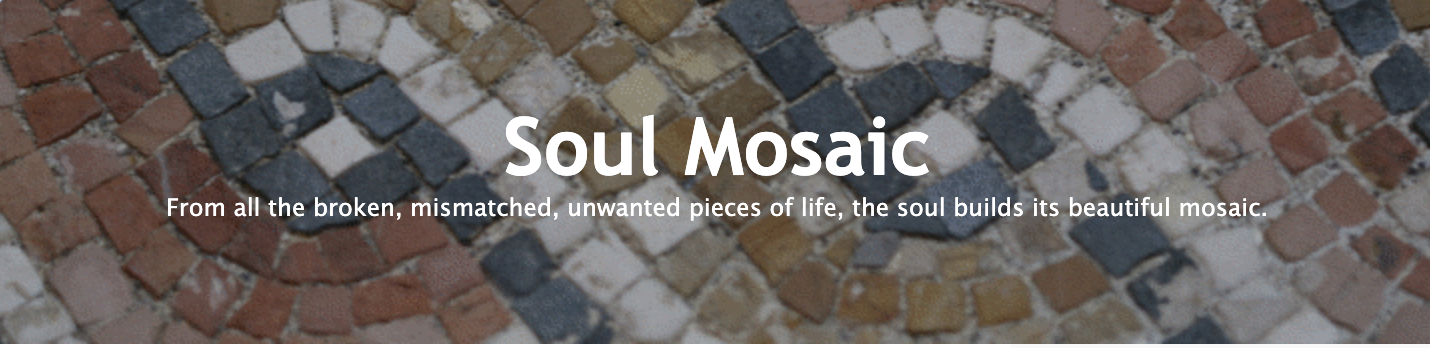
The photo shows a closeup image of a Roman mosaic with the tiles looking like two eyes. This is the background of the logo for this blog's header. The blog is Soul Mosaic, and the subtitle is: From all the broken, mismatched, unwanted pieces of life, the soul builds its beautiful mosaic.
Logo for this blog, incorporating a picture of a mosaic the author took at the NC Museum of Art

The truth is, that mosaic idea is the truest metaphor of my life – broken, mismatched, unwanted — rebuilt into a beautiful mosaic. The truth is, it may have taken me a lifetime to get here, to learn what I needed to, but I am STILL HERE…and in spite of all the havoc that went on in the first half of my life, I THRIVE.

The work of my lifetime?

So that brings me back to the writing work of I am doing and have been working on for the last few years…the writing work that has waited a lifetime for me to come back to it…my memoir.

In short, I was abused – physically, sexually, emotionally, mentally — from infancy through age 27. I should never have gotten out due to all the brainwashing, gaslighting, shame, and frankly ignorance that what happened to me had a name – incest. I thought I was an aberration of nature, and instead I found out it happened to others. Many others. And all of us who lived it walk through life, silent, SILENCED, and broken. The key to healing – understanding, speaking, finding our strength – are denied in silence.

I have fought back for most of my life. I left it behind, rebuilt a life, a good life, and I have done well in spite of the scars I carry. But life has a way of coming back with the well of emotional pain left behind that demands to be heard…in fact, MUST be faced and heard if one is to heal…learn…understand…LOVE.

Why go back? Why write?

Rabbi Jonathan Sacks commented about Holocaust survivors that most spent the bulk of their lives LIVING and BUILDING a life. THEN, only after that, was it time to “look back” – T’shuvah – return to it, and examine what it all meant.

The book – Deep Memoir by Jennifer Selig, PhD – has some pithy answers:

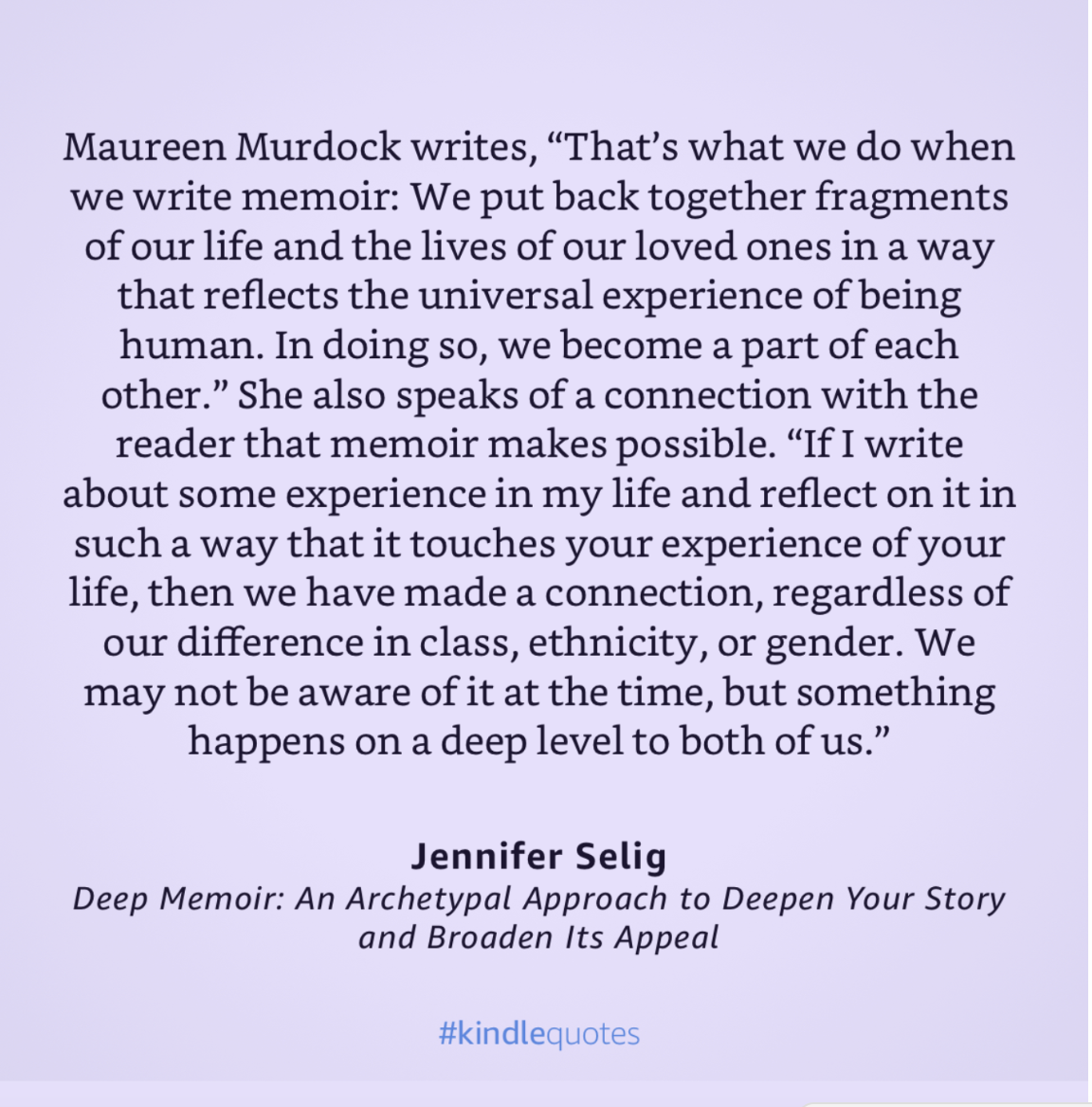
Photo by the author of a book page with a quote explaining that we write memoir to put pack together fragments of our lives and and those of our loves ones in a way that reflects the universal human experience. The focus of the quote from the book Deep Memoir by Jennifer Selig, is that memoir makes connections between writer and reader that connect us both no matter our backgrounds.
Photo quote take by the author from the book, Deep Memoir

Later in the book she also has a quote from another author who sums up the “why”:

”You too are driven by the desire to understand…Beneath your desire for knowledge writhes the hunger to understand and love yourself.”

So – understand…heal…connect with others…and finally PUT BACK TOGETHER FRAGMENTS….LOVE YOURSELF

And to anyone who thinks it is just a litany of just this happened and that, or gee, why me? It is the story of hope…after despair. It is the story of evolving over a lifetime, from a pile of broken-bits rubble, into that mosaic.

It is told through almost 100 paintings and photos that helped me remember, feel the trapped emotions, then find the right words to understand and move forward.

So it is the story that says: “In spite of what you did to me…in spite of how I struggle...I THRIVE.

As to Questions – that tired old “why me?” – that was NEVER the question that plagued me.

MY QUESTION was always:

“Because of what happened…what do I do with it?”

That is the final reason I write – MEANING. All that destruction has to have meaning, and if that comes by writing and helping even one other person in pain with my story, it will MEAN SOMETHING.

Why use the blog?

A way to get my book written, is to have a place I can write posts that discuss one topic at a time that will be covered in the book. This can be my place for “rough-drafting and brainstorming a concept” that I will later more fully develop in the book.

By the way, to write the book I am using a software called Obsidian. I LOVE IT! And it has been a gift to come across, both for gathering thoughts, storing easily accessible info I need to have available, but also to hold the drafts as I build the book.

Anyway, I realized that this Soul Mosaic blog could be my “scratchpad” or “sounding board” place for things I need to explore so I can then expand on them and put them in the book.

Some of the topics I have written about in related essays I published in the Pure d’esprit Medium publication, and I will share those essays here too because the Medium platform is only open to paying members.

But some of the topics I just prefer to write here, in my “old friend” Soul Mosaic because emotionally, it is my place for broken bits being reformed into beauty…and always has been.

So I will be posting here again. For anyone who decides to follow along, welcome.

The Post – The Dear Departed Meatloaf……

January 19, 2011

Let us have a moment of silence for the dear departed meatloaf…..one should never do a meatloaf in a crockpot without “other things” and liquid – it’s juices do NOT constitute liquid…..windows open in the house on a cold mid-January morn……eating out tonight. By then I might be able to pry the meatloaf out of the pot….. for whatever talents I have in oil painting, writing, studying sea creatures and finding odd facts to share here….that talent does NOT translate to cooking skills….the kitchen is a no-man’s land this morning…..

The Gift

May 7, 2008

“The idea is to write it so that people hear it and it slides through the brain and goes straight to the heart.”

Maya Angelou

The Post – Twenty Years of Marriage

February 27, 2008

A time out, today, from both my writing journey posts and my fiddler crab posts. No new info on the latter yet, by the way. It’s like pregnant women past their due date – you just wait and don’t ask if the contractions have started yet.

Today is a special day. It is our twentieth wedding anniversary. It is a milestone, and worth taking time out to honor. The years have gone quickly, sprinkled with child-raising, dogs, sick parents, near-death experiences, heart-ache, joy, aging. A good mix for life I’d say. As I’ve noted, we are both geeks in our own ways, and as such, we understand each other. I just wanted to take a moment today to honor my best friend, and I figured he would enjoy and understand the movie reference below. He and I speak in movie references – lines from movies that capture the emotion of a moment for us. Over the years we have accumulated a collection of lines from hundreds of movies. They have become a kind of coded communication between us.

This particular movie is called 84 Charing Cross Road. Anne Bancroft stars. Her husband, Mel Brooks, purchased the rights to produce it – his gift of love to her, knowing how much she loved the story.

It’s the true story of a New York City writer, Helene Hanff – a person kind of like me – no bullsh–, doesn’t mince words, very “unglamorous.” She has a sharp, but kind sense of humor and a great heart. Helene LOVED English literature, but in late 1940s New York City where the movie begins, she could not find any English literature books except at the library. Then she discovered Marks & Co. and began a decades-long correspondence with them. The story is told through her letters. From the opening of the movie:

“October 5, 1949, to Marks and Co., 84 Charing Cross Road, London, WC2, England. Gentlemen, Your ad in the Saturday Review of Literature says that you specialize in out-of-print books. The phrase “antiquarian bookseller” scares me somewhat as I equate antique with expensive. I am a poor writer with an antiquarian taste in books and all the things I want are impossible to get over here except in very expensive rare editions. I enclose a list of my most pressing problems. If you have any clean second-hand copies of any of the books on the list for no more than $5 each, would you consider this a purchase order and send them to me?”

Thus begins her relationship with the very proper bookseller at Marks & Co., “FPD.” FPD, over letters and time becomes Frank Doel, then simply, “Frank.” It’s a love story, but not the usual kind. They live an ocean apart, have different lives, and he is married with daughters. Happily married. So no, there are no hot sex scenes, the crutch of most modern movies. Yet it is a love story, anyway, because true love at its deepest is about caring, generosity, and the connection of souls. It is not limited by the relationship but can be felt for spouses, friends, relatives, neighbors. Their friendship enlarges their lives, expanding to include his wife, neighbors, daughters, other workers at the bookshop, her friends. Their love is about adding something to each of their lives, not taking things away or destroying things. It is about understanding each other, and that is the quality of love that sustains it, whether in marriage or friendship, well into old age. And frankly, a marriage that lasts well into old age is as much about friendship, as anything else.

Throughout the movie, she revels in the old books she buys, books better for having been owned by someone else first. Again, it is a love of connection to others, even those she never met. She says: “I love inscriptions on fly-leafs and notes in margins. I like the camaraderie-sense of turning pages someone else turned and reading passages someone long gone has called my attention to.” She can’t get enough of the books. Frank finds them for her.

By the end of the movie, he is “Frankie” to her, and she tells him, “You’re the only soul alive who understands me.” It’s a sentiment that reflects a bond where you are known deeply, valued, and most importantly, accepted. Your truth is safe in the hands of another. Whether two people are the same or very different matters not if there is acceptance. When someone knows our deepest places, our vulnerabilities, and accepts us, they give us the best of gifts. The wish to be understood and accepted is one of the bonds that links us all. These are things I have felt for and from my husband.

At one point a friend of Helene’s made it to England and visited the book store. She wrote Helene with a description:

“It’s the loveliest old shop straight out of Dickens. You would go absolutely out of your mind over it….It’s dim inside. You can smell the shop before you see it. It’s a lovely smell. I can’t articulate it easily but it combines must and dust and age and walls of wood and floors of wood…The shelves go on forever. They go up to the ceiling and they’re very old and kind of gray, like old oak that absorbed so much dust over the years they no longer are their true color.”

Such a visceral, sensual description. It was a description both my husband and I fell in love with immediately when we heard it. It is a place we hope yet, to be.

At one point in the movie Helene writes to Frank:

“I require a book of love poems with Spring coming on. No Keats or Shelley. Send me poets who can make love without slobbering. Wyatt or Johnson or somebody. Use your own judgment. Just a nice book, preferably small enough to stick in a slacks pocket and take to Central Park.”

Late in the movie, Frank is shown, reflecting on her as a Yeats love poem runs through his mind. The moment, and the poem, are my gifts to my husband, my best friend. Thank you for these last 20 years. They’ve gone so fast. I’d like 20 times 20 more, and if time allows, I’d like yet to walk into 84 Charing Cross Road with you.

So to “Eddie,” all my love, and to you and all romantics out there, a poet who can make love without slobbering:

He Wishes for the Cloths of Heaven

Had I the heavens’ embroidered cloths,
Enwrought with golden and silver light,
The blue and the dim and the dark cloths,
Of night and light and the half light,
I would spread the cloths under your feet:
But I, being poor, have only my dreams;
I have spread my dreams under your feet;
Tread softly because you tread on my dreams.

W.B. Yeats (1865-1939). The Wind Among the Reeds. 1899.

The Post – How Do You Take Three Picture Books and Make a Novel?

February 22, 2008

In writing this post I feel the same amount of confusion and struggle as I did when I was trying to get my head around how to set up the novel. Where do I start? There’s too many thoughts and ideas, too much to wade through or convey. My brain feels overwhelmed and I want to give up and go have hot chocolate at Starbucks instead.

Back then, I was surrounded by papers…drowning actually. I had a binder full of hermit crab story versions from all the different submissions I’d sent out, as well as their rejection letters. I even filed each rejection letter neatly alongside the particular story version sent to that publisher, and the binder was organized in chronological order. That way I could see the not only the history of all the submissions, to whom, and the result, but also, the evolution of the story itself as it changed for each new submission. So in reality, for that one picture book, I had about 20 versions of that story as I tweaked, changed, revised, and resubmitted it.

I had another binder with the multitude of revisions (and rejection letters) for the Max and Jamie un-picture book. Then there was that third short story whose revisions and versions filled, first a folder, then a box. Climbing Mount Everest would have been easier. That journey of a thousand miles seemed shorter than whatever it was going to take to wade through all that stuff and find the story that needed telling. And worst of all, here I was, this very goal-oriented person who lived to finish things fast and cross them off the to-do list. The thought of what this job was going to take to start it, never mind finish it, seemed too daunting to face.

You can drive yourself crazy trying to find the exact perfect place to start or the exact perfect way to work. In fact, I don’t think either exists. As far as getting started, you just have to pick a nipple and get going. It’s like Billy Joel said about the songs in his dreams never matching what he created. Nothing will be as perfect as our dreams and visions. So you can either give up right then because you can’t have perfection, or you swallow your ego and create the best you can. Even the imperfect can move souls. But you still have to write it. Tabitha King, wife of novelist Stephen King, and a critically acclaimed author in her own right, noted in an interview in Writer’s Digest magazine that, “…fiction never turns out the way it’s imagined. Your expectations are never gonna jive. …But that doesn’t mean it’s not a success.” So you put your butt in the chair and start somewhere, working through it all, somehow.

This is where going through Stage 2 helped – you have to know yourself. If you do, you have at least 2 things going for you: 1) you have at least some idea of the questions in your heart that might need to be answered in a book; 2) you have a pretty good idea of how you work best.

How you work defines what your processes and tasks will be. Some writers just sit down and start writing. They write several hundred pages until they finally discover their story and characters. Then they throw away those pages and write the story. A few, like Isaac Asimov, can sit down and organically know where they’re going and just get it right the first time out. And then there’s us plodders. We think, percolate, plan, research ….plod.

Tabitha King said that she likes to research “the living crap out it” before entering the story. Jodi Picoult, best-selling author of 14 novels, said that often she spends more time on research than writing. Why? In her June 2007 column, “This Writer’s Life,” for Writer’s Digest magazine, she said, “…fiction’s a tightrope. I’m supposed to whisk the reader away from his everyday life, but to do that, I need to create characters and situations real enough to entice him to follow. To that end, I’ve found myself living the lives of dozens of people, all in the name of research.” She said that research allows you to write with authority so readers can trust you to get the facts straight, and it gives you the “chance to walk a mile in the shoes of a character that might have lived a life very different from your own.”

I knew I wasn’t Asimov. I also know that to meander aimlessly through hundreds of pages before knowing where I was going, would drive me crazy. I need order, organization, planning, research. You should see how I plan a road trip. After all, my natural tendency was to be General Patton. Generals assess what they’ve got, research their enemy, plan their strategy, then execute the battle. That’s me.

So, first I assessed what I had:

1) I knew now what kind of book it should be – novel.

2) I had LOTS of raw material. I knew the setting, the time of the story-current day – and had some ideas about characters and plot points because I had MANY versions of each story to choose from.

3) I finally knew about what age my own child was inside, 11 or 12. That sort of tells you what age the reader of your book might be. Also, knowing about what ages you and your readers are points you toward what kinds of story questions you can tackle.

At least for me, writing is all about questions and choices. As you ask, you learn something. As you learn, you make a choice about something in the story. Another question comes up, another choice. Before you know it, characters appear, setting, time, places, problems. Others are excluded. The story evolves. So at this point, the question for me became: What is my story about?

I came out of childhood with scars and resentments and issues. So has everyone else. If my own life has depth and there’s more to ME than meets the eye, the same is true of everyone else out there. This means there’s lots of potential for conflict and issues and depth of characters, quirks, oddities, and unexpected twists and turns. No need for clichés, stereotypes and superficial stories when you have some real meat to work with under the surface.

The very story you tell comes out of a choice when answering the questions – Do I write what I know? Or what I want to know about? Sometimes you choose a place or character or issue that you know personally. Sometimes you choose something you have no experience with. You could even choose something that repulses you, but you want to explore it so you can stretch yourself and grow. George C. Scott did that when he portrayed General George S. Patton, Jr. in the 1970 movie, Patton. In this quote from a special features documentary included on that movie’s DVD, one of the former executives at 20th Century Fox, David Brown, spoke of all the issues they had to deal with in making that movie. One was casting an actor for the lead role:

“…of all the critical decisions made for the project, perhaps none was more crucial than the casting of George C. Scott as Patton. George C. Scott was not very fond of General Patton. Why he accepted it was because it was a good script and it was a reach for him as an actor.”

Jodi Picoult noted that she’d grown up happy in the suburbs. Everyone in her family liked each other, there were no dark secrets in the family’s closet, and she worried that she was doomed as a writer before she even got started. “Frankly, I didn’t have enough trauma in my life to write about.” She came to the conclusion she had to alter that “write what you know” rule a bit to “write what could be learned.” Tabitha King said most people assume that “write what you know” means “tart up your autobiography.” Her feeling is you should “know what you write.” All of these things come back to…questions.

But which question do you start with to unlock the answer to “What is my story about?” For my money, if I was allowed only one question, it would be ‘why’? That’s the one I used most heavily in getting this novel going.

Why write this book? Why have these characters and not others? Why does someone do what they do? Buried in the answer to why, is the story of that whole character: flaws, strengths, wishes, dreams, disappointments, crimes, family background, personality traits, likes, dislikes. Ask “why” and you’ve opened the can of worms. Everything is folded into “why?”

People act a certain way. Pretty girls, tomboys, shy ones, party girls. They each have their personality and behaviors. Why? Were they born that way? Did something happen to cause them to act that way? Both? What was it that happened?

Why leads to more questions:

– Where do they live? What’s their environment like? Why are they living in that environment? Are they rich? Poor? Brilliant? Anti-social?

– Who do they live with? Why? Do they get along? Why or why not?

– What’s the story behind the people they live with? Work with? Go to school with? Why do THOSE people act like they do? Who is or isn’t in their lives? What happened to them if someone, say a parent or spouse, is missing?

It’s like spinning a web. You start with one thread, one character. Give that person one trait and ask why. The minute you do, other pieces of the puzzle pop up. You choose a few pieces. More questions come up. Add another trait. Exponentially, the character expands before your eyes. Things you didn’t even know about your character show up on the pages. And so far, you just have the one character.

Now. Want some real complications? Add in another character. The minute you add in another character, the possible choices for how they interact, what they are like, what’s going to happen when those two collide, expands. Then add in a third, a fourth. Add in the environment. Add in the weather, the teacher, the dog down the street, whatever. The minute you add ANYTHING to that one solitary person, you get a reaction. It’s like adding a second chemical into a solution with something else – chances are, you get a reaction. That reaction is based on the properties each chemical brings. And why does a particular chemical have those properties? Because of it’s structure, it’s formation process. So, mix two people together and based on their structure, formation, properties in the form of their birth, environment, personality, etc. you get a reaction.

If you haven’t had enough, add in the question “What if?” What if one character jumps off a bridge and the second one tries to save him and the first one lives but the second one dies? What does that do to the person who tried to kill themself in the first place? Questions multiply the possibilities.

With all these questions and answers, your story seems to be beyond your control, right? It’s not. It’s messy, but that’s good. For right now, you want your right brain to just explode with the possibilities and get it all down. This is still part of the “what have I got” stage. You want to have as many options as possible, as rich a palette of colors as possible, to choose from. Save controlling it for later. Right now just throw all the mosaic stones on the table and see what you’ve got.

You will have to reel in the storyline at some point. Your story will need a road map – the plot, and its soul – the premise. Premise is a one line summary of what the real heart and soul of your story is. Premise may take time but it is percolating in the background as you go through assessing, researching, and planning. It may even change after you put your first stage wild ideas through the research and planning process. But all of this can come later. Right now, just keep throwing things on the pile of “what have you got?”

So how do you do all this? I’ve thrown in all kinds of theoretical process information and questions. But you’re me sitting in that room with these folders and binders of pieces of stories all around you. You’re not sure how to put them together, if to put them together, which characters to keep, create, jettison . . .

I don’t know about anybody else, but the way through all of this for me, was to journal. I have a couple of binders of journaling. Maybe those journals were my “couple hundred pages to find the story” that other authors write then throw away.

I picked a version of each of those three stories and used that as my starting point. If there were scene variations, better wording, or different events in other story versions, I cut and pasted those into my journal or made a “list of possible things to add later” to the version I started with. The point is – I had to pick a version to begin with, then journal from there. I might in the end decide a particular version, scene, person didn’t work. In fact, I know I did. But at least, I had a starting point. You can always add, take away, or start over. But you have to pick that one nipple and just start journaling.

Every day I sat down and did a piece of a scene here, a character description there. I wrote up thoughts about what if you mix these two characters in that setting with this problem – how that might play out? I did sample plot lines. Again and again and again. Dialogue samples. Setting descriptions. List of things to check on. I wrote and wrote and wrote, and made to-do lists.

It’s a messy, imprecise process, but what I was doing was slowly working my way to the soul of the story and its characters. I was pruning. Refining ideas, discarding others. For me, it’s a gut, organic kind of process, like baking bread. You mix up this mess of ingredients, knead it, set it aside. It rises. You come back, push it down. It incubates some more, then you come back and roll it, stretch it, bake it. You eventually end up with a concrete product: a loaf of bread, that you can hold in your hands, see with your eyes, smell with your nose and taste. The same happens with your story and characters. By the end of the journaling, you have this concrete mass of information about the story structure, who’s in it, you may have even answered that one line premise question. The reality is, if you can’t describe your story in a sentence or two, you don’t know the story and need to go back to the journaling. At least I did. Once I could write that sentence or two, it was time to put up the scaffolding. It was time to run all of it through the concrete tests of research and planning. Construction was on the horizon.

Next: The scaffolding – index cards and binders. LOTS of them. And maps. And lists. And books and….