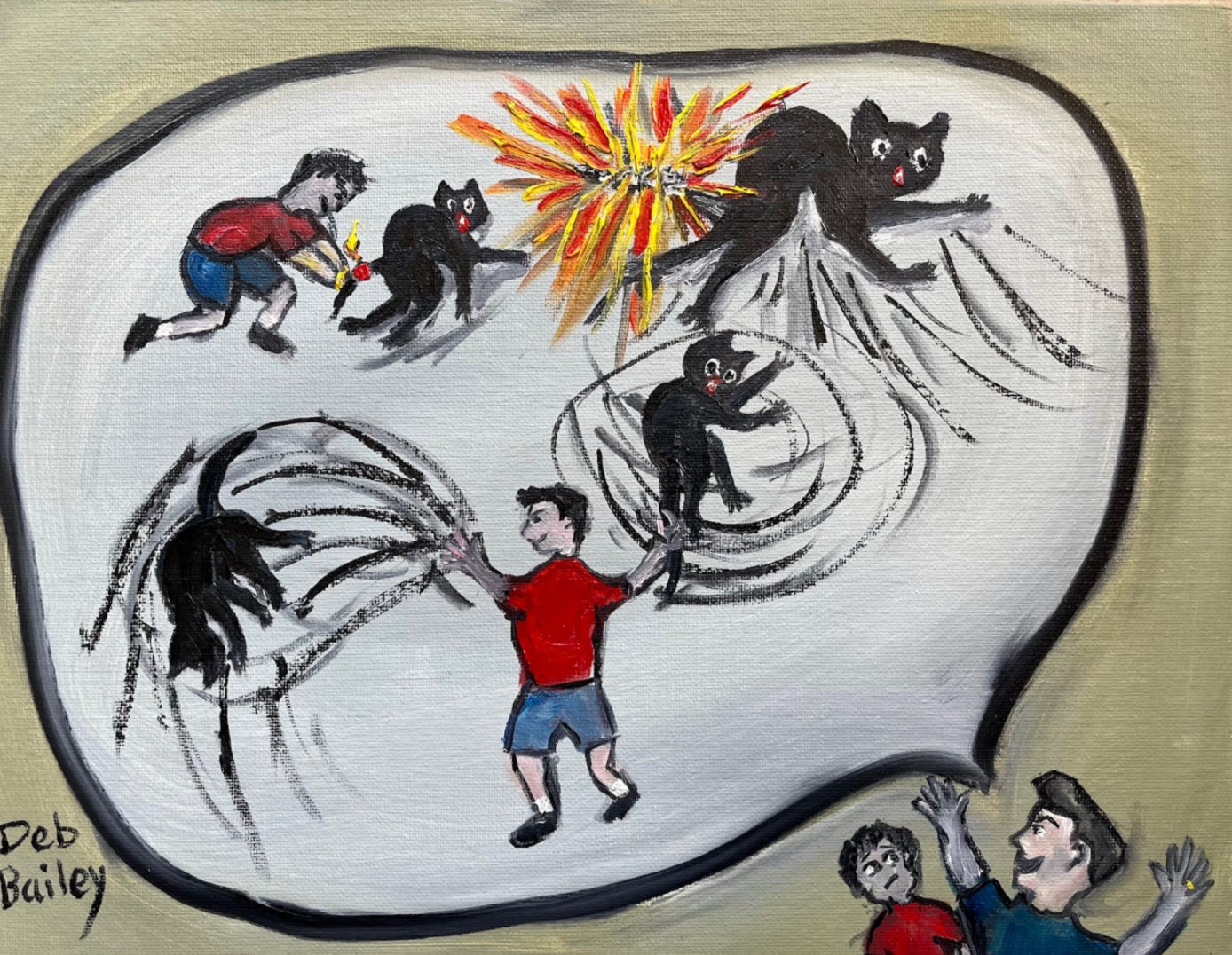
“Yeah, I always hated cats. I’d catch them by the tail and spin them around, then throw them. Sometimes, I’d tie a cherry bomb to its tail, light it, and boy did they run when it went off!”
I couldn’t react as I listened to my father recount this story like it was just a harmless prank. To react badly wasn’t possible, or I’d be in trouble. But I was also a kid, and he was telling this like it was no big deal. He laughed. We laughed.
But inside, I was trying to wrap my head around that story. First, what was so bad about cats that he thought they deserved that? Didn’t it hurt them, especially when the cherry bomb went off?
WHY would you do that to an animal?
His confidant and co-conspirator
Right from that toddler car ride when he molested me, car rides with Dad in later years were no better. In fact, as the years went on, they became a special form of hell.
I was born in November 1955 at 11:40 pm… which maybe explains why I always like the quiet solitude of late nights and even enjoyed working second shift in the hospital lab for years. But to be honest, I was actually reborn in September 1969, at 8:10 in the morning, on a day in my freshman year at Torrington High School, in College English IA, B-building, Room 204 with teacher “TD” (as it was listed on my computer class assignment card). Never have two letters so understated the full amazingness of an individual or what she would come to mean to me, and to so many others.
TD — her students either loved her or hated her, but no one was *indifferent* to her. She had that effect.
Before I continue with the rest of the story, I take a moment to note where I’m at in it. The preceding entries showed all the various influences on me from birth. And the rules I lived by that I took as normal life.
At this point, I was 14 years into that abuse. And I had no idea I was only halfway to an escape.
For all intents and purposes, I was controlled and didn’t realize it. I was manipulated and unaware. I was aware of my stress level whenever I crossed Dad. Aware of my relief and gratitude when he was kind and loving. And I was most aware that if he got upset, I blamed me.
I took it all in as any child would, and believed him. Why wouldn’t I? I had no idea that this was wrong. I had no role modeling that this was, in fact, truly aberrant behavior for a family. True, it felt wrong at times, but I assumed that was my mistaken judgment.
Painting by author
The trapped fly
If you’ve ever watched a spider wrapping a fly caught in its web, you might think of the spider as a vicious killer. But the spider isn’t breaking any laws. Nothing is calculated or premeditated. It’s just following the biology of its life cycle. Like all of us, the spider has to eat. And it responds to the thrashing of a fly trapped in its web out of instinct only. At least so far, science research hasn’t shown that the spider is finding pleasure in its actions.
In fact, given the process it uses, a spider could even be considered “humane.” It reacts quickly and efficiently. And with one exception, most spider species administer a venom into the trapped fly that not only immediately paralyzes it, but leaves it unaware of what is being done to it. It will then either digest the fly and eat it right then, or set it aside for a later meal. But the fly is mercifully unaware of anything. It doesn’t experience pain at that point, nor does it feel any apprehension of what might be in store for it.
The spider is just living by its life rules, and so is the fly. And to that end, there is no guile or treachery.
3. operating or proceeding in an inconspicuous or seemingly harmless way but actually with grave effect.
Insidious. Just the sound of the word makes my skin crawl. When I say it and feel the tactile sensations of the syllables as my mouth muscles form them and they roll off my tongue, I feel afraid. Listening to the word as I slowly enunciate each letter, it conjures sensations of evil. And that’s because it is.
It is something deliberate. Calculated. And executed before you even know what is being done to you. It is done so subtly and slowly that by the time you realize it, you’re in too deep. It’s too late. And all you can do is wonder if you were to blame because you didn’t see something coming, and feel stupid.
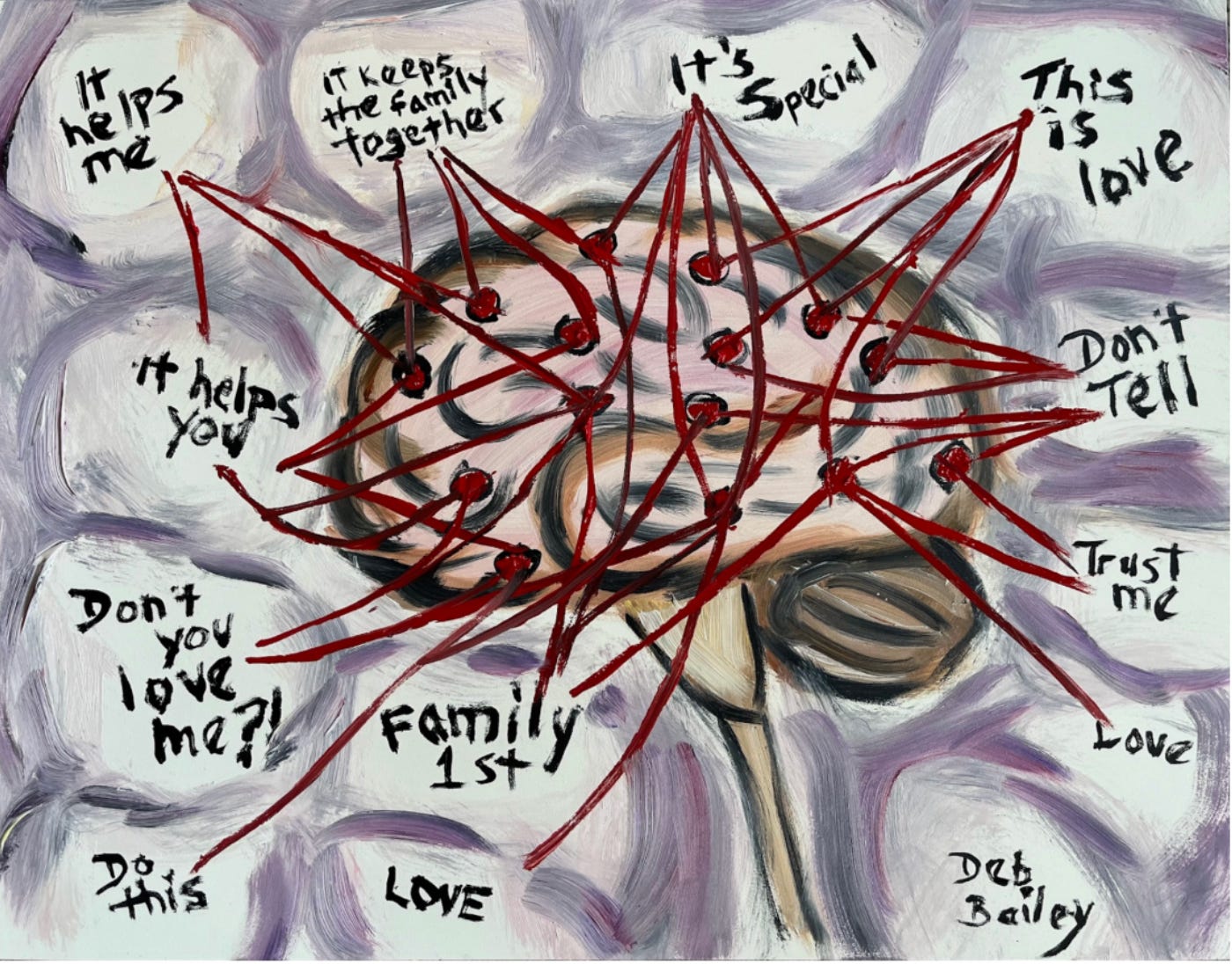
If ever there was a word that captured how he wove his web of control over me, “insidious” is it. He started on me from infancy. I will talk later about how I know that. But I was groomed, manipulated, and played like a puppet for years using the strings of his power, intermittent reinforcement of love, abuse, and brainwashing.
Like the fly, I was rendered helpless, and it all happened before I even knew what was being done to me. But unlike the fly, which was put out of its misery quickly and whose misery was just part of a natural cycle, I was NOT unaware of the sensations of apprehension, fear, and pain. It was definitely NOT part of a NATURAL cycle. And unlike the spider who was just following the rules of its species in a straightforward way, my father was most definitely choosing to break his in a calculating and stealthy manner. Nature…the spider… is actually merciful. My father was not.
Trigger alert – The descriptions here may upset some readers. Please proceed gently.
Who WAS Dick Phillip?
When Robert Louis Stevenson wrote his novella, *The Strange Case of Dr Jekyll and Mr Hyde*, he had no idea that 45 years later, his character would enter reality as my father.
Dick Phillip. Richard Phillip. Richard M. Phillip, Richard Marshall Phillip…Richie.
Who WAS Dick Phillip…and as an aside, as a kid…and an adult, I always wondered why he preferred “Dick” for a nickname. Except that in his case, it seemed to fit in more ways than one.
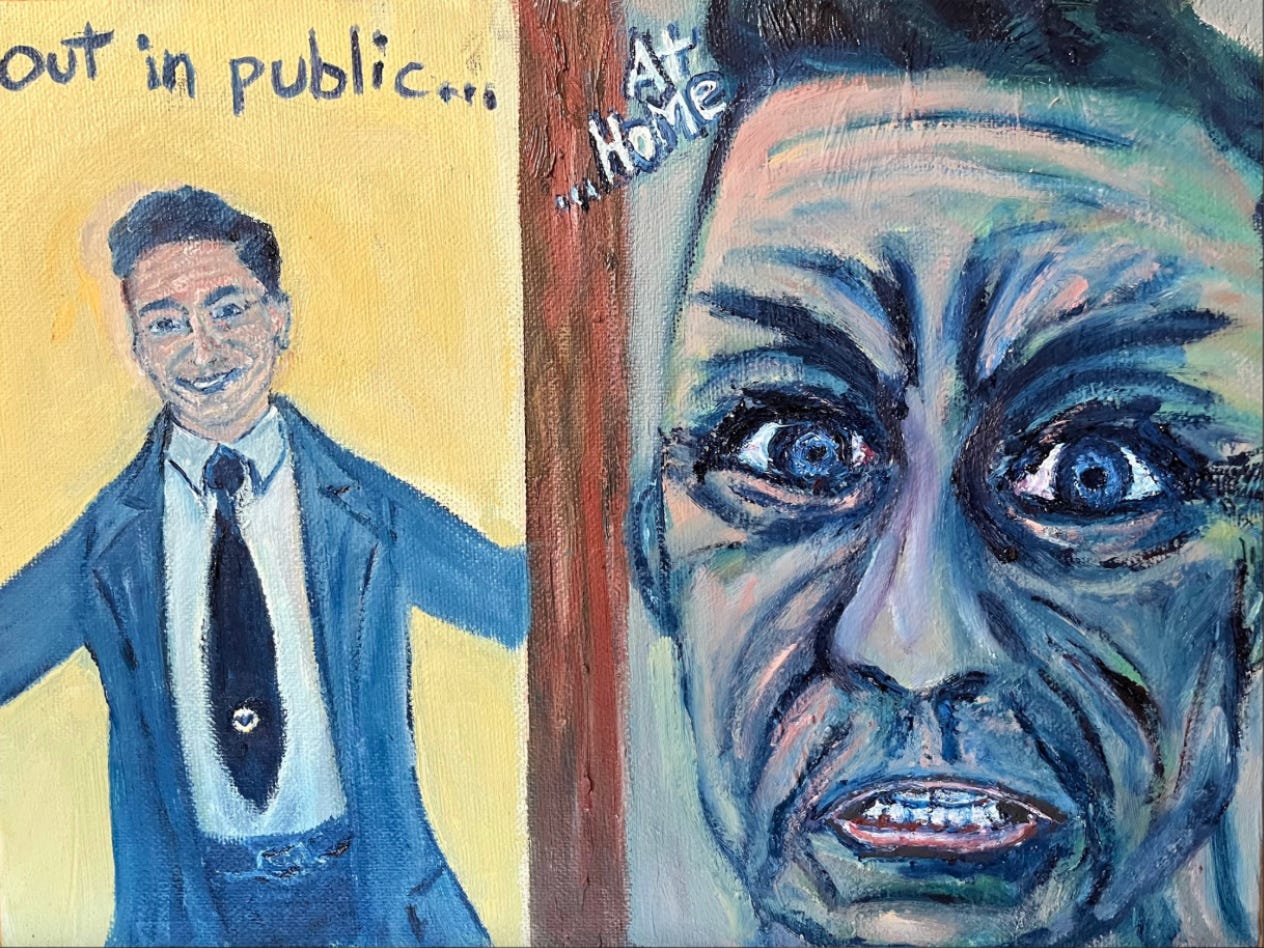
To me, who he was varied with his mood and his needs. Sometimes he was so warm and fun, and other times it was like I didn’t exist, or worse. Intermittent reinforcement. Alternate love with rage, with love, with cold isolation, and back to love again. Mix it up until I was so confused and convinced that somehow it was my fault, and if only I could figure out the right things to do, then it would be okay.
As for how he treated others, it just depended on what you were to him, where you stood in relation to what he wanted and needed, and who had the upper hand in the power dynamic between you.
When I started high school and was worried about succeeding in a public school after years with the nuns, his advice was:
“If you want people to like you, find out what they need or want, and give it to them. Then they’ll like you and you’ll look good.”
Even then, I thought that seemed like a cold way to treat people, and being a young teen, I ignored him. But it was his modus operandi in life because he wasn’t looking for friends. He was always about getting something out of an interaction.
If you were outside of the family and had nothing he needed, you were off his radar…except to make sure you weren’t a threat. If you were a family member, at the very least, he would put on enough charm to keep the peace and preserve any future usefulness you might have to him. If you had something he wanted or you could advance his goals, now you had his attention.
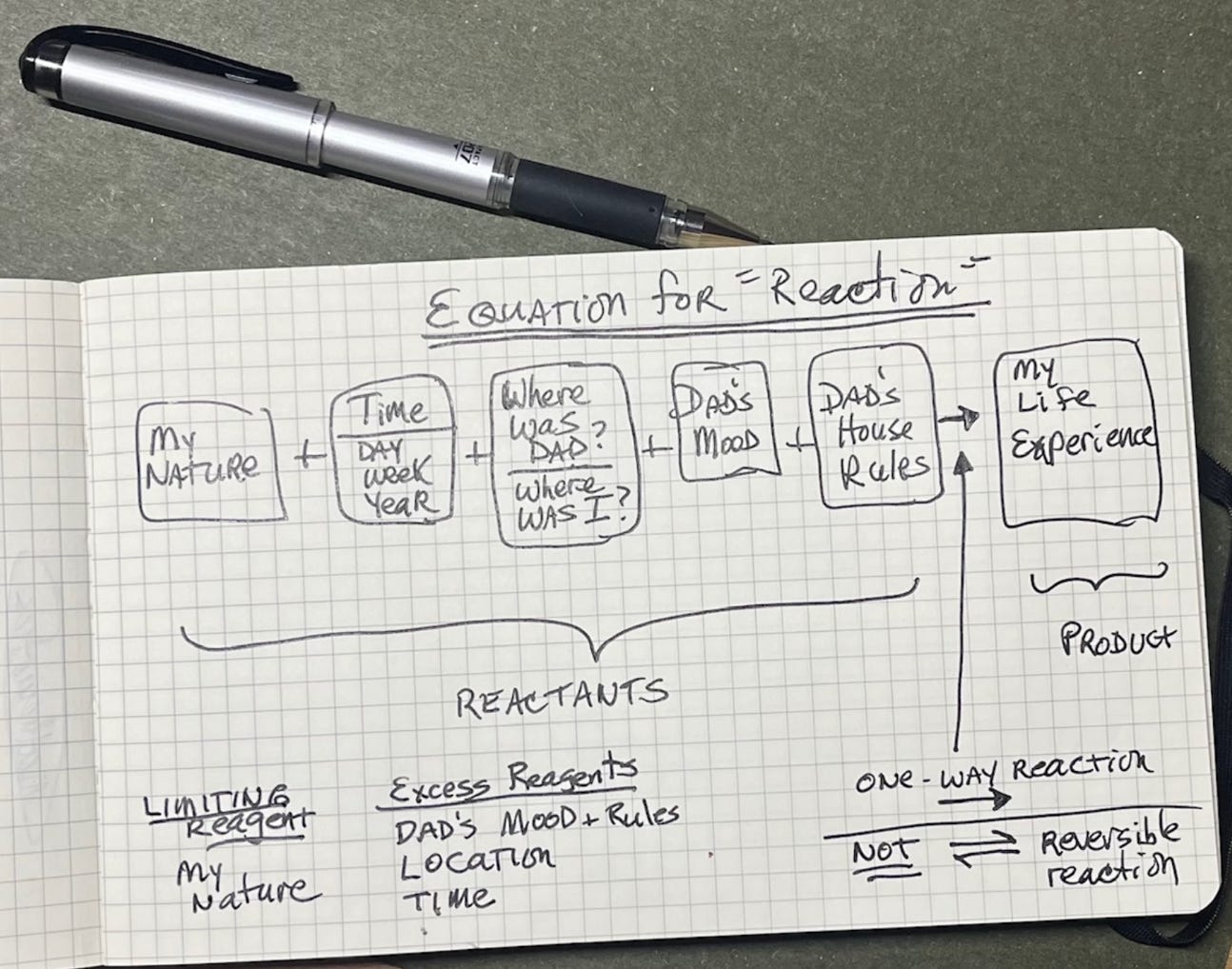
As a scientist, one of the best ways to capture what happens in a reaction, especially a chemical one, is to set up a formula. On one side of the equation are all the reactants, the items that are mixed together for the reaction to take place, and on the other side is the final product or outcome.
I wasn’t aware of what was happening to me all those years, because when I was living in the “water” of that house, I just considered it the norm and never questioned anything. But now, when I look back, I can see the patterns. If I want to visualize life in that house, I could use the following formula:
My nature + Time (Day/Wk/Yr) + Where Dad Was vs Where I Was + His Mood + His House Rules = My Experience
More generally, the ingredients were people, time, place, and rules. But no matter how you look at it, the equation was heavily weighted toward the power of his ingredients: Time, Where He Was, His Mood, and His House Rules.
Another thing about chemical reactions is that some ingredients have more power over the others, especially if they are present in overwhelming amounts, versus the others. In reactions, the reagent with the least amount present is called the “limiting reagent.” Once that particular ingredient runs out, the reaction is done.
For example, consider my nature. At any given time, my ability to be calm or in control of what was happening to me, was limited. If he he wasn’t around, most of the time I could be me, indulging in play with friends, books, daydreams, school. I say “most of the time” because there were times even when he was gone, that if he was angry with me, I would be a nervous wreck anticipating what was coming when he returned. But generally, I could use those “in-between” times away from him, to recharge, and live a “normal life.”
But when he was around, I needed to be on guard. I learned early on that everything about my day revolved around him and his mood. The absolute constant was to always be focused on him, assess the state of things, then adjust me to match what was happening. So in thinking about it, this required some amount of psychic energy no matter what.
If he was in a good mood, I still needed to stay on guard because I couldn’t be sure how long it might last or what might trigger a change. But if he was in a bad mood, I was consuming vast amounts of my emotional energy rapidly to “prepare or endure.”
The bottom line is that my emotional energy would run out long before his. So I was the limiting reagent. He could control me and have his way with me, even when I tried to resist, because all he had to do was keep battering me with his reagents — his mood, twisting his house rules, picking fights with me and not leaving me alone. Since he had these infinite amounts, sooner or later, I would run out of fight out of sheer nervousness. I would have to cave because I just couldn’t stand it anymore.
The last thing about chemical reactions is that they are either one-way or reversible. One-way reactions are “all-consuming,” that is, they can only go on until the limiting reagent is used up. Then the reaction stops. And there is no going backwards to restore any of that limiting reagent.
Reversible reactions can flow back and forth, sometimes benefiting one side and other times benefiting the other, depending on conditions. The chemical reaction in our house was one-way and all-consuming. His way, and I was being consumed.
Only now do I realize all of this, and the full extent of what I was up against. Yet, I am still here. I sustained, somehow, even if I am left with permanent scars. How did that happen? And what does that mean for my continued healing?
It’s time to look at not just Mom and Dad, but time, place, house rules, and the one “people” I haven’t said much about yet…that kid…me…that person in those “in-between” times. Just who was that kid, and why did she survive?
So that is next. But to start off, I will start with “place” — my world, the house and immediate area that I lived in. Then I’ll visit that young child and see what she was like, especially when he was not around…those “in-between times” when I could be myself.
As usual on any afternoon, my Mother was preparing a full meal for dinner, including a homemade dessert. Dad expected full dinners, including desserts, with his meal. While store-bought” Oreos were allowed for snacks because Dad liked them and he brought home the paycheck, desserts had to be homemade.
On this particular afternoon, Mom had two cake layers cooling on top of the stove, and they gave off the sweetest vanilla aroma that I couldn’t miss as I ran into the kitchen. I stopped near the stove to examine them because they smelled so good, and that’s when I spotted the problem.
Poor Mom! She always worked so hard to make all her desserts from scratch, usually from recipes out of the red binder — her Betty Crocker cookbook. But today, looking at the cake tops, I felt bad at how they were turning out. That’s when the perfect idea popped into my head for how to help her and fix the problem.
Happily, I set to work with a knife. A few minutes later, I was almost done when Mom came into the room. She stopped dead in her tracks, her eyes wide in horror, and she yelled, “What are you doing?!”
“I’m helping you!”
I pointed to the piles of cake chunks I’d cut off the top of each tier – the uneven bumps that, to my mind, marred the smooth surface.
“The cakes were all bumpy, so I figured I’d cut them off and make it all smooth for you!”
My mother stood there, staring from me to the cakes, then back again, as she struggled to process my logic. For several moments, she said nothing. I wasn’t sure what was wrong. This was not the reaction I expected.
Then, she took in a deep breath then let her shoulders drop as she exhaled slowly, and said quietly, “It’s okay. Go play. I’ll fix this.”
Now, many years later, I realize the artful skill it must have taken her to spread frosting onto those two cake layers whose tops were almost totally crumbs….
**
I love looking at pictures of my Mother from her early years. She was beautiful and had a radiant joy that seemed to burst out from within.
A “talisman” is often defined as a magical object that brings luck or special powers to its owner.
If it is not obvious by now, maps, mind maps, charts are talismans for me. Being a visual person, these tools empower me to bring order to my life. It is how my brain works. Whether it’s a road atlas, a treasure map, or a topographic map, I love them all. Give me a map and I can do anything.
Maps give you knowledge, and thus, power. They show you everything that exists, where it is, how to get there. Maps make the unknown visible, clear, quantifiable, and possible. With a map…a plan, you can get anywhere you want.
So maps would become one of the key tools in my life, both for my journeys and my understanding. When I discovered “mind maps” I became a power user. Just a sheet of paper and some markers let me plan my life, a project, or my writing. And it all started with one Christmas when I was very young.
“David Foster Wallace’s ‘This Is Water’ speech uses the metaphor of fish and water to highlight how the most fundamental aspects of our existence often go unnoticed. In the story, two young fish swim past an older fish who greets them with, ‘Morning, boys. How’s the water?’ After a while, one of the young fish turns to the other and asks, ‘What the heck is water?’ This illustrates how the most pervasive elements of our lives can become so familiar that they become invisible to us.
Many things go into forming a person, especially if the programming starts right from birth. As I tried to find the “entry point” to tell my story, I was overwhelmed by all the things I needed to weave into the narrative.
So, I resorted to what I always do when confronted with too much information: I throw everything I can think of onto a large sheet of paper to see it all at once. That way, I can then notice if there are key pieces that stand out — relationships, patterns, repeating elements.
In my true scientist way, I made a list of all the different influences over my young life:
Along with all the released pain, the ache in my heart, the emptied out mess of my life before me, there was also an ironic twist in facing this work.
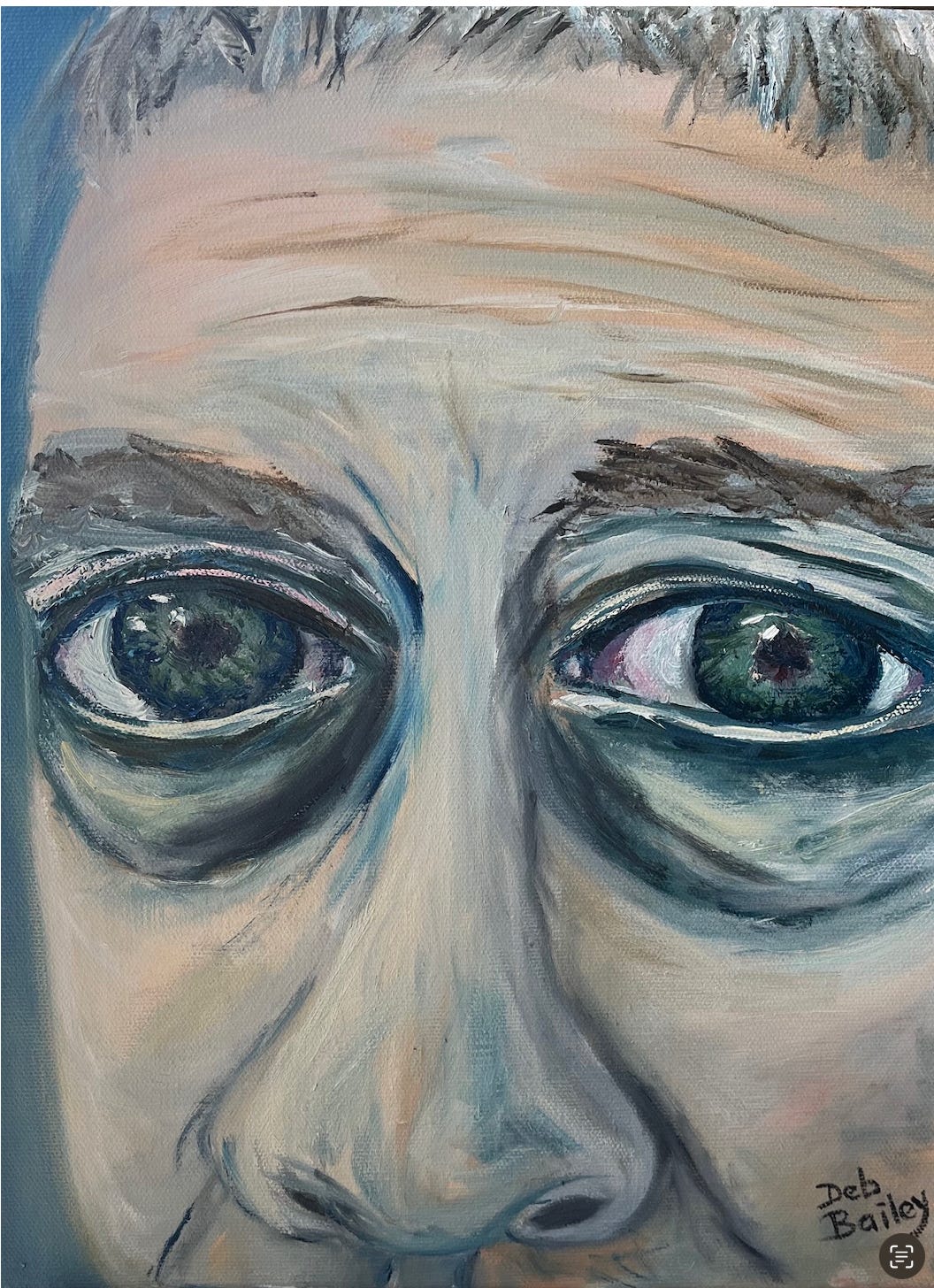
When I painted this particular self-portrait, it was after a hard session of EMDR work. I was looking for a way to capture how much fear, sorrow, pain, and despair I was experiencing at that moment.
On a whim, I took a selfie and realized all of the emotions were right there in my eyes. So, I decided to paint that picture. In fact, all of those feelings were so strong and so near the surface that I did the painting in about an hour.
Unbeknownst to me, Ed, who was exercising in the living room, kept looking over, as he described it, “watching the image emerge.” As the eyes formed and came into focus, he felt horror. Later, he acknowledged I had nailed “that look,” but he also hesitated before saying the rest.
He didn’t have to. I finished the sentence for him.
I guess I expected that, like after Dad’s death, I would feel relief…or maybe more correctly, peace and serenity, given how it all ended.
While his aftermath was the relief of a threat finally extinguished, hers was the completion of caregiving done honorably. Though we parted with many unresolved things, I felt such peace at her transformation at the end…a kind of redemption from the rest of her life.
So I expected something more like: “It is done.” With both parents gone, and it being the end of that whole era, I should be able to “get over it,” “move on,” and “leave the past behind.” All those things people say, as if just the fact it is finally done means it is “over.” But nothing was further from the truth.
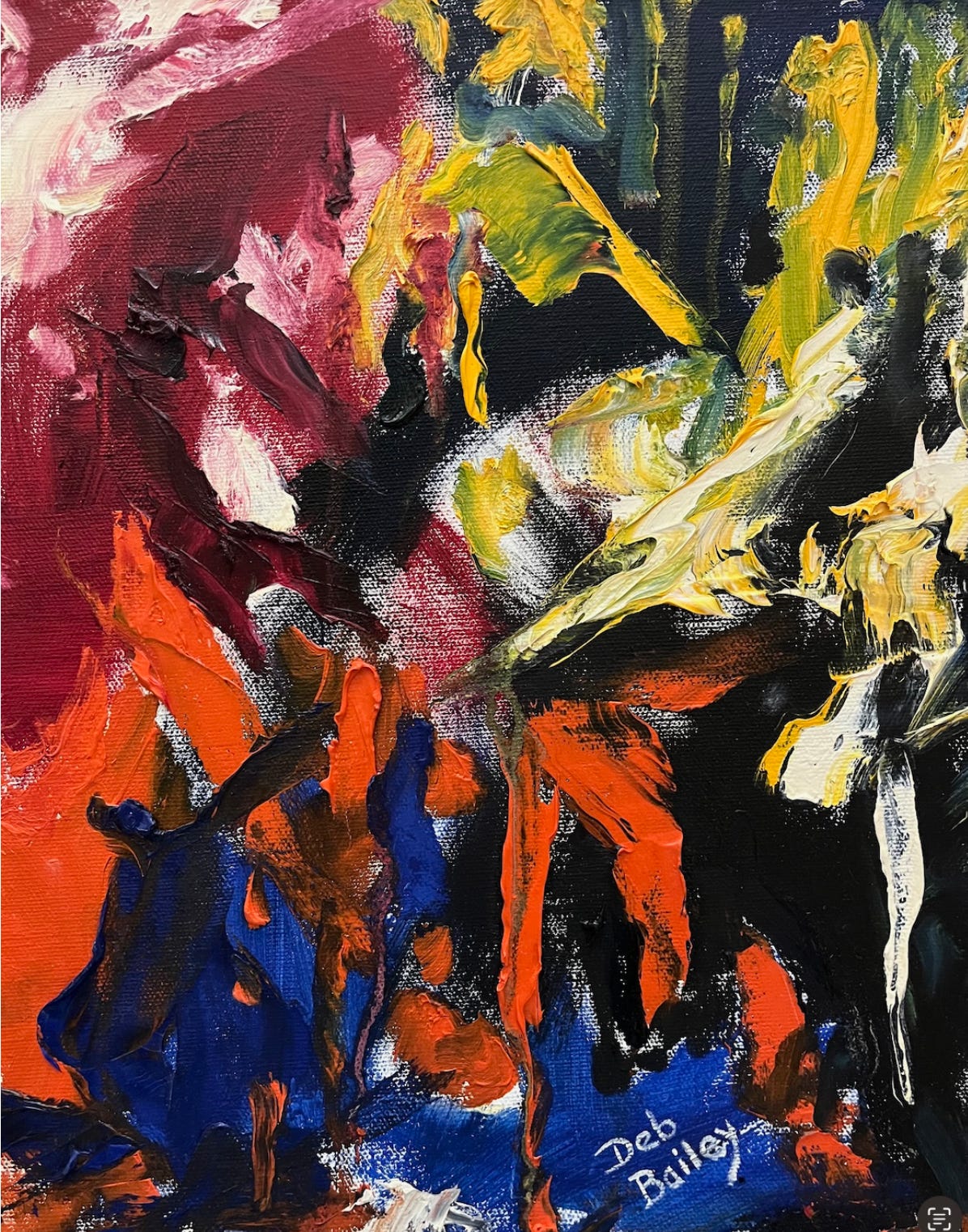
Instead, there was an intense explosion of a whole mess of emotions, ranging from love and grief, compassion and confusion, to anger, disappointment, abandonment, and back again to grief.
 Soul Mosaic