Posts Tagged ‘mental-health’

The Warrior Years – Battling Dad – Part I

February 21, 2026

“She would of been a good woman,” The Misfit said, “if it had been somebody there to shoot her every minute of her life.”

Flannery O’Connor, story, “A Good Man is Hard to Find”

He woulda been a good man if…

It was that same book I was given by one of my elementary school nuns from her college English course. The one that opened my mind to the wide new world of literature. The one I drank up like it was water, and I was dying of thirst.

There was that one story in the book, though, by Flannery O’Connor, called “A Good Man is Hard to Find.” I was both repelled by it because of its violence and unwillingly, but powerfully drawn to it. I could never let it go. All my life, it gnawed at me, but I never knew why.

It was about a family that took a wrong turn on a vacation trip, all because the manipulative grandmother badgered them to go find some old house she wanted to visit. So, to placate her, they made a detour, turned down a rutted dirt road, and ended up in an accident. At the same time, they crossed paths with a killer named The Misfit, who was on the run. Because the grandmother recognized him and announced it, the entire family would end up dead, shot, one by one. The grandmother would be the last one to be killed.

But the crux of O’Connor’s story was about that last moment right before The Misfit shot her. It was in that last second before the bullet tore into her that she finally had a spiritual awakening.

After he killed her, the Misfit observed that “She would have been a good woman, if it had been somebody there to shoot her every minute of her life.” The comment resonated with me for years, even as I didn’t know why.

But I finally understand. She was Dad. He was manipulative, self-absorbed, and thought he was better than everyone else. Smarter. More clever. Just like the grandmother in the story. And the only time he would act differently was if he felt the power balance had shifted against him in an encounter. Then, instead of bullying and being abusive, he would be kind, magnanimous, charming, even. He would behave.

While I don’t think he ever had a change of heart or spiritual awakening, I realized that he “could a been a good man if it had been somebody there to threaten him with jail every minute of his life.”

A purpose, re-examined
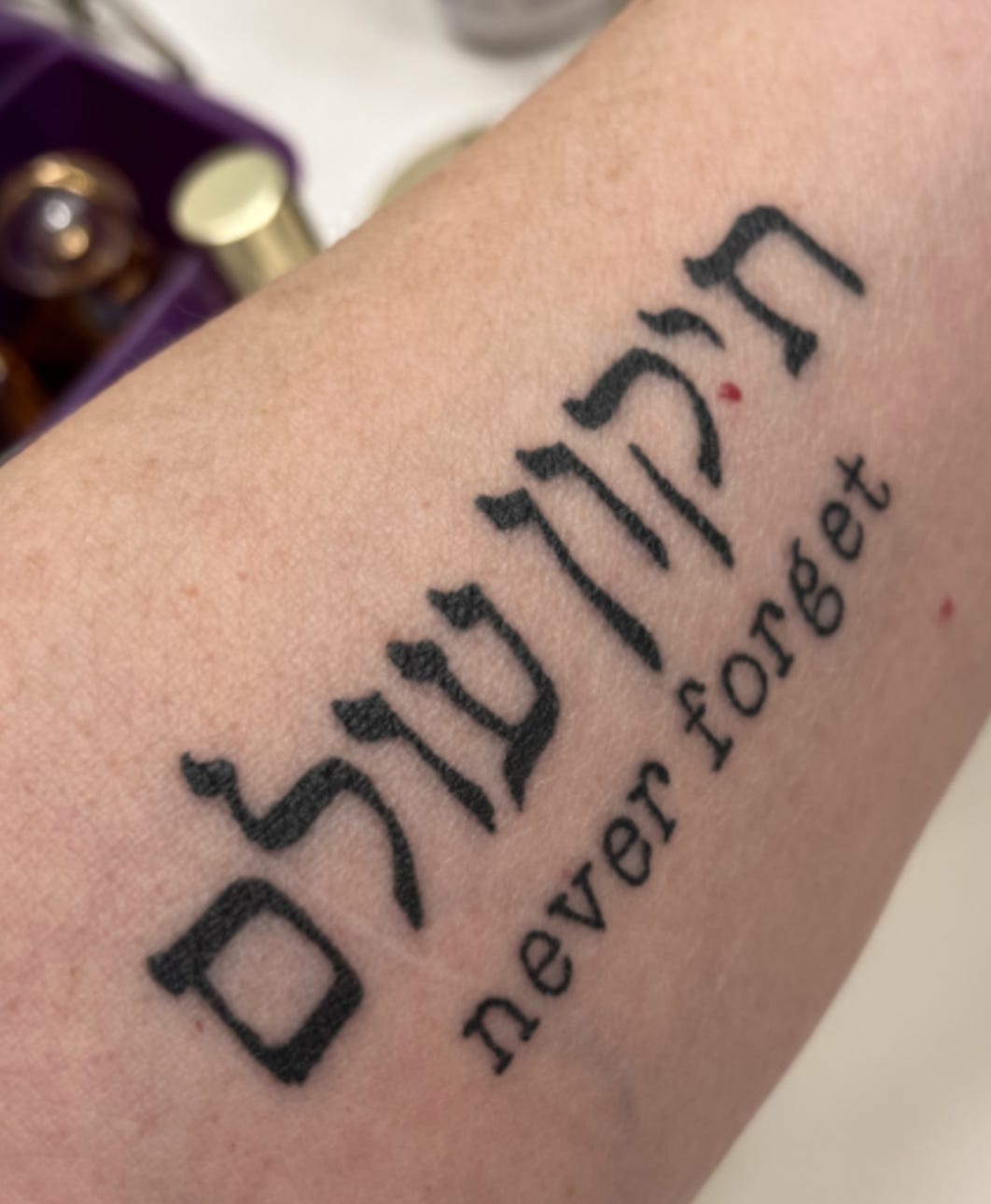
Photo by author

On my forearm, I have a tattoo that clearly states my purpose in life — Tikkun olam — the Jewish directive to “Heal the world.” When I taught science at the museum, my purpose was less about teaching science and more about reaching kids who might be hurting. I did all I could to reach them, inspire them, and heal them.

I am writing this book, these entries, for the same reason. I start by healing myself and making myself whole again, but I also share the story to help anyone else heal.

The struggle here is to tell the story, with deep emotional truth, while protecting the privacy of others. At the same time, I have to tell the story as it happened, and as fairly as I can. This is not about making me the hero.

Cycles of “If only”…

Dad’s behaviors, when I look back, show up as an unchanging pattern of cycles. For example, whenever we went on vacation, the first day was wonderful. He was happy, relaxed, and we were excited. But within the next 24-48 hours, that mood would slip, his irritability would rise, we would walk on eggshells more and more, until the inevitable explosion would take place. Then he would be contrite, calm, and happy, and the rest of the cycle would start again.
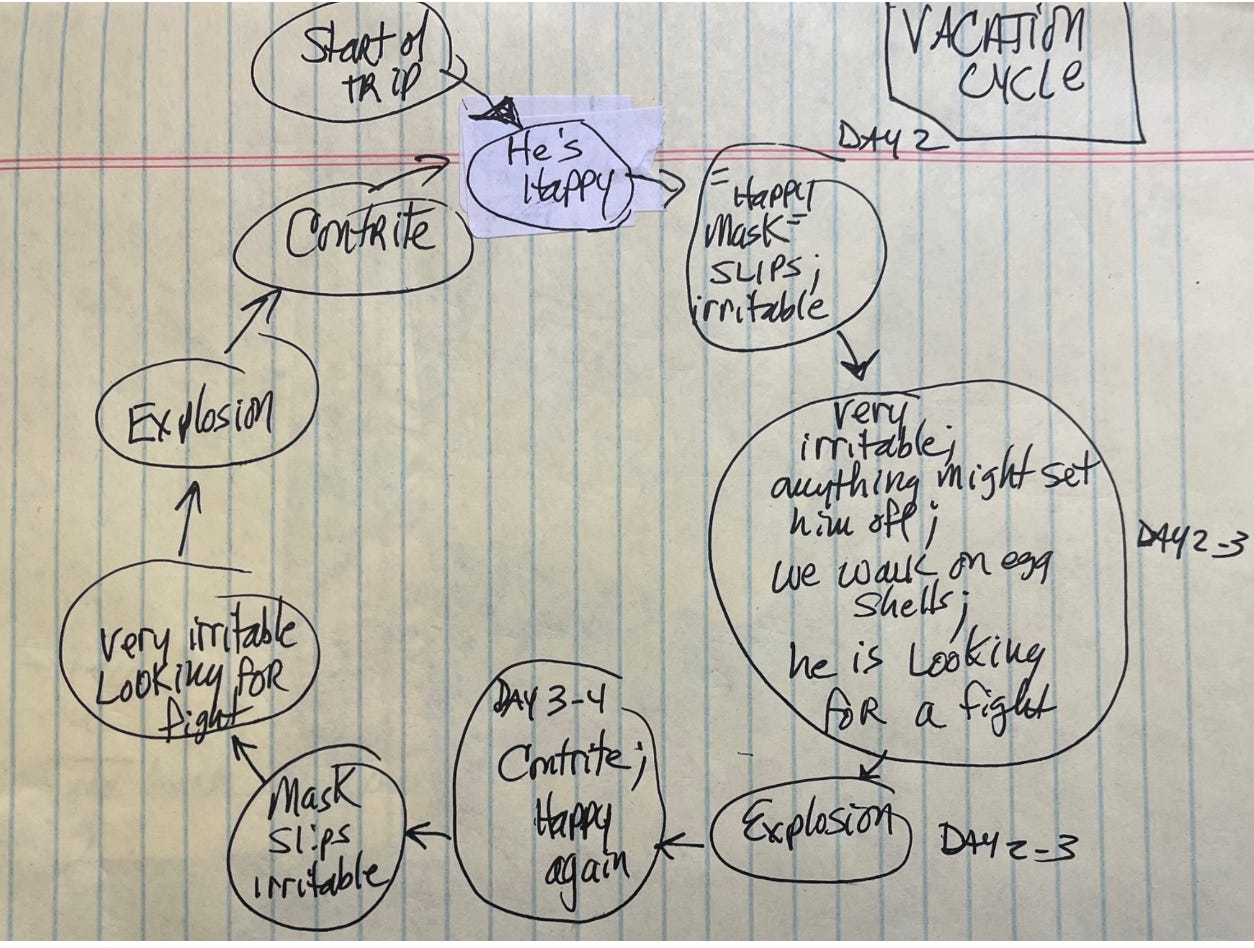
Diagram by author

In the same way as vacations, there was another cycle operating, though I didn’t realize it then. And it was going to play out again and again in a series of confrontations over the next several years.

My goal in confronting him was not to destroy our family, but to save it. I loved my family. Despite all the harm he had done to me, he had also done good things, and I still loved him. By challenging him and trying to open up the silences, I hoped to protect and preserve our family.

Silence had been one of his powerful tools. The rule of the family. In our house, our family system, it was made very clear from a young age that life was meant to be hidden. Secret. Back then, I didn’t realize what was operating or how much harm that silence enabled and protected. But once I got out of the house and began to understand what he was and the harmful things he did, I could no longer remain silent.

“When something exists in a family that is not discussed, it goes into what Carl Jung termed ‘the shadow,’ the unacknowledged aspects of the self…the shadow is called the ‘elephant in the living room.’ Everyone knows that something is wrong, but no one speaks it. Everyone accommodates the presence of what is unspoken and verbally talks around that territory, avoiding it as though there really is an elephant in the living room. Everyone knows better than to cut directly from point A to B because he or she would bump into a huge obstacle. That obstacle is silence; that obstacle is fear; that obstacle is facing the unknown.”

Christina Baldwin, Storycatcher: Making Sense of Our Lives through the Power and Practice of Story, pg 148

My thinking at that time was that if only I could figure out the right things to say or do, I might make him understand. If only he would get help, he could realize how much better our family could be. If only he could see the harm his actions caused and how they needed to change, there was hope for a better life. If only our family bonds, the things that were good, could be preserved. If only. If only. If only.

I didn’t understand then, you cannot make someone change when they don’t want to. There were no “right things to say or do” on my part. And it didn’t matter how many “good things” he did, that didn’t change what he was or what he might be capable of in the future.

So, like vacations, so began a cycle of confrontations over the next several years.

1984 + 1988 – The preceding confrontations

I’ve already written about two times that I challenged him to get help. The first one was in 1984, shortly after I began therapy. The second time was in 1988 when I was pregnant.

The 1984 effort was a failure as he either outright refused or paid it lip service by visiting a counselor once. Then he moved to Texas and refused any help from my therapist to find a new provider for him in Texas.

In 1988, when I confronted him during my pregnancy, he said he would get help. In looking back, I realize he never did apologize. But my therapist gave him phone numbers for other psychologists he could contact, which my father accepted.

At that point, I severed contact with him because I was too busy with my infant son. Whether he used those contacts, I don’t know. I doubt it. In those years, he wasn’t required to prove anything to any authority.

I saw my mother after our son was born, but I did not see my father again until early 1990. By then, our son was over a year old. It was a tentative visit, mostly to see my mother. But also, I truly hoped that maybe there would be a change…a chance for rebuilding our relationship.

It was difficult to know what to do with him, or what to think. He had seemed sorry. Contrite. Kinder. Changed. He didn’t offer any further information, and again, I was so busy with our son, I did not pursue it.

I will note that it is very hard when you have been both abused by someone, and also given the only real “love” and attention in your childhood, by that same person. Yes, he did bad things, but he also did good things. He is your father, and there is still love. And that family loyalty that was drilled in for my entire early life.

In looking back, I can only say it was so confusing. There was no clear guidance on what to make of him. I really wanted things to just “get better” and heal. I’d second-guess myself all the time. Was he a bad person, or just so misguided he thought what he’d done to me was actually some kind of love? Yet, I remembered that Nova Scotia trip years ago, when he admitted he knew he’d abused me.

But lately, he seemed to have changed. I wrestled with doubts. Was it possible he was sorry? COULD he change? Would it be okay because he was older now?

Yes, there was that cluelessness about sexuality in older people. At the time, I thought, well, he’s in his early sixties. Of COURSE he’s no longer interested in sex…right? He was too old. Yes. Clueless.

So it was just such a confusing mess. And again, there was so little known or talked about back then about sexual abuse. I just took it one day at a time.

1993 – The third one

Somewhere in that same period, we moved to North Carolina and were very busy with all the issues and responsibilities I’ve already talked about. Meanwhile, Dad had retired, and so my parents would periodically visit different family members, and there also would be family get-togethers.

Whenever they came down our way, they seemed to be on their best behavior. No angry “second-day-of-vacation” Dad, or any whiff of inappropriate behaviors.

It is that most difficult quandary that the therapist would explain to me, that when an abuser shows both love and abuse, it is the hardest kind of situation to navigate. He said it would be easy if Dad had been all bad, because then you could just walk away with no issue. But when there is goodness and love, mixed in with the abuse, it is the hardest situation. If you fight them, you look unreasonable when they are kind. And you can never be sure which person is showing up or how to react.

I was trying to maintain a connection with my family. For a few years after I first got out of that house, I had shut everyone out completely. But as time went on, I realized that wasn’t the answer. Total avoidance, as if they were all dead, didn’t work. I loved them. While I had no desire to be reeled back into enmeshment, I was trying to find some kind of “middle ground relationship” rules.

We were also trying to give our son some semblance of extended family experiences. There was no chance of that on my husband’s side. He had no siblings or extended family. His parents were older and sickly. If there were to be any extended family connections, it would be with my family.

It was hard, for sure. Our son really liked those visits and loved seeing everyone in the family. And he thought my father, especially, was a lot of fun. I had to balance being constantly on guard with letting him enjoy his grandparents.

The visits were mostly family group get-togethers, and we always stayed at a hotel. It was the best we could do to achieve some kind of “normal,” while protecting. But it drained me. A neighbor of mine at that time observed, after we returned from one of our family gatherings, that I always came home from those trips absolutely exhausted.

As our son started to get older, I would give small amounts of information, a bit at a time, as age-appropriate. Instructions on how his body was his own and what others weren’t allowed to do to him. I’d also explain that Grandpa could be nice, but he had also been abusive and hit us when we were kids. And, of course, we never sent our son for any stay-over visits with his grandparents.

But it was hard. Especially the time our son pointed out to me that he understood that I had one set of feelings about my father, but that he had his own relationship with him, and our son wanted that relationship. On the one hand, it meant Ed and I were succeeding in giving our son that extended family experience he craved. But it made it that much harder to make sure no lines were crossed.

For a few years, things seemed okay. The dad of the past seemed to be absent. He was calmer. Gentler. I wondered if maybe retirement removed some life stressors that had driven his abusive behaviors? Had he gained some wisdom as he got older? I hoped so.

Then a communication with a sibling trashed that assumption. While he was on his best behavior around me, he might not have been so with the others in the family. He was apparently trying to spend time alone with one or another of the kids. Offering to do clothes changes. Offering things that on the surface might be innocent enough, unless you consider that he was a lifelong child abuser. And some of the kids in the family, my son included, were now around the same age that I was when Dad molested me in the car as a toddler. No small trigger point for me.

Also, about that same time, I learned that he had not been to a counselor like he said he would. He brushed it off by saying that he and my mother had gone to see a priest. Who knows if that was even true? And even if they did, to my mind, that was a useless substitute for treatment by a mental health professional for deeply ingrained abusive behavior.

It hit me full force that here was the man who sexually abused me for decades and who had not done any therapy. Given no help, why would he be any different now? He still had to be a risk.

I reacted very strongly. Afraid that I might be overlooking a real problem, I consulted our therapist. His description of my father was chilling:

“…personality disorder…antisocial behavior. Conscience and empathy were absent, or present only in small and inconsistent amounts. Even though he could be kind and caring at times, he had no ability to sustain those emotions.”

That terrified me…and it also made sense. It was why he could start out on our vacations all happy and nice, but by the second or third day, he was back to “miserable Dad,” and there would be fights. He could never sustain good behavior. And in like manner, he never got help for his abusive behaviors. So while he had been acting as the “good, changed” Dad, was it even true? Could he sustain healthy behaviors?

My siblings and I all agreed this needed to be dealt with. So I confronted him, yet again, this time in a letter. I told him clearly that he had failed to honor his word to get help. That meant he was a risk to any kids in the family. Given his failure, I told him that if he touched any of the kids in the family, I would make sure he was prosecuted and sent to jail.

Frankly, I was shaking as I did that. I didn’t even know if I had the strength to go through with that threat. I was still a work in progress myself and fragile. It hadn’t been THAT long since I got out of the system.

My own emotional power was shaky, and my self-esteem was low. Every confrontation with him, with his family system of rules, terrified me and triggered fear, anxiety attacks, and nightmares. He still could make me question my very reality. I’d second-guess my perceptions and feel guilty that I was reading things wrong and creating unnecessary discord in the family.

Also, while we all agreed he needed to be “controlled,” that unity was shaky at best. I’d get comments such as, “You need to get over this,” or “Stop living in the past.”

I’d sit there, totally confused. Was I reading this all wrong? If everyone else felt it wasn’t a problem, and that “those problems” were all in the past, were they right that I was just hanging onto my own issues from the past? Or was everyone just ignoring the elephant in the room, hoping that if nobody talked about it, it would just go away?

I so wanted to let things go. I just wanted peace in the family. But I kept coming back to two things: I knew what he was. I had experienced, firsthand, just how manipulative he could be and how much damage he did. And…there were young kids now. Even if I was overreacting, I’d rather that than risk trusting him.

Sometimes, you walk the path you feel is right, even if you walk it alone. It was just that if you add in all of those issues on top of our marital therapy, jobs, Ed’s parents’ illnesses, and our son’s needs, it was such an overwhelming time.
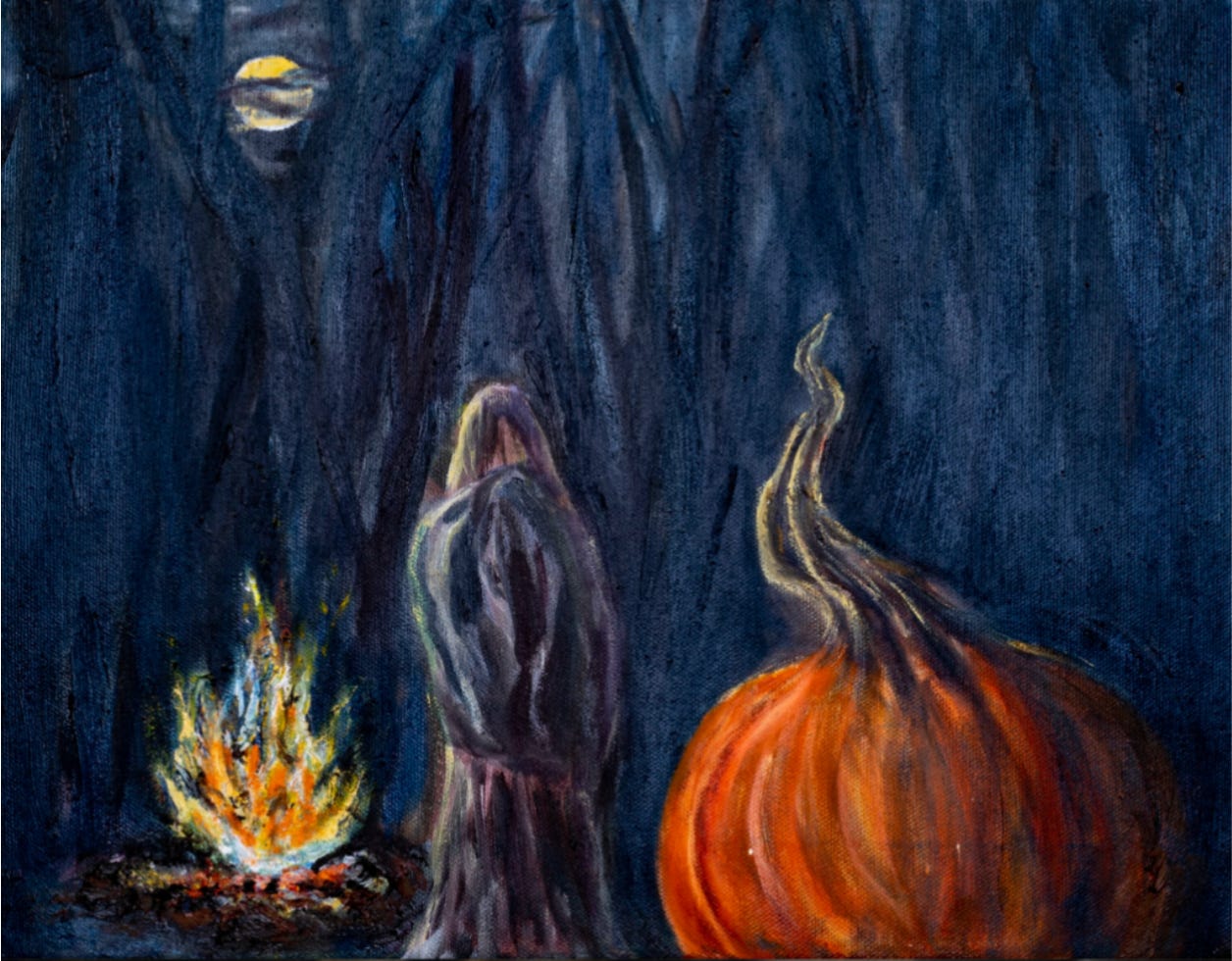
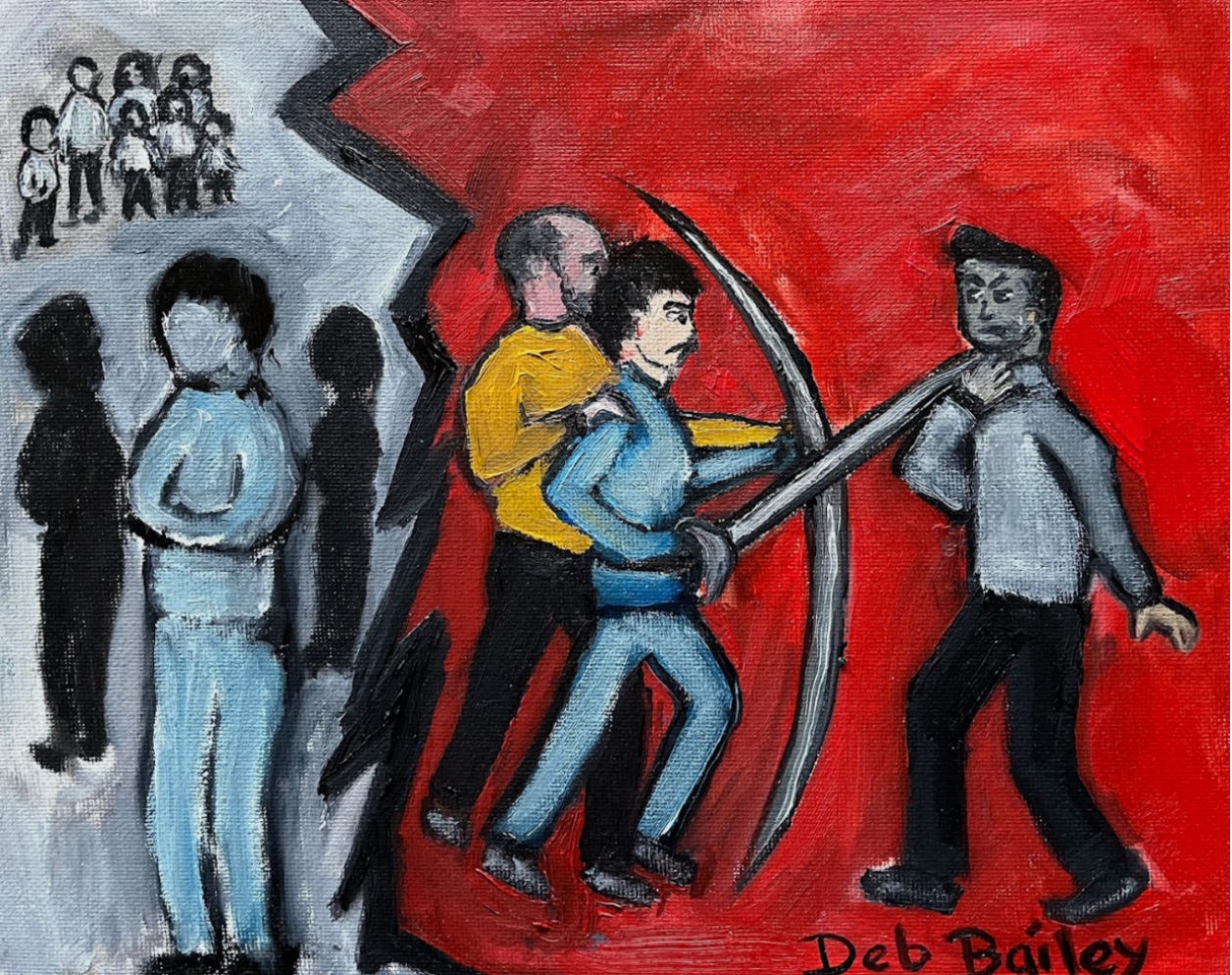
Painting by author

The family system reactions

In all fairness to everyone involved, each was doing the best they could.

Jen Cross, in her book Writing Ourselves Whole, noted that “…sexual abuse doesn’t just happen to individuals…but to families and communities.”

While I’d been my father’s “sexual target” all those years, the energy in the household touched everyone. Each was a victim in different ways. And each had to deal with that trauma and damage in their own way. The reactions to one person speaking up, or another remaining calm, silent, or enraged, can vary widely. So there are no villains here, except my father.

1993 – There will be no more silence on this

Meanwhile, Dad was apparently scared enough by my letter that he made a trip down to North Carolina to discuss my “concerns.” I requested he stay at a hotel. My mother was put out about that because they were retired and had to watch their money. This, despite the fact that they had just bought an RV and were traveling around the country, including to Alaska. But whatever.

I confronted him about the fact that he was trying to get close to kids and be alone with them, things he, as a sexual abuser, had no business doing. I blasted him for not keeping his word about getting help. And I made it clear that a priest didn’t count. As far as I was concerned, he lied. He betrayed. And as usual, there was just silence and secrets.

He apologized for the silence on the subject and said that he was now working with a woman therapist. She had given him a book to read. He promised to speak openly about this to all of us in the family and said he would keep me updated on progress. Before he left, he promised, “There will be no more silence on this.”

And that was the last he ever said about it.

Reflecting on things more recently, I’ve wondered: Had he even gone to a therapist? Or if he did, had he been honest with her? What was this book she gave to him, and did she think a book was enough to unravel the deep-seated problems of a 60+-year-old man who was a lifelong wife abuser and child molester?

But at the time, I took him at his word…even more guarded, but still hoping…

Words from the Universe

Even as I struggled to stand up to him, there seemed to be help “from beyond.” I can look back and feel there were times the Universe sent messages not to give up. I’d come across some powerful quote, a line from a book or movie, or a song lyric, that seemed to be talking directly to me.

One time, it was Madonna’s song, “Live to Tell.” To this day, that song just strikes a raw nerve in me. Its haunting lyrics just screamed out about men’s lies, secrets, and who would tell the truth.

Another time, it was a quote in an article:

“Be the woman you needed as a girl.”

(Attribution: Often attributed to various motivational writers, bloggers, and influencers, including blogger Caprice Kwai and [lifestyle writer Jayne Moore](https://www.jaynemoorenyc.com/blogs/news/be-the-woman-you-needed-as-a-girl). )

There was even Dad’s programming in me, speaking from my childhood. He drilled in things like: “You’re the oldest. You know better. You’re responsible for them.”

So, I “stood guard,” always watching and listening for any of those “familiar signals” that might indicate kids were at risk. And no matter how afraid I was of him or of a confrontation with him, if I saw something “odd,” I was going to challenge him. If his “feelings got hurt,” well, he lost the right to be given the “benefit of the doubt” a long time ago.

At that point in my life, even if I was struggling to build emotional strength, I was physically strong. I was in my prime, and that was the one quality I could always count on. If I needed to confront him, I’d harness that part of me that was the fierce, male energy. Then, afterward, I would collapse and have to rebuild myself again. But at least I could always draw on that physical power. It was my battle armor, just like Maureen Murdock wrote about in her book, *The Heroine’s Journey*:

“Our heroine puts on her armor, picks up her sword, chooses her swiftest steed, and goes into battle.

Murdock, pg 6-7,

Painting by author

It’s just that underneath that armor, I was still quaking jelly inside. And my biggest fear was, “What happens if I am no longer strong?” What if my fears got the better of me? But so far, I’d been able to keep fighting him. I stayed focused on the kids, “put on my armor,” and pushed my fears to the background at the moment of battle.

My hope was to convince him that he was no longer the only power base in the family. There was a lyric in the song by the Police, “Wrapped Around Your Finger,” that I strived for — that moment when the manipulator turns white because he realizes the tables are turned, and he’s no longer in control.

So every time one of these stray messages floated into my consciousness, I absorbed them like food into a starving person. They were my gifts from God.

All through the 1990s until the early 2000s, I would remain “on guard.” Only then, with kids growing older, and Dad’s health and cognition starting to fail, did I dare start to stand down.

But before that time would come, there would be one more confrontation, the largest of all, in 1995.
The Warrior Years – Time Out for a Definition – What is a Family System?

February 19, 2026

A need for clarity

Before I go on with my story, I need to clarify something.

As I write, I usually speak of my “family,” either in terms of my husband, son, and myself, or my family of origin – my household growing up. And I try to be mindful to be clear who I mean in each specific instance.

But I will also sometimes mention the “family system,” and it occurs to me I never explained what I mean by that. So, before I continue the story, a clarification is in order.

My own impressions

First, I am not a psychologist or mental health professional, so I can only speak from things I have learned in therapy, read in the research, and then applied to my own situation.

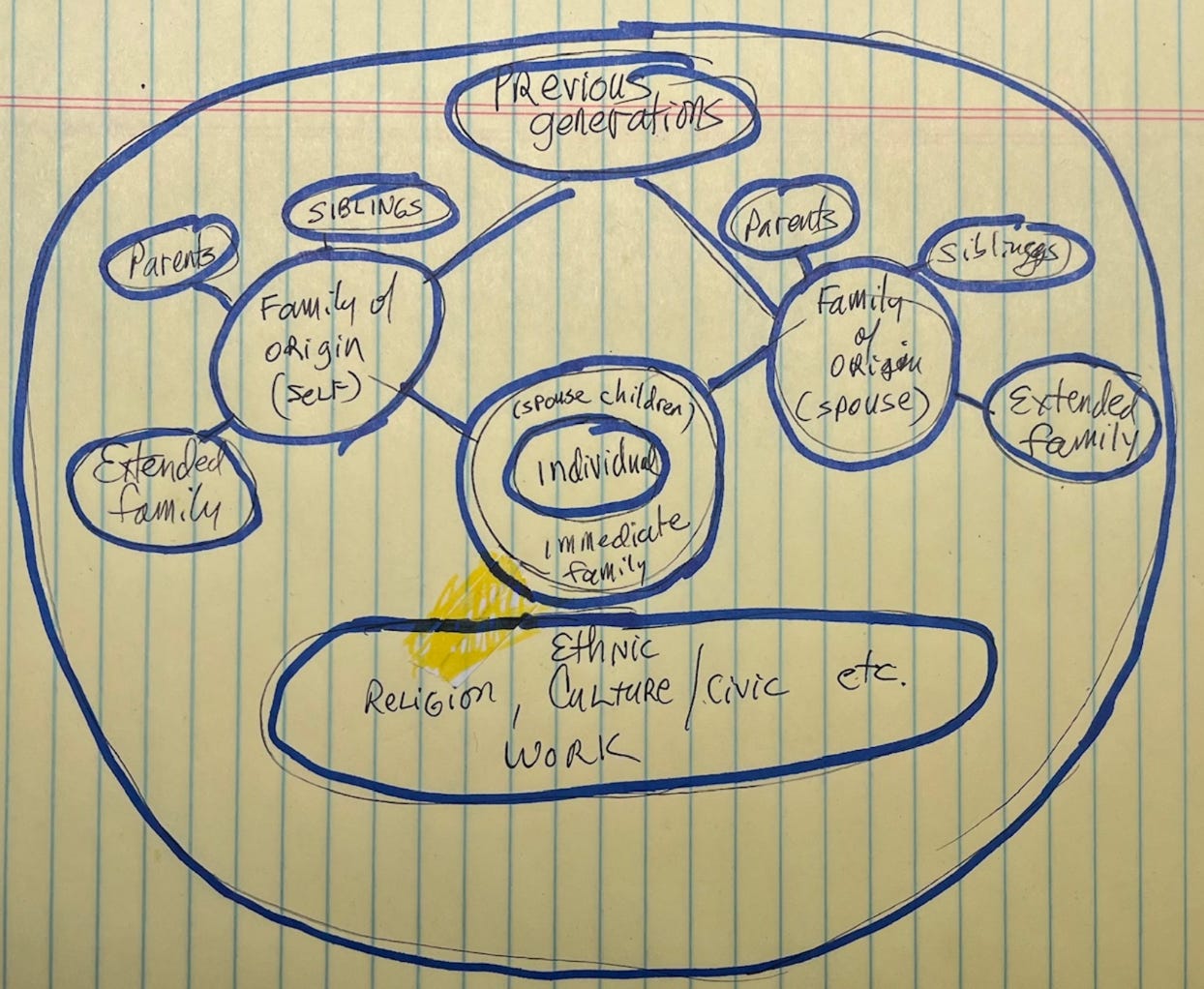
For example, as part of the PAIRS therapy classes that Ed and I took to save our marriage, we had to create family charts that went back 2-3 generations and that identified successes, addictions, abusers, marital difficulties, and such. It was an exercise to see, at a glance, the patterns and behaviors that seemed to operate, both in an immediate nuclear family and across generations. By observing such patterns, it helped us understand issues that came from both of our family histories that were possibly affecting our marriage.

For our work in this, the “family system” included the following:

  • Not just the father, mother, or specific child, but all in a household, and sometimes extended family members
  • The rules, behaviors, and culture of the whole family, again, not just the immediate family, but also intergenerationally
  • Does the system allow each member to become their own person, or are the members forced to serve the needs of others, enmeshed in others, and unable to make a healthy separation?
  • The rules, behaviors, and culture of the “surrounding ethnic, religious, civic, and cultural” communities that the family lived in and was affected by
  • It is a living “emotional” system, like a biological system, that requires “homeostasis” – that is, everything has to balance out. If one part of a system is extremely out-of-balance, the rest of the system has to compensate or over-extend in order to keep the whole in balance. In the case of abusive households, abusive persons create a large imbalance that favors themselves. This means that the rest of the family members in that system have to work overtime or be pulled way out of balance in order to compensate for the abuser. All of that adversely affects the health of the other members in the abuser’s family.
Diagram by author

So the things I have defined are my own interpretation, for my own use, and might differ from the formal academic and psychological theories, which I give a bit of info on next.

Google AI’s thoughts

If of interest, I did a search on this topic, and got this information from the Google AI:

“A family system is a therapeutic and sociological framework viewing a family as an interconnected, interdependent emotional unit, rather than just a group of individuals. Behavior, actions, and emotions of one member affect the entire group. Key concepts include, but are not limited to, boundaries, roles, and maintaining homeostasis (equilibrium) within the family. 

Key aspects of the family system include:

  • Interconnectedness: Family members are deeply connected, with one member’s actions triggering responses from others.
  • Emotional Unit: Families often operate under the same “emotional skin,” where stress in one person affects the whole unit.*
  • Patterns & Roles:
    • Behaviors are often repeated through generations (generational patterns) or assigned (e.g., caretaker, troublemaker).
  • Structure: This includes nuclear, extended, or blended families living together or operating as a unit.”

Formal Family Systems Theory research information

Lastly, for anyone wanting to dig deeper into the theory of family systems, I would suggest seeking out a psychology professional. Also, here are some links for background information. Family systems theory was developed by Dr. Murray Bowen, and it focuses on the way relationships affect the well-being and mental health of the individuals in the system.

https://www.theraplatform.com/blog/677/family-systems-theory)

https://www.psychologytoday.com/us/blog/your-emotional-meter/202311/understanding-bowen-family-systems-theory

https://www.thebowencenter.org/

https://pubmed.ncbi.nlm.nih.gov/34823190/

https://www.thefsi.com.au/what-is-bowen-theory/

Now, back to the story.

The Warrior Years – What About Women?

February 14, 2026

Rebirth

As impossible as it may have seemed, we made it. Despite managing marriage, parenthood, jobs, caring for his parents, and fighting mine… despite all the odds, Ed and I stuck with therapy, and it started working.

In looking back at my journal entries and talking with Ed about all the things I’ve written here, we both just shook our heads. Both of us agree that we don’t know how we did it, and that it is flat-out amazing that we made it through those years. But we did. And we are both deeply grateful now.

As our love and marriage grew stronger, it would show up in small ways. It was especially telling on one occasion when we bought a new tree for the front yard of our home. Our son said that because the tree was part of our family, it needed a name. So he promptly called it “Ralph.” I have no idea why.

But then Ed spoke up and added to its name the words, “the passion tree.” Ralph, The Passion Tree. I looked at him, and he just said, “Ralph is a symbol of our growth…a testament to the changes that are happening in both of us, and in our marriage.”

So, Ralph was rebirth…and so were we.

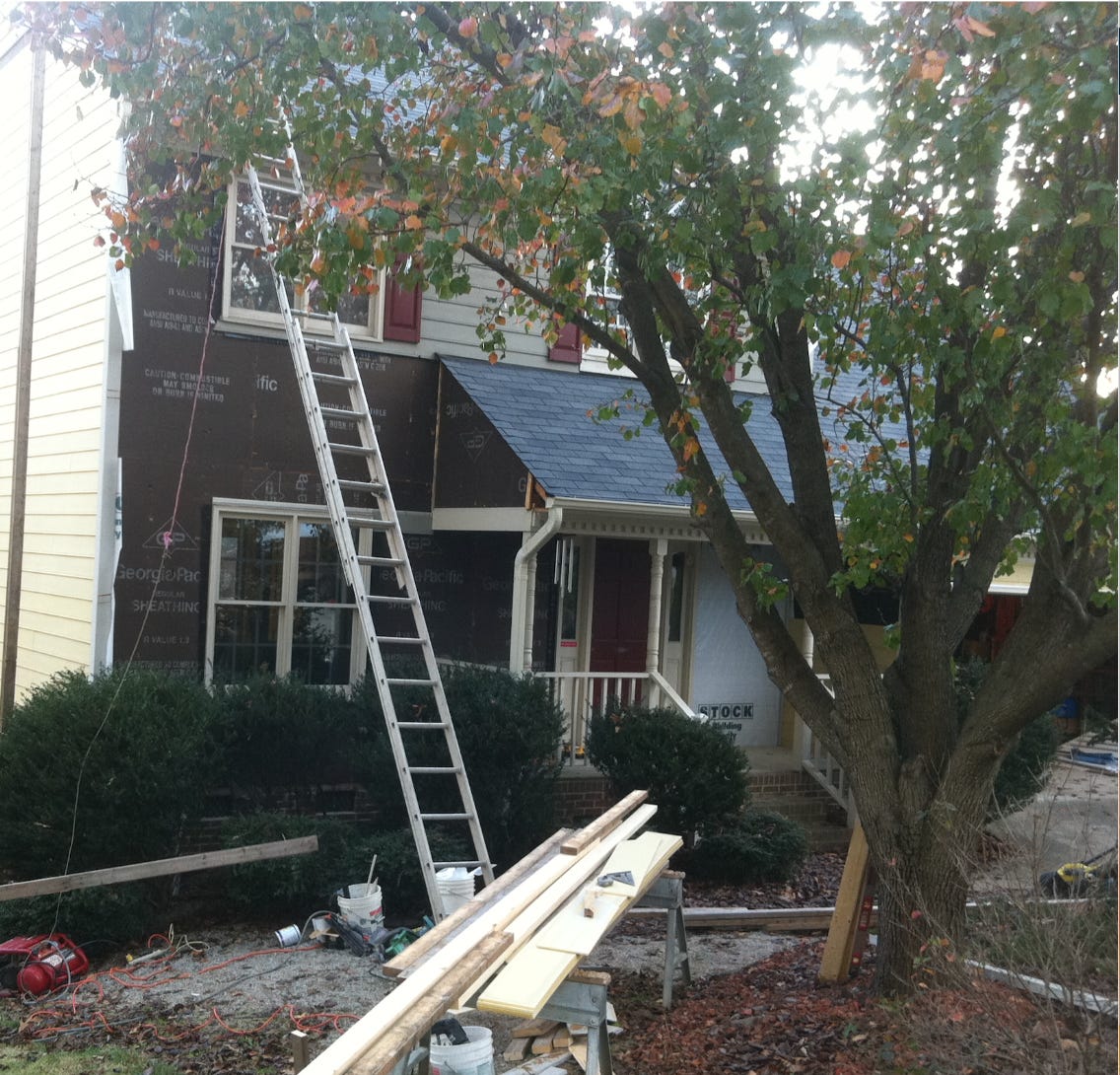
As an aside, Ralph grew from a 4-foot sapling into the strong tree pictured below, in spite of hurricanes, winter storms, and even the chaos of house repairs going on all around him. He thrived despite, or maybe because of, challenges. I think the same has been true of Ed and me.

With things between the two of us settling into a real partnership and a place of peace, another issue rose to the surface that needed to be dealt with.

Photo by author

So what about women?

My husband saw that title, laughed, and said, “That is my question every day!”

It was a moment of comic relief as I tried to tackle my Achilles-heel topic, friendships with women.

My track record wasn’t great. I was a caring person, capable of much love. I was honorable and loyal. And I wanted friends, and could be a good one. But things weren’t going well. And there were so many mixed messages operating in my head. Some came from Dad. Some from Mom, or maybe more to the point, the “lack of Mom.” And some from the unanswered questions regarding my friend and our sexual relationship.

Early programming

Dad presented a couple of problems. For one, he had drilled into me, his rules: “Don’t grow up to be a stupid woman,” and its corollary, “Don’t be weak.” He had abused and demeaned my mother. I hated him for how he treated her, and I was angry at her for allowing it. I definitely saw her as weak and was determined not to follow in her footsteps. Hence, I had my own rule: “Don’t grow up to be my mother.”

He also interfered with a very primal need – the formation of a mother-daughter bond. To be denied that connection denies any honoring of, or even awareness of, the feminine side of life. He denied me a good relationship with her, so I never learned that there was a value to it, even as I felt its loss under the surface.

She, in turn, was passive and did not protect me or try to have a deep bond with me. That reinforced my dismissive attitude toward the value of women. What I was left with was the message that power = men. Weakness, being abused, useless, and powerless = feminine. Bottom line – be male in your approach to life.

Even those old Slovak women who always said, “I str-r-r-o-n-g like bull!” were ultimately still at the mercy of the men they married. Their strength was in enduring the garbage their men handed them.

There was one exception to all of this – my high school teacher, Terry Doyle. She had shown me that there were some women who were powerful and accomplished. So if I honored anything of the feminine side, it was her role-modeling. But beyond that, I wrote off any women who could not demonstrate that quality.

Add to this the fact that during those years, I was standing guard against Dad constantly, to make sure our kids would be safe. So I was totally focused on being a warrior, girded for battle. To be weak was unacceptable.

I operated totally from the mindset that no matter what came up, as long as I was as strong as any man, I could bull through anything and keep going. As long as I was “strong,” I was safe. As long as I was strong, I could keep others safe.

In fact, I remember thinking one time, “What happens when I am no longer strong?” That thought terrified me, and I blocked it from my mind as some long-way-off-in-the-future possibility. That possibility would come up sooner than I would expect, but more on that later.

While those rules served me well at that moment against him, as far as the rest of my life, they did not. Tough is a brittle form of strength. That approach leaves no room to flex or bend, no softness to catch you and hold you in the vulnerable moments. And most especially, no awareness that vulnerability was important and necessary in life.

As far as “feminine qualities” in my life, I could feel and allow things like compassion, empathy, and gentleness in my heart. And I don’t know that I considered them “feminine” anyway. I think I thought of them more as qualities befitting an “honorable” person. It was kind of like a “chivalrous” approach. I was a warrior when I needed to be, but could be kind where it applied. I didn’t bully or take advantage of someone weaker than me. So, honorable.

But vulnerability? That was an ultimate feminine quality, and it was a non-starter. That represented danger and weakness, being conquered and controlled. So, risk being vulnerable? Never.

It never occurred to me that vulnerability WAS strength and required courage. That one could employ the idea of Yin/Yang – the balanced use of both the forceful male energy as well as the softer feminine. But then balance was a concept never recognized, respected, or taught in our house. In our house, battles just had winners or losers. You were either strong or weak.

The ultimate quandary

So with all these threads woven into my psyche, I was not very adept at knowing what to do with women. And because of that, I was facing the biggest irony in my life.

Even as I either ran from, feared, despised, or refused female friendships, I also so desperately wanted and needed them. The hunger lay beneath the surface, and I was clueless that it was driving both my attempts to reach out and hampering my ability to be successful. I didn’t trust any of it. In fact, even though I didn’t realize this either at the time, I didn’t even trust myself.

Who and what was I?

If I tell you who I am…who I REALLY am, will you still be my friend?

Women. The list of issues was long.

I made “friends” easy enough. I wanted to have friends. But I can also look back now and see the patterns. I realize I was looking for certain things in friends, all things related to my own life wounds around “Mom” and “best female friends.”

I wanted a mom, a mentor to guide me and answer the so many questions I had about life, questions that I could never talk to my own mother about. I wanted someone I could tell anything to without shame, self-consciousness, or feeling judged. And I had a deep need for mothering, protection, and the “I’ll-love-you-no-matter-what” type of loyalty and devotion. All things my mother never gave.

And then, regarding mothers, I also wanted to save them. My mother was wounded, weak, and trapped, and I had to abandon her when I left that house to save myself. On some level, I felt awful about that, and looking back, I realize I sometimes befriended women who I sensed were hurting or struggling with something in life.

While I couldn’t save my own mother, maybe I could stand by that friend so they never felt abandoned? I knew what abandonment felt like in life, and I never wanted anyone else to know that despair. If I could give them support to take charge of the issues in their lives, unlike my mother, who never did, maybe they wouldn’t end up like her?

It was also partly a cross between that honorable, chivalrous, warrior mentality of always being there for a friend in need, and those early messages I learned in church when I was growing up. I had internalized Jesus’ message of “Greater love had no man than that he lay down his life for a friend.” So those ethics were as deeply ingrained in me as the messages Dad had drummed in.

Then there was that other big lack in my life – that fun, totally best female friend of adolescence. The friend you would die for. Share anything with. Giggle over boys, discuss how to kiss them, how to do makeup, whatever. I never had this, and on some level, missed it even if I didn’t know it or admit it.

And there was the huge well of shame. I carried secrets. No one knew the kinds of things I’d done in life or had to do. The self-hate I felt because of that past. Even if a friend DID like me, would she still feel the same way if I told her the WHOLE story?

It was not a prescription for success. I wanted to be able to just tell a friend all the secrets of my life. First, it was like a test of my worth: If I tell you who I REALLY am, what I’ve done, will you still be my friend?

Second, I wanted a woman’s perspective on the things I’d done in life. I had a therapist, but he was male. And though I did work with a woman therapist and a women’s group for a bit, I can look back and know it wasn’t enough. I wanted the compassion and caring of a close friend. Empathy over what had happened.

So that hunger under the surface for a mom and best friend drove my interactions with an energy and intensity that either put people off or gave the wrong impression. If I shared that I’d had a sexual relationship with another woman and her husband, I wanted acceptance and answers as to why it had happened. But would they know that? Or would they think I was looking for another one of those relationships?

If I wanted a friendship with someone in particular because she seemed kind, protective, or fun, did my neediness show? Those emotions can overwhelm someone and drive them away. People sense a need that is “too big,” that they know isn’t about them, and that they cannot fill. So they back off.

When friendships wouldn’t work out, I would feel like a true failure. Broken, rejected, and even less willing to trust someone in the future. So, I would just give up for a while. Until I met another person who truly seemed like THIS TIME, the friendship could work. But I would navigate it all so mechanically, in such a klunky way, all because of that giant well of hurt, abandonment, and longing for that feminine connection.

Did I understand ANY of this back then? No.

Nor did I understand the source of the fear lurking in the back of my brain about that earlier friendship. Could that sexual relationship issue from the past rear its ugly head again? That had been such a powerful force that came out of nowhere and blindsided me. I wasn’t looking for it now. But could it happen again anyway? I was terrified.

So, I talked with Ed about it.

I know who you are

“So you aren’t worried?”

“No.”

His response amazed me. “But…why not?!”

“Because I know you…I know who you are.”

I had shared my fears with Ed about not knowing why that sexual relationship with my friend had happened. If I didn’t know that, would it happen again? That he wasn’t worried mystified me.

But there it was – the crux of it. Or at least part of it. HE knew me. But I had no idea who I was. I felt like someone who’d been caught in the vortex of those powerful life forces. And I never wanted to be at the mercy of that again. But how could I be sure?

I only knew I was battling self-loathing from the past. Confusion over how things could just blindside you. Confusion even about my own identity at that point. I knew I had always found men…the male body…the draw for me. And still did. So WHY did I end up in a sexual relationship with a woman? Was I “bi?”

But then, even that wasn’t the real issue. Sexual identity didn’t matter. Because at the end of the day, I was committed to my husband, totally. I knew we were soulmates. But I was afraid that whatever powerful outside force that drove me before might someday come along again and put things at risk. Did the power of sex allow for choice?

Ed looked at me with no concern, almost mystified at my own frantic worries.

“Look. We committed to each other. And certainly, there are times when we might find ourselves attracted to another. That’s normal. But we chose to be together.”

I calmed as I listened to him. Everything he said was absolutely true.

“Our marriage is about so much more than just sex. And we didn’t get married to step out on each other. If that changes down the road, then we need to have a serious conversation about our future.”

Again, all true. There were no secrets between us. And there had never been any betrayals. But I marveled at his certainty. And trust. Not of himself. But of me. The truth was, he DID know me — frankly, he’d always known me better than I knew myself.

“I think you see sex as some all-consuming, uncontrollable, outside force. It’s just sex. And you can choose or not choose. But you ARE in control. It’s just that all your life, your father taught you that it was uncontrollable.”

That one was like a rap on the head that snapped me into awareness. He nailed it. I DID always see sex as this “energy” to be feared. Something “outside of me” that had all the power.

But then, given that it had always been forced on me, why wouldn’t I think of it that way? Dad had conveyed it as a “must have,” the most important thing at all costs. So, of course, I would see it as having all the control over a person. It sure did for Dad.

But Ed was right. That wasn’t who I was. I didn’t want anyone else. I never did. In my fear, I was looking to protect our commitment. Yet that still left the question, if sex was controllable, why had that episode happened with my friend and her husband?

I sensed that the key to putting this to rest was rooted in a need to understand it all.

It was EXPECTED…

In sharing all of this with our therapist, he wasn’t the least bit surprised…or disturbed. In fact, he said it made total sense.

I was glad it made sense to somebody.

First, he put sex in its proper place. “Nobody NEEDS sex to survive.”

Wow. Given Dad’s driven approach to molesting me, THOSE words were revolutionary.

“You need food. Water. Air. Sleep. Those are survival. Sex, while nice, is NOT required for survival.”

My mind reeled not just at that fact, but that here was a MAN saying that sex isn’t everything!

“Second,” he said, “that relationship you had was a natural outgrowth of what you went through. In fact, I am just amazed that, for what you survived, you were even willing to let another human being close to you. Despite it all, you were willing to be open to take in ‘love’ from someone. That was amazing. You were RESILIENT.”

Resilient…I was speechless. I had carried such shame, and here he was complimenting me. And I was just amazed that not only was that whole past relationship something he actually EXPECTED, but that he even saw something POSITIVE in.

He went on to explain that because I’d been denied the chance to go through that period in early adolescence of exploration and experimentation, I didn’t have a chance to learn “who I was.” He said those are the years when teens start to figure out who they are, who they are attracted to, and their sexual identity. It’s a time to experiment to find out what is right for you. I hadn’t gone through that, and there was no “getting around that.” If you didn’t go through it then, you would have to later. And since I didn’t get to experience that in my early teens but later as a mature sexual adult, it made total sense that the relationship turned sexual.

“So even though you were an adult at the time of that relationship, emotionally, you were still a child.”

I just sat there taking it all in. At that point, he thought I would benefit from working with the women’s group there and referred me to the therapist who led the group.

Terror returned. It was one thing to say these things in the privacy of our therapy session with just the doctor, my husband, and me present. But now, tell these things to a whole group of women? Would they judge and shame me?

So I arranged for a private appointment with the therapist who led the women’s group. I wanted to get her take on things.

The therapist weighs in

“So. When am I supposed to be shocked?”

The therapist smiled, adjusted her glasses, and looked across her desk at me. Her eyes, though boring right into mine, were filled with kindness.

“It all makes perfect sense. It’s not a problem.”

As with our regular therapist, I just sat there amazed at the “normalcy” that she viewed all of this with.

“In fact, if you had told me you never experienced this kind of relationship, I would have thought you were lying.”

It seemed that everyone else…but me… understood why I had responded the way I did with my friend.

The doctor continued. Even though I was in my twenties at the time of that relationship, I was emotionally a pre-adolescent, a phase of life development my father had prevented me from going through.

“It is not uncommon for teens, and especially teen girls, to go through a phase of falling in love with their friends. A same-sex attraction sometimes. At that age, it might or might not be acted on, and eventually, the teen discerns who they are and who they are attracted to. You had not been allowed to go through that phase until you were an adult. So when you go through that phase in an adult body with adult needs, it isn’t unexpected that it becomes sexual.”

Emotions swirled through me. Gratitude for such logical, helpful information. The ebbing away of all that shame and guilt I’d carried. Consternation at all I hadn’t learned in life. Relief to understand, finally.

Regarding relationships, she explained that Dad’s abuse of me made so much of my early programming about relationships sexual. I had little role-modeling for different kinds of relationships, i.e., sexual, platonic, friends, different kinds of friends, etc. So I was just trying to figure out my way around all of this.

And as to sexual identity, she added that nothing in life is black and white. Sexuality is on a continuum, with very few people being either strictly gay or heterosexual. Most fall somewhere in between.

As she spoke, I could feel some of that terror around my whole history subside. There was so much I hadn’t known or understood about what forces were driving me at that time. Her kind explanations made so much sense. And even about one’s identity – if everything else in life was on a continuum — weight, height, looks, etc., why not sexual identity?

When we finished our session, she had two requests of me. She wanted me to share my truth with a couple of close friends. She felt it was important that I be who I was and not be ashamed. Also, she wanted me to share all of this in the women’s group because she felt there were others who might benefit from hearing my story.

In spite of wanting to run the other way, I did what she asked. It was a first attempt to stretch my courage and ability to trust other women. And also to see that true friends would not be at all put off by my truth, which they weren’t.

Also, her requests gave me my first experience with another revolutionary concept — vulnerability. In contrast to the belief system in my house that to be vulnerable was to be weak or “too sensitive,” I started to realize just how much strength and courage it takes to be vulnerable to and open with another. That is a trait definitely NOT for the faint of heart.

Since then, I have had other occasions to face being open with friends. And sometimes, that openness would be “misunderstood.” But then, maybe those individuals were never meant to be true friends after all.

But each effort was another lesson in learning the art of friendship. It would take years. A lifetime of closely held shame, fear, and defensiveness doesn’t melt away after one effort. But it was a beginning.

So why tell my friends, or even write it here, now?

Because…it was my life. My truth. And it didn’t deserve to be shamed by me or anyone else.

Because I am tired of carrying secrets.

Because I don’t want to live behind a facade or some fairytale story, I didn’t live when telling people about my past. I don’t need to proclaim it from a street corner to all.

But if I am to be free of the ghosts of the past, I just need to…be…me. And end the shame and the hiding. I didn’t choose my past. He chose it for me. But I CAN choose my present.

As to friendships in general with women, I would still have more to resolve yet. The mechanical approach, insecurity, and clinginess still needed healing. But at least this one question about why that relationship happened had some answers. And I could begin to make my peace with it.

Resilience

In a Fresh Air interview with Tonya Mosley, Jane Fonda talked about her own broken relationship with her mother, and about the struggles it caused. They came to the topic of resilience, and Fonda shared what she learned in her own sessions:

“Resilience is such an interesting thing…resilience is when a young child who is not getting love at home kind of – there’s a radar that’s scanning the horizon. If there’s a warm body that maybe could love her or teach her something, you go there. You find love where you can. You find support where you can. That’s a resilient child.”

Fresh Air Interview – 9/2/25 Jane Fonda with Tonya Mosley

So, to quote Ed’s and my therapist, I was …resilient. I had been brave enough to risk letting love in from someone.

Instead of a condemnation, it was an affirmation of …strength. It felt so good…

Now, having laid out all the many things happening during the early years of our marriage, the next item is about dealing with Dad, and those warrior years of adulthood…

The Warrior Years – The “Onion” That is Therapy

February 12, 2026

These current entries are taking more time and thought to write. There were so many things going on simultaneously during those years, complicated and all knotted together. In order to share something meaningful and coherent, I have needed to reflect deeply and not rush the process.

In the last two pieces I wrote, I spoke of my husband and me managing many priorities, and just finishing the marriage-skills classes, as well as my finally ending a friendship that was not working.

To continue with the story thread, I will begin with the onion that is “therapy.”

The life of an onion

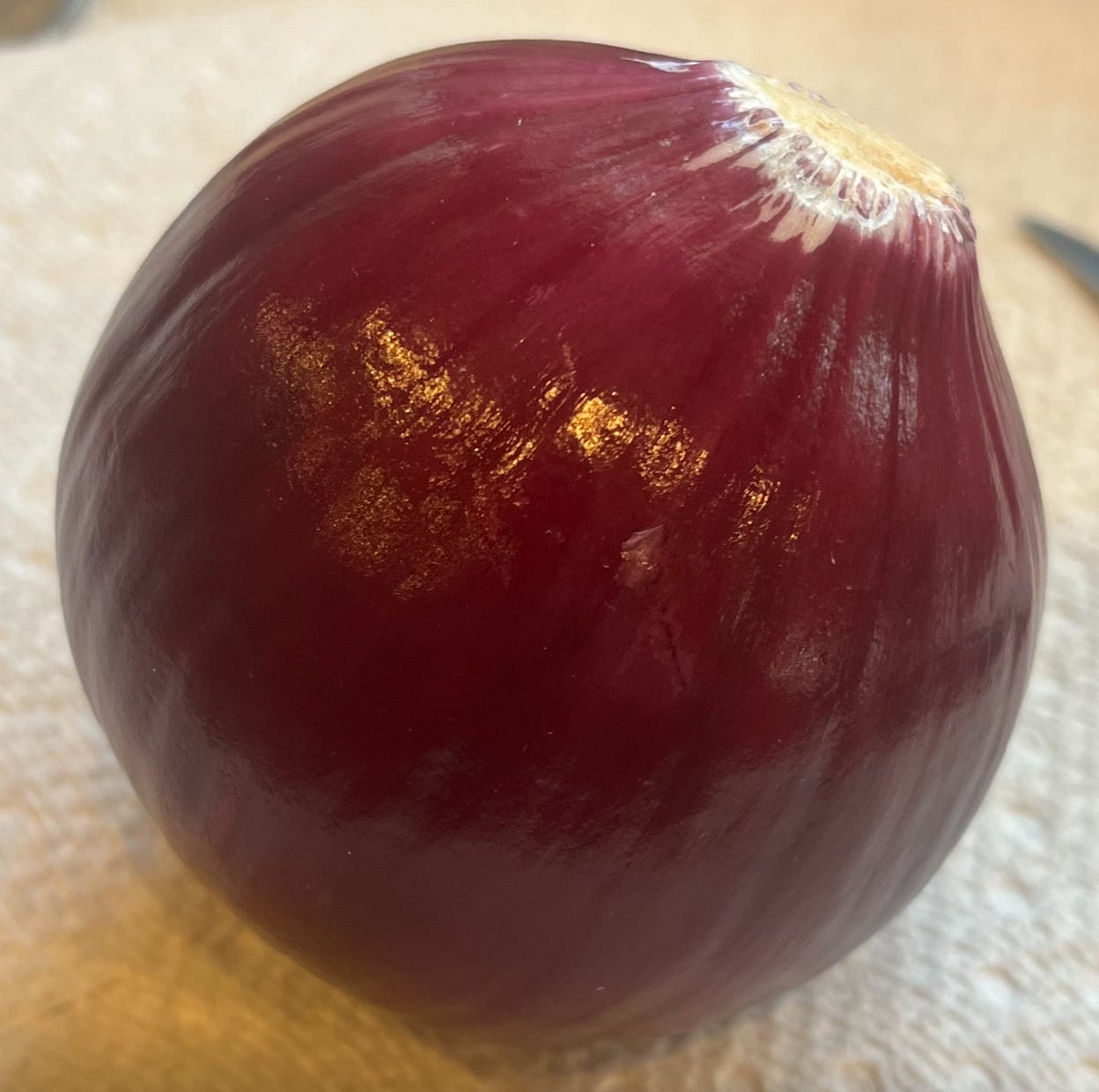
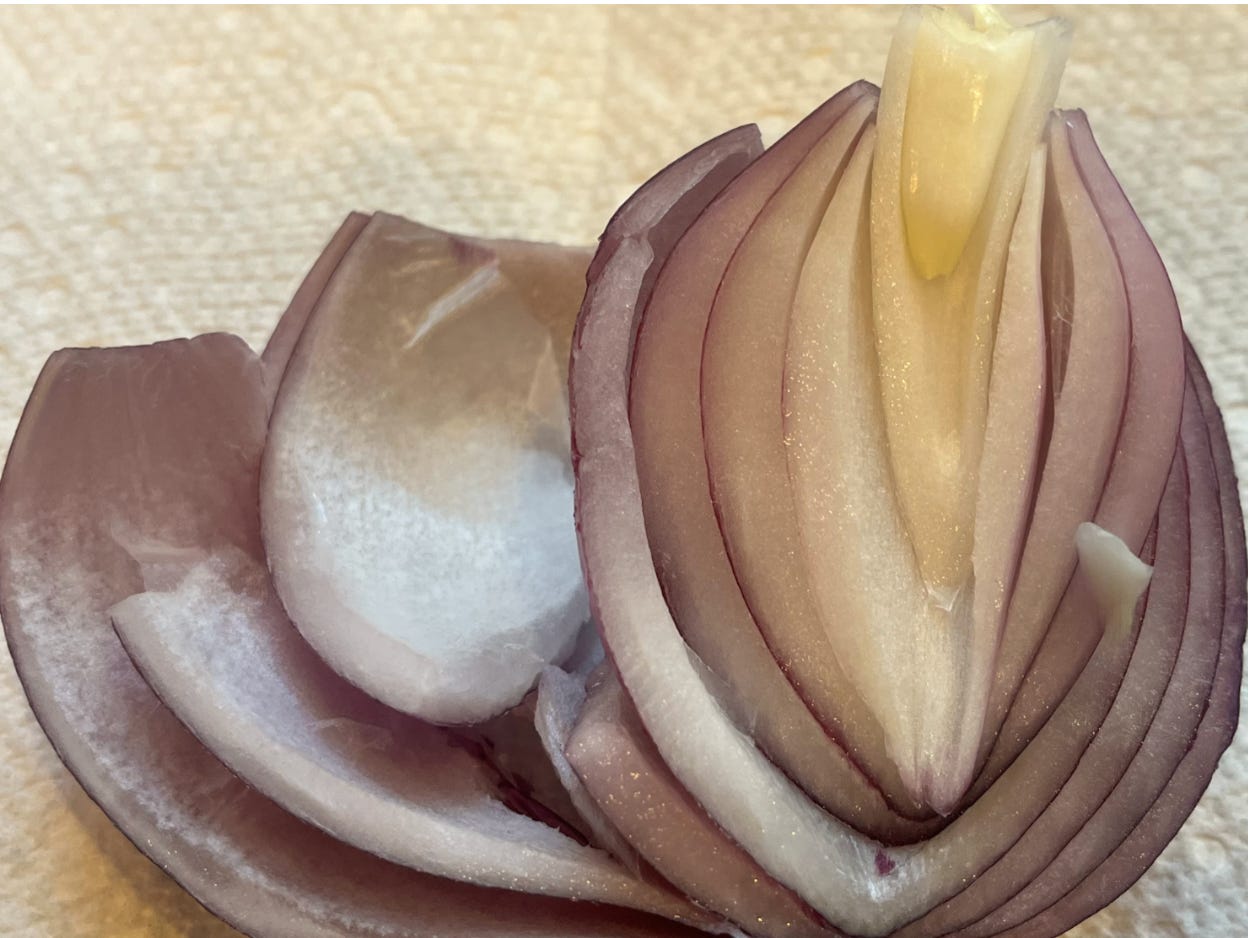
Photo by author

Onions can last a long time as they are. The layers of outer skin seal them off from the elements, protecting them from invasion by moisture, insects, bacteria, and all. So as they stand, they can remain intact, dormant, and unchanged, for a fair period of time.

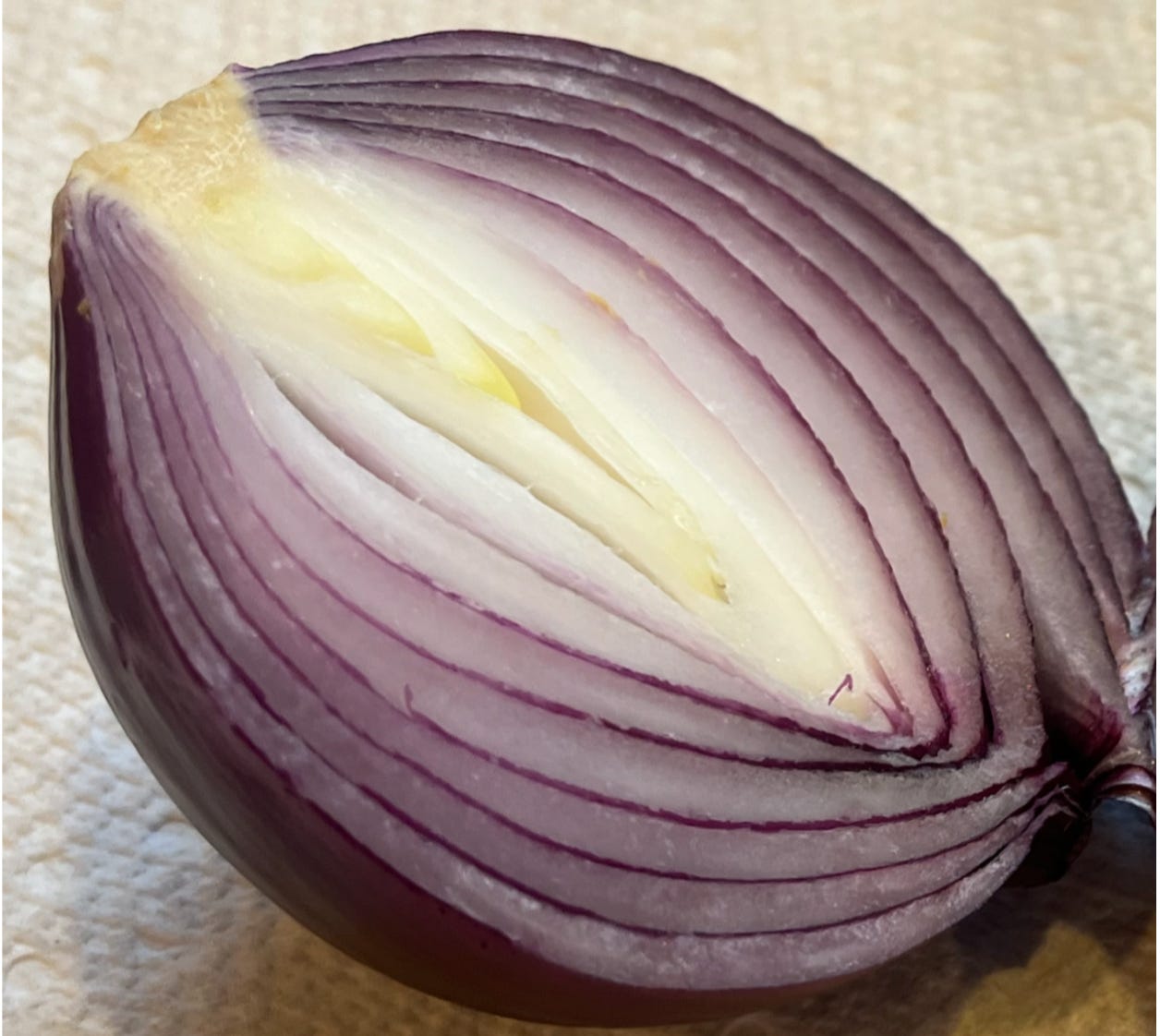
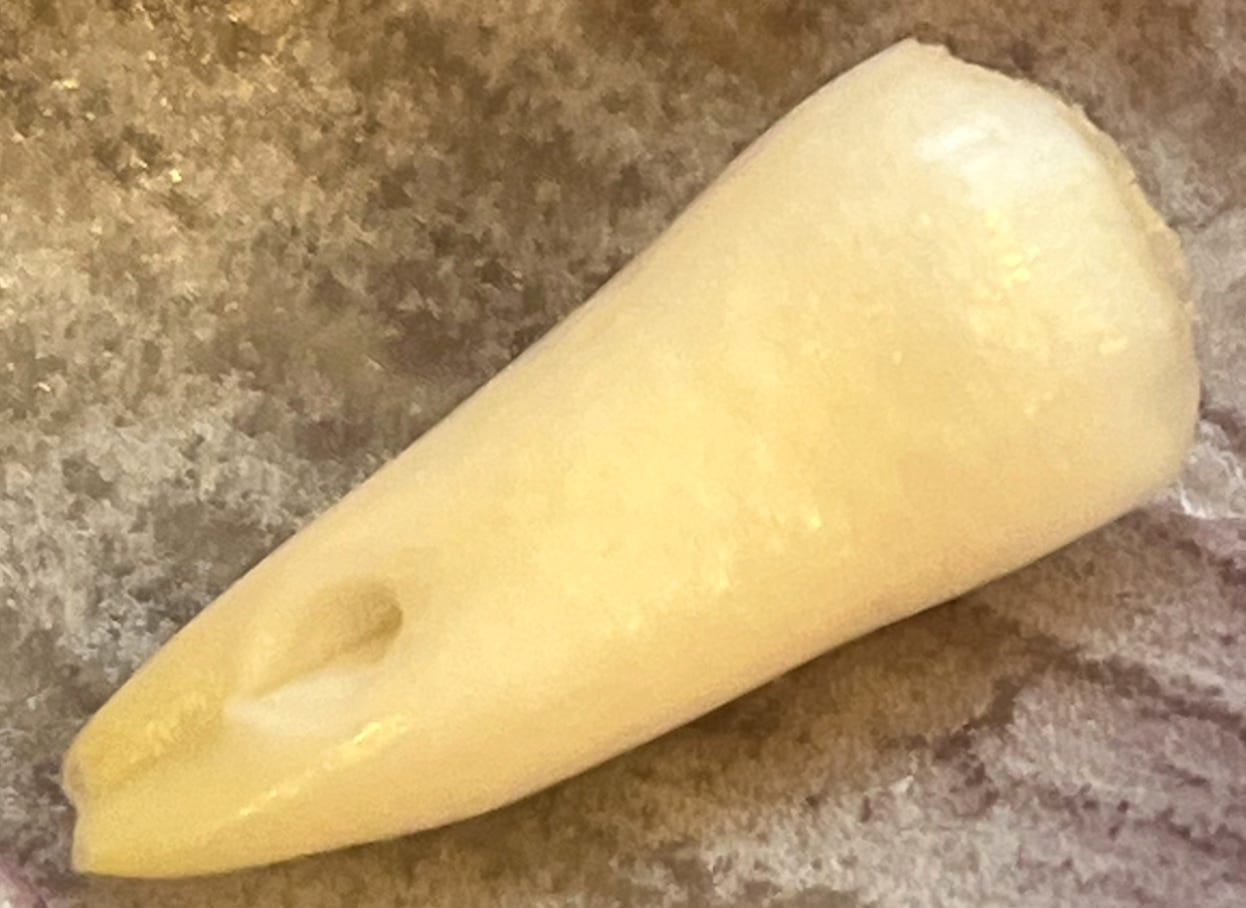
Under the skin are multiple inner layers filled with water and nutrients. They surround the innermost layer, and the whole point of the onion, its core. That core is the living bud, the baby plant, that, once released, will become the new onion.

Photo by author

If we harvest the onion, it is those fleshy inner layers that provide us with culinary flavor.

If we instead plant the onion, each one of those inner layers will protect that core, feed it, and then disintegrate. Once all those layers are gone, and if the soil conditions around the onion core are right, it will form the new plant, and the cycle of life continues.

If conditions are not good in the soil, the whole thing rots and dies. So the outcome of an onion depends on the conditions it lives in.

And it was the same for us…

Photo by author

Peeling the onion

As the therapist explained, the whole point of therapy is to examine a problem, find out what is causing it, use tools, and the right nutrients and conditions to heal it. To discover the cause, you have to slowly dig down through the many layers of mess that life has piled on. Layer by layer, you remove debris until you hopefully can get to the center of it all.

He used the example of peeling away the layers of an onion. Quite often, the wound is deeply buried – at the core. Surrounding it are the layers of lifetime’s harms, abuses, and damage. And sealing it all off so you can’t get at the core easily, are layers of thick outer skin. If an onion core is ever to grow a new plant, all those layers around it need to be broken away.

And in a similar manner, if we were to change our lives, we had to break that onion open and start digging.

Photo by author

This made sense to me. If we wanted to heal and have a better life, we needed to excavate a lot of garbage, get to the core of the wound…or in our case, wounds. Then, with the right conditions, we could see what insights and wisdom we could grow.

Good conditions will yield new growth. Poor conditions and the refusal to do the work would let a plant, or our lives, stagnate, then rot.

The marriage classes had been a good beginning. It had eased the tension and polarization between us and gave us a process to “grow a new plant garden” if we were willing to keep going.

The huge onion that was both of our lives

Sometimes therapy doesn’t need a long time. Some onions are smaller than others, and so there are fewer layers to peel. And some onions are huge, because life piled on so much. That was my life, and Ed had his own layers, too.

At each visit to the therapist, I always had one eye on the clock. To say the clock was ticking was an understatement. And then add in the sound of a cash register ringing because we had such a long list of purchases. It is an unfortunate thing that such needed emotional health is often out of reach because insurance is unavailable for therapy, or the costs are just too high. Somehow, we made it work, for which I am so grateful.

We had so many questions, things to fix, lessons to learn. Time was the enemy as we battled to tackle as much as we could in every session. So many issues, so much time needed, so much money…

Our particular excavation

When you have been denied the ability to grow up and experience all the phases of life and emotional development, it leaves you with a lot of holes in your knowledge. I understood this and was determined to learn and catch up to other people my age, as quickly as possible. I wanted to be a good mom, wife, employee, and human being.

It isn’t easy trying to manage present responsibilities, catch up from the past, and prepare for what the future may bring, all at the same time. It’s like having to operate in 1965 at the same time I was doing 1995, while getting ready for 2000 and beyond.

I hated myself inside for what I saw as my “deficiencies,” my brokenness. I always felt “less” than others.

Ed would sometimes hug me and tell me how precious I was to him. I HATED it. I couldn’t hear the word “precious” and take it in as the loving compliment he meant it as. I loathed parts of me. In fact, it’s only now in my older years that he can say that, and I take joy in it. So it was clear that I had a lot of healing to do.

And that was just the surface layers of the healing. I was working full-out to heal what I needed IN THAT MOMENT, to be there for my husband and son. It was all about creating a good “present-day” with them, so the future for all of us could be different and healthier than the past.

As to those deeply-buried chambers of trauma? They were so unreachable in those years. For one, I didn’t even know they were there. Even if I did, there was no time for them yet. Our everyday life had its demands that needed to be dealt with first. And I think my subconscious, which was holding all that pain, knew it wasn’t time. So it would be decades before that core would surface and demand to be heard.

Shadows of things to come

About the only hint that deeper wounds were present was all the nightmares I had. Some were of pit vipers attacking me. Others were more blatant — dreams of being abused again and again and again, reeking of the shame I felt and the confusion over the fact that even as I didn’t want the abuse, when he did things to me, my body betrayed me and enjoyed it. The nightmares were the abuse being replayed in my subconscious over and over. Sleep was not a refuge. I will come back later to the topic of nightmares and how they have changed as I heal. For now, all I can say is that we didn’t deal with them. That was work for a later day.

Regarding the things I was experiencing then, they were part of the trauma and severe PTSD I have. But at that point, the therapist didn’t refer to it as trauma, and PTSD wasn’t spoken of. Those were topics of research just being discovered at that point.

The things we know now about trauma and PTSD, about the way all that pain is stuck and stored in our body tissues as unprocessed memories, and about the new methods of treatment, were unknown then. They wouldn’t come to our attention for a number of years.

We worked with the tools we had and did our best to peel back every layer of the onion that presented itself to us.

Revelations

Even as reaching those core issues was years away, there was still a lot of ground to cover. We continued learning about how to resolve our marriage issues. There were things to learn about how to help our son with his educational issues. And there were more things to share and understand about what my father had done to me, and what to do about him in the present moment.

I shared more details with Ed and the therapist about what had transpired all those years at home. Things I hadn’t even though to say before.

Hearing about moments like the family shower session, Dad molesting me in the car at three years of age, or other equally damaging incidents, the therapist emphasized to Ed and me, “You were never safe. Not ever.”

Those are chilling words to hear. The implication was clear — “not ever” meant right from that helpless infancy. Even as I had no “photographs of those moments,” on some deep level in my gut, I knew he was right.

The therapist also confirmed for us that, given my father’s lack of any credible therapy, he was a risk to our kids. His whole history pointed to him being a sociopath, with no remorse, and only concerned with his own wants and needs. And that he was incredibly successful at being emotionally manipulative.

Dad could be both loving and cruel. Manipulative and generous. It was such a mind-f-ck to determine if he was good or bad? Helpful but misguided? Truly Machiavellian?

It was so hard to wrap my brain around stark, harsh realities. I always knew that part of him was malicious. That was the part that abused me. But I also thought that there were parts of him that were good. Redeeming qualities. Like a good person who just can’t control one area of their nature. As ridiculous as it sounds, it was like Luke Skywalker in Star Wars sensing “the good in his father, Darth Vader.”

So it was such a struggle to face him as pure evil. WAS I reading him correctly? Was I being unreasonable in always standing guard and confronting him? Or was I really seeing the tip of an evil iceberg, and as such, had to stand against him for the kids?

As the therapist put it to us, “If he were all bad, it would be easy to walk away. But when abusers are a mix of loving and abusive, that is the hardest situation to deal with.”

And there was the fact that he was then in his sixties. With the arrogance only a younger person can have, you assume, “Maybe he is safe now. Changed. After all, he’s old now and probably isn’t interested in sexual things.” Being older now myself, I know that is a ridiculous assumption.

As to the quandary of what to do with him, I read a quote one day that nailed it:

“Adult children don’t just wake up one day and say, ‘I’m done with my parent, I don’t ever want to speak to them again.’ Making that decision usually takes years and many failed attempts to heal the relationship. Cutting off a parent comes with immense grief and lots of shaming.” – Genesis Games, LMHC – The MindJournal

I will speak very shortly about “family systems,” and just how true this statement is. For now, I will simply say I tried earlier to just cut off my family. That didn’t work. It isn’t that easy for a variety of reasons, as the therapist noted above. Yet, being around and just “going along to keep the peace” wasn’t the answer either. Connection was on a case-by-case basis. So, so hard. Thus, we had a lot to contend with in terms of my father. Soon.

Given all of this, it is no small wonder we were doing a lot of therapy…and needed to.

Another “onion” area

If all of that wasn’t enough, there was one other area of my life that presented problems – the offshoot of Dad’s programming in me to despise the “power of the feminine” in life — my broken relationships with women.

How to “do friendship?” COULD I trust a friend? SHOULD I even bother? While I had ended one friendship that just wasn’t right, I had other friends and was struggling with those relationships. Within me was a battle that both longed to have other women in my life and my terror to never let another woman close.

So that came under the microscope, too…

The Warrior Years – Marriage – 1 – “The Breaking”

February 2, 2026

Is it possible to go from an abusive household with no role modeling for healthy relationship skills and have a successful marriage?

I can’t answer for anyone else. I can only say, for us, it was not a given, no matter how much we loved each other.

Is it even relevant?

What do you say about the issues in your early years of marriage, when you are writing about them from 40+ years out? From having navigated struggles and joys, successes, near-death episodes, and all that life can throw at you? When I think of who we were back then compared to now, we were almost more like strangers.

So does it even feel relevant to look back?

Yes…

Yes…because writing this memoir is partly about putting all the broken pieces of my life’s picture back together and seeing what it can teach me in the present moment. And at least for me, those lessons come through clearest when I view them through the lens of that shared past.

Yes…because there is never a place you reach where you can say “we got it knocked now and we’re all set. We know it all.” Being humans, we are always changing, and hopefully, learning. Even now, this many years out, each day is always a journey of mindful teamwork – sometimes easy because of the work from 40+ years of previous “negotiations. But sometimes just as strenuous as the beginning, because we keep changing as we enter different phases of life. And those changes mean we still need to stop, take stock, and sometimes shift or renegotiate things. You don’t raise a plant and then say, “Enough, I don’t need to tend it anymore.” If something is “alive,” you always need to do some tending, or it will die. And if anything is a living, breathing thing, it is a relationship. I may kill plants, but I don’t want to kill my marriage.

Yes…because all of that means you never stop paying attention to the person you love and walk through life with, and noticing growth and change. It is that very past knowledge that lets you see anything new emerging. And it is always possible for something new, wonderful, and interesting to be found in your beloved, through attention and curiosity.

Yes…because sometimes there are issues, struggles, or discords that have been there for a lifetime, and something in the current moment finally explains it all. That discovery brings depth and peace to that lifelong struggle, and an appreciation for the willingness of both parties to sustain through it all.

Yes…because those early struggles set the foundation for how and why we are still together. The tools used to build that foundation are just as useful for continued “maintenance.”

Yes…because there was a lot that was GOOD, and those things, properly fed and nurtured, saw us through a lot of ills. It is equally important to go back and see all the good and celebrate it.

And yes…because it is the “accumulated history” that urges you to continue, and gives the perspective of that whole past as you consider what to do with the future.

For each of these, you go back to go forward.

So what was going on?

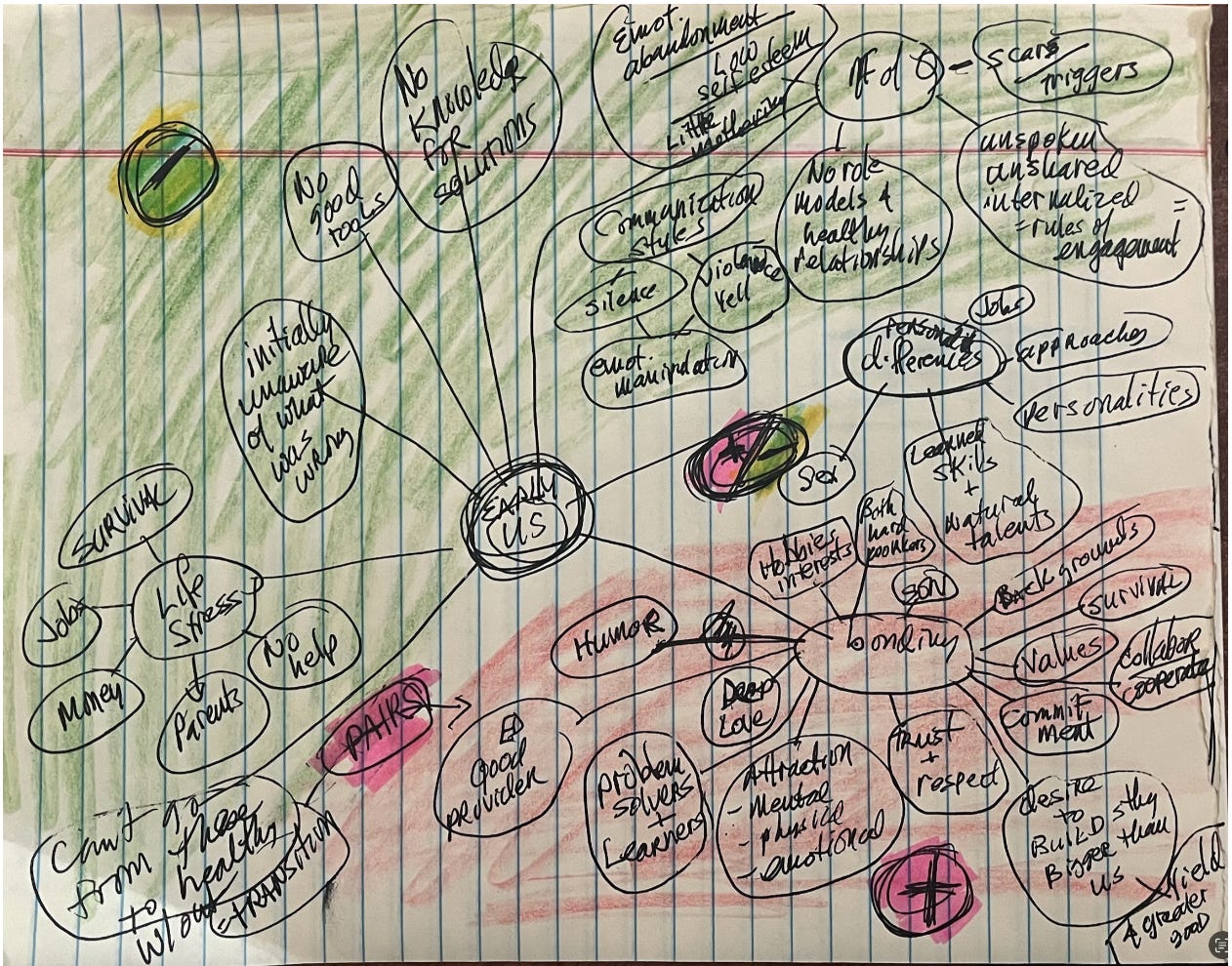
Given the number of years, memories, and events we have walked through, it almost seemed overwhelming to figure out where to start or how to capture the essence. So I did what I always do – Mindmap it. Just empty out every idea that comes to mind and then look for patterns and truths.

My first pass yielded this map, with positives on one end, negatives on the other, and “differences between us” in the middle. And I will note that differences aren’t necessarily bad or good. They can be both, depending on the situation.

Mindmap by author

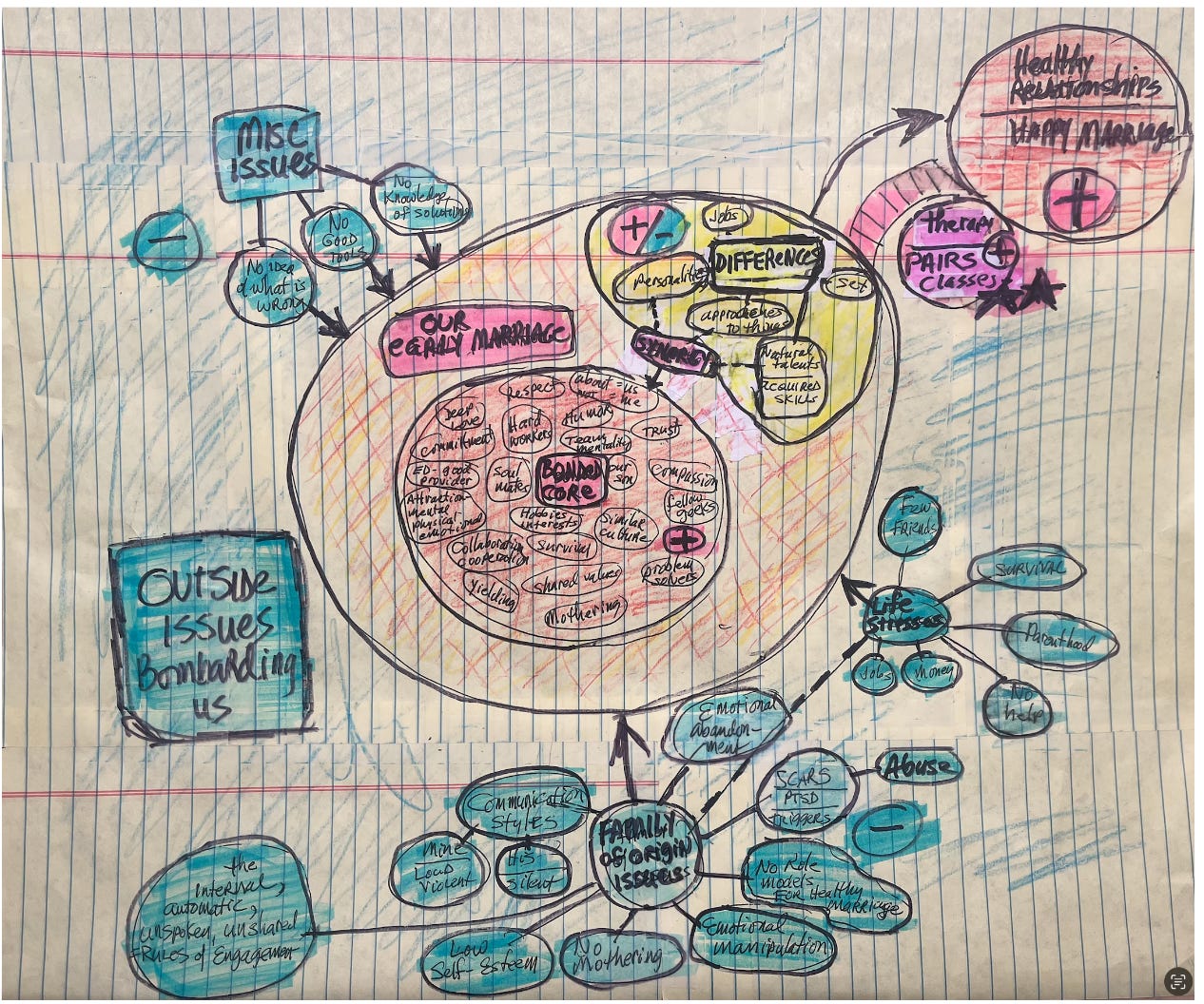
Then I had an idea for another way to look at it all. What was in our marriage, good and bad, and what was battering us from outside?

Diagram by author

THIS made it so much clearer for me. I will come back to the center part, the “bonded core,” in another entry. But first, this let me see at a glance just how many challenges and issues were arrayed against us. And those were over and above the usual ones of jobs, money, parenthood, no help or support, and just plain survival.

We had internal issues that were causing friction, but with no role modeling from our families of origin, with no tools for how to handle problems, no idea what was wrong, and no idea that there even WERE tools to help, the stress intensified.

Then there were our respective families and what they left us with: Scars of abuse; PTSD, even though I had no idea what that was or that it was operating in me; wounds like emotional abandonment, lack of mothering for both of us, triggers from being manipulated, and low self-esteem. And of course, the biggies: no communication skills. His household was silent and manipulative. Mine was violent, loud, and manipulative. And instilled in both of us, operating in stealth, were the automatic “house rules,” those internalized, unspoken, unshared, automatic “rules of engagement.” Those were the inner beliefs and methods we were each taught in our homes that affected how we reacted to things, even though we didn’t realize it.

With all of that aligned AGAINST us, I am still absolutely amazed we made it.

In fact, re-reading my journal entry from September 5, 1995, we almost didn’t.

And while it was an “internal” issue – sex – that nearly broke us, its roots were thickly embedded in deep scar material from that “external” abusive past…

The Warrior Years – “Team Rules”

January 31, 2026
Photos by author

Priorities, “triage,” and setting up the “base camp”

For any successful team to operate, there must be an agreed-upon set of rules and priorities. And Ed and I were a team. So, during this “adult” phase, we had five priorities:

  • Survival
  • Our marriage
  • Our son
  • Heal into a strong, healthy life
  • Break the family cycle and protect the kids from Dad

Nothing else mattered. Not career. Not money. In our house, the iron-clad rule that reigned supreme for these years was:

Kids’ needs first.

Their survival, their wellbeing, their safety.

Yes, my past may have been strewn with wreckage that still needed fixing if I were going to be an effective wife, parent, and human being.

Yes, we had marital issues that were threatening to break us. So if we were going to make it, those had to be dealt with.

Yes, there was so much that I still needed to learn from the past and the present to catch up to everyone else.

Yes, I had unresolved trauma from my past that was locked away, so deeply buried that I didn’t even know it existed.

And yes, Ed and I did not want to create future problems because we did not address the ones from the past or the present.

The dilemma? With only so many hours in a day, what issue(s) should be tackled first? Between jobs and life needs, there was no way to do them all at once.

The answer was triage. Each moment was a constantly rotating set of decisions as to which priority to address first. And always, if it was immediately necessary for our son’s welfare, that issue came first. It was the best we could do.

So some days it was working on a personal issue, another day it was a marital one, and in between, it was learning the life skills to navigate better. We would take care of the latest, most pressing need first. Then catch the others later.

But the important thing we agreed upon was that there WOULD be a later for those deferred issues, even if later might be years. For my buried trauma, that later would be a couple of decades. And I think in a lot of ways, that was for the best, and my “buried trauma” knew that. Before I would be able to face any of that, I needed to “secure the home front first,” protect our kids from Dad, and develop tools and skills along the way. So those deepest of wounds knew it wasn’t time, and stayed silent.

For now, the first necessity was getting us to North Carolina for the hope of a better, less stressful life. And like any new adventure, first you get there and set up your base camp, then you explore…

So, What Next?

January 11, 2026

Time for a new mind map

After the chaos of the winter months of 1984, I’d like to say things quieted down, and I could then just proceed in therapy to full healing and live happily ever after. For sure, at the time I thought it worked that way — if I worked REALLY hard, fast, and fiercely, I could get over all of this quickly and be “normal” and healed. That statement alone indicates just how far from understanding myself and the situation, I really was.

Yes, I had stabilized and was no longer suicidal. And that was no small achievement. But it just meant I had finally landed at the bottom of that abyss, the crash hadn’t killed me, and I was now standing upright on two legs facing a mountain whose top was obscured by a heavy bank of clouds. I had no idea then just how high that mountain was or that I would still be climbing it today.

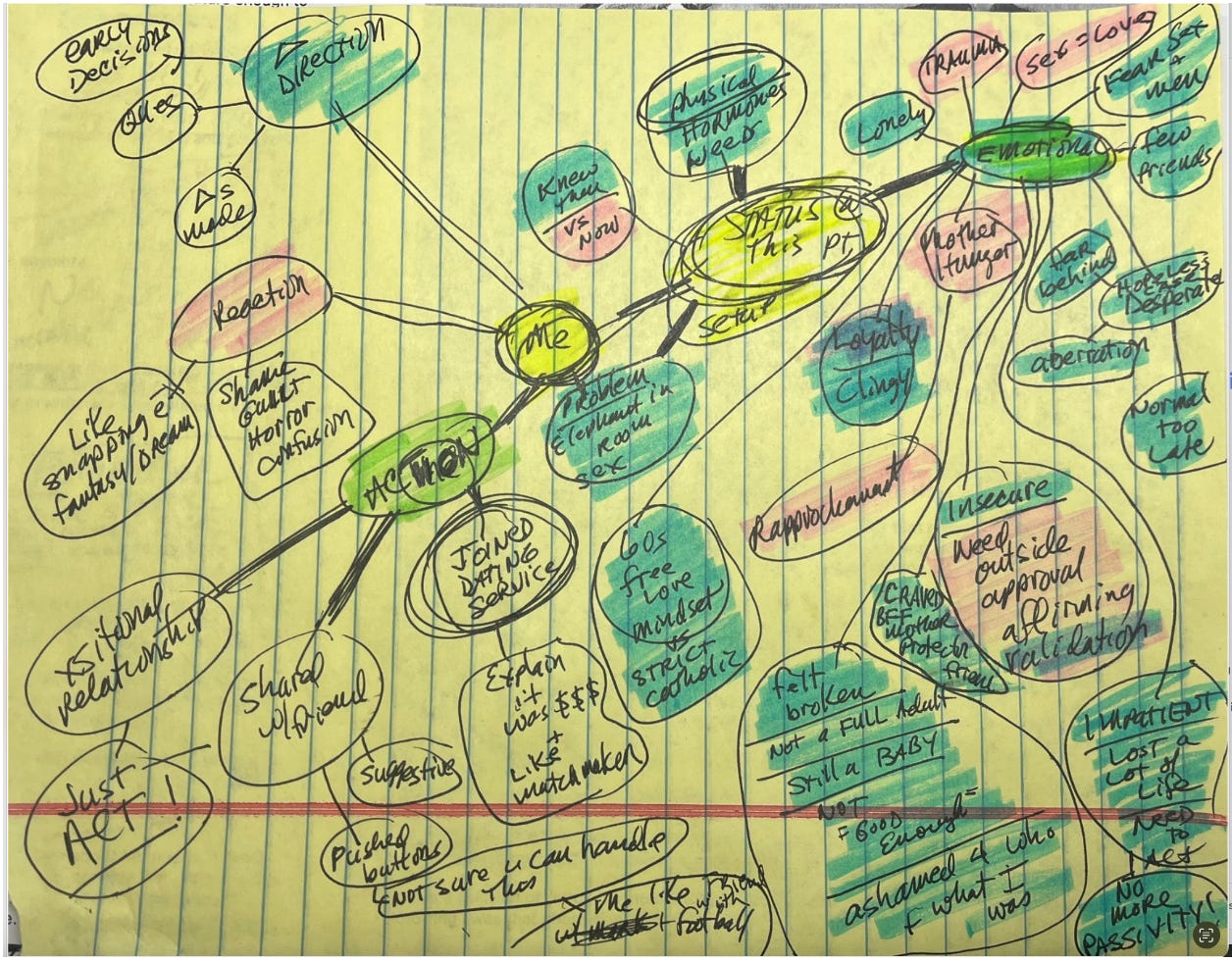
Anyway, given the rapidity of changes and experiences I’d undergone in the few months since leaving my parents’ house, this seemed like the perfect place to stop and do a status check. As a former lab person, when I feel overwhelmed by so many thoughts coming all at once, or confused about how to clearly tell the story next, I reach for my strongest talisman, and I make another mind map. Then, with all my thoughts spread out on the paper in front of me, I can see what they tell me — both about the things I was aware of then, and the things I realize only now, as I look back.

Photo by author

To spare anyone the craziness of reading that map, I will distill the essence of what it told me. I think three main things were operating…driving me…in the spring and summer of 1984: Emotional issues, physical needs, and one big problem — sex. Of course. It was the ever-present elephant in the room. But first, the other two.

Emotions

In terms of emotions, there was so much whipping me around. I had just been through a meat-grinder of an experience, riding out the storm of whether to go on living or end it all. Now that I had decided to hang around, there were the issues of how to form a life for myself, especially when you have no idea how to do that.

First, it’s hard to live a happy life without “relationships.” Even for simple friendships, I had no real idea of how to do that well. For all of my life, I’d been cut off from having anyone “close” to me. There had been none of those teen sleep-overs and BFF experiences where you stay up all night baring your soul and talking about “everything.” And it would take me years to understand just how big a loss that was, how it stunted my emotional maturity and development, and how it would drive my needs and decisions very shortly, and for many years to come.

I knew I longed for someone. I FELT such a need for a “mother,” older sister, BFF, trusted confidant, protector, even as I couldn’t articulate that back then. But I’d had none of these growing up, and I FELT its effects driving my actions. I was lonely and insecure, and when I did get a good friend, I clung to them for dear life, desperate that they might abandon me. And I needed outside validation that I had worth, or even to know what was up or down, right or wrong. I didn’t trust friends. I didn’t trust me, even as I didn’t realize it then.

Regarding trust, why would I TRUST anyone after what happened to me? The very people I should have been able to trust most – my parents – betrayed and destroyed that. As to self-confidence, given that anything I had ever felt or thought, my father discredited and replaced with his own programming, I didn’t feel I could make my own choices. And since he raised me to serve him and his needs, I was not brought up to see myself as a separate person. I wasn’t allowed to have my own needs, sense of self, or personal power, much less that I was allowed to use it or know how. I was trained that to follow my own path was hurtful to others and I should always defer to their wisdom.

So I felt the effects of these things and operated from that broken core. I knew I was broken. I just didn’t know how badly or what was causing it, much less that it needed fixing.

In terms of “broken,” I knew I was not a “full adult,” yet. I felt like a baby, ashamed of who and what I was. Not good enough. I felt desperate and like a hopeless case because I was so far behind all the other adults. I was that aberration of nature. I feared that I was so far behind that any normal methods of healing wouldn’t be enough, and worse, that it would show, and others would see my brokenness.

And then, regarding fear, there was one other one…that elephant in the room – sex. I was terrified of men, and especially the idea of having sex with them. Sex seemed like this out-of-control force that caused harm. I didn’t know then that I was deeply traumatized, or that there was even such a thing as trauma.

I only knew I was like this “child-adult,” a child in an adult’s body, desperately wishing she could be like all the other “grown-ups.” They dated, fell in love, made love…were normal. And I wasn’t.

I also didn’t understand then that the programming he’d drilled into me taught me another useless lesson — that all my self-worth was measured by sex. That was all Dad valued me for, and it was the thing he risked everything to get from me. So “sex” had a HIGH value tag attached to it. And from that programming, I equated the ability to be sexual with my self-worth, and with being loved. Without being a functional sexual adult, what good was I?

Physical

And then, add to this volatile emotional stew, a lit match — hormones. I may have been immature emotionally, but I was an adult with a body that had needs. And longings.

I was tired of “waiting for love to find me.” And even if it did, worried that I’d be unable to respond because of my fear. I’d been passive my whole life, always having to just wait for something to change, or wait for someone to rescue me, until I finally learned I had to rescue myself. So I was impatient and determined to take action. Never again would I wait and settle for passive patience.

The “Problem”

So the problem was: How does an adult who is emotionally more like a pre-teen in certain areas, with a background story no one could ever understand, much less accept, and who is way behind in terms of knowing how to find or develop relationships, meet men, and have a healthy, intimate relationship?

Today’s Holiday Gift Post

December 31, 2025
Photo by author

So today is the last day of 2025. And on that note, an especially gentle touch as we go into the New Year. I will be resuming regular postings in the next day or two. But for now:

Today’s Gift Quote:

“You are a child of the universe, no less than the trees and the stars; you have the right to be here.” – Max Ehrmann from Desiderata: A Poem for a Way of Life

My “gift posts”

While I am away from my desk, I will leave “daily gift posts” for all.

When I return, I will resume my memoir posts.

In the meantime, a reminder of the purpose of this blog:

This blog is my way of honoring what I lived through and had to do to reach “today” in as healthy a way as possible.

The posts here tell the story of the pain I’ve carried because my life was not whole.

It wasn’t whole because I’ve had so many questions and no answers. All I’ve had was the confusion of a lifetime, because so much of my life was in broken fragments I could not make sense of.

So this blog, which I hope to form into a memoir for publication, is my journey to find answers. It is my way to piece the fragments back together, see the whole picture, and find the understanding that brings healing.

While I write for myself, I am also writing to give to anyone else who wants it, an example of this kind of journey. It is not the only way, but it is my way.

And I write to bear witness to the pain of so many others harmed by abuse of any kind, especially for those who can’t tell their story…or those who didn’t live to tell their story.

Lastly, I offer it all here in the hope that it helps another not to feel alone as they do their own life’s work.

With love

Deb

Today’s Holiday Gift Post

December 30, 2025
Photo by author

Today’s Gift Quote:

“Finish each day and be done with it. You have done what you could. Some blunders and absurdities no doubt crept in; forget them as soon as you can. Tomorrow is a new day. You shall begin it serenely and with too high a spirit to be encumbered with your old nonsense.” – Ralph Waldo Emerson

My “gift posts”

While I am away from my desk, I will leave “daily gift posts” for all.

When I return, I will resume my memoir posts.

In the meantime, a reminder of the purpose of this blog:

This blog is my way of honoring what I lived through and had to do to reach “today” in as healthy a way as possible.

The posts here tell the story of the pain I’ve carried because my life was not whole.

It wasn’t whole because I’ve had so many questions and no answers. All I’ve had was the confusion of a lifetime, because so much of my life was in broken fragments I could not make sense of.

So this blog, which I hope to form into a memoir for publication, is my journey to find answers. It is my way to piece the fragments back together, see the whole picture, and find the understanding that brings healing.

While I write for myself, I am also writing to give to anyone else who wants it, an example of this kind of journey. It is not the only way, but it is my way.

And I write to bear witness to the pain of so many others harmed by abuse of any kind, especially for those who can’t tell their story…or those who didn’t live to tell their story.

Lastly, I offer it all here in the hope that it helps another not to feel alone as they do their own life’s work.

With love

Deb

Today’s Holiday Gift Post

December 29, 2025
Photo by author

Today’s Gift Quote:

“The greatest thing in the world is to know how to belong to oneself.” – Michel de Montaigne

My “gift posts”

While I am away from my desk, I will leave “daily gift posts” for all.

When I return, I will resume my memoir posts.

In the meantime, a reminder of the purpose of this blog:

This blog is my way of honoring what I lived through and had to do to reach “today” in as healthy a way as possible.

The posts here tell the story of the pain I’ve carried because my life was not whole.

It wasn’t whole because I’ve had so many questions and no answers. All I’ve had was the confusion of a lifetime, because so much of my life was in broken fragments I could not make sense of.

So this blog, which I hope to form into a memoir for publication, is my journey to find answers. It is my way to piece the fragments back together, see the whole picture, and find the understanding that brings healing.

While I write for myself, I am also writing to give to anyone else who wants it, an example of this kind of journey. It is not the only way, but it is my way.

And I write to bear witness to the pain of so many others harmed by abuse of any kind, especially for those who can’t tell their story…or those who didn’t live to tell their story.

Lastly, I offer it all here in the hope that it helps another not to feel alone as they do their own life’s work.

With love

Deb