Posts Tagged ‘therapy’

The Warrior Years – The “Onion” That is Therapy

February 12, 2026

These current entries are taking more time and thought to write. There were so many things going on simultaneously during those years, complicated and all knotted together. In order to share something meaningful and coherent, I have needed to reflect deeply and not rush the process.

In the last two pieces I wrote, I spoke of my husband and me managing many priorities, and just finishing the marriage-skills classes, as well as my finally ending a friendship that was not working.

To continue with the story thread, I will begin with the onion that is “therapy.”

The life of an onion
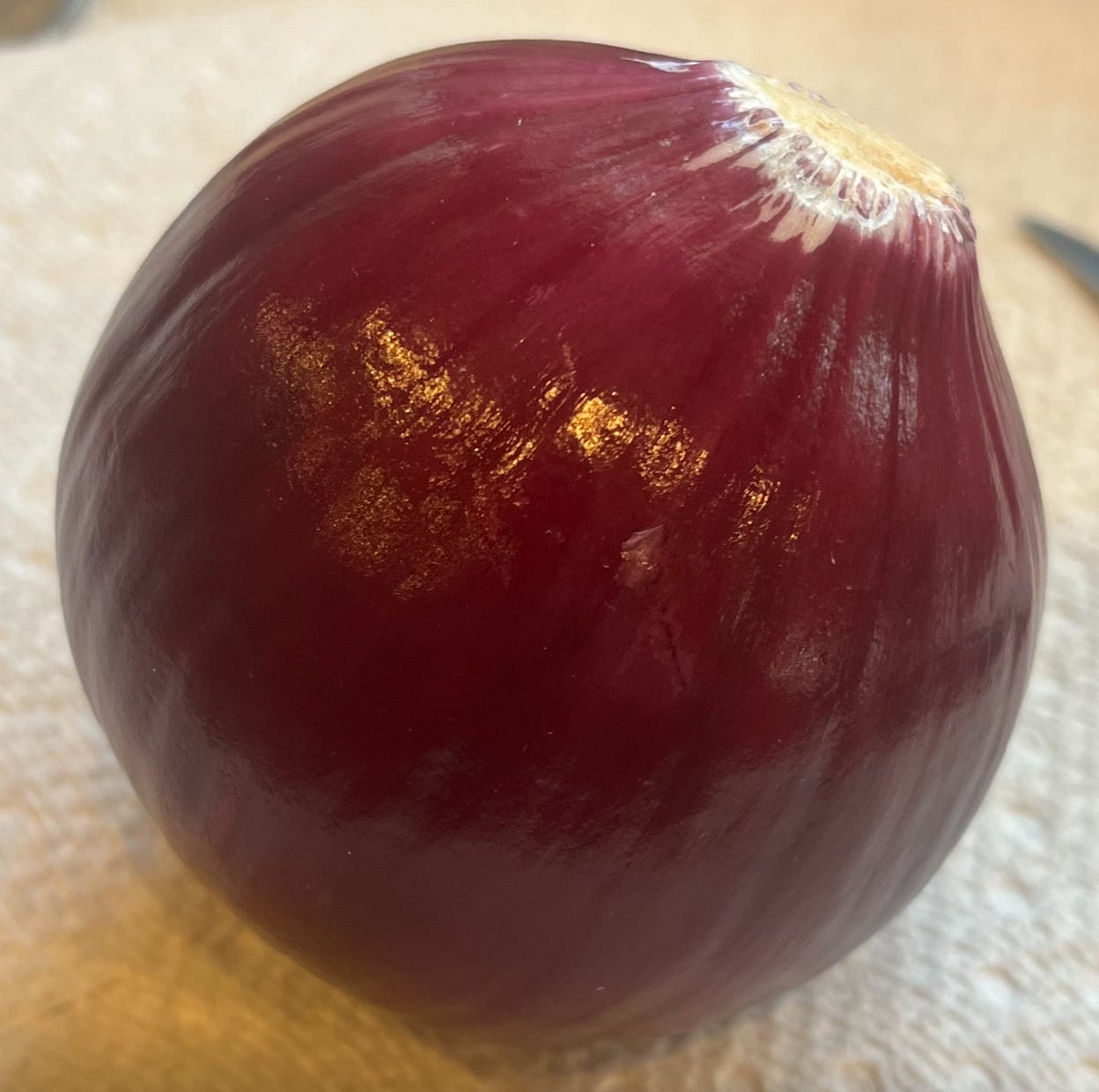
Photo by author

Onions can last a long time as they are. The layers of outer skin seal them off from the elements, protecting them from invasion by moisture, insects, bacteria, and all. So as they stand, they can remain intact, dormant, and unchanged, for a fair period of time.

Under the skin are multiple inner layers filled with water and nutrients. They surround the innermost layer, and the whole point of the onion, its core. That core is the living bud, the baby plant, that, once released, will become the new onion.
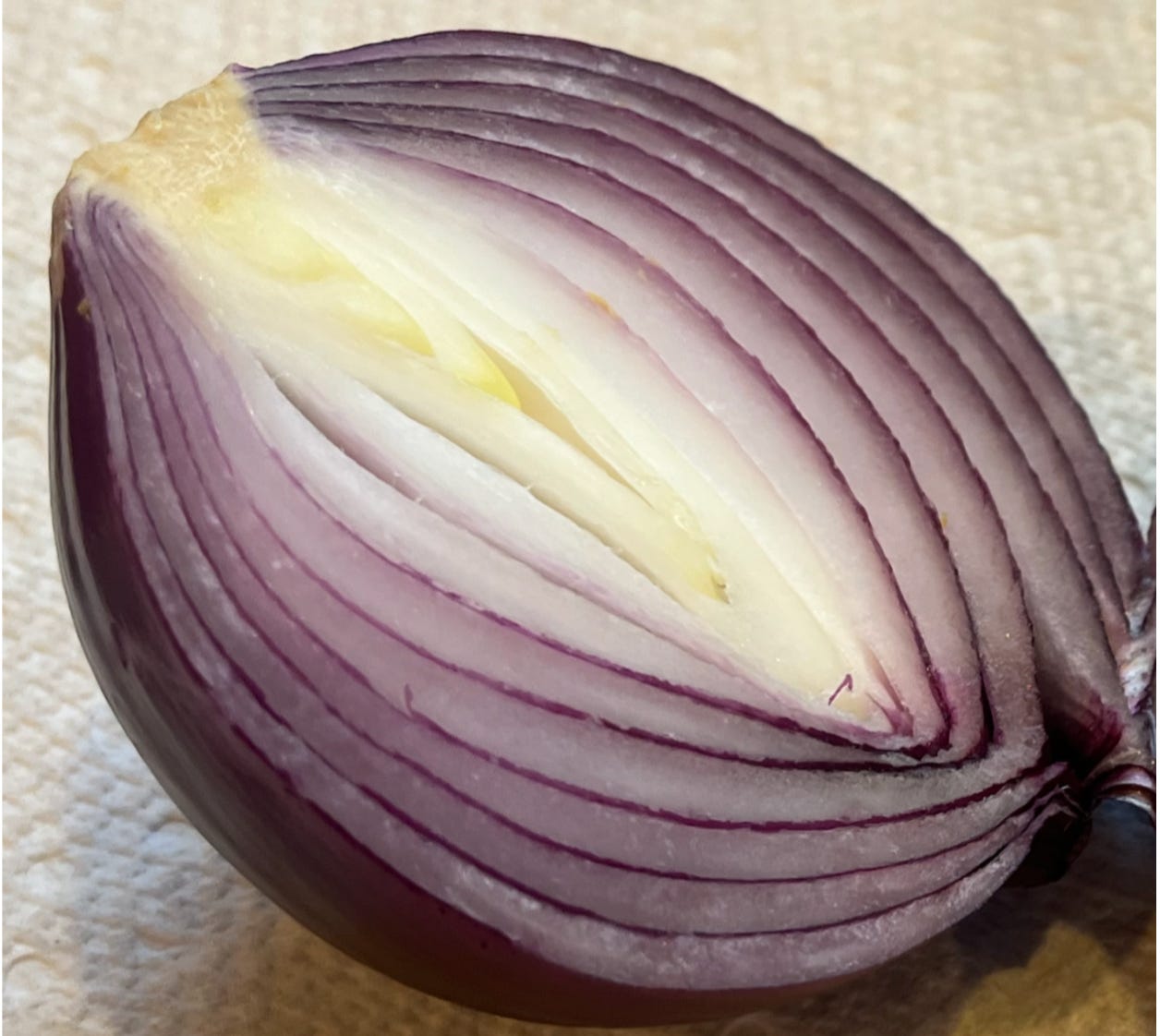
Photo by author

If we harvest the onion, it is those fleshy inner layers that provide us with culinary flavor.

If we instead plant the onion, each one of those inner layers will protect that core, feed it, and then disintegrate. Once all those layers are gone, and if the soil conditions around the onion core are right, it will form the new plant, and the cycle of life continues.

If conditions are not good in the soil, the whole thing rots and dies. So the outcome of an onion depends on the conditions it lives in.

And it was the same for us…
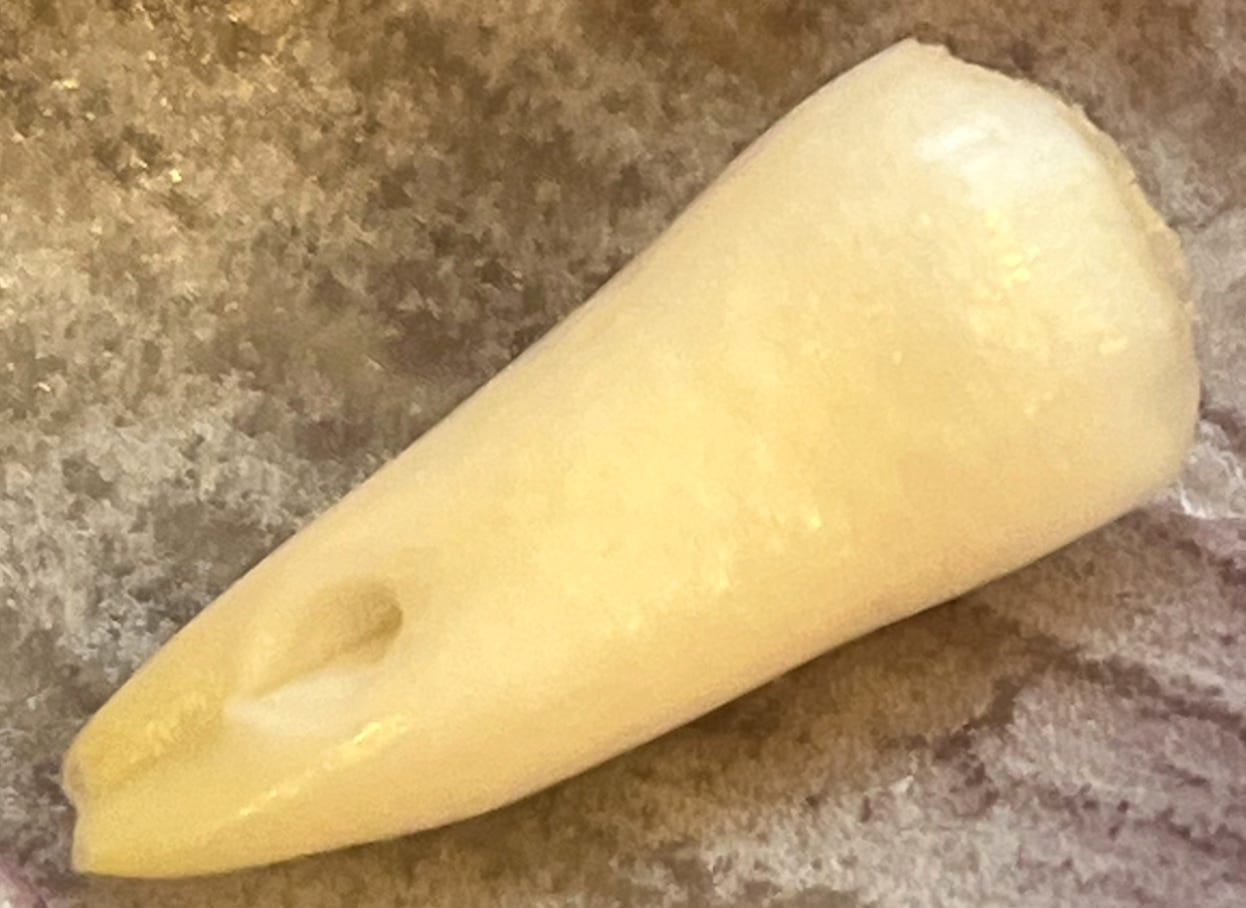
Photo by author

Peeling the onion

As the therapist explained, the whole point of therapy is to examine a problem, find out what is causing it, use tools, and the right nutrients and conditions to heal it. To discover the cause, you have to slowly dig down through the many layers of mess that life has piled on. Layer by layer, you remove debris until you hopefully can get to the center of it all.

He used the example of peeling away the layers of an onion. Quite often, the wound is deeply buried – at the core. Surrounding it are the layers of lifetime’s harms, abuses, and damage. And sealing it all off so you can’t get at the core easily, are layers of thick outer skin. If an onion core is ever to grow a new plant, all those layers around it need to be broken away.

And in a similar manner, if we were to change our lives, we had to break that onion open and start digging.
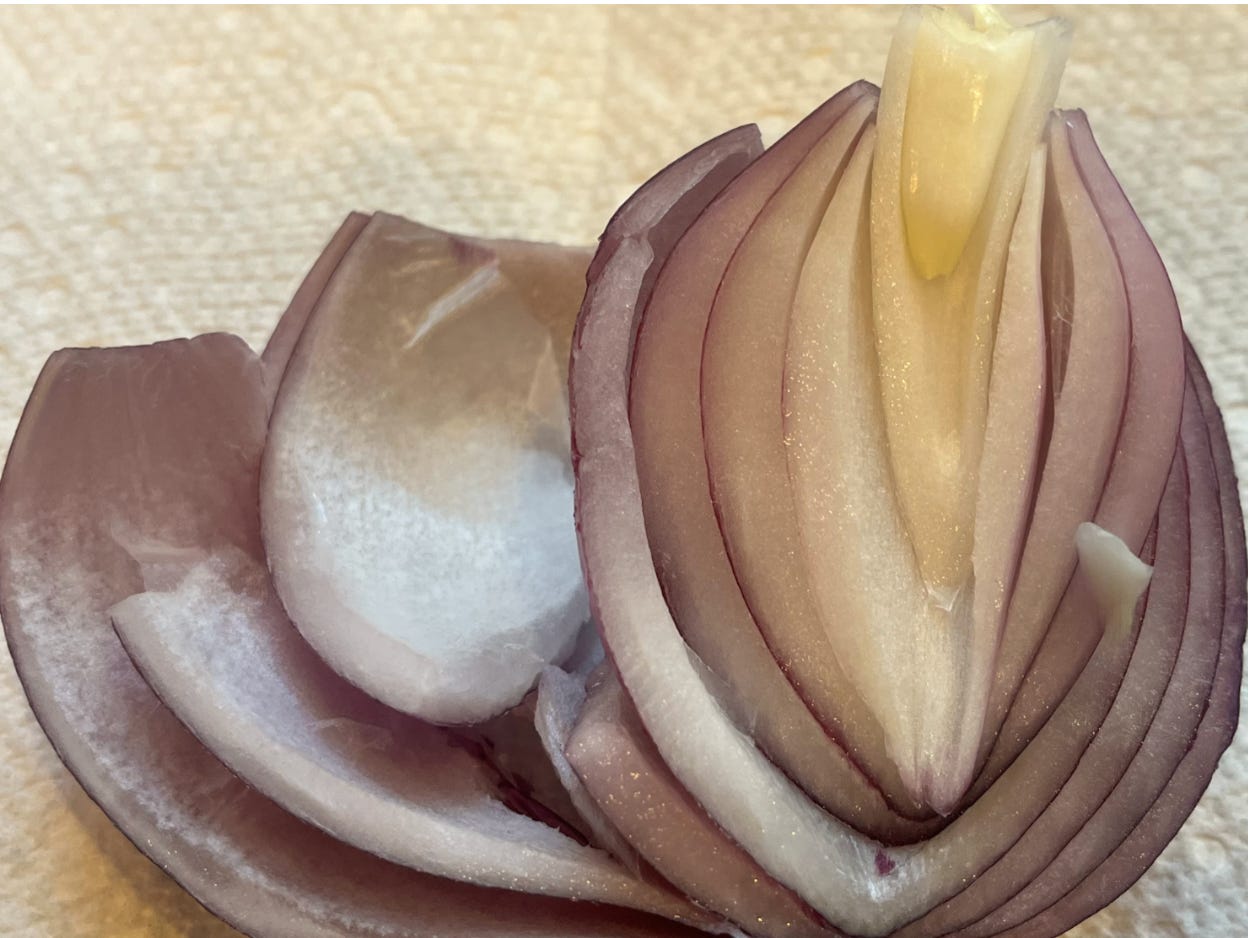
Photo by author

This made sense to me. If we wanted to heal and have a better life, we needed to excavate a lot of garbage, get to the core of the wound…or in our case, wounds. Then, with the right conditions, we could see what insights and wisdom we could grow.

Good conditions will yield new growth. Poor conditions and the refusal to do the work would let a plant, or our lives, stagnate, then rot.

The marriage classes had been a good beginning. It had eased the tension and polarization between us and gave us a process to “grow a new plant garden” if we were willing to keep going.

The huge onion that was both of our lives

Sometimes therapy doesn’t need a long time. Some onions are smaller than others, and so there are fewer layers to peel. And some onions are huge, because life piled on so much. That was my life, and Ed had his own layers, too.

At each visit to the therapist, I always had one eye on the clock. To say the clock was ticking was an understatement. And then add in the sound of a cash register ringing because we had such a long list of purchases. It is an unfortunate thing that such needed emotional health is often out of reach because insurance is unavailable for therapy, or the costs are just too high. Somehow, we made it work, for which I am so grateful.

We had so many questions, things to fix, lessons to learn. Time was the enemy as we battled to tackle as much as we could in every session. So many issues, so much time needed, so much money…

Our particular excavation

When you have been denied the ability to grow up and experience all the phases of life and emotional development, it leaves you with a lot of holes in your knowledge. I understood this and was determined to learn and catch up to other people my age, as quickly as possible. I wanted to be a good mom, wife, employee, and human being.

It isn’t easy trying to manage present responsibilities, catch up from the past, and prepare for what the future may bring, all at the same time. It’s like having to operate in 1965 at the same time I was doing 1995, while getting ready for 2000 and beyond.

I hated myself inside for what I saw as my “deficiencies,” my brokenness. I always felt “less” than others.

Ed would sometimes hug me and tell me how precious I was to him. I HATED it. I couldn’t hear the word “precious” and take it in as the loving compliment he meant it as. I loathed parts of me. In fact, it’s only now in my older years that he can say that, and I take joy in it. So it was clear that I had a lot of healing to do.

And that was just the surface layers of the healing. I was working full-out to heal what I needed IN THAT MOMENT, to be there for my husband and son. It was all about creating a good “present-day” with them, so the future for all of us could be different and healthier than the past.

As to those deeply-buried chambers of trauma? They were so unreachable in those years. For one, I didn’t even know they were there. Even if I did, there was no time for them yet. Our everyday life had its demands that needed to be dealt with first. And I think my subconscious, which was holding all that pain, knew it wasn’t time. So it would be decades before that core would surface and demand to be heard.

Shadows of things to come

About the only hint that deeper wounds were present was all the nightmares I had. Some were of pit vipers attacking me. Others were more blatant — dreams of being abused again and again and again, reeking of the shame I felt and the confusion over the fact that even as I didn’t want the abuse, when he did things to me, my body betrayed me and enjoyed it. The nightmares were the abuse being replayed in my subconscious over and over. Sleep was not a refuge. I will come back later to the topic of nightmares and how they have changed as I heal. For now, all I can say is that we didn’t deal with them. That was work for a later day.

Regarding the things I was experiencing then, they were part of the trauma and severe PTSD I have. But at that point, the therapist didn’t refer to it as trauma, and PTSD wasn’t spoken of. Those were topics of research just being discovered at that point.

The things we know now about trauma and PTSD, about the way all that pain is stuck and stored in our body tissues as unprocessed memories, and about the new methods of treatment, were unknown then. They wouldn’t come to our attention for a number of years.

We worked with the tools we had and did our best to peel back every layer of the onion that presented itself to us.

Revelations

Even as reaching those core issues was years away, there was still a lot of ground to cover. We continued learning about how to resolve our marriage issues. There were things to learn about how to help our son with his educational issues. And there were more things to share and understand about what my father had done to me, and what to do about him in the present moment.

I shared more details with Ed and the therapist about what had transpired all those years at home. Things I hadn’t even though to say before.

Hearing about moments like the family shower session, Dad molesting me in the car at three years of age, or other equally damaging incidents, the therapist emphasized to Ed and me, “You were never safe. Not ever.”

Those are chilling words to hear. The implication was clear — “not ever” meant right from that helpless infancy. Even as I had no “photographs of those moments,” on some deep level in my gut, I knew he was right.

The therapist also confirmed for us that, given my father’s lack of any credible therapy, he was a risk to our kids. His whole history pointed to him being a sociopath, with no remorse, and only concerned with his own wants and needs. And that he was incredibly successful at being emotionally manipulative.

Dad could be both loving and cruel. Manipulative and generous. It was such a mind-f-ck to determine if he was good or bad? Helpful but misguided? Truly Machiavellian?

It was so hard to wrap my brain around stark, harsh realities. I always knew that part of him was malicious. That was the part that abused me. But I also thought that there were parts of him that were good. Redeeming qualities. Like a good person who just can’t control one area of their nature. As ridiculous as it sounds, it was like Luke Skywalker in Star Wars sensing “the good in his father, Darth Vader.”

So it was such a struggle to face him as pure evil. WAS I reading him correctly? Was I being unreasonable in always standing guard and confronting him? Or was I really seeing the tip of an evil iceberg, and as such, had to stand against him for the kids?

As the therapist put it to us, “If he were all bad, it would be easy to walk away. But when abusers are a mix of loving and abusive, that is the hardest situation to deal with.”

And there was the fact that he was then in his sixties. With the arrogance only a younger person can have, you assume, “Maybe he is safe now. Changed. After all, he’s old now and probably isn’t interested in sexual things.” Being older now myself, I know that is a ridiculous assumption.

As to the quandary of what to do with him, I read a quote one day that nailed it:

“Adult children don’t just wake up one day and say, ‘I’m done with my parent, I don’t ever want to speak to them again.’ Making that decision usually takes years and many failed attempts to heal the relationship. Cutting off a parent comes with immense grief and lots of shaming.” – Genesis Games, LMHC – The MindJournal

I will speak very shortly about “family systems,” and just how true this statement is. For now, I will simply say I tried earlier to just cut off my family. That didn’t work. It isn’t that easy for a variety of reasons, as the therapist noted above. Yet, being around and just “going along to keep the peace” wasn’t the answer either. Connection was on a case-by-case basis. So, so hard. Thus, we had a lot to contend with in terms of my father. Soon.

Given all of this, it is no small wonder we were doing a lot of therapy…and needed to.

Another “onion” area

If all of that wasn’t enough, there was one other area of my life that presented problems – the offshoot of Dad’s programming in me to despise the “power of the feminine” in life — my broken relationships with women.

How to “do friendship?” COULD I trust a friend? SHOULD I even bother? While I had ended one friendship that just wasn’t right, I had other friends and was struggling with those relationships. Within me was a battle that both longed to have other women in my life and my terror to never let another woman close.

So that came under the microscope, too…
What Kind of Visuals Am I Using…and Why

January 11, 2025
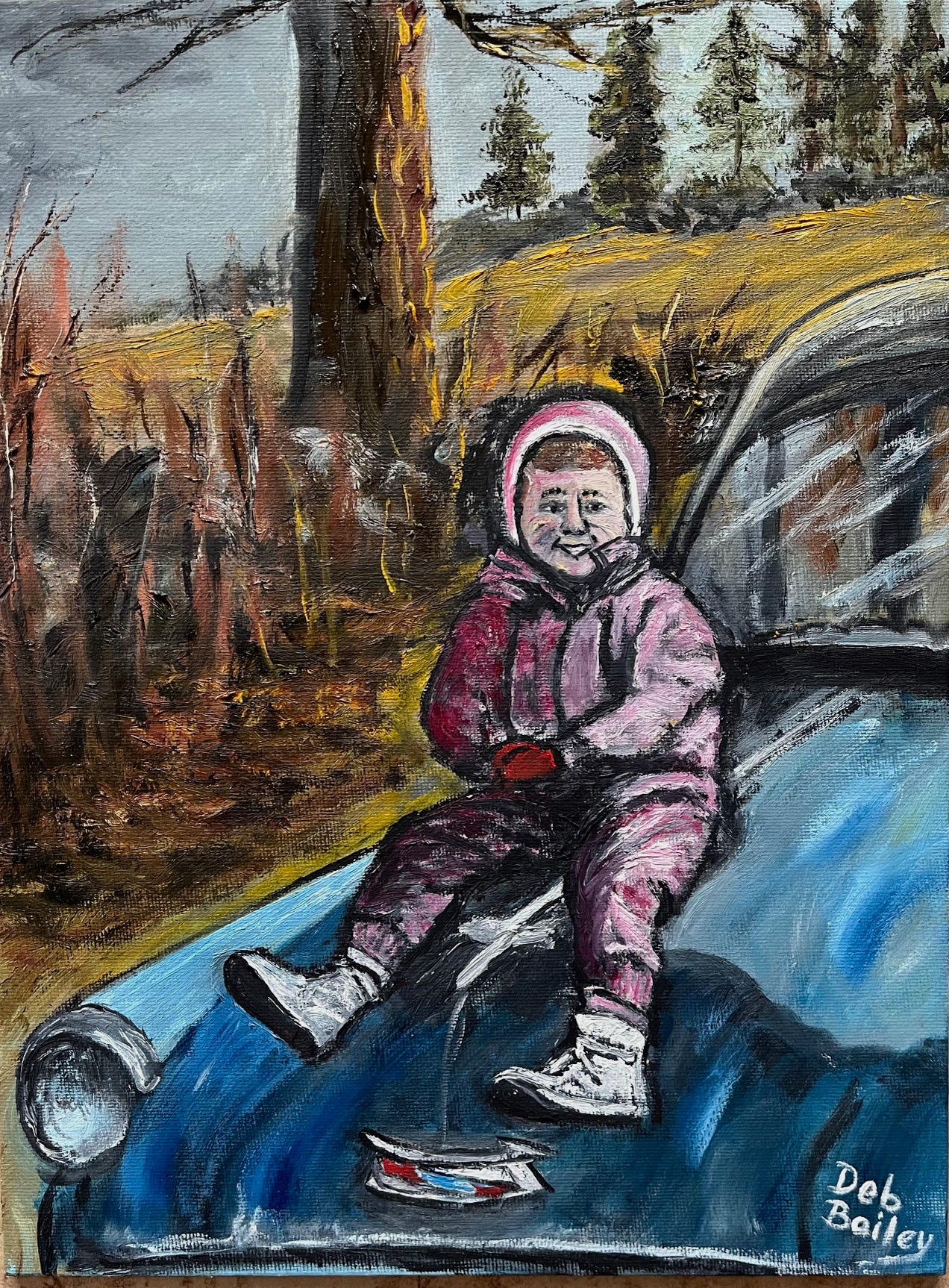
Painting by the author of the author as an infant in a pink snow suit sitting on the hood of her parents' 1954 Chevy Belair sedan
Painting by author – Author as an infant on hood of her father’s car

Driven to paint

Before I share below a sampling of the visual elements I am using in my book, I thought I would share the “WHY” I not only used them, but HAD to use them.

Rebuilding my life

The book incorporates the story not only of the abuse I endured, but also of my journey from my parents’ house—the depression and despair—to my rebuilding, and my creating of a meaningful life.

Even after the initial crises of my escape and recovery with the help of good therapists and friends, I would return for rounds of therapy off and on throughout adulthood. Given all of the life lessons I had missed out on during my early phases of life, I looked at it as “preventive maintenance.” Why “wing something” when I wasn’t sure how to handle it and risk messing it up, then have to fix it? Better to learn as I went along.

The traumas of life

This approach worked well, and I thought I had finally put the past to rest…until midlife. Menopause hit. My husband almost died. The dog did die. My son left for college. All at once. But even worse, those new traumas blasted open a well of trapped emotions I never realized were even there. Like opening Pandora’s box, it unleashed a flood of unresolved depression, anxiety, flashbacks, nightmares…severe PTSD. At the time, I had no idea what was going on. Desperate and having major anxiety, I began working with a skilled trauma specialist who was and remains a godsend in my life.

This was fortunate because, in addition to everything that I was dealing with, I also began navigating the last chapters of my parents’ lives and their deaths. It was then that I realized just how much work I still had to do.

The past comes calling to claim its due

Those first decades of adulthood had been about building a life. Now, it was about returning to the past to address the well of unfinished business and unresolved pain that had come forward to claim its due. It had patiently waited a lifetime…my son came first all those years. But now, it was time for me…and that long-suffering child.

However, I had no tools to reach the pain, to know how much was there, or to express it. I only knew its presence through the agony of body memories and nightmares. That was when I made the discovery that art heals.

(more…)

Trauma, Anxiety, PTSD….

November 22, 2024

Now there’s a word salad I tried to ignore.

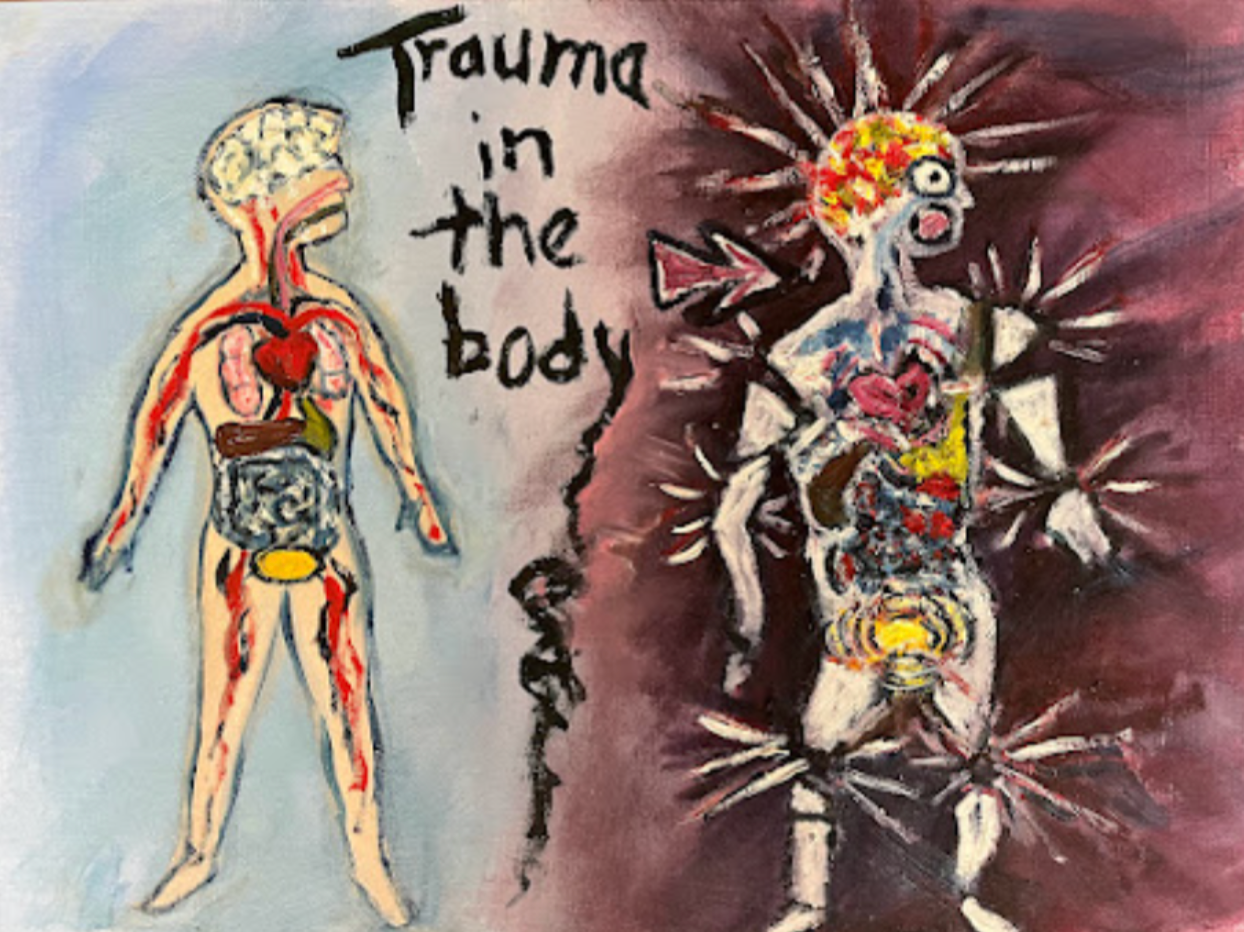
A graphical image of a normal person’s insides vs the throbbing broken insides of someone with PTSD and anxiety. That side the body looks disjointed, bright colors that almost scream at you, brain on fire, overactive bladder, upset intestines
Painting by the author

I live with PTSD and anxiety. I have my whole life, even for those decades when I didn’t know it, or denied it. I just shrugged it off as irritable bowel, being “high-strong,” or having a small bladder. Other than that I was fine, no different than anyone else, right? Because if you ignore what you feel, mobilize some anger at your “weakness” and push harder, of course you will get over it, right? 

Be KIND to anxiety???

There are so many things wrong with that paragraph I won’t even waste time to list them. 

Now, I am not a psychologist so I am not going to give anyone advice. I will just relate my own experience. As to the above, that is how I lived my life for years, and I will simply say that unless you are looking to cause yourself more harm, I wouldn’t recommend it. 

I now work with a wonderful trauma specialist. And anytime I said anything like the above to her, if I didn’t get an eye roll, I would see her take a deep breath, smile with compassion, maybe say something like “Yes, well…” and then proceed to help me understand why treating myself that way was me abusing myself the way I’d been abused for years. 

For starters, she said: “ You come by your anxiety honestly,” by which she meant it would have been abnormal not to have PTSD and anxiety after what I lived through. That was a major revelation to me. I actually had to take a bit of time to wrap my head around the fact I wasn’t being weak. And imagine that, there was actually a valid reason for what I was experiencing. 

Second, when we first started working together I was shocked to see the amount of compassion she showed me. That was certainly nothing I’d experienced much of in my earlier years, never mind allowed for myself. So Clue #2 — perhaps I was not approaching this whole “healing thing” correctly?

“Weak” vs “tough”

Regarding “weak,” I should note that I grew up in a situation where weakness was reviled and it was all about being tough. And I had to be  anyway because  it was survival. The mantra I learned was “hurry up and get over it.”

I remember having a stomach flu one time and right after being ill my father insisted I needed to eat because I needed to get over this fast. So I came by “tough” honestly, too. 

My therapist gradually helped me understand there was nothing wrong with being kind to myself, and that believe it or not, healing is a life-long endeavor. I learned that PTSD and the various things that came along for the ride in me — depression, anxiety, and anger — made total sense given the stress-hormone-fueled cocktail that flooded my system for decades. I joked with a friend, that I had no idea what “calm” felt like, except for maybe the time I was coming out of anesthesia after a colonoscopy. It finally started sinking in that I had a fair bit of “relearning” to do.

The nature of trauma and PTSD

Given I spent my adult life in medical research, I did what I did best — hunted for information that would teach me what I’d not learned my whole life. I consumed research journals and Psychology Today articles on anxiety, stress, and PTSD. I read books, such as one my therapist recommended: Bessel van der Kolk’s The Body Keeps the Score: Brain, Mind, and Body in the Healing of Trauma. I read anything and everything to help me understand why my body felt like the painting above. Once I realized how totally unaware I’d been of how poorly I was treating myself, I was hungry for all the knowledge I could get. After all, I might be decades late, but I can be taught.

So then, of course, I did the opposite. I figured that if I read everything I could find, worked as hard as possible with my therapist as fast as possible, and pushed myself to relax and meditate and… Yeah. It might not have been the stomach virus anymore, but it was still that “hurry up and get well” mentality. So much for self-compassion and letting healing become a way of life. 

Compassion?

I will say with total gratitude, that my therapist is a blessing and the most patient, compassionate person I have ever dealt with besides my husband and a few good friends. Like coming back to the breath when you get distracted in meditation, she kindly brings me back, again and again, to self-compassion…and at least the “suggestion” of patience with myself.

Her knowledge of Yoga and meditative techniques also rekindled the practices I had first started learning in the 1990s when I came across a wonderful book by the former Buddhist monk Jack Kornfield, A Path With Heart. It was all about the reminder that life is filled with suffering, but that we can still show ourselves and others compassion. It was such a help, as were books by Pema Chodron and other meditation practitioners. 

This is not to say that this fixed my PTSD. No, nor the anxiety. In spite of all my work in life, that “word salad” still walks with me. Yet, progress does come and I recently had another “aha” moment. 

The moment of insight

I was sitting on the couch, aware of those pesky tendrils of anxiety starting to spread through my body, as they often do, uninvited. My initial thought was one of “God, when will this ever go away?” and an answer immediately flashed across my brain: “Never.” But instead of being upset, I actually felt a calmness at that. A sense finally, of acceptance and the awareness I wouldn’t be failing if I just stopped fighting it.

In that moment, I was aware of a level of compassion coming in along with the anxiety. It occurred to me that the frantic, anxious part of me…WAS me. A piece of me. She was my lifelong companion, maybe even a friend of sorts — she sure could be as we’d traversed enough of my life together. 

Finally, the awareness dawned on me that I could either spend the rest of my life hating her or…I could simply accept her…welcome her in. I could offer that part of me love and acceptance, and invite her to just “come on over, and sit with me and we will weather the storm together until it eases.” 

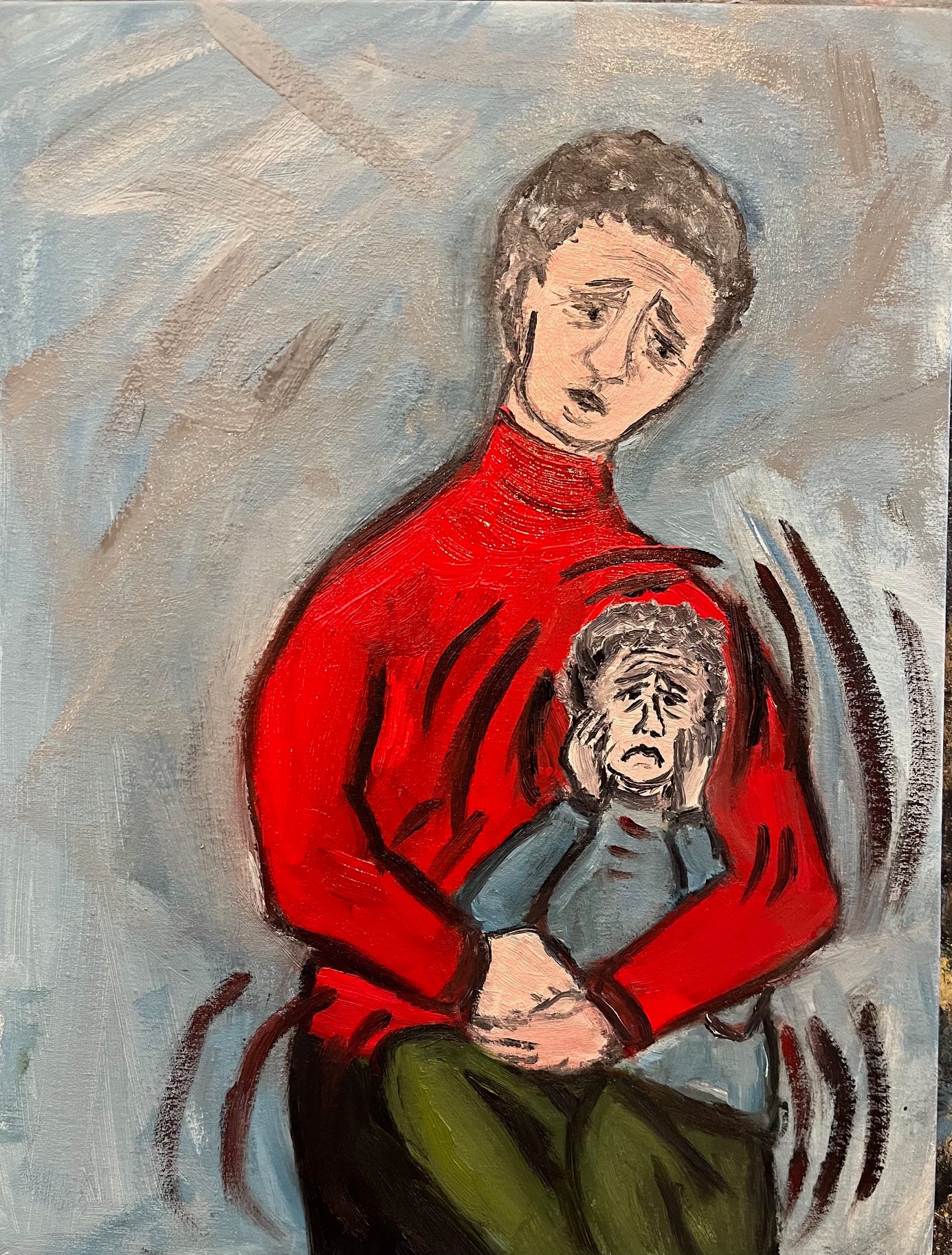
“Holding the baby”

This is not to downplay the discomfort or the need for my anxiety meds or continued therapy. But something shifted in that moment just a bit…something softened. To just stop the battle against myself was actually a relief.

After all, if I had a friend who was struggling and upset, what would I do with them? I knew without question — I’d hug them. I’d walk beside them and tell them I love them no matter what. It wouldn’t cure their anxiety, but it would give them relief to know they were loved, accepted, and not alone. So why wasn’t I doing this for myself?

I flashed on this image of “calm me” just holding that quivering stressed-out me and saying gentle words of love. And I remembered a quote I’d read years ago by the Buddhist monk, Thich Nhat Hanh, about holding ourselves like a mother holding and calming an upset infant. Sure, he was talking about managing anger but the same thing applies to anxiety:

Anger is like a howling baby, suffering and crying.
Your anger is your baby. The baby needs his mother
to embrace him. You are the mother.
Embrace your baby.

Embracing the Tiger Within: Meditations on Transforming Difficult Emotions
Thich Nhat Hanh

I figured, if it works for anger, then it might work for anxiety. And God knows, I struggle with anger and impatience too, so what could I lose to try? 

Two sides of the same coin

And then, the other day I found the Psychology Today article by Leon F Selzer, PhD: “Why Anger is Nothing More Than Repressed Anxiety,” and if that didn’t set off waves of self-recognition, nothing would. 

Dr. Selzer explaied how “anxiety and anger are two sides of the same emotional coin, kindred states of ‘agitated unease.’” That hit me. He went on to explain that “most people would prefer to ‘mutate’ their anxiety into anger…” He noted that anger gives a person the “illusion” of regaining control and it was a “pseudo-solution” to the self-shaming that went along with having anxiety. 

Well, hello again. In one short article, he connected the dots between my anxiety, the shame I always felt at “failing to get rid of it,” and my anger and impatience. I resorted to that last one because at least getting angry and taking some action seemed better than being “weak, anxious and stuck.”

The “antidote”

I suddently understood what Thich Nhat Hanh was getting at, and why his antidote to anger had deep relevance as an antidote to anxiety. Imagine that — self-compassion as a better way of life than kicking yourself? Who would have thought. 

Now no, it doesn’t mean I will not feel that familiar creeping sensation of anxiety at unexpected moments, or that I can stop working with a therapist, or doing all the self-caring things she recommends. I just finally understood for the first time in almost 7 decades, how nice it is to be nice to me. So, now, when things get upsetting, I can hold my own “baby” with care, and at least I don’t have to add “self-hate” to the word salad of things I live with. 

If anyone else has felt that familiar sinking sensation of fear spreading through your nervous system, I would of course encourage them to seek their own therapist, mentor, or spiritual guide to help them explore and navigate ways to healing. But I can also add that for anyone, giving oneself a few moments of quiet attention, love, and “holding your own baby” is always a soothing and loving experience. May you all find a way to “comfort that inner being.”

A painting of an older calm, compassionate adult holding their inner anxious self as that inner person struggles with anxiety. A way of calming and showing love to even the parts of ourselves we wish we didn’t have to feel.
Painted by the author