“Why write…now?” Three simple words, but a vital question that demands an answer to the motive for my change of heart.
Dr. Edith Eva Eger, in her 2017 book, The Choice, about her experiences both as a Holocaust survivor and a psychotherapist, talks about the question, “Why now?” Whenever she was confronted with a new patient, her approach was always the same–questions. I loved her description:
“Why now?…This was my secret weapon. The question I always ask my patients on a first visit. I need to know why they are motivated to change. Why today, of all days…Why is today different from yesterday, or last week, or last year? Why is today different from tomorrow?”
But before I can even answer why I would write now, I need to answer the question that came before it: “Why write?” I had actually tried three times before to write something about sexual abuse, wanting to help someone else in the same situation. I tried articles for adults, a picture book for small children, a chapter book for older kids. No matter what I did, it didn’t come out right. The message was wrong…missing…useless. What could I tell a child that might help their situation? “Go tell an adult, and they can help you.” First, I am not a therapist. And second, if I said that, would I be opening them up to a world of more hurt with a simplistic answer?
Even when professionals try to intervene, there are no guarantees that it will be better. Sometimes if a child tells, they risk breaking up their family, retribution for speaking, possibly being removed from the home and put in foster care, or maybe ending up in a worse situation. If authorities remove the offending parent, the entire family’s financial stability might be at risk. I so wanted to make a useful contribution. But what message could I give to anyone?
The alarm hasn’t yet gone off, but I am awake. I’ve been so since about 5:30, like many mornings. The oblivion of sleep, its escape from reality, at least on the nights I have no nightmares, is over. While my regular blanket keeps me groggy and warm, the weight of the other blanket starts pressing me into the mattress. It is the heavy sensation of feeling scared, hopeless, and like I have done something wrong and will soon be in trouble. I neither want to stay in bed nor get up. I wish I could just sleep in oblivion all day. Getting up means facing another day of writing, struggling to live with the pain it releases, and holding the chaos I feel inside.
I get up anyway, because by now, in my 7th decade, I know that this is part of my life, my existence, at least for the time being. Even as I felt great last night, felt ready to take on the world, yet again, this morning, the black cloud was there to greet me when my eyes opened and consciousness returned. But life has taught me that, like the weather, everything eventually changes. You just have to wait long enough. So for now, I just focus on my “routine.”
The routine. It is something I had to create after I retired from teaching at Raleigh’s North Carolina Museum of Natural Sciences. When I was working, I didn’t have time to feel all of this. I had to get up, get moving, battle traffic, and then revel in the last job of my life — which was my total joy.
So let’s get something straight right now – because I am a direct person, all my friends know that, and I prefer to be clear. This is not a book about a person’s journey from harm to forgiveness. If you are looking for a tome on the blessings of forgiving your abuser or how to achieve it, I recommend you look elsewhere.
My journey is about healing…restoring my soul from a lifetime of trauma and pain that was inflicted on me, and that I have carried way too long. And just to be clear, to me, forgiveness and healing are not the same things. They may both come about, or not, but they are not the same thing, and for me, both are not required. So first and foremost, I write to heal.
If I am to be totally honest, I don’t give a shit about forgiveness anymore…about whether it comes or not. In fact, the next person who tells me that I must forgive because it is the only way to happiness, or repeats that all-too-often quoted trope, that withholding forgiveness is like drinking poison and expecting the other person to die, I will tell you to just keep on walking. Unless I am in a bad mood, in which case I may say it slightly differently.
Cathartic maybe. Healing, insightful, yes. But easy? Never – And sometimes it takes you down unexpected roads…
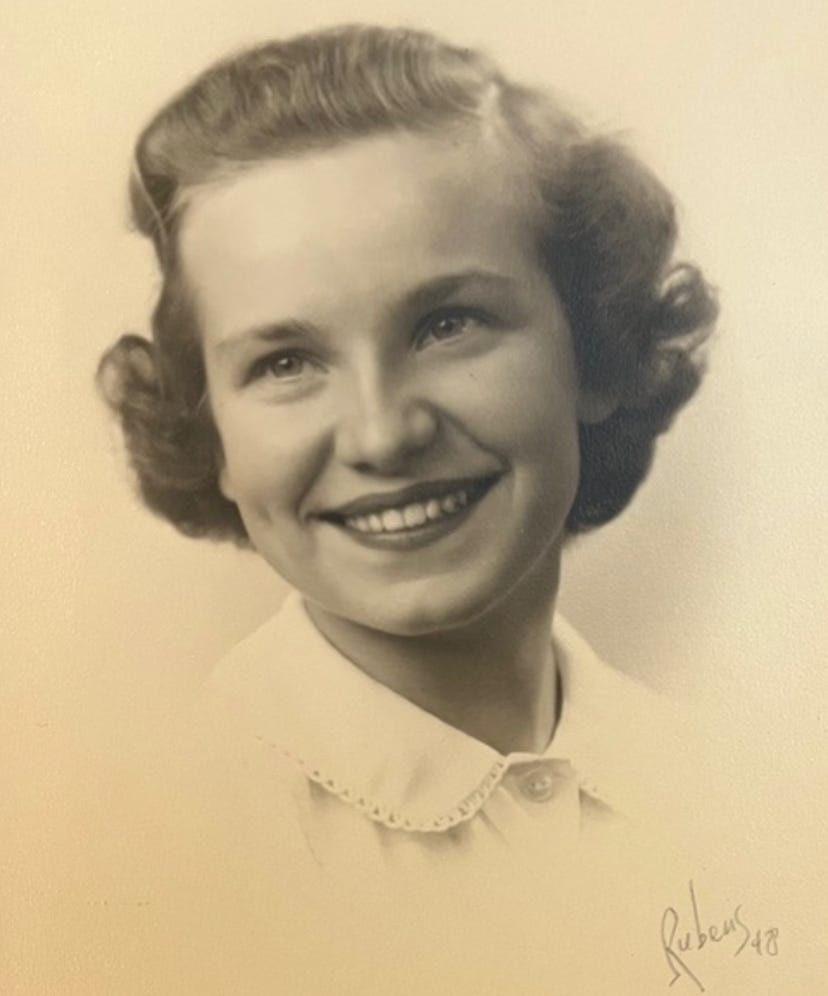
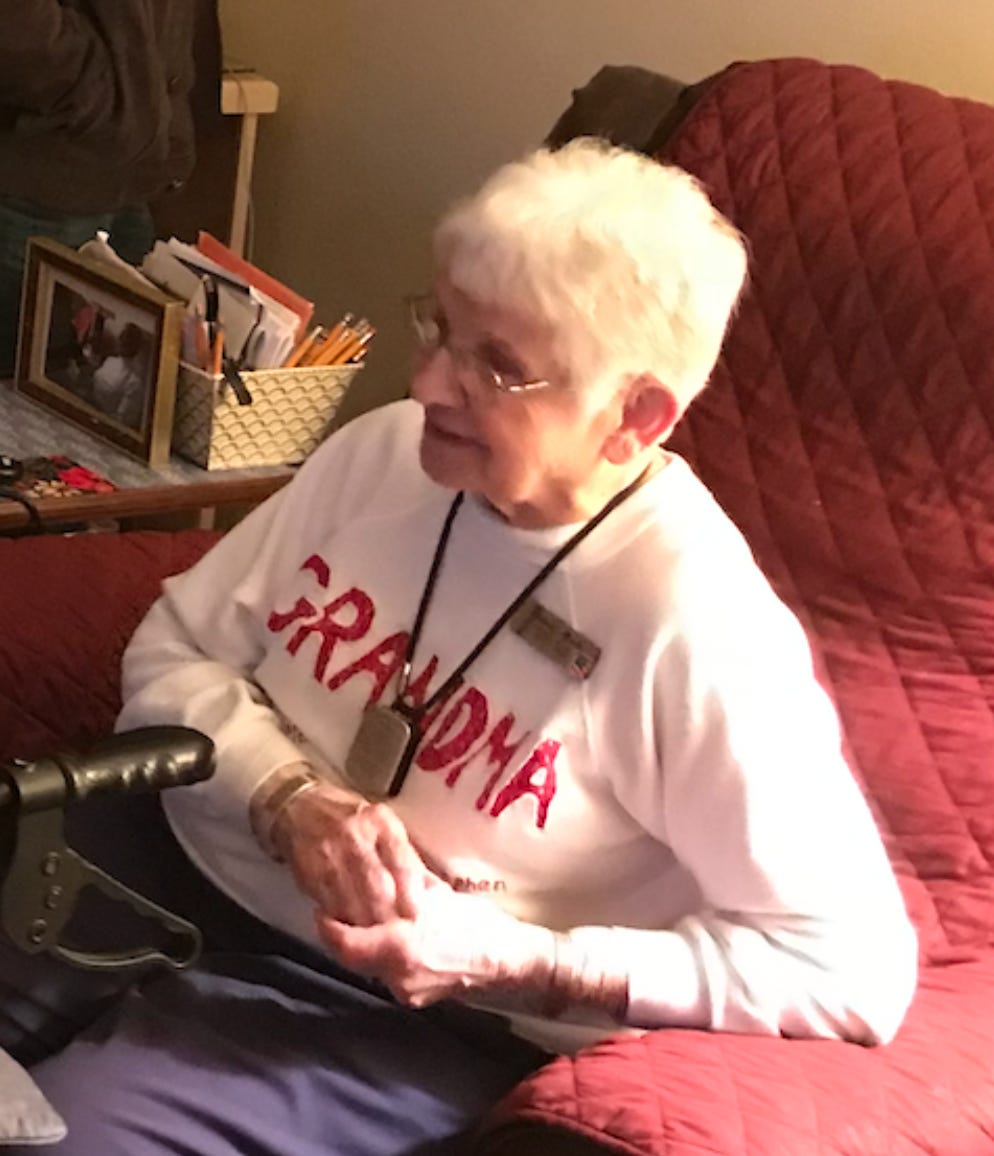
Author photo of her mother – 1948Author photo of her mother – circa 2017
It has been a difficult time. I have been writing …well, I WAS writing the next pieces about my childhood, working to move the book forward. But I got sidetracked by Mom.
The festering splinter
I had done a side piece about Mom..her death, her life…her, as part of the prologue. A matching bookend to the prologue entry about my father’s death. Yet every time I tried to edit it I ended up rewriting it instead. First from one angle, then another, struggling to capture that “something” inside me that needed to speak. That “something” that was driving me to write about her, and it was unrelenting. While I felt like I got closer to “it” with each round of writing, still, I was missing the essence.
Whatever it was I was trying to excavate, it was buried deep in my soul. The effort felt like when you have to plunge into your flesh with a needle to remove a deeply embedded festering splinter only to have it keep slipping out of your grasp and sink deeper. I felt like I was failing because that “Mom piece” was taking too long, and I needed to get back on track and return to that piece from my childhood. I was determined to stick to the outline.
This continued until late yesterday afternoon when, in a flash of insight…then despair, I realized I WASN’T off-track at all…and that there was actually something much bigger emerging in all of this. In fact, I suddenly understood that the “Mom” piece wasn’t the “sidetrack” but THE track. I kept getting pulled back to her…her death…her life because there were so many questions that needed answers. Questions like why did it matter so much to me that we took care of her to the end…why was I so proud of how she navigated her death process? Why did I care so much after she had abandoned me for a lifetime?
“The point in a conversation that is an impasse – both love each other very much. Both want desperately to make each other happy. One doesn’t want to hurt the other with his opinion but feels compelled to say it. The other wants desperately to agree, to be able to agree so all can be happy again, but can’t.
Both search to say something that would make it better…want to find those magic words. And “I love you,” may be true, but isn’t enough – it doesn’t dispel the present problem. The love is there, but so is the problem – each looks to the other to back down – to say the one thing they long to hear just to make the problem go away – but can’t, and each knows the other can’t but just hoped they would…and at this point no one knows what to say – all you can do is just walk away – confused – emotionally drained – completely mystified as to a solution.”
The missing link
How do you go from being a submissive, beaten-down child in an abusive family system to a healthy adult who stands up for herself? When does that miraculously happen? It’s not like you leave that house, flip a switch, and suddenly you’re an independent, healthy, assertive human being. In there somewhere is a missing link in the maturation process — years of trial-and-error efforts to heal and learn how to become that adult.
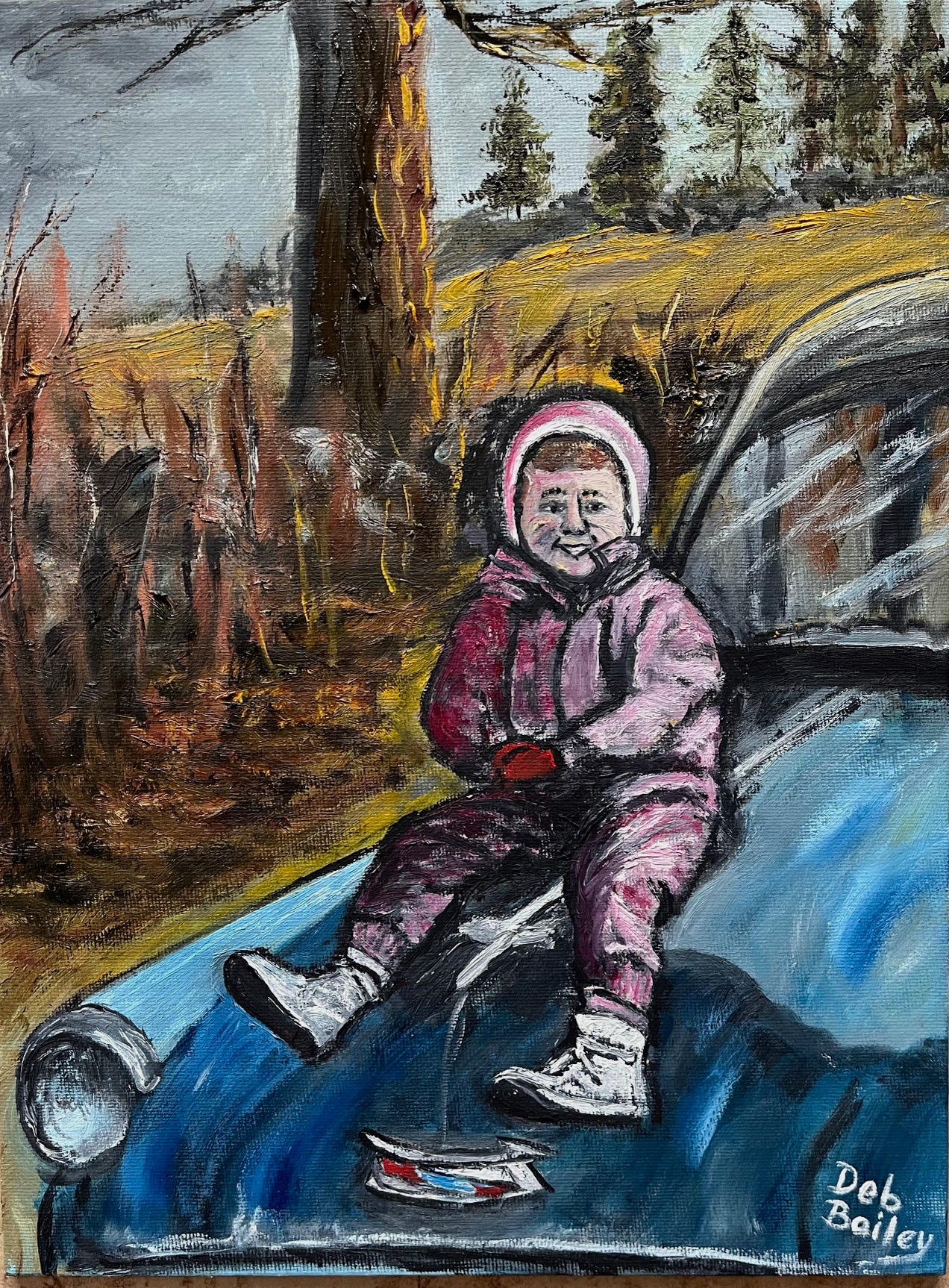
Painting by author – Author as an infant on hood of her father’s car
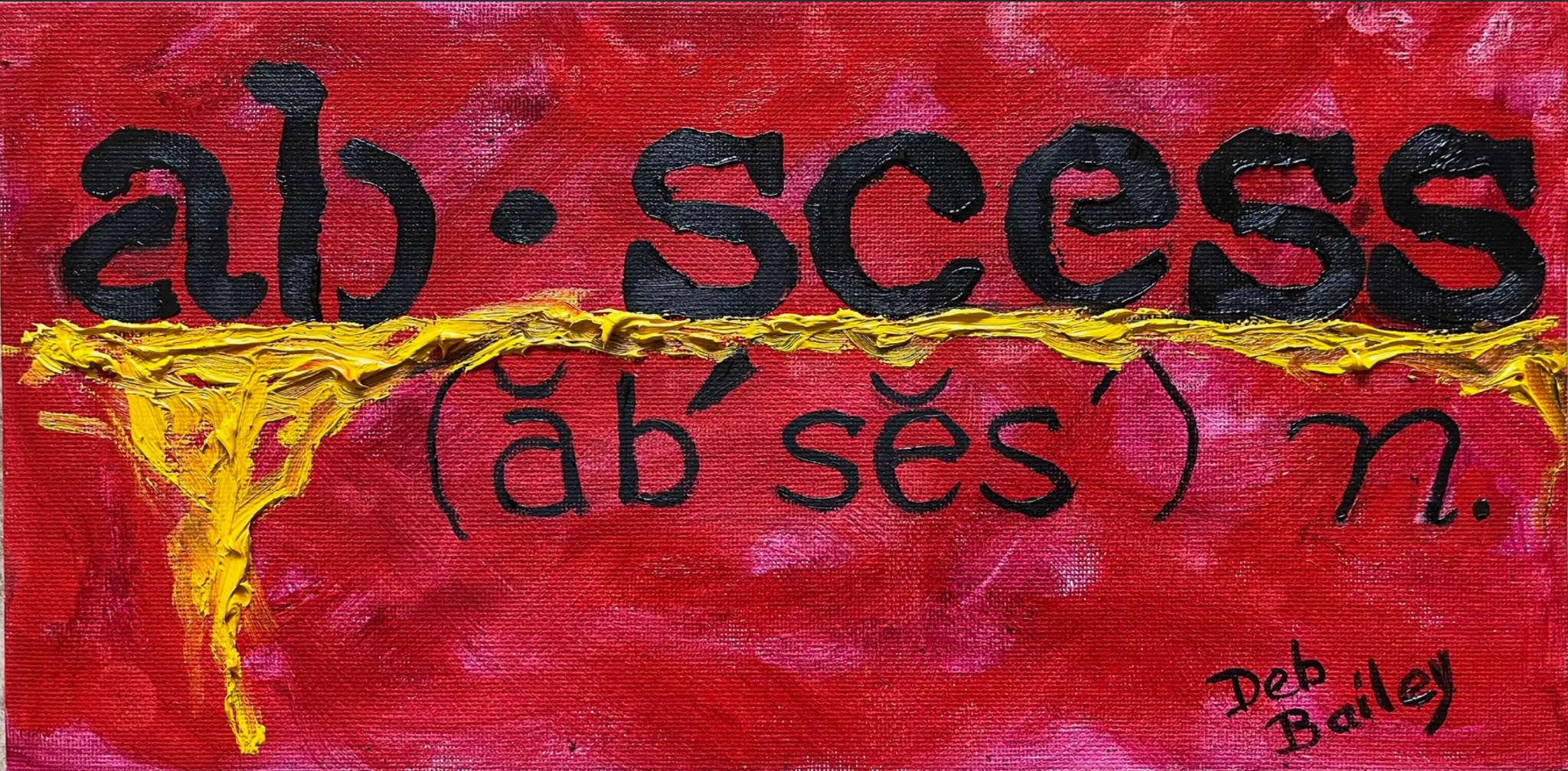
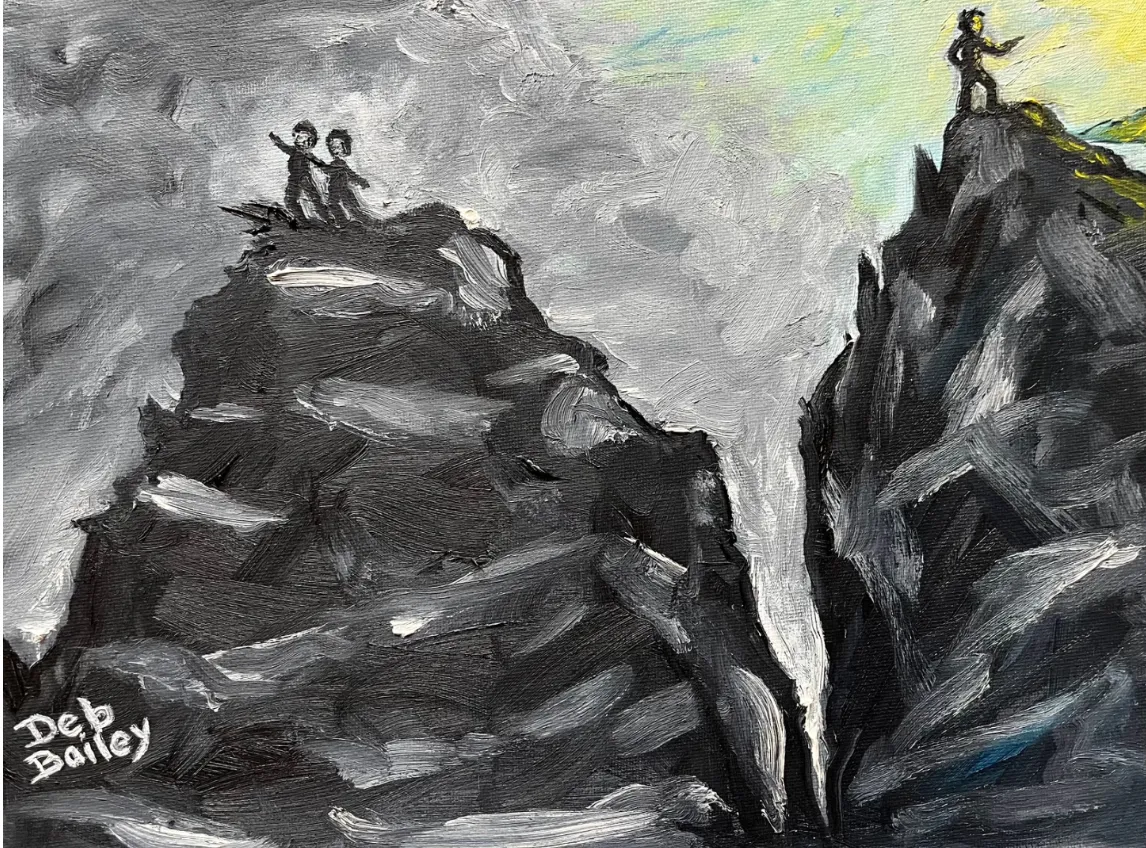
Driven to paint
Before I share below a sampling of the visual elements I am using in my book, I thought I would share the “WHY” I not only used them, but HAD to use them.
Rebuilding my life
The book incorporates the story not only of the abuse I endured, but also of my journey from my parents’ house—the depression and despair—to my rebuilding, and my creating of a meaningful life.
Even after the initial crises of my escape and recovery with the help of good therapists and friends, I would return for rounds of therapy off and on throughout adulthood. Given all of the life lessons I had missed out on during my early phases of life, I looked at it as “preventive maintenance.” Why “wing something” when I wasn’t sure how to handle it and risk messing it up, then have to fix it? Better to learn as I went along.
The traumas of life
This approach worked well, and I thought I had finally put the past to rest…until midlife. Menopause hit. My husband almost died. The dog did die. My son left for college. All at once. But even worse, those new traumas blasted open a well of trapped emotions I never realized were even there. Like opening Pandora’s box, it unleashed a flood of unresolved depression, anxiety, flashbacks, nightmares…severe PTSD. At the time, I had no idea what was going on. Desperate and having major anxiety, I began working with a skilled trauma specialist who was and remains a godsend in my life.
This was fortunate because, in addition to everything that I was dealing with, I also began navigating the last chapters of my parents’ lives and their deaths. It was then that I realized just how much work I still had to do.
The past comes calling to claim its due
Those first decades of adulthood had been about building a life. Now, it was about returning to the past to address the well of unfinished business and unresolved pain that had come forward to claim its due. It had patiently waited a lifetime…my son came first all those years. But now, it was time for me…and that long-suffering child.
However, I had no tools to reach the pain, to know how much was there, or to express it. I only knew its presence through the agony of body memories and nightmares. That was when I made the discovery that art heals.
Aside from making order out of chaos by deciding which of life’s millions of details to include or leave out, there is the issue of how to order the book and tell the story. I am still working on that. But at least for the first draft stage, I have a rough outline to follow as I write.
This blog shares excerpts of my draft memoir — working title: “I Thrive.” While not graphic, it will discuss aspects of the sexual, physical, and emotional abuse I endured and my journey back to healing…and thriving.
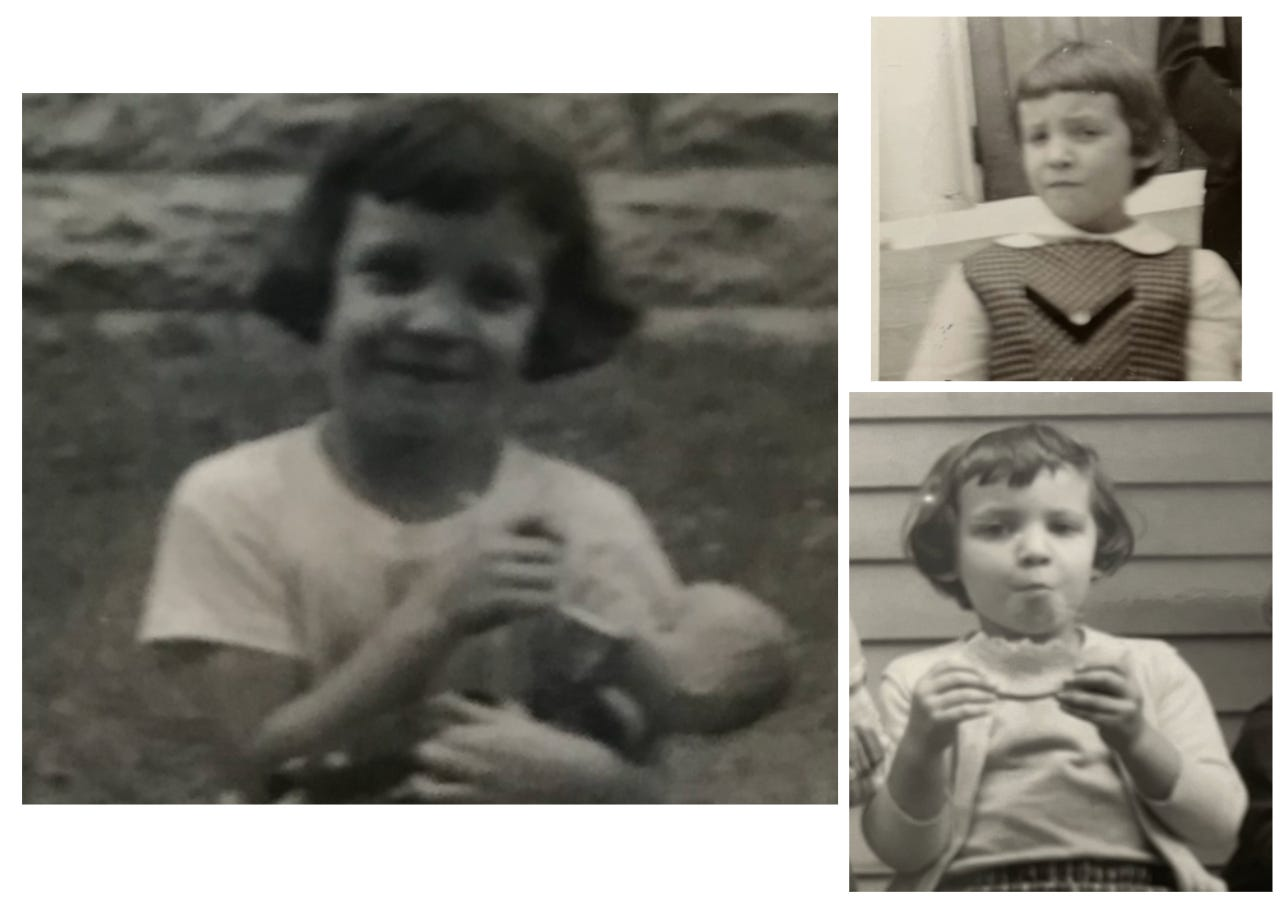
Photo by author, circa 1959-1960
To be the illustration
Memoir expert and author Marion Roach Smith described the genre of memoir this way:
“Memoir is not about you. It’s about something and you are its illustration.”
Another author, Trish Lockard, added that this genre is not just a recounting of things that happened to you because, after all — “Stuff happens to everybody.” Instead, memoir captures one’s reflections about an event when enough time has passed for a change, a transformation, to take place. Those insights gained over time through effort are the gift to the reader—the takeaway.
To only write a list of everything done to you in life without the reflections is like dumping a pile of ingredients on the counter and calling it a cake. It is only a cake when that pile of ingredients has gone through the crucible of a hot oven and been transformed into the real takeaway — dessert. Only then does it have “purpose and meaning.”
I loved how one author, whose name I cannot find, summed it up:
“Don’t just confess. Digest.”
Digestion is change and makes something useful…nutritious. It gives back. And digestion is the unfinished business of my life.
After seven decades of silence, it is time for me to look back, digest the raw material of my life, and obtain the nutrition— the insights that give it meaning. It is not: “Look at what was done to me” so much as the answers to the questions: “Because of what was done, what am I doing with it? What does it mean?” So, my life will be the illustration of that “something” that might have meaning and nutrition for all.
28 years of abuse…and building a “beautiful mosaic”
Finding the main threads and recurring elements that lead to a strong book
Photo by author
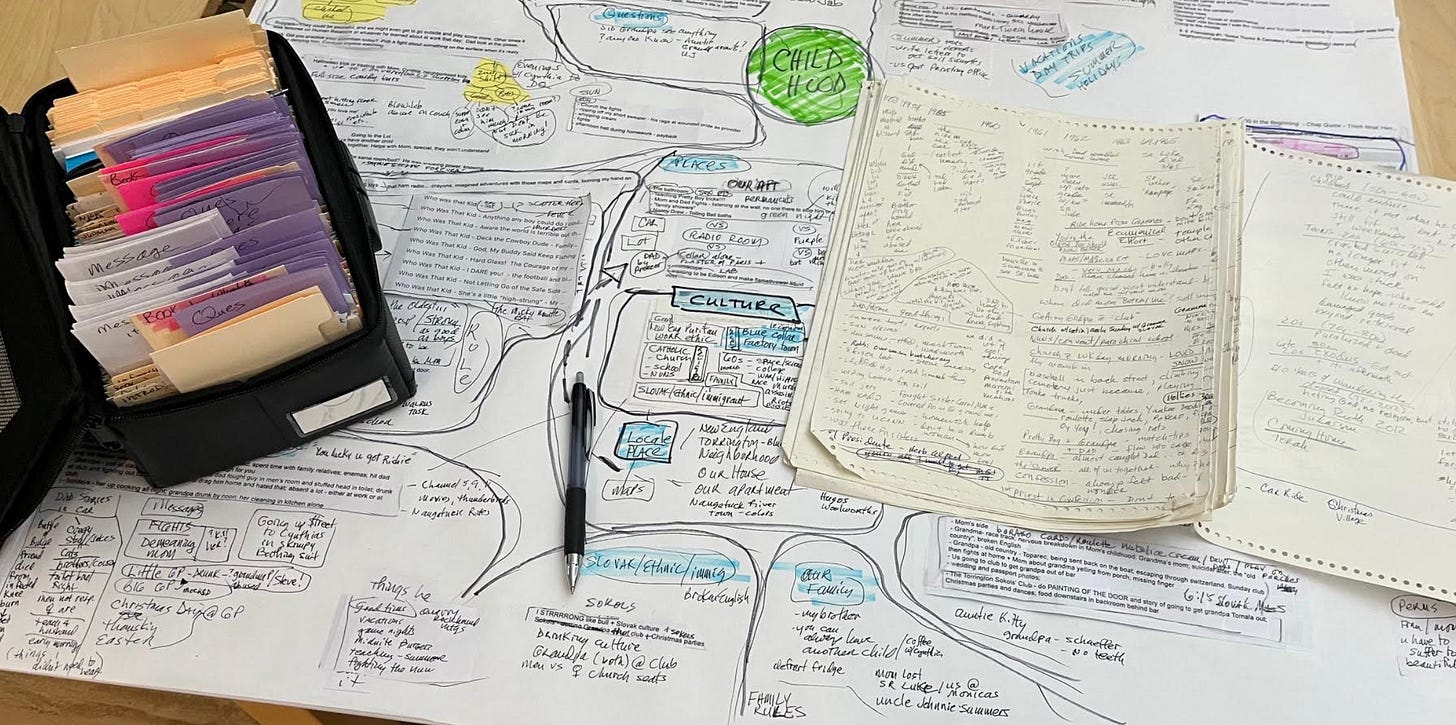
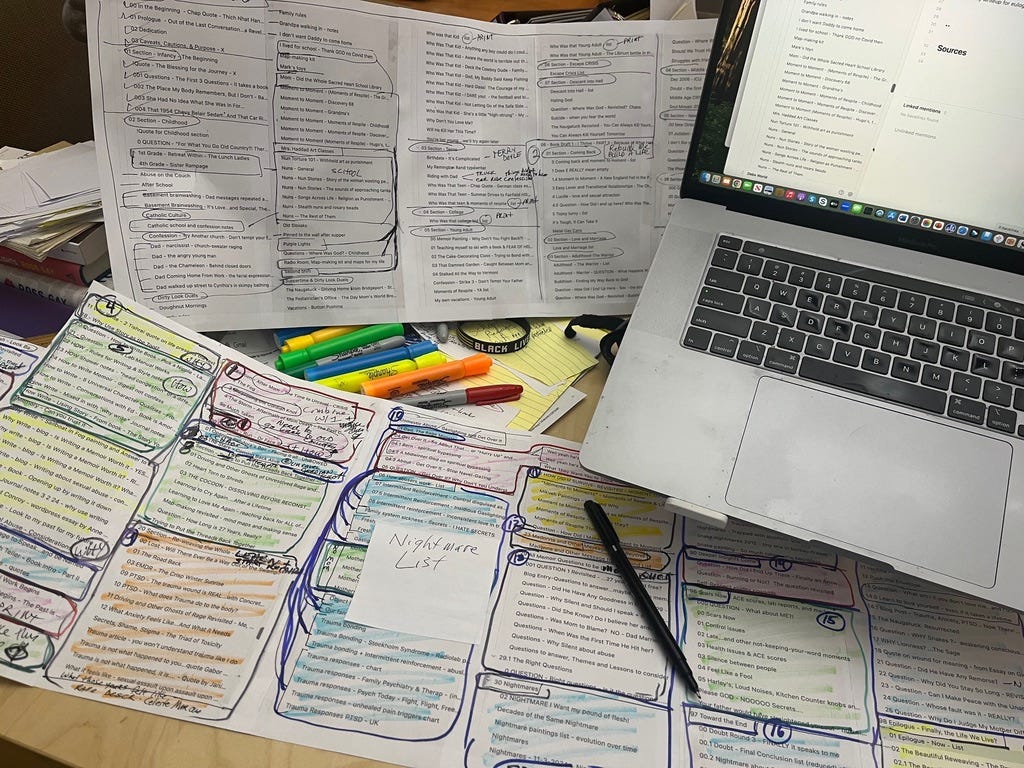
Today is a “heads-down” day, one of those unavoidable times in writing a book where you have no choice but to stop any forward progress and “assess.” I have spent years journaling for the book. There are a lot of reflections, insights, scattered accounts of events, and lists of things “to remember to put in the book.”
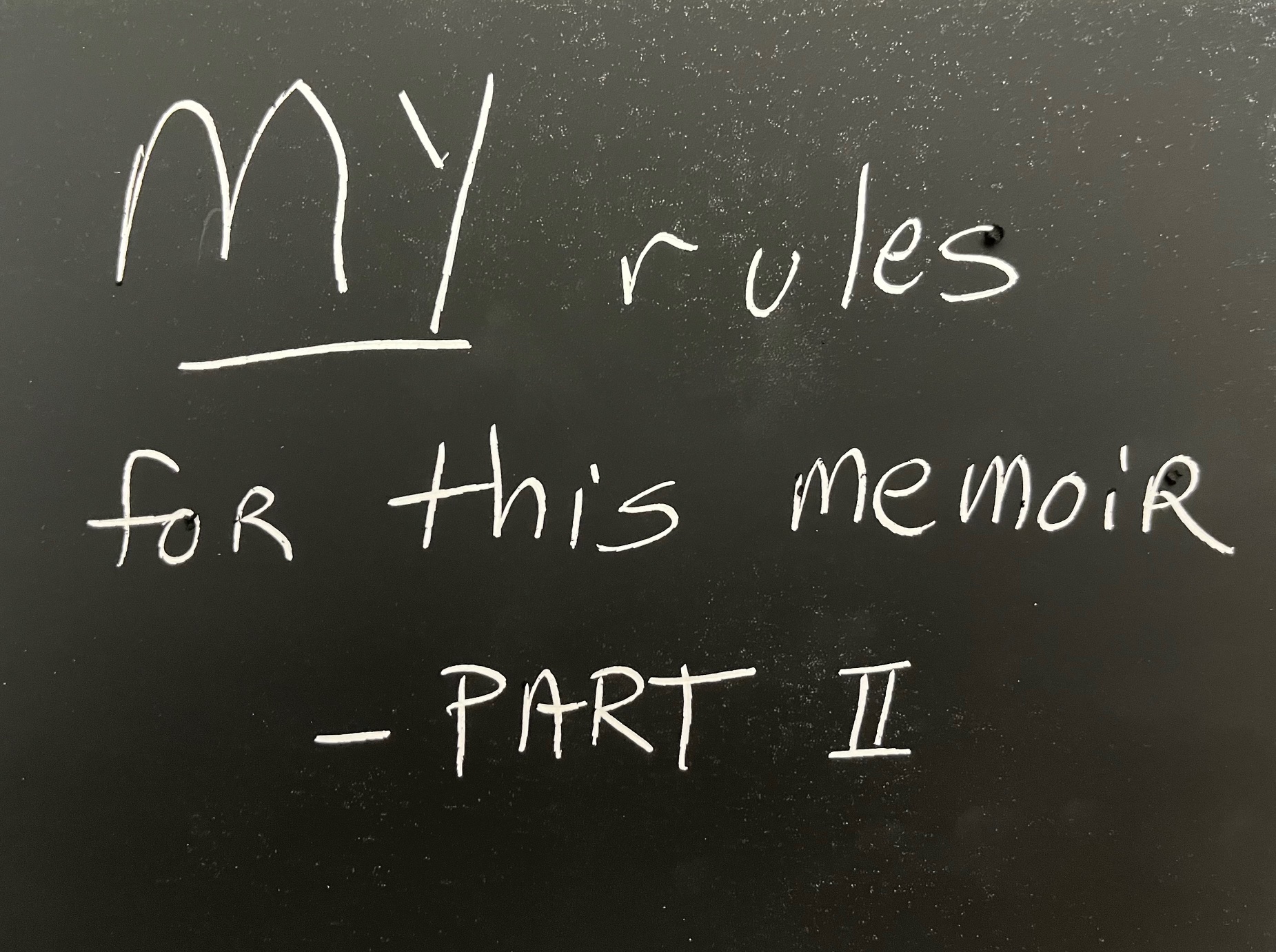
As promised, here is the second half of my rules for this memoir. These will be right at the front of the book so the reader is also clear about what I have in mind.
Caveats, cautions, and purpose
Before departing on this journey, here are 7 key points:
 Soul Mosaic