This blog shares excerpts of my draft memoir — working title: “I Thrive.” While not graphic, it will discuss aspects of the sexual, physical, and emotional abuse I endured and my journey back to healing…and thriving.
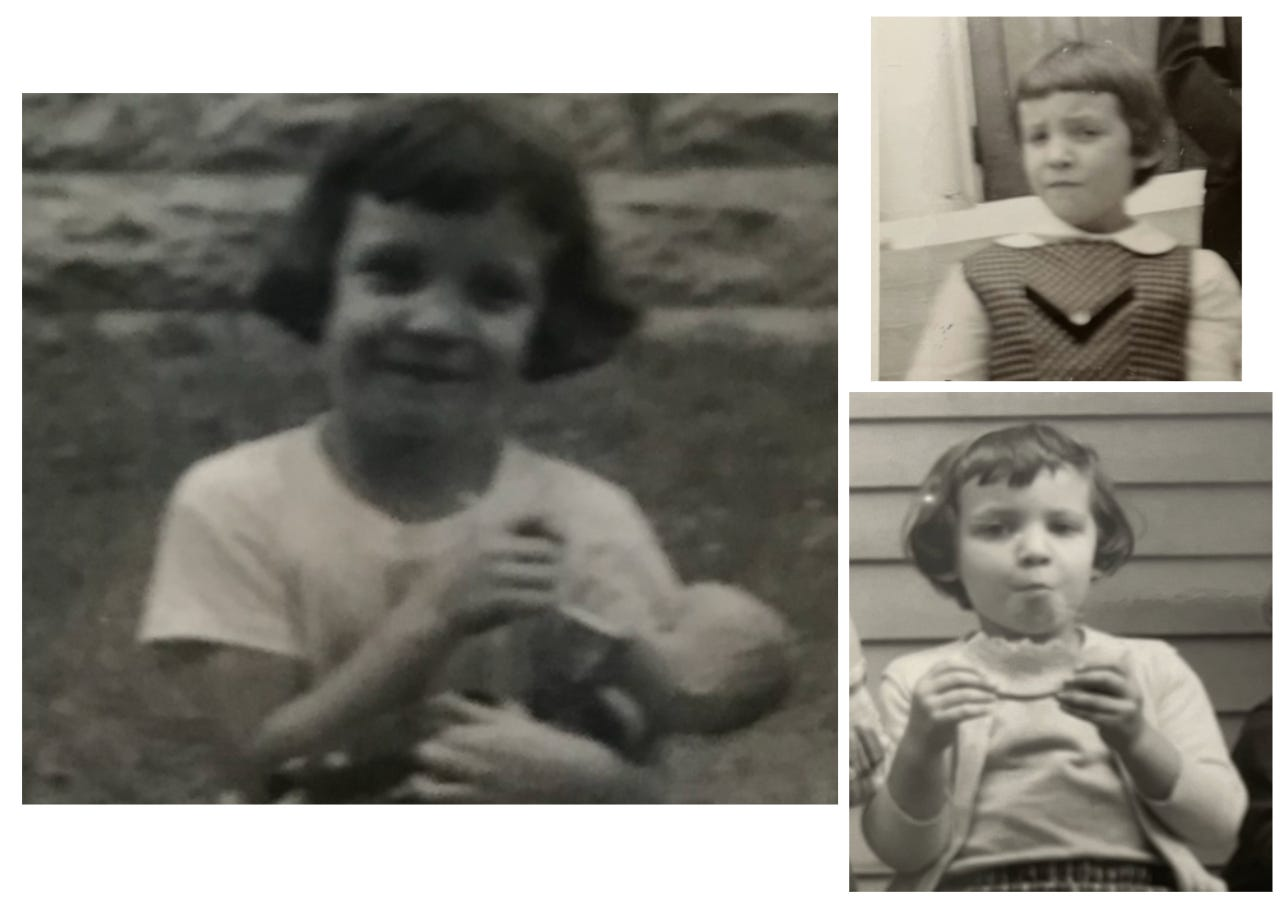
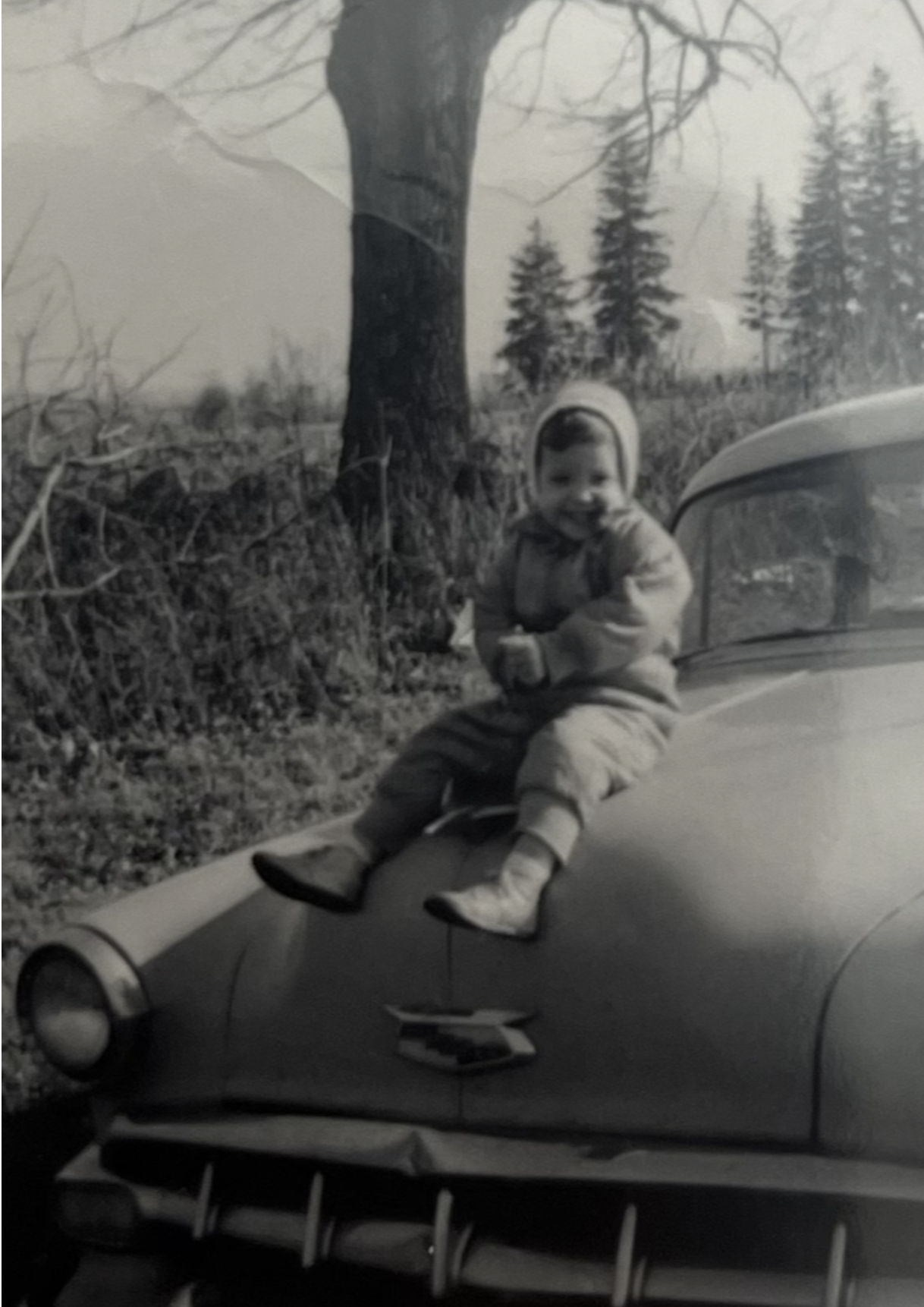
Photo by author, circa 1959-1960
To be the illustration
Memoir expert and author Marion Roach Smith described the genre of memoir this way:
“Memoir is not about you. It’s about something and you are its illustration.”
Another author, Trish Lockard, added that this genre is not just a recounting of things that happened to you because, after all — “Stuff happens to everybody.” Instead, memoir captures one’s reflections about an event when enough time has passed for a change, a transformation, to take place. Those insights gained over time through effort are the gift to the reader—the takeaway.
To only write a list of everything done to you in life without the reflections is like dumping a pile of ingredients on the counter and calling it a cake. It is only a cake when that pile of ingredients has gone through the crucible of a hot oven and been transformed into the real takeaway — dessert. Only then does it have “purpose and meaning.”
I loved how one author, whose name I cannot find, summed it up:
“Don’t just confess. Digest.”
Digestion is change and makes something useful…nutritious. It gives back. And digestion is the unfinished business of my life.
After seven decades of silence, it is time for me to look back, digest the raw material of my life, and obtain the nutrition— the insights that give it meaning. It is not: “Look at what was done to me” so much as the answers to the questions: “Because of what was done, what am I doing with it? What does it mean?” So, my life will be the illustration of that “something” that might have meaning and nutrition for all.
28 years of abuse…and building a “beautiful mosaic”
Finding the main threads and recurring elements that lead to a strong book
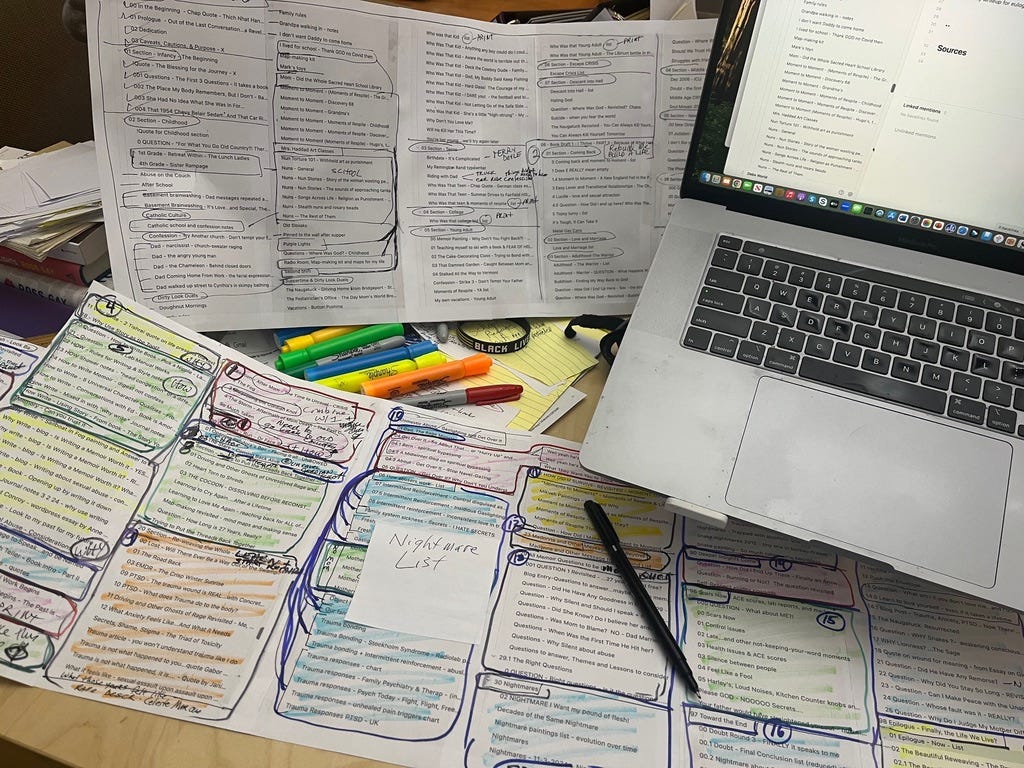
Photo by author
Today is a “heads-down” day, one of those unavoidable times in writing a book where you have no choice but to stop any forward progress and “assess.” I have spent years journaling for the book. There are a lot of reflections, insights, scattered accounts of events, and lists of things “to remember to put in the book.”
As promised, here is the second half of my rules for this memoir. These will be right at the front of the book so the reader is also clear about what I have in mind.
Caveats, cautions, and purpose
Before departing on this journey, here are 7 key points:
A moment before continuing the story, to state the “rules of the road” for this book
Before continuing with posts about my life, I want to share what I think is a vital part of any memoir – stating the rules, goals, and cautions for the book. So this is the first of a 2-part set of posts that will form the introduction to my memoir. That introduction will give all readers clear information about the how and why of my approach.
The “hows and whys” of my writing
Since there are so many good books on how to write a memoir, mine does not and will not be a textbook on all the nuances, methods, and rules.
But the following things jumped out at me as I studied all the different books on the subject. So I wrote myself some clear guidelines:
The “ancient history look” of 1950s black-and-white photos
It’s one of those typical 1950s black-and-white photos found in family albums — those of the era of the late Baby Boomers but before the 1960s when you could more easily obtain color film. It has that dated look and these days, it could simply be viewed as “back then, ancient history.” Only the car gives a clue as to the time period. The bottom line is that this picture comes across more as something found in a history book than a real moment out of a real life. So, while I’ll use some photos in this book, for a large part I am going to use paintings.
The details of a photo…
Why? First, check out the difference when viewing that same moment in full color:
In one respect, I wish I could go back in time to 1955-1957 and be a fly on the wall in this apartment. But maybe it’s better I can’t. Whatever went on at 57 xxxx Avenue is something I will never know because I can’t remember…consciously. But boy my body does.
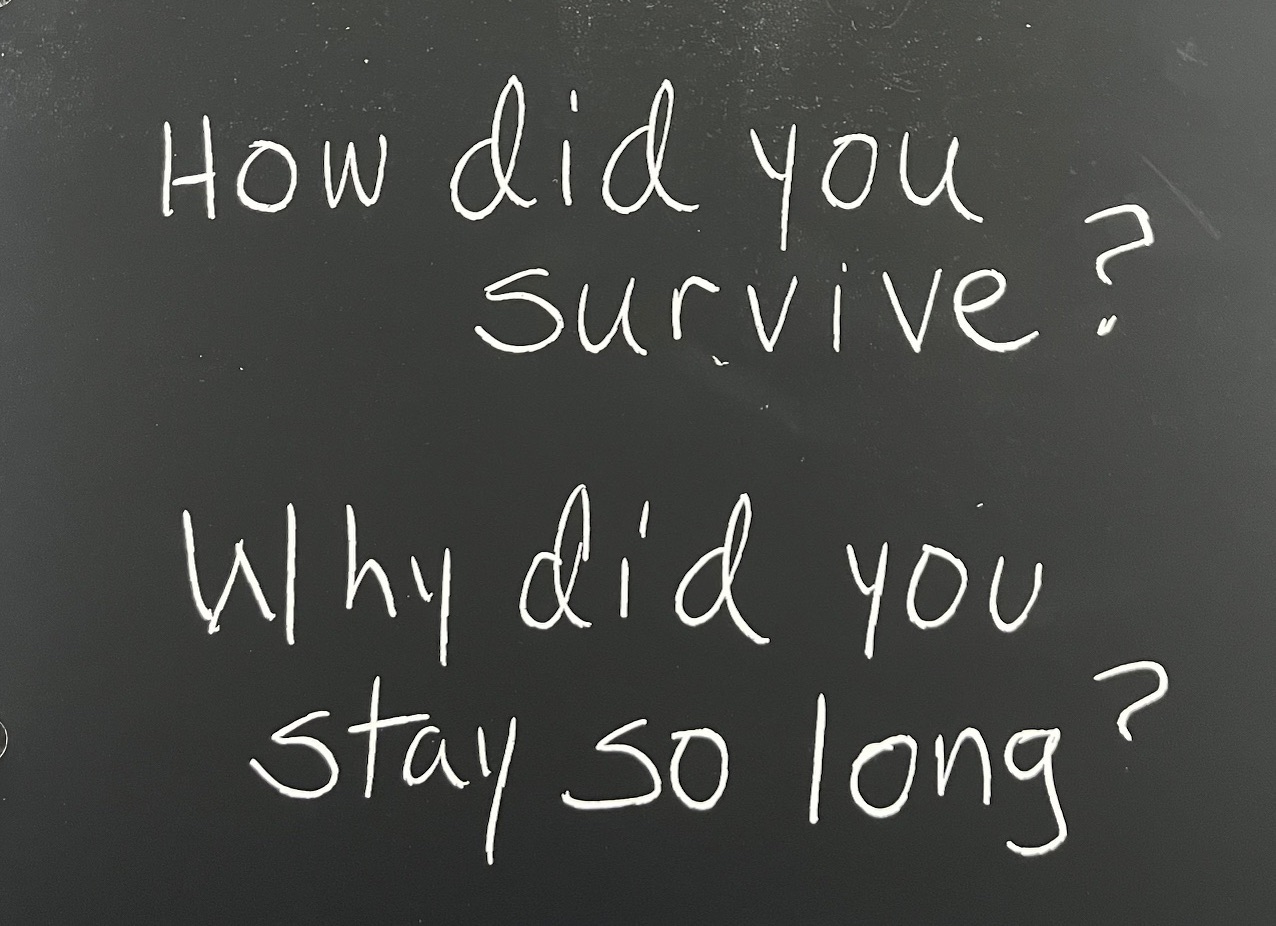
The book will have questions scattered throughout it: questions I’ve been asked and questions I’ve asked myself.
But these 2 questions are the ones people ask me the most…and the answers are complicated. I can only say that it takes a book.
There is also one other question, and it sounds mean, the question I tortured myself with over a lifetime, at least until recently. This question truly needs the book to show why I hated myself so much, and how I came back:
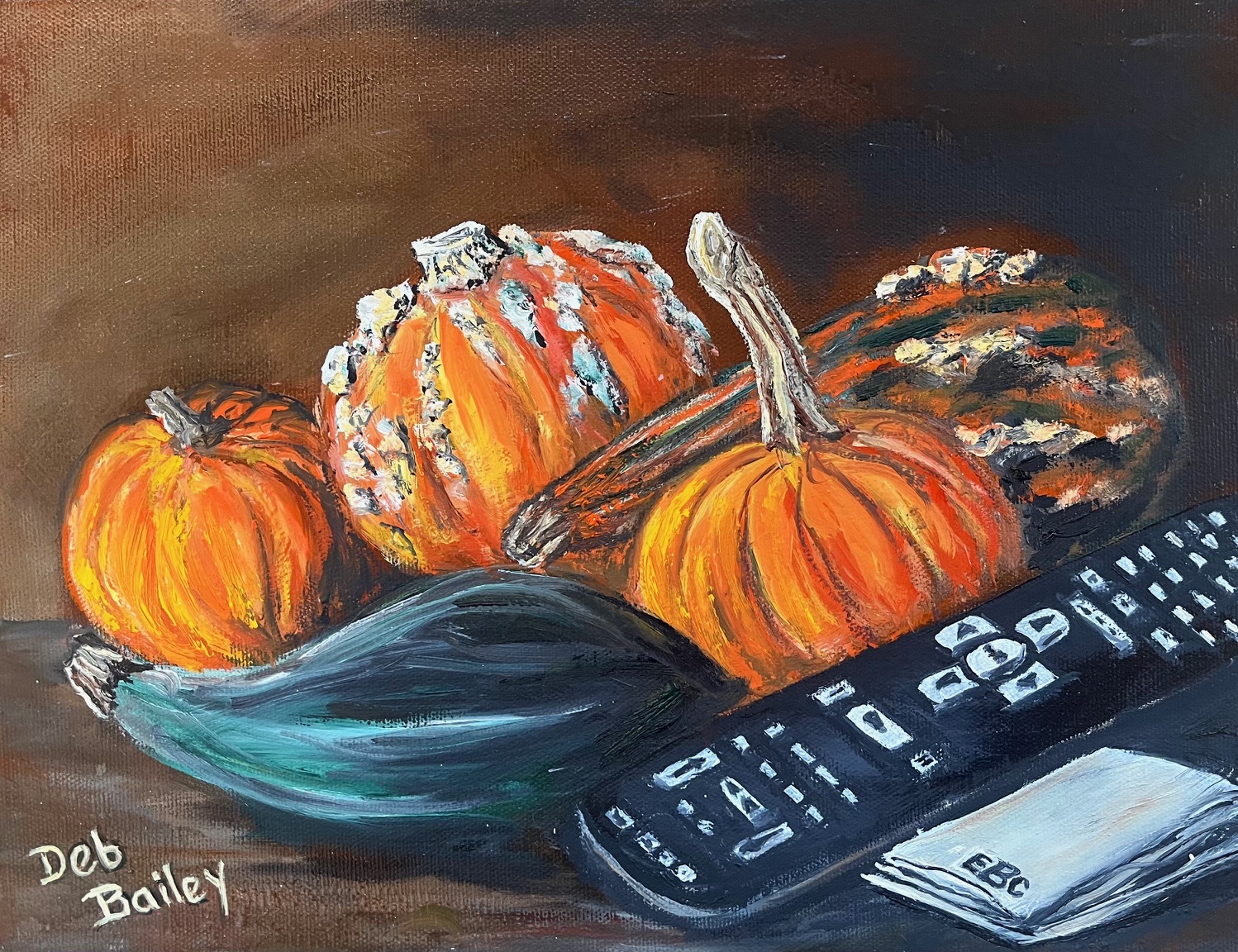
A Humorous Twist on the Old Masters’ painting style
“The Old Masters with a TV Twist” – Painted by the author
The need for stress reducers during intense writing
There is no question that writing a memoir about abuse …frankly, about anything serious in one’s life if you are emotionally open and honest, can get intense. It takes energy to face it, feel it, process it, and extract the meaning behind the events. So, in order to maintain a healthy outlook it is important to have some activity for a “tension-breaker.” For me, that is art — both looking at good art as well as creating my own oil paintings.
The Old Masters paintings
I happen to love the Old Masters – whether the styles and color tones of the Northern Renaissance, such as Rembrandt, Albrecht Durer, Pieter Bruegel the Elder, or Hieronymous Bosch; or the Italian Renaissance painters and sculptors. I have a lot of books on the various artists or on the time period.
Giving the Old Masters a “modern” twist
Recently I decided to have some fun with the topic and created the above painting – The Old Masters With a TV Twist. I love the idea of throwing in some current-day object(s) to give a modern twist to the classical still-life painting approach! So there will be more of these coming along!
BTW, if you want to know more about the “Old Masters” – here you go:
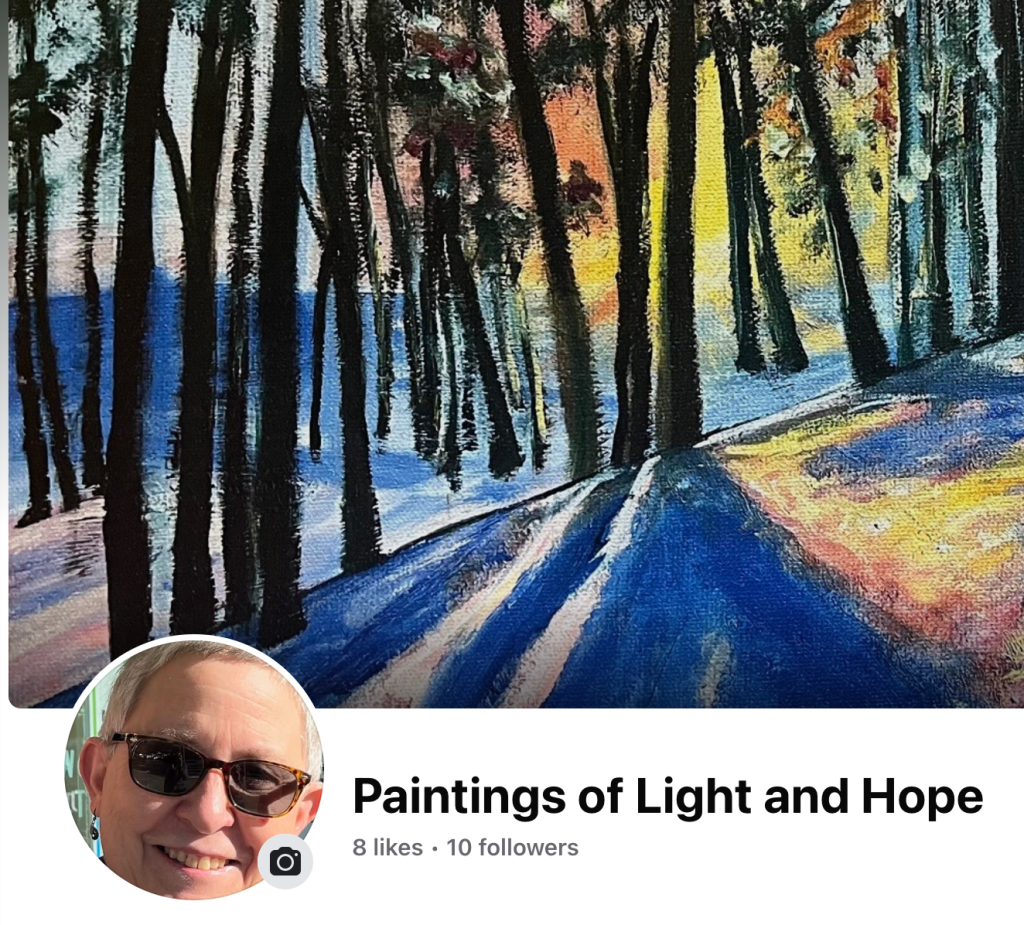
For anyone who might enjoy watching the progress of my paintings from blank canvas to finished “masterpiece” please check out my Facebook page: Paintings of Light and Hope:
Photo link by author
You can also view my art progress on Instagram (if you’re not on Facebook)
Just a short post here. I have been sharing thoughts about “why write a memoir,” the considerations for how to approach such a project, the fears, etc. Going forward, I will continue to share some of that work, including various ways the book could be structured and specific guidelines I wrote about my approach so it’s clear to the reader.
But I will soon also start weaving in some excepts of my life story itself. A taste of both the process and the story.
Throughout my life, as is true for many of us, there are difficult days when the weariness of spirit becomes like a hand shoving us down against the mattress as we try to get up. The body struggles and the mind asks: Why bother? Why try?
Moments of “respite”
Decades ago, through years of childhood abuse, I found a way to survive — not a “dissociation” thing, but by living “Moment to Moment.” There would be the bad things and at that moment you just did whatever you must to get through it. Later though, when alone, I took comfort…escape…in a moment here, a quick experience there, but essentially in some small “detail” that I could lose myself in even for a little while. In those breaks, I could eke out sustenance where none seemed possible. And that let me keep going. At the time, I didn’t recognize consciously what I was doing–I just did it intuitively I guess– but it was my survival. Now I call them my “Moments of Respite.”
When autumn is in full color, I am reminded of one of the Moments of Respite from my late 20s — during a lonely day full of despair and a sense of abandonment.
Nature’s abundance
I grew up in New England, where the cold of fall harvest days conjures up images of steely gray skies and bare orchard trees. Even now, remembering that day gives me a reprieve from current problems…
Pulling into the dirt driveway of the farm I parked near the barn, the only car in the lot. Dried leaves crunched underfoot as I approached the building, and the air was heavy with that sweet smell of damp earth and composting plant matter. The sun hung low in the sky as the late afternoons were already taking up the appearance of night sooner than I wanted.
Inside the dimly lit barn, my breath visible in front of my face, bushel baskets of nature’s bounty were arrayed in rows before me. Grease pencil writing on cardboard signs listed the varieties there: Early McIntosh. Golden Delicious. Baldwins and Cortlands. Empires and Granny Smiths. So many to choose from thanks to nature’s gift to us of abundance… of flavors and textures, colors and sensations.
Questions, questions, questions
That gift though, presented the dilemma — which one or ones to choose? Even the questions came in abundance: Sweet apples or tart? Crunchy or soft? All? How much money was in my wallet? (Farmers then didn’t take credit cards and there was no Venmo or Squarespace.)
More questions followed. Would it be pies for the freezer? Or applesauce? Caramel or candy-apples, or baked ones? The type of apples makes a difference, of course, depending on how you are going to use them. And then there was just that simplest of delights, eat them fresh and raw before they made it into anything!
I walked the rows of baskets, gravel of the barn floor grinding against my boot soles. Back and forth, assessing the red ones, the green-red stippled. The sizes. The shapes. You look for the best ones with the fewest bruises…unless, of course you waited too long and there aren’t many left to choose from.
Even before I finished shopping, I couldn’t wait any longer to sample one. I was buying the basket anyway so I grabbed the largest one off the top, rubbed it against my jacket and tore into it.
The joy of a fresh apple
When you eat apples that are fresh off the tree, the sensations come all at once: the aroma of sweet and spice mixed together; the snap of crisp skin giving way under your teeth; a flash of tanginess as the soft flesh hits your tongue, and the syrupy juice that sprays out and runs down your chin. It is an overload of delight. In that moment, that “Moment of Respite” — the despair temporarily evaporated. In the raw air of a fall evening, drowned in the sensations of a fresh apple, I felt the totality of an autumn miracle right in the palm of my hand. And refreshed, I could go on.
It’s all in the details…
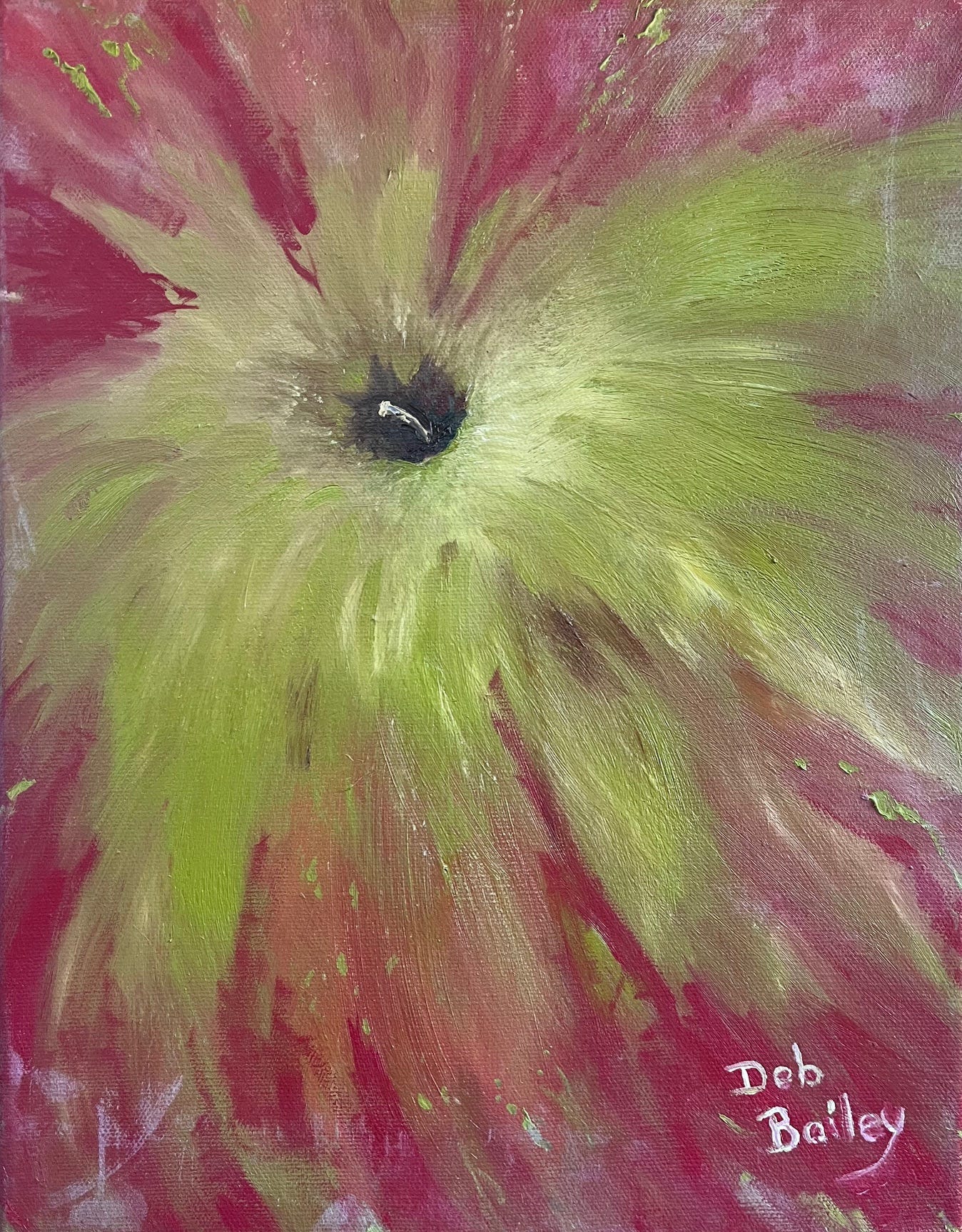
So many times in my life, those Moments of Respite saved me, fed me, gave me the energy to try again. For all the times when your world may be torn apart, life is sustained in the small details. It is those precious details that preserve the life-blood of our souls. You can draw a circle and color it in with a red crayon and call it an apple. Or you can underpaint it with burnt umber to put in the shadows, then layer in increasingly bright pigments of cadmium red, cinnabar green, lemon yellow, and titanium white. You can vary the intensity of the colors and the depth of the layers. Whatever you choose, the details make it all the richer for the moment. And it is in seeing the details that we are reminded there is more to life than just the pain we are struggling with at the moment.
Finding the calm
Moments of Respite provide the reminder that life still offers little worlds of richness and sensory escapes where our overwrought nervous system can retreat to find calm…where we can bind our wounds, restore our minds, and then return, ready for another round of the battle.
I no longer live in New England, and my life is much happier and serene. But even now, whether I am holding a crisp fresh apple from the store or the leaves hint at shades of crimson and burnt sienna, the evenings get a chill and the light departs sooner than I want, that moment comes flooding back. And I remember that Moments of Respite can make any chaos seems a little less daunting.




 Soul Mosaic