The alarm hasn’t yet gone off, but I am awake. I’ve been so since about 5:30, like many mornings. The oblivion of sleep, its escape from reality, at least on the nights I have no nightmares, is over. While my regular blanket keeps me groggy and warm, the weight of the other blanket starts pressing me into the mattress. It is the heavy sensation of feeling scared, hopeless, and like I have done something wrong and will soon be in trouble. I neither want to stay in bed nor get up. I wish I could just sleep in oblivion all day. Getting up means facing another day of writing, struggling to live with the pain it releases, and holding the chaos I feel inside.
I get up anyway, because by now, in my 7th decade, I know that this is part of my life, my existence, at least for the time being. Even as I felt great last night, felt ready to take on the world, yet again, this morning, the black cloud was there to greet me when my eyes opened and consciousness returned. But life has taught me that, like the weather, everything eventually changes. You just have to wait long enough. So for now, I just focus on my “routine.”
The routine. It is something I had to create after I retired from teaching at Raleigh’s North Carolina Museum of Natural Sciences. When I was working, I didn’t have time to feel all of this. I had to get up, get moving, battle traffic, and then revel in the last job of my life — which was my total joy.
Cathartic maybe. Healing, insightful, yes. But easy? Never – And sometimes it takes you down unexpected roads…
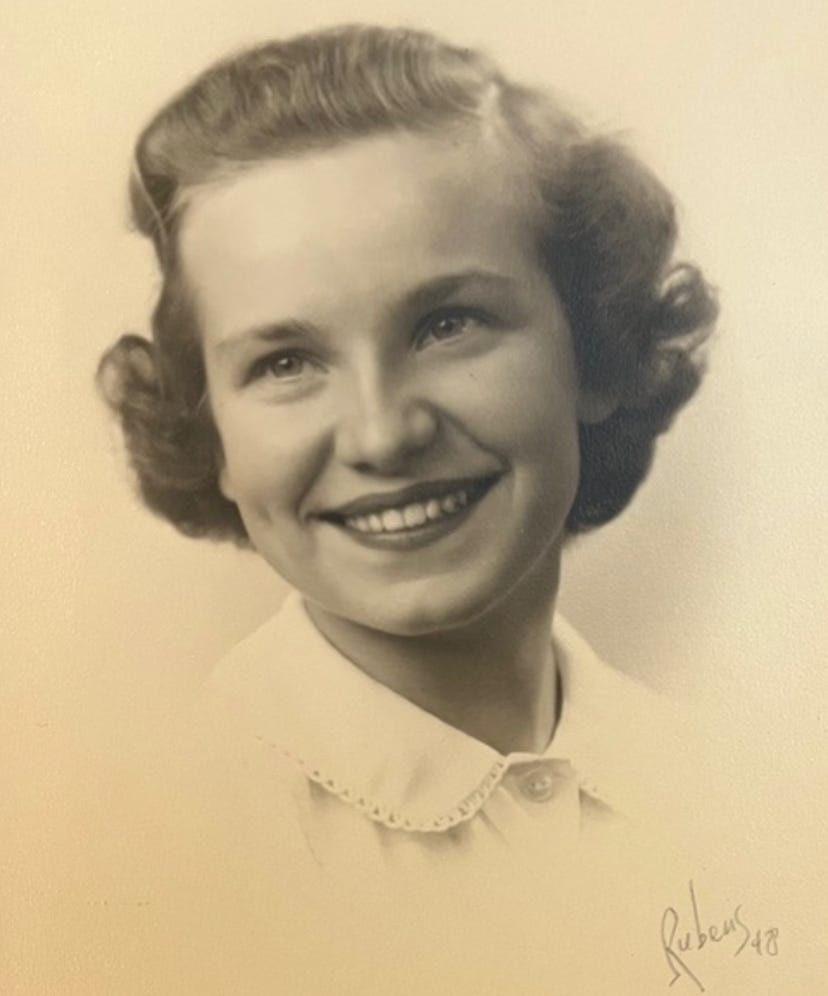
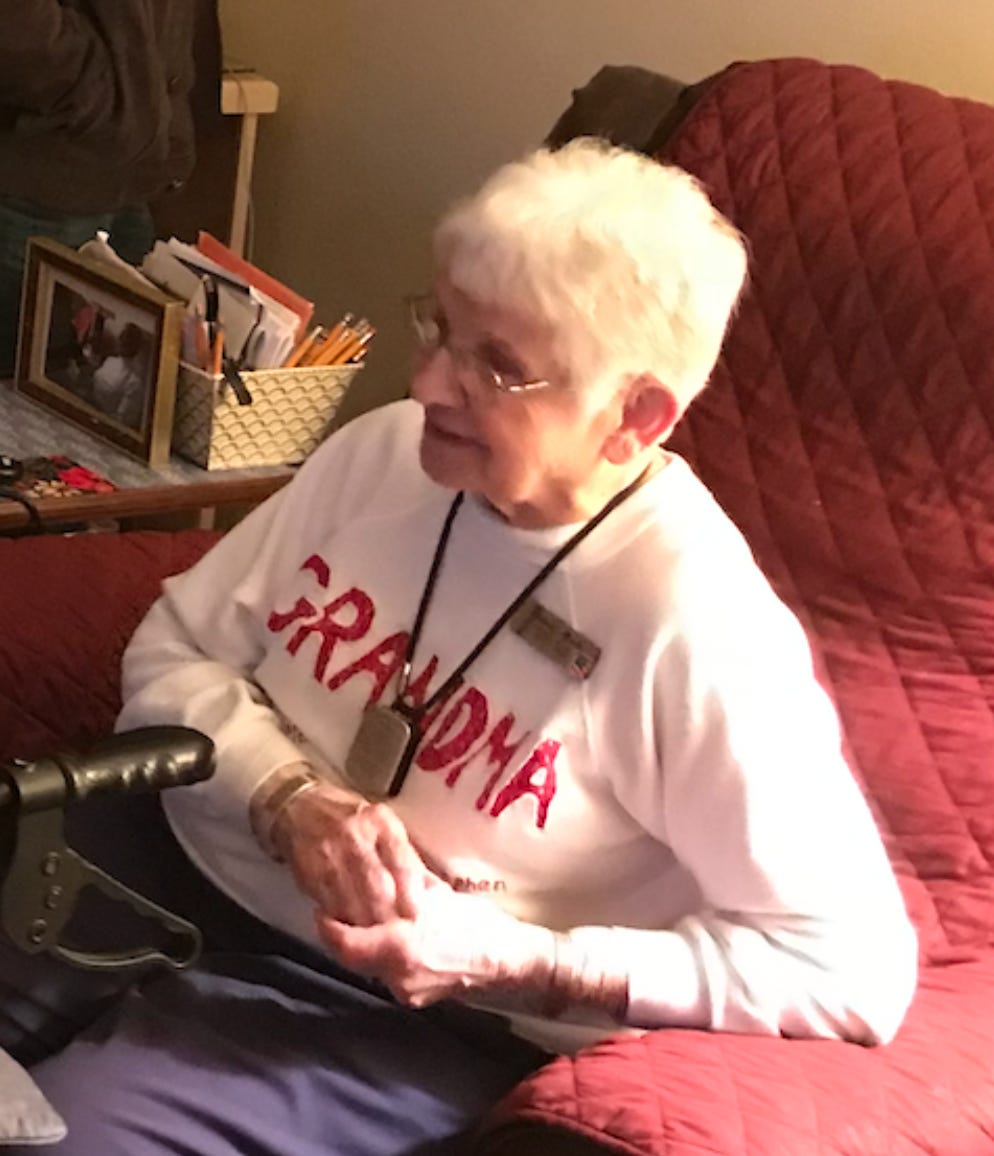
Author photo of her mother – 1948Author photo of her mother – circa 2017
It has been a difficult time. I have been writing …well, I WAS writing the next pieces about my childhood, working to move the book forward. But I got sidetracked by Mom.
The festering splinter
I had done a side piece about Mom..her death, her life…her, as part of the prologue. A matching bookend to the prologue entry about my father’s death. Yet every time I tried to edit it I ended up rewriting it instead. First from one angle, then another, struggling to capture that “something” inside me that needed to speak. That “something” that was driving me to write about her, and it was unrelenting. While I felt like I got closer to “it” with each round of writing, still, I was missing the essence.
Whatever it was I was trying to excavate, it was buried deep in my soul. The effort felt like when you have to plunge into your flesh with a needle to remove a deeply embedded festering splinter only to have it keep slipping out of your grasp and sink deeper. I felt like I was failing because that “Mom piece” was taking too long, and I needed to get back on track and return to that piece from my childhood. I was determined to stick to the outline.
This continued until late yesterday afternoon when, in a flash of insight…then despair, I realized I WASN’T off-track at all…and that there was actually something much bigger emerging in all of this. In fact, I suddenly understood that the “Mom” piece wasn’t the “sidetrack” but THE track. I kept getting pulled back to her…her death…her life because there were so many questions that needed answers. Questions like why did it matter so much to me that we took care of her to the end…why was I so proud of how she navigated her death process? Why did I care so much after she had abandoned me for a lifetime?
Aside from making order out of chaos by deciding which of life’s millions of details to include or leave out, there is the issue of how to order the book and tell the story. I am still working on that. But at least for the first draft stage, I have a rough outline to follow as I write.
The “ancient history look” of 1950s black-and-white photos
It’s one of those typical 1950s black-and-white photos found in family albums — those of the era of the late Baby Boomers but before the 1960s when you could more easily obtain color film. It has that dated look and these days, it could simply be viewed as “back then, ancient history.” Only the car gives a clue as to the time period. The bottom line is that this picture comes across more as something found in a history book than a real moment out of a real life. So, while I’ll use some photos in this book, for a large part I am going to use paintings.
The details of a photo…
Why? First, check out the difference when viewing that same moment in full color:
I recently wondered how a caterpillar — this slug-like crawling thing, emerges from a cocoon as a multi-colored, fragile-winged, flying beauty.
Being a retired science geek I of course hunted the answer down. While I sensed it was a sort of “magical” process, the specific details surprised me. Attached is a Scientific American article for those of you who would like to know the nitty-gritty process.
The short version is that all of the tissues of that caterpillar are literally digested and become mush! All its various structures are gone…with one exception: Imaginal discs.
Imaginal disc magic
When caterpillars are forming in their original eggs, they contain not only the structures needed to be a caterpillar but also an imaginal disc — an organized group of very specific cells — for each of the adult body parts they will have.
Once in the cocoon with the caterpillar reduced to mush, the imaginal discs take over and start reconstructing that soup into the adult butterfly. When the transformation is complete, the butterfly will emerge, mate, lay new eggs that will form new caterpillars carrying imaginal cells, and so on.
So…what do imaginal discs have to do with choosing not to write a memoir?
The very personal cocoon of transformation
Writing a memoir is a very personal decision and requires a careful assessment of risks to you and benefits to you. It is also a matter of personal timing in life as well as so many other factors. There is no right or wrong decision. It’s taken me seven decades to get to this point, even as I tried several times at different ages. It’s just that I was still mush in a cocoon and wasn’t ready.
Now, I choose to write. But after a lifetime of healing and transformation, I could have chosen the opposite instead. And I wouldn’t have been wrong. It’s not about the decision to write a memoir or not. It’s about growing, healing, and finding peace.
The Middle Path
The Buddhists say there is a Middle Path — not one or the other, but some road in between that fits you and lets you do what YOU need to do to heal. It doesn’t only have to be “write a memoir” or “don’t write.” Another way to heal could be to work with a therapist, paint, write only for yourself, or pursue some spiritual exercises that give you peace. The real point is to grow, heal, transform, and find peace.
“Spiritual” imaginal discs
To that end, I guess I relate to the caterpillar and butterfly story because I think we all have our own special “spiritual imaginal discs” — an inner part of us that came with us at birth and which holds the seeds of who we are meant to be in life. At the end of the day, it isn’t about a particular path to realizing our potential and our life mission. It is about finding out the mission itself. So find your own imaginal discs within you and follow your best path.
Take the time to consider things
Now, if you feel drawn to writing but aren’t sure , check out my previous two posts on “Is Writing a Memoir Worth it?” — the first on Risks of writing,
These two provide a number of points to consider before you decide. Maybe consider the lists, honestly answer the questions, and make your own decision. No one should ever tell you what to do, or that you are wrong.
Real safety is your willingness to not run away from yourself — Pema Chodron
The audience
A friend of mine asked who I was writing the book for. Almost without hesitation, I said– myself. Now in case that sounds selfish, it really isn’t. There is that old saying that before you can help another, you have to take care of yourself.
In the past, I would have answered that question differently. So many times over the years I tried to write my story in one form or another, but always, I thought I was writing it for others. After all, shouldn’t we want to help another if we can, to escape the pain we were in? A noble thought but it’s not that simple.
Each person must untie their own Gordian Knot
It’s also been said that the more you learn, the more you realize you don’t know. Hence the idea of writing a book to save another seemed arrogant, presumptuous, and flat-out wrong. I’ve spent a lifetime searching for my own answers, so how could I think I had answers for anyone else?
That might have been a bit of the pendulum swinging a little too far in the other direction, though. About the point I had decided never to write, a few key mentors in my life took issue with that. One of them–my high school English teacher who was pivotal in saving me back then, said to me: “You don’t give people answers. You tell your story. From your story, they find their own answers and untie their own Gordian knot.”
In that second, I was convinced. Her comment cemented my decision–this was a reason I could accept and write for.
Are there many good reasons to write a memoir?
Now I recently listed the number of risks in writing this kind of story, which made me wonder what, if anything, might be a good reason for doing my memoir. Maybe a few more than just “I knew my mentors were right.”
Photo by the author of just “some” of the many memoir-writing books in her home library
What About the Risks?
So you’re considering writing your memoir. You take stock of what stories, events, and insights most impacted your life. You examine your life and make a list of obstacles encountered, successes and failures — and how you dealt with either. Your soul says “there‘s bits here that might be helpful to share,” so you sit down at the computer, get ready to open a vein and…you freeze.
There is no question that many writers experience tremendous fear when writing, no matter the topic. There are many books and articles out there on how to write, what to write, and even how to overcome the fear of writing. I have more than a few of each kind on my bookshelf.
Fear of writing
On that last item, fear of writing, I have a book — The Courage to Write: How Writers Transcend Fear by Ralph Keyes — that I’ve kept since it was first published in 1995. So, it’s not a new problem. I suspect the first time a cave person scrawled an image on a stone wall it might have given them pause when they stepped back to assess their work.
The idea of putting ourselves out on the page…even if we never show it to anyone, may stop us before we ever start. And I am not even talking about whether the writing is any good or not. First, there is the possibility of triggering powerful emotions never before confronted. That is immediately followed by self-judgment: Am I really like that?
The pages never read aloud
We all have those “pages we never read aloud” to anyone — things we don’t want anyone to know about us, and for that matter, things we may not even want to admit to ourselves. And yet there is no escaping their reality when the words sit there — stark black letters blazing tracks across the white page.
Even if we’re not writing about our own mistakes or faults, there is no question that subjects of a serious nature will impact any writer’s willingness to venture there. It’s one thing to talk about how a car engine works and know you will be judged on how well and accurately you write the piece. But to write about victimization, shame, or messy emotions, and to say on the page what someone drilled into you NEVER to speak about, invites some powerful ghosts to come stomp all over your courage.
While you may have shared those stories with therapists, relatives, or close friends, it is a whole other matter to actually know that thousands of perfect strangers know your secrets. And that doesn’t take into account in a digital age, putting things out in places where people can respond immediately, and with things like: “What’s the big deal? Get over it” or worse.
So that brings me back to my original question — is writing a memoir worth it?
The power of transformation
I have been reading a book on memoir writing that is great…actually, I’ve read many over the last few years. But the one I speak of right now — Deep Memoir, by Jennifer Leigh Selig, PhD — just nails soooo many important themes.
One theme in particular, in a chapter near the end of the book, really caught my attention. In that section, the author dug into the power of writing a memoir to transform you — change you not just by looking back at the past and making observations about what happened THEN, but to change you RIGHT NOW as you are writing.
As soon as I read that sentence, my gut tightened because I knew exactly what she meant. I’d be writing about some issue of anger or shame that I’ve carried for years and even as I was typing the words, I could feel some slight shift in me…a softening, compassion, a lowering of terror.
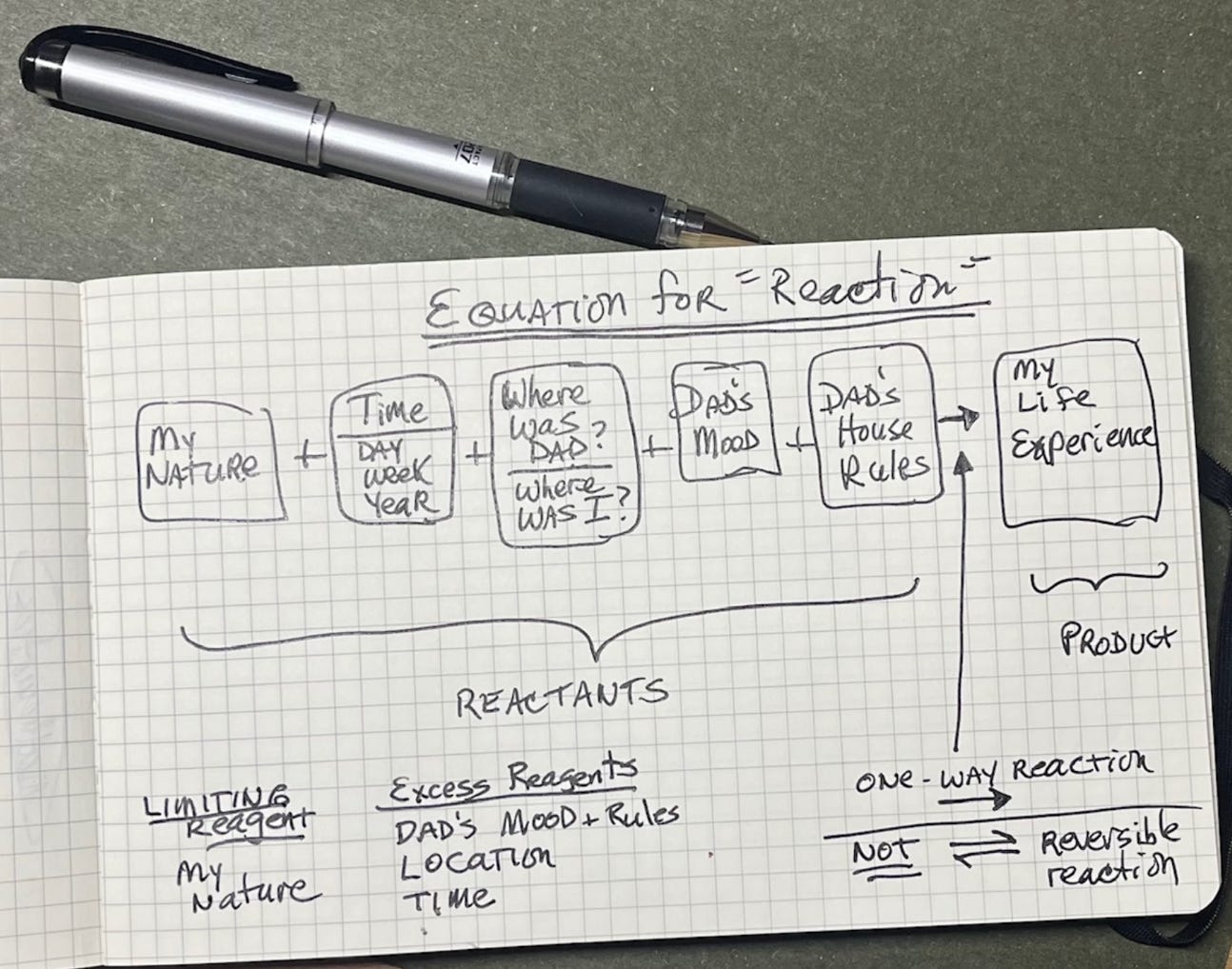
All I know is that in those moments, I am like a crucible holding individual chemicals. And as I am held over the fire in that writing process, the chemicals start to melt, mix, react, and become something new. The process taking place in that “writing crucible” changes me and it’s not about the ingredients I started with. It’s the process.
But what about the risks?
But the book also notes some authors who have experienced extreme emotional trauma such that after they published their book they said they would never do it again. Jessmyn Ward, writing about five men in her life who died, said she doesn’t know if she could go through that process again. Carmen Maria Machado, after writing about intimate partner abuse, said she probably would not. And Pat Conroy, writing about his childhood abuse in his novels, experienced suicidal despair, attempted suicide, and had another suicidal breakdown later, after another book. So the risks to one’s mental health are not imaginary or inconsequential, especially when writing about traumatic events.
Physical illness is another way traumatic material can wreak havoc on a writer. Kate Bornstein was already experiencing sleep and eating disturbances, along with having to seek therapy because her writing triggered a borderline personality disorder. But she also suffered gut problems so severe they had to remove part of her intestine, something she attributed to her writing. She said the writing “gets you right in your gut…and I took that as a sign that I was on the right track.”
All of that aside, there are the “normal fears” about writing a book. What if people hate it? Or don’t get it? Or maybe worse, what if they love it and the response overwhelms you? Fear of success is just as strong as fear of failure. Especially if you’ve lived through abuse, you may have lived your life in the shadows and sudden public awareness is too much. Or there are the stories about writers who’ve encountered rejections and relationship breakups; angry responses from others who don’t like what was shared; or for some, even lawsuits.
What risks am I facing?
So, based on all of the above, in terms of writing my memoir I realize it might:
Trigger my own pain, health, and emotional reactions to revisiting painful things
Expose all my hidden details to the public
Deliver reactions from others that I may fear, or be emotionally devastated by
Change my life
As to “change my life” — well it already has. And will continue to. Just look at the fact I am writing here and saying truths I’ve not put out publicly before. So change is a given. And the remedy for that is just “one day at a time.”
Regarding the first three risks, I have given those a lot of thought. I have put in place some support systems for me as I do this. Also, I drafted a list of things to share with readers at the beginning of the book — things such as rules and boundaries for how I chose to write the story; trauma-trigger cautions for readers, given the topic; and most importantly, the purpose for writing.
What is memoir REALLY for?
The last one matters most because in the end, if I am going to write a memoir, it is not about just making a laundry list of all the things I lived through. It is REALLY about: because of what happened, what did I do with it? It is about coming back. It is about hope. It is about connecting on a universal level with a reader who might have a different story but still experienced similar emotions.
The “decision-maker”
Having thoroughly rattled myself with the risks, I did one last thing before answering the question — I made a comparable list of “why it’s worth it to write a memoir.” I figured it would be blatantly obvious after that, what I should do.
Digging into all of the books in the above picture (and several more) I compiled a list. It was an illuminating…actually an eye-opening experience. And so I came to my decision.
I will share in a separate post, what I put on that list. It will, no doubt, make clear my logic and maybe be helpful to anyone else considering whether to write their memoir or not. It goes without saying — but I will say it anyway — that each person has to make their own list and determine what their own risk/benefit ratio is for writing and then make their own decision.
The bottom line
But for me? Is writing a memoir worth it despite everything above? And despite the fact it’s taken me seven decades to come to this point?
I have been busy for the last many years – working at the NC Museum of Natural Sciences in Raleigh, NC. It was the BEST job of my life and it used every bit of what I learned through 40 years of medical labs, pharma research, clinical trials and medical ethics. And my creativity, painting, play and prototyping with Play-Doh…it was a return to my childhood of dissecting frogs, chemistry sets, and reading about the adventures of undersea-shipwreck explorers. That job was literally PLAY that drew my long-dormant 10-year-old back to the surface. I could reach and excite kids about all the weird tweaky details of science and its stories, because I returned to BEING that kid.
I did it for 15 years, every day a new exciting topic to create an activity or class or show for all ages. The topics, the ways to spin it, the ways to get people involved, surprised, laughing even, fed my soul to no end I would have done it forever, but finally, arthritis plaguing my joints, a really bad bout with the flu and subsequent infections this past year, and just plain tired no matter how much I loved it all, I knew it was time to stop. I’ll be 70 next year. It was a good run. I “did good!” 🙂 But yes, it was time for new blood, and so I retired.
So now what?
However…that doesn’t mean I sit in a rocking chair. I have a manilla folder full of things I want to do – take all the poetry and literature classes I never had time for when I went to college in the 70s – only enough money and time then to get my requirements, my lab classes, get out and get to work. But now, the adult ed classes at local universities have these classes and I will take them.
I want to learn to play chess well. I know how to play – poorly 😉 – but it would be nice to get better. There are a few small trips I would like to do.
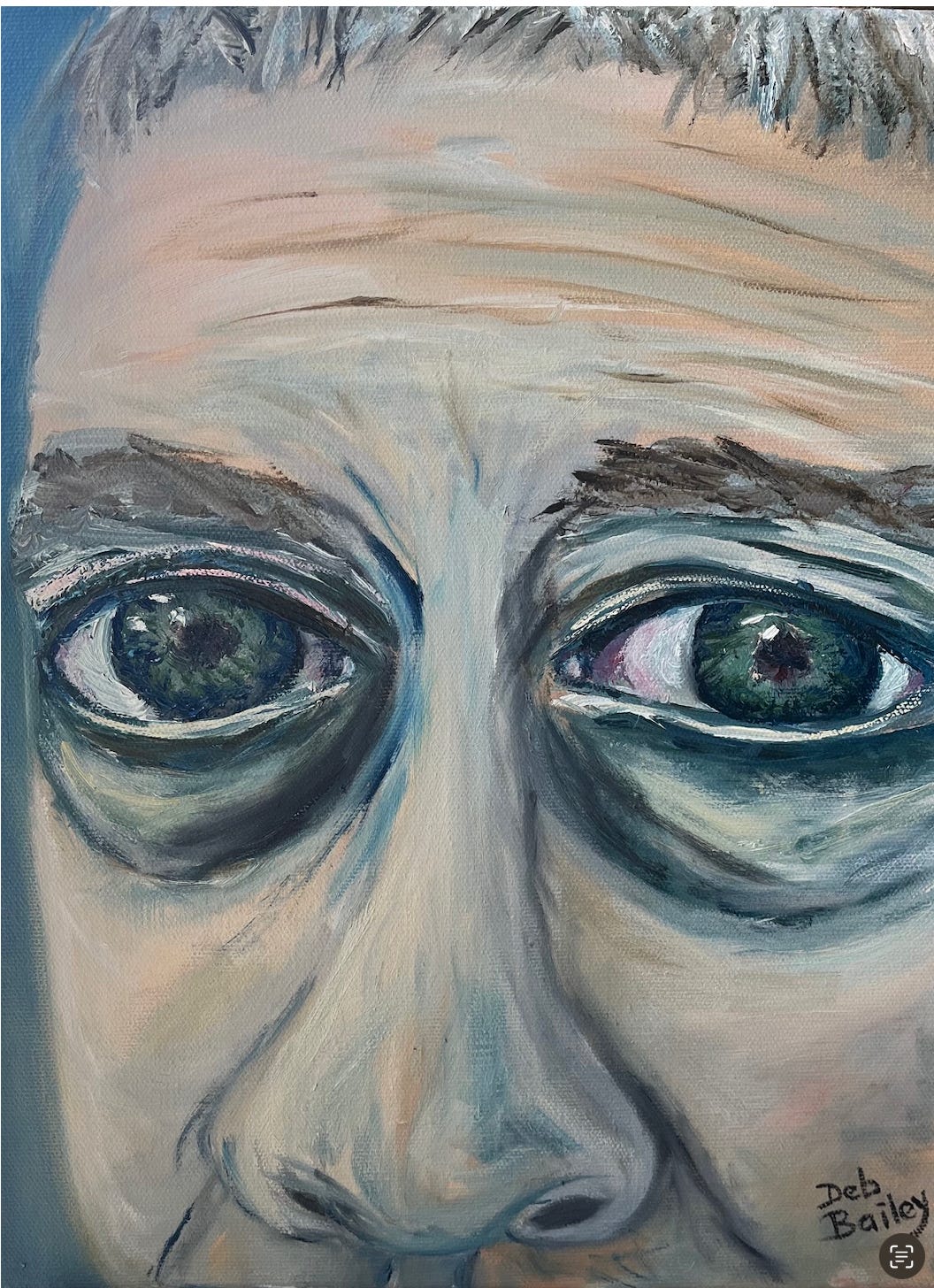
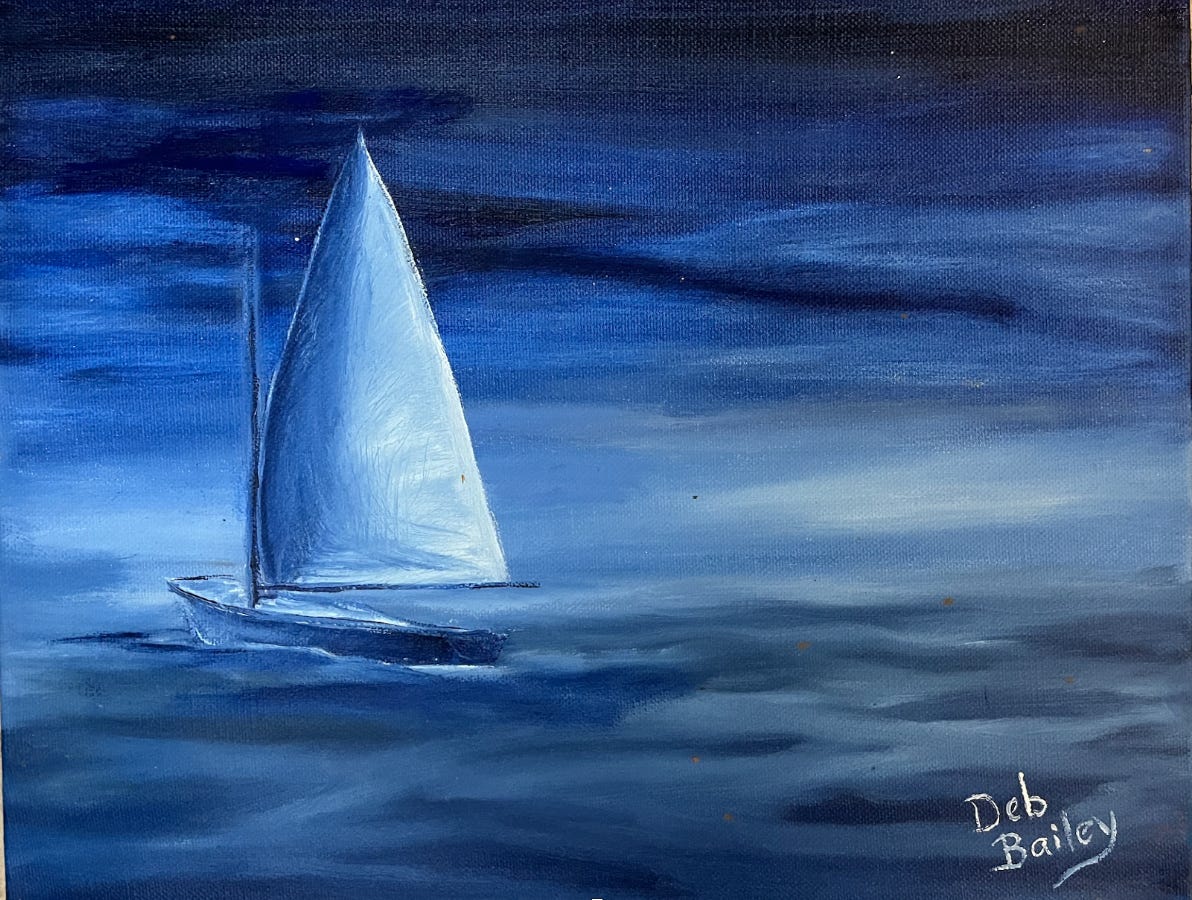
And I now oil paint every day — partly for me — partly to sell — and partly to brighten people’s lives. As I do a painting I post pictures of the progress on my Facebook page as I did it during Covid. People then found comfort and joy in watching the evolution of various paintings. And these days the world has so many “issues” going on, I figured people could use “a Moment of Respite” from it all, if only to follow along with my oil paintings again.
And if you like what you see, there are links on that page (and below) to my DebsWritingandArt Etsy store where I sell the originals, or to my FineArtAmerica pixels.com website page where I sell prints and originals, and also blog about the paintings:
But why am I bothering to write here then, if I have all these other places I show up on the internet?
It’s because the “Soul Mosaic” concept has never left me…
Logo for this blog, incorporating a picture of a mosaic the author took at the NC Museum of Art
The truth is, that mosaic idea is the truest metaphor of my life – broken, mismatched, unwanted — rebuilt into a beautiful mosaic. The truth is, it may have taken me a lifetime to get here, to learn what I needed to, but I am STILL HERE…and in spite of all the havoc that went on in the first half of my life, I THRIVE.
The work of my lifetime?
So that brings me back to the writing work of I am doing and have been working on for the last few years…the writing work that has waited a lifetime for me to come back to it…my memoir.
In short, I was abused – physically, sexually, emotionally, mentally — from infancy through age 27. I should never have gotten out due to all the brainwashing, gaslighting, shame, and frankly ignorance that what happened to me had a name – incest. I thought I was an aberration of nature, and instead I found out it happened to others. Many others. And all of us who lived it walk through life, silent, SILENCED, and broken. The key to healing – understanding, speaking, finding our strength – are denied in silence.
I have fought back for most of my life. I left it behind, rebuilt a life, a good life, and I have done well in spite of the scars I carry. But life has a way of coming back with the well of emotional pain left behind that demands to be heard…in fact, MUST be faced and heard if one is to heal…learn…understand…LOVE.
Why go back? Why write?
Rabbi Jonathan Sacks commented about Holocaust survivors that most spent the bulk of their lives LIVING and BUILDING a life. THEN, only after that, was it time to “look back” – T’shuvah – return to it, and examine what it all meant.
The book – Deep Memoir by Jennifer Selig, PhD – has some pithy answers:
Photo quote take by the author from the book, Deep Memoir
Later in the book she also has a quote from another author who sums up the “why”:
”You too are driven by the desire to understand…Beneath your desire for knowledge writhes the hunger to understand and love yourself.”
So – understand…heal…connect with others…and finally PUT BACK TOGETHER FRAGMENTS….LOVE YOURSELF
And to anyone who thinks it is just a litany of just this happened and that, or gee, why me? It is the story of hope…after despair. It is the story of evolving over a lifetime, from a pile of broken-bits rubble, into that mosaic.
It is told through almost 100 paintings and photos that helped me remember, feel the trapped emotions, then find the right words to understand and move forward.
So it is the story that says: “In spite of what you did to me…in spite of how I struggle...I THRIVE.“
As to Questions – that tired old “why me?” – that was NEVER the question that plagued me.
MY QUESTION was always:
“Because of what happened…what do I do with it?”
That is the final reason I write – MEANING. All that destruction has to have meaning, and if that comes by writing and helping even one other person in pain with my story, it will MEAN SOMETHING.
Why use the blog?
A way to get my book written, is to have a place I can write posts that discuss one topic at a time that will be covered in the book. This can be my place for “rough-drafting and brainstorming a concept” that I will later more fully develop in the book.
By the way, to write the book I am using a software called Obsidian. I LOVE IT! And it has been a gift to come across, both for gathering thoughts, storing easily accessible info I need to have available, but also to hold the drafts as I build the book.
Anyway, I realized that this Soul Mosaic blog could be my “scratchpad” or “sounding board” place for things I need to explore so I can then expand on them and put them in the book.
Some of the topics I have written about in related essays I published in the Pure d’esprit Medium publication, and I will share those essays here too because the Medium platform is only open to paying members.
But some of the topics I just prefer to write here, in my “old friend” Soul Mosaic because emotionally, it is my place for broken bits being reformed into beauty…and always has been.
So I will be posting here again. For anyone who decides to follow along, welcome.
Let us have a moment of silence for the dear departed meatloaf…..one should never do a meatloaf in a crockpot without “other things” and liquid – it’s juices do NOT constitute liquid…..windows open in the house on a cold mid-January morn……eating out tonight. By then I might be able to pry the meatloaf out of the pot….. for whatever talents I have in oil painting, writing, studying sea creatures and finding odd facts to share here….that talent does NOT translate to cooking skills….the kitchen is a no-man’s land this morning…..