Archive for October, 2026

Citrinitas – Mothers in Incest Cases – Weak? Strong? Unforgivable?

October 16, 2026

Do I wish my mother could have married someone else?
Do I wish she could have seen through his manipulations and left him?
Do I wish she could have had options, fought back, or protected me?
Do I wish she had been able to take on the fury of my father’s mental torture and survive?

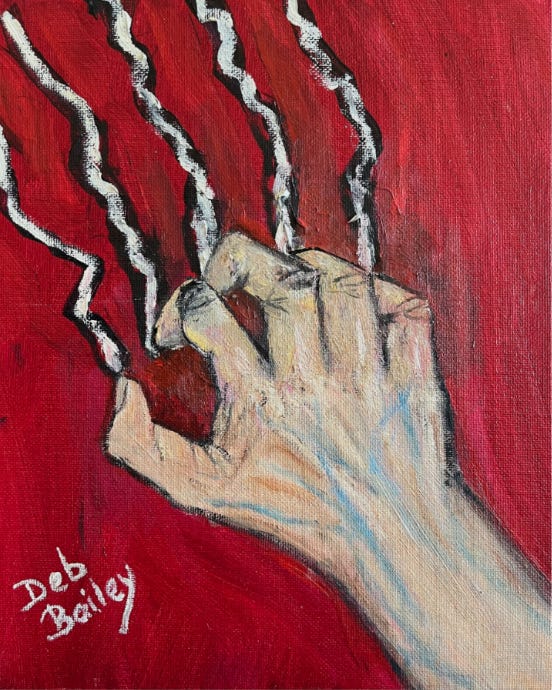
Painting by author

Yes, to all of the above. But I have grown to understand, especially with all the things I have learned as I write, that she couldn’t do that. She was ambushed, abandoned, and battered. She did the best she could.

I can also take comfort that there are strong women who have been able to fight, help, and bring more awareness to this topic.

The strong women

I have a folder of articles about strong women. One is a Washington Post article about a Mom facing jail because she was fighting court-ordered “reunification therapy” with her husband who sexually assaulted their daughters. Other women became fugitives, running from spouses and the law, to keep their children safe from a sexually abusive parent. And even nuns joined the fight.

(more…)

Citrinitas – About Mom, It Could Happen to Anyone

October 14, 2026

The book

It Can Happen to Anyone: Why Battered Women Stay, 3rd Ed.

My eyes locked onto that title like laser beams. Could this book represent answers to questions I held for a lifetime? And blame?

It wasn’t lost on me that it was written not by men, but by two extremely accomplished female researchers:

Alice D. LaViolette, MS, MFT
Ola W. Barnett, PhD.

The first was a long-term advocate, expert court witness, and consultant in domestic violence issues. The second was a distinguished professor of psychology at UCLA, with research including the topics of batterers, battered women, and dating violence.

It was the first half of that title that REALLY drew me, because it was the first time anyone suggested that my mother wasn’t weak, at fault, or “different.” That maybe she just fell into a trap she couldn’t climb out of.

Painting by author

The second half of that title clinched my decision to buy the book because it implied that there were logical answers for why my mother stayed with my father.

I was already on the trail of explanations given my research into Dad’s abuse tools and especially understanding about intermittent reinforcement, trauma bonding, and the brain chemistry changes that drove those things. But this was the missing link — the research that showed that a person who fell victim to trauma bonding WASN’T ANY DIFFERENT THAN ANYONE ELSE!”

THIS was a book I had to read.

(more…)

Citrinitas – Mom…Clues From the “Beyond?”

October 12, 2026

Where did THAT come from?

There were so many questions Mom had left unanswered. Why did she stay with him? Why didn’t she protect me? Why didn’t she stand up to him? She died, and all I had was frustration and judgments about her “weakness.”

Many times, the things I wrestled with during the day would haunt my sleep. And in those dreams, things seemed so intensely real, especially because they were saturated with fully concentrated, unrestricted emotions. In dreams, there is no frontal cortex that can keep the terror and rage at bay. It’s all there in all of its raw fury.

I have lived with those nightmares for years. In fact, I think I would be shocked if they disappeared. But what I wasn’t prepared for in the two following sets of nightmares was the sense that these “performances” were not my experiences, but Mom’s. Yes, there were bits of my reality woven through their storylines, but the actual emotional experiences weren’t mine.

And after each one, I could not shake the feelings those dreams left behind. It was as if I’d stepped into someone else’s nightmares during my own.

As strange as it might sound to another person, I found myself wondering:
Is there an afterlife where she could ‘show me,’ from beyond the grave, what she had lived through, what it did to her, and why she was trapped?

(more…)

Citrinitas – Mom, “Hopeless?”

October 10, 2026

The yearbook

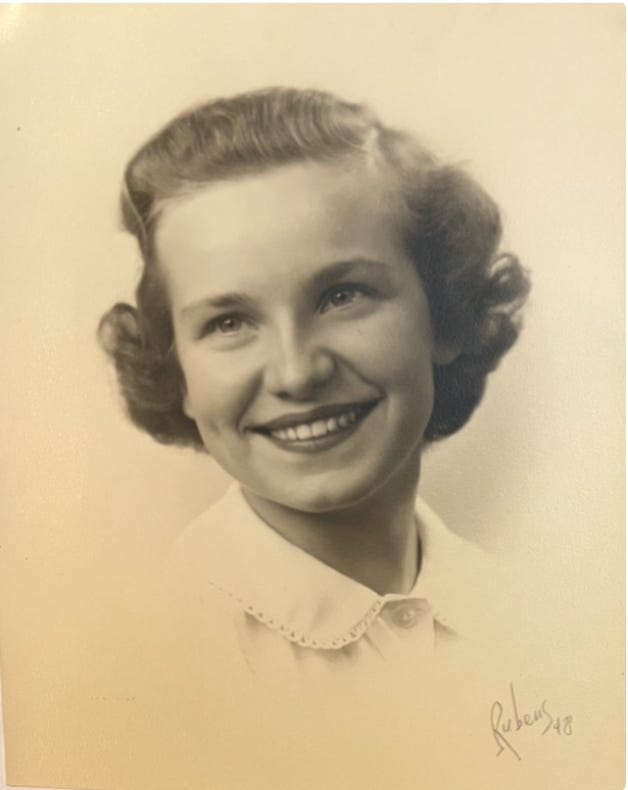
She was beautiful. Radiant even. I’ve always loved this photo of Mom…such a face of youthful joy beaming out from her high school yearbook page. So much might have been in store for a spirit like that.

Photo by author

And yet, by that photo she had written a single word: “Hopeless.”

My God. What a statement. It just begs for clarification…which is too late to get.

Questions race. When did she write that? And why? Was it a lonely teenage girl wondering what life held for her? Or a self-deprecating joke with friends? Maybe a young adult despairing of her prospects for love?

Or…was it later? The scribing of a scarred and disillusioned wife looking back and regretting her choice?

Years later, I struggle to reconcile the picture with that word. In fact, I literally cringe at the word, pained to think that “Hopeless” is what she felt about herself.

Yet to look back now and know what her life became, was it the word that set her up? A chilling prediction of where the path would lead?

(more…)

Citrinitas – Mom, A Love Letter

October 9, 2026

As I type the title of this post, I ask myself why I feel such love for my mother. Why am I no longer angry about the times she didn’t protect me or didn’t “turn around” to see what he was doing?

Painting by author

And most of all, why, at this point in my life, am I less angry with what Dad did to me, but still absolutely enraged at how he demeaned and abused her? The word “fury” comes to mind.

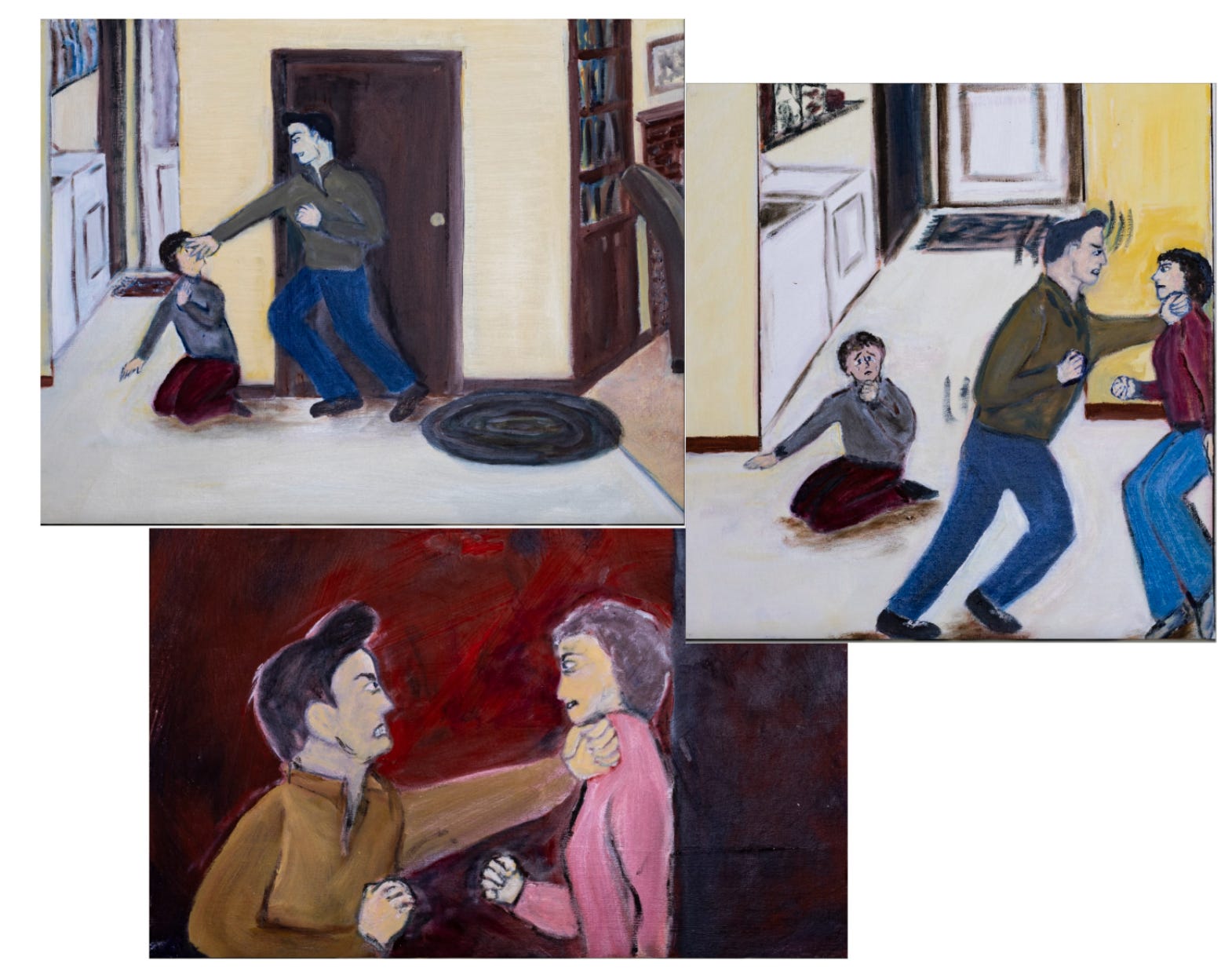
Watching all through my childhood years when he hit her, yelled at her, and no other adults in that house came to her aid…when the only thing I could do as a child was listen at the wall when he beat her in the bathroom, hoping he wouldn’t kill her — it was hell to witness. What more was it to be her?

There was only one time any of us stood up for her, and that was the day I saw her on the floor at his feet. I was in my late twenties; he had been at her downstairs. I heard her fall, and that was the last straw for me. Fearful for her and raging at him, when I saw her on the floor at his feet, I lost it. Despite my fear of him, I yelled that he needed help. And then he nearly choked me.

Paintings by author

It was then that I knew I had to leave. I knew she would never leave him, and I would be destroyed if I stayed. But to this day I remember how much I wanted to rip him apart for demeaning the woman who gave me life, and I was glad that for once, finally, I stepped up for her.

The eulogy I wanted to give

When she died, I delivered her eulogy. There was so much I wanted to say, to put in that text. And I did do a good job of honoring her gifts and highlighting her personality. But I left the elephant in the room untouched. It didn’t seem like it was the right time or place to bring up “all those things she had endured at his hands.”

Since then, I regretted that I stopped short of saying all I wanted to. And I always wished I could do it over and give her the eulogy she deserved. So now that I come to the part of this book to talk about Mom, maybe I can do that.

(more…)

Citrinitas – The Result of All His Abuse? Trauma Bonding

October 5, 2026

Stockholm Syndrome…and Patty Hearst

1973 – Stockholm Syndrome. 1974 – Patty Hearst’s abduction. 1981, 1993, 1997 -Defining Trauma Bonding.

These names have often been batted around almost interchangeably. And while they are related, there are differences that became clearer over the decades.

The term Stockholm Syndrome was coined in 1973 to describe the seeming bond that developed between hostages and their captor following a botched bank robbery in Stockholm, Sweden. The story is much more complicated and beyond the scope of what I want to write here.

But simply, it appeared at the time like the hostages were siding with their captor. In reality, they were traumatized by both their dangerous situation, not knowing if or when their captor might kill them, and the government’s clumsy negotiations that they felt almost got them killed.

Traumatized, enraged by the government putting them at risk, and responding to the kindness their captors started to show them, the hostages had to react in whatever way made sense to them to survive and live, even if it seemed strange to outsiders.

The bond even started to work in reverse. Their captor spoke later that while he initially would have killed them if he needed to, the more they got to know each other during the 6-day hostage situation, the harder it was for him to do that.

It should be noted that Stockholm Syndrome was not, and is not, a recognized psychological condition. From Wikipedia, here is the origin of the term:

“Nils Bejerot, a Swedish criminologist and psychiatrist, invented the term after the Stockholm police asked him for assistance with analyzing the victims’ reactions to the robbery and their status as hostages. Bejerot never met, spoke to, or corresponded with the hostages during or after the incident, yet diagnosed them with a condition he invented. Bejerot, speaking on a news cast after the captives’ release, described the hostages’ reactions as a result of being brainwashed by their captors.3(https://en.wikipedia.org/wiki/Stockholm_syndrome#cite_note-Adorjan_2012-3) He called it Norrmalmstorgssyndromet (after Norrmalmstorg Square, where the attempted robbery took place), meaning “The Norrmalm Square syndrome”; it later became known outside Sweden as Stockholm syndrome.5(https://en.wikipedia.org/wiki/Stockholm_syndrome#cite_note-5)“

The following year, that same term was applied to the 19-year-old heiress, Patty Hearst, who was abducted by a political extremist group and later seemed to side with them. That story, too, has many different complexities that I will not get into here.

Suffice it to say that both situations, which involved captives who seemed to switch allegiances and side with their captors, fueled even more research into the areas of captives, brainwashing, and domestic abuse, which had started in the 1950s with the Korean War POWs.

It was during the 1980s and 1990s that researchers, including Donald Dutton, PhD, Susan Painter, PhD, and Patrick Carnes, PhD, in their study of violence and victims, situations of power imbalances, intermittent reinforcement, and domestic violence, brought more clarity to these situations, along with a new term: Trauma Bonding.

(more…)

A Time Out to Answer – Why ANOTHER Book on Abuse?

October 2, 2026

“All happy families are alike; each unhappy family is unhappy in its own way.”
Leo Tolstoy , Anna Karenina

Where next?

Before continuing my path through this Citrinitas section of the book, I need to take a moment to reflect on the “WHY” of this book and “WHERE NEXT?”

As I’ve worked toward finishing this first “Bible-sized” draft of my story and my insights, I’ve also been thinking about draft # 2.

The important question about that next draft that has been percolating in the back of my mind is:

What is the best way to shape a publishable book from this full first draft, one that will deliver a useful, powerful, needed message to other survivors?

A fiction writer I follow described a story’s theme as “the truth of the main character.” I liked that. And I realized that works for memoir as well as fiction.

The bottom line is that however I shape the next draft, it needs to deliver my truth in my life…it needs to answer: What “theme” do I stand for and give the reader?

The REAL question

But there was an even bigger question that loomed over the first, one an agent, or editor, or publisher might ask:
“Why another book on abuse?”

From the start of this endeavor, I knew there absolutely NEEDED to be another story for readers on this topic; I knew it in my gut. But I also knew I would need to put that “gut knowing” into the right words of a compelling argument for any editor.

It has been in reading the news about yet ANOTHER incident of sexual violence against women…human beings…this time at Cornell. It is another HORRIBLE story that thankfully was brought out ONLY BECAUSE YOUNG WOMEN on the school newspaper refused to let it drop. And in that moment, I had my first clue to answer why another book….The power of STORY. It is only in the courage of the school newspaper’s reporters to deliver this story that there is a chance for justice to happen.

Now, I am not a lawyer or police officer or forensic analyst. So I cannot help the fight for justice in those ways.

But I am a survivor. A storyteller. A person who has BEEN THERE, even if my story details are different. I am a person who has had to walk, sometimes CRAWL back to healing…and eventually, even to thriving.

I have a story of my particular path through struggles, learning, survival, and despair. I have my own story of how I held on, refused to give up my life, and eventually reclaimed it to the best of my ability.

When I looked again at the question: “WHY ANOTHER STORY ON ABUSE?” I suddenly realized THAT IS THE WRONG QUESTION.

The REAL question is:

(more…)

Citrinitas – His Tools and What They Did – Part III

October 1, 2026

“I saw a post online where someone said, ‘An abuser doesn’t abuse every day.’ That, my friend, is intermittent reinforcement in a nutshell.”
— Shannon Thomas, author, Healing From Hidden Abuse

Intermittent Reinforcement

I don’t know what any mental health professional will say, but my own opinion from my own lived experiences is this: Intermittent Reinforcement is the HUGE one, the coup de grâce tool. It is the one that takes all of his individual tools and intensifies them into one immense, laser-focused, emotional superweapon that delivers the final blow.

What is it

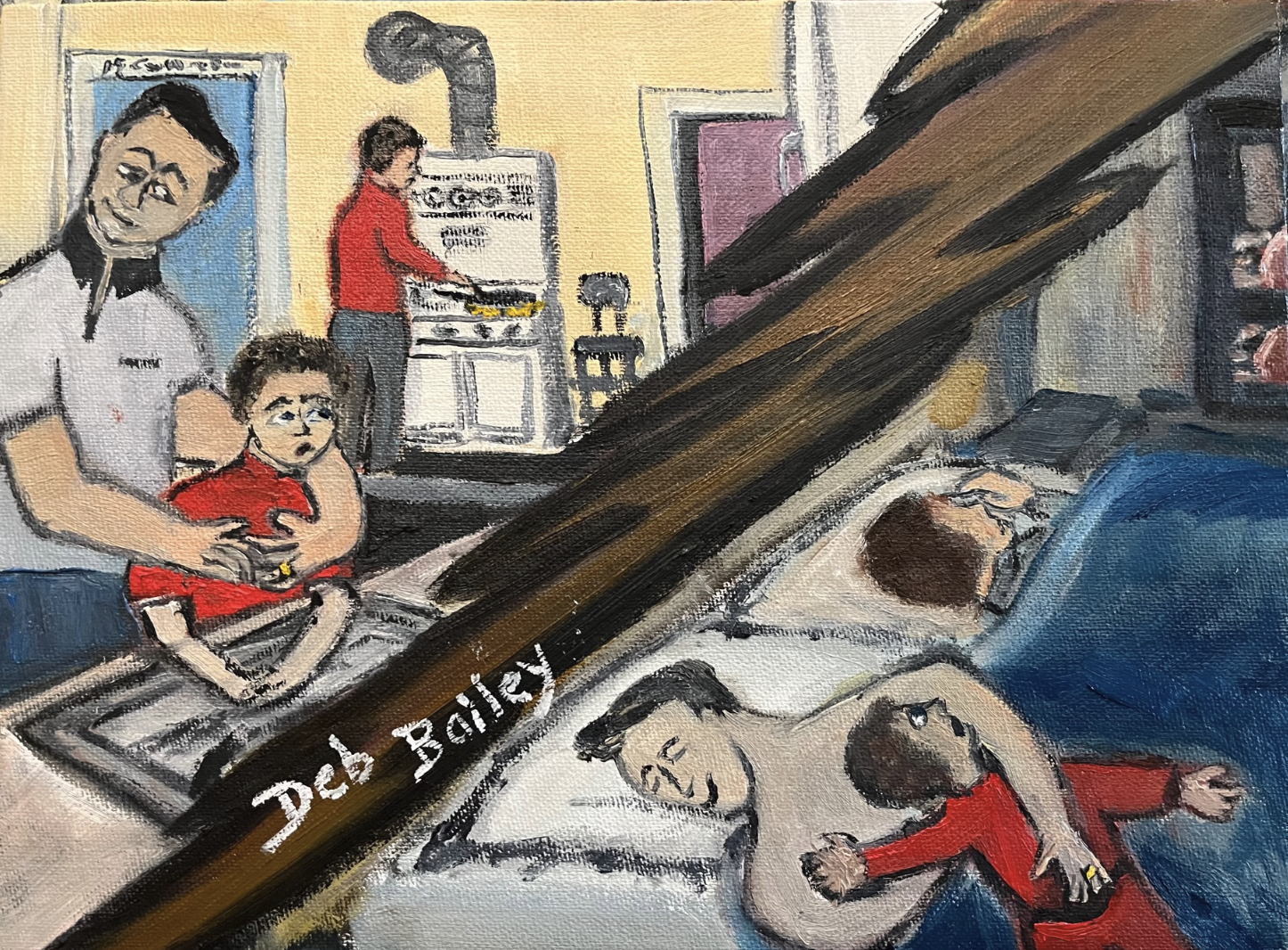
It is the unpredictable delivery of love and rewards in between rounds of abuse. One moment he is laughing, praising us to others, joking; the next moment he is raging. Then at some undetermined moment in the future, he is loving us again.

Photos by author

That is intermittent reinforcement, and it is precisely that lack of consistency that makes it the most powerful tool of all. Why?

(more…)