Before I continue, it is time for a periodic update for the sake of new readers as well as current ones.
I want to take a moment to “recap” why I am writing this blog, and why I would like to publish it in some form as a memoir. I have been writing to discover what I didn’t see before, and to build that “crummy first draft.” Then I will revise, and revise, and revise, because my goal is to find an agent and seek publication. So for right now, I am writing, discovering, and sharing.
So often…every morning when I sit down to write…I feel weary. And I feel the heaviness of the pain from the past. Why, then, someone might wonder, am I doing this…re-living past abuse to put it on paper? And what will it give the reader?
I’ve spent a bit of time in my posts talking about who I am, why I’m writing, how to do this book, why now, and what kind of tools I need.
Why have I “wasted” so much time on those things?
Maybe this post can answer that question. It will be the first entry in the book and sets the stage for the first chapter — Packing for the Journey, which will include the information I mentioned above.
The alarm hasn’t yet gone off, but I am awake. I’ve been so since about 5:30, like many mornings. The oblivion of sleep, its escape from reality, at least on the nights I have no nightmares, is over. While my regular blanket keeps me groggy and warm, the weight of the other blanket starts pressing me into the mattress. It is the heavy sensation of feeling scared, hopeless, and like I have done something wrong and will soon be in trouble. I neither want to stay in bed nor get up. I wish I could just sleep in oblivion all day. Getting up means facing another day of writing, struggling to live with the pain it releases, and holding the chaos I feel inside.
I get up anyway, because by now, in my 7th decade, I know that this is part of my life, my existence, at least for the time being. Even as I felt great last night, felt ready to take on the world, yet again, this morning, the black cloud was there to greet me when my eyes opened and consciousness returned. But life has taught me that, like the weather, everything eventually changes. You just have to wait long enough. So for now, I just focus on my “routine.”
The routine. It is something I had to create after I retired from teaching at Raleigh’s North Carolina Museum of Natural Sciences. When I was working, I didn’t have time to feel all of this. I had to get up, get moving, battle traffic, and then revel in the last job of my life — which was my total joy.
Cathartic maybe. Healing, insightful, yes. But easy? Never – And sometimes it takes you down unexpected roads…
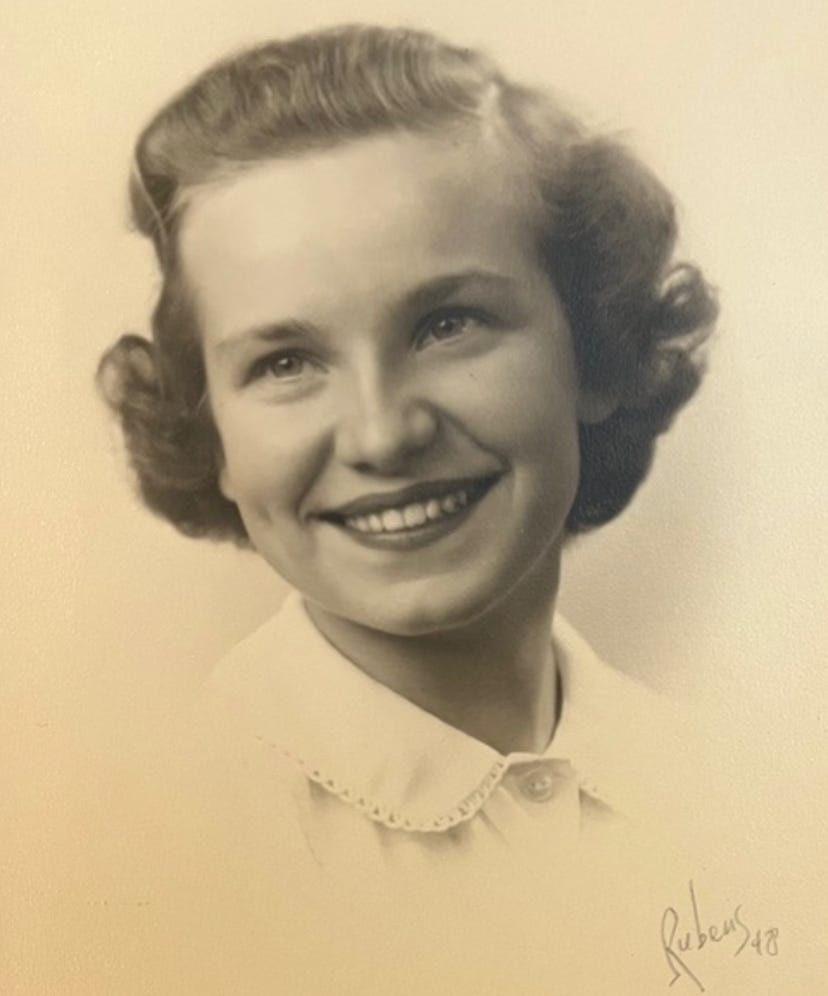
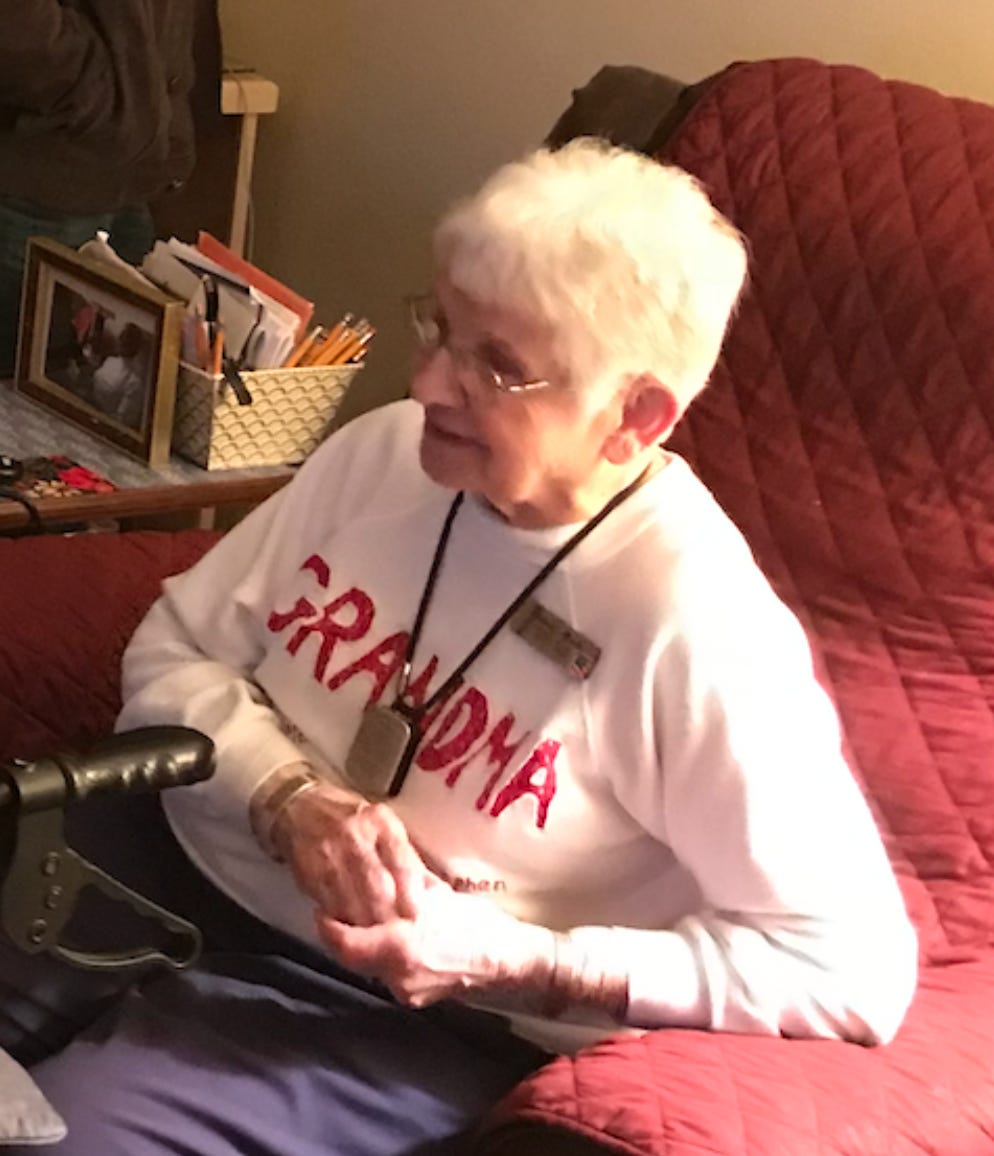
Author photo of her mother – 1948Author photo of her mother – circa 2017
It has been a difficult time. I have been writing …well, I WAS writing the next pieces about my childhood, working to move the book forward. But I got sidetracked by Mom.
The festering splinter
I had done a side piece about Mom..her death, her life…her, as part of the prologue. A matching bookend to the prologue entry about my father’s death. Yet every time I tried to edit it I ended up rewriting it instead. First from one angle, then another, struggling to capture that “something” inside me that needed to speak. That “something” that was driving me to write about her, and it was unrelenting. While I felt like I got closer to “it” with each round of writing, still, I was missing the essence.
Whatever it was I was trying to excavate, it was buried deep in my soul. The effort felt like when you have to plunge into your flesh with a needle to remove a deeply embedded festering splinter only to have it keep slipping out of your grasp and sink deeper. I felt like I was failing because that “Mom piece” was taking too long, and I needed to get back on track and return to that piece from my childhood. I was determined to stick to the outline.
This continued until late yesterday afternoon when, in a flash of insight…then despair, I realized I WASN’T off-track at all…and that there was actually something much bigger emerging in all of this. In fact, I suddenly understood that the “Mom” piece wasn’t the “sidetrack” but THE track. I kept getting pulled back to her…her death…her life because there were so many questions that needed answers. Questions like why did it matter so much to me that we took care of her to the end…why was I so proud of how she navigated her death process? Why did I care so much after she had abandoned me for a lifetime?
This blog shares excerpts of my draft memoir — working title: “I Thrive.” While not graphic, it will discuss aspects of the sexual, physical, and emotional abuse I endured and my journey back to healing…and thriving.
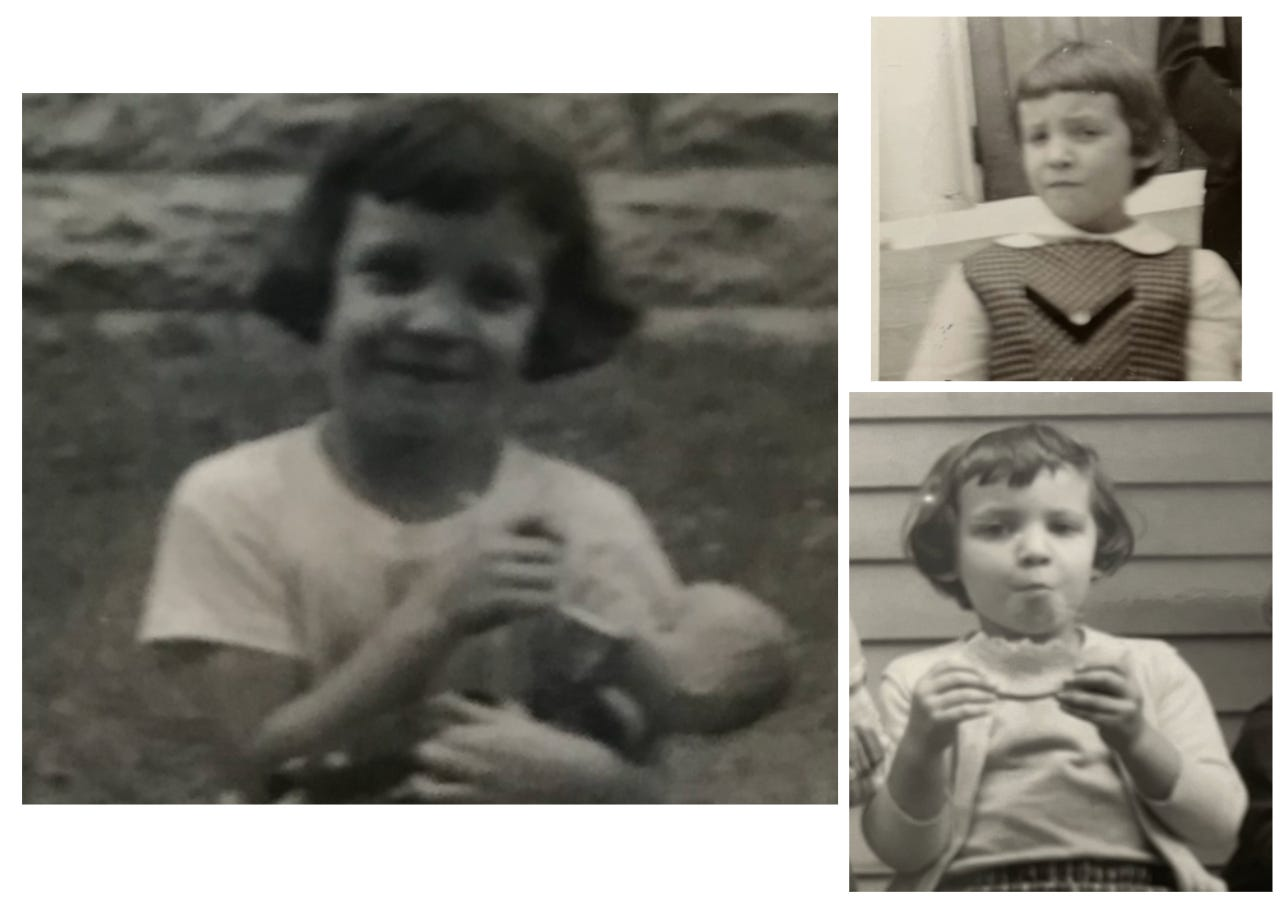
Photo by author, circa 1959-1960
To be the illustration
Memoir expert and author Marion Roach Smith described the genre of memoir this way:
“Memoir is not about you. It’s about something and you are its illustration.”
Another author, Trish Lockard, added that this genre is not just a recounting of things that happened to you because, after all — “Stuff happens to everybody.” Instead, memoir captures one’s reflections about an event when enough time has passed for a change, a transformation, to take place. Those insights gained over time through effort are the gift to the reader—the takeaway.
To only write a list of everything done to you in life without the reflections is like dumping a pile of ingredients on the counter and calling it a cake. It is only a cake when that pile of ingredients has gone through the crucible of a hot oven and been transformed into the real takeaway — dessert. Only then does it have “purpose and meaning.”
I loved how one author, whose name I cannot find, summed it up:
“Don’t just confess. Digest.”
Digestion is change and makes something useful…nutritious. It gives back. And digestion is the unfinished business of my life.
After seven decades of silence, it is time for me to look back, digest the raw material of my life, and obtain the nutrition— the insights that give it meaning. It is not: “Look at what was done to me” so much as the answers to the questions: “Because of what was done, what am I doing with it? What does it mean?” So, my life will be the illustration of that “something” that might have meaning and nutrition for all.
28 years of abuse…and building a “beautiful mosaic”
As promised, here is the second half of my rules for this memoir. These will be right at the front of the book so the reader is also clear about what I have in mind.
Caveats, cautions, and purpose
Before departing on this journey, here are 7 key points:
A moment before continuing the story, to state the “rules of the road” for this book
Before continuing with posts about my life, I want to share what I think is a vital part of any memoir – stating the rules, goals, and cautions for the book. So this is the first of a 2-part set of posts that will form the introduction to my memoir. That introduction will give all readers clear information about the how and why of my approach.
The “hows and whys” of my writing
Since there are so many good books on how to write a memoir, mine does not and will not be a textbook on all the nuances, methods, and rules.
But the following things jumped out at me as I studied all the different books on the subject. So I wrote myself some clear guidelines:
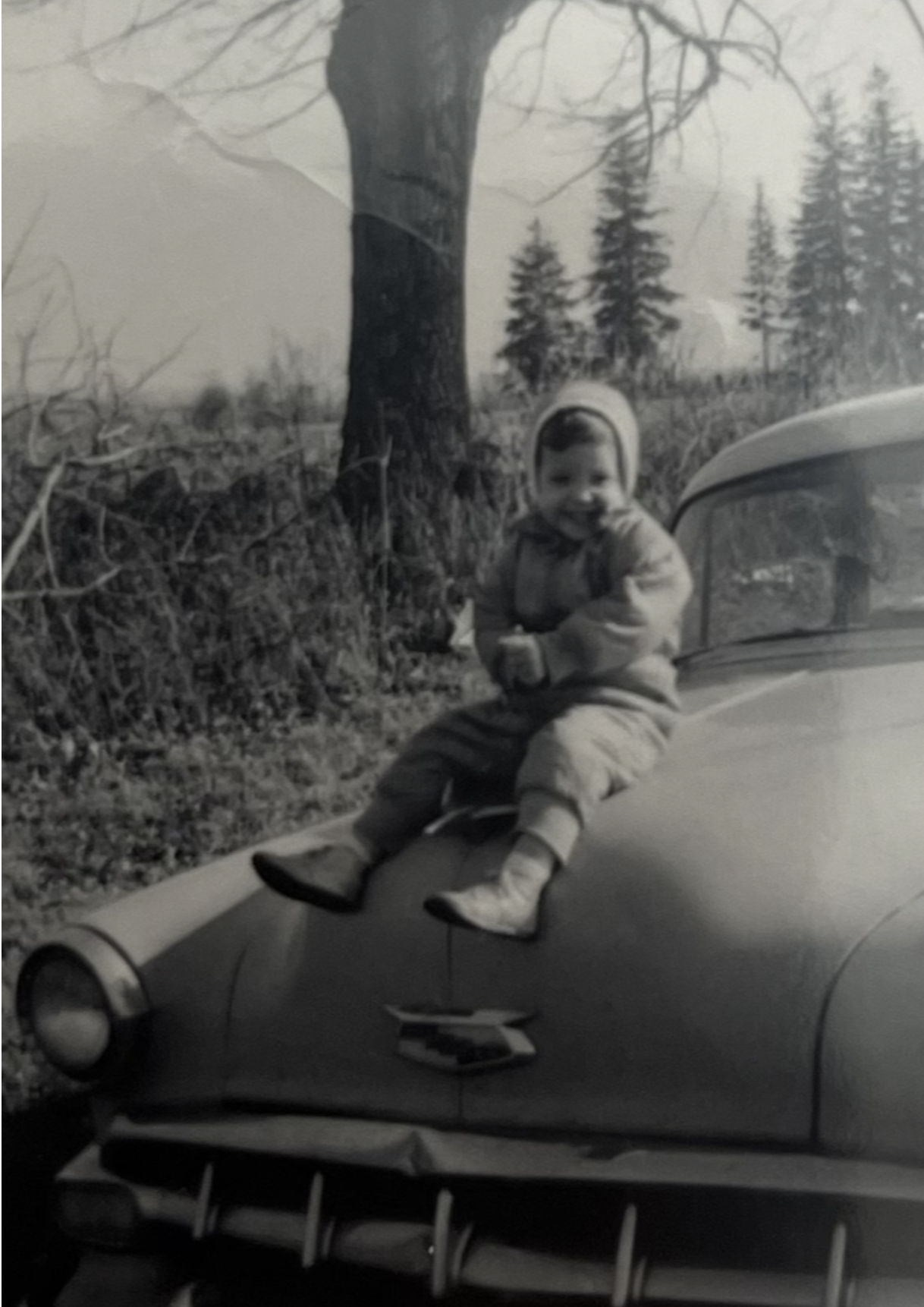
The “ancient history look” of 1950s black-and-white photos
It’s one of those typical 1950s black-and-white photos found in family albums — those of the era of the late Baby Boomers but before the 1960s when you could more easily obtain color film. It has that dated look and these days, it could simply be viewed as “back then, ancient history.” Only the car gives a clue as to the time period. The bottom line is that this picture comes across more as something found in a history book than a real moment out of a real life. So, while I’ll use some photos in this book, for a large part I am going to use paintings.
The details of a photo…
Why? First, check out the difference when viewing that same moment in full color:
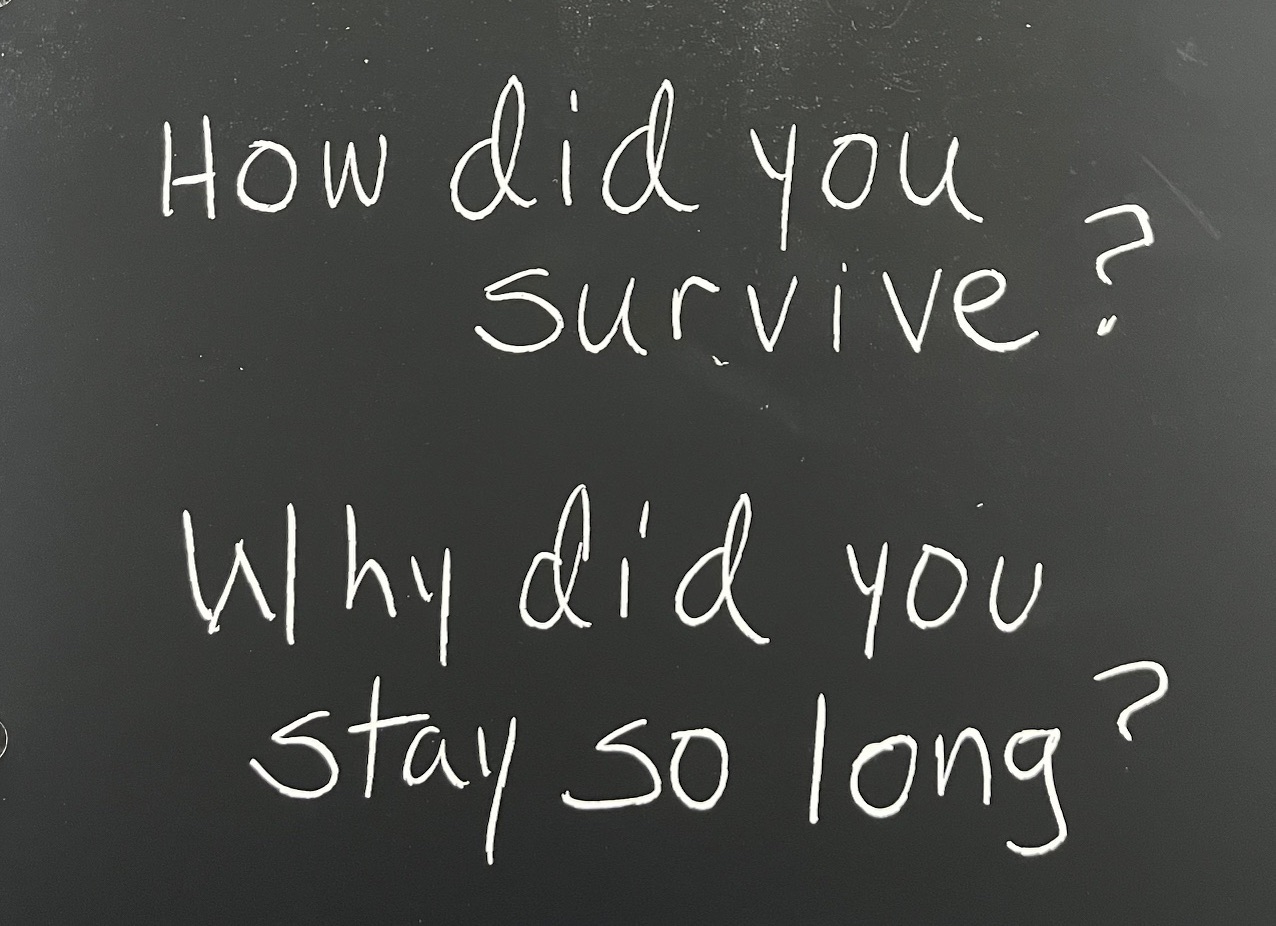
The book will have questions scattered throughout it: questions I’ve been asked and questions I’ve asked myself.
But these 2 questions are the ones people ask me the most…and the answers are complicated. I can only say that it takes a book.
There is also one other question, and it sounds mean, the question I tortured myself with over a lifetime, at least until recently. This question truly needs the book to show why I hated myself so much, and how I came back:
A Humorous Twist on the Old Masters’ painting style
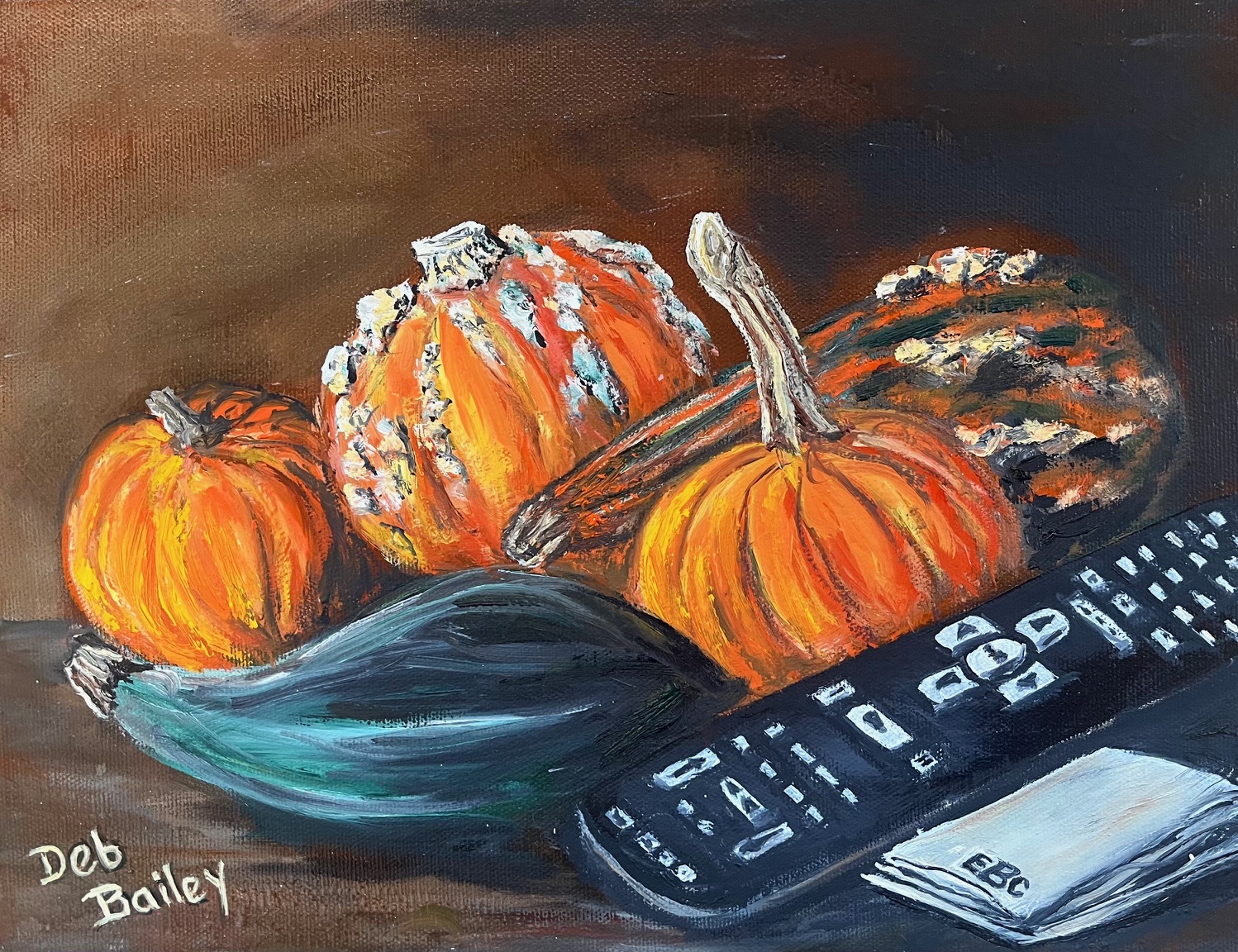
“The Old Masters with a TV Twist” – Painted by the author
The need for stress reducers during intense writing
There is no question that writing a memoir about abuse …frankly, about anything serious in one’s life if you are emotionally open and honest, can get intense. It takes energy to face it, feel it, process it, and extract the meaning behind the events. So, in order to maintain a healthy outlook it is important to have some activity for a “tension-breaker.” For me, that is art — both looking at good art as well as creating my own oil paintings.
The Old Masters paintings
I happen to love the Old Masters – whether the styles and color tones of the Northern Renaissance, such as Rembrandt, Albrecht Durer, Pieter Bruegel the Elder, or Hieronymous Bosch; or the Italian Renaissance painters and sculptors. I have a lot of books on the various artists or on the time period.
Giving the Old Masters a “modern” twist
Recently I decided to have some fun with the topic and created the above painting – The Old Masters With a TV Twist. I love the idea of throwing in some current-day object(s) to give a modern twist to the classical still-life painting approach! So there will be more of these coming along!
BTW, if you want to know more about the “Old Masters” – here you go:
For anyone who might enjoy watching the progress of my paintings from blank canvas to finished “masterpiece” please check out my Facebook page: Paintings of Light and Hope:
Photo link by author
You can also view my art progress on Instagram (if you’re not on Facebook)




 Soul Mosaic