A moment before continuing the story, to state the “rules of the road” for this book
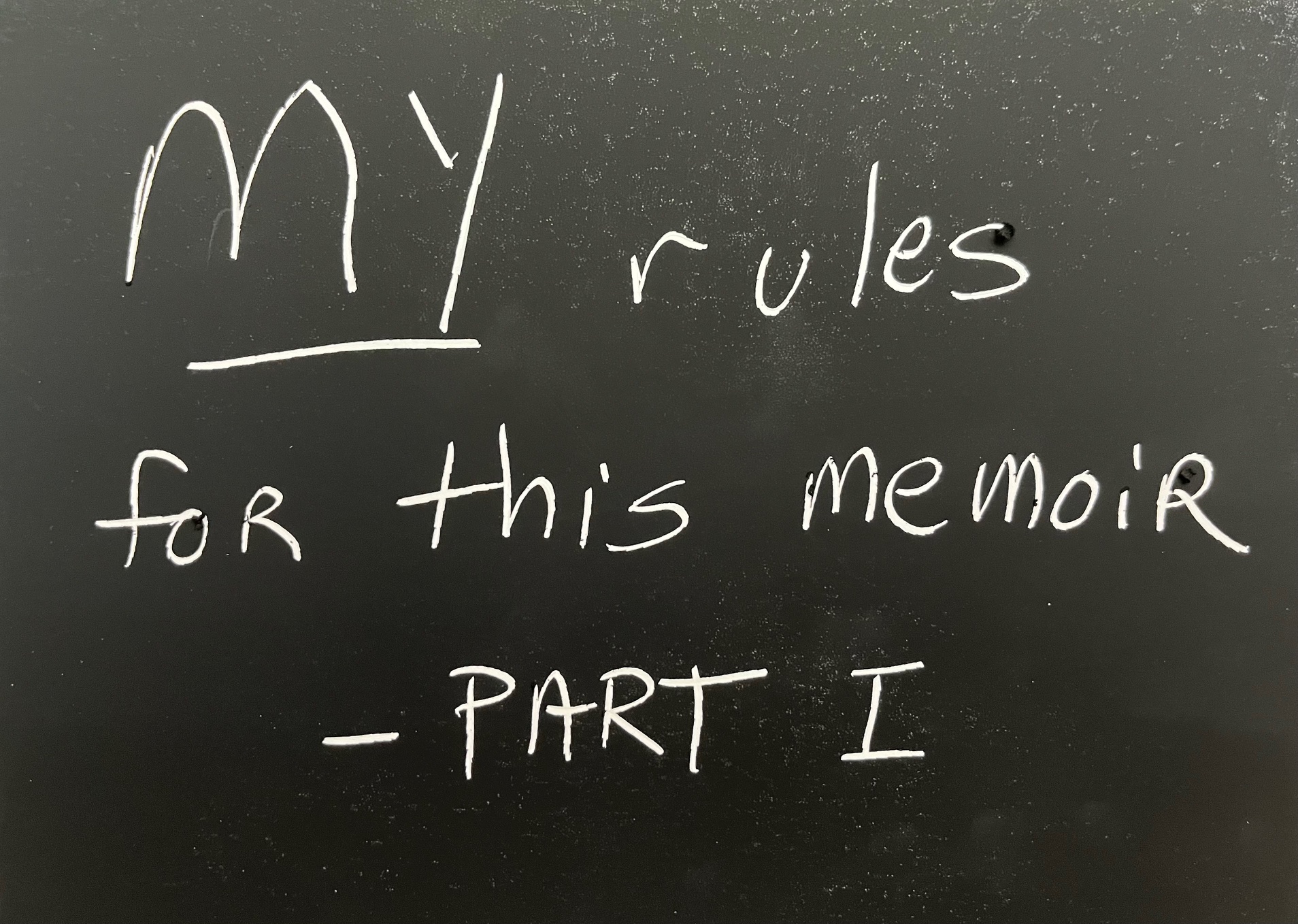
Before continuing with posts about my life, I want to share what I think is a vital part of any memoir – stating the rules, goals, and cautions for the book. So this is the first of a 2-part set of posts that will form the introduction to my memoir. That introduction will give all readers clear information about the how and why of my approach.
The “hows and whys” of my writing
Since there are so many good books on how to write a memoir, mine does not and will not be a textbook on all the nuances, methods, and rules.
But the following things jumped out at me as I studied all the different books on the subject. So I wrote myself some clear guidelines:
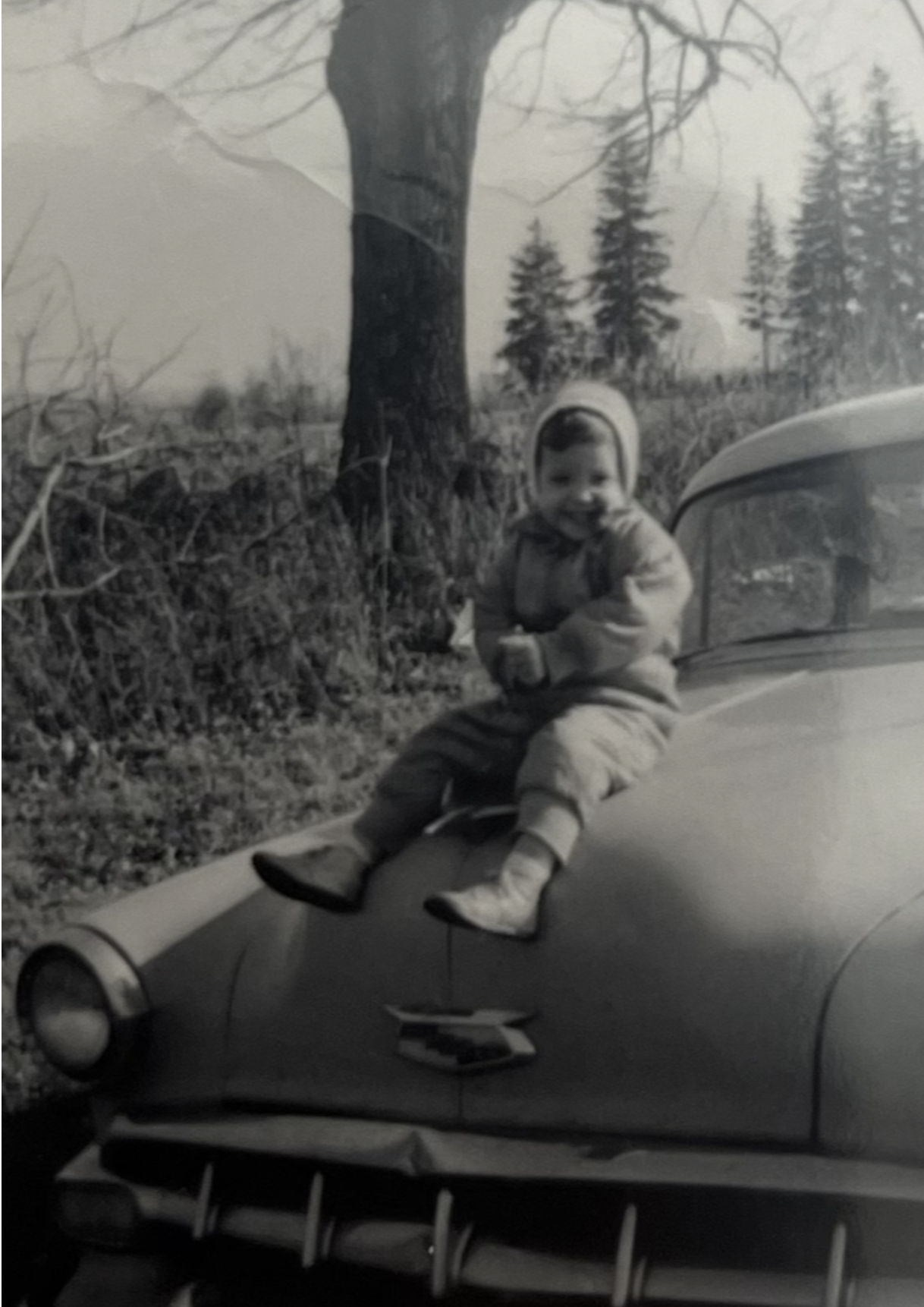
The “ancient history look” of 1950s black-and-white photos
It’s one of those typical 1950s black-and-white photos found in family albums — those of the era of the late Baby Boomers but before the 1960s when you could more easily obtain color film. It has that dated look and these days, it could simply be viewed as “back then, ancient history.” Only the car gives a clue as to the time period. The bottom line is that this picture comes across more as something found in a history book than a real moment out of a real life. So, while I’ll use some photos in this book, for a large part I am going to use paintings.
The details of a photo…
Why? First, check out the difference when viewing that same moment in full color:
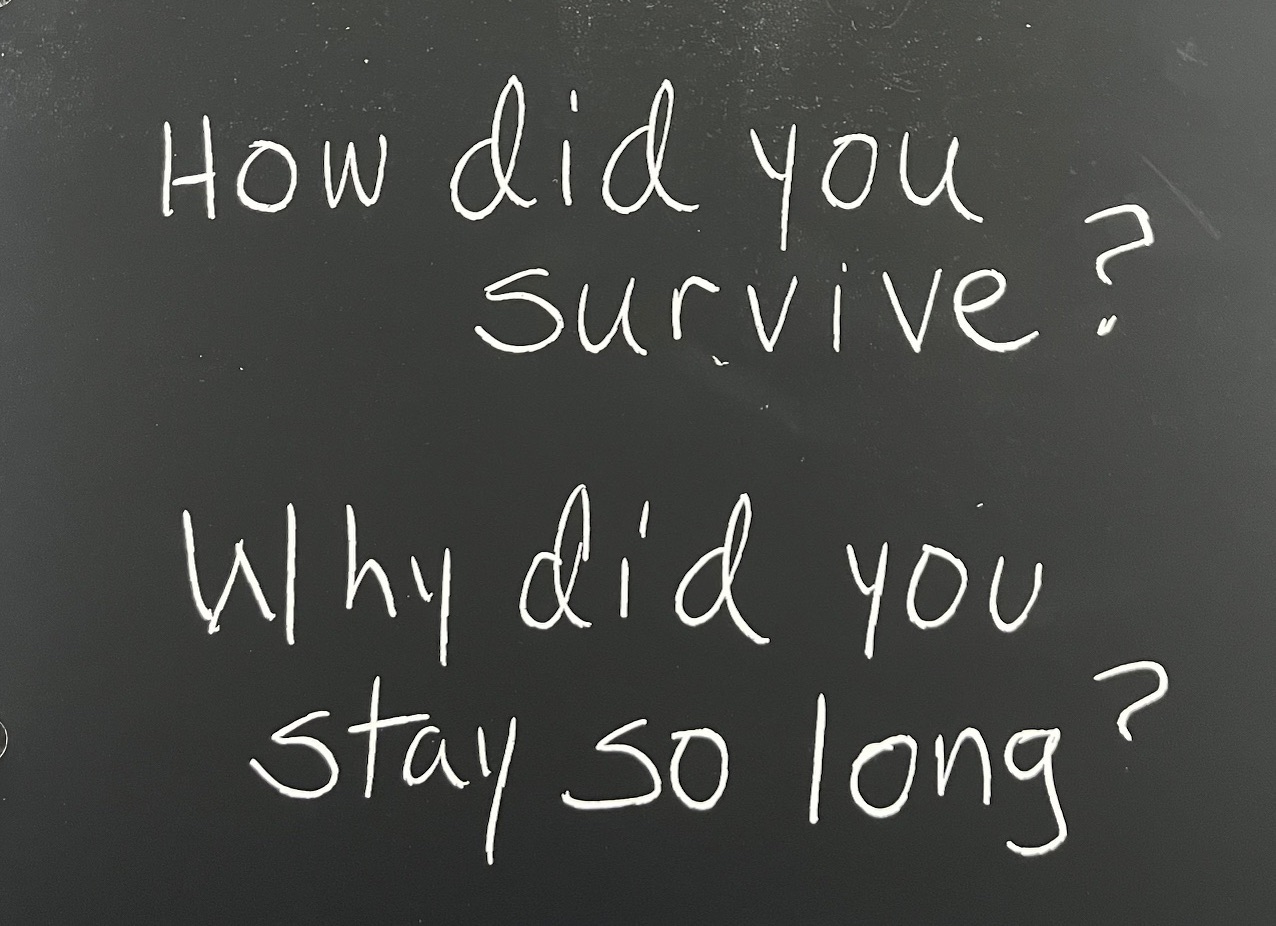
The book will have questions scattered throughout it: questions I’ve been asked and questions I’ve asked myself.
But these 2 questions are the ones people ask me the most…and the answers are complicated. I can only say that it takes a book.
There is also one other question, and it sounds mean, the question I tortured myself with over a lifetime, at least until recently. This question truly needs the book to show why I hated myself so much, and how I came back:
A Humorous Twist on the Old Masters’ painting style
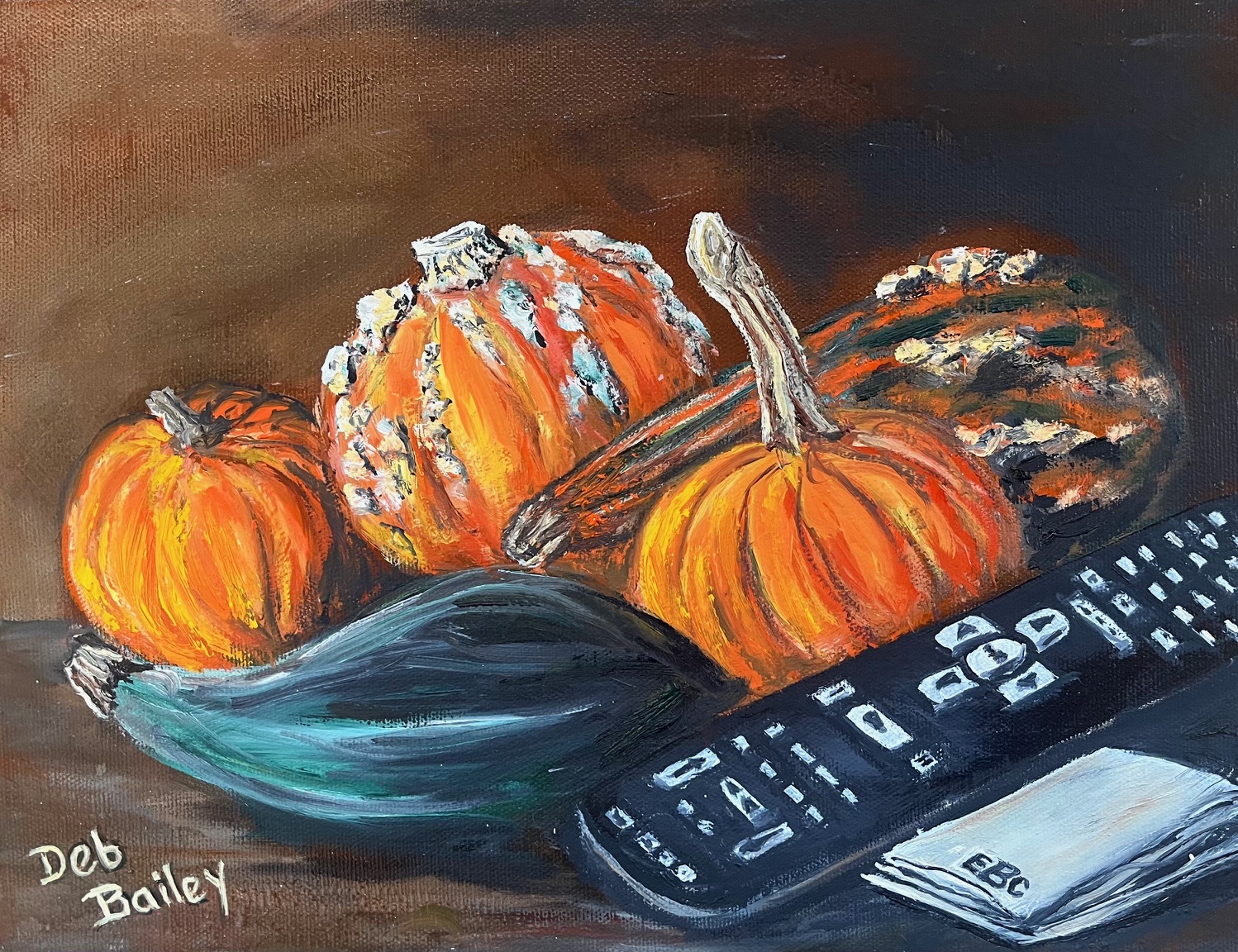
“The Old Masters with a TV Twist” – Painted by the author
The need for stress reducers during intense writing
There is no question that writing a memoir about abuse …frankly, about anything serious in one’s life if you are emotionally open and honest, can get intense. It takes energy to face it, feel it, process it, and extract the meaning behind the events. So, in order to maintain a healthy outlook it is important to have some activity for a “tension-breaker.” For me, that is art — both looking at good art as well as creating my own oil paintings.
The Old Masters paintings
I happen to love the Old Masters – whether the styles and color tones of the Northern Renaissance, such as Rembrandt, Albrecht Durer, Pieter Bruegel the Elder, or Hieronymous Bosch; or the Italian Renaissance painters and sculptors. I have a lot of books on the various artists or on the time period.
Giving the Old Masters a “modern” twist
Recently I decided to have some fun with the topic and created the above painting – The Old Masters With a TV Twist. I love the idea of throwing in some current-day object(s) to give a modern twist to the classical still-life painting approach! So there will be more of these coming along!
BTW, if you want to know more about the “Old Masters” – here you go:
For anyone who might enjoy watching the progress of my paintings from blank canvas to finished “masterpiece” please check out my Facebook page: Paintings of Light and Hope:
Photo link by author
You can also view my art progress on Instagram (if you’re not on Facebook)
Just a short post here. I have been sharing thoughts about “why write a memoir,” the considerations for how to approach such a project, the fears, etc. Going forward, I will continue to share some of that work, including various ways the book could be structured and specific guidelines I wrote about my approach so it’s clear to the reader.
But I will soon also start weaving in some excepts of my life story itself. A taste of both the process and the story.
Throughout my life, as is true for many of us, there are difficult days when the weariness of spirit becomes like a hand shoving us down against the mattress as we try to get up. The body struggles and the mind asks: Why bother? Why try?
Moments of “respite”
Decades ago, through years of childhood abuse, I found a way to survive — not a “dissociation” thing, but by living “Moment to Moment.” There would be the bad things and at that moment you just did whatever you must to get through it. Later though, when alone, I took comfort…escape…in a moment here, a quick experience there, but essentially in some small “detail” that I could lose myself in even for a little while. In those breaks, I could eke out sustenance where none seemed possible. And that let me keep going. At the time, I didn’t recognize consciously what I was doing–I just did it intuitively I guess– but it was my survival. Now I call them my “Moments of Respite.”
When autumn is in full color, I am reminded of one of the Moments of Respite from my late 20s — during a lonely day full of despair and a sense of abandonment.
Nature’s abundance
I grew up in New England, where the cold of fall harvest days conjures up images of steely gray skies and bare orchard trees. Even now, remembering that day gives me a reprieve from current problems…
Pulling into the dirt driveway of the farm I parked near the barn, the only car in the lot. Dried leaves crunched underfoot as I approached the building, and the air was heavy with that sweet smell of damp earth and composting plant matter. The sun hung low in the sky as the late afternoons were already taking up the appearance of night sooner than I wanted.
Inside the dimly lit barn, my breath visible in front of my face, bushel baskets of nature’s bounty were arrayed in rows before me. Grease pencil writing on cardboard signs listed the varieties there: Early McIntosh. Golden Delicious. Baldwins and Cortlands. Empires and Granny Smiths. So many to choose from thanks to nature’s gift to us of abundance… of flavors and textures, colors and sensations.
Questions, questions, questions
That gift though, presented the dilemma — which one or ones to choose? Even the questions came in abundance: Sweet apples or tart? Crunchy or soft? All? How much money was in my wallet? (Farmers then didn’t take credit cards and there was no Venmo or Squarespace.)
More questions followed. Would it be pies for the freezer? Or applesauce? Caramel or candy-apples, or baked ones? The type of apples makes a difference, of course, depending on how you are going to use them. And then there was just that simplest of delights, eat them fresh and raw before they made it into anything!
I walked the rows of baskets, gravel of the barn floor grinding against my boot soles. Back and forth, assessing the red ones, the green-red stippled. The sizes. The shapes. You look for the best ones with the fewest bruises…unless, of course you waited too long and there aren’t many left to choose from.
Even before I finished shopping, I couldn’t wait any longer to sample one. I was buying the basket anyway so I grabbed the largest one off the top, rubbed it against my jacket and tore into it.
The joy of a fresh apple
When you eat apples that are fresh off the tree, the sensations come all at once: the aroma of sweet and spice mixed together; the snap of crisp skin giving way under your teeth; a flash of tanginess as the soft flesh hits your tongue, and the syrupy juice that sprays out and runs down your chin. It is an overload of delight. In that moment, that “Moment of Respite” — the despair temporarily evaporated. In the raw air of a fall evening, drowned in the sensations of a fresh apple, I felt the totality of an autumn miracle right in the palm of my hand. And refreshed, I could go on.
It’s all in the details…
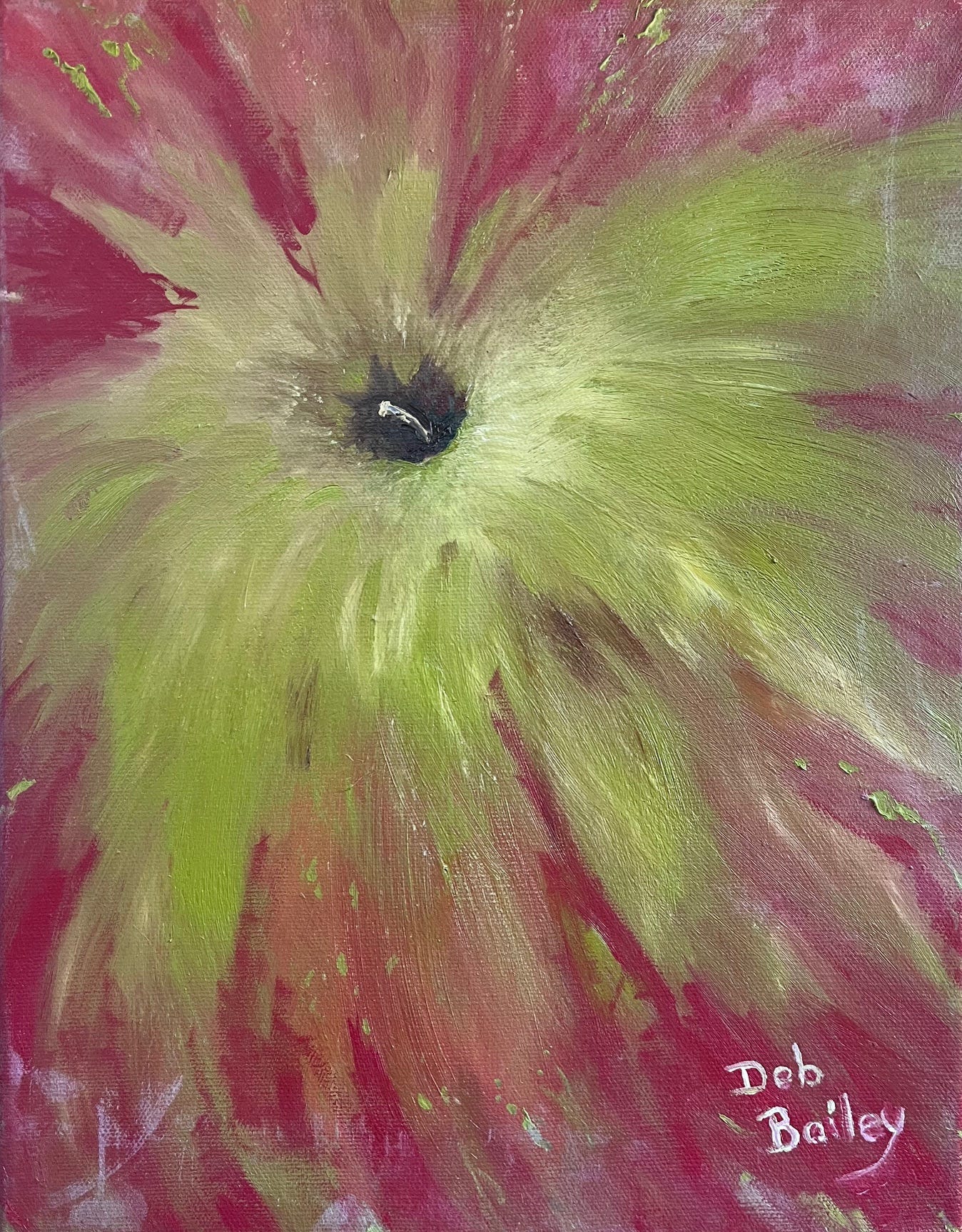
So many times in my life, those Moments of Respite saved me, fed me, gave me the energy to try again. For all the times when your world may be torn apart, life is sustained in the small details. It is those precious details that preserve the life-blood of our souls. You can draw a circle and color it in with a red crayon and call it an apple. Or you can underpaint it with burnt umber to put in the shadows, then layer in increasingly bright pigments of cadmium red, cinnabar green, lemon yellow, and titanium white. You can vary the intensity of the colors and the depth of the layers. Whatever you choose, the details make it all the richer for the moment. And it is in seeing the details that we are reminded there is more to life than just the pain we are struggling with at the moment.
Finding the calm
Moments of Respite provide the reminder that life still offers little worlds of richness and sensory escapes where our overwrought nervous system can retreat to find calm…where we can bind our wounds, restore our minds, and then return, ready for another round of the battle.
I no longer live in New England, and my life is much happier and serene. But even now, whether I am holding a crisp fresh apple from the store or the leaves hint at shades of crimson and burnt sienna, the evenings get a chill and the light departs sooner than I want, that moment comes flooding back. And I remember that Moments of Respite can make any chaos seems a little less daunting.
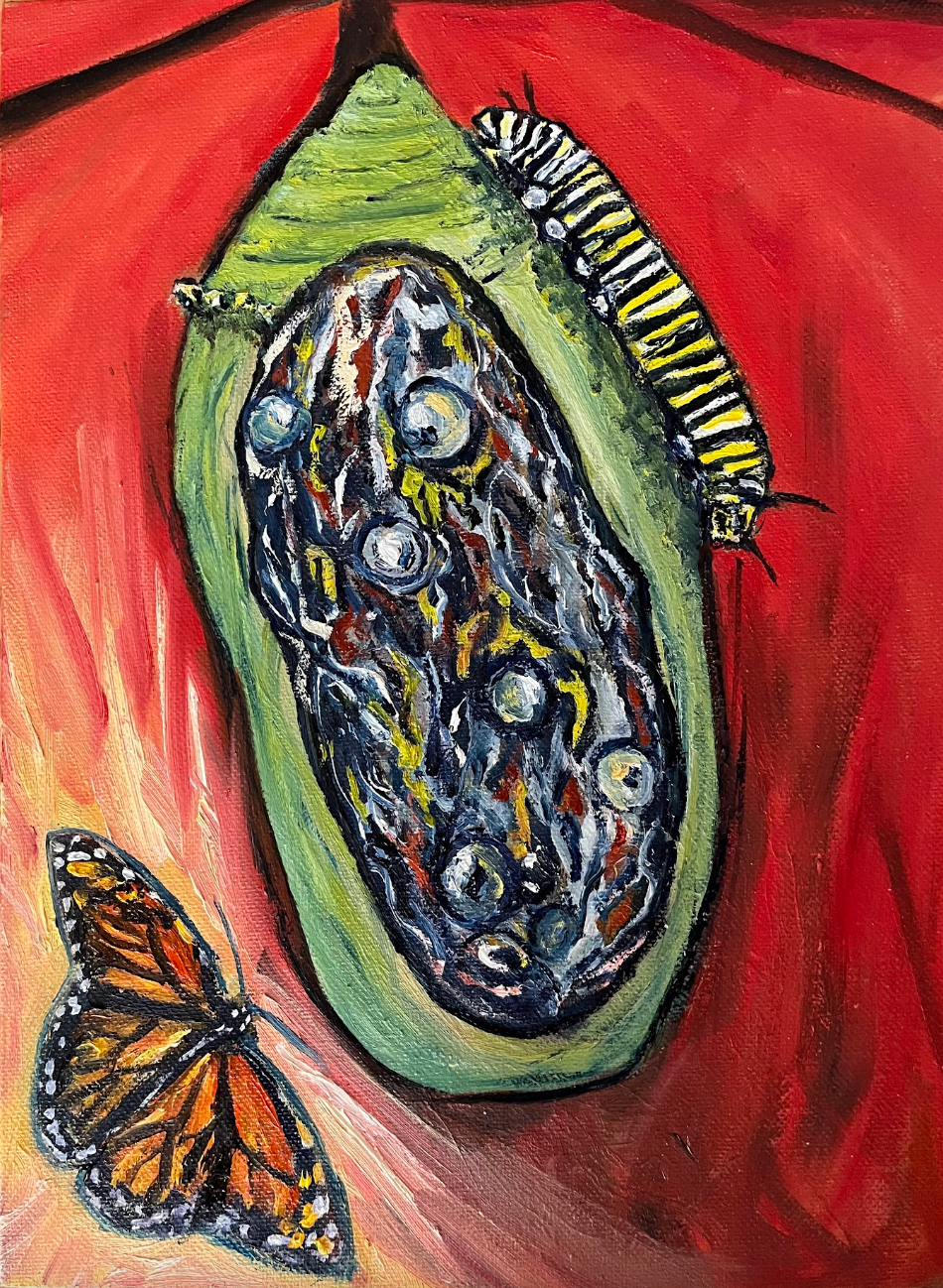
I recently wondered how a caterpillar — this slug-like crawling thing, emerges from a cocoon as a multi-colored, fragile-winged, flying beauty.
Being a retired science geek I of course hunted the answer down. While I sensed it was a sort of “magical” process, the specific details surprised me. Attached is a Scientific American article for those of you who would like to know the nitty-gritty process.
The short version is that all of the tissues of that caterpillar are literally digested and become mush! All its various structures are gone…with one exception: Imaginal discs.
Imaginal disc magic
When caterpillars are forming in their original eggs, they contain not only the structures needed to be a caterpillar but also an imaginal disc — an organized group of very specific cells — for each of the adult body parts they will have.
Once in the cocoon with the caterpillar reduced to mush, the imaginal discs take over and start reconstructing that soup into the adult butterfly. When the transformation is complete, the butterfly will emerge, mate, lay new eggs that will form new caterpillars carrying imaginal cells, and so on.
So…what do imaginal discs have to do with choosing not to write a memoir?
The very personal cocoon of transformation
Writing a memoir is a very personal decision and requires a careful assessment of risks to you and benefits to you. It is also a matter of personal timing in life as well as so many other factors. There is no right or wrong decision. It’s taken me seven decades to get to this point, even as I tried several times at different ages. It’s just that I was still mush in a cocoon and wasn’t ready.
Now, I choose to write. But after a lifetime of healing and transformation, I could have chosen the opposite instead. And I wouldn’t have been wrong. It’s not about the decision to write a memoir or not. It’s about growing, healing, and finding peace.
The Middle Path
The Buddhists say there is a Middle Path — not one or the other, but some road in between that fits you and lets you do what YOU need to do to heal. It doesn’t only have to be “write a memoir” or “don’t write.” Another way to heal could be to work with a therapist, paint, write only for yourself, or pursue some spiritual exercises that give you peace. The real point is to grow, heal, transform, and find peace.
“Spiritual” imaginal discs
To that end, I guess I relate to the caterpillar and butterfly story because I think we all have our own special “spiritual imaginal discs” — an inner part of us that came with us at birth and which holds the seeds of who we are meant to be in life. At the end of the day, it isn’t about a particular path to realizing our potential and our life mission. It is about finding out the mission itself. So find your own imaginal discs within you and follow your best path.
Take the time to consider things
Now, if you feel drawn to writing but aren’t sure , check out my previous two posts on “Is Writing a Memoir Worth it?” — the first on Risks of writing,
These two provide a number of points to consider before you decide. Maybe consider the lists, honestly answer the questions, and make your own decision. No one should ever tell you what to do, or that you are wrong.
Real safety is your willingness to not run away from yourself — Pema Chodron
The audience
A friend of mine asked who I was writing the book for. Almost without hesitation, I said– myself. Now in case that sounds selfish, it really isn’t. There is that old saying that before you can help another, you have to take care of yourself.
In the past, I would have answered that question differently. So many times over the years I tried to write my story in one form or another, but always, I thought I was writing it for others. After all, shouldn’t we want to help another if we can, to escape the pain we were in? A noble thought but it’s not that simple.
Each person must untie their own Gordian Knot
It’s also been said that the more you learn, the more you realize you don’t know. Hence the idea of writing a book to save another seemed arrogant, presumptuous, and flat-out wrong. I’ve spent a lifetime searching for my own answers, so how could I think I had answers for anyone else?
That might have been a bit of the pendulum swinging a little too far in the other direction, though. About the point I had decided never to write, a few key mentors in my life took issue with that. One of them–my high school English teacher who was pivotal in saving me back then, said to me: “You don’t give people answers. You tell your story. From your story, they find their own answers and untie their own Gordian knot.”
In that second, I was convinced. Her comment cemented my decision–this was a reason I could accept and write for.
Are there many good reasons to write a memoir?
Now I recently listed the number of risks in writing this kind of story, which made me wonder what, if anything, might be a good reason for doing my memoir. Maybe a few more than just “I knew my mentors were right.”
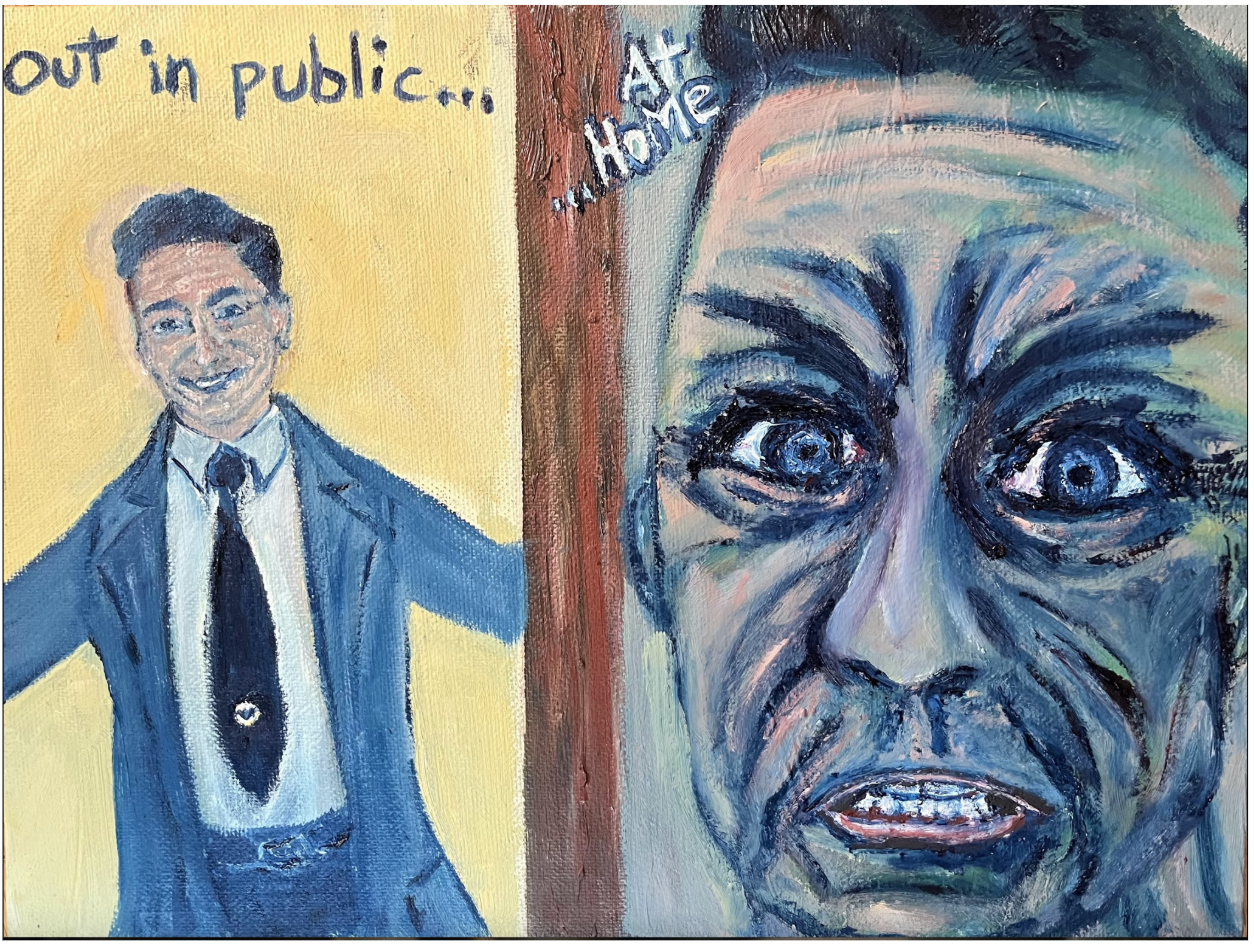
What lives in the heart of another, what REALLY goes on behind closed doors, and who do you believe?
Painting done by author
Before I get started, let me first say this piece is not about the average failings we all have where we wish we had done better. We all have dark places in our hearts that we try to overcome with our better sides. And most of the time we actually do. There is not a one of us out there that is perfect. But there are those who carry much darker sides, inflicting harm on others without caring and often taking pride in their ability to fool others.
Why can’t people just leave it alone?
Domestic abuse, child abuse, incest….these are messy topics, uncomfortable topics, topics many would rather avoid than deal with. For many people it comes down to, “he said, she said,” and how do you prove it? And if you know the person accused personally or through their fame, who do you believe? Do you even want to believe it might be true? Why can’t it just be simple and why do people have to bring this stuff up?
(Published on Pure d’esprit as: How to Love Yourself-Even if it Takes a Lifetime)
Painting by the author
NOTE: While I work on that list of reasons to write a memoir, let me share this recent post of mine from the Medium platform publication, Pure d’esprit. I will follow-up later with posts that get into the origin of why I felt this way, the shame carried, and lifelong self-hate that had to be recognized and confronted.
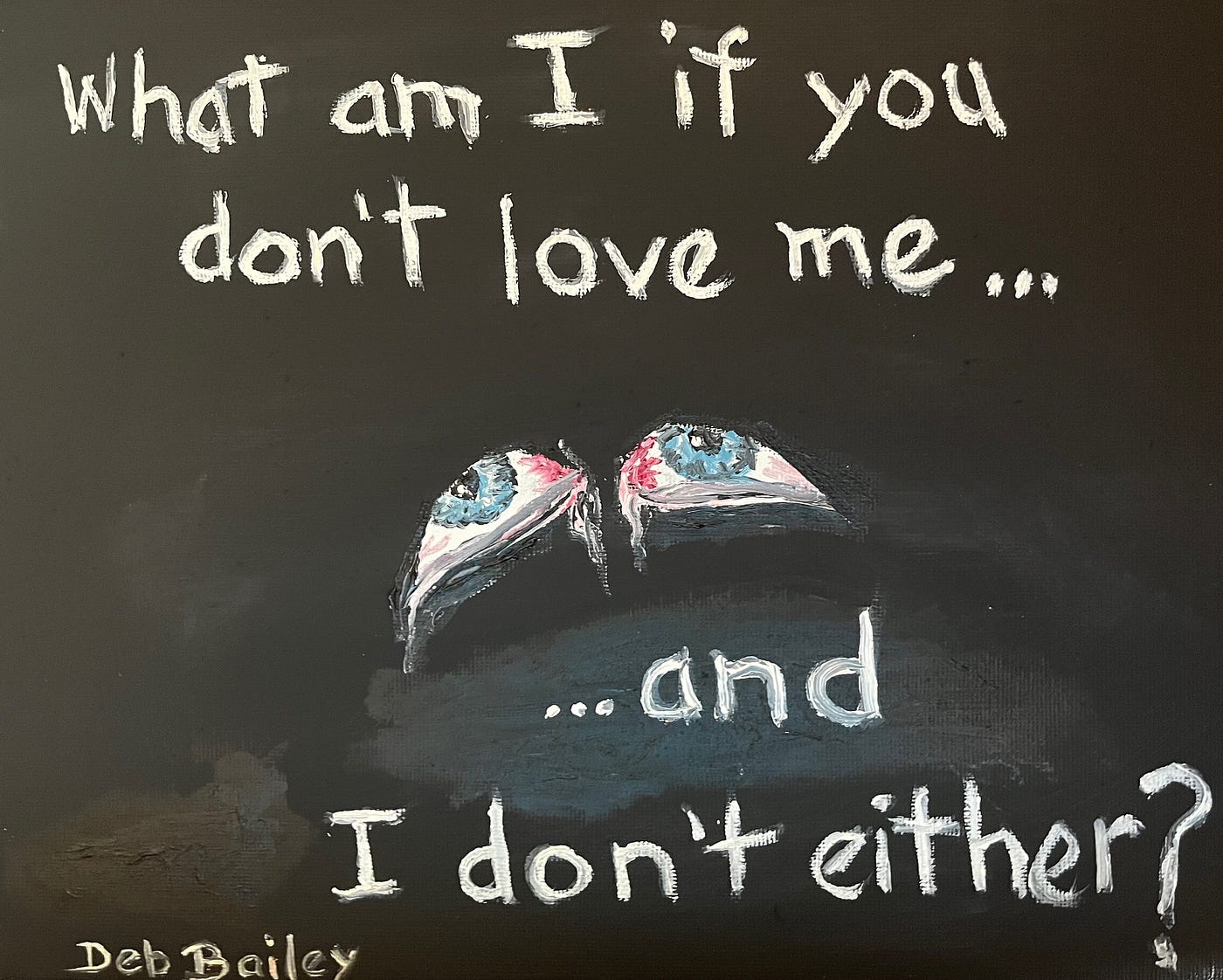
So what am I if you don’t love me…and I don’t either?
At the end of the day it really comes down to this question. In life, sometimes the only one we can count on at times to be in our corner IS ourselves. Parents may fail or abuse. Spouses may walk. Friends disappoint. At the end of the day, if we measure ourselves by those around and outside of us…and they fail us, does that mean we have failed?
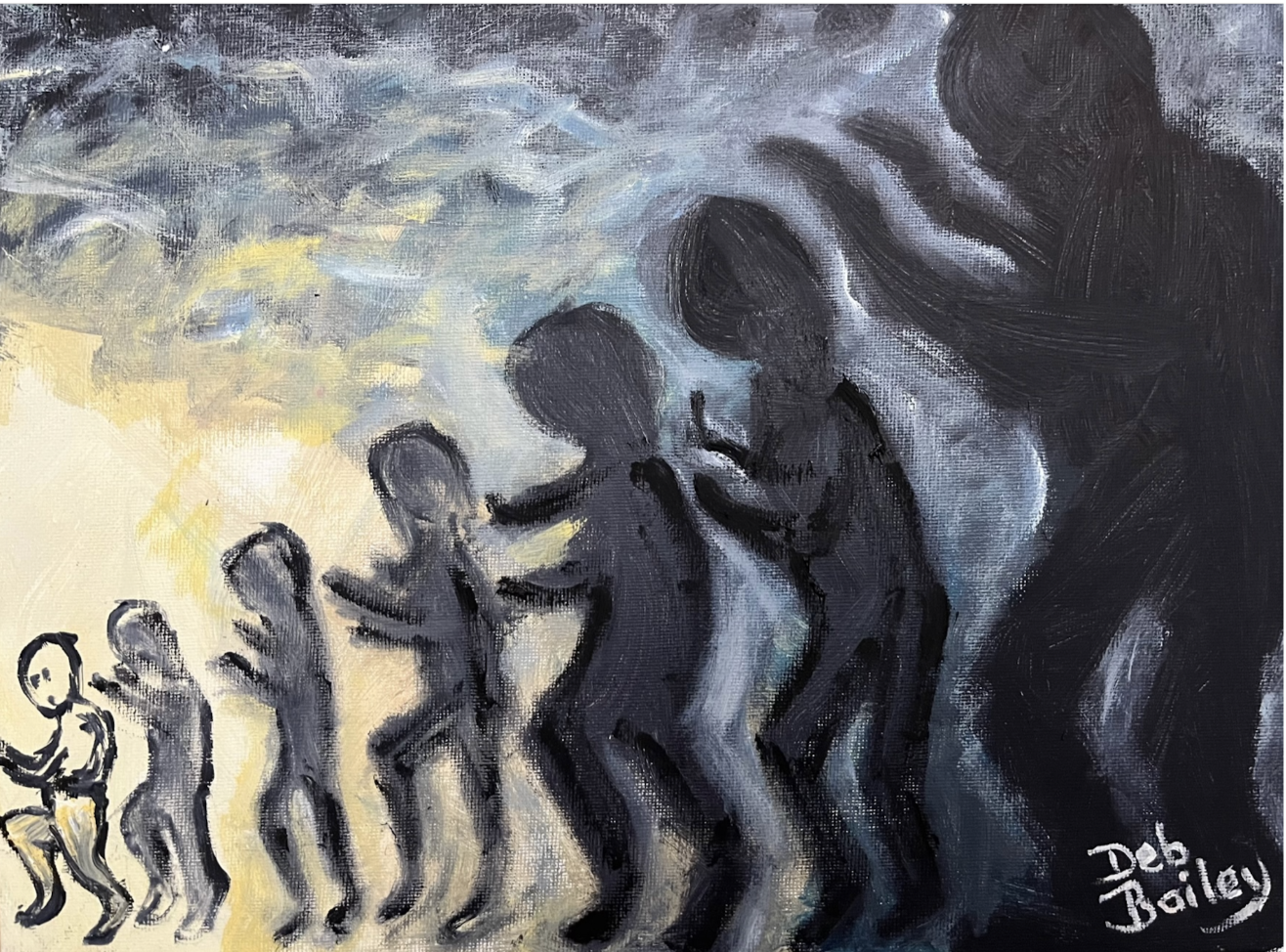
That answer took me 69 years. I had almost 30 years of childhood abuse to rebuild from. For a lifetime I hated that younger person I was. Viewed her as weak, stupid, a victim. And I was never going to be a victim again. So, of course I shunned a whole part of me…the part that actually saved me.
About that younger part of me…
That younger part of me had struggled through some of the worst years of my life and kept going. She had trudged through all kinds of abuse, through no or few friends. Through suicidal times. Circumstances crushed me and challenged me to ask myself: “Why should I stick around?”
She instead listened to a small voice inside that kept telling me: “Just hang on. You can always choose to ‘leave’ tomorrow. But just hang on, even one more day. You might miss something.” That small voice wouldn’t relent and she kept listening. “You can hate yourself. But, just hang on anyway, even a little while longer.” I don’t know why she listened, but she did.
Over the next several years I slowly rebuilt me. Got strong, fierce, determined. No one was going to ever do that to me again…a good thing for sure, though I think the pendulum swung a little too far with that tough side of me.
Never be weak again…and then…
Eventually, though, life got better. I even found love with a true soul-mate. And while I continued to soften emotionally, to myself I was not very kind. I had learned to “value” me in some things, in that present moment. I valued being strong, not that “weak stupid younger part.” Her, I despised. I sealed her off and tried to forget her. She was dead to me. Besides, I was too busy raising a son, having a life, to think about her anymore
Then 2006 came along. My husband almost died. My son left for college. The dog died. Menopause hit. And I could no longer face doing the medical research work I had done for a decade. I was in a total spiral. Lost. And it was then, brought to my knees and realizing I was no longer that “tough strong” person anymore, that I began the rest of the journey to healing. And she, who I had hated for a lifetime and abandoned, was the key to my healing.
The return
It has taken a lifetime to return to her…to me actually…that younger part of me. It took me a lifetime to recognize just how brave she was, how much courage she showed. And that the only reason I survived and grew was because of the strength she showed. I finally realized what a truly amazing and special person my younger self was, and what a debt of gratitude…what a debt, period, I owed her…as well as an apology. But even there, strong, loving, gracious — that younger part of me showed me love. Reminded me that at any point we are all just doing the best we can. And she welcomed me back with full love, reminding me also, that is is “better late, than never.”
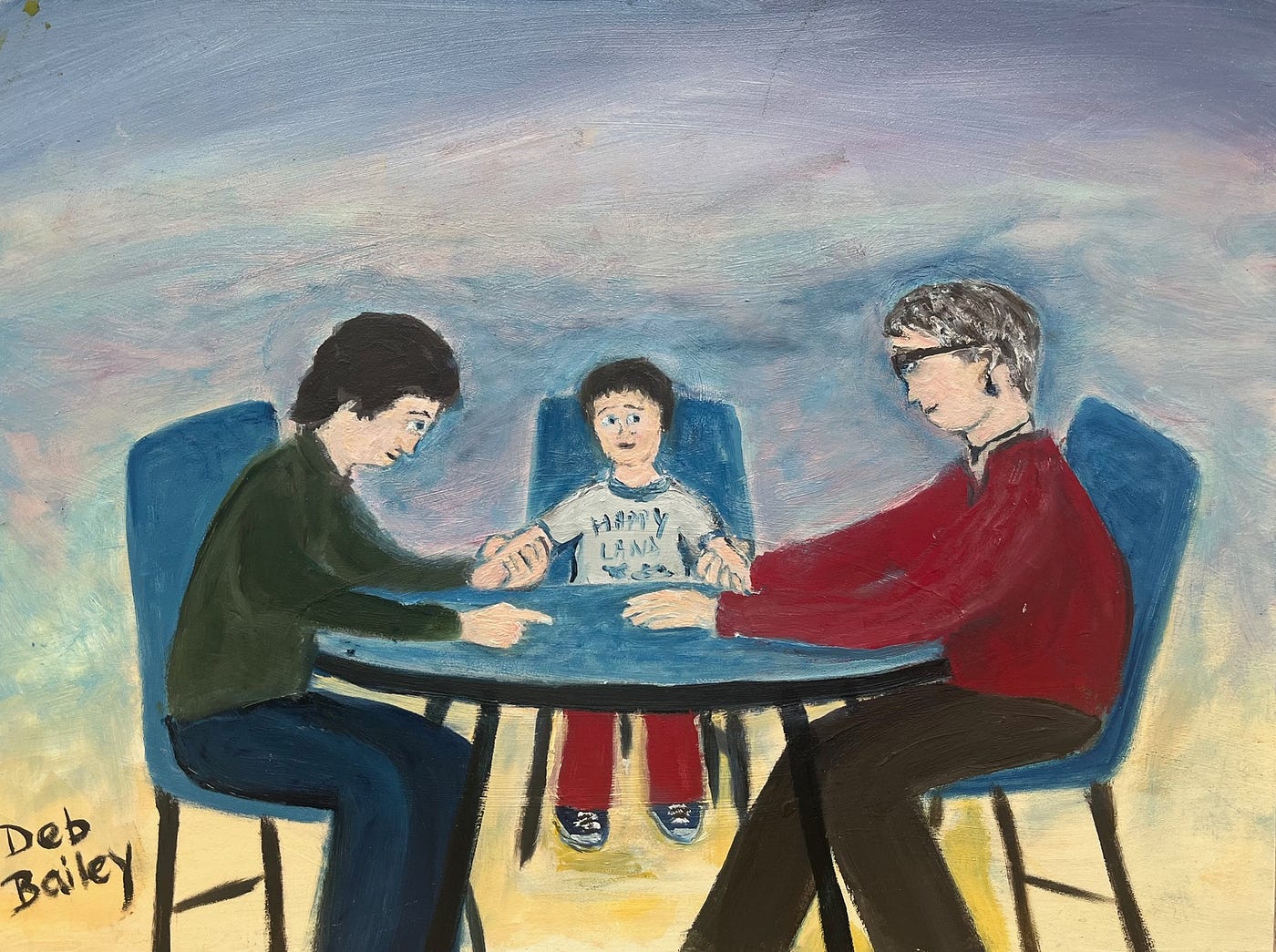
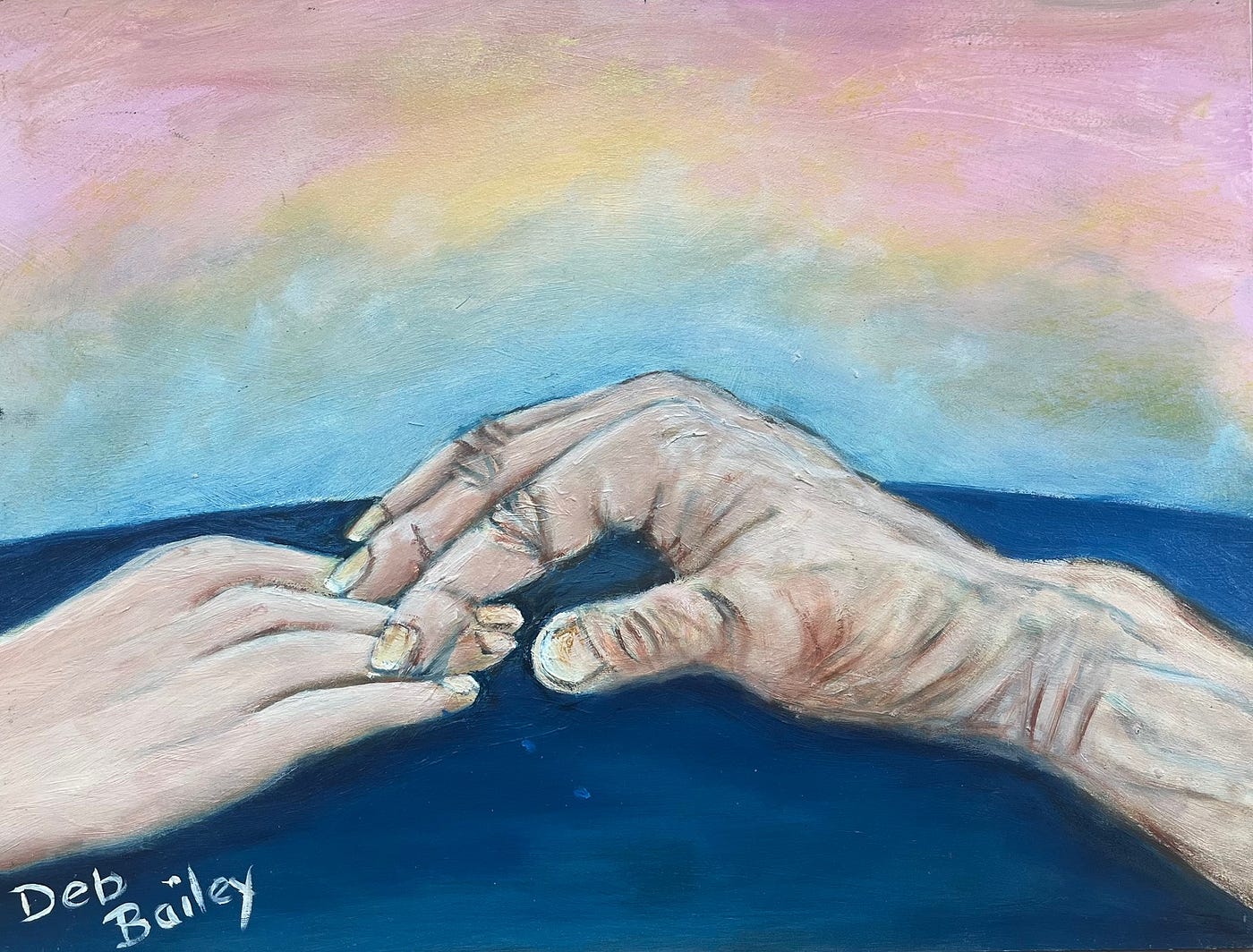
It is never too late to start loving yourself. And whether it takes a lifetime, whether it is a messy imperfect process, it only matters that you finally reach across the table and reconnect, and truly LOVE yourself. Just start. Even a little. The rest can follow later…even if it’s a lot later.



 Soul Mosaic