The last two weeks have been extra stressful with some medical things going on with my husband. While all remains “stable,” ever since he nearly died in the early 2000s after a “routine one-day surgery,” I never take those for granted.
Given the trauma from his medical emergency back then, on top of all the abuse trauma I carry, it is not a surprise that I don’t handle new “possible stressors” with ease.
It is also true that writing these memoir entries now about the deep emotional pain I felt in the EMDR sessions is hard. I re-live those emotions. It is necessary to write about those times and to extract new meaning from them. But it is also necessary when things get too intense to just take a breath and resort to one of the tools I used to survive all those years of abuse: Moments of Respite.
I have mentioned them briefly earlier, and I will talk more soon about them — what they are, and why I love them as a coping mechanism. But for right now, given that I needed to resort to that tool with current goings-on, I will share a sample of my newest one – a little “break in the action” for all of us.
The chaotic mess of mammalian breathing
So, we all breathe. Big deal. Inhale — diaphragm pulls the thoracic cavity down, the lungs expand, oxygen-rich fresh air flows in. Then the diaphragm snaps back up, forcing air out of the lungs. In the middle, red cells get rid of CO2 and take in fresh oxygen. Sounds simple enough. But in reality, it’s a pretty chaotic process.
Before I relate the session experience, I need to take a moment to consider the question – Why rage?
Why did I carry white-hot rage toward my father? And why did that need to be the first thing we tackled?
I will let the images do most of the talking here.
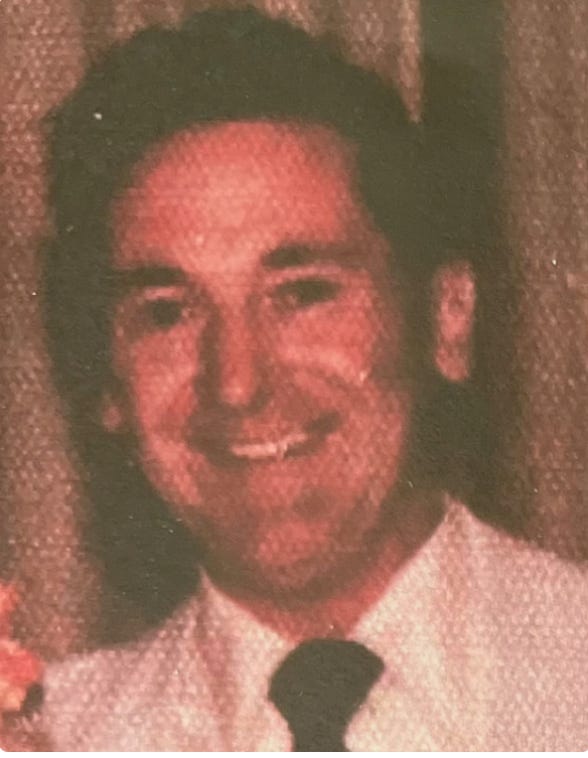
Who was he?
Probably best answered by the stories he shared with me on our weekend car rides, all of them disgusting or upsetting. Such as the one about abusing cats when he was a kid.
When we started planning for the upcoming EMDR session, I had no idea what to expect this time. Would it trigger another panic reaction like in 2009? Would it fix ANYTHING? I only knew I wanted to try because my psyche was demanding it.
For sure, I wasn’t even thinking about whether this would need multiple sessions. I wasn’t trying for any specific goal other than some relief. The pressure on my chest and the choking sensation in my throat were immense. And I so wanted to cry. But I couldn’t.
It was an understatement to say that with all the rage, fear, and pain building up, I felt like a loaded cannon. In fact, the better description was that I was a cannon barrel that had been OVERloaded with SEVERAL shells rammed tightly against a triple charge of gunpowder…and that lit fuse was dwindling closer to the gunpowder by the second.
No small challenge
In our final preparation meetings, we went over my rage and emotions again and again, trying to narrow down the list of issues and memories to one main event. As my therapist explained, EMDR can work better if we clearly define one issue, along with a specific associated memory or event, and the statements I held about that episode — Things like: What did I currently believe and feel about that event…and about me? And what would I prefer to believe in the future?
She explained our approach and why we would handle things that way. In cases where the trauma was a single, more recent event, improvement might come fairly quickly. On the other hand, with complex trauma like mine, it would take more work and time.
In preparation for that EMDR session that was coming, I spent a lot of time considering the things my therapist suggested — the nature of that white-hot rage I felt toward my father over what he had done to me and what it cost me. And I thought a lot about why I struggled to feel I had any power now in life.
Painting by author
The place of ghosts
We all have a shadow side…a place of dark rage, born out of the pain of abandonment that wails the cry: “What about me?”
It is a place of our ghosts, filled with toxic poisons, bubbling, oozing, and swelling in a stoppered bottle. As the fires of life’s pain intensify, the heat and pressure build. The boiling liquid rises, forcing itself hard against the stopper until, finally, the block gives way.
If we’re lucky, it will just push the stopper up enough to leak out and ease the pressure. Or, if we can bring attention and wisdom to the process in time, we might be able to toggle the stopper slowly and safely release what’s under it. But if we ignore it, it builds, explodes, splatters, and destroys.
Transformative wrath
I love mythology and stories about old wise women and crones…especially since I am one now, at least, old. So, this excerpt by Jean Shinoda Bolen, MD, in her book, Goddesses in Older Women, says it eloquently:
“…Outrage is good, healthy anger that finally is directed at changing an unacceptable situation. The depression and anxiety that women suffer from in the first and second phases of their lives are usually the result of feeling angry and powerless, afraid to express it….By the time a woman is in the third phase of her life, she may no longer be intimidated …or held emotionally captive by an abusive or domineering person…
“This is when she can tap into…the ‘Enough is enough!’ archetype. These are the energies of the goddesses of transformative wrath, powerful agents of change…if she has gained wisdom — and has the resources of compassion and humor — she will not be impulsive, one-sided, and carried away by fury.”
Well, I am old. And I certainly didn’t want to be impulsive and get scalded by the hot mess inside me. So “wisdom” would be welcome. That is where the guidance of my therapist, husband, and close friends always comes in handy.
What about anger?
Regarding anger, my therapist put it in perspective first by affirming my right to have it. “You come by your trauma honestly. It was done to you. And given how long you were abused, if you stayed angry for a long time, it wouldn’t be unreasonable.”
So anger, that emotion that is terrifying to so many of us, has a right to exist. And it can even be a force for good if wielded carefully.
Despite the upwelling of so many intense emotions these last months, I was here to heal, not destroy. I could not deny the level of fury, but neither would I let it lead the journey.
I remembered something that the Buddhist monk, Thich Nhat Hanh, shared in his book about how to care for anger. He described our anger and pain as being a crying infant inside us. It doesn’t need to be ignored or punished, but instead, held with compassion and love. By embracing our rage and pain with love, we can let its fury wear itself out safely, calm it down, and then look deeper inside it to see what it is about and hear what it is trying to tell us.
So, the thing I needed to do at this moment was not run, but to stare down into that cauldron of noxious fumes and identify what ingredients my shadow side and ghosts put there to cause such pain. And try to hold it all with self-love.
Now, I am not a Buddhist monk, and more times than not, when I am pissed off by someone or something…or my dark ghostly companions have goaded me into despair and fury, I can have some really “animated” conversations with myself. Maybe I’m not exactly gently cradling the baby of my inner pain, but at least I’m paying attention to it safely.
All alone, as I clean or make dinner, I vent about all the things I’d like to tell this person or that, the things I should have told them, or whatever. I imagine I’m not the only person who fights the battles of the world this way. But it’s safe. No one is there to hear it all, and sometimes, out of the solitary yelling, some questions or insights will pop up.
Challenging the ghosts & their “Triad of Toxicity”
In the case of all the toxic messages my inner ghosts were trying to tear me down with, I realized there were three very powerful ingredients in that cauldron that I call the “Triad of Toxicity” — Secrets, Shame, and Stigma. So I pondered those. Questions, arguments, and retorts flooded my head:
Why do we live in a closet, swallowing down the toxic poison of secrets, and feel we would be “bad,” or “wrong,” or “disloyal” to speak our truths?
Why is it that instead, we spend most of our lives behind the facade, pretending we’re just fine, when the truth is we’re choking on that bulging bottle of family secrets?
One question that came up just the other day was, “Why do people think trauma and incest survivors should be quiet and get over it?” I was thinking about what another incest survivor said in the book, The Courage to Heal – “Incest is not a taboo. Talking about incest is the taboo.” She nailed it.
We are viewed as the “problem” — the living, breathing reminder of something everyone else wants to forget, something they don’t want to look at. Something ugly and uncomfortable that needs to be kept hidden.
So, we clamp our mouths shut, make ourselves small, and refuse to speak, like a good little victim. But…the poison keeps building and choking us. And ultimately, it will either kill us or haunt us for the rest of our lives.
I didn’t do this!
For a lifetime, I’ve felt apologetic, not wanting to cause discomfort, and feeling like speaking betrays the secret of what my father really was versus what everyone else thinks he was.
I kept the secret, which protected his carefully cultivated reputation and image. Because if I spoke, if I shined the light of truth on him to show his reputation was fiction, I would be the villain.
The other day, this emotion burst out of me from somewhere, and I wanted to scream – “So people don’t want to hear it, and criticize me if I speak what I need to…But I DIDN’T CAUSE THIS! I DIDN’T DO IT! IT WAS DONE TO ME! Why do I pay the price?!”
Messages to silence us
The ingredients to this stew of control are powerful: You start with a mix of secrets, personal shame, and society’s stigma, add in some misguided loyalty, wrap it in a crust of self-hate, and garnish with a side of messages to stay silent.
After a lifetime of being crushed by trauma, then add in society’s response, it’s no wonder so many never speak, and some don’t make it through.
What are the messages to silence us?
They include themes like: Minimization. Anger. Accusations. Fear. Gaslighting. Guilt trips. Shaming. Questioning your memory. And zero-sum game thinking. That is where only the person with the worst story has a right to have pain and feel it. And since your pain will never be bad enough, you don’t have a right to it. So get over it.
No doubt many have heard at least one of the following, or felt its energy directed at them. Or worse, after hearing these, I know I have internalized some of them, and then said them to myself:
You’re just being selfish.
You always want the attention.
So you had a rough time. Everyone does.
Get over it.
You’re being dramatic — you were always the sensitive one.
It could be worse — there are people dying of disease, so be happy you have it better.
Others have had it worse than you.
You are mistaken — it wasn’t that bad.
You were just imagining it.
It’s over and done with.
It was a long time ago
You’re still going on about that?
Can’t you let it go?
Focus on the present. Life is short, and you’re wasting it thinking about the past.
Maybe if you stopped navel-gazing and focused on others, you wouldn’t have this problem.
There are so many good things now, can’t you just move on?
You’re going to upset everyone around you by talking about old history.
If you just forget about it and focus on the present, everything will be fine.
If you loved us, you would just leave it alone and move on.
Why are you sharing private business in public?
I am sure there are more. These are more than enough, though.
Poet Lucille Clifton, writing of the abuse she suffered in her childhood and people’s response to her speaking out, captured all of this so powerfully in her poem:
why some people be mad at me
sometimes they ask me to remember but they want me to remember their memories and i keep on remembering mine
Why are we silenced…and what does it do to us?
In the book Your Brain on Art: How the Arts Transform Us, it explains that two big inhibitors to recovery from trauma, especially shame-filled traumas like sexual assault or abuse, are the shame we feel in ourselves and the stigma put on us by society.
In shame, WE want to stay quiet because we don’t believe we have the right to speak, we haven’t been believed, or we have been beaten down by fear so that we don’t dare tell our truths.
In stigma, SOCIETY wants us to be quiet. We are viewed as a danger to the normal order of others, different, weak, or broken, and so we are set apart from them. It is probably that part of the human brain that thinks “different” or “unknown” is dangerous. We are dangerous to them, so we are driven to conform or to isolate.
No turning back
I have lived through decades of trauma, despair, suicidal questions, and finally, rebuilding, learning, and thriving. I did my work quietly because I believed that repairing was my business, I was so ashamed and loathed myself, and I didn’t want to burden anyone else with it. And, I feared criticism or rejection. If I stayed quiet, I was allowed in and possibly respected for my “strength.” But if I talked?
I realized that I’ve lived for seven decades in this manner. I hid the toxicity, the pain, and the inability to feel much. But now, the more I worked with my therapist and grew stronger, the more I felt this crushing pressure of “something” within me, waiting to be rescued…or maybe better: waiting to be brought back into my life…by me. That meant I needed to reclaim my power.
I was starting to feel and hear that part of me that I’d sealed off and forgotten about, years ago, in order to survive. Now, for better or worse, it was time to take my own counsel. Maybe I was strong enough now to approach that sealed chamber, and open it up…and release…whatever was there. Would it be out of control and destroy me? Was there more pain than I could withstand? Or would it finally be the portal to the rest of my healing and a wonderful new life?
Time and therapy may not heal all wounds, but denial heals none. I had to know. And I was tired of running. I am the sort of person who will endure something for a very long time, and it may take me even longer to realize I am doing it and ask myself why. I am not always the quickest learner. But once I do realize and ask, there is no turning back.
Note:
I am seeking financial support to complete my memoir, work with an editor, and return home for fact-checking. Your help would mean the world to me as I take this step toward healing and giving voice to my journey.
Please like, comment, and share this post to help spread the word. The link for my fundraiser is on GoFundMe. Thank you for your support.
Before I continue with the story of my preparations for that upcoming EMDR session with my therapist, I wanted to give an overview of the various tools I use in my healing process, as well as some additional information about my two main techniques:
CBT, or Cognitive Behavioral Therapy EMDR, or Eye Movement Desensitization Reprocessing
None of this is medical advice or recommendations for anyone. I just wanted to provide some additional background on what these terms mean, as well as some links to related professional organizations, if of interest.
Again, these methods were chosen by my therapist and me, based on what we both felt would be best for me. Each person needs to work with their therapist to determine their own best path, as it is a very individual process.
It goes without saying that there are many different types of therapy approaches. And there are also new tools being explored, such as psychedelic medications for the treatment of PTSD, depression, and anxiety. Toward the end of this book, I’ll touch on that a bit more. While I have no personal experience with the psychedelic medications, I watch the research to see what might develop in the future.
The tools I use on my own:
Here is a list of other tools that I use on my own, which augment the work I do with my therapist:
In looking back at my 2018 notes, whatever the specific items I listed in that email, I realized they boiled down to these core items:
Fears (many)
Shame
Anxiety
Rage
Pain
Self-hatred
The usual culprits, at least for me.
Photo by author
As to fear, it was interesting to see how many different things I was afraid of. And I can’t say that any one of them was bigger than another. They were all about equal in size…huge.
For example, at that point in time, even as I started to consider writing this book, I was ADAMANT that it would be under a pen name. I was absolutely TERRIFIED that any family members or people who knew me would see my name on the book. And I fully expected I would be attacked for speaking out loud. For that matter, I may yet be. But I feel differently about it now.
But at that point, I was even terrified of using a pen name. I still hated my younger self, was drowning in shame over many things in my life, and I still believed that telling my story would cause others pain, that I didn’t deserve to pursue this “navel-gazing,” and I would, rightly so, be attacked, then abandoned.
So it was no small thing that I even considered writing this. I will discuss efforts surrounding the issues of “why write, how, and how to manage courage and fear” in a few upcoming posts.
Reassuring my inner person
I find it helpful, especially when all my fears and emotions feel like they are ganging up on me, to get it out onto paper. Like an exorcism. That way I don’t have to carry them in my head, which both releases the pain of them and reassures me.
On that latter one – reassurance – I feel like as long as I have a list on paper, I know those things won’t be forgotten. For that hurting inner person at my core, it is calming. Soothing. She feels like this time she won’t be forgotten, stuffed down, or….locked behind that door again like in the past.
Sharpening the focus
It also helps me to formulate a coherent plan. I can’t just splatter rage all over the therapist’s office…well, I can, and there is a time for that, but in terms of us making a clear plan for the upcoming EMDR, that wouldn’t do.
The thing about me, especially before all this work, is that I feared I might get stuck again. In fact, it is one of my biggest fears. I don’t easily slow down or rest because I fear I might not get going again.
After all the years trapped in my parents’ house, I never wanted to experience that again. So, for most of my adult life, I’ve operated from a frantic energy to heal. And “rest” was not a welcome part of that process.
My therapist has often remarked that for many of her patients, she has to give them a push sometimes. But for me, she frequently needs to slow me down and help me be more patient.
The EMDR failure
In 2009, when I started working with her, I was in such agony from PTSD that we tried to do a round of the EMDR routine – that process of eye movements while remembering a particular trauma, that helps the brain reprocess and heal that memory. I’ll explain more in the next post. For right now, enough to say that at least at that time, I reacted very poorly. It triggered such a high level of anxiety and stress that my therapist stopped the session and said we would use other methods.
Other tools
Since then, we’ve used, and continue to use, CBT- Cognitive Behavioral Therapy. That is where we talk out the various issues, piece by piece, as often as needed, until I can figure out what is operating. Then we work to implement better ways to manage the trauma, and my life.
At times, she also taught me various Yoga breathing techniques to help my body relax. Or she would have me lie on my back with my feet elevated while breathing slowly. Both of these processes help the body’s parasympathetic nervous system to take over. That’s the one that helps calm you and slows down the stress and anxiety reactions.
The sympathetic nervous system is the one that is running in overdrive when triggered by trauma reactions. And no question, I spend a lot of time reacting from that sympathetic nervous system. Yet, these tools did help relieve some of that anxiety, and they continue to be very helpful.
The siren call of EMDR
But I also sensed that I wanted…and needed…to revisit that EMDR process again. It just kept “calling to me,” and my gut gave me no peace.
There is that question: “How do you eat an elephant?” And the answer: “One bite at a time.”
It was the same thing writer Anne Lamott was getting at in her book on writing, Bird by Bird. She tells the story of her brother, who had waited to write his school paper on birds until the night before it was due. Frantic, he asked his father how he would ever get it all done? And the answer was, just write it bird by bird.
In this last section of my memoir, The Undiscovered Country, I am trying to draw to a close the many threads of the previous section, The Old Country. This is the climax, the finale, the meaning, growth, and wisdom part.
While I was writing the deeply painful posts about the abuses in my life, I said to my husband one morning that the writing was “so very hard…it just hurt so much.”
His response, while it sounds harsh, was actually an affirmation of just how well I was doing this work. His comment was delivered with great kindness and encouragement. “I think that is a good thing that it hurts. Not that I wish that for you. But it means you are really hitting the heart of those memories. You’re not just speaking from your brain, but from all those harmed places inside.”
His comment actually gave me relief and the energy to go on.
Buried in binders
When I got through all of those entries, I felt a sense of great…achievement…relief…gratitude. I thought to myself, Well, I’ve made it through the worst of it. Now I just have to draw the threads together and finish. So that should be easier.
Yet, every time I looked at all the folders spread out on that bed, each carrying nuggets of insights on different topics I’d introduced before, I grew more and more tense.
After the trip, I still wasn’t able to start “sorting and assessing” right away, because the flood of “things boiling to the surface” continued for a while. All I could do was let it come. Write it down. And when it started to settle, figure out what to do next. Those reverberations held some clues:
Journal entry: Sun, Oct 1, 2017:
Feelings of anger, rage, not going to put up with anybody’s sh-t
When a drawer knob catches my shirt and pulls at me, or I bump into something – I rage
When anyone treats me like they think I’m stupid or they are pulling something over on me, I rage
Journal entry: Mon, Oct 23, 2017:
I DID compartmentalize (back in that house and life). I dissociated. I had no voice.
Now, I HAVE a voice.
*I DON’T want to be silenced or stay in a closet any more, because of anyone not liking what I have to say
I don’t like compartmentalizing anymore – I spent sooo much time dissociated.
My work now is to reintegrate all and be whole.
And the “Me Too” things …doesn’t answer for me, “So what is next?”
Journal entry: Sun, Nov 12, 2017:
Ed asked me what my earliest childhood memory was that was not of the abuse.
My earliest memory WAS the abuse.
I can’t remember a “before time.” There never was a “before time.”
Journal entry: Mon, Nov 13, 2017
Where am I now? I am ALREADY TRIGGERING my PTSD, just writing these things
What do I expect to come out of writing this book?
Change. Though I don’t know what form it will take.
I’m optimistic it will be a good outcome.
*But my guess is it will be something I won’t be expecting. That kind of change is never what you think
*The purpose is not getting to the end of the book, its outcome, or money. It’s the process that I will experience through the writing and the changes that will come from that.
*I have to pace it.
If I rush and don’t touch emotions, I’ll be “okay,” but the experience won’t be worth anything.
If I bull through and hit too many emotions too fast, that is emotionally DANGEROUS for me.
Need a “middle path” approach
I must learn to let it take as long as it will – and it WILL take longer than I want
Stopping the runaway freight train
Working with my therapist after my return, we focused on slowing down the abundance of emotions and thoughts coming up. They were all to the good, and I’d write them down as I knew they would have value….at some point. But we needed to slow things down enough to take stock of what I’d experienced.
Experiences are useless without reflection and then, some way to organize them and see the insights and patterns they hold. I’ll talk about reflection in a minute. But first, order.
I didn’t even know what I should be looking for or what to expect on this trip. It’s like going into a grocery store, uncertain of what you need or what you may find. So you just start looking around and flinging everything into the cart that you guess “might” be useful.
Then, when you get home, you find you have bags and bags FULL of things. So many things that you have to spend a fair bit of time just unpacking it all, then sorting it, before you can even consider “Is any of this useful…and…how?”
This post is the “unpacking.” I collected so many bits in the journal I kept on the trip. I’ll let those entries do most of the talking in this post. I’ll “sort and prioritize it all” in the next one.
“Landing…back in time
Looking out the window, it struck me that Connecticut always looks the same when we return: Thick bank of clouds below…as we descended, so much so that the plane got very dark inside…It was the familiar gray, bleak outside, the usual “Connecticut gray” overcast….”
As soon as I stepped from the plane into the building, “it was like stepping right back into ‘then’ as if it was all still waiting there….Like a radio that had been turned off, but as soon as I walked in there, the radio came on and resumed from where it left off.”
Walking through the terminal, I felt like I had stepped into a time warp. I was in the present, but at the same time, I definitely was NOT.